Dawn of the Planet of the Apes

Ten years after a deadly simian virus wipes out populations and collapses economies and countries, only a small band of immune human survivors remain. They brush up against Caesar, the genetically modified ape from the first movie, and his band of primates, who live in the forest outside of San Francisco. Caesar warns that the apes don’t want war but they also don’t want intruders – the humans are to stay away, or the apes will defend their home. But of course the humans won’t stay away. They need access to a hydroelectric dam that just happens to be smack in the middle of ape territory. apes_1

Caesar grants Malcolm (Jason Clarke) and co the necessary access, provided they remain unarmed, but humans can’t do that either. But it’s an ape with a grudge who really gets things going – he sets fire to his own settlement and frames the humans for Caesar’s death.

Critics called this the summer’s best popcorn film, but that’s not saying much considering this was the summer of the stinkiest Transformers movie to date. I will say that it bests 2011’s Rise of the Planet of the Apes; it’s more assertive, more sure of itself, and more clearly guides us to where we all know we’re going.

Andy Serkis as Caesar is as good as ever. In fact, all the apes are so strongly turned out that they make the human characters pale in comparison. I felt a very real dread the first time I saw an ape on a horse with an automatic weapon in hand. The apes have gone guerrilla. So there’s a certain philosophy that permeates the movie – even Caesar must confront his own naive believe that apes are “better” than humans – because they certainly seem to be adopting an awful lot of the culture they so disdain. While the 2011 film had us discussing medical experimentation and all it entails, the 2014 film has us pondering supremacy, vengeance, forgiveness. And maybe even ambivalence, which is what I felt toward this film. A lot of interesting parts still left me feeling not quite there. But maybe that’s part of the journey. There is 1968’s Planet of the Apes, and we haven’t come full circle yet, but we’re getting there fast.
 

Birdman or (The Unexpected Virtue of Ignorance)

I walked out of Birdman last night feeling exhilarated, confused, and unqualified to review it.

The film, nominated for seveon Golden Globes including Best Picture- Musical or Comedy and Best Director), follows (literally, through most of it) Riggan Thomson (Michael Keaton), a fictional ex-movie star most famous for playing a superhero called Birdman as he tries to re-invent himself as a Broadway star in a play that he wrote, directs, and stars in. The production is shaping up to be a disaster throughout rehearsals as it’s star must not only deal with his own demons but also with his eleventh-hour replacement co-star who threatens to steal the spotlight (Edward Norton), a high-maintenance actress afraid of spoiling her one chance to be in a Broadway show, his high-strung lawyer (Zach Galifanakis), and his resentful daughter who is straight out of rehab.

Whenever possible, director Alejandro Gonzalez Inamitu gives the appearance of one long continuous take as he follows his actors from backstage to Times Square to a nearby bar. Some of this was accomplished through fancy editing tricks but the film’s stars apparently would have to shoot up to 15 pages of dialogue at a time. That and the complex choreography of the walk make what would otherwise be a pretty talky movie feel action-packed. Even those with little interest in cinematography and editing are likely to be impressed. And the cast, with Keaton and Norton being clear stand-outs, seem grateful for the challenge.

I feel shy about reviewing Birdman because it’s more surreal touches involving Thomson’s frequent arguments with the voice of Birdman in his head left me scratching mine. Many scenes are ambiguous and are probably meant to be but sometimes left me feeling like I wasn’t understanding what was going on. But mostly, I feel shy to review it because few seem to be able to escape its brutal honesty as it takes aim at Hollywood, Broadway, critics, bloggers, Twitter, awards season, and self-importance in general. I felt like I was being dared to love this movie- or to hate it- only so it could mock me for it. The script and acting feel refreshingly honest even as it seems to question its own ability to do so. Keaton and Norton contribute to the multi-layeredness, both playing parts that are so close to their real-life public personas.

My review of this is all over the place. Sorry about that. I’m still not sure what to make of this movie. I can tell you that you I doubt you’d regret watching it. And that (I never thought I’d say this) someone should nominate Michael Keaton for an Oscar. Even if the makers of Birdman would laugh at them for it.

Die Hard: My Second Favorite Christmas Movie

To make up for my admittedly obvious choice for my favorite, my second favorite Christmas movie is one of the best action films of all time that just so happens to be set entirely on Christmas Eve. Despite being originally released in the middle of summer and featuring a body count of nearly 20 bloody murders, Christmas is not incidental to Die Hard. Beginning with an act of Christmas kindness from the likeable limo driver Argyle, featuring several Christmas songs hummed by Sgt. Powell, and ending with Let it Snow during the credits- barely a minute goes by where we’re not reminded that it’s Christmastime at Nakatomi Plaza. In fact, when the third Die Hard abandoned Christmas Eve for summer in New York, I missed it, more than I missed Bonnie Bedelia as Holly or Reginald VelJohnson as Powell- also both missing in the third installment. This is the perfect Christmas movie for those that don’t mind a little mayhem with their mistletoe.

Supporting Characters

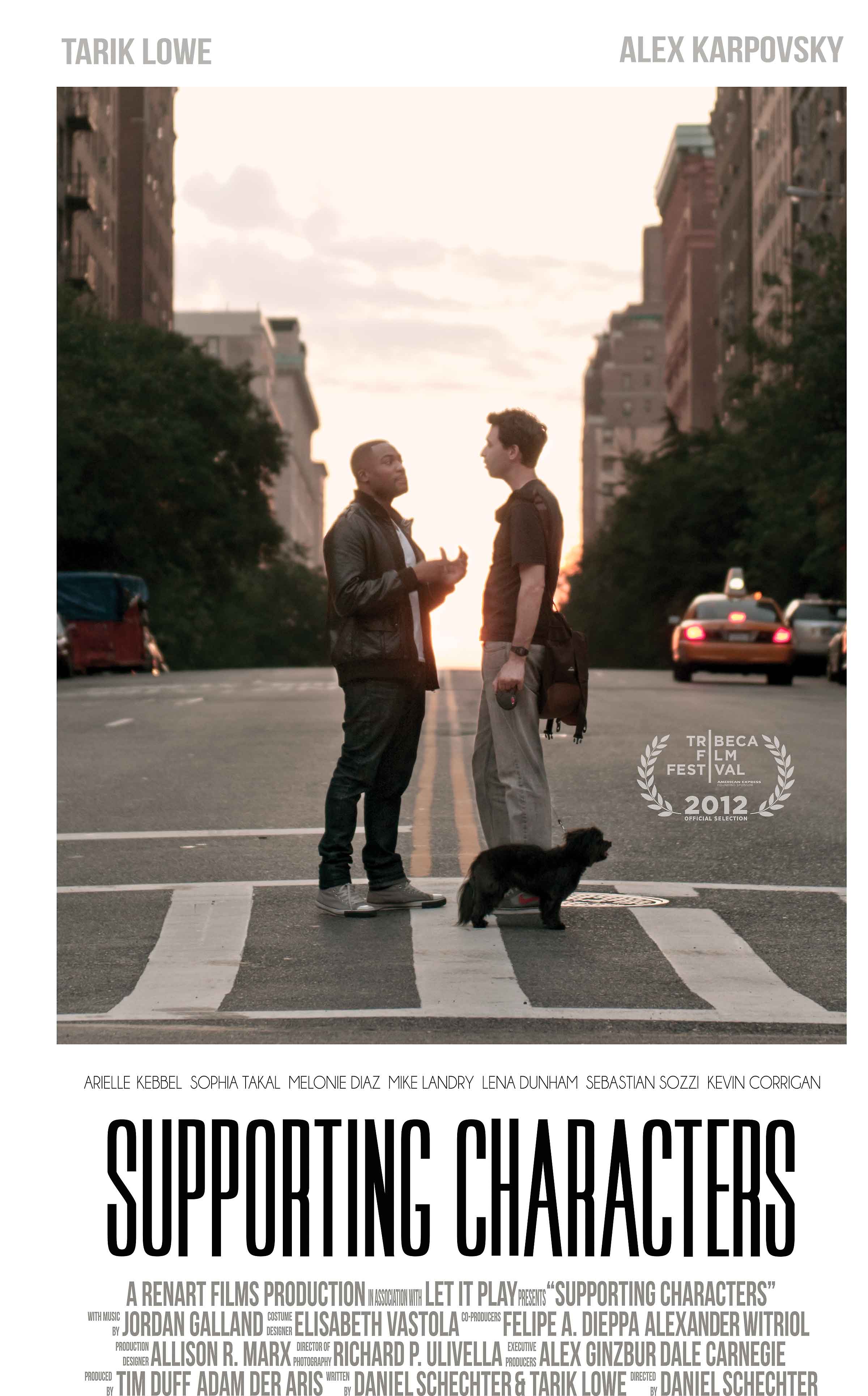
A perfectly fine little indie film starring Alex Karpovsky and Tarik Lowe about co-editor buddies who work together to save movies and relationships in crisis. They’re more successful at one of those things than the other.supporting-characters

It’s very bromantic. The dialogue is snappiest between the bros, and the chemistry works best between them too. The movies is well aware of this. When the buddies each take their respective girlfriends on a double date, one girlfriend asks “So how did you two meet?” and the buddy isn’t sure whether she’s asking how he and his girlfriend met, or he and his buddy. In any case, he prefers to tell the story of the buddy meet-cute, it’s the better story, and, frankly, the better relationship.

The movie is no-budget, ugly to look at, but comes to life when the grumbly Karpovsky and charming Lowe have only each other to pick on. I nearly turned the thing off after about 20 minutes because while nothing was wrong or offensive about it, it just wasn’t that interesting to watch. We left it on but my original impression was confirmed. Just not that into it.

What movies bore you?

A Most Wanted Man

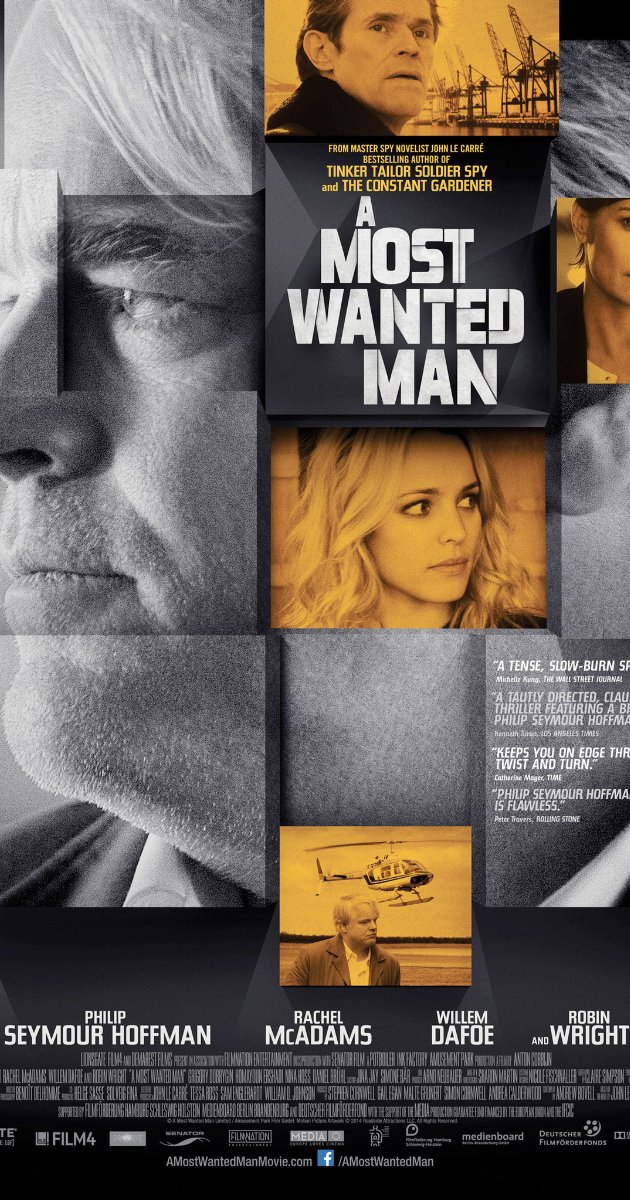
Post-911 Germany is scrambling to make sure nobody uses their country for terrorist organization again. Gunther Bachmann (Philip Seymour Hoffman) is one of the few “good” ones left in an intelligence unit largely corrupted by CIA, but his burnout is evident. When a young Russian-Chechen enters the country illegally, ostensibly looking for asylum, Bachmann decides to use the refugee to move up the ladder, hopefully toward a Muslim philanthropist who Bachmann believes is using charities as a front to fund extremist operations.wanted

Hoffman looks terrible in this film, which kind of fits with the character, who’s a bloated wreck, but it’s still painful to watch. He’s good though, if you overlook his German accent occasionally sounding Irish. Rachel McAdams plays a lawyer trying to help the refugee Issa Karpov (Grigoriy Dobrygin) claim political asylum. Dobrygin plays tortured and traumatized very well but McAdams seems miscast and out of her depth.

This movie is interesting but seems to have tried to pack too much into one single movie, so it’s a bit hard to follow. It’s also the least thrilling espionage thriller I’ve seen in a long time.  It’s not gripping because it gets bogged down in the details. And there’s no real heart. Who are we supposed to care about? The titular character, supposedly this Issa, is supposed to be mysterious. People are arguing over whether to arrest him now, or use him as bait to uncover his hidden motives, not just because he could lead them up the chain, but because they believe he himself may actually be a jihadist. The audience is meant to see him as a threat lying in wait, only he’s such a pathetic character that there is no real urgency, no real menace. In fact, the movie’s strongest sense of sinister undertone comes from conversations between Hoffman and Robin Wright, playing a CIA agent. The actors and director Anton Corbijn hint masterfully at malevolence.

It’s a mostly subtle film that makes you wonder how far is too far. How much should we infringe on someone’s rights in the name of “fighting terrorism”?  This movie will leave you unsettled, with a bitter taste in your mouth, both for the frustrating geopolitical policy, and for Hoffman’s swan song, his last completed movie.

Magic in the Moonlight

Colin Firth plays magician Wei Ling Soo (aka Stanley) brought in to a wealthy family’s home to debunk Emma Stone’s Sophie, a beautiful young medium who Stanley is sure is a swindler.Magic-in-the-Moonlight-onesheet

I want to say that Woody Allen films have been pretty hit or miss with me lately, only I can’t think of any hits. Last year’s Blue Jasmine cast an admittedly stellar Cate Blanchett but other than a great performance, I’m not sure the movie really did anything for me. I was similarly unmoved by Midnight in Paris. His movies for the past  couple of decades have been lighter and less ambitious (not to mention white-washed). This one, as a rom-com, is standard formula, but it does start off with some really great questions of belief. Stanley is a rational man who believes only in what his (5) senses can tell him. The convincing and bewitching young psychic have him doubting his entire existence, and for the first time, he’s feeling happy about life.

Magic in the Moonlight has some great dialogue, which Allen is known for, but also some heavy-handed expository stuff, which I find unforgivable. Allen’s motto of late seems to be quantity over innovation. He’s a very productive writer\director, but what is he presenting that is new? What he shoots is beautiful, but also predictable and safe.

Colin Firth is the Cate Blanchett of this movie, he makes it worth watching. The romantic nature barely concealed under disdain and haughtiness and a dash of intellectualism. Swoon. Emma Stone I was less sure of. I asked Sean, is she very bad in this, or is she always this bad, or is she pretending to be this bad? We weren’t sure. But I was pretty sure that I felt a little creeped out to see Colin Firth kiss her. Now why is that?

Emma Stone, the actress, is 26. But Emma Stone looks quite young and is playing quite young in this film. Hollywood makes no bones about pairing ingenues with daddy types, and either way, I am definitely on team Colin. He could tongue me any day he pleased even though at age 54, he is older than my mother.

So here it is. At what point does what we know about a morally corrupt artist taint the art that he produces? My repulsion to the kiss was not a conscious reaction to Woody Allen: film maker and child molester. But clearly these are serious allegations and so how do we feel when he continues to work out his neuroticism and sexual dysfunction on-screen? I’m not saying that art is confession (although it sometimes is), but I’m wondering at the correspondence between the characters he writes and the crimes we hear about in the newspapers. It’s troubling. Criticism must be within context. A movie written and directed by Woody Allen cannot be considered as wholly detached from Woody Allen the man.  His female characters are never well-developed, and the men in his movies, including ones he’s played himself, are very often emotionally stunted, and almost always chasing after some uncomfortably young tail.

So how do we watch Woody Allen movies going forward? Or should we not?

Eight Crazy Nights

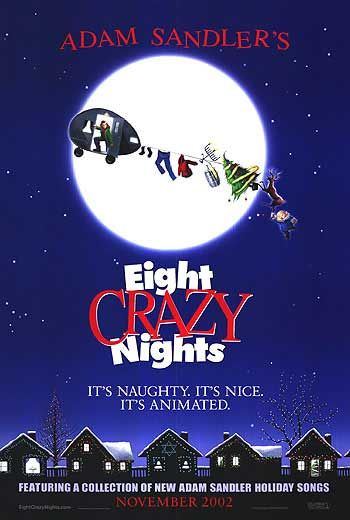
Confession: I am an Adam Sandler fan. Or maybe he’s become more of a guilty pleasure over the years, emphasis on the guilty. I grew up watching him on SNL, fell a little in love with him watching Billy Madison, and have been the only grown woman in a long line of 12-year-old boys to many of his movies. And no matter how many Jack & Jills he throws at me, I keep coming back. eight_crazy_nights

Eight Crazy Nights is not your standard holiday fare. Two and a half minutes in and this movie has already distinguished itself from other holiday movies: it’s lewd, it’s rude, and grandma’s not going to like it. I’m not even sure that I do, half the time. Potty humour’s not my thing. Like really not my thing.

This movie, when you can look beyond the crudeness, is actually kind of touching. It has messages of gratitude and appreciation, and an interfaith holiday celebration that’s more inclusive than any other holiday film on our list. But Adam Sandler is an eternal pre-pubescent boy. He is so squeamish about real emotion that any time he attempts it in his movies, he just as quickly negates it with bodily functions or silly voices. His discomfort is sadly obvious to the grown-up viewer, and yet, this movie doesn’t exactly seem directed at or appropriate for children. It is however, juvenile humour all the way. This movie can only appeal to pre-existing fans with a high tolerance for toilet jokes. It’s not charming or clever but it does have some guffaws, and even a song (“Technical Foul”) that you may find yourself singing around the house. Fans of Saturday Night Live will recognize voices from Sandler’s usual repertoire: Kevin Nealon, Rob Schneider, and Jon Lovitz.

This movie doesn’t belong on any list of the “Classics” and I’m the last person to suggest that it be included, but I do find myself watching it every year around the holidays. I guess I’m a sucker for the Hanukkah Song.


Jay’s favourite Christmas movie: A Christmas Story

Matt’s favourite Christmas movie: It’s a Wonderful Life

Vote for YOURS!

It’s a Wonderful Life: My Favourite Christmas Movie

Maybe a boring and obvious choice but It’s a Wonderful Life is the one movie I can’t go without every Christmas. It went into wide release in January of 1947 so probably wasn’t even originally marketed as a Christmas movie (but if they did try and sell a Christmas movie in January that would explain its poor performance at the box office). In fact, only the last half of the film takes place at Christmas. Every year I feel tempted to even skip the first hour and a quarter and just jump to Christmas Eve and every year I’m glad I didn’t. You really need to watch George Bailey’s life of watching his dreams slip away to feel the full impact of his Christmas Eve realization that he had been living a wonderful life without fully realizing it. Every year it makes me cry and every year it makes me thankful.

Jodorowsky’s Dune

This documentary tells the story of arty film director Alejandro Jodorowsky’s inspired but ultimately doomed film adaptation of Frank Herbert’s sci-fi novel, Dune.Jodorowsky's_Dune_poster

To help realize the ambitious plans he had for this film, Jodorowsky recruited the very best talent available. He tapped Mick Jagger, Orson Welles, and Salvador Dali to star, Pink Floyd to do the music. A quarter of the budget was spent in pre-production, but the art and storyboards produced were stunningly surreal and top-notch. Maybe even a little too aspirational, because Hollywood studios balked at the high concept (and at the projected 14-hour runtime) and it never got made, despite having influenced countless sci-fi movies over the past four decades.

Jodorowsky is a great man to capture on film. Talking about his movie, it’s obvious that this was his passion project, his life’s work. Flipping through costume designs, camera angles and script changes, it’s astonishing and heartbreaking to see so much work and so much talent go to waste. Deflated over his Hollywood rejection, Jodorowsky stopped making movies. And it was with a heavy heart that he trudged to theatres in 1984 to see David Lynch’s Dune. He admits that if anyone could have done justice to his movie, it was Lynch, but he also gleefully tells us that his spirits soared when he realized the film was awful, a flop.

Jodorowsky speaks knowledgeably about the messiah complex that’s a running theme in the material without seeming to realize that he is the epitome of the expression. He admits that he “raped” the novel, albeit “with love” – it was rumoured that author Herbert was none too pleased. He took the story to places never imagined by the book itself, and perhaps it was this conceit, this unbowing grandiosity that was his undoing. Studio execs did not believe that this epic film, straying so far from the beloved source material, would ever find an audience. And maybe they were right. But between the conceptual art and the passionate storytelling of Jodorowsky, I wish that the choice had mine, had been ours, to see or not to see his masterpiece: Dune.

Almost Famous

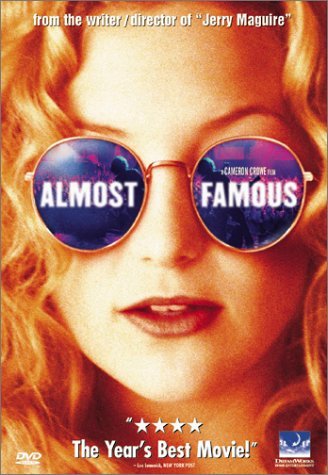
I’m watching Almost Famous and I know you don’t need to be sold on it. It’s terrific. But sometimes, between viewings, you forget how terrific. I’m just eleven minutes in, at the part when the sister, played by Zooey Deschanel, leaves and she bequeaths her record collection to almosther little brother. He flips through those albums (actual saved albums of director Cameron Crowe) and dreams are born. Just watching him discover music that will open up his world wakes something up inside me, like the infinite possibility of childhood. Like you could fall in love with anything, any time.

Philip Seymour Hoffman gives a great performance; this is the first time I’ve watched a movie of his since his passing and really felt his loss. Frances McDormand can’t help but be excellent. Patrick Fugit and Kate Hudson give star-making performances (even all this time later, seeing him on screen in Gone Girl still prompted the whisper, isn’t that the kid from Almost Famous?). Rainn Wilson, Jay Baruchel, Nick Swarsdon, Eric Stonestreet and Mitch Hedberg all make “before they were stars” appearances, solidifying Crowe’s casting genius.

Almost Famous had triple the music budget of the average movie, and it was worth every penny. Peter Frampton was onboard to write music for the movie’s fictional band, Stillwater. But ultimately this movie hits home for a lot of us because it’s about discovery. Do you remember the first album you ever bought? Listening to a track obsessively? Memorizing lyrics? Calling in to your favourite radio station? Pouring over the liner notes? Music is the gateway to our growing up, and to witness William naive and wide-eyed bumping up against the most cynical of industries is a little like watching ourselves encounter the big bad world for the first time.