Birds Of Prey

This is the Harley Quinn that Margot Robbie deserves. That we all deserve, really, away from the male gaze and into the capable hands of director Cathy Yan, writer Christina Hodson, and with Robbie herself producing.
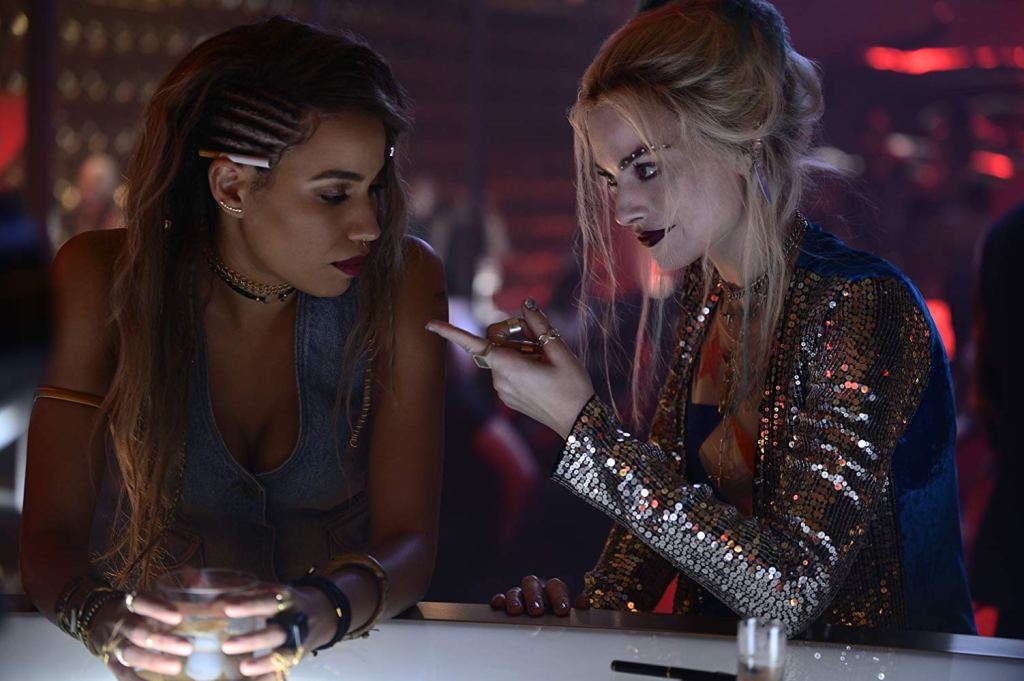
Harley to Black Canary: “Do you know what a harlequin is? A harlequin’s role is to serve. It’s nothing without a master. No one gives two shits who we are, beyond that.” Harley Quinn has broken up with her on-again-off-again longtime love, the Joker, this time for good. Without him as an anchor, she knows she’s vulnerable. Under his protection, no one could touch her, but it turns out she’s accumulated quite a few enemies, and now that she’s untethered, they’re gunning for her. Number one on her tail: a guy who calls himself the Black Mask (Ewan McGregor), who seems to think of himself as a rival to the Joker, though he styles himself more like a Miami Vice drug lord. He does have a bit of a fetish for peeling people’s faces off, though, so don’t go underestimating him. The only way Harley can keep her keister safe is to find the missing diamond he and literally every bad guy in Gotham would like to get their greedy paws on.
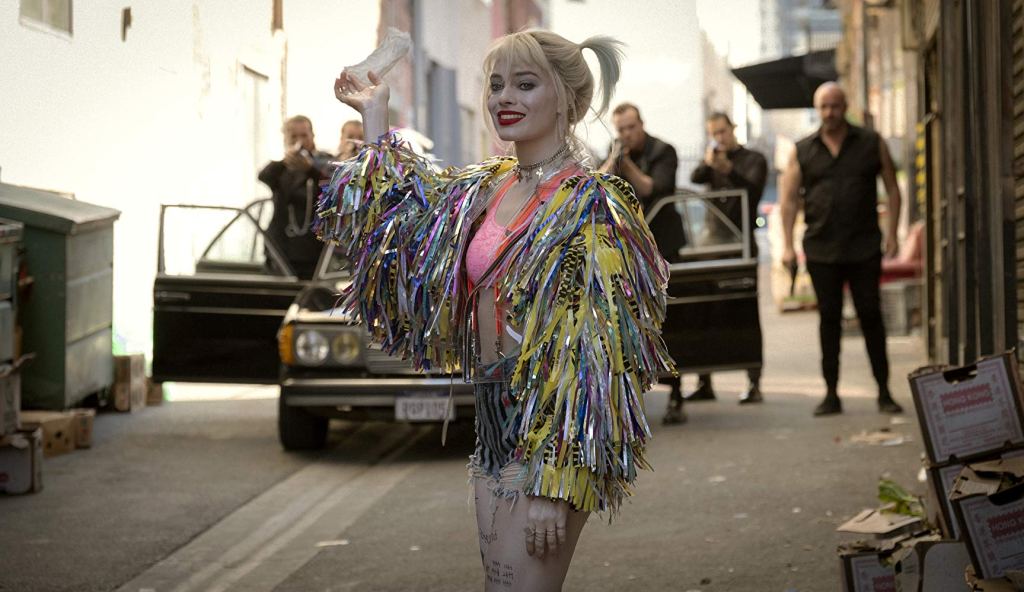
In Harley’s sparkly shoes, Robbie proves she can make this role her own, and without her emo boyfriend in tow, Harley Quinn is actually an interesting character in her own right. Her origin is glossed over with a couple of smartly and quickly tossed lines; the rest of the film is devoted to amped up action sequences. Yan doesn’t just have some tricks up her sleeve, she’s got entire confetti cannons up there, glitter bombs and rainbow grenades. Her violence is slick and beautiful, set to a perfect array of pop tunes you’ll be stomping your feet to even as someone one screen’s getting their skull caved in.

I’ve seen far too many reviews mention ‘female empowerment’ (of course in a derogatory manner, eye roll) and I can only assume those people are a) men and b) morons. Did anyone refer to the Avengers movies as ‘male empowerment”? No? Yeah, didn’t think so. Birds of Prey is better than 99% of the other DC movies released in the last decade, and if it happens to star women, well, so be it. This is not about female empowerment, it’s about empowered females, women with their own agency, women who can save themselves and best their male antagonists. The only thing being fetishized here is a breakfast sandwich. Feel threatened by that? Maybe you could do with a little male empowerment yourself. I believe the Batman franchise was built on the theory of overcompensation.

Meanwhile, Robbie has built herself a fearsome army: Jurnee Smollett-Bell, Mary Elizabeth Winstead, Rosie Perez, and even young Ella Jay Basco. And none of them are rolling around on the ground crying about mommy Martha.

Can’t get enough? We’ve got more thoughts on Birds of Prey here.
Horse Girl

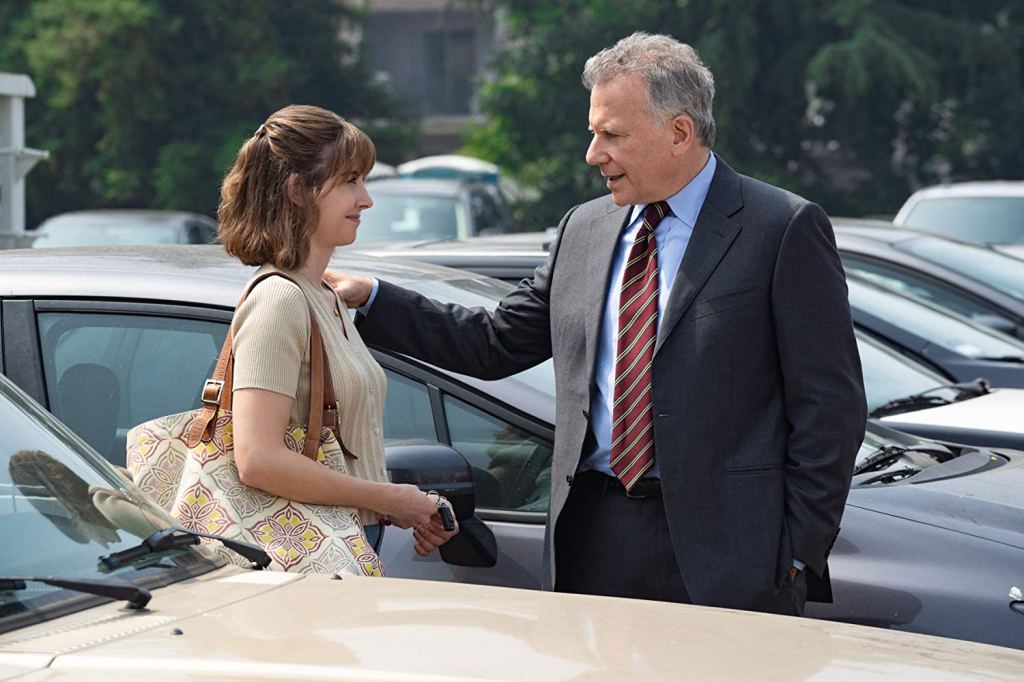
Sarah (Alison Brie) is a socially awkward woman who never really grew out of her girlhood horse phase. It’s clear to everyone but her that she’s not really welcome at the stables anymore, but she visits her old horse Willow even more diligently than she visits her childhood friend who was injured in a riding accident.

But horses are the least of Sarah’s problems. She’s a sleepwalker and she’s finding that her troubling lucid dreams are starting to leak into her waking life. She’s losing time, finding her body bruised, and since she’s a big fan of supernatural shows, she’s prone to those kinds of explanations. Is she a clone? An alien abductee?

And what’s really interesting is when she meets a guy and he had to decide if he’s horny enough to put up with her crazy. Because it’s clear that her mental health is deteriorating. Whereas before she seemed quirky if cringy, now her behaviour is getting harder to ignore or excuse. Her boss Joan (Molly Shannon) hardly knows how to help her but she doesn’t have many other non-equine friends.

As things fall apart, so does the narrative structure of the film. It’s clear Sarah has been an unreliable narrator, but for how long? What’s real? We doubt ourselves and her story far more than she does.

The very talented Alison Brie produces and is co-writer as well; she owns this story because she has created it, crafted it. Sarah slides down a slippery slope, and the descent is gives Brie a chance to show a muscularity in her performance that we haven’t seen before.

I wish the film were a little more sure of itself. Director Jeff Baena is reluctant to come down on one side or the other but the ambiguity starts to wear thin and push the bounds of credibility. It was thoughtfulness and sensitivity that pulled us in, and we lose a bit of that toward the end. Horse Girl is for an audience comfortable with oddball films and open endings.

Timmy Failure: Mistakes Were Made

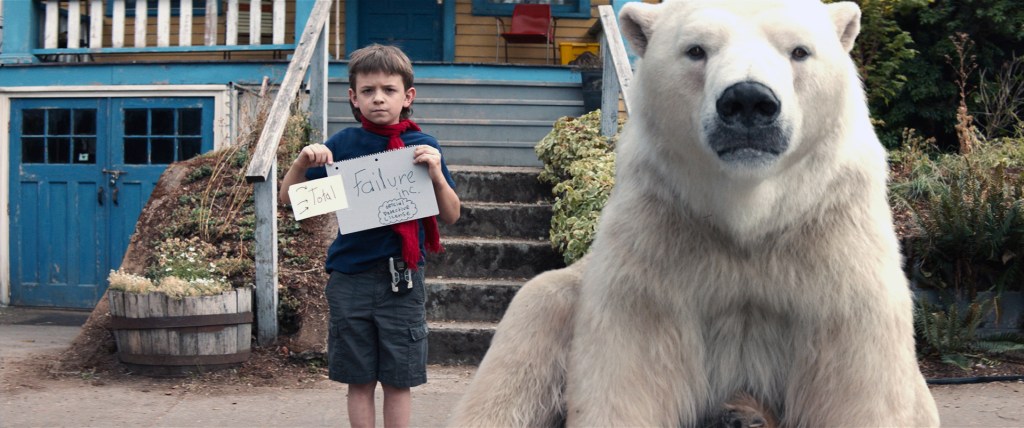
Timmy Failure has a misleading name, because he’s anything but. He may be young (11), but he’s the best detective in town (Portland). He and his partner, an imaginary 1500lb polar bear named Total, run the agency, called Total Failures, together. This may have been Timmy’s first mistake. Total is not the diligent and responsible polar bear he first appeared to be.

Timmy (Winslow Fegley), easily identified by his mullet and his red scarf (if not by his polar bear partner), roams the mean streets of Portland on the failure mobile, which looks suspiciously like a segway. But his case of the missing backpack is usurped by the case of the missing segway (eep!) which is in turn usurped by just trying to survive the 5th grade, his mom’s new boyfriend, his school’s rigid anti-bear policy, and the Russian spies overtaking his city. Gulp.

Winslow Fegley is a delightfully odd kid who pulls off charming and quirky in equal measure, exactly the kind of weirdo who’s a pleasure to watch. The whole cast, largely unknown, and largely children, are surprisingly talented and likable. It’s a good fit for a script that excels at being offbeat. Even the polar bear sidekick looks terrific, a visual witticism crashing about on screen. Timmy Failure: Mistakes Were Made is almost like a Wes Anderson starter movie, tonally odd but in a way I quickly became addicted to. I imagine this is the kind of movie the whole family can actually enjoy, its clever moments more than enough to keep adults entertained and the protagonist’s wacky antics enthralling for all ages.

Timmy Failure is a great piece of original programming for Disney+ and I wouldn’t mind a bit if there was more just like it (sequel?) on the way.

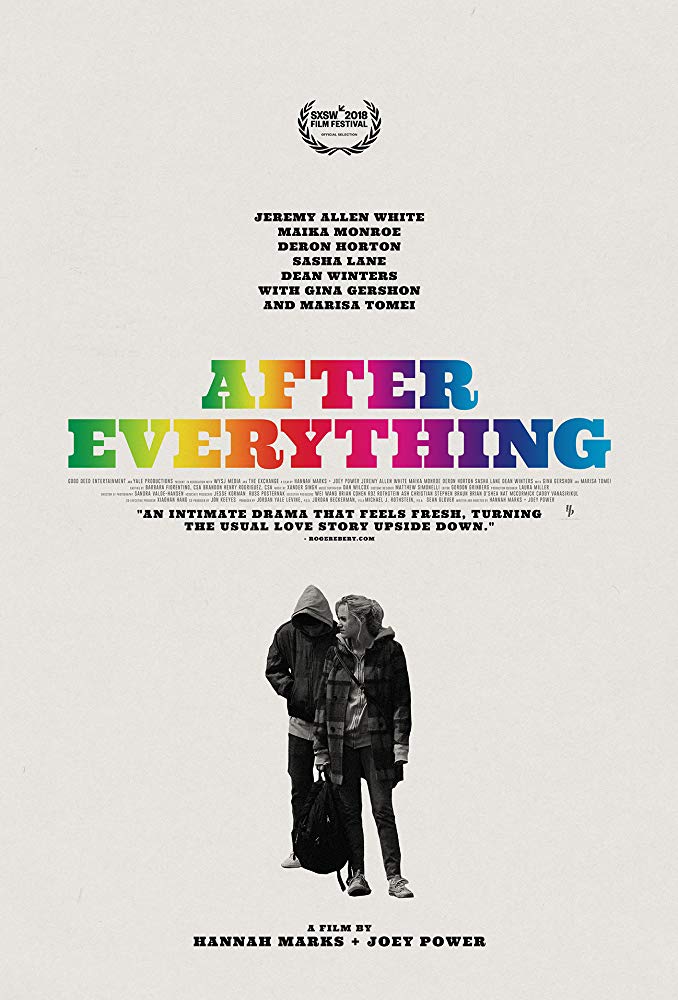
After Everything

If Elliot hit on me the way he hit on Mia, he wouldn’t have gotten the time of day. Clearly Tinder has desensitized her – an unwanted intrusion and the implicit assumption that women somehow owe some kind of interaction to all men who ring the doorbell aren’t enough to dissuade her. She consents to a date, her roommates encouraging her to “get her dick wet” and he confesses: he was just diagnosed with cancer yesterday. It’s life threatening, and more importantly, sex threatening (ie, a tumor on his pubic bone, specifically Ewing’s sarcoma, if you’re the type who likes to Web MD that shit). With sex off the table, Elliot’s going to have to relearn how to talk to women!

So anyway, this puts kind of an awkward pressure on their relationship for a couple of kids in their early 20s who weren’t necessarily looking for anything serious. This pressure cooker means they get to know each other very intensely and soon they’re inseparable: chemo, radiation, surgery, and even a bucket list for broke 20somethings. The other people in his life get a little jealous that Mia’s monopolizing all his time, but they’re living like these might be his last days, because these might be his last days.

Jeremy Allen White and Mia Monroe are excellent as two people on this impossible trajectory. Either their love is doomed…or it’s doomed. Youth and passion may be enough to plow through the indignities of a medical crisis, but what happens outside those bounds? What will they even have to talk about if not tumors and ports and hair loss? Even if forever isn’t exactly a long time, it’s still further ahead than either of them has ever though. Cancer has launched them into a premature adulthood, which may be a flimsy premise for a love story. You think that illness is going to be the greatest test, but lots of mundane things topple relationships with deeper roots than theirs.

P.S.: it’s National Wear Red Day!

Miss Americana

In many ways, this Taylor Swift documentary is like all the other musician documentaries recently released. It’s a flare shot urgently if shakily to fans that says: I’m human. And perhaps more than that: I’m a human who has recently done some growing up.

Specifically, Swift’s revelations seem to orbit around 1. untangling her self-worth from the “good girl” public persona 2. a political awakening 3. her own lawsuit over a groping case and how it inspired her to stand up for human rights more generally. All good and noble things.

There’s not a lot of dirt. Nothing about feuds, no Katy Perry, only a little about Kanye. Not much about love. Nothing about the Scooter Braun fiasco, and that feels like a big one to have left out. Basically, the label Swift signed to as a 15 year old owned the rights to all the masters of her recordings. They sold the label to Braun without offering her the chance to buy her own music back and so now all her old albums are owned by Braun, who manages Kanye and Justin Bieber among others, and who, according to Swift, was responsible for bullying and an attempt to dismantle her career. She severed ties with that label, but when she walked, she had to leave all her old music behind for someone else’s profit, painful I’m sure. So it’s strange to have left it out entirely.

Personally, though, the only part of these documentaries that I’m ever interested in is in the creation of the music. And we do get some great takes of her with various collaborators trying to turn something she’s been humming to herself into a song with notes and words and instruments. It’s cool to watch it all come together, and as Swift is actually a very accomplished musician, playing piano and guitar, her fingerprints are all over the creative process.

I’m not sure if this documentary is really meant to appeal to anyone but her fans, but there are enough of those to make this film successful on their own. It’s backstage access to a major star during some formative years of self-discovery and transformation. The Swifties will be proud.

One Child Nation

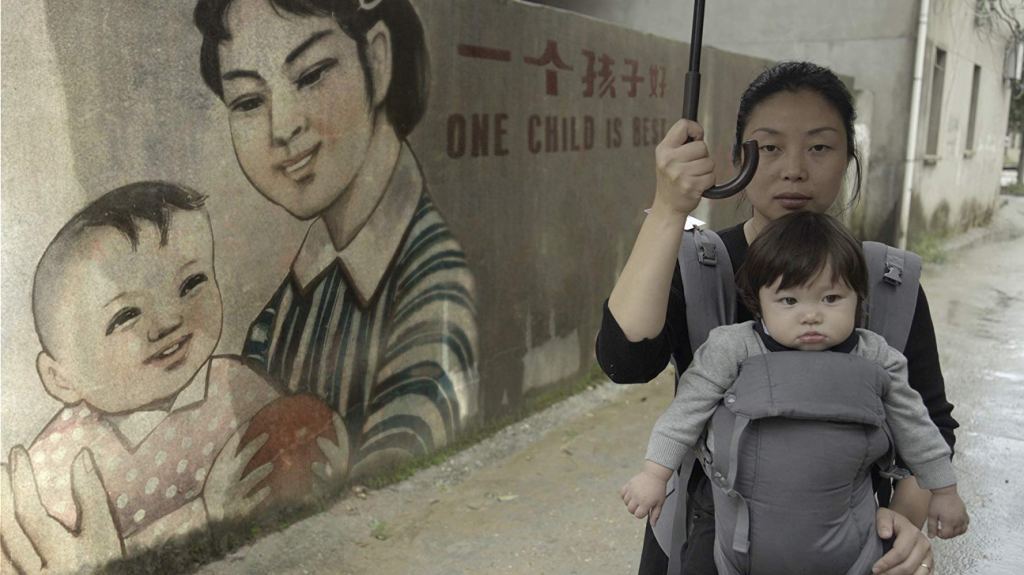
China instituted its one-child policy in 1979. By 1982, it was locked into its constitution. The Chinese population had ballooned to a billion and officials knew that in order for the country to truly prosper, it would need to control its growing numbers. Western countries worried about China’s population for different reasons. Over here, population growth had slowly withered as our countries grew stronger economically. As families move away from agriculture, large families become less necessary. As health care improves, more children make it into adulthood, so having ‘spares’ feels less urgent. And in order to give children every economic advantage in this new world – each their own bedroom, perhaps, a swimming pool in the backyard, a ski vacation every winter, a college fund for everyone – families grew smaller. Here in Canada we rely on immigration to keep our population from shrinking. Sean and I both come from 4 kid families, big even in the 80s. But in each of our families, only half of the siblings chose to have children at all. Of the 4 siblings who do have kids, 3 families have 2 kids each and 1 family has 3. We aren’t even replacing ourselves. But there’s a big difference between choosing what feels right for your family considering all the pros and cons; it’s much different when your government had made a law about your uterus and what can be inside.

In 1982, ultrasounds were not sophisticated enough to discern gender but following centuries of tradition, most Chinese families still wanted and valued a son. It fell to village officials to enforce this impossible policy, taking possessions and destroying homes of people who refused to follow it, and forcing sterilization on women after their first child, sometimes even forcing abortion.

One village midwife has lost track of how many babies she’s birthed but knows she performed 40-50 000 sterilizations and abortions over 20 years. Women would be abducted from their homes by the government, tied up like pigs, and dragged onto her operating table. Now she’ll only treat infertility “to atone for my sins” she says, though it’s clear she was not exactly a willing participant, just one of many doing their jobs. And so many of them had suffered from starvation, had spent lives just struggling to survive, that this promise of a better life for their child had lots of appeal. But if anything, the one-child policy strengthened the Chinese preference for sons. Baby girls were abandoned in droves.

After leaving China for the U.S. and becoming a mother herself, Nanfu Wang wonders if her thoughts are truly her own, or the result of propaganda so finely ingrained in culture and daily life they were hardly noticed. It’s impossible to know how China would have fared without the policy and most citizens don’t want to broach the question honestly. They have sacrificed so much, but the values and ideas so deeply embedded they are impossible to separate. Nanfu Wang can’t help but ask herself why she has traded one country who seeks to legislate women’s wombs for another.

The one-child policy was finally repealed in 2015 (they can now have 2), China assuring us that the nation was stronger, the people more prosperous, and the world more peaceful. And that may be true. But there is a trail of heart break, human trafficking, and a heavy toll paid by broken families and exiled children.

Oscar Predictions 2020

We three Assholes got together to talk Oscars in a major way.

We’d love it if you care to eavesdrop and while you’re there, hitting the Subscribe button is a sweet, sweet treat that’s free to give and very gratefully received.

Bombshell

Sean and I have had our eye on a tiny, forgotten movie theatre in the basement of a local shopping mall. It only shows films during mall hours, and it’s strictly second-run stuff: this is where movies go to die, these are their last breaths at the box office, and the last chance Sean and I will have to see them in theatres before the Oscars which ARE THIS WEEKEND. It’s where we saw Richard Jewell last week and it’s where we caught Bombshell this week. It came out just before Christmas, and between holiday prep and Rise of Skywalker, we never got around to it. Plus, word was that it was kind of a lame movie that housed some good performances. Of course once those Oscar nominations came out, the movie went from back burner to the pressure cooker: see 38 movies before February 9th, some of which aren’t in theatres and hardly where, and certainly not in this country or in a language that I speak (and that’s not counting the shorts!).

So when I finally got around to seeing Bombshell, I was surprised by how much I enjoyed it. True, Bombshell is all flame and no burning embers; it deals with the headline-grabbing sexual harassment case at Fox News circa 2016 and though it does justice to the headlines, it doesn’t offer up a lot of meat. However, it does an excellent job of spreading the heat and accounting for the experience of many.

Gretchen Carlson (Nicole Kidman) is right in the middle of the blast. Having been with Fox in one capacity or another for years, Gretchen finds herself demoted, and reprimanded for covering stories deemed by network president Roger Ailes (John Lithgow) to be ‘too feminist’ and criticized for not upholding beauty standards when she dares to do one episode makeup-free. She’s seen the writing on the wall and when she’s let go in June of 2016, she’s ready with a lawsuit accusing Ailes of sexual harassment. She’s confident that once she breaks the ice, other women will come forward, but she’s forgetting just how pervasive the culture is at Fox news.

Megyn Kelly (Charlize Theron), Roger’s golden girl, the tough reporter recently taking heat for questioning Trump’s behaviour toward women during a debate, has remained silent. No support for Gretchen, but none for Roger either, though the entirety of the organization seems to pressure her. Instead, she’s searching for the truth, quietly speaking with other women about their own experiences. Eventually she’ll make her way to Kayla (Margot Robbie), a composite character of a new girl trying to climb her way up the ladder. It’s pretty clear whose “ladder” she’ll have to “climb” in order to get anywhere – but ambition and livelihoods are inextricably tangled up in this thing, and it’s fairly clear that any woman who comes forward will have a permanent stain on her record, untouchable by any other network for having dared to make a complaint against her boss. That’s just not something women are allowed to get away with.

It’s shocking, actually, that it’s the women of Fox of all places that really got something done. They haven’t toppled the patriarchy; there were plenty of other white men to replace Ailes in more ways than one. Director Jay Roach shows how pervasive the boys’ club can be, and how women have been denied their own network by constantly being pitted against each other. There’s too much history here for any one film, too much damage to uncover let alone comprehend. Still, I like the attempt. I like all three of these performances even if Kidman got shut out of awards season. What I dislike is that this very important story told (written and directed) by men. Which kind of misses the point altogether.

Oscar Spotlight: Costume Design

The nominees are:

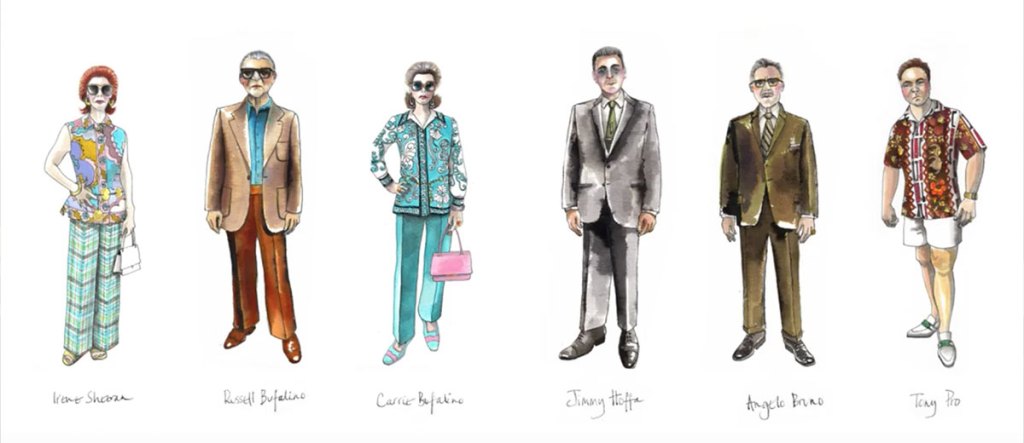
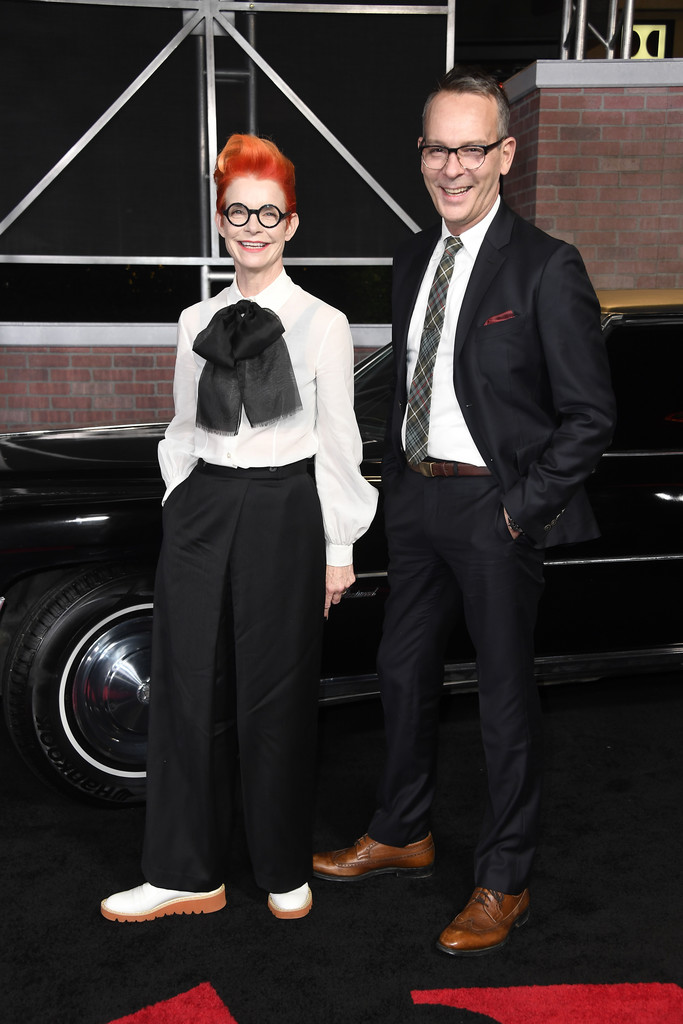
Sandy Powell and Christopher Peterson for The Irishman

I think I’ve been very clear in years past that I’m a big fan of Sandy Powell; she is a rock star among designers, and she’s given me plenty of reason to blab about her – 15 Oscar nominations, including 2 last year for both The Favourite and Mary Poppins Returns, and 3 wins, for Shakespeare In Love, The Aviator, and The Young Victoria. But to be honest, though I had over 3 hours of staring at The Irishman, I can’t say I really noticed it for its costumes. But doing the math, 209 minutes covering 50 years…that’s a lot of suits and ties in an awful lot of time periods. The fact that nothing stood out is probably a credit to Powell, who was so overloaded by the mountain of work she promoted her long-time assistant Christopher Peterson to co-designer. Not only did they clothe 250 characters and 6500 extras, they helped the CGI de-aging process by talking certain gentlemen into Spanx. Think that’s worth a fourth Oscar?

Mayes C. Rubeo for Jojo Rabbit

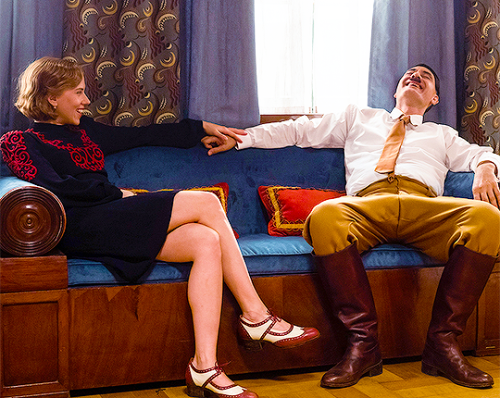
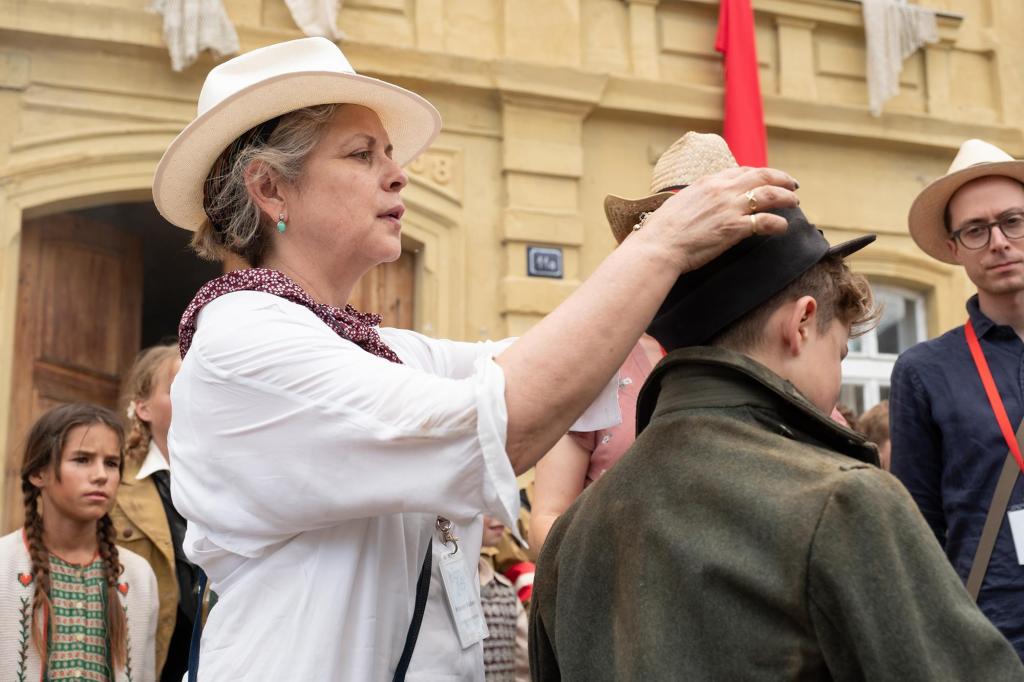
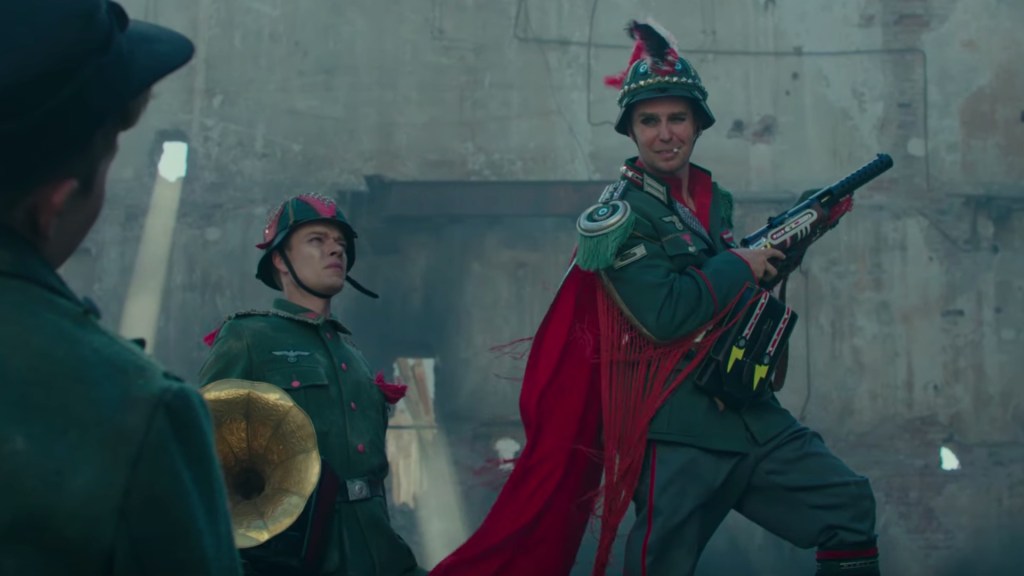
Although this is Rubeo’s first Oscar nomination, she hasn’t shied away from big looks, having designed for the film Avatar, World War Z and most recently for Taika Waititi’s Thor: Ragnarok. This was different of course; Jojo Rabbit is a different kind of war movie. Rubeo steeped herself in history but then took creative license, eschewing the strictly drab palette of most WW2-era films. Jojo Rabbit has a different visual arc, one that’s a bit more poetic. Yes she found it morally and ethically challenging to create an army’s worth of Nazi uniforms, but dressing Scarlett Johansson was her true outlet, a spot of joy on screen. Rosie’s shoes were designed and made specifically for the film, a tribute to her eclectic personality and to ‘better, happier times.’ Sam Rockwell’s, shall we say, bedazzled Nazi uniform was in fact a strange homage to Bill Murray, per Rockwell’s request. The Costume Designers Guild created a bit of an upset, awarding its excellence in a period film to Rubeo, and should she take home the Oscar as well, she’d be the first Latina to do so.

Mark Bridges for Joker

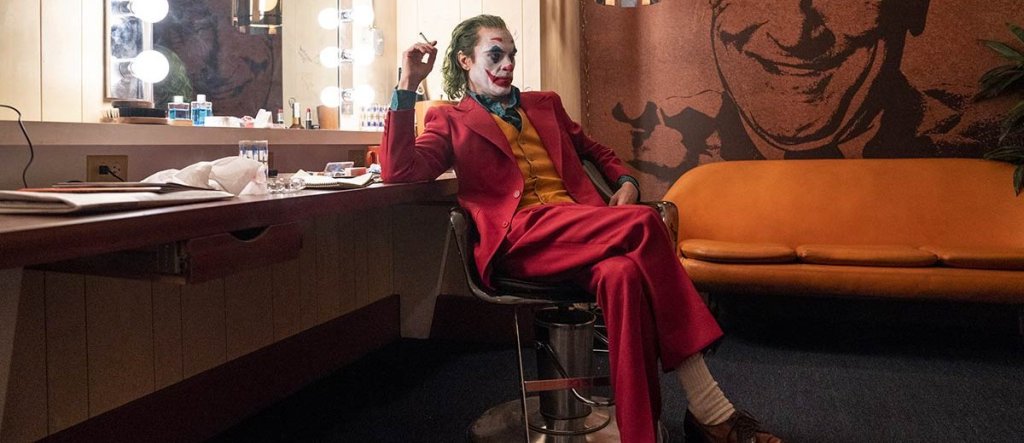
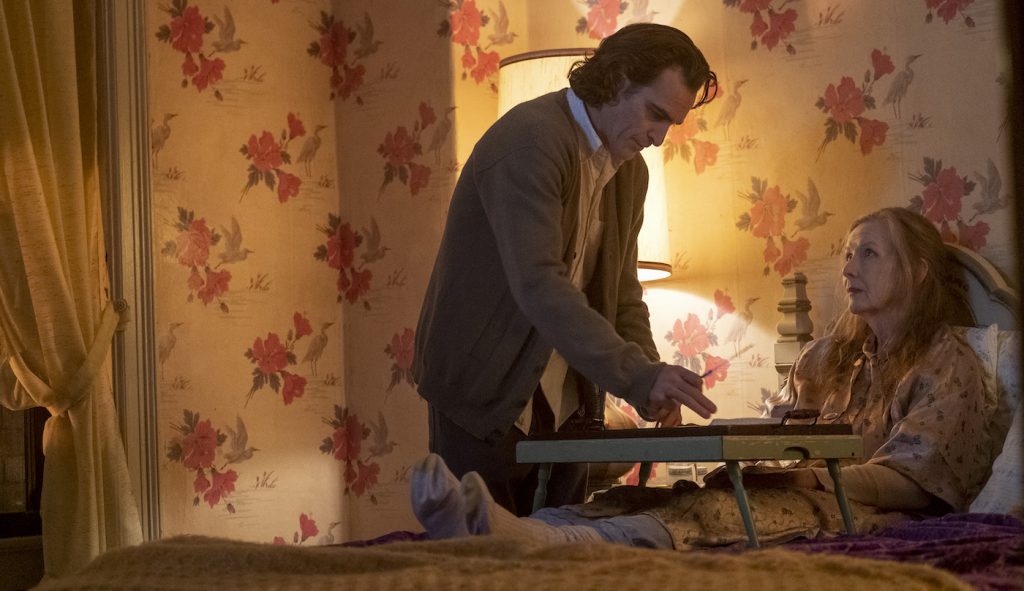
The Costume Designers Guild gives out awards for 3 types of movie: period, contemporary, and sci-fi/fantasy. The Oscars only have 1 category for costumes and they almost always give it to a period piece (you’ll notice that all the nominees this year are); one of the very few times they’ve deviated was for Black Panther, a comic book movie. So you might say that Joker qualifies twice. This s Mark Bridges’ fourth nomination, and he’s got 2 wins under his belt, including one for Phantom Thread. This time, Bridges has to dress both the man and the villain, with the added challenge of Joker’s look already being rather iconic. As to Arthur: “When thinking about Arthur you realize he doesn’t have much style. He dresses for comfort. I imagined if he ever did laundry everything went into the washer at the same time. So we made a kind of bad laundry feel to the clothing. It’s those subtle choices you can make for a character that informs the audience who they are and how they live.” Though every piece was made for the film, it was then distressed to give it a thrift store feel. As for the Joker’s suit, Bridges felt comfortable designing away from the looks of previous iterations. He used only pieces he felt Arthur would have had in his closet – the pants are seen previously in the film, the vest is actually reused from his work clown costume, the teal shirt an extension of the makeup on his face. It’s a more organic approach, but just as iconic in its own way.

Jacqueline Durran for Little Women

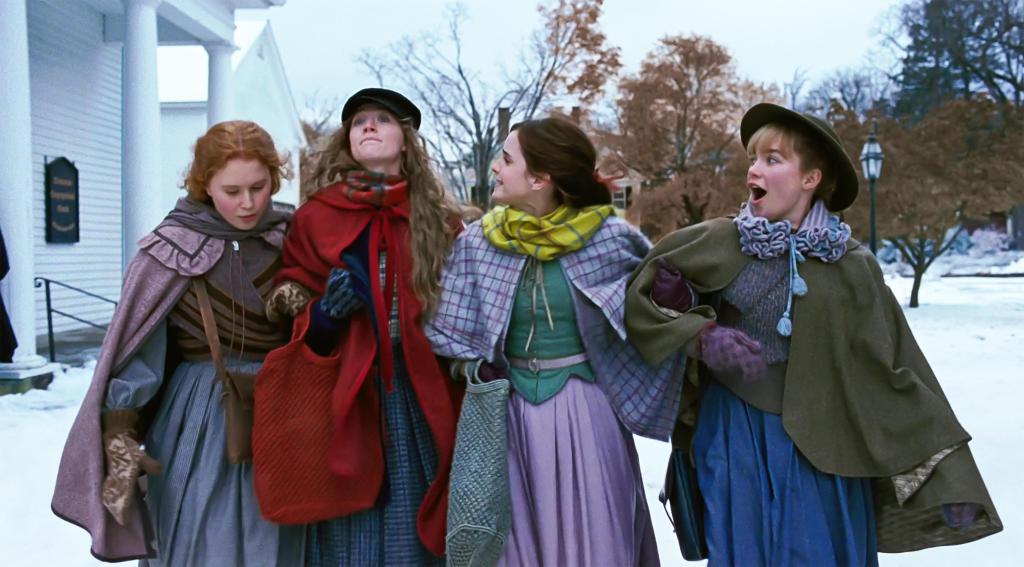
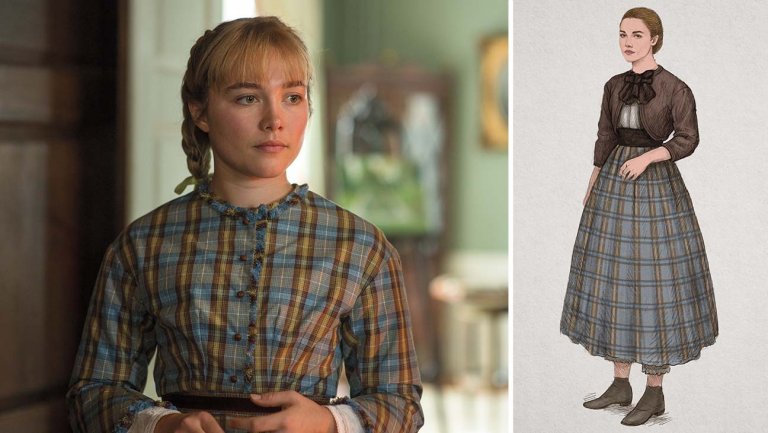
This is Durran‘s 7th Oscar nomination, with a win for Anna Karenina in 2013. She was inspired by the works of Massachusetts painter Winslow Homer and soft portraitures of British photographer Julia Margaret Cameron, carving out character-defining contrasts and colour palettes for each sister. Durran used a fiery red and indigo blue palette for Saoirse Ronan’s Jo, an energetic, creative tomboy, and dressed her in corset-free clothes that she could move freely in. Little Women is exactly the kind of period piece the Academy favours, so don’t you dare discount it.

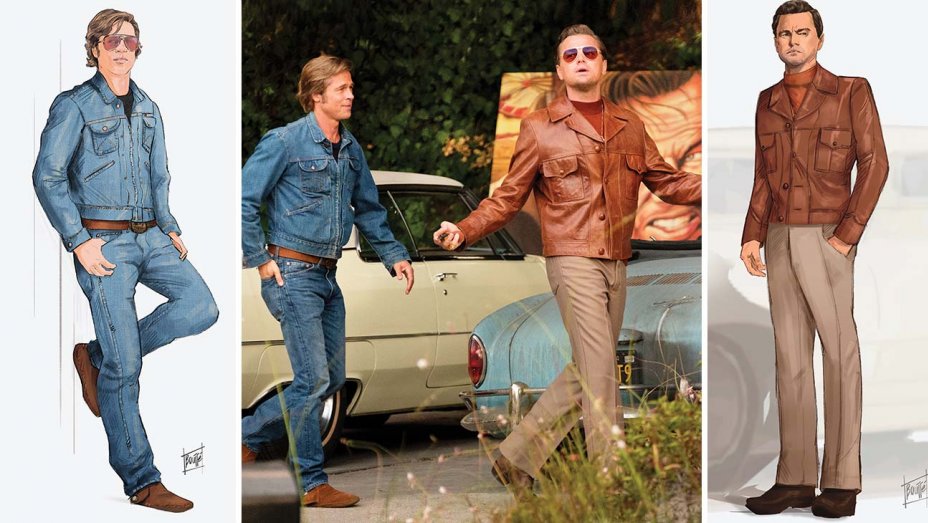
Arianne Phillips for Once Upon A Time in…Hollywood

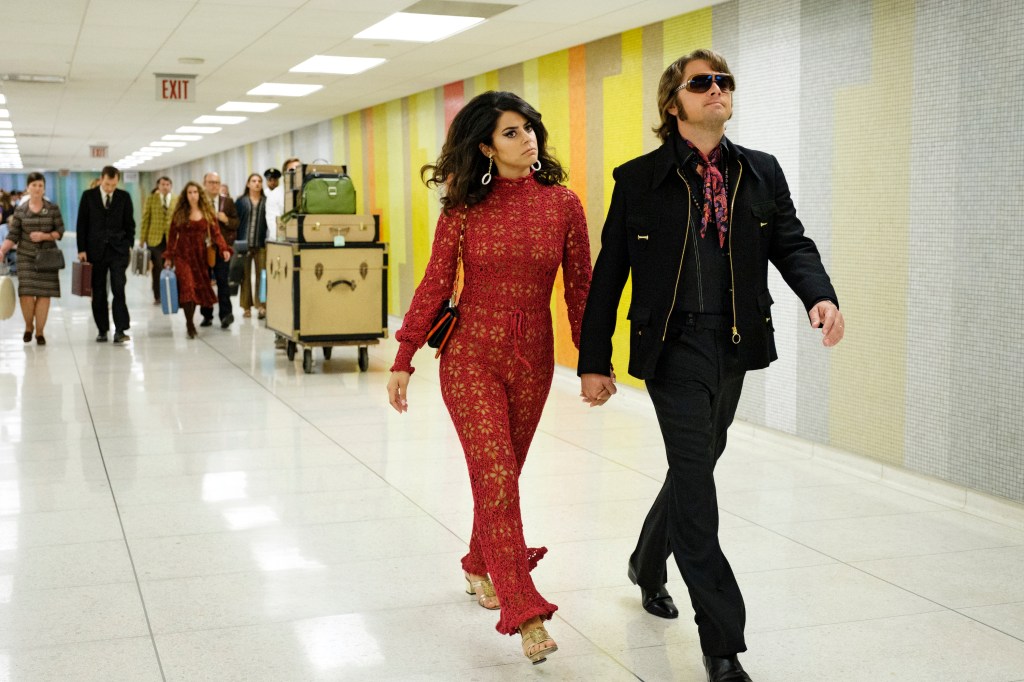
Phillips’ credits include Walk The Line, A Single Man, and Nocturnal Animals. This is her third nomination and some predict her first win. The costumes in Once Upon A Time…in Hollywood include costumes that the characters wear on the sets of the movies within the movie – Rick Dalton appears in a western, and a Bruce Lee film, whereas Sharon Tate appears in real movies. Furthermore, she was a fashion icon during an already iconic time in fashion. Phillips had lots of room to play, splashing around in go-go boots and miniskirts, even wrangling actual pieces of Tate’s jewelry from her sister. Dalton’s look is a little stuck in the 50s while Brad Pitt’s character, Cliff Booth, has more of a nod to youth culture, distinct from the more mod look sported by Tate.

For Sama

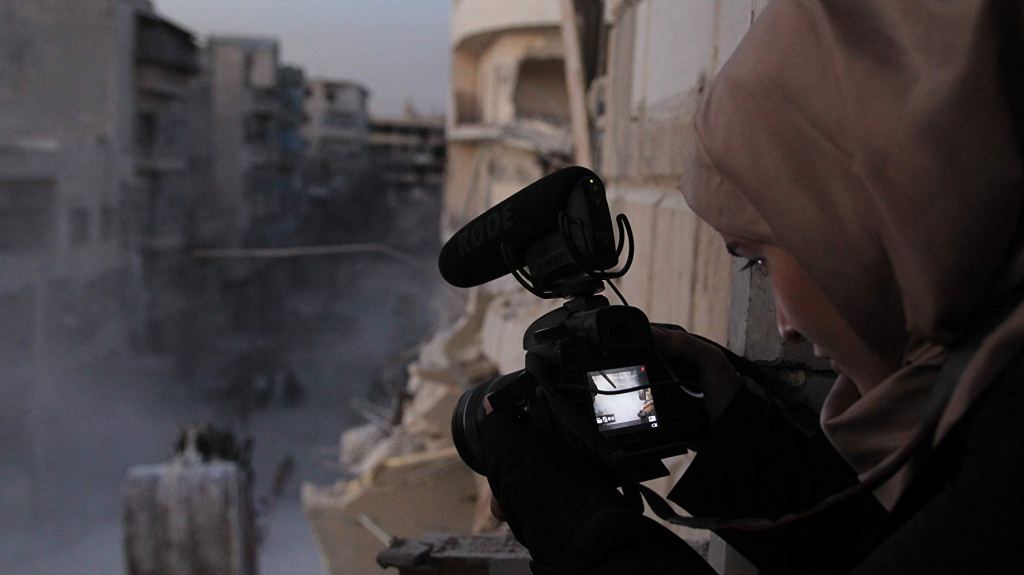
In so many ways, Waad al-Kateab is a young woman just like you and I. She went to school, left home, fell in love, got married, had a daughter. But al-Kateab’s milestones are happening amidst the backdrop of the Syrian war. For five years she has had her camera trained on the uprising in Aleppo and she crafts this documentary as a love letter to her young daughter so she may know just what her parents were fighting for.

This is an intimate, female portrait of war, a side of the story rarely reported. In many ways, Jojo Rabbit is the film that got me thinking down this path; war stories are so often told from the point of view of the soldier (1917 is a good one), but for the women and children left behind, life goes on. Life: complicated and confusing, but there is no pause button. Children grow out of shoes, and tape idols on their bedroom walls. Mothers cobble together meals, and try to create some semblance of a happy home. For Sama is a story that is ongoing, and real. Waad al-Kateab is a real wife and mother telling her story from war-torn streets. Bombs are dropping around her but she slow-danced at her wedding just like you, peed on a stick just like you, felt her belly swell not just with baby but with hope and happiness, but tinged with a filament of fear always burning from within. She plays peek-a-boo with her baby just like you, but flees from a barrel bomb dropped on her by her own government with her baby clutched to her breast. But she loves her country just like you, believes it is worth saving. Her husband, a doctor, tends every day to the wounded. There are always new wounded. Sometimes the body bags are so small. It is endless work. So is the balancing of parenthood and principle, the urge to flee the city to protect their daughter’s life, and the conviction to stay and fight for what so many have already sacrificed so much.

It feels so alien to face such choices, and yet one image stops me cold: sock feet in a pile of bodies. Sock feet that could easily belong to anyone. Must I (we?) relate to those who suffer before we feel compassion? It’s so easy to dismiss this conflict as “their” problem but the boundary between us and them is illusory at best. We are all brothers and sisters, and if this documentary helps us walk a mile in someone else’s socks, it has done its job.

Sama is a toddler with big, gorgeous eyes. She was born during war. She knows nothing else. A loud bang erupts as another bomb explodes nearby. Her mother flinches, crouches reflexively, but Sama doesn’t react at all: a baby who doesn’t cry at a loud noise? Sama doesn’t know this is wrong, this is scary. She thinks this is life. Who will be left to tell her otherwise?