
Cinematography is the art of making movies. Cinematographers, also called directors of photography, or d.p., might decide what kind of camera to use, what kind of film, what kind of lenses, whether a shot should be stationary or use movement, what angles can be shot, what material can be shot through (like a window pane, or water), what might obscure the camera, what light might enhance the mood, the depth of field (meaning how much of the foreground, mid-ground, and background will be in focus), and the aspect ratio (how the frame looks – a rectangle of 1.78 (16:9) is commonly used in high definition today, a compromise between the cinema’s ratio of 1.85 and TV’s 1.33 but some films, like Son of Saul, choose 1.375:1 to narrow the field of vision and Mommy used the squared 1:1, which kept the shots extremely 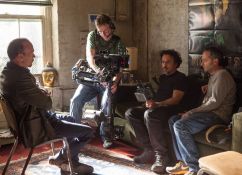 tight). They aren’t just recording the actors, they’re making choices that craft, manipulate, and interpret what we see. They oversee the camera operators, grips, and lighting crew to achieve this vision.
Emmanuel Lubezki is the Oscar-nominated cinematographer of The Revenant. He’s got a resume that’ll impress the pants off of anyone – his Academy-nominated work alone includes The Little Princess, Sleepy Hollow, The New World, Children of Men, and The Tree of Life. He actually won back to back Oscars for Gravity and Birdman and I believe he’s 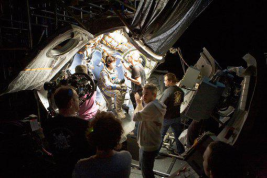 about to threepeat with The Revenant this Sunday. He’s remarkable in every way, yet humbly attributes lots of growth and learning to frequent collaborators, directors Terrence Malick, Alfonso Cuaron, and Alejandro Inarritu.
He’s known for seamless one-take shots and techniques that make you feel like you’re a part of the action. The Revenant allowed him to really flex his muscle and show us everything he’s capable of, all at once, in a way that still feels quite natural. I’ll let him tell you about all his tricks in this movie: “we wanted to have a movie that was very immersive, very visceral, and to have a certain naturalistic base, even if some of the scenes have different degrees ofreality. So we didn’t use artificial light for that same reason and we used very, very wide lenses for that same reason, to be able to immerse the audience and to be able to tell the intimate together with the environment, to be able to capture the close-ups and the surroundings at the same time and allow the audience to pick what they want to see within the frame. And we used a lot of
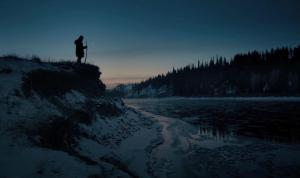 moving cameras, either handheld or Steadicam cranes, but the camera is constantly moving. We did a lot of these shots that we call the elastic shots where we go from a very objective view from the audience’s point of view, to a very subjective point of view that is the point of view of the character, because we wanted to feel what he’s feeling but also see it as he would be if you were standing close to the action.”
If that sounds intense, believe me, it is. Have you seen The Revenant? You really should. There are other worthy nominees in this category – Edward Lachman for Carol, Robert Richardson for The Hateful Eight, John Seale for Mad Max: Fury Road, and poor, poor Roger Deakins for Sicario, who holds the frustrating honour of most nominations without an award (13! – his work on Unbroken lost to Lubezki last year, and his work on Prisoners lost to him the year before that too). Sorry Roger, but I’m betting you’re going home empty-handed again this year (cinematographers don’t even receiving the consolation prize of a non-Academy-sanctioned swag bag, which this year contains a sex toy and a vapourizer among other fun prizes).
Cinematography is the only category in which no woman has even been nominated, and they’re shockingly under-represented in the profession. Some talented cinematographers to look out for, who just happen to be women: Maryse Alberti (Creed, Freeheld, The Wrestler), Ellen Kuras (Away We Go, Eternal Sunshine of the Spotless Mind), Reed Morano (The Skeleton Twins, Frozen River), Rachel Morrison (Fruitvale Station, Cake, Dope), Tami Reiker (Beyond The Lights), and Mandy Walker (Truth, Jane Got A Gun).
Back to Lubezki, who truly deserves to be honoured, penis or no penis (although when reached for comment, he gave affirmed “penis”) (not really). To me, the major feat of The Revenant is that it was shot entirely in natural light. That decision took an already grueling shoot and made it three times as 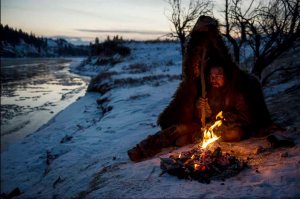 long, limited by the hours during which they could shoot. They raced the sun each day, and battled the stars at night. The only extra lighting they used was during the camp fire scene – there was lighting off-screen to compensate for the wind making the flame flicker in a distracting way. The natural light also forced him to abandon film for digital, using the Arri Alexa 65 digital camera with lenses from 12mm to 21mm because film “didn’t have the sensitivity to capture the scenes we were trying to shoot, especially the things we shot at dawn and dusk. I felt this was my divorce from film — finally.”
 The shoot was famously arduous but Lubezki insists it was worth it, citing a particular scene in the movie where Leo comes out of the freezing water, with his breath visible and lips blue, which wouldn’t have been possible without “We would never have gotten anything like that. And while natural light is very complex because it’s constantly changing — which can be a problem for continuity — it’s beautiful.”
 home top prize for Outstanding Directorial Achievement in Feature Film for his brilliant work on
  producers, that kind of thing, fixed costs that no matter what scene is cut or special effect is scrimped on will still be paid the same. The UPM gets tasked with the less glamourous crew, the “below-the-line” costs, contracting with gaffers, makeup artists, sound engineers, all the “little people” who turn up and work hard to actually turn good ideas into reality. Plus he or she will be negotiating deals for location, equipment, etc.
 sure everyone’s safe. The first assistant director (1AD) is directly responsible to the director and runs the floor or set; they have to accurately estimate how long it will take to film a scene – whether several pages will be shot quickly, or one emotional paragraph may take all day. The 1AD is the communicator on set: all directions to the rest of the crew from the director will run through him or her. The second assistant director (2AD) creates the call sheets and then makes sure that all the cast is ready to follow through,
  putting them through make-up and wardrobe. The call sheet tells cast and crew what scenes and script pages are being shot today, and where. They will provide exact start times (which rarely turn out to be all that exact), and addresses of shoot locations, and transportation arrangements so everyone can actually get there and maybe even park legally. It should also have contact info for the important crew, safety notes, maybe weather reports, sunrise\sunset times, and where to find the nearest hardware store when you inevitably need another extension cord. The second
 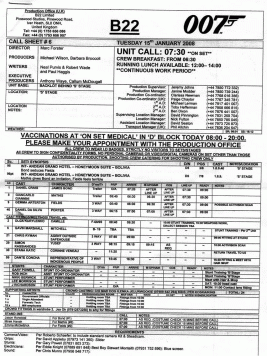 second assistant director (22AD) (yes, that’s their real title) comes on board when the production is big and\or complicated. You can be sure the 2AD is checking on Brad Pitt’s mustache while the 22AD is making sure there’s a dozen ladies in hoop skirts behind him, or a thousand extras in zombie makeup, or that all the parking meters are fed. This really frees up Alejandro Iñárritu to laze about in his director’s chair fantasizing about Leo’s frosty breath, or Wes Anderson to deliberate between Egyptian blue and Ultramarine, or Steven Spielberg to play another practical joke on Tom Hanks.
 I’m also crazy excited to tell you that Alex Garland won for Outstanding Directorial Achievement of a First-Time Feature Film Director. Recognize his name? He’s the man behind 2015’s break-out indie success and seriously one of my favourite films of the year,
 achievement. Thewlis worked under Martin Scorsese on The Age of Innocence as a DGA trainee. She worked on the Tupac Shakur movie Above the Rim as the key second assistant director and under director Jon Avnet as second second assistant director on Up Close & Personal and then spent a lot of years at Law & Order originally as Second Assistant Director and eventually First Assistant Director. Kudos to her, and may she be an inspiration and example of hard work to aspiring young film makers everywhere.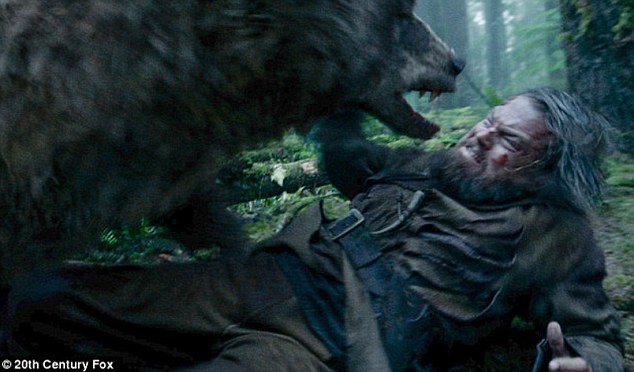


 ASSHOLES WATCHING MOVIES