Tag Archives: animated movies

OIAF: Psiconautas: The Forgotten Children

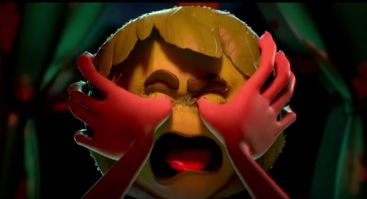
galeria_03_lPsiconautas finds beauty in unusual places: decimation, addiction, and poverty, to name a few. In a word, the art is stunning. It feels like a throwback in its hand-drawn aesthetic, and yet feels modern in subject matter and futuristic in its setting.

Taking place on an island populated by talking animals, Psiconautas immediately throws us into multiple animals’ stories with hardly any explanation and leaves it to us to reconcile the strange things we’re witnessing. galeria_05_lLike why a mouse’s stepfather is a human dressing up as a mouse, why her “fake brother” is a bulldog wearing a luchador mask, and why her bird boyfriend is possessed by horrific crows.

Psiconautas is completely captivating and keeps the viewer eagerly searching for answers to those questions and more. The answers that are provided make things even more confusing, but galeria_01_lin a good way. All of it has meaning, all of it is a blurry reflection of our society, from our proclivity to make trash to our struggles with addiction to police brutality. I left the theatre wanting to immediately watch Psiconautas again to see what other threads could be tied together.

Psiconautas is beautiful, haunting and fascinating. I highly recommend it for adults, but make no mistake, this movie is not for young kids. With that said, a childhood encounter with a horror movie seems to have led Tom Hanks to stardom, so maybe there’s something to that method!

If nothing else, you should see this movie so we can compare notes in the comment section. Psiconautas has won a plethora of awards so far, so hopefully it gets a wide release based on that, because this film deserves to be seen.


Ottawa International Animation Festival 2016: Louise en hiver

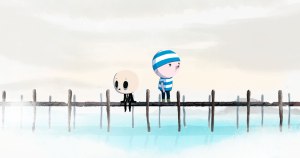
Louise values her peace and quiet so she barely even seems disappointed when she misses the last train of the season from the small seaside town where she likes to spend her summers. Through voiceover, she claims to be more annoyed than afraid to be left alone in this increasingly stormy abandoned town.

As I mentioned yesterday, I’m no good at describing animation but at least here I can tell you that the OIAF website praises Louise en hiver for its “beautiful pastel imagery”. I can also show you some pictures.

Louise may not be a people person but 9 months is a long time to spend by yourself. Plus, there’s the whole “no one seems to be looking for me” thing which can eat at you a bit, especially when left alone with your own thoughts. So, like Tom Hanks in Castaway, she needs someone to talk to. And with no other people or volleyballs around, a talking dog named Pepper will have to do.

Yes, the dog talks. Unlike in Castaway, where Hanks’ conversations with Wilson were largely one-sided, we see everything from Louise’s point of view. It’s not always easy following this story through the eyes of the occasionally confused and forgetful protagonist. Reality, fantasy, memories, and dreams are interwoven so beautifully that it isn’t always easy to tell which are which.

Louise en hiver is worth the trip into a lonely woman’s mind. It’s quite a beautiful film from its simple yet effective animation to its sad yet hopeful meditation on aging, memory, and looking back.

Here’s the trailer.

Ottawa International Animation Festival 2016: Window Horses

Young Canadian Rosie Ming has kept her interest in poetry a secret so her grandparents and best friend are shocked when she announces that she has been invited to a poetry festival in Iran. Though she can’t help wishing that the festival was in Paris instead, Rosie soon discovers that she has a lot to learn from her fellow poets from around the world about ancient Persian poetry and her own family history.

Of course, some of my favourite movies are animated but I am realizing lately how little I know about animation itself. I know very little about the different styles of animation and wouldn’t know how to go about describing the look of this film.

Luckily, I have some stills.


Window Horses is as much a story about multicultural identity as it is about family. Rosie was born and raised in Canada to a Chinese-Canadian mother and a Persian father. With her mother now deceased and her father now estranged, she knows very little about either family’s heritage. When asked about her father, she has only one thing to say “My father abandoned me when I was 7”. As she starts to realize that nearly every local she meets in Iran seems to know him, she is forced to revisit the oversimplified story she’s been telling herself about her father.

Yes, the resentments we hold on to, maybe especially when it comes to our own family, are more complex than we let on. We’ve seen this before in movies and I did find the family drama a little played out and predictable. Thankfully, Window Horses has a lot more to offer than just a mystery surrounding Rosie’s family. Window Horses works best when it shows us the transcendent power of art. Rosie spends a lot of the movie discovering Chinese and Iranian culture through poetry and barely even needs to speak a word of Mandarin or Farsi to relate to the words. German, Mandarin, French, and Farsi verses are all brought to life with some beautifully creative animation all without a single subtitle. It is the film’s most brilliant device by far.

Window Horses may drag a little when it relies too heavily on exposition  and voice actress Sandra Oh is badly miscast as Rosie but, for the most part, director Ann Marie Fleming has made quite a nice film. Its unique sense of humour and literally poetic animation more than make up for its any minor complains I might have.

Cloudy With A Chance of Meatballs

I’m at a wedding today, one I’m helping to coordinate, so I know the brides and I are all hoping that it won’t be cloudy, nor will there by any weird weather events. Blue skies and sunshine please.

I saw Up in theatres with my best friend Rachel in the spring of 2009. The previews included a trailer for a movie I’d never heard of before – Cloudy With a Chance of Meatballs. With our dorky 3D glasses on, the meatballs looked big and bad and only a glance between us was needed to establish that this is where we’d be when it came out in September of that year.

I did see Meatballs in theatres, with Sean. Rachel was dead by then. She died very suddenly on this day 7 years ago, the result of a motorcycle accident. She left behind a 9 year old daughter and was just a couple of weeks away from turning 30. She was buried in a sundress that I bought her. She was always older than me but now I’m older than she ever got to be. I’ve been without her for longer than I knew her, but her loss still smarts.

Meatballs was possibly the first movie I saw with Sean. He and I met just a month before Rachel died. He never knew her in life; they only “met” when he accompanied me to the hospital to say my goodbyes, but that swollen face and broken body weren’t her.

I’ve never been able to be objective about this movie. I like it. It has Mr. T. and that’s pretty objectively great. But it’s also a way to have one last date with the fabulous Miss Rachel. I never got to throw her that surprise birthday party, or be the maid of honour at her wedding. But I did see this movie, and I know she saw it with me.

When Marnie Was There

I haven’t a single bad thing to say about this movie, except it just didn’t speak to me. I’m supposed to like it; it’s Oscar-nominated from the Studio of Ghibli, which are all the credentials it needs. But it’s slow. Painfully slow at times.

Anna-and-Marnie-boatI feel guilty for not liking this, for failing to appreciate the beauty of a more hand-drawn aesthetic. The truth is, I’m just not comfortable with someone that looks too much like Sailor Moon.

And the plot, based on an English book (which I suppose explains the awkward tripping over of the name ‘Marnie’ with a Japanese accent), relies too heavily on a 12 year old’s sensibilities. I couldn’t relate. And I didn’t care to. There were definitely some visuals with a watercolour beauty to them, but the whole thing didn’t add up to the usual magic I’m used to from Studio Ghibli, and by the middle of the movie I was so bored by the thing I just wanted it to wrap up already. Does this make me a terrible person? Probably. Everyone else loves this movie. It’s just really not for me.

Ratchet And Clank

I was just saying that animated movies were very strong in 2016 – I loved The Little Prince, Zootopia, Kubo And The Two Strings…and likely many more. What I did not love, or even like, was Ratchet And Clank.

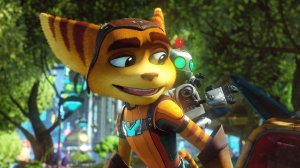
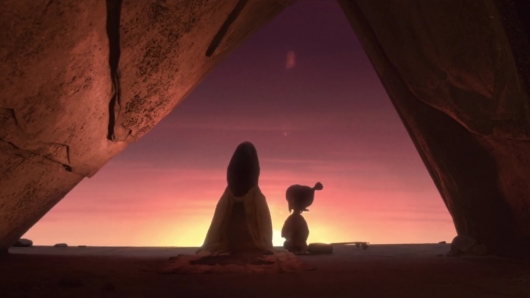
ratchet-and-clank-screen-06-ps4-eu-02jun15A cute nearly-puppy looking protagonist named Ratchet is “trying out” to join a team of alien super heroes, the Galactic Rangers. He’s not strong or fast, but he has “heart” and lots of failed inventions and a robot sidekick named Clank. Sounds promising on paper but it just wasn’t interesting in practice. Small children may make it through but even they’ll know there’s just better stuff out there. It does nothing to distinguish itself. It has an admirable message lost somewhere amid the chaos about the surprisingly thin line between heroes and villains, but it’s so obviously just going through the motions that it fails to inspire. Even my idle curiosity and need to kill an hour and a half weren’t fulfilled by this in any way. If it’s mediocre animation you’re after, try Kung Fu Panda #Whatever, or The Secret Life of Pets.
This movie is based on a video game I know nothing about, nor do I want to after this exposure. Ratchet and Clank, as far as I’m concerned, can go back to living underneath the rock I accidentally unearthed. Bye, Felicia.

Kubo And The Two Strings

A little dark, and a little melancholy for kids, but for me, near perfection.

Kubo is a little boy with a magical, ancient Japanese banjo. Well, technically the banjo wasn’t ancient at the time – he lives in ancient Japan. And the banjo isn’t actually a banjo, it’s a shamisen. When he plays his magical shamisen, his origami comes to life and helps him tell awesome stories about warriors and samurai. He’s busking, essentially, and the captivated crowd rewards him with a few coins – a good thing because he provides for his sick mother, who lives outside the village in a cave.  When she’s not in a trance, she’s adamant that Kubo always return before sundown. It was surprisingly sound advice from the mentally ill because THE ONE TIME he doesn’t, hell breaks loose. Ancient Japanese hell.

kubo-and-the-two-strings-530x298Turns out, Kubo’s grandfather is some sort of Moon God. Grandfather has already “stolen” one of Kubo’s eyes and wants to get his hands on the other – in blindness, his grandson can join him in immortality, ruling the sky. He sends his 2 creepy daughters to do the dirty work while his 3rd daughter, Kubo’s mom, struggles to protect him with what little magic she has left.

The movie is a grand adventure with more beauty in any random 30 seconds than The Secret Life of Pets has in its entire running time. As usual with Laika productions (they brought you Coraline), there are darker feelings at play, a sometimes ominous and foreboding tone unusual in a children’s movie, and yet the kids in the audience seemed to tolerate it better than they did Pete’s Dragon. It’s a glorious act of story-telling that feels like something genuinely passed down for generations. Every time Kubo picks up his shamisen, be prepared for some of the loveliest music you’ll hear at the movies. It sweeps you up into the magic of his origami, and the whole thing feels alive and vibrant, steeped in a culture filled with divine tradition.

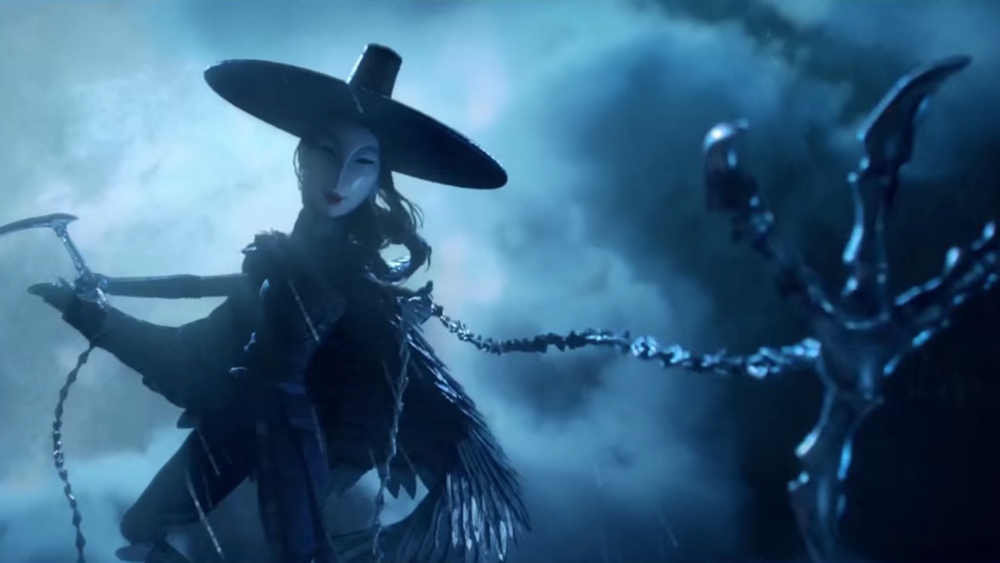
Kubo And The Two Strings is surprisingly well-balanced tonally, able to incorporate gags meant Kubo-and-the-Two-Strings-just for kids between bouts of horror, humour, and yes, tragedy. It’s quite brave, when you think of it. Suicide Squad pulled back on the Joker’s villainy, and Ben-Hur rewrote some of its savagery. This, a meticulously animated piece of art, has the backbone to trust children with some rather heavy themes. And it does it while also being the most visually arresting thing I’ve seen at the movies this year. It’s a spectacle, and a technical triumph. Having no wordly idea how they pulled some scenes off just adds to the magic. Laika is no stranger to Oscar nominations for animation, and is sure to earn another, but this movie demolishes even their own high bar. Laika doesn’t have the cachet of Pixar so politically, beating Finding Dory will be difficult. But the proof is on the big screen: it is undoubtedly the better film.

The Little Prince

A little girl has a bright future ahead of her. How do I know? She and her mother (Rachel McAdams) have her whole life planned out. A life plan so intense she’s more like her mother’s Senior VP than her daughter. Her mother’s best compliment: “You are going to make a wonderful grownup.”

But the crazy old man (Jeff Bridges) next door draws her out of her mature little shell with his fanciful inventions and his beautiful story-telling. His stories and drawings come to life in animation within the animation: the story of The Little Prince.

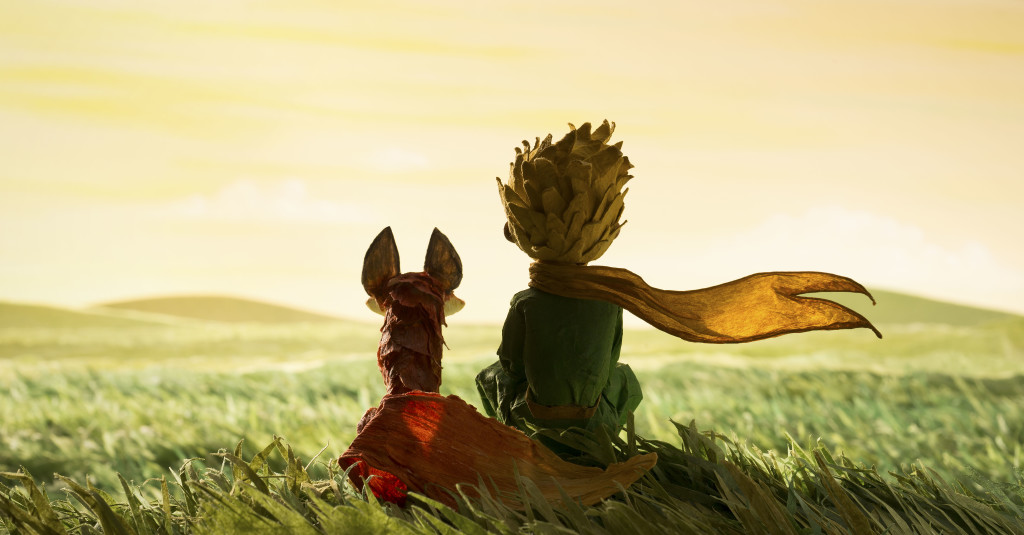
Growing up it was always Le Petit Prince to me, but even en anglais, the timeless story warms the heart. The main story, starring the little girl, and the crazy man’s story, starring the little prince, are distinguished with different styles of animation. The little girl is done in familiar CG style; the little prince is stop-motion, done not in clay but in paper. Both are lovely, 210b0b20-a7ab-11e5-88e2-828a3e695a05_1280x720but I confess a fondness for the nostalgia and simple loveliness of the latter.

The voice cast is incredible: Jeff Bridges, Paul Rudd, Albert Brooks, Marion Cotillard, Benicio Del Toro, and more. It’s a real testament to just how cherished the book is, around the world. The Little Prince is a sweet children’s book but it can be read and enjoyed by adults, with many layers of themes to interpret. The same goes for the movie, faithfully and lovingly adapted from its source.

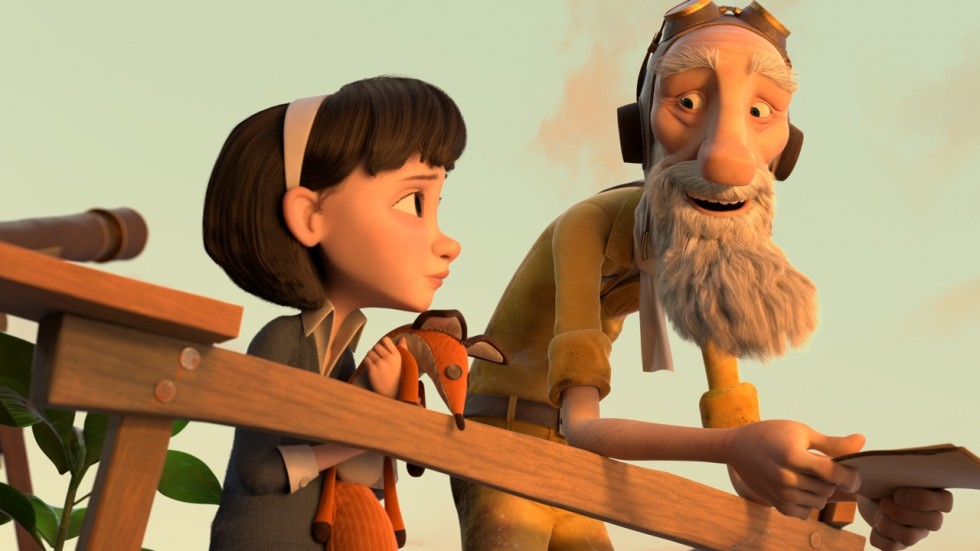
The little girl, too grown up for her own good, rediscovers childhood lp-garden-rgb-5kthrough friendship with the batty old guy next door. But anyone who knows the story knows that along with sweetness, there is also sorrow. The first half of the movie is all poetry and imagination. The second half falters a bit when it gets further away from Saint-Exupéry’s ideas and ideals. The movie is a little less fanciful than the novella, a little more down to earth. But The Little Prince has always been the stuff of dreams, too good, too ethereal for Earth. It’s still lovely though. It’s still one of the loveliest things I’ve seen all summer.


Sausage Party

This movie is surprisingly well-reviewed for something based on a pun gone wrong, and is poised to usurp Suicide Squad’s tenuous hold on the box office’s top spot.  But it’s probably the summer’s biggest disappointment for me.

It comes as a surprise to absolutely no one that Sausage Party is peppered with f-bombs and exploding with offensive material. The surprise is that I didn’t buy into it. I’m generally a cusser extraordinaire and have a tongue so salty it makes sailors blush and mumble “aw shucks.” But swearing should be unselfconscious whereas Sausage Party just feels so darn deliberate. Like it’s a 19 million dollar excuse to pack in every bad word Seth Rogen knows, and a few he just made up.

sausage party cabageThe basic premise is: what if your food had feelings? Like, every night when the grocery store closes, the food comes alive in almost exactly the same way the toys do in Toy Story. But in Toy Story, the worst thing we do is neglect our old toys. Worst case play with them too roughly. But we flipping eat food! And before we eat it, we torture it: we cut it, mash it, boil it up, set it on fire. At first the food is blissfully unaware of its weird relationship with us, but when they eventually find out it’s supermarket anarchy.

There are mostly two types of jokes in this movie:

  1. Racial stereotypes. Kosher food, halal food, ethnic food. The Canadian beer that apologizes constantly. The bagel and the lavash are sworn enemies. A little homophobia on the side just to keep things fresh.
  2. Graphic sex. As graphic as a juice box can get, anyway. I mean, the whole plot revolves around a bun (Kristen Wiig) and a sausage (Seth Rogen) who can’t wait to couple. There’s a character who is literally a douche (Nick Kroll). Did you ever want to see a sausage penetrate 3 types of bread products at once? I mean, this is the kind of thing that only comes around once, maybe twice in your life. So get it while it’s hot.

The problem with rude comedy is that if it’s all rude all the time, then rude is the new normal and it all becomes dull pretty quick. I prefer my food orgies to be me at an all you can eat buffet in Vegas, with unlimited mimosas, is what I’m saying.

But even critics, who found Suicide Squad so joyless, are on board for this profanity-filled49033034.cached sausage fest. And of course I cracked a few laughs. I absolutely did. But mostly I didn’t enjoy myself much. I feel too guilty to laugh at something so obvious and offensive as a bottle of “fire water” with a Native American accent (provided by white guy Bill Hader). And while that might be the most culturally inappropriate, it’s not the hardest to watch. Not with a used condom sloppily lamenting its fate, or toilet paper experiencing PTSD.

This should have been a movie right up my bum. Er, alley. Right up my alley. But I guess I’m just too much of an old prude to appreciate it. For me it’s a rare miss from Seth Rogen but I guess my tolerance for glutinous cunnilingus just isn’t what it used to be.

Seoul Station

Standing outside Seoul’s central subway station, two young men are having a nice liberal chat. “I think there should be universal welfare,” one says  to the other. As if on cue, an old homeless man who is covered in blood comes staggering by. Concerned, one of the two men run to check on him but is quickly recoils from the smell. “I thought he was bleeding but he was just homeless,” he tells his friend.

So begins Seoul station, the first Korean animated zombie movie that I’ve ever seen. Though I was unsure of what to expect at first, it became immediately clear that this hilarious yet disturbing picture would have a lot more to say than the average episode of The Walking Dead. Because acclaimed director Sang-ho Yeon’s version of the zombie apocalypse seems to start with those who rely on the Seoul Station subway tunnels as a place to sleep, no one really seems to care at first and the infection is allowed to spread quickly. Unlike most zombie movies I’ve seen, we see the fall of civilization entirely through the eyes of pimps, prostitutes, and the homeless.

There aren’t many Zombie Kills of the Week in Seoul Station but the animation alone- surreal enough to be unique but realistic enough to keep it grounded when it counts- makes it stand out. As much as it has to say about the struggles of Seoul’s marginalized, this is not a movie without it’s guilty pleasures. There are enough close calls, creatively claustrophobic suspense, and hilariously over-the-top voice acting to work as a fun popcorn movie. It’s only unsettling once you let it sink in.