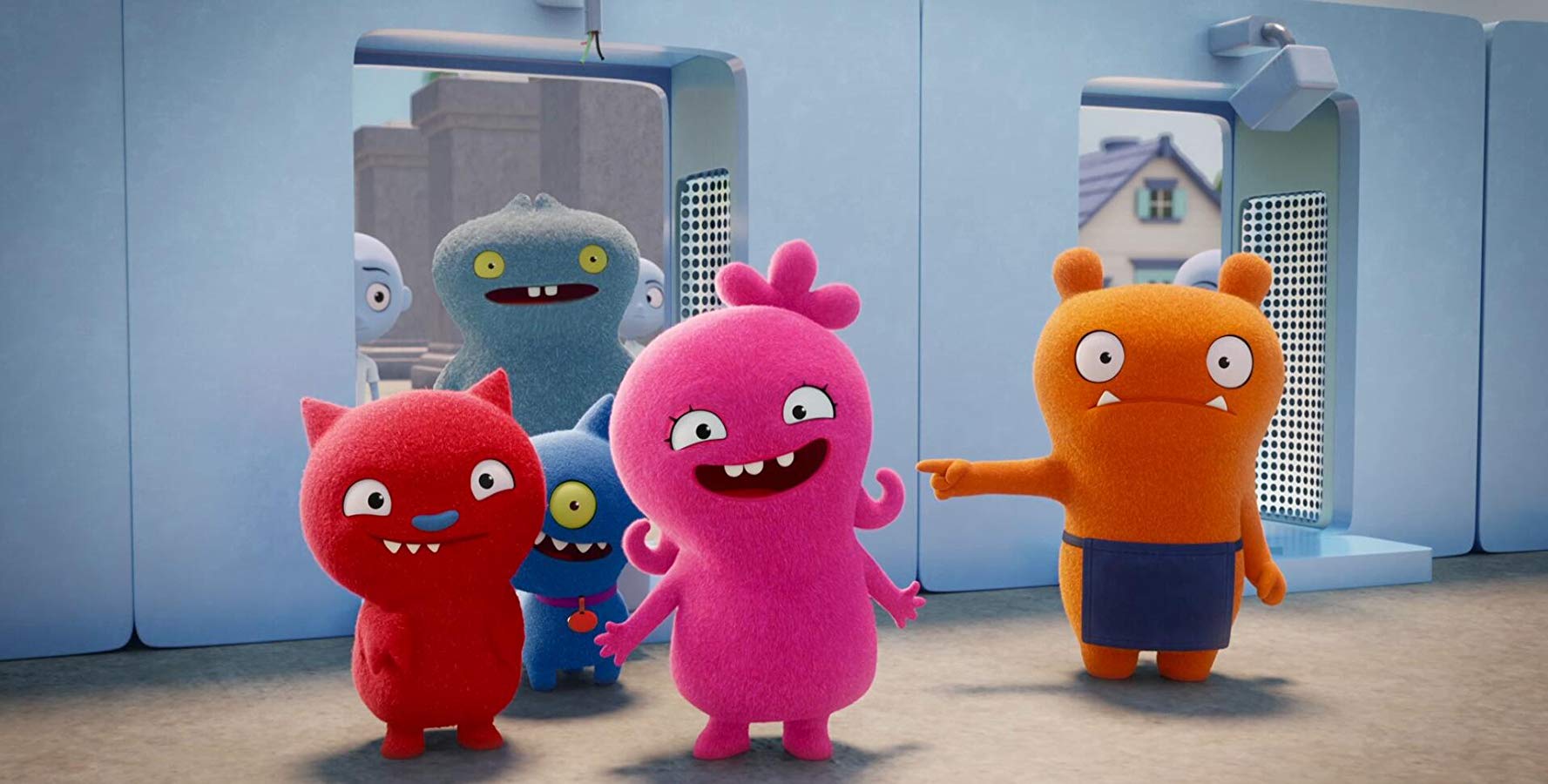
Uglyville is home to some fairly upbeat if misshapen dolls – they’re missing eyes or teeth or limbs – but most seem content. All but one doll, Moxy (Kelly Clarkson), who dreams of going to the “big world” and living with a child who will love her. She gets together a band of misfits (truly the only kind of band that CAN be assembled on this island of misfit toys by any other name), including Lucky Bat (Leehom Wang), Wage (Wanda Sykes), Babo (Gabriel Iglesias) and Uglydog (Pitbull), and together they stumble upon the Institute of Perfection, the last stop between the best dolls and their forever homes.
The Institute of Perfection is run by Lou (Nick Jonas), an alarmingly blonde-haired, blue eyed bastion of excellence. He gets all the beautiful dolls ready to run the gauntlet, the final hurdle to be cleared before being placed in a home. Moxy and gang find these perfect dolls to be outwardly pretty but inwardly ugly – they soundly and definitively and in many cases quite cruelly reject Moxy and friends for looking different.
From the very first frame, you know where this film is headed. We’re teaching kids to embrace differences and to accept imperfections. Sounds nice. But this movie takes an uncomfortably long time getting there and goes through too many catchy songs about the importance of beauty on the way. It makes you really start to sweat all the Hitler references.
In the end, the Uglydolls meet a perfect doll named Mandy (Janelle Monae) who (you may want to sit down for this) wears glasses. And through that hideous physical defect they’re able to bond and together they realize that not only is being weird okay, maybe it’s even possible for a kid to love you that way, in all your freaky glory.
UglyDolls plays like a watered down Toy Story, appealing to only the very youngest of children (my 5 year old and 7 year old nephews preferred to pick up live-action Dumbo over this for a recent car trip, but it was Sean’s recommendation of Shazam that really impressed, which meant we just spent 10 days sequestered in a cottage with kids who couldn’t go more than 5 minutes without singing “Lightning with my hands! Lightning with my hands!” and requesting this new band they’ve just been introduced to through the movie – Queen). Its fuzzy feltness and bouquet of primary colours should serve as a warning that this movie is nothing but saccharine and if you have any other requirements from a film then this one is not for you.
June and her mother (Jennifer Garner) have expansive imaginations. Together they created a pretend theme park called Wonderland, a special place that peopled by June’s favourite toys: a warthog named Greta (Mila Kunis), a hedgehog named Steve (John Oliver) a blue bear named Boomer (Ken Hudson Campbell), and brought alive by the pictures and blueprints that June and her mother draw together, wallpapering June’s room with their designs.
But then June’s mother gets sick, and June can’t bring herself to play their favourite game without her. June’s dad (Matthew Broderick) thinks it’s a good idea that she spends her summer at math camp, but halfway there, she gets cold feet and heads back. But she gets so turned around she ends up in – Wonderland? But how is the amusement park in her imagination a real place? And how are her toys talking, breathing characters?
One thing’s for sure: Greta the pink warthog and friends feel abandoned by the “voices” who inspired their adventures and brought life to their home. June realizes that she’s been so afraid to lose her mom that she’s somehow lost herself. But in the meantime, saving Wonderland presents itself as a real thing. We don’t know how June has wandered into the actual iteration of the park, but she’s there, and must contend with the consequences of her neglect. Luckily, as the inventor of Wonderland, there’s no one better to fix it up and save it from the darkness.
It’s hard to make a movie with colourful, talking stuffed animals in a fanciful amusement park address grief, so the script does not, not in any meaningful or profound way, even though grief is the catalyst for June’s neglect, and her need for escape, and for pretty much 80 of the film’s 85 minute runtime. It also talks about the nature of play, and what happens when you shut down an integral part of yourself, but without really saying anything about it. The movie is really content just to a diversion for kids than to be something with a moving story or a plot that makes sense. But it’s fun and full of energy and perfectly likable if you’re 5 and think bendy straws are the shit.
Sidebar: it’s shocking how many animated kids movies have erection jokes in them. Like, it’s pretty much all of them. This one’s no exception. In fact, it’s not exceptional in any way.
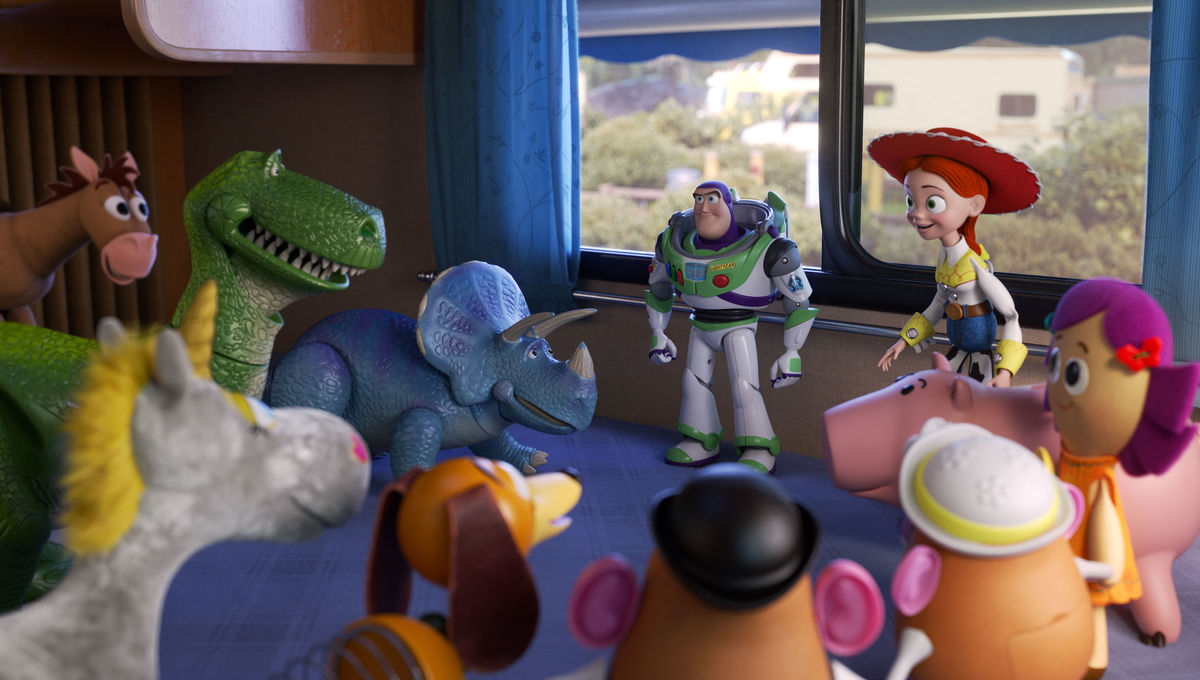
Toy Story movies have always been darker than people give them credit for. In the first film, Buzz believes himself to be a hero stranded in a hostile environment. Turns out, he’s just a toy – everything he thought was real is a lie. He exists to be someone’s plaything, and Woody and the gang convince him that there’s dignity and even nobility in this fate, even if it strikes you and I as a kind of slavery, to exist merely at someone else’s whim, until you’re all used up, and then you’re disposed of. What a dizzying and disorienting concept; it’s no wonder Buzz literally gets depressed when he learns his true nature. In the second film, Woody literally contemplates his own mortality. His benevolent master Andy will one day tire of him, and worthless, he’ll be discarded. His friend Jessie really hammers this home with a heart-wrenching flashback of being abandoned at the side of a road by someone who once claimed to love her. Ultimately, Woody chooses to live as a toy rather than achieving a sort of immortality as a collector’s item; he’ll have a short but meaningful life rather than a long but insignificant one. What a choice. In the third film, Woody and the gang face the consequence of this choice: Andy goes off to college, and eventual abandonment becomes actual abandonment. Not only that, but the best friends are being separated, with Woody being doomed to spend his twilight years alone on Andy’s shelf, no longer a useful, loved plaything, but a mere relic of his past. Meanwhile, his friends are going to molder up in the dark oblivion of an attic. What cold comfort. Luckily, the toys are instead given to a little girl named Bonnie to live out a happy afterlife. Cue the fourth film.
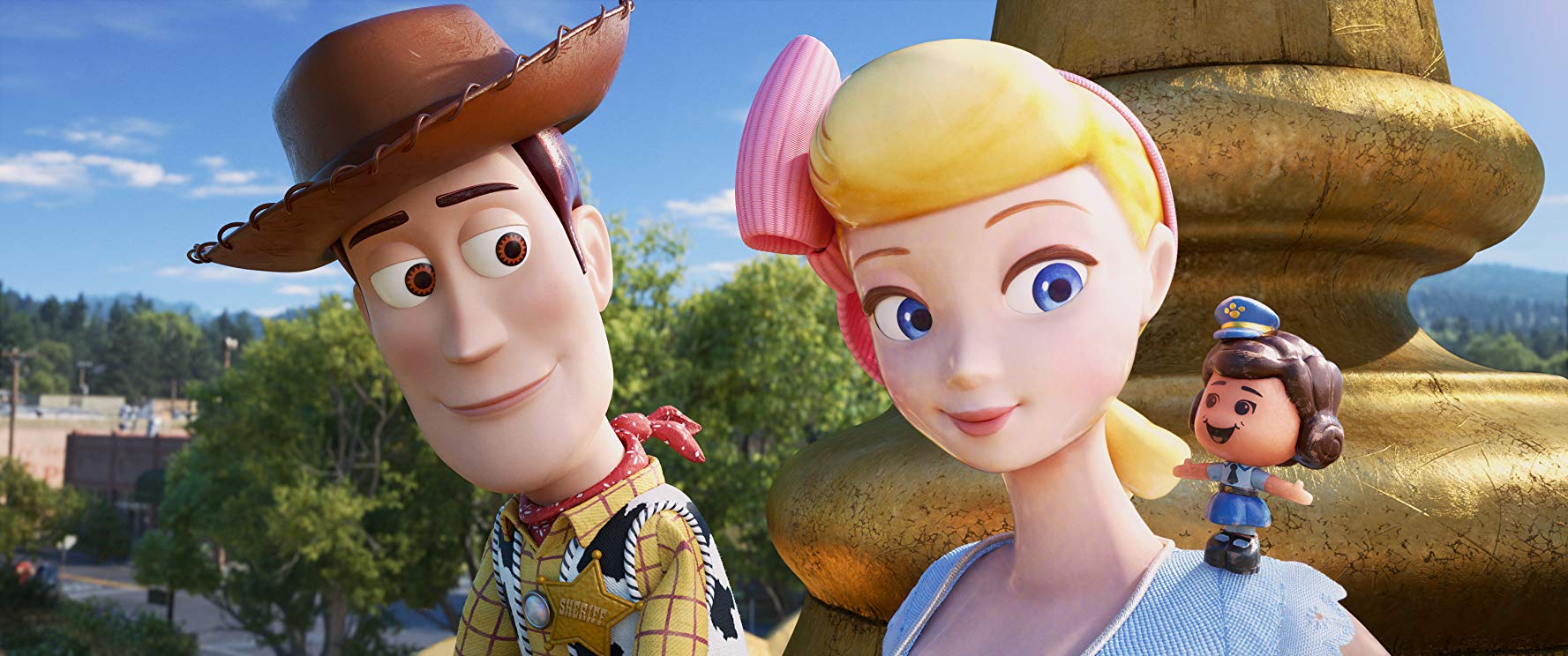
Woody (Tom Hanks) and pals are having a grand old time being played with by Bonnie. Sure, the little girl prefers cowgirl Jessie (Joan Cusack) over cowboy Woody just a tad, but still, it’s a good life, no complaints. Bonnie is starting kindergarten soon, and at an orientation session, she shows some initiative (fancy term for not following instructions) and makes herself a toy out of trash rather than a pencil cup out of art supplies. She brings her cherished new friend home and gives him a place of honour among toys. “Forky” is no more than a spork, some googly eyes, a pipe cleaner, and a broken popsicle stick, but he’s Bonnie’s new best friend, so Woody vows to keep them together at all costs. That’s going to be a problematic promise because a) Bonnie’s family is embarking on an RV roadtrip and b) Forky has some suicidal tendencies. Forky was never supposed to be a toy, you see. He’s trash. He knows he’s trash. Rather simple-minded and fairly spooked, all he wants more than anything in the world is to be trash once again, which is where he keeps launching himself. Woody keeps dutifully fishing him out, but one of these times he’s bound to get thrown out for good. It’s on one such rescue mission that Woody encounters an antique store where he thinks he may find an old friend/lost toy/love interest, Bo Peep (Annie Potts). We haven’t seen Bo Peep since the second movie, which was 20 years ago. Where has she been this whole time?
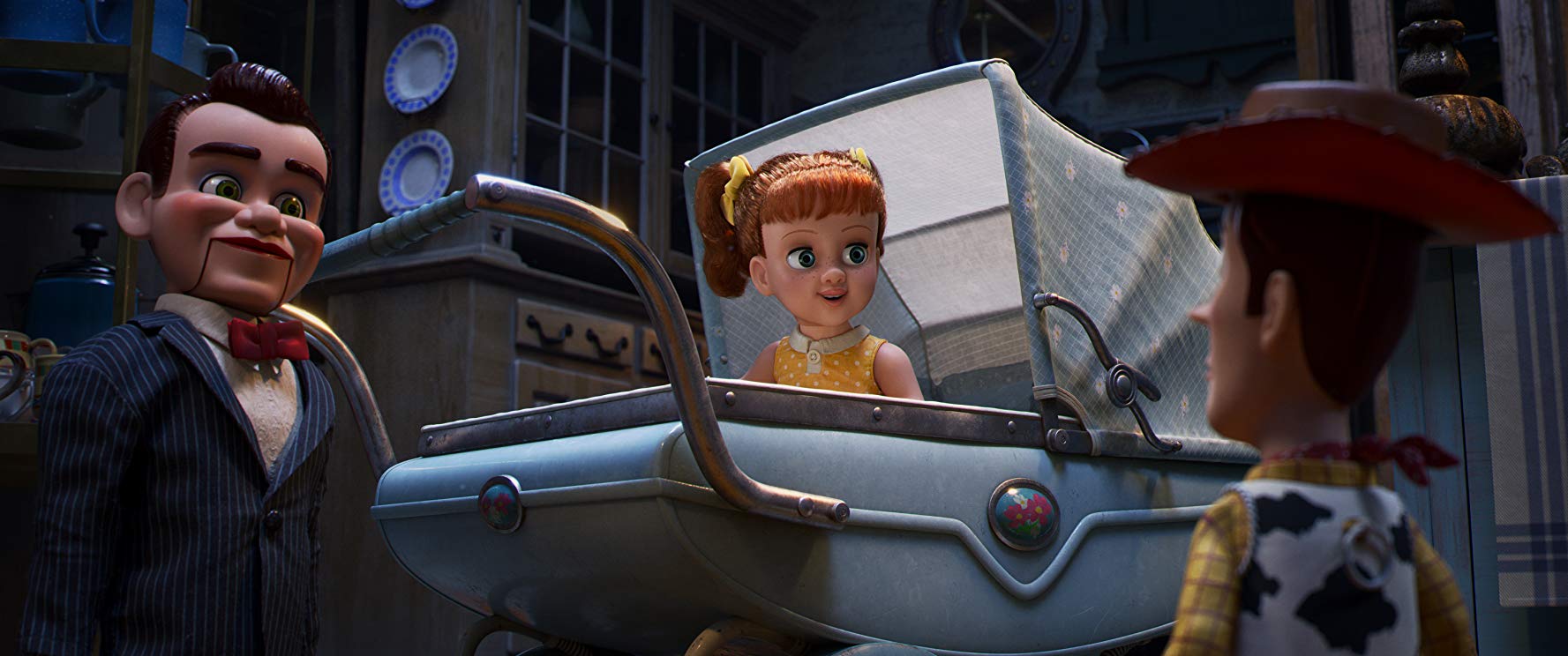
Bo’s been living free and wild as a toy with no owner. That’s essentially Woody’s worst nightmare but she makes it sound rather grand. Besides, Woody has a new worst nightmare: another antique store occupant, vintage doll Gabby Gabby wants his voicebox and she’s prepared to rip the stuffing out of his chest to get it. Yikes!
Structurallly, this fourth installment plays out a lot like those that came before it. There’s always some kind of separation, and then some kind of secondary rescue mission when the first one fails. These toys sure do get themselves into some high-stakes situations on an alarming basis!
It’s wonderful to see the cast of old friends: Bo looks shinier than ever, and Jessie’s hair has never looked yarnier. The animation on these films started out innovative and has only improved. And new friends are a hoot and a half: Forky (Tony Hale) is a walking, talking existential crisis, but the rendering of his pipe cleaner is photo realistic. Gabby Gabby (Christina Hendricks) was a dollie defective right out of the box, and her resulting failure to bond has really warped her. Duke Caboom (Keanu Reeves) is a Canadian daredevil who never lived up to his promise; he is haunted by his past, and by the kid who resoundingly rejected him. Ducky (Keegan-Michael Key) and Bunny (Jordan Peele) are two brightly-coloured stuffed animals attached at the hands. They’ve been unredeemed carnival prizes for far too long, and are a little unhinged. Officer Giggle McDimples, Giggs for short (Ally Maki), may look precious and pocket-sized, but she’s a force to be reckoned with, and fiercely protective of her road warrior partner, Bo Peep. All these new toys will come together in surprising ways to give our pal Woody one last big adventure.
Coming full circle with the original film in the franchise which was released 24 years ago, Toy Story 4 has Woody once again paired with a toy who does not believe himself to be a toy. Woody’s experiences with Andy, and now with Bonnie, position him to a real advocate for finding and fulfilling one’s purpose and embracing one’s destiny. Heartwarming and heartbreaking in almost equal measure (I cried twice before the opening credits were over, and then alllllll the way home), Toy Story 4 more than justifies its existence. But after the perfect send-off in #3, is #4 a necessary or worthy addition? As much as I looked forward to connecting with these characters again, I surprise myself by saying no. Toy Story 4 is a good movie, an entertaining one, a very sweet one, but I can’t help but wish they’d left it at a trilogy so that we could have one perfect, shiny thing in our lives.
Time and again, we have been told that a toy’s only intrinsic value is to be useful. And when that toy ceases to be useful – either it gets broken, or a kid stops playing with it – well, that toy has met the end of its life. Yikes. Woody and friends have occasionally had the chance to grab at immortality but have always convinced themselves that to be Andy’s toy is the highest possible achievement. There is no better thing, therefore it is okay to accept the eventual certainty of death. One day, Andy WILL grow up, will leave for college, will leave them behind.
That day has come.
Andy is indeed off to college. Toy Story 3 was released in 2010, 15 years after the first one, so by any accurate count, Woody and the gang have had some bonus years. But their luck has run out. Andy is packing up his room – putting aside a few things to store in his mother’s attic, a few essentials to bring along with him, and the rest will be marked for garbage. Andy’s sentimental side has him setting aside Woody for college, and bagging the rest of his old pals for storage, but a misunderstanding leads both his mother and the toys themselves to think that they’re meant for the trash. The toys manage to save themselves from the metallic maw of the garbage truck, and they throw themselves into a donation pile destined for Sunnyside Daycare.
The toys are sad to leave Andy, but thrilled that they might once again be played with. Until now, the toys have spent their lives caring solely for Andy, wanting nothing but his happiness. Their own needs have occasionally gone unmet in this quest, especially in these last few years, with Andy the teenager no longer having time for them. The toys, and Woody in particular, have often seemed parental in their concern for him, and in fact, with Andy’s dad curiously absent and unremarked upon, Woody seems to have stepped into that of father figure. But parents too must say goodbye to their children eventually, and when they grow to become useless, they too will be placed in an institution. The toys are optimistic about the daycare centre, but it’s easy to read it as relegation to retirement living, being put out to pasture (Buzz even gets lobotomized, like a dementia patient). There’s always been this double read to Toy Story, one that often leaves us choked up. Thanks a lot, internet. I thought the well had finally run dry, and now I’m flooding my keyboard with tears.
But that’s not even the sad part! Toy Story 3’s genius has the toys not just facing oblivion and meaninglessness without a kid to serve, but it has them facing actual death. When the daycare turns out to be a pretty awful, tyrannical living situation, they find themselves embracing death. This is possibly this decade’s most traumatic and touching scene: with death mere moments away, the toys stop their futile efforts to save themselves, and hold hands to face it bravely together. Luckily, Pixar thinks better of killing off their revered heroes, and they do get a last minute reprieve and a second chance at life with Bonnie, a little girl just down the street from Andy. Even Woody, who was meant to accompany Andy to college, gets reassigned, and frankly, it’s with a sigh of relief that we find he will remain with his friends. Because for me at least, it wasn’t actually death that seemed the worst of it, it was thinking of Woody and Buzz, best buds and life partners, being separated in their twilight years. Is anyone not thinking of their grandparents, and who will die first, leaving the other to face those bleak years alone?
Toy Story 3 improves upon its predecessors in my ways. In 11 years, the animation has of course improved by big heaping gobs. In the first film, we briefly see a teddy bear that’s been relegated to the shelf; they chose not to make him part of the gang because fur was just too hard to get right. In this film, Lotso the bear is made a proper villain, and he looks glorious. Not only are the colours and textures perfect, but the animators find ways to show proper wear and tear on the toys as well. The animation is vivid and astonishing. The expressions on the toys’ faces are often so realistic that you have to pinch yourself to remember it’s just a cartoon (Woody has 229 animation points of movement in his face alone). In Toy Story 3, the Pixar animators are fearless. Whereas before they struggled to get clothes right, in this film they embrace them, with Ken making over 20 costume changes alone (and all of them fabulous). Hair swings. Fibers are differentiated. But they’re not just improving, they’re innovating. Believe it or not, in this film, the real challenge was the trash bag. They have properties that apparently you and I take for granted, but the animators truly struggled with.
But we don’t keep coming back to this franchise for the richly drawn cartoons, we come back because these characters are our friends, and the excellent story-writing has made us care. And boy did we line up in droves to see this film, even if it had been more than a decade since the last installment: it was the first animated film to make a billion dollars worldwide, which it did in just over 2 months at the box office. It was also one of only 3 animated films to score an Oscar nomination for Best Picture (Beauty and the Beast and Up were the other 2), and it did it without any of its predecessors being nominated. Toy Story has continued to surprise fans because it actually feels that each sequel is better than the last, while Hollywood of course has led us to expect exactly the opposite. Although, it should be noted: while the first and second films both had 100% ratings on Spoiled Red Fruit, this one had a mere 99.
If the nostalgia attached to vintage toys and TV shows and lunchboxes isn’t enough for you, I find it kind of neat that Toy Story has managed to keep the same guy, John Morris, as Andy’s voice for its entire run (there was an 11 year gap between this film and the one before it – the producers had no idea if adult Morris would at all be suitable, but they called him up and his voicemail convinced them on the spot). And Laurie Metcalf as his mom; Roseanne was still on network TV when the first film premiered, and now I suppose it’s kind of on again. Of course, we’ve lost some voice actors along the way: Jim Varney (Slinky) was replaced by his friend Blake Clark. And Don Rickles (Mr. Potato Head) will appear in the latest film via archival audio. But we’ve also seen some great additions. Toy Story 3 introduces Ned Beatty (Lotso), Michael Keaton (Ken), Jodi Benson (Barbie – but most famous as the voice of Ariel, of course), Timothy Dalton (Mr. Pricklepants), Kristen Schaal (Trixie), Bonnie Hunt (Dolly), and the list goes on. Toy Story 3 has over 300 characters, which is a lot for any movie, never mind one in which each needs to be rendered from scratch!
Toy Story 3 earned a place in our hearts with scenes that register both pleasure and pain – bittersweet, like life. It taps into our primal fears (uselessness, loneliness, death) but ends with a hopeful note. Toy Story 3 was the perfect way to end a beloved franchise: Andy says goodbye to his toys, and so do we. We know they’re safe and happy in their after(Andy)life, with the final scene panning up into white fluffy cloud, reminiscent of Andy’s wallpaper, but also a sure symbol of heaven. But this franchise has again proved irresistible and Disney-Pixar just couldn’t stay away: a fourth installment hits theatres this weekend, so if you’re curious what life has been like for the toys in their new home, you’re in luck. Just pray that this one holds up to the rest.
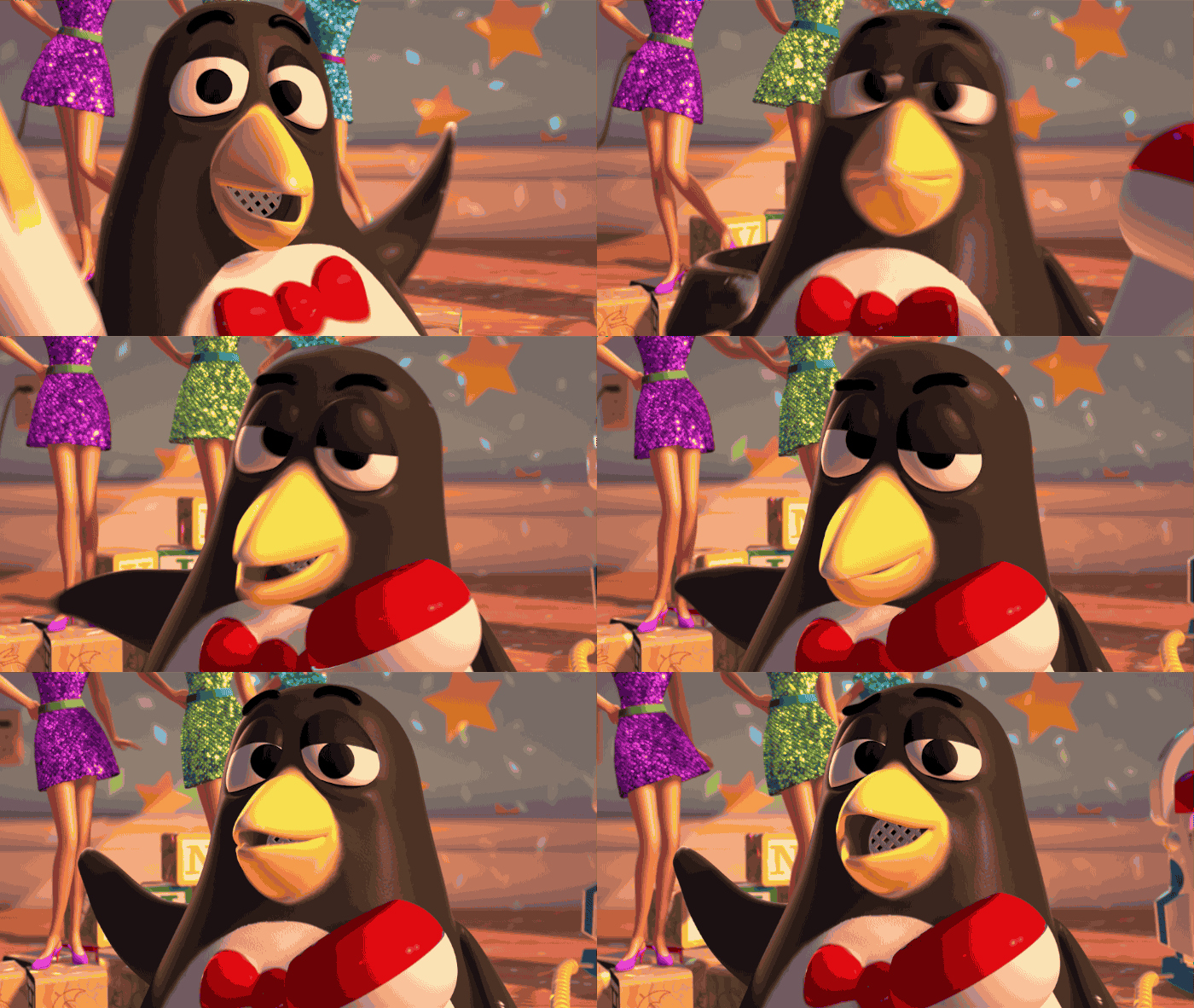
Minutes from departing for cowboy camp, Woody (Tom Hanks) suffers a rip to his arm seam that shelves him. Up there, in the dusty recesses of Andy’s room, Woody has an existential crisis. If he is a broken toy, what value does he have? Is he to be forgotten forever? Has his time as Andy’s toy come to an end? It doesn’t help when he meets an old friend up there, Wheezy the penguin, who was shelved months ago due to a broken squeaker. Even worse, an impending yard sale is a serious threat to all and any toys who may not have been recently played with – especially when a declutter-happy mom (Laurie Metcalf) is allowed to make cuts while Andy’s still at camp.
Woody gets a little too close to the yard sale and an eagle-eyed toy collector, Al, from Al’s Toy Barn (Wayne Knight), refuses to take no for an answer. He steals Woody, to the toys’ horror. Turns out, Woody is the valuable central piece in a collector’s set of retro toys. Woody meets the other toys in the set: yodeling cowgirl Jessie (Joan Cusack), Woody’s sidekick and noble steed, Bullseye, and the prospector, Stinky Pete (Kelsey Grammer). True to his nature, Woody is at first concerned with returning to Andy, but as he contemplates his fate as the broken toy of a growing boy versus the intoxication of a full restoration by Al in order to be sold to a toy collector in Japan, he can’t help but weigh his options. And his new friends have a vested interest in Woody’s sticking with them: without him to complete their set, they’ll go back into storage. Without him, they’re worthless.
I moaned on and on about how cleverly the characters were built in the last movie, and once again, I can’t help but admire what they’ve done with the new toys. Jessie wants very much to convince Woody to stay, but as a former toy herself, she remembers the heady feeling of being someone’s beloved. Pete, on the other hand, is mint in the box. He’s never been played with. Together they sow the seeds of doubt.
But if the first Toy Story was a buddy comedy of sorts, all of the films in the franchise are a testament to friendship. Woody’s friends at home once again launch a rescue mission, and it’s adorable the lengths they’ll go to in order to reunite their friend with his owner. But will Woody go?
At its heart, this film is once again more contemplative and nihilistic than your typical children’s movie. Heck, than most movies, period. Being loved by a child is the thing that gives a toy’s life meaning. But accepting that means that one day you will be rendered useless, which is worse than death. It means a brief period of being adored followed by an eternity of nothingness. But this toy museum in Japan offers Woody another option: immortality. He may not be loved by anyone, but he’ll be appreciated, not forgotten. And Jessie really drives that home with her heart breaking flashback wherein she remembers being loved, and then being abandoned. Because all children grow up, and all toys are eventually discarded.
So yeah, there are some dark ass themes in this movie, but they’re told with boldly coloured characters that make the whole thing just so gosh darned palatable. Woody is still the rootinest, tootinest cowpoke we know, but there’s an edge to him, a darkness. Woody’s been through some shit. Is there a single soul who watched this movie who didn’t, at least for a split second, experience dread over the treatment and neglect of their own childhood friends? I wager there is not.
The first Toy Story was ground-breaking in its animation, but this sequel, which came out just 4 years later in 1999, is already lightyears beyond it. They’re better at animating hair; Andy’s mom has her hair down in this film whereas she had to keep it in a ponytail during the first because of animation limitations. Everything’s gone up a notch. Bo Peep, who Andy uses as a toy, is actually a detachable porcelain figurine who belongs on his little sister’s lamp. In this movie, we can actually SEE that she’s porcelain; she has a particular sheen to her that the plastic toys do not. Pixar was motivated to keep its reputation as an innovator, so they didn’t just recycle stuff from the first film, they went in and upgraded character models, created new locations, and utilized more complicated camera shots that weren’t possible in the first. But they were careful not to let the look evolve too much from the first, wanting to keep the films looking cohesive. Perhaps their greatest technical achievement was up on that dusty shelf where a broken Woody reunites with Wheezy the Penguin. Turns out, dust motes are frustratingly complex to animate. Pixar animated 2 million of them – a major feat since this sequel was originally planned as a direct-to-video release which got bumped up at the last minute, leaving animators scrambling, and fully a third of them with some sort of repetitive strain injury (like carpel tunnel) by the time animation was complete. In a perfect world, making movies wouldn’t result in injuries, but this isn’t a perfect world. It is, however, a perfect sequel. A perfect movie, in fact. I wouldn’t dare tell anyone their injuries were “worth it” but Toy Story 2 achieves even more than its predecessor. It capitalizes on what made the first film great but it doesn’t recycle its success. The story works harder, the characters dig deeper. Though the toys are often out of their element, we are firmly in their universe, a universe that is clever and expansive and shockingly complete.
Pixar establishes itself as a studio that animates adventures that kids will love but writes stories that speak directly to the adults in the audience. It even has an erection joke that’s cloaked in Pixar’s special camouflage – obvious to adults, unnoticed by kids. That’s a rare and unique talent from a studio that keeps the boundaries on what we’ve come to expect from an animated film.
You can blame John Wick for this review. As the lights were dimming in our theatre I suddenly thought – should I have rewatched the previous films? The answer was yes, but I hadn’t. I am a learner of lessons. More or less. Occasionally. When the lesson means watching movies instead of doing work. I did rewatch the incredibly complex The Secret Life of Pets in order to fully appreciate the nuances of its sequel. Now I shall do the same for a much better franchise of movies, one that has more than earned a spot on this site anyway – Toy Story.
As you can likely tell from the title, I was taken aback by the year of its release. Intellectually I probably could have told you the year, but emotionally I just wasn’t prepared to face the consequences. This movie is dang near 25 years old. I was a kid when it came out and don’t remember if I saw it at the cinema. In fact, I don’t remember seeing it for the first time at all, which is strange for such a defining moment in animation (and I’m sure I called it such when I reviewed it on the playground).
Toy Story introduces us to a little boy named Andy and his most beloved toy, a cowboy with a pull-string and a snake in his boot but no gun in his holster named Woody. Woody is the natural leader of Andy’s toys, of which there are many: an etch-a-sketch, a Mr. Potato Head, a dinosaur named Rex, a slinky dog, Little Bo Peep, a pig-shaped piggy bank named Hamm, green army guys galore. But Woody is Andy’s absolute favouritest toy, and we see them at play in Andy’s cloud-wallpapered room, and tucked into bed together at night, under a Sheriff Woody duvet. But Andy’s birthday brings a plethora of new toys as birthdays often do, but only one toy competes for Andy’s prime affection: a space ranger named Buzz Lightyear. The interesting thing about Buzz, other than his quest to save the universe from Emperor Zurg, is that Buzz doesn’t know he’s a toy. He believes he’s the actual hero, and that the galaxy depends on him.
Woody, who up until now has assured all the other toys that just being Andy’s toy is an honour, is of course insanely jealous. And when he is kinda sorta responsible for Buzz “falling” out a window into the sadistic neighbour’s yard, the other toys are naturally upset with their old pal Woody and mount a rescue mission for new friend Buzz. In actuality, Buzz has all but saved himself, but our two heroes end up outside, essentially “lost toys” in the world, and they’ll have to rely on each other to get home safely. Andy’s family is moving in just 2 days so there’s no time to waste!
Toy Story was the first animated film to earn an Oscar nomination for its screenplay, and it’s well-deserved [It lost to The Usual Suspects. It also lost best original musical or comedy score to Pocahontas. There was no best animated film category in 1995, that didn’t happen until 2002, but John Lasseter was given a special achievement Oscar to commemorate the film’s ground-breaking success. Those are pretty rare; the only other one handed out in the past 25 years was in 2017 to Alejandro Gonzalez Inarritu for his contribution to VR film Flesh and Sand.]
The characters are wonderful because the toys all manage to feel timeless. Buzz and Woody are created especially for the film and each is meant to be a character on a hit TV show (though Woody seems to be a relic, perhaps a toy handed down from Andy’s mom or dad). Buzz is newer, all plastic and flashing lights and fancy buttons compared to Woody’s stuffing and low-fi technology. But Andy’s other toys may be more recognizable. In fact, slinky dogs and potato heads and telephones saw a resurgence in popularity after each of the Toy Story films were released. The wonderful voice actors of course go a long way to help bring these toys to life. Tom Hanks (Woody) was drawn to the project because he too had as a child wondered what his toys were up to when he wasn’t looking. Tim Allen (Buzz) was drawn because his comedy idol, Chevy Chase, had been offered the role and turned it down (so had Billy Crystal, who was wise enough to regret it – when Lasseter came calling again, for 2001’s Monsters Inc, Crystal said yes before Lasseter got a single word out). Hanks recorded his lines in the early 90s, while filming Sleepless in Seattle and A League of Their Own – he wanted the voicework wrapped up before he started in on Philadelphia or Forrest Gump as he felt he’d be in the wrong frame of mind. Little Bo Peep is voiced by Annie Potts, but Bo almost didn’t make the film. Initially, Pixar had planned for her to be a Barbie, but Mattel was sure this movie would be a disaster and declined the role, rather fooolishly in hindsight. Similarly, Pixar was not able to use G.I. Joe’s name either; they rewrote the character as ‘Combat Carl.’ Rex the dinosaur, voiced to perfection by Wallace Shawn, is a particular favourite of mine because the idea of a neurotic dinosaur who suffers from self-esteem issues and extreme anxiety turns out to be a whole lotta fun. He’s got an inferiority complex and doesn’t do well with conflict, at odds with him being the biggest of the toys, and depicting a classically scary character. Hamm the piggy bank is voiced by Pixar fixture John Ratzenberger. He’s a board game enthusiast and seems to know the most about the outside world. His frequent board game opponent and best friend is Mr. Potato Head (Don Rickles), who covers his loneliness with sarcastic wise-cracking but he prays every birthday for a Mrs. Potato Head. Like all good dogs, Slink (Jim Varney) is very loyal to his pal Woody; he often manages to have a hang-dog look about him that’s incredibly sympathetic.
Toy Story was the world’s first computer-animated feature film, and it changed animation forever. To be honest, this film still looks good today because they were careful to avoid things they weren’t quite up to animating convincingly yet, like long hair and water droplets. Pixar has continuously astonished us with increasingly intricately-animated films, and by that standard, Toy Story is its worst. What a marvelous, beautiful worst.
All these toys work together to evoke childhood and warm feelings. Toy Story tickled our imaginations, reinvigorated the field of animation, and established Pixar as a giant in the genre.
Victor and Felicie look and sound like adults, but they act like children. They ARE children, supposedly. In fact, they’re orphans in an orphanage who manage to runaway to Paris – she, to be a ballerina, he, to be an inventor.
Once there, they immediately get separated in the most unimaginable way possible, and quickly make a pact to meet on the bridge the next day. Which is incredibly stupid since Paris is like 87% bridge. And yet they do manage to make their rendez-vous, and she’s already enrolled in in the dance academy (under false pretenses, sure), and he’s already met famed inventor Gustav Eiffel (his eponymous tower is visibly half-built).
Felicie (Elle Fanning) makes friends with a cleaner with a limp, Odette (Carly Rae Jepsen), which is how she earns her room and board. Odette is somewhat suppressed herself, by a real evil stepmother type (which describes her general attitude and cruelty, not her parentage). There are several Cinderella types, so I suppose it evens out, but the sheer volume of adults being cruel and hostile toward children is a little alarming. Meanwhile, Victor (Dane DeHaan) is working in Gustav’s atelier, where they’re hard at work on the Statue of Liberty. It defies incredulity that these two parentless waifs have managed to make their dreams come true in under 24 hours with no resources or connections or experience. But let’s sweep that under the carpet for now.
Ballerina, also known as Leap!, has some stunning animation where the dance scenes are concerned. But the story is too familiar. Lazy, in fact. I suppose some little girls who love ballet themselves may be enchanted, but there’s no crossover potential for adults , and little to entice other kids into giving this a passing chance. I found it boring, and I’m what might be described as a grown human adult person. The movie veers drunkenly from heavy-handedness to negligence, from unabashed cruelty to unmitigated forgiveness, both unearned. To call it inconsistent is to besmirch the word. And then there’s the not inconsequential fact that a mother tries to go all Tonya Harding on a kid with a sledge hammer. That’s dark, y’all. I’m glad I didn’t spend any money to see this movie, but I’m a little sad that my taxes went toward making it. Canada makes some truly beautiful films, but this isn’t one it’ll be remembered for.
Let me ask you a question: are you a sack of shit? Yeah, I didn’t think so. In that case, it’s pretty safe to say you’ll find this movie enjoyable. Like the first one, it’s not going to rock your world. It’s not going to usher in a new era of animation. It’s not a story that will be passed down generation to generation. It’s a just-funny-enough, tug-on-the-old-heartstrings, relate to humans through their better counterparts kind of thing.
The best kinds of people are dogs. That is a FACT.
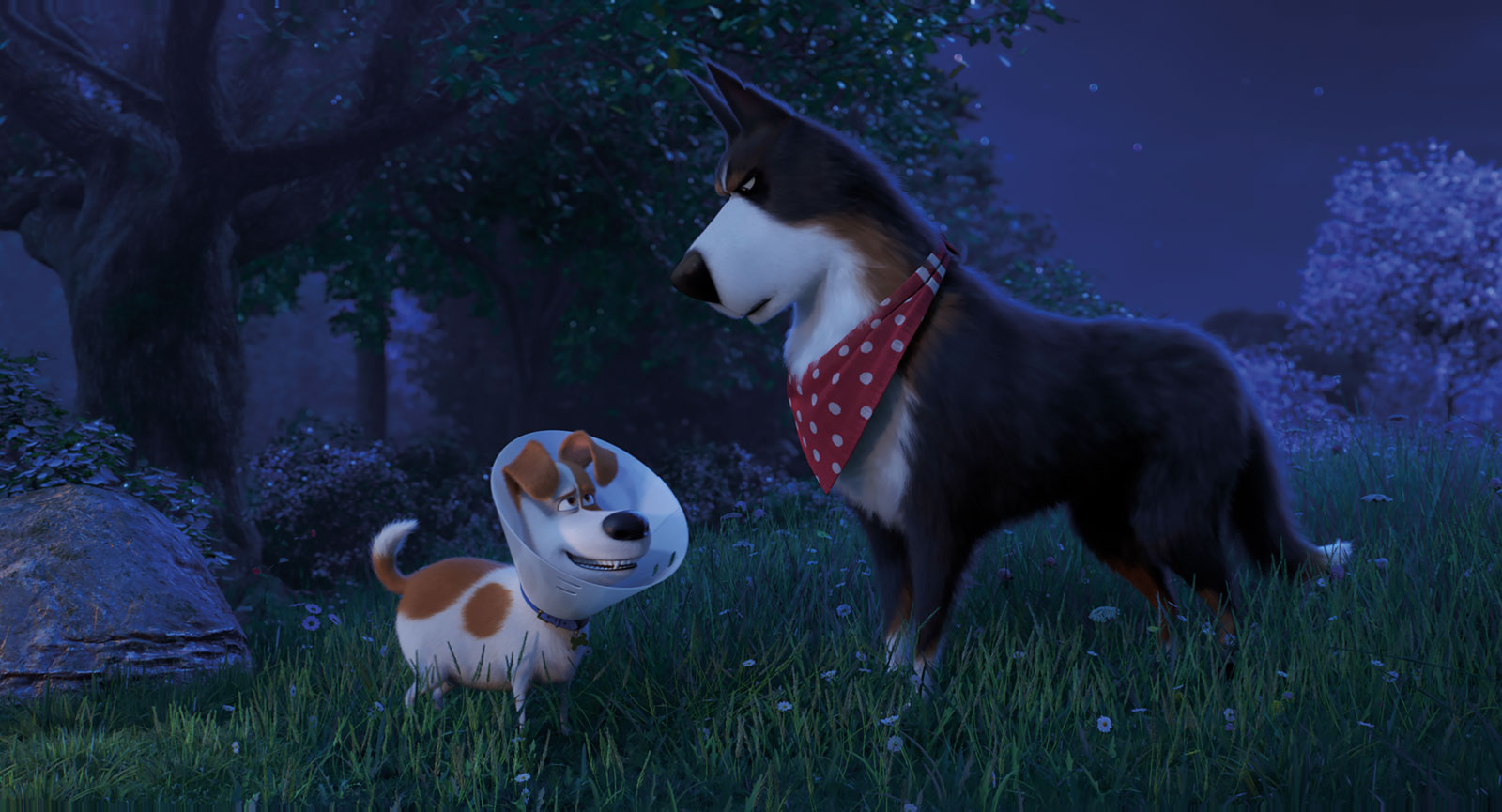
Max (this time voiced by Patton Oswalt rather than the sex offender Louis C,K.), the very good boy from the first film, is back again. He and his very good boy brudder Duke (Eric Stonestreet) are welcoming yet another new addition to their family: a human baby named Liam. Yes, owner Katie (Ellie Kemper) has met and married a human man and produced an heir. We still don’t know what it is that Katie does to afford her very nice Manhattan apartment, but her life is very full. And Max, initially quite ambivalent about human children, grows to love Liam very very much. The feeling is mutual. But just loving Liam is not enough; Max feels he must protect him from the world. Max, normally a happy-go-lucky dog, is now a bit of a nervous nelly. The behaviourist outfits him with a cone of shame, and then his owners pack him off to the farm. Oh gosh, not the proverbial farm, an actual farm, where he meets rough and tough farm dog Rooster (Harrison Ford), who is determined to cure him with tough love and hard work.
Meanwhile, back in the city, old friends are up to new tricks. Fuzzy bunny Snowball (Kevin Hart) is helping new pal Daisy (Tiffany Haddish) to, believe it or not, rescue a tiger from a circus. And sweet little fluffball Gidget (Jenny Slate) has her own little rescue mission going, and enlists Chloe the cat (Lake Bell) for her particular brand of expertise.
This movie caught me right in the feels on at least to parts: a) My sister had a lovely good boy, also named Max, who got a little “overprotective” during her pregnancy, and through the birth of her first child, and he had to go to the proverbial farm. We all miss him to this day. b) My own little Fudgie is himself a bit of a nervous nelly and is newly on anti-anxiety meds actually called Clomicalm. He is not yet calm, but he is definitely not unhappy. He mostly worries about stupid stuff like: am I posing with my toy in exactly the right way to impress Sean when he comes in? How about now? How bout now? Now? NOWWW????
And of course, as pet owners generally and dog lovers specifically, and people who are just plain old not monsters, you can’t help but melt a little when you recognize a bit of your own four legged friend up on the screen. When Daisy made her mad face, I saw my Herbie. And when Max learned how to howl, I heard my Bronx (though Bronx does more of an “Awuuuuu.”)
So no, it’s not a terrific film. But it’s a sweet film, a cute film, it’s the film I wanted to see tonight and I’m glad I did. Awuuuuuu.
Disney is releasing a whole slew of “live action” remakes of its most beloved classics, so Sean and I are taking a stroll through the Disney vault to revisit movies we haven’t seen since childhood. So far, the only one of these that I’ve genuinely enjoyed is Cinderella; the others – like Beauty & The Beast, Mary Poppins, and Dumbo – have missed the mark, and I downright disliked The Jungle Book. And unfortunately, I’ve tended to assume that I’ll feel the same about The Lion King, mostly because I don’t approve of calling this “live action” when it’s clearly also animated, just animated in a more realistic, CGI-style. But it’s still just computers. In real life, lions don’t sing and dance and cuddle up to warthogs in a strictly platonic, non-hungry way. BUT it does have an AMAZING voice cast that I admit intrigues me. More on that later.
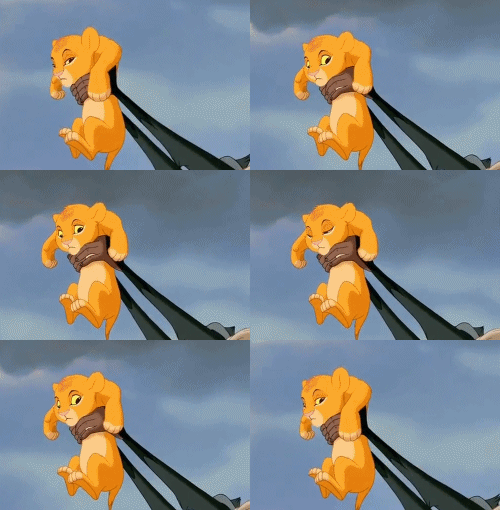
The Lion King (1994) doesn’t need improving upon. It’s quite a lovely film. The animation holds up. The songs are part of our cultural lexicon. We all know the story: Simba is a young lion prince who will won day rule the pride lands when his father Mufasa passes. But Mufasa’s death is hastened by evil uncle Scar, who wants the seat of power for himself. Scar murders his brother and exiles his nephew. He allows his pals the hyenas to share hunting grounds with the lion tribe, which totally fucks with the circle of life, and pretty soon they’re all starving. Meanwhile, Simba has grown up with a sweet gay couple, Timon and Pumbaa, who adopt him despite their initial misgivings about him being a meat eater and all. Their worry-free existence is pretty sweet until Simba’s past shows up to shame him into returning. And once he knows how bad things are, he can’t help but engage. He returns, but he’ll have to face his uncle Scar if he wants to take his rightful place as King.
As a kid I didn’t pick up on the Shakespearean undertones of this film because I was just a dumb, Sesame Street watching baby. It’s definitely Hamlet-adjacent. But as an adult, I have so many more experiences that are informing my viewing.
Like any good Canadian who often escapes the winter by going down south, I first saw The Lion King musical experience at an all-inclusive resort where they pirate the heck out of anything they can and squeeze it until the lawsuits come. The first time I saw it, it was an excellent production (I think I was in Mexico). It made me want to see the real Broadway version, so when it came to my city, I saw it with my in-laws, and it was even better than I’d imagined. Then I saw several low-rent versions at less ambitious resorts – my favourite at a Cuban hotel where my friends got married and their young daughter was cast as the baby Simba.
Hakuna Matata (such a wonderful phrase!) was a full-on craze in the 90s. People cross-stitched it onto pillows. Nothing trendier than that! It means “no worries for the rest of your days” and was lampooned by Matt Stone and Trey Parker in The Book of Mormon. In that Broadway musical, which Sean and I were lucky enough to see with its original cast, Josh Gad and Andrew Rannells), the phrase they pick up is Hasa Diga Eebowai. It inspires its own musical number which is every bit as perky and upbeat as Hakuna Matata – only imagine the little Mormons’ consternation when they find out it means Fuck You, God. Oops.
Last month Sean and I took the niece and nephews to see Disney on Ice, and they had quite the generous Lion King portion, no doubt to generate interest for a movie hitting theatres later this year. But the original film is also celebrating its 25th anniversary, and sure, you could figure that out with simple math, but we found it out at Disney World, where they’d outfitted Animal Kingdom with photo ops celebrating it. We also frolicked at the animation hotel, where an entire branch of the resort is dedicated to the film, its rooms are movie-inspired and the grounds are full of scenes from the movie. I turned to Sean and said: “Hey, remember when YOU played in an elephant graveyard?” and I kid you not, he responded “At the hotel?” Now, like most (all) men, Sean is an idiot. But he’s also the King of Stupid Questions. Now let me ask you, perfect stranger: how many times do you think Sean has played in an elephant graveyard? We’re CANADIAN. I think the fact that he’s done it once is remarkable. Why, then, the clarifying question, as if he’s done it so many times he’s not even sure to which one I’m referring. Hasa Diga Sean.
When Scar undertakes to kill his brother, he orchestrates the murder so that it looks like an accident. He plants Simba in a gorge and then sparks a wildebeest stampede. It’s a frantic, pulse-pounding scene that took 3 years and the invention of new software to animate the thing. Musafa of course saves his son, but Scar pushes him to his death. In the aftermath, little Simba finds his father’s body and curls up next to it, wrapping his father’s dead paws around him. It’s a very tender scene of course, but it reminds me of my nephew and something he once said. This kid loves his family and insists he’ll never marry and never move out – he simply can’t imagine a time when he won’t be vitally attached to his parents. He’s even insisted that when he dies, he wants to be buried in his father’s arms. These are soul-destroying words to his sensitive aunt’s heart. I wept over it then, and I wept over it again when Simba all but reenacts the scene.
So there’s no doubt, really, that Scar must be among Disney’s very worst villains. But there’s a secret (or not so secret) side to Scar that I never considered as a kid. The LGBTQ community has adopted him as a coded-gay character. Of course it’s problematic as hell because he’s a reprehensible guy, but when you were gay in the 90s, you didn’t exactly have a lot of choice. Scar IS slightly effeminate, I suppose. And he’s camp. He’s snide. He slinks around. He has a goatee! He’s scrupulously correct and he’s British for christ’s sake. Is he a mean old Queen? Possibly. He’s definitely the bachelor uncle who, while inheriting his brother’s kingdom, has absolutely no interest in the pride’s lionesses. He spends his time with a singing parrot. So when people saw the trailer for the “live action” Lion King, fans of Scar were dismayed. In the cartoon he comes off as very vain and very feline, but in the trailer for the new one, he just looks emaciated. Anyway. I think we can do better than Scar for gay icons, but so far Disney really hasn’t. There’s a void there, and a gaunt, bedraggled Scar isn’t going to fill it.
Anyway. Jon Favreau’s The Lion King will hit theatres in July, with James Earl Jones providing continuity as the voice of Mufasa but Jeremy Irons has been replaced as Scar – and so has everyone else.
Simba: Donald Glover
Nala: Beyonce
Scar: Chiwetel Ejiofor
Pumbaa: Seth Rogen
Timon: Billy Eichner
Zazu: John Oliver
So it’s not The Lion King of your childhood. But might it still be good?
Of course I watched Aladdin when I was little. Disney’s renaissance era was such a great time to be kid: The Little Mermaid, Beauty & The Beast, Aladdin, The Lion King. Instant classics, all. I remember my aunt giving my little sister Jana a pair of Princess Jasmine pajamas – gauzy and midriff-bearing. They were an instant source of jealousy (we were four little girls, but Jana was the smallest and the blondest and the default cutest, and I suppose the rest of us felt that our chubby little bellies were not deemed worthy).
But I hadn’t watched Aladdin since I was young, on VHS, naturally. On DVD I’ve fallen in love all over again with the movie. Gosh it’s crisp, the animation looks beautiful. I find that I still know every word to every song (it probably helps that I have the soundtrack on vinyl).
It’s a sad story if you stop to think about it: Aladdin is a homeless youth who is so hungry he resorts to stealing even though the punishment is having your hand chopped off. Jasmine, the resident princess, has never been hungry a day in her life, but is far more eager to escape her life of confinement in the castle and the pressure to marry a prince before her next birthday (at which time she turns all of 16). The two meet in the market where they also get in some trouble. Jafar, the nefarious vizier to the sultan, tells Jasmine that Aladdin has been executed (to death!), but actually he’s going to use him to break into the Cave of Wonders and steal the magic lamp.
As you know, Aladdin does get his hands on the lamp, and imagine his surprise when out pops a big blue genie (voiced by Robin Williams). Genie turns Aladdin into a prince so he can court and marry Jasmine, but there’s a lesson in there about being your true self, and the lesson must be taught.
Anyway, Robin Williams recorded his part while on breaks from Hook and Toys. He’d call up Steven Spielberg, who was filming Schindler’s List at the time, and make him and the cast and crew have a much-needed laugh. So much of the movie was ad-libbed by Williams, it no longer qualified for best adapted screenplay at the Oscars. Not that anyone complained: animators literally added whole scenes just because Williams said something too brilliant not to use.
Robin Williams was reluctant to even do the movie. He wanted to try his hand at voicing an animated character but he balked at the whole Disney merchandising machine. Eventually he agreed to do the film for scale (!) on the condition that his voice not be used for merchandising, and that the Genie not take up more than 25% of space on posters, billboards, and trailers. The idiots at Disney did not abide his rules so Williams was actually mad at them for years. Michael Eisner even tried to apologize to him with a Picasso, but Williams turned it down. Only when Jeffrey Katzenberg was fired and replaced by Joe Roth did things thaw: Roth apologized publicly.
If Jasmine and Aladdin look familiar to you, you’re not wrong: Jasmine was modeled after Jennifer Connelly, and Aladdin after Tom Cruise, which has to make you wonder – does Tom Cruise not have nipples either? I met Princess Jasmine recently. I was having dinner at Cinderella’s castle (at Disney World), and quite a few princesses drop by to say hello. She asked me if Sean was my diamond in the rough and I must have scrunched up my nose quite skeptically because she amended it to “Diamond in the scruff?” – in fact, Sean has a no-razors-on-vacation policy, so I let that one stand even though it wasn’t the rough I objected to.
Anyway, we gave this one a re-watch because Guy Ritchie is doing a live-action remake hitting theatres later this month (May 24). Although I was disappointed by both Mary Poppins Returns and Dumbo (both of which I’d hoped would be good but weren’t quite) already this year, I’m going to go ahead and reserve some moderately-sized hope for this one. They can’t all be bad, right?









 allows his pals the hyenas to share hunting grounds with the lion tribe, which totally fucks with the circle of life, and pretty soon they’re all starving. Meanwhile, Simba has grown up with a sweet gay couple, Timon and Pumbaa, who adopt him despite their initial misgivings about him being a meat eater and all. Their worry-free existence is pretty sweet until Simba’s past shows up to shame him into returning. And once he knows how bad things are, he can’t help but engage. He returns, but he’ll have to face his uncle Scar if he wants to take his rightful place as King.
 the heck out of anything they can and squeeze it until the lawsuits come. The first time I saw it, it was an excellent production (I think I was in Mexico). It made me want to see the real Broadway version, so when it came to my city, I saw it with my in-laws, and it was even better than I’d imagined. Then I saw several low-rent versions at less ambitious resorts – my favourite at a Cuban hotel where my friends got married and their young daughter was cast as the baby Simba.
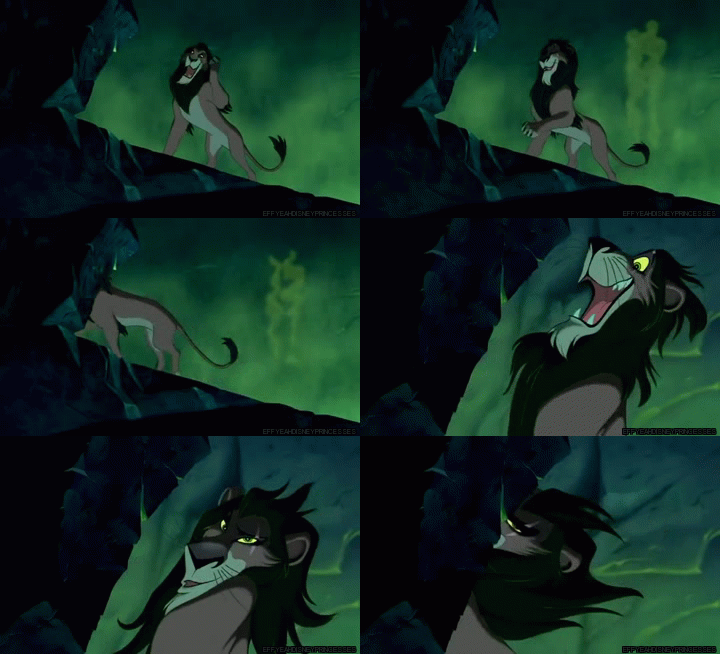 90s, you didn’t exactly have a lot of choice. Scar IS slightly effeminate, I suppose. And he’s camp. He’s snide. He slinks around. He has a goatee! He’s scrupulously correct and he’s British for christ’s sake. Is he a mean old Queen? Possibly. He’s definitely the bachelor uncle who, while inheriting his brother’s kingdom, has absolutely no interest in the pride’s lionesses. He spends his time with a singing parrot. So when people saw the
  But I hadn’t watched Aladdin since I was young, on VHS, naturally. On DVD I’ve fallen in love all over again with the movie. Gosh it’s crisp, the animation looks beautiful. I find that I still know every word to every song (it probably helps that I have the
  after Jennifer Connelly, and Aladdin after Tom Cruise, which has to make you wonder – does Tom Cruise not have nipples either? I met Princess Jasmine recently. I was having dinner at Cinderella’s castle (at
  ASSHOLES WATCHING MOVIES