Tag Archives: based on a true story

TIFF: Lion

I was a little caught off guard by audience reaction to this movie at TIFF. I’d read the book and liked it well enough but the movie didn’t strike me as particularly must-see. Boots on the ground at TIFF though had me hearing something different. In fact, had me hearing that it was giving La La Land a run for its money as People’s Choice. People’s Choice! So I did what any sane woman would do: I gave up my tickets to I Am Not Your Negro and secured tickets to a last-minute additional screening of Lion.

mv5bndjimtnhmgmtntewzs00zdazlthhmdutngm4nzfhnjzhy2rjxkeyxkfqcgdeqxvymtexndq2mti__v1_Lion tells the true story of a 5 year old Indian boy named Saroo. Separated from his brother one night, he falls asleep on a train and wakes up miles away from his home, his family, from people who speak his language. He survives on his own for weeks before being thrown into an orphanage and then shipped down to an Australian family who adopt him.

Once grown, Saroo finds himself thinking about the mother he disappeared from, who might very well still be looking for him. So he uses the only tool he has available to him: Google Earth. With little information to go on, he scans the internet every night for signs of his childhood home. It’s an impossible mv5bmdu4zgi4yjgtywzlns00nte2ltg1mmutytk2njflnzhjotrjxkeyxkfqcgdeqxvymtexndq2mti__v1_task but Saroo is miraculously lucky. Off he goes to India, to see if he can locate any family near the place he once called home.

Sunny Pawar will quickly win your heart as 5 year old Saroo. His big, adorable eyes immediately indicate his innocence and vulnerability. His half of the movie is gripping and heart-wrenching because Pawar easily elicits our sympathy. While a lost child living on the streets would surely be attended to here, in India it is unfortunately all too common a sight. His pleading is ineffectual. I felt ready to shout at the movie screen myself. And such a tiny thing navigating the streets of Calcutta – it’s an indelible image that speaks directly to your heart.

When Saroo is sent to his new Mummy (Nicole Kidman) in Australia, it becomes a new movie: a fish out of water experience for a little boy who probably didn’t even know that such a country existed. But for all intents and purposes, Saroo grows up Australian. His brown skin gives him away, but he feels a fraud among other immigrants, his culture and background a mystery to him. Dev Patel plays grown-up Saroo, a man searching the Internet not just for his hometown but really also for himself. He doesn’t want to hurt his adoptive mother though, so he pulls away to protect her.

Unfortunately, Google Earth isn’t all that interesting or cinematic. Garth Davis chose to stick with Saroo’s real-life methods but it’s not thrilling or sexy on mv5bndu0mgqxndmtndc5zc00otm4lwe0zmqtndjmzdiwmju1zjezxkeyxkfqcgdeqxvymtexndq2mti__v1_the screen. It literally is just a guy staring a screen night after night for weeks, months, years. He’s moody and emotional in between, throwing his relationship (with Rooney Mara, in an underwritten role) onto the rocks. Nicole Kidman gives an admittedly strong and stirring performance as his mother and helps bridge the gap, but there’s a marked lag until Patel goes back to India.
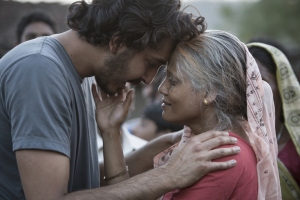
The Indian scenes are triumphant, but they also raise a lot of questions. Where was Saroo better off? What happens to kids adopted outside their culture? Which one is his real home, his real mother?

I worried that Lion was garnering attention at TIFF because the audience, who skews older, might have felt good about watching something multi-cultural while still safely ensconced in a white lady’s movie. The film, however, won me over. Maybe it tries a little hard to be upbeat, but a feel-good ending is hardly a negative. Davis acquits himself well in his first directorial feature. The chapters are perhaps a bit uneven but the victory is not.


On a TIFF sidebar: While La La Land did end up receiving the People’s Choice award (Lion was the runner-up), the tickets I gave up, I Am Not Your Negro, would have had me watching the People’s Choice documentary winner. Ah well. You win some, you lose some. I can’t regret much since I was watching a great movie either way.

TIFF: The Journey Is The Destination

This is supposed to be the inspiring biopic of photojournalist/artist/activist Dan Eldon. But something is lost in the translation between his real-life journals that inform the story, and its appearance on the big screen. Namely, the inspiring part.

Supposedly Dan Eldon was an activist from a young age, raising money for various good causes. British-born but raised in Nairobi, he had a silver-spoon life, having the best in x9kbt0q2zcmaybswkkqklezuxi3education, the ability to visit over 40 countries while still in his teens, and loads of opportunity. He sprinkled his good fortune with charitable acts for others. But in the movie we don’t see a lot of Dan Eldon, activist. Rather we see Dan Eldon, purveyor of white privilege, with a side of white saviour to further sour the milk.

The film is brought alive under Bronwen Hughes’s able direction. She attempts to turn the film into a literal scrap book of sorts, travel-logging his adventures to honour creative source material, though this conceit is used sporadically. And it’s also not a great fit for the film, tonally. By the movie’s end, The Journey Is The Destination will have brought you to some very dark places. Cutesie scribbles and doodle a la Diary of a Wimpy Kid don’t really belong somewhere that ultimately ends up more Hotel Rwanda.

I want to believe in Dan Eldon, good person. It’s just that this movie keeps showing me Dan Eldon, man of many advantages and almost no self-awareness. The cast is strong: Ben Schnetzer is charming as Eldon, plus the likes of Maria Bello and Kelly Macdonald in particular are welcome additions, but they can’t do much with material that’s inconsistent and contradictory. In fact, in researching this guy, I’ve learned that most of what we see in the movie is just plain wrong. And the edits they’ve made, perhaps to make him seem less flighty, more substantial, also make him less sympathetic.

If you’re truly interested in the man, reading his writings is likely the better bet.

Waffle Street

Waffle Street is a slice of life with too much syrup and not enough sustenance.

A Wall Street-type loses his job at a financial firm – doesn’t just lose it actually, gets fired and scapegoated for the firm’s shady dealings, of which he is also guilty. Wanting to redeem himself by doing “honest work” for a while, his fancy suit and attache case get his 160316114714-waffle-street-still-01-780x439resume thrown out of places from carpet fitters to mechanics. Only a chicken and waffle restaurant will take him, where he’ll fall under the tutelage and benevolence of grill man Danny Glover, who insists on being called Waffle Daddy.

This career downgrade means he and his wife have to sell their nice cars and sprawling home just as they are expecting a baby. But driving a Honda and owning a bungalow don’t elicit a whole lot of sympathy. The financial crisis that this dude helped create had far more dire consequences for millions of people.

This “riches to rags” tale is apparently based on a true story, but the movie feels the furthest thing from authentic. Low budget, bad acting, and sub-par script are all at play. This just doesn’t ring true. The voice overs, however, are unforgivable, and inspire almost as much nausea as the disgusting clogged toilet scene that for some reason was necessary to show in gory detail.

Since this is a rich white dude’s story, he of course isn’t satisfied with being a lowly server for long. Instead, he’s punching his time card with the ambition to soon open up his own franchise. And don’t worry – if the path isn’t as straight-forward as he thinks, he’s got a rich white father and a rich white grandfather both prepared to step in with wads of cash at a moment’s notice – but only if he’ll agree to take some time off soon. Because it turns out that working as if you’re poor and your life and family depend on it is really hard. It’s just too bad the film doesn’t know enough to be self-conscious about this.

Sully

You know his name: Captain Sully became a celebrity and a hero when he made a successfully landed a passenger jet in the Hudson river after losing both engines shortly after takeoff. The passengers, the media, and then the sully-tom-hanks-aaron-eckhart-slice-600x200world, praised him for his quick thinking and skill. His maneuver saved every soul on board. It was quickly labelled “The Miracle on the Hudson.” He made the rounds of late night talk shows, smiling politely as hosts feted him, but that smile was a facade.

What few of us realized at the time was that Captain Sullenberger and co-pilot Jeff Skiles were going through private hell. While dealing with crippling flashbacks, they were basically put on trial by the National Transportation Safety Board, accused of making the wrong decision and endangering a plane full of passengers.

Sully, with 40 years of experience, knew in his gut that going into the river was the best option. The NTSB, however, maintain that computer simulations prove he could have made it back to La Guardia for a safe landing on an actual strip. All the people thrown into frigid waters, the cold and frightened babies, the weakened-heart old ladies, could all have been spared a terrifying crash-landing. Should Sully be held responsible for his actions?

Tom Hanks as Sully is spectacular. He deftly portrays a crumbling man, one whose confidence is badly shaken, who can’t escape the mental replaying of the incident, the assessment of the choices he made, effectively putting 155 960lives on the line, his own included. Aaron Eckhart plays Skiles, the right-hand man with an equally formidable mustache (what is it with pilots and mustaches?). Laura Linney has is relegated to an even smaller part, as the wife on the other end of a telephone. Both are fine, but this is clearly Hanks’ show, and Sully’s story. He’s the one not just with his reputation on the line, but his career and pension and ability to support his family in flux too.
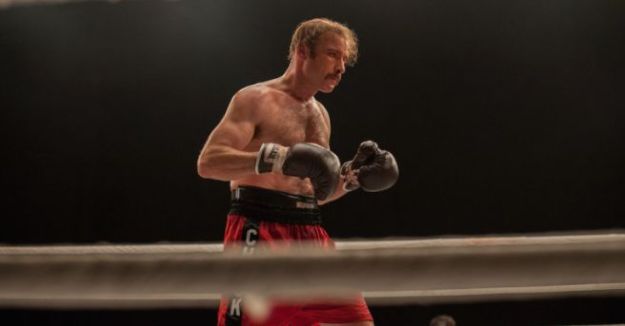

Director Clint Eastwood plays it safe; in fact he even downplays what must have been a petrifying few minutes for the other 153 on board. What he may not have accounted for is how jarring Sully’s day-mares are to an audience, post 9-11 (and keeping in mind the movie hit theatres for its 15th anniversary). Sully keeps imagining that his plane is zipping through New York City’s skyline, missing and not missing buildings along the way. It hurts.

Where Eastwood excels, and always has, is in hero-worshiping, and Sully’s an easy target. Humble, grateful, stoic: just the kind of man that appeals to old Clint. But Sully’s not the only hero I see here. The flight attendants are brave. The air traffic controller is determined. Rescue workers are quick. Ordinary citizens lend a hand. Heroes come in lots of shapes and sizes. Not all wear uniforms. Maybe Clint should make a movie about one of them sometime.

TIFF: The Bleeder vs. Bleed for This

Ladies and gentlemen, it’s now time for the main event of the 2016 Toronto International Film Festival, coming to you live from the beautiful, historic Elgin Theatre.  

Introducing first, in the red corner, standing six feet five inches and weighing 223 pounds, with a professional record of 35 wins, including 17 by knockout, 14 losses and 2 draws, the former New Jersey State heavyweight champion, from Bayonne, New Jersey, please welcome from the Bleeder, Chuck “The Real Rocky” Wepner!!  

His opponent, in the blue corner, standing five feet eight inches and weighing in at 170 pounds,  with a professional record of 50 wins, 30 by knockout, against 10 losses, fighting out of Providence, Rhode Island, a former world champion in the lightweight, light middleweight, and super middleweight divisions, from Bleed for This, please welcome Vinny “The Pazmanian Devil” Pazienza!!

Jay was gracious enough to agree to include not one, but two boxing biopics in our TIFF schedule: The Bleeder, starring Liev Schrieber, and Bleed for This, starring Miles Teller.  In an all-out battle to capture my vote, who came out on top?  Let’s go ringside and find out!

bleeder

The Bleeder:

The Bleeder opens perfectly, introducing us to a guy we know even though we don’t know it.  That guy is Chuck Wepner, a human punching bag who took a punch so well he could go 15 rounds with anyone, even the Greatest.  Yes, the man himself, Muhammad Ali.  Wepner got the fight because he was the only white guy in the top ten, and during the fight he acquitted himself so well that he inspired Sylvester Stallone to write Rocky.

Along with taking a punch, Wepner’s other notable trait is the ability to consistently make the worst possible decision.  To the credit of Wepner and the Bleeder, the movie does not pull any punches with Wepner’s character.  He is a flawed person but the kind of flawed person who you can’t help but be charmed by.  Liev Schrieber is almost unrecognizable as Wepner and does a fantastic job of showcasing the charm while also making us feel for Chuck as he suffers some severe consequences, including losing his family and going to prison.

In the end, the Bleeder does justice to the Real Rocky’s story and gives us a true underdog who makes good in a real way, in his own way.  Somehow, the Real Rocky turns out to be the furthest thing from a cliche, and yet still manages to come out on top in the end.


Note: this movie has been renamed ‘Chuck’ and will hit theatres May 5.

bleed-for-this

Bleed for This:

While the Bleeder features the Real Rocky, Bleed for This features a comeback story too unbelievable to be used as a plotline in the Rocky franchise.  And that’s saying something considering Rocky has come back from: (a) Mickey being shoved to death by Mr. T; (b) Apollo being beaten to death by Drago; and (c) Adrien being written to death by Stallone as a convenient reason to make yet another goddamn Rocky movie.

Miles Teller makes a good showing as Vinny Pazienza, a champion boxer whose neck was broken in a car crash.  Told by doctors that he may never walk again, Paz somehow was able to return to the ring just 13 months after his accident and went on to fight boxing legends like Roberto Duran and Roy Jones Jr.  Teller looks like Paz and looks like he belongs in the ring, but in the transition to the screen the real-life magic that Paz possessed is lost and Bleed for This ends up feeling like just another boxing movie.  And that’s a shame, because overcoming this level of adversity should truly feel triumphant.

The Judges’ Decision:

The match goes the distance as both the Bleeder and Bleed for This are enjoyable films with charismatic turns by their stars.  There can only be one champion though, and by unanimous decision The Bleeder takes the belt.  The Bleeder is far more memorable because it’s not your typical happy ending, and it’s less about boxing and more about the trappings of fame.

The bottom line is that if you like boxing, you’ll enjoy both of these.   The difference maker is that even if you don’t like boxing, I am still confident in recommending that you watch the Bleeder.  It’s a fascinating story that captures the essence of the most interesting loser imaginable, a story so powerful that it inspired an entire movie genre.  It’s a credit to Paz and his tenacity that things were even this close, as in the end Rocky always wins.

TIFF: Jackie

Jackie is a beautiful film by Pablo Larrain that focuses on Jacqueline Kennedy in the minutes and days following her husband’s assassination.

Larrain is a Chilean film maker, which makes him at outsider to American politics. He poured over documents and was fascinated to read about this day that every age-appropriate American remembers so vividly: when the car turned, the location of the grassy knoll, the flag-wavers lining the street, the bullet’s trajectory – and always sitting beside the president, his wife, Jackie. e02adc223bf38b822b3e250330bde15cLarrain thought to himself, what if it was the other way around. What if he was sitting beside her? And in that thought was born a beautifully conceived film that puts its female character front and centre.

Larrain thought the script was good but sent it back with a note to cut every and any scene that she wasn’t in. The camera would be on Jackie the whole time. Obviously a film with such unerring focus would need an actress who could carry it, and Natalie Portman is that actress. This is her best role since Black Swan and honestly it may be her best role, full stop. She inhabits Jackie like a second skin. She doesn’t get caught up in the trappings of impersonation, she just embodies the grace, the thoughtfulness, and the mystery of one of America’s most beloved and glamourous first ladies.

Despite being a favourite in the press, Jacqueline Kennedy is perhaps unknowable. She was always careful about her public persona and was closely guarded when speaking on record. The film makes this abundantly clear through scenes with a journalist (Billy Crudup) about a week after tragedy has struck. She edits her remarks, strikes things from the record, and demands final approval before a single word is printed. Noah Oppenheim’s script is 14996precise and offers up tantalizing looks behind the closed doors of Camelot.

Peter Sarsgaard, as Bobby Kennedy, is a charming lurker. Greta Gerwig in her most un-Gerwig role to date is restrained and almost unrecognizable. I’d heard that Natalie Portman gave a stellar performance in Jackie but I was unprepared for how good the film would be as a whole. This isn’t just a candidate for Best Actress but I believe, for Best Picture. It’s so well-orchestrated, each piece comes together perfectly to make a very satisfying picture. JFK, one of the world’s most recognizable politicians, is a mere shadow in this film. Jackie gets her moment in the sun, which makes Natalie Portman the star at the centre of this movie’s universe.

She deserves all the acclaim she’ll receive. She’s brave and courageous here, mixing grief and poise in an intoxicating cocktail that you won’t be able to tear your eyes from. She’s magnetic. She shimmers with loss and outrage as she protects her husband (and more importantly: his legacy) from the vultures already climbing over his coffin. Jackie feels very much like an insider’s peek-a-boo on what has to be an iconic yet little-understood moment in history. Finally we experience JFK’s assassination as Jackie felt it – as the gruesome murder of her husband and the father of her two young kids. She sat beside him, scooping his brains back into his skull, calling to him even as she knew he was already dead. His blood is still fresh on her dress as LBJ is sworn in just 43 minutes later, Kennedy’s body resting just a few feet away. What to tell the children? What to tell the nation? It’s absolutely fascinating. Stephane Fontaine’s cinematography allows us to get very close to the grief, while also appreciating its context: Air Force One, the White House, the Lincoln convertible. Jackie manages to be both historic and quite personal, and Larrain ushers us ably into both worlds. Both Portman and Larrain resist the temptation to over-emote. Like the former first lady herself, restraint, control, and self-possession are at its heart.

TIFF: Denial

denial_04Movies based on true stories were a recurring theme for us at TIFF 2016. Our festival experience included five B.O.A.T.S. in a row. My favourite of those was Denial. As a lawyer, I may be slightly biased toward legal dramas, but if you have even a passing interest in law and order (or Law & Order) then you’ll enjoy Denial.

Denial tells the tale of a defamation lawsuit brought by David Irving, British holocaust denier, against Deborah Lipstadt, American university professor. The claim is brought in England, and as a result in order to defend herself, Lipstadt is faced with proving that Irving is a liar.denial

Director Mick Jackson attended our screening and participated in a Q&A session afterward. Jackson confirmed that the courtroom scenes were word-for-word reenactments of the trial transcripts.  That was a great choice by the writers as it makes the scenes feel authentic in pace, tone and style. It was refreshing to me that the real-life scenes were allowed to stand by themselves.

Don’t get me wrong, I enjoy the over-the-top moments a la Col. Jessep’s crossexamination in A Few Good Men, but those don’t actually ever happen in real life. Real life is much more subtle.  Denial embraces that subtlety wholeheartedly and in doing so sets itself apart from your typical lawyer movie.denial-timothy-spall

Rachel Weisz puts on her best American accent and convincingly plays targeted Professor Lipstadt as a driven, determined and difficult-to-deal-with client, and Timothy Spall is wonderfully despicable as Holocaust-denier Irving. But my favourite performance by far was Tom Wilkinson as Lipstadt’s barrister, Richard Rampton, Q.C. Wilkinson is just so fun to watch in the courtroom scenes and in the strategy sessions with Weiss and the rest of team Lipstadt, led by Andrew Scott (who, thanks to his role in Sherlock, I was sure would turn out to be the evil mastermind pulling Irving’s strings). He conveys confidence while at the same time hinting at underlying conflict. I can only hope my British accent develops to the point where one day I sound as lawyerly as Wilkinson.

While I practice my accent, you should definitely watch Denial. I give it a score of eight unhandleable truths out of ten.


TIFF: Birth of a Nation

It is sometimes difficult to separate the message from the movie. I’ve already braved backlash by confessing that I didn’t care for 12 Years a Slave. This is not the same as saying I love slavery or I hate black people, but some people will choose to hear it that way. I can see with my own eyes that 12 Years A Slave does have artistic merit. Steve McQueen has a stylistic sensibility I can’t ignore, and Chiwetel Ejiofor gave a riveting performance amongst a strong cast. But the movie felt derivative to me. In a crowd of slavery movies, this one didn’t have a distinctive voice and I was bored. How does Birth of a Nation compare?

Well, it’s both better and worse. The first two-third to three-quarters of Nate Parker’s movie is a lot of the same old. We get it: slavery is bad. I actually don’t require 90 minutes of convincing on that subject. But the last chapter of the story is when it finally comes alive: the slaves rise up. birth-of-a-nation-nate-parkerNat Turner, a docile preacher, reaches his breaking point and leads a rebellion. A bloody rebellion. White slave owners will be slain in their beds. These scenes are so jarring that I can understand why one might think that 90 minutes worth of context are important. Those minutes establish that yes, slavery is bad. There were indeed lots of vicious slave owners who were just despicable human beings. But slavery movies often have a benevolent slave owner as well, one who is “not so bad,” I suppose so that white people don’t shout “They’re not all like that!”

As Samuel, Armie Hammer is this year’s Benedict Cumberbatch. He’s not too terrible. But his character’s arc is perhaps the most compelling of the film. As children, he and Nat are playmates. They aren’t equals, but maybe they’re friends. It is only as Samuel inherits the plantation and all of its chattel – which of course includes the human beings who work the land – that this relationship transforms. It is clear that Nat is not just his employee – there is a subservience to their interactions that is immediately repulsive. Times are tough in the south. Plantation owners are under a lot of pressure, and the slaves are of course the first ones to suffer, to work longer hours with less food. Samuel, being “one of the good ones” begins to drink, ostensibly to deal with the increasingly degrading things he must demand of his slaves. He slides from benevolent to aggressive, and it’s a great performance from the man you’re probably not watching as closely as you should. But that’s the problem with owning slaves. Once you accept that owning another human being is okay, of course it’s a slippery slope that leads directly to the rapes and whippings and deprivations we’re so used to seeing. There is no good way to own a slave.

As Samuel slides further down into the muck, Nat is rising from it, with increasingly radical ideas about his oppressors. So Nat Turner rises up. Samuel Turner gets cut down. Are we prepared toenter_slavery_2_la see this? Prepared to watch people be chopped up as they sleep in their homes? It’s brutal and shocking. And justified: the film has made sure of that. Of course this is a true story so you know there is no happy ending here. Nat Turner’s is a necessary voice in the story of slavery, and Nate Parker’s choice to make religion both a weapon, and salvation, are a fresh take on a crowded genre.

Nate Parker co-wrote and directed himself in The Birth of a Nation, and his passion is evident. I only wish he trusted his audience more. In the hands of a more competent director, we might have a Best Picture contender here, but instead he allows his slow build to be overplayed, turning his third act into a bit of a cocky circus act. It’s uneven. It neglects secondary characters – and with Aja Naomi King so damned good, it seems a crime not to give her more screen time.

Speaking of which. I would feel irresponsible if I didn’t bring up the skeletons in Nate Parker’s closet. The Birth of a Nation was a Big Deal at Sundance. Fox Searchlight eagerly bought it up and set an October release date, certain it would be on the path toward Oscar. But rape allegations in Parker’s past resurfaced. When he was a student at Penn State, he was accused and charged with sexually assaulting a woman along with his roommate and The Birth of a Nation co-writer, Jean Celestin. They stood trial; Parker was eventually acquitted but Celestin was found guilty before having the verdict overturned on appeal. The story gained traction when it was reported that the victim had committed suicide. Even with an acquittal to his name, an a newfound belief in god, Parker’s mea culpa press tour has been lacking. His remorse has been sparse. Gabrielle Union, the actress who plays a rape victim in The Birth of a Nation, herself a real-life survivor of sexual assault, has struggled to reconcile his past and her part in his present. Can we and should we separate the art from the artist? What kind of shadow does this cast over his film? As Union puts it, “As important and ground-breaking as this film is, I cannot take these allegations lightly.”

The Birth of A Nation is an important story and deserves to be seen and heard. I said before that I thought it was both a better and a worse film than 12 Years A Slave. What I meant was: it’s not as good a movie. It’s more formulaic, more conventional, less sophisticated, a little too obvious. But as a piece of art, it inspires conversation and controversy. I can’t discount it.


TIFF: Barry

It’s 1981 and Barry is just starting his junior year at Columbia University in New York. His estranged father is Kenyan and his mother is a white American. Some of his friends insist that he is fortunate to be mixed race because he should be able to fit in everywhere but for Barry it feels like he can’t fit in anywhere. Barry is the story of a young man finding his identity and searching for self-acceptance.

By the way, “Barry” is short for Barack. Yes, that one. Starring in his first feature film, Australian actor Devon Terrell is brave enough to portray the 44th President of the United States while the real one is still in office. It’s an impressive performance. Yes, he looks and sounds like him (though Avi Nash as Barry’s friend Saleem does an even better impression in two of the film’s funnier scenes). The real trick though is making the emotions seem believable while mimicking the future president’s signature speaking style without looking like he’s auditioning for Saturday Night Live. Terrell succeeds at convincingly playing a 20 year-old college student who swears, gets drunk, and gets punched in the face for chatting up another guy’s girl while never letting you forget that he is in fact playing the Barack that we know.

Director Vikram Gandhi and writer Adam Mansbach are less concerned with reminding you that young Barry will one day become the first black President. They are mostly concerned with the internal struggle of young men of mixed race in the US and use the details of the real Barack Obama’s life mostly to provide interesting context. I’ll admit that the context worked for me. I would have surely found this movie less gripping without knowing that this same young man’s historic inauguration will one day inspire hope for a brighter future for millions of Americans. (Not to mention around the world).

If you can believe Oliver Stone’s Snowden, which I saw at the festival the day before, Edward Snowden watched President Obama’s inauguration with a renewed faith in government. As he told filmmaker Laura Poitras, he really allowed himself to think that this is a leader who could bring some real change. As it turned out, when it came to illegal surveillance of law-abiding citizens, Snowden watched things go from bad to worse under Obama’s watch.

It can be hard to reconcile the idealistic young man of Barry with the president that we see in archival footage in Snowden. How do you claim a passion for social justice while sanctioning (or, at the very least, defending) illegally spying on your own citizens? Don’t get me wrong. I still love him and will miss him no matter who wins in November. But he is the President of the United States and every president has a certain amount of blood on their hands.

I understand that you don’t get to occupy the highest office in the land without getting your hands dirty. I’m just saying that there’s a story there, between the events of Barry and the events of Snowden. Barry, deliberately paced and completely unpretentious, has a story worth telling as does Snowden, which was self-important but undeniably gripping. But somewhere out there there’s got to be a movie that tells the story of the journey from hero of a nice little indie to the villain of an Oliver Stone movie. That’s the movie I’d really want to see.

TIFF: Snowden

I feel much better now. If you read my Amanda Knox review, you may remember that I was close to TIFF burnout last night. Well,  I did what I hate doing: I made the tough choice of skipping my Midnight Madness movie last night and finally got some good sleep. Nothing like watching four more movies to make an unsettling documentary but a distant memory. I’m excited about TIFF again.

Seeing Oliver Stone take the stage to introduce Snowden (which I’ve been dying to see) didn’t hurt. Stone hasn’t made a particularly good movie in awhile and, come to think of it, has never really made a film that I love, but seeing him at TIFF still feels like a big deal. And, thankfully, my concerns about whether or not he could handle this tricky material were unnecessary.

I mean, it’s not perfect. It tries to do way too much and is about 20 minutes longer than it really should be. But it tells and/or speculates about the story that I felt 2014’s Oscar-winning documentary Citizenfour missed out on. It tells us about Snowden the man. Wonderfully played by Joseph Gordon-Levitt, Snowden is easy to root for and easy to relate to. I’d even argue that Stone’s film does a better job of  making the case that all of us should care about illegal NSA surveillance. Even if we feel we have nothing to hide.

Of course, this isn’t a documentary and it’s easier to inspire outrage in a dramatization of events. Snowden isn’t a substitution for Citizenfour, which is an important documentary that everyone should see. It is, however, an interesting and worthy companion piece that will likely make you appreciate Snowden’s sacrifice even more and think twice about getting changed in front of your laptop.