Tag Archives: based on a true story

TIFF 2015: Spotlight

spotlight

My Asshole compadres and I were enthusiastically discussing and comparing notes on all the wonderful films we’ve seen at TIFF over guacamole and cocktails when I raised the question of how difficult it can be to stay objective through TIFF-coloured glasses.

TIFF is exciting. I’d forgotten how exciting. The red carpets, the thrill of seeing eagerly anticipated movies before anyone else, and the frequent false alarm celebrity sightings (I could have sworn I saw Hillary Clinton last weekend outside TIFF Bell Lightbox but began to doubt myself when I heard her speak with a Ukranian accent) all make for as thrilling a trip to the cinema as you can get. Separating the quality of the film itself from the experience has been- I’m not going to lie- a challenge.

The anticipation I feel going into a TIFF screening and the focus I keep at all times at what’s happening onstage and onscreen made it particularly surprising that the couple sitting next to me at Monday’s international premiere of Spotlight, the true story of sexual abuse at the hands of Catholic priests, were making out through the beginning of the movie. That’s a TIFF first for me.

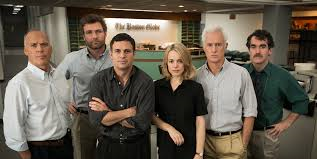
So you’ll excuse me- I hope- if I was a little distracted for a little while at the beginning. Luckily, the urgency of Spotlight soon caught even my neighbors’ attention and we could all sit back and enjoy the show. Well, maybe “enjoy” is the wrong word. Mark Ruffalo, Rachel McAdams, and Michael Keaton play real-life Boston Globe journalists who exposed the Catholic Church’s cover-up of sexual abuse at the hands of approximately 90 local priests. It’s not always an easy movie to watch. The interview scenes where survivors disclose the details of the abuse are harrowing and stomach-turning and the extent of the corruption on the part of the Church and so many others who turned a blind eye is infuriating.

Last week, I named All the President’s Men, The Insider, and Zodiac as my three favourite films about journalism. All three are based on real journalists and maintain suspense throughout while mostly avoiding melodrama. Spotlight works for many of the same reasons as those films did but doesn’t quite measure up to my favourites. It’s not always as tightly written as those  films and even drags a little in the middle but Keaton- who can’t seem to believe his luck getting great parts two years in a row– gives a passionate performance that always keeps things moving. He may get his second shot at Oscar with this film.

TIFF 2015: Freeheld

freeheld

I was moved- and pissed off- by Freeheld, as I’m sure director Peter Sollett and screenwriter Ron Nyswaner intended and I can only imagine what it must have been like to attend the premiere the night before.

Freeheld tells the true story of veteran police officer Laurel Hester’s battle for the right to pass on her pension benefits to Stacie Andree, her same-sex partner, when she’s diagnosed with lung cancer. Justice doesn’t come easy. Some cops have a big problem with a domestic partner having the same benefits as their wives do and those that don’t are too afraid to speak up. Some freeholders, despite having the legal right to honour her request, refuse on the grounds of their own religious beliefs.

This movie made me mad. “God will be mad” as an excuse for withholding from others what is rightfully theirs, has been getting old for a long time. How gay marraige affects straight people in any way is something I will never understand. Still, the right finds ways to insist that their own rights are being violated. So, yes, I rooted very strongly for these characters and against those who stood in their way and I could tell that Monday’s TIFF audience did too.

Freeheld succeeds admirably as a piece of Preaching to the Choir, even if not necessarily as a piece of cinema. Nyswaner’s script seems carefully designed to beg for as many Oscars as possible, with almost every character being given their Big Speech Oscar moment.

He pretty much gets away with it too. Julianne Moore, Ellen Page, Michael Shannon, and Steve Carell elevate the lazy writing, nail their speeches, and each bring something special and unique the the project. The outstanding acting and undeniably interesting and important story go a long way in saving this otherwise conventional drama.

Devil’s Knot

This movie tells the true story of the West Memphis Three. In 1993, a trio of young boys went missing, and were later found on the bottom of a creek, bound with their own shoelaces, savagely beaten, and dead either of their injuries, or of injuries combined with drowning.

The local police force bungles the investigation. When a restaurant manager calls to say a man covered in blood is sitting in their ladies’ restroom, a patrolwoman eventually shows up, at the drive through, and never comes inside. The crime scene is trampled, the coroner isn’t called, the bodies are left out in the sun. Fair to say that when whispers of a satanic cult surface, the cops are all too happy to suckle at the teat of a convenient scapegoat, and within a month, three teenage boys are arrested and charged with the murders, though two maintain their innocence while a third, mentally retarded, has a confession coerced from him after an exhausting 12 hours of interrogation.

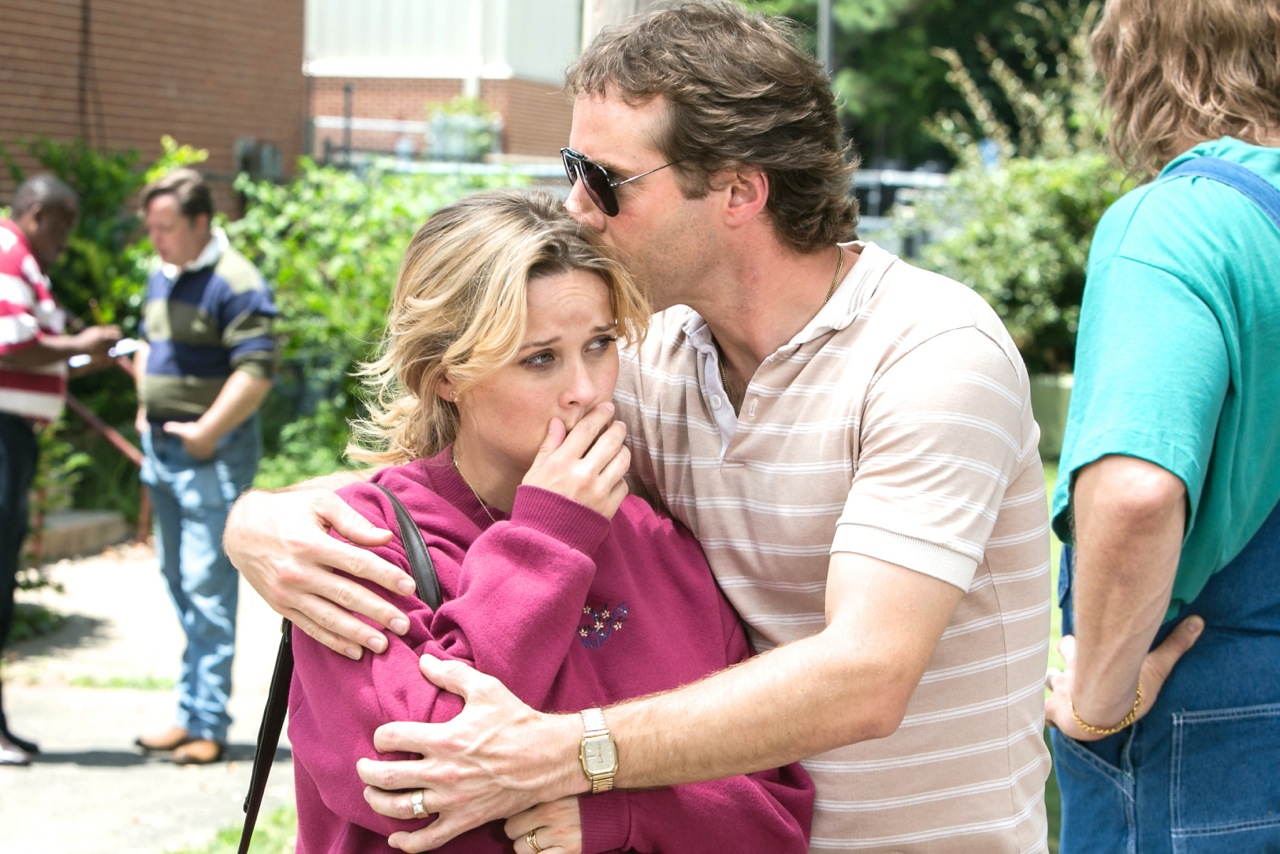
Reese Witherspoon plays the mother of one of the victims. She is haunted by little Stevie, devils-knottmourns him viciously, but still can’t shake the many questions that seem to surface during the trial. Colin Firth plays an investigator who donates his services to the defense team because although the accused are young, a sentence of death is still on the line.

Atom Egoyan does a capable job of telling a chilling story. He hits all the right marks, and I can tell you this, and you may know this yourself, from the many compelling documentaries that have been offered over the years. I already know all the right marks. Within the past year, I watched a documentary called West of Memphis produced by one of the convicted murderers himself, a riveting piece that chronicles the events meticulously. Paradise Lost is a trilogy concerning the case. Devil’s Knot, therefore, is late to the party and fails to add to the conversation in a meaningful way.

True Crime

truestoryOver the weekend we took in True Story – the Jonah Hill\James Franco movie about a man who killed his wife and kids, fled to Mexico, and assumed the identity of a disgraced NYTimes journalist. Learning this, the journalist meets the guy in prison and writes the story of how he’s actually innocent. It got me thinking about cinema’s strange fascination with real-life criminals, and whether the Hollywood glamorization machine contributes to delinquency.

Personally, I have guilt. I immediately think of The Wolf of Wall Street – I love me some Marty Scorsese, but I had serious reservations about helping to line the pockets of someone who so callously victimized others. Leonardo DiCaprio plays Jordan Belfort, a young man who became addicted to the high life as a stock broker, and realized he could make even more money by scamming and defrauding countless trusting people.

Jordan Belfort was convicted of his crimes but spent less than 2 years in jail because he cooperated with the FBI. I used to believe in a line from True Story – that a criminal cannot profit from his crimes. Turns out, this is not quite true. Most states have “Son of Sam” laws (so named because people were understandably outraged when it seemed David Berkowitz stood wolfto get paid for his story) but these laws tend to be found unconstitutional because of free speech and discrimination based on subject matter. If a case like this is challenged, the criminal tends to win, so mostly nobody bothers to enforce it. So Jordan Belfort wrote a book, and got paid for it. And then Leo bid over a million dollars for the rights (and just for comparison’s sake, Jonah Hill made $60 000 for his work). And then Marty paid him another quarter million to ‘consult’ – he stood around on set, instructing Leo how to act all fucked up on Quaaludes and shit. And then he actually appeared in the end of the movie! So he made $1.2M and even though he’s supposed to be paying his victims back, only $21 000 ever went toward his restitution obligations.

Christina McDowell, daughter of Tom Prousalis, who worked closely with the real-life Belfort at Stratton Oakmont, wrote an open letter addressing Scorsese, DiCaprio, and Belfort himself, criticizing the film for giving insufficient attention to the victims of the financial crimes created by Stratton Oakmont, for disregarding the damage that was done to her family as a result, and for giving celebrity to persons (Belfort and his partners, including her father) who do not deserve it. Hard to argue with that.

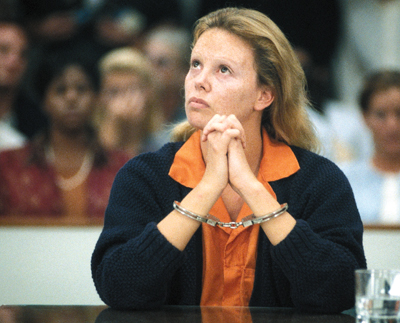
It’s this last part that’s getting to me. To what extent are we, the audience, culpable? Are we condoning crimes? Rewarding them? Encouraging them? Jordan Belfort likened himself to Gordon Gekko of Wall Street (the movie) – he was inspired by the character’s unscrupulousness. THERONWe can’t help how someone lacking a moral centre will interpret a movie (or a book, or a song, or a video game) – but we can and probably should stop giving these people a platform, or Hollywood’s version, a whole pedestal. Frank Abagnale Jr. was paid to work as a consultant on Steven Spielberg’s Catch Me If You Can. Aileen Wuornos became a recognizable name when Charlize Theron won the Oscar for portraying her in Monster – but can you name a single one of her victims? Those bratty, fame-obsessed kids who stole from Paris Hilton and her ilk were rewarded with reality TV shows and free trips to luxury rehab in lieu of prison sentences. When Sofia Coppola filmed her movie The Bling Ring based on their misdeeds, she renamed the characters so they didn’t get more famous – but she also paid $100 000 for the rights, which means they did get more rich. Piper Kerman went to prison on felony charges for laundering drug money and was rewarded heavily for it when Netflix decided to make a series out of her memoir Orange is the New Black – they paid her (and continue to), but paid for the “life rights” of several others as well. Nice work if you can get it. Philip Morris was a paid advisor on the film I Love You Philip Morris, in which a con man (Philip’s ex-lover) steps up his game to impress a fellow prisoner, including orchestrating elaborate prison escapes. Henry Hill capitalized on his gangster career with a line of spaghetti sauces, frequent interviews with Howard Stern, and a restaurant called Wiseguys, though Scorsese ultimately went with Goodfellas when it came time to release the movie. It may be the best mob movie ever made, but it glamorized the lifestyle and allowed Hill to thoughtlessly respond  “I don’t give a heck what those people think; I’m doing the right thing now” when asked what his victims might think of the commercialization of his story through self-written books and advising on the movie.

Does this sit right with you?


True Story with Matt and Jay

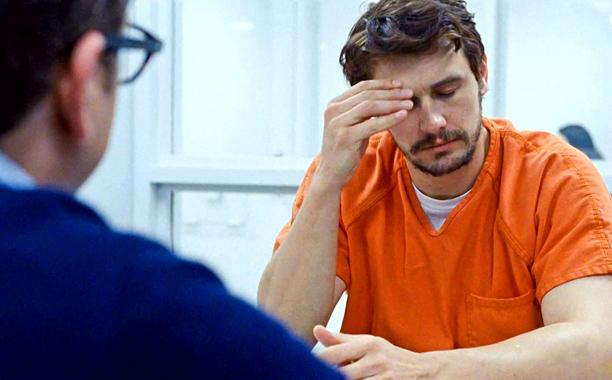
Both James Franco and Jonah Hill play against type in True Story, a dark true crime drama about the relationship between accused murderer Christian Longo (Franco) and journalist Mike Finkel (Hill). Franco has done his fair share of serious roles in the past (is there anything he HASN’T dabbled in?) and Hill has even been nominated for two Oscars but seeing them in a movie together primes me for gay jokes and arguments over who’s giving off more rapey vibes. They both did a fine job, Hill in particular, with Franco a little too self-consciously creepy, but I found the casting distracting.

truestoryfrancoWell, you hope that Franco is playing against type, but I guess we never really know what lurks beneath the pubic-hair beard. It was a bad casting choice; one or the other may have worked, but not both together. In fact, I’m not even sure I would keep Franco on my short list. He did the dead eyes thing a lot, and at first I thought, okay, that wouldn’t have been my choice, but at least he’s committing…but the more I knew about the character, the more I felt I needed to see grief or deviousness or SOMETHING. And yet I still enjoyed our little outing, dinner and a movie, trying Lansdowne Cineplex VIP’s new spring menu (though hasn’t it been spring for all of our visits?), indulging in a delicious lobster grilled cheese sandwich and a couple of raspberry-watermelon gin spritzes.

Poor Mike Finkel. One minute a Pulitzer feels like it’s right around the corner, the next he can’t even get hired to write a snowboarding piece. Maybe I’m a little jaded but I found the way he adjusted the details in order to tell a more powerful story easy to forgive. The film even tries clumsily to draw parallels between the stories of Finkel and Longo, the latter of whom strangled his wife and three children and stuffed them into suitcases. Not sure I see the connection.

Yeah, that was a weird angle. It’s like the writers felt they had an interesting story but had no idea how to present it. But Finkel’s indiscretion did feel relatively minor, having attributed a TRUE STORYfew extra details to a profile about African children. Did all of those things happen to the one kid? No. But he was telling a bigger story, and I suppose you and I could see that while his superiors valued cold facts over a story that moves. Either way, the rest of us would call those white lies at best – in a generous mood, maybe even “fudging” or “embellishing”, you know, the way I fudged the truth up there where a) I claimed we had dinner and a movie when in actuality we saw a movie, and then had dinner and b) I characterized the grilled cheese as delicious although in reality I found it to be ambitious movie food but ultimately soggy in the middle and overly crispy around the edges – so much so that I feared you were about to shush me at any  moment.

Longo accuses Finkel of being more like him than he’d like to admit. After all, Finkel did profit financially from telling this story. Is it a fair comparison? Not only did Longo murder his family, he shows no remorse and lies compulsively to protect himself. Was his a story that needed to be told- by Finkel or by the filmmakers- or is this more attention than he deserved?

I didn’t see them as being very similar at all. Multiple homicide is not equal to getting paid to write. I think Finkel was a bit motivated by career-redemption – it certainly kept him from following up on some serious red flags, and I think he may have been more guilty of journalistic negligence here than in his kerfuffle with the New York Times. He was a weak man but I don’t think he was a bad one. As for your last question, I’ve been thinking on that so much that I wrote a whole post about it – watch for it soon.

True-Story-phone-call-flippedThere may have been a good movie in here somewhere. Maybe if it really focused on the somewhat bizarre relationship between these two men instead of the maturation of these two actors. Or if it asked the right questions. It’s revealed at the end that the two men still speak semi-regularly. WHY?! There may be a much more interesting story there than the one told in True Story.

Agreed. There was nothing in the movie that suggested that these two would or could remain friends. One of the last scenes has Longo asking Finkel what he has personally lost by befriending him  – seems like a friendship-ending thought to me. I also felt that they didn’t properly address the whole stolen identity aspect, and the verdict feels a little…out of the blue. But the part that I find myself dwelling on the most is that end title card that read something like – Christian Longo went on to write for many publications, including The New York Times, from death row. Finkel never wrote for them again. It really made me feel like our social priorities are horribly fucked up. 

Pride

“There’s a long and honourable tradition in the gay community. When somebody calls you a name, you take it… and you own it”.

Ever since I’ve started reviewing movies, I’ve been surprised how often a character says something in a movie that reviews the film perfectly. Mark Ashton (played by Ben Schnetzer) seems to sum up Pride’s philosophy. Some have criticisized it as “formulaically cheery” and “gushy”. Seeming to have anticipated this response, Pride wears labels like “crowd-pleaser” and “feel-good movie” like a badge of honour. Its unapologetically sentimental, unashamedly light, and undeniably manipulative. And I LOVED it!

In 1984, a group of London-based lesbian and gay activists formed a small group in support of the miners strike called Lesbians and Gays Support the Miners. This is a tough side for both sides at first. Some gays and lesbians question why they should help the kind of guys that used to beat them up in school. And the miners in the small Welsh town that the group focuses on are about as pleased to accept help from homosexuals as Billy Elliot’s dad was to discover that his son was learning ballet. Soon though, the initial culture shock gives way to an alliance that builds friendships that last even after the miners strike is over.

Pride is based on a true story although I’m not sure how much of this actually happened. The bonds between the two groups come a little too easy and the atmosphere of homophobia may be a little watered down to fit the lighter comedic tone of this movie. But the fact that any of this happened is actually kind of amazing- that two groups of activists with different agendas would work side by side, daring to see their struggles not as “gay rights” or “worker’s rights” but simply as human rights, fighting injustice that they see done to others even as they have their own injustices to deal with.

Pride tends to keep things light but isn’t afraid to touch on some pretty serious themes as members of LGSM deal with coming out, hate crimes, and AIDS. Its filled with likeable performances from an ensemble cast that contribute to a very funny and moving film that I highly recommend.

Foxcatcher

I’ve been eagerly awaiting the release of Foxcatcher all year. Director Bennett Miller (Capote, Moneyball) is doing what few can do better- a film inspired by a true story. But it was Steve Carell, playing millionaire schizophrenic John du Pont, that I was most excited to see. This isn’t the first time he’s tried to surprise us. I was completely caught off guard by the sincerity of his performance in Little Miss Sunshine and even more so in Seeking a Friend for the End of the World. The more risks someone takes, the more I root for them and I knew that pulling off something so dark would be his biggest yet.

On his against-type casting choice, Miller apparently said “I think all comedians are dark”. After the recent passing of Robin Williams, the cliche of the sad clown has been discussed online at length but it’s always been especially on the surface with Carell who, even in some of his most straight-up comedies (The Office and 40 Year-Old Virgin in particular), has never been afraid to let his dark side show. Michael Scott, the boss from hell on The Office, can be obnoxious and selfish but Carell rarely forgets to play the sadness and loneliness that’s behind his less likable traits.

As John du Pont, Steve Carell doesn’t disappoint. I didn’t know much about this story at the start of the film and only knew that all this was supposed to end in tragedy so du Pont’s creepy persona and erratic behaviour unnerved me every time he was on screen. Carell plays him as unpredictable (quite a feat given that his voice rarely raises above a mumble) and nearly impossible to read. It’s a performance that I found impossible to forget as I tried and failed to sleep later that night and I hope Oscar takes as much notice as the Golden Globes have.

As for the film itself, it’s never less than compelling and held my attention long after it was done as I tried to piece it together for the next few hours. Miller uses dialogue only when necessary and seems more interested in telling his story through haunting images and the looks on Channing Tatum and Steve Carell’s faces, resulting in a finished product that is exceptionally well shot and edited and easy to admire. But because both leads (Tatum and Carell) say so little and because Miller keeps his audience at such a distance, there’s not much to get emotionally involved in.

The Bling Ring

In this week’s edition of stupid criminals: teenagers who take selfies of themselves committing crimes, at the scene of the crime, during the crime itself. The balls though. The fucking balls.

You may know that Sofia Coppola’s The Bling Ring is based on a real-life band of teenaged criminals who robbed celebrities blind. Although, considering the type of criminal, let’s qualify the type of celebrity: mostly reality stars like Paris Hilton and Audrina Patridge. And while most of us have trouble feeling sympathy for the Haves having a little less, the kids aren’t exactly Have Nots. Of course, you can always Have More. The crazy thing is, they’re just stealing because they can, because it’s there and they’re entitled, and they don’t give a fuck. They want for nothing…except maybe a good lawyer.

Most criminals are eventually caught. All stupid, blatant, idiotic criminals are caught. But even a brush with the law, strike that, several brushes with the law, doesn’t humbleMV5BZGQ5MzIxMTgtNmM3Yi00YmQxLWI1OWMtMWNmM2YwOGQ0Y2QzXkEyXkFqcGdeQXVyNjQ4ODE4MzQ@._V1_ them. The more, More, MORE monster must be fed and soon our band of merry robbers are graduating to the likes of Megan Fox, Rachel Bilson, and Orlando Bloom. The gossip magazine lets them know when someone’s away, and Google offers up their address. The drugs and their hubris make them sloppy. Their egos make them indiscreet. It’s not so much that they wanted to be caught, but that they genuinely thought they were invulnerable. And for a time they were.

This film is beautifully shot. A stand-out for me is a particular robbery of a glass-walled house in the hills. The camera is set far back, and we’re observing the house from some distance. We witness the intruders moving from room to room, turning on lights one at a time. It’s a beautiful, well-plotted scene. And like all Coppola films, this one maybe more than most, the sound track boasts a lot of great songs.

However, not unlike its protagonists, The Bling Ring ends up being kind of superficial. I get that production probably spent a pretty penny recreating Paris Hilton’s boudoir. But scene after scene of theft that looks like Christmas morning should not come at the expense of motivation. Who the fuck are these kids? Who gave them such a sense of entitlement? These perpetrators are so self-absorbed that they gave interviews on how hard it was to do prison time with one of their victims – Lindsay Lohan. How hard it was to stay strong in the face of her tears. It’s hard, as a viewer, not to feel the bile rise. And while I don’t want to glorify these terrifyingly stupid, self-centered criminals, I’m not sure what good this movie is if it doesn’t offer up insight.

The Diving Bell and the Butterfly

How do you go on living if you wake up one day unable to speak, unable to move, and only able to blink one eyelid?

diving-bell-1

This is the seemingly impossible challenge faced by former real-life French Elle editor Jean-Domonique Bauby after, at the age of 43, he suffers a massive stroke. Bauby has team of talented and empathetic doctors, nurses, and speech therapists to guide him along the way but overcoming the understandable paralysis of self-pity will have to come from within. Learning to communicate again won’t be easy. Especially when, as you’ll soon see, communicating with his family wasn’t easy for him to being with.

Shot almost entirely through the one good eye of a paralyzed man, The Diving Bell and the diving_bell_04Butterfly could easily have been unwatchable. Instead, director Julain Schnabel offers us something life-affirming and almost excruciatingly beautiful. Schnabel’s lens takes us on a breathtaking journey through Bauby’s imagination while Bauby’s interior monologue, based on his own memoir, is painfully honest but often very funny.

The great Mathieu Amalric, who you may know from American films such as Quantum of Solace, Munich, and The Grand Budapest Hotel, gives an unforgettable performance, almost literally without moving a muscle. Also, watch out for the lovely Canadian actress Marie-Josée Croze as a speech therapist with unwavering faith and Max von Sydow as Bauby’s father. If you aren’t bothered by French subtitles- or a POV shot of one’s one eye being sewn shut, you just might be glad you gave this film a chance.


Rise

Based on a true story, Rise is the story of Will, a young nurse falsely convicted of rape and sentenced to maximum-security prison. The story focuses on his unlikely friendship with a hardened fellow inmate, and the lawyer making sacrifices on the outside to get him out.

Writer-director Mack Lindon is that nurse, and Rise is his story. It’s personal to him. It means something. I hope the process of creation was cathartic for him because he understandably has some demons to exorcise.

The movie paints a pretty fair portrayal of both guards and prisoners, a rarity among prison movies. The movie doesn’t seek to make devils out of anyone, not even the woman whose lies have condemned him. It’s more a story of struggle and survival. However, I still would have liked to have at least heard from his accuser. Her voice is absent from the movie and that only raises red flags.

Prison is a degrading experience for anyone – but what does it do to an innocent man?