Tag Archives: Canadian content

Whistler, Day 4

Born To Be Blue: Ethan Hawke plays Chet Baker during a period of born-to-be-blue-pstr01time in the 1960s when he was approached to make a movie about his troubled life as part of a comeback effort. It’s inspired by Baker, but not a true biopic, so Hawke has plenty of room to spread his wings and make the character his own, in what is probably one the best performances of his career. His charming junkie act lends a little humour to the proceedings, surprisingly, so it’s not as bleak as you might think. His co-star, Carmen Ejogo, plays a composite character representing Baker’s “women” and is stunning, not just because she’s beautiful but because she gives a delicate and refreshing performance, a real break out, and fearless alongside such a seasoned professional. Canadian actor Callum Keith Rennie rounds out the cast as Baker’s long-suffering agent, and he attended the screening to tell us all about painting fake palm trees born-to-be-blue01to make Sudbury pass for California, and squeezing in the shots before the first snowfall of the year. This movie was a real passion project for Hawke and it took a long time, and funding from both Canada and the UK, to get the thing off the ground. It’s a real treat for jazz fans because the music permeates this film, as it should. It’s filmed in a kind of jazzy way too, a little offbeat maybe, but with plenty of sparkle. So if you can get over Hawke’s terrible Chet Baker teeth (or lackthereof), you should find lots to enjoy in this fantastic, tragic film.
 
 
685RIVER_INTERNATIONAL_ONE_SHEET_V0c

River: An American volunteer doctor in Laos becomes a fugitive when he intervenes in the rape of a young woman and her assailant’s body is later pulled from the Mekong River. It’s one of those spiralling, out of control situations, and we’re right in the heart of it thanks to writer-director (and Canadian!) Jamie M. Dagg. Fuelled by fear, the doctor makes an attempt for the US embassy. The editing has energy that propels the story forward, but it’s more than just a thrilling escape attempt. This movie leaves you wondering about the ethics of visiting or living abroad – obeying laws that may clash with your own ethics, and who pays the price when the two disagree. Sean’s got a great review of the movie here.


The Legend of Barney Thomson: Robert Carlyle directs himself in the eponymous role, an awkward and shy Glaswegian barber who just so happens to take up a new hobby: killing. An inept local thomsondetective (Ray Winstone) is on to him, and it becomes a battle of the bumbling fools to see whose luck will run out first. One thing Barney’s got going for him: his mother, played uproariously by the ever-wonderful Emma Thompson, who goes balls to the wall with her delivery. Kitted out with a prosthetic neck, her accent is through the roof and it’s the most fun I’ve seen her have with a role, maybe ever. The movie is FUNNY. The accents are a little thick to my Canadian ears, but the jokes land so quickly that I never struggled for long. It’s like the Scottish Fargo – an absurd farce that’s just a whole lot of fun. Carlyle was very humble at this, the North Emma-Thompson-On-Set-Movie-Legend-Barney-Thomson-Tom-Lorenzo-Site-TLO-4American premiere of his movie (sidebar: this one too was funded with Canadian dollars!). He called his character’s suited look a tribute to his father – “My dad was a tie man his whole life.” He acknowledged several other personal touches, including shooting on locations where he’d grown up. He credited Danny Boyle with being a particular influence – “he just creates the right atmosphere” and taught him “not to interfere.” He also called a certain scene a “definite nod to David Lynch” (his Blue Velvet, in fact), but I won’t spoil it for you because it’s sure to make you smile. This movie was entertaining and well-executed, so I was surprised how emphatically Carlyle responded to an audience member who asked “Do you want to direct more films?”, the answer being “No!”


River

Of all the films we saw at the 2015 Whistler Film Festival, River was my favourite, and apparently, I’m not alone.   When the bulk of WFF’s awards were handed out yesterday, River won the Borsos Competion for Best Canadian Feature Film!

As well, writer/director Jamie M. Dagg was honoured twice in connection with River, for Best Director and Best Screenplay (naturally).  River’s lead, Rossif Sutherland (Donald’s son and Kiefer’s half-brother) also received an honourable mention in the Best Performance category.  And when the People’s Choice Award is announced tomorrow, I will be rooting for River to win that too, because it’s awesome.

What was it about this movie that grabbed me?  There’s so much there to love.  It’s a Canadian-Laos co-production, the first of its kind and the first western movie to be filmed in the southeast Asian country of Laos (if you’re rough on your geography, Laos is nestled between China, Vietnam, Cambodia,  Thailand and Myanmar).  It’s hard to call anything we see onscreen beautiful, exactly, but the surroundings almost become a character of their own.  The title, though generic, is fitting because the seemingly omnipresent water is an obstacle that our protagonist grapples with again and again.

The movie starts in a frenzied emergency room and the tension only builds from there.   Every sight and every sound tightened the knot in my stomach as I watched the action unfold from there.  The cinematography is fantastic, the editing is tight, the score is amazing, and Rossif Sutherland is a revelation as Dr. John Lake.  Dr. Lake is one of the doctors in that frenzied opening scene, and the outcome results in him being asked to take some time away.  After a night of drinking at a vacation spot in south Laos, Dr. Lake witnesses a sexual assault and from there everything goes to hell.

Rossif commands our attention right away.  He’s got more than a little Jack Bauer in him, frenetic, unstoppable, and big enough to have eaten Kiefer whole.  But Rossif is clearly set on making his own name rather than relying on his lineage, and in River he delivers a star-making performance.  From the start, Dr. Lake is not a super likable guy, but Rossif makes us root for him anyway. We’re with him all the way through his journey and Rossif owns every single frame.

At all times, Rossif is an overpowering presence in the best of ways, and it is clear that the foundation for his stellar performance is Jamie Dagg’s work behind-the-scenes.  It’s hard to believe this is a Canadian movie and even harder to believe this is Jamie’s first feature film.  The action scenes, and there are many, flow naturally, are perfectly staged and suck the viewer right in.  Despite the fact we know in our gut that this can’t end well, we follow Rossif eagerly, because he and River are so compelling.  And just when you think it can’t get any better/worse, Dagg’s script delivers a fantastic payoff that elevates Dr. Lake and this movie to a whole new level, which did not even seem possible because what came before was already so great.

During the Q&A, we were told that this movie is being given a wide release in the spring of 2016.  How wide seems yet to be determined, but this is a movie you need to track down and experience.  Because River will take you on a wild ride that you won’t soon forget.   Don’t miss it!

Thoughts and Themes from Whistler Film Festival

Whistler Film Festival’s slogan is “Inspiring and Connecting Stories that Matter”, which is so generic I had to look it up even though it is attached to the pre-movie montage at every screening and we’ve seen ten movies in the last four days. But in the spirit of WFF’s slogan, here are some thoughts and themes inspired by our time here at the festival.

1. Consistently great Canadian movies

At least half of the movies we saw were Canadian or co-Canadian productions, and they were consistently good.  Canadian content rules have conditioned me to see Canadian movies as filler and nothing more, but I need to get over that notion and Born to be Blue, How to Plan an Orgy in a Small Town, The Legend of Barney Thomson, and my favourite of the festival, River, are helping me ease into that new mindset.

2. Real-life storm porn

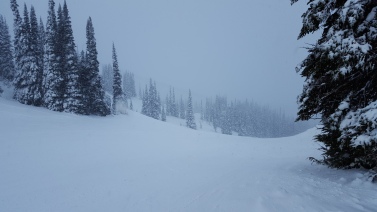
It’s a good thing we brought an umbrella.  The local weather forecast called for 110 inches of snow this week.  I didn’t bring my ruler, and most of that snow had turned into rain by the time it reached the village (which is 5,000 feet below the mountain peaks) but I think for once thwitnere meteorologists got it right.  Even the rain was pleasant, though, and the thick, fluffy
snow capped off the idyllic experience in this beautiful mountain town (or more accurately, “resort municipality”, because it doesn’t seem that anyone actually lives here).

3. Technical difficulties

From long, unmoving lines in an empty 8 theatre cinema, to lines that were permitted to mhqdefaulterge when they should have been kept separate, to triple viewings of the same commercial, to cancelled screenings, to reserving more than half the seats in a theatre for patrons who never showed, the Whistler Film Festival was an utter mess.  This topic deserves its own article, so stay tuned!

4. Australians

There must be more Australians in Whistler than anywhere outside Australia.  It’s absolutely insane that their accent here is more common than ours.  Whether you’re in the gondolas, hotels, theatres, coffee shops, pizza places, box offices, restaurants, equipment rental places, or grocery stores, in Whistler there is no escape from talk of dingoes eating babies.

5. Uncircumcised penises and other gratuitous nudity

I lost count of the number of penises I saw this weekend.  It was a lot.  And I think there might have been even more times when I thought, that woman is only naked because the director/screenwriter/executive producer wanted the excuse.  omg-gross-roger-rabbit-censored-1

Then again, this whole art instead of porn approach is one I can get on board with!

That’s all I’ve got for now but we have a five hour plane ride coming up so that will give us lots of time to come up with more to say.

Whistler, Day 2

This day ended up being nothing like the one we had planned. It was supposed to have been crazy in a 4-movie kind of way, but as you’ll see it ended up being crazy in an unanticipated kind of way.
 12009642_729776313832592_461311092944717881_n
The Life and Death of an Unhappily Married Man: This ultra-indie (made for less than I have in my bank account on any given day), a dark comedy written and directed by Josh Hope, tells the tale of Riley (Tommy Beardmore), perpetually irritated by his wife and miserable at his job. The opening scenes of the movie don’t exactly make you sympathetic to his plight, however – could it be that Riley himself is the architect of all his pain? If every single facet of your life is going wrong, the only common denominator is you, Riley. It’s hard to watch a movie having no sympathy whatsoever for the main character; it’s even harder to do so when the man who wrote and directed the film, based on his own real-life experiences, is sitting next to you in the theatre. Matt and I agreed afterward that we couldn’t decide if it was bad writing or bad acting that made whole scenes fail. It felt like it was trying too hard to be a quirky movie while actually being ridiculously unimaginative. Sean had a slightly kinder outlook, but here’s what it boils down to: nobody died. And I think there has to be a rule that if you announce in the title there’s going to be a death, you bloody well better go through with it. And furthermore, if you’re going to create a character this irritating, then you’d better reward us with his destruction. Anyway, we’re very happy that the director got to exorcise some demons in the making of this film, while also convincing lots of young actresses to remove their tops (needlessly, sure, but there is no balm to the divorced man’s soul like young, nubile, goosepimply tits). Kudos to him.


How To Plan An Orgy in A Small Town: Like the previous one, thisMV5BMTUzMjU2NzA4Ml5BMl5BanBnXkFtZTgwNzM0MTg5NjE@__V1_SX214_AL_ independent film was crowd-funded, made on a teeny budget, and vied to be crowned ‘Most Awkward Title 2015’ . It’s about a “town slut” turned successful sex columnist who has to go back home for her mother’s funeral only to encounter the awful people who chased her away, who are now begging her to organize an orgy for them. This little Canadian gem is written and directed by Jeremy Lalonde and I’m happy to report that while there’s also heaps of nudity in this one, the whole thing was pulled off an awful lot better than the one we saw before it. It’s probably  not fair to compare them, but we’re at a festival, we’re watching movies back to back, and it can’t be helped. We rated this movie better on every score: the writing was better, the acting better, the score was better. The jokes landed. In fact, the jokes were funny to begin with, and then well-executed. The scenario was a bit of a stretch but it asked you to go along with it, wink wink, and so we did. Matt thought it was a little “low-brow”, which is frankly probably what won Sean over. It’s not arty. It’s not putting on airs. It really is the kind of weirdos you’d expect to show up to a small town orgy, and you kind of love it for that. If you’re familiar with small towns at all, you’ll find something to relate to in this movie. The lead actress, Jewel Staite, looked awfully familiar to all of us without any of us being able to say why. She must be one of those Canadian staples that just floats around in everything, but I can tell you this: we’ll be deliberately looking out for her from now on. I loved her sarcasm, her cynicism, her naiveté. This character is interesting, and she pulls her off with a wry, shy charm. The cast as an ensemble was actually very solid, and we had fun discussing our favourite characters over dinner – and nearly all of them were mentioned at one point or another. So this is how you assemble a successful indie film: you work and rework the script; you find great talent. And you don’t start filming until you have done both those things. And when it comes time to film the nude scenes, you film quickly, and without permits. Is it weird that the director of both these movies told about illegally filming public nudity? Should we be worried about our film selections? Nah. I think we’re cool.


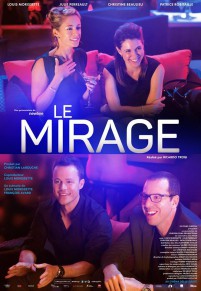
7d3340a1d2d14c92b1137e346b554afeLe Mirage: This one garnered some controversy when it was released in its home province of Quebec earlier this year. It’s about a 30-something man who seems to have it all – a successful business, a beautiful wife, an impressive home, great kids. But things aren’t as swell as they seem and instead of telling his wife about the trouble they’re in, he turns, instead, to her best friend, newly implanted with ginormous tits, the new object of his fantasies. It doesn’t sound all that out there, but there’s … an aggressive kiss. A kiss aggressive enough that some people were calling sexual assault. I’d like to give you my take on it, but the truth is, for first time in Asshole film festival history, we missed a screening. Entirely our own fault. Sean decided last-minute that in fact, he could not come all the way to Whistler and not ski the mountain. But he’d in no way prepared for this, so we scrambled around to rent all the necessaries, and that cut into our movie-going time. I’m sad to have missed it, but not sad that life got in the way. We love movies, but they’re only a portion of our happy lives, not the entirety.


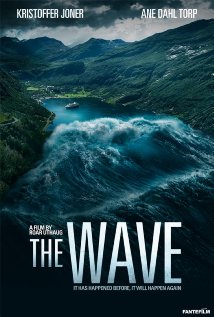
The Wave: This is Norway’s official entry for Oscar consideration inMV5BMjI2NDUyODgyMV5BMl5BanBnXkFtZTgwMTM5NDY1MzE@__V1_SX214_AL_ the foreign film category, and it’s Norway’s first disaster movie. The mountain pass of Åkneset is constantly moving and could fall out at any time. This movie imagines that it does, and creates a huge tsunami that’s going to threaten the lives of anyone who gets in its way. Sean and I were very excited to see this one but alas, we were told that there were “technical difficulties” and it would be delayed by at least 90 minutes. People dispersed to kill time alcholically (I’m assuming) but we stuck around long enough to hear that in fact it was cancelled altogether and so we parlayed our useless tickets into another screening.


Gaspar Noe’s Love: What better way to end the day than with NoeLovePoster-thumb-630xauto-51550graphic, unsimulated sex. That’s right: it’s not porn, it’s not acting, it’s just sex, up on the big screen (and possibly in 3D, if you’re lucky – just watch out for that money shot!). Murphy is an American studying film in Paris who hooks up with unstable,erotic Electra. Their sex life is turbo-charged, and then one day they get the very good idea to invite their pretty neighbour to join them, because why not? So yeah. If you thought our day was jam-packed with sex and nudity already, let me tell you, that was only a little light over the clothing petting compared to this. Two and a half hours of graphic, penetrating, relentless sex. You don’t even realize how unsexy sex is until there’s such an onslaught of it: every inch of Murphy’s constantly turgid penis, the sloppy wet noises of fervid humping, the moans of ecstacy, the sighs of agony (or were those just mine?), the slapping of balls, the scrunched up orgasmic faces, the curled toes, the semen. Oh, the semen. There is literally a cum shot that will make you flinch as it spurts toward your eye. No detail is spared when it comes to Murphy’s cock, but only dark, hairy triangles of mystery where the women are concerned – and why is that? You haven’t seen this much hair on a woman since 1974 so I can only assume its point was to obscure. And while we clearly see every last bit of Murphy’s erection as he plunges balls-deep into one woman or another, we never get a single glimpse of anything pink and glistening while he eats her out, or fucks her with his thumb. The vulva is a beautiful flower but apparently not worth showing. So I hated this movie for its singularly male experience, but since I hated this movie for many reasons besides, it seems unfair to dwell on this one thing. But since my laptop reminds me that it’s 4:06am back home, I might save those other reasons for another day. We have to attempt some sparse sex acts of our own now before dreaming in 3D.

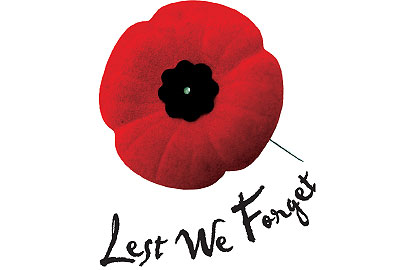
Lest We Forget

November 11th is Canada’s national day of remembrance, and is a memorial day observed by many Commonwealth nations to remember the members of their armed forces who have died in the line of duty. It marks the 11th hour of the 11th day of the 11th month, the end to hostilities of the first world war (in 1918). At 11am we stop, as a country, whether at work, play, or school, for two minutes of silence, just a small slice of our lives for such a large sacrifice of theirs.

Lest-We-ForgetWe wear red poppies, the flowers that bloomed across some of the worst battlefields of WWI (commemorated in the poem “In Flanders Fields” by Canadian John McCrae), that have come to symbolize the blood spilled during war. They are worn as an emblem of peace – so that we don’t forget, so that no more blood is spilled. The poppy campaign actively supports retired veterans and their families.

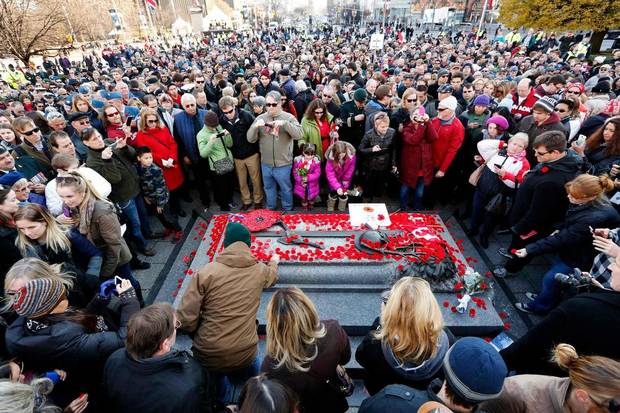
Our remembrance ceremonies happen right here, since we live in our Nation’s capital city, Ottawa, at the National War Memorial. An honour guard – unarmed soldiers – stand by the War Memorial, and the tomb of the unknown soldier year round as a tribute to their fallen brothers and sisters. Last year Sean, Matt and I attended the ceremonies just as our city was still 4829_duck_boards_1020mourning the attack on Parliament that had occurred just a few weeks before and resulted in the death of one of the honour guard right on that very spot. Thousands of Canadians came to watch the solemn parade of veterans march in, the road being opened for the first time since the attack. The city was still a little shaky, but there is something so dignified and uplifting about those veterans and their determined entrance. The pack dwindles every year; many who remain have to be supported by others, or rolled in wheelchairs, but their presence is invaluable for young Canadians who have never known their country at war. At the close of the ceremony, we leave our poppies on the tomb of the unknown soldier and we file out to the sounds of the bells day-inphotos11rb1tolling at the Parliamentary peace tower (a 53-bell carillon, in fact). The peace tower was erected after Parliament burned down in 1916 as a tribute to Canadians who gave their lives to the great war. The memorial chamber up top is a vaulted room with stained glass windows illustrating our war record, and brass plates made from spent shell casings found on battlefields inlaid into the floor. There’s also a book of remembrance containing the names of all Canadians who gave their lives in service of their country. Every day a page is turned to reveal more names. Sean and Matt both have family members listed in that book; every year their families will receive notification of which day those names will be seen publicly.

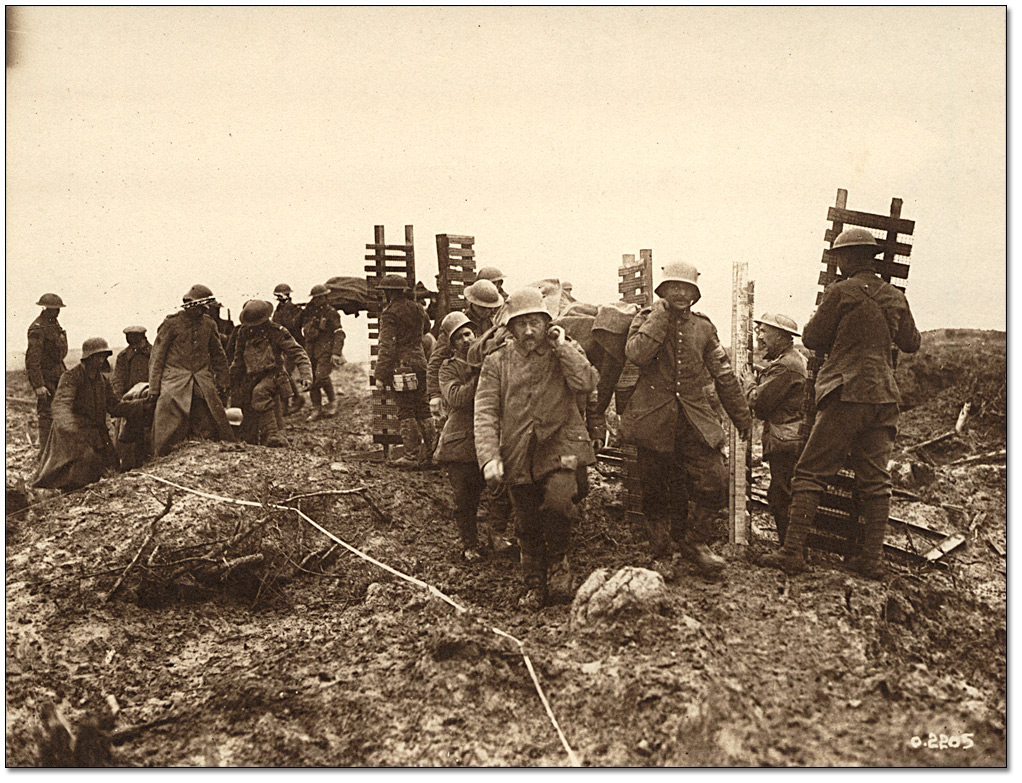
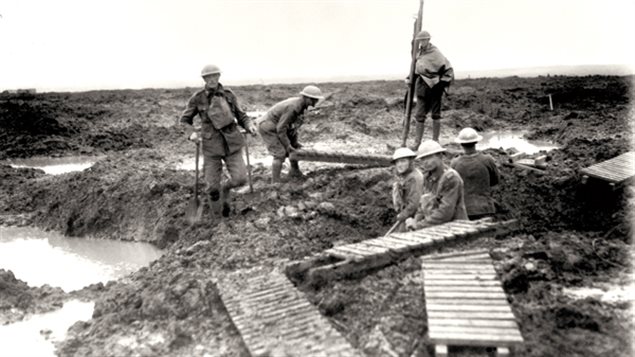
Canada is a small country that fights hard for what it believes to be right. 110 000 lives were lost 141106_8i2mz_rci-m-duckboards_sn635between the two world wars (619K served and 65k died in WWI alone when we had a population of less than 8 million), but Canadians played invaluable roles overseas, notably in battles at Ypres, Vimy Ridge, and Passchendaele during WWI, and Dieppe and Normandy during WW2. We are often forgotten in blockbuster war movies, but not by the people who benefitted. All these years later, a Canadian travelling in France will always be greeted warmly.

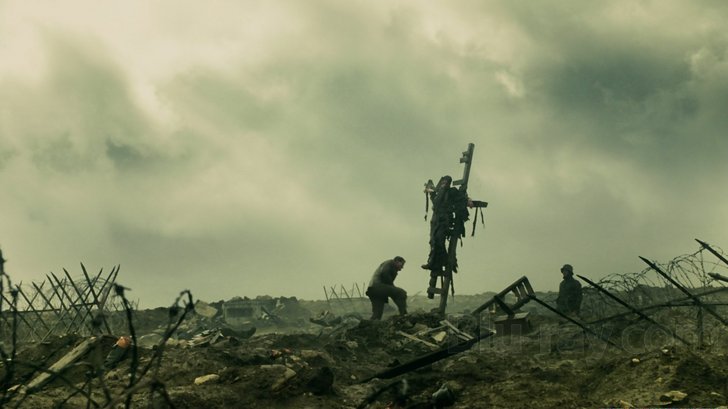
Passchendaele is “our” war movie, likely overlooked by anyone outside our borders, written and directed by Canadian Paul Gross. Gross’s grandfather was a veteran of the first world war, and he incorporates a lot of personal touches into the script, including his grandfather’s deepest secret and greatest regret: having bayoneted a young enemy soldier in the forehead. His imagesCA82C4IAgrandfather was still muttering for forgiveness on his deathbed. It’s crippling to think not just about all the young men who died over there (and whose bodies remained over there), but think of those who came back, having done their duty, but paid a very high emotional price.

The film is no technical achievement. Gross pays his respect by sticking to historical fact within the constraints of a Canadian budget. It can’t have been easy to balance those things, and the unevenness shows through. But I’m going to forgive the flaws because when a man goes awol  because he can’t cope with the fact that he’s received a2717_1 medal for having bayoneted a kid, it’s kind of a powerful thing. And because our very real war contributions have tended to be forgotten by film, this is a story that needed to be told, and deserves to be seen. I wish it was better but I’m glad, at least, that it exists.

Passchendaele (now called Passendale) is only 12 km away from Boezinge, where Canadian war physician John McCrae wrote his famous poem “In Flanders Fields”. Lt.Col. McCrae died of pneumonia in 1918 near Boulogne-sur-Mer, and lies buried in Wimereux. The battle at Passchendaele was for control of the ridges south and east of the Belgian city of Ypres, about T070412-IMG_83028km from a railway junction vital to the Germans’ supply system. The allies fought the Germans but were unable to clinch because of unusually wet conditions (the mud was a defining characteristic), the onset of winter, plus the diversion of British and French resources to Italy. The campaign ended when the Canadian Corps arrived and captured Passchendaele with a series of well-executed attacks. The Canadian Corps is commemorated with a memorial in a small, keyhole-shaped area of land on the fringe of Passendale village, aptly dubbed ‘Canadalaan.’ The park is lined with maple trees.

Thank you for your service. Thank you for your sacrifice. Thank you for my freedom.

9e70aab44577a6589f7015fe28ddc29f

TIFF: The Grolsch People’s Choice Award

The Toronto International Film Festival is non-competitive. There are no juries, and there are no conventional prizes, like best picture, or best actress. It is a festival for the people, by the people, so it is fitting that it is the people who vote.

Every feature film shown at TIFF is eligible, but only the people who saw that film can vote.  The winner always generates some Oscar buzz, and many do go on to win best picture at the Academy Awards (Chariots of Fire in 1981, American Beauty in 1999, The King’s Speech in 2010). You can vote as many times as you want; if you see 20 films and love 18, you can vote for all 18. Of course, only the movies that are screening at TIFF are eligible, but since TIFF is now second only to Cannes in terms of influence, and the timing is good, well, it’s a powerful start to the race.

Past winners include The Imitation Game, 12 Years A Slave, Slumdog Millionaire, Amelie, The Princess Bride, and Roger & Me. Gavin Hood, director of Eye in the Sky, which is in competition this year, was thrilled to have his film Tsotsi win in 2005, which helped spark his career and really put him on the map.

A great big congratulations to this year’s People’s Choice winner: Lenny Abrahamson’s Room. You may have heard me whining and complaining about how I didn’t get to see this one, and it was the one I MOST WANTED TO SEE (#firstworldproblems) but then a TIFF miracle occurred and we ended up making a last-minute screening on Friday evening (it was supposed to have been Johnny Depp’s London Fields, but the director sued the producers and the movie got pulled, and Jay & Sean got to see an incredibly good movie that’s already humming with Oscar buzz).

room

Brie Larson plays a young woman abducted and kept captive by her abuser for many years. While living her miserable existence inside Room (a garden shed, as it turns out), she has a son, and their bond, as you can imagine, is uniquely strong and close and complicated. They eventually manage to escape, and it’s this reintroduction to the world (and in her son’s case, his first meeting of it) that is the biggest challenge of all, and the crux of the film. It’s nuanced, highly emotional, and superbly acted.

Congratulations also to:

Best Canadian Short Film goes to Patrice Laliberté for Overpass. Sol Friendman of Bacon & God’s Wrath got runner-up, and many of you noticed its appeal right here.

Best Canadian First Feature Film goes to for Andrew Cividino’s Sleeping Giant.

Best Canadian Feature Film goes to Stephen Dunn’s Closet Monster. The jury remarked, “For its confidence and invention in tackling the pain and yearning of the first love and coming of age of a young gay man in Newfoundland, the jury recognizes the remarkable artistry and vision of first-time feature director Stephen Dunn for Closet Monster.” This award carries a cash prize of $30,000 and a custom award, sponsored by Canada Goose. The Assholes were big supporters of this film and are so glad it got some well-earned attention.

The prize of the International Federation of Film Critics (FIPRESCI) for Special Presentations is awarded to Jonás Cuarón’s Desierto. The jury remarked, “For using pure cinema to create a strong physical sensation of being trapped in a vast space and hunted down by hatred in its most primal form, FIPRESCI presents the prize in the Special Presentations programme to Desierto by Jonás Cuarón.”

We had a super great time at TIFF this year and look forward to actually being in our home next weekend for the first time in 5 weeks. It’s the best kind of tiring to see all of these labours of love appear on the big screen for the first time. Thank you so much to everyone who has taken the time read along – you don’t realize how much that means to us, but it’s a real treasure to hear from you and we hope that to continue the conversation because movies are our passion and some of them really are worth all the words.

TIFF 2015: Remember

rememberSo begins Day 4 of my trip to the Toronto International Film Festival. It’s 9:30 in the morning and I’ve already seen 9 films and am worried that TIFF fatigue may be setting in. How much enthusiasm ccan I possibly muster up in four days?

If I didn’t have such high hopes for the latest film from Atom Egoyan (The Sweet Herafter), I probably would have been more tempted to sleep in. Unfortunately, the trailer and write-up on the festival’s website had really caught my attention. I was not disappointed.

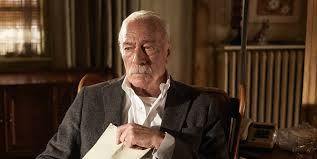
Egoyan specifically asked us to write spoiler-free reviews, which I have to admit made me feel pretty special to be getting a direct appeal from such a respected filmmaker so I want to respect his wishes. I can tell you that Christopher Plummer plays Zev, a Holocaust survivor who is now living in a nursing home. With his memory beginning to incline, he has no choice but to follow the mysterious Max (Martin Landau)’s step-by-step instructions to escape from the home and track down and exact vengence on the former Auschwitz guard who murdered both their families over 70 years ago.

Remember works equally well as a thriller as psychological thriller as it does meditation on memory and trauma. There are elements throughout the film that you may have seen before but the creative casting of the 85 year-old Plummer as the lead keeps the story from ever feeling too derivative.

TIFF 2015: Closet Monster

closet monster 2

The world premiere of Closet Monster, which screened on Sunday as part of TIFF’s Discovery program, was a heart-wrenching experience and I don’t just mean the film itself. Director Stephen Dunn wept openly when asked whether his first feature film was auto-biographical in any way and recounted the story of a hate crime that happened in the Newfoundland town that he grew up in and the fear of his own sexuality that it instilled in him.

Described by the TIFF website as “a coming-of-age (and out-of-the-closet) story”, this small Canadian drama is as much about living with trauma as it is about coming out. Oscar (Connor Jessup) witnessed a brutal hate crime growing up similar to the one described by Dunn and the memory has haunted him ever since. As he is terrified to discover that he himself may be gay, every sexual impulse triggers graphic flashbacks of the incident. His crisis comes to a head when a cute male Montrealer shows up in town for the summer.

Closet Monster is not a perfect film. Most of the problems seem to come from Dunn’s inexperience as a feature filmmaker. A plot device involving a talking hamster (voiced by Isabella Rossellini) is needlessly bizarre and goes nowhere. I found this easy to forgive though given the director’s obvious passion for the project. I got the sense that making even a single cut from material that he was so close to would wound him deeply.

There’s plenty to admire. Oscar’s anxiety about being true to himself is beautifully depicted, both through conventional drama and surreal fantasy sequences. And Jessup, who impressed me at the Festival three years ago in another small Canadian film called Blackbird, continues to be a young actor to watch out for.

Closet Monster isn’t always easy to watch but it is mostly very effective and moving and, if you’re up for it, I hope you’ll seek it out.

Tiffing Like Crazy

I hardly know how to begin summing up our crazy time at the Toronto International Film Festival. We’re actually only about halfway through our experience, but if I don’t start putting down some thoughts now, I’m going to run out of usable memory space.

Day 1

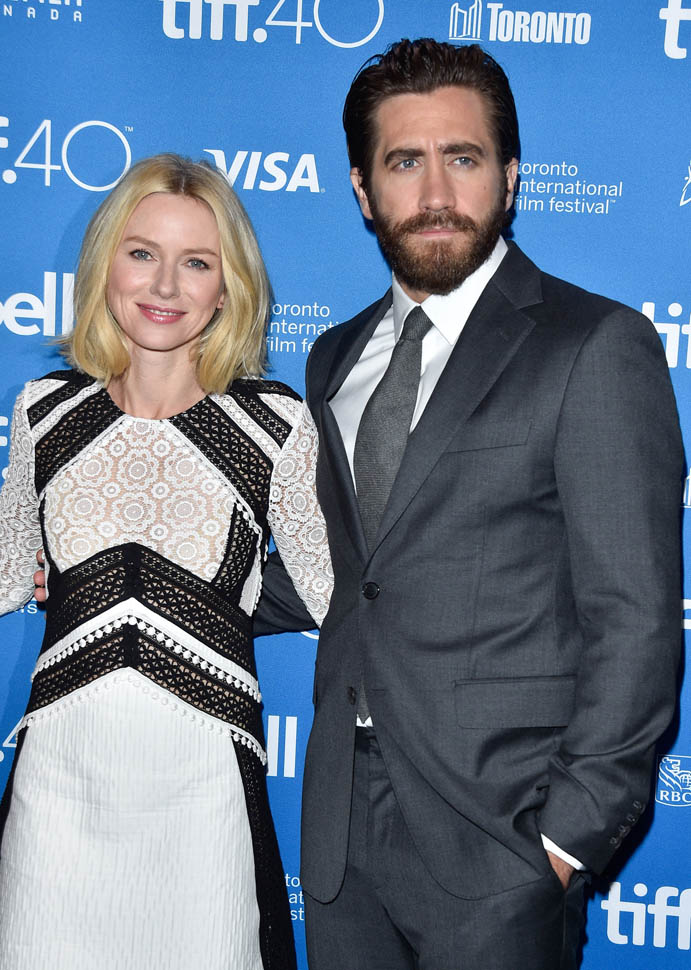
Demolition: Our first film of the festival is still probably my favourite. Music-obsessed Canadian director Jean-Marc Vallée (Dallas Buyers Club, Wild) calls this the “most rock-n-roll movie I’ve ever made” and while that’s not the descriptor that immediately came to my mind, I do get where he’s coming from. I would call this movie vigorous. It’s very alive, ironically, since it’s about a man (2015 Toronto International Film Festival - "Demolition" Press ConferenceDavis, played by Jake Gyllenhaal) who’s been numb for the past dozen years or so. It takes the sudden death of his wife for him to realize that he probably didn’t love her. And once that realization is made, his whole life starts to tilt to the left. He becomes obsessed with understanding and improving small, safe things: the leak in his fridge, the squeak in a door, the defective hospital vending machine. A surprisingly confessional letter about the latter connects him to a lonely customer service lady (Naomi Watts) and they stumble together toward truth, just two lost souls helping each other without even meaning to. Gyllenhaal is nothing short of amazing. We see him removed from grief, literally doing whatever he can just to feel – manual labour, loud music, the embracing of pain. Gylllenhaal does disconnection eerily well. But he also has some bracing bonding scenes with a young co-star, the two careening from frank discussions about homosexuality in Home Depot, to the point-blank testing of bullet proof vests. The mourning in this movie is off-kilter to say the least, and jumpcuts and flashbacks keep the loopy momentum going – sometimes quite elegantly, as the editing and cinematography are both superb. Davis busies himself with demolition – he likes taking things apart, methodically, to see how it looks inside, but he can’t quite put it all back together. The physical demolition of his house, of the things surrounding him, serves as an apt metaphor for his sorrow, for his life up until now. It is brutal and quirky and offbeat. Gyllenhaal has been turning in solid performance after solid performance, but this one might be The One. It’s an unconventional movie but also deeply spiritual in its way. Jean-Marc Vallée, when asked after the movie about this theme, responded: “Have you ever smashed the shit out of something? It feels great!”

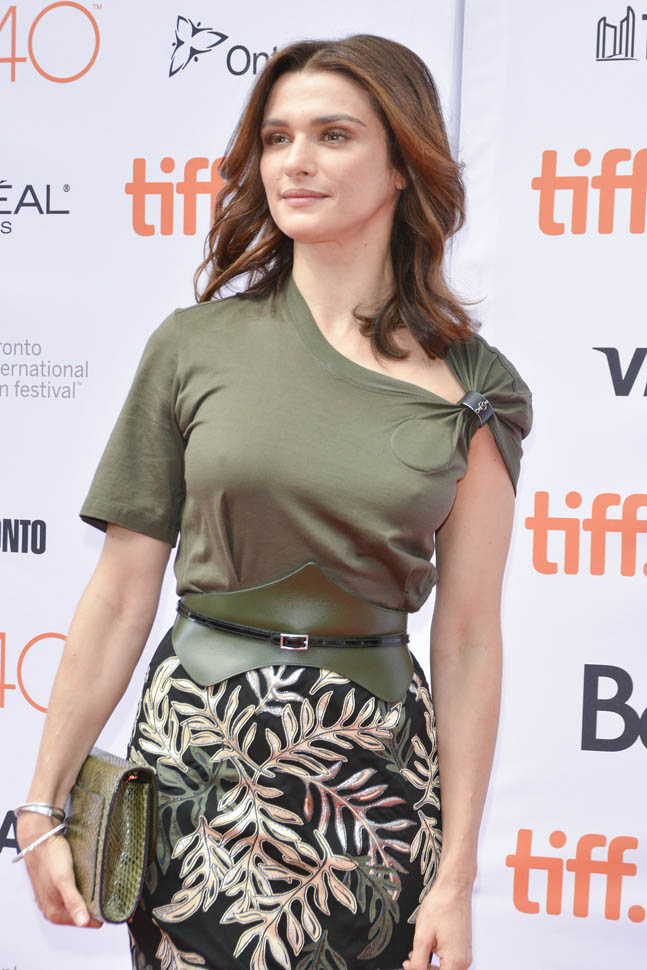
The Lobster: I realize now, having used words like quirky and offbeat to describe Demolition, that there aren’t words to describe this one. Director Yorgos Lanthimos is a sick man. He has imagined a world not so unlike ours, he thinks, where single people are so ostracized that it’s 40th TIFF- 'The Lobster' - Premierebeen made illegal to be without a spouse. When alone, they’re forced into this hotel where they either find a mate, or get turned into an animal. Many fail. Exotic animals abound.This is how we meet Colin Farrell and John C. Reilly as they desperately attempt to be lucky in love. It’s got the deadpan feel of a Wes Anderson movie, only instead of the warm and fuzzy nostalgia, there’s bleak and panicky hopelessness. This movie won’t appeal to most, or even many, but if you can stomach the brutality, this movie is not without some major laughs. And believe me, you earn them. Sean was having a little post-traumatic shock as he lef the theatre, but a few days a lots of reflection later, he found the movie to be undeniably growing on him. The movie is absurdist and bizarre and unique. It is occasionally shovel-to-the-face brutal. Lanthimos understatedly calls it a movie “about relationships”, and his leading lady, Rachel Weisz called it his most “romantic” yet.

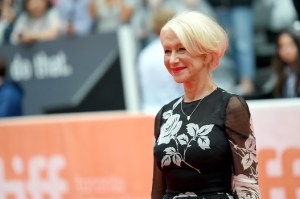
Eye In the Sky: Helen  Mirren and Barkhad Abdi  joined director Gavin Hood in introducing this wonderful film to us – just icing on the cake as the film itself would have been more than enough. Helen Mirren, as you might expect, is completely compelling as a Colonel who’s been tracking radicalized British citizens for 6 years. Just as she’s found them she encounters bureaucratic hell trying to get permission to do her job – that is, to eliminate the threat. What I didn’t realize going in to this movie is that it would not solely be a vehicle for Mirren but a really heleneyestrong ensemble cast who all pull their weight to give this film so many interesting layers. Drone warfare is obviously a pretty timely discussion, but this movie is also an entertaining nail-biter, successfully blending ethical dilemmas with on-the-street action thanks to Barkhad Abdi (Captain Phillips) who ratchets up the tension. The crux: there’s a house full of terrorists. They’re literally arming themselves for an imminent suicide attack. Capturing them is not an option – they must be killed before they kill dozens, or hundreds. But just outside this house is a little girl, selling bread. So government officials debate her fate. Mirren the military tour de force is adamant that the terrorists must be stopped at any cost. Aaron Paul (Breaking Bad), the guy with the finger on the trigger, is not so sure. You can see the weight of this decision in his eyes, knowing it’s not his to make, yet doing everything in his power to stall. If he’s the heart and Mirren is the head of this operation, there are dozens of politicians muddling up the chain of command in between. The movie is asking us what is acceptable – the sacrifice of one bright little girl to save potentially dozens? The politicians waffle. The girl herself is not the problem, rather it’s the way it would look to the electoral public. How can they spin this? Who will win the propaganda war? Hood does a great job of subtly reminding us that no matter what, not everyone in the kill zone deserves to die. But at the same time, he lets us feel the urgency, lets us count the potential dead bodies if the suicide attack is allowed to continue. And who would be responsible for that? This movie never stops being tense, even when it draws uncomfortable laughter: Alan Rickman, at the head of the table of the dithering politicians, rolls his eyes for all of us as everyone passes the buck. This movie never flinches and it doesn’t take sides. There is an emotional heft to it and I felt it on a visceral level when this sweet little girl is callously referred to as but “one collateral damage issue.” Oof.
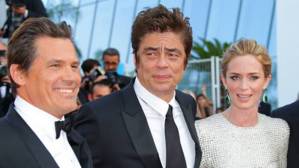
'Sicario'+Stars+Stunned+by+Ovation+Sicario: Matt was ultimately disappointed with the film but was still lucky enough to be at the premiere where Josh Brolin and Benicio Del Toro were both on hand to answer questions along with Canadian director Denis Villeneuve.

We Monsters: A German film by Sebastian Ko about a mother and father who follow their most primal instinct to protect their teenaged daughter even as she commits an unspeakable crime. It’s weirdly relatable and abhorrent at the same time, and keeps asking us what we would do even as it pushes the envelope to deeper and darker places. Many shots are obstructed, Ulrike-C-Tscharre-Sebastian-Ko-175x197keeping shady characters exactly that, a little out of focus, a little blurred, a little on the sly. The cinematographer cultivates a sense of dread expertly, boxing those characters in, keeping the shots almost claustrophobic. There’s a real sense of panic, of increasing alarm and desperation, and it’s not easy to watch. But it is kind of fascinating. Afterward, Ko was on hand to answer questions, and when someone asked him about the recurrent shots of a butterfly eventually emerging from its cocoon, he confessed that at first it was just meant as a metaphor for adolescence, but in the end he was struck that what emerged was a “pretty ugly creature” and made for a pretty fitting parallel.


TIFF 2015: Ninth Floor

ninth floorWhen I first started at Concordia University in Montreal, news magazine Macleans had ranked the school as an embarrassing 11 nation-wide. The only Macleans measure on which we could chant “We’re number 1! We’re number 1!” was student activism. (Im)famous at the time (I have no idea if this has held true 15 years later) for its student protests, the Concordia Student Union refused to keep quiet on issues of social justice. During my undergraduate orientation, some sneaky CSU reps took some of us aside and told us their side of their conflict with the university’s administration. They told us one story (which, as I recall, they neglected to mention happened 32 years prior) about blatant racism on the part of one professor and the administration in general and how several students held their ground and seized the Sir George Williams campus’ computer room for two weeks until their demands were met.

This incident that I now know happened in early 1969 is the subject of Ninth Floor, which premiered Saturday night as part of the TIFF Docs program. Director Mina Shun makes her documentary debut and at times fails to ask the questions I would have liked to hear the answer to. Even onstage she seemed to still be adjusting to her new title of documentarian- accidentally referring to her participants as “cast members” more than once and even referring to one partipant’s tearful interview as his “Oscar moment”. Overall though, this is a POWERFUL film about an important two weeks in Canadian history and gets bonus points for searching for the roots of racism instead of taking the easier road of labelling some as the Bad Guys. Even professor Perry Anderson- who was the subject of the students’ original complaint- is treated with some compassion. The screening concluded with four of the film’s “cast members” – three participants in the occupation (one of whom later went on to become Canada’s first black Senator) as well as Professor Anderson’s son- taking the stage to a standing ovation in one of the most moving of my TIFF moments.

Both onstage and onscreen, the interviewees often speak of their actions in 1969 as those of young naive kids. I never speak up during question periods but what I wanted to tell them- but didn’t dare- was the ongoing tradition on campus of retelling against injustice and the pride with which my generation- all these years later- speak of their actions.