Tag Archives: female directors

TIFF: The Journey Is The Destination

This is supposed to be the inspiring biopic of photojournalist/artist/activist Dan Eldon. But something is lost in the translation between his real-life journals that inform the story, and its appearance on the big screen. Namely, the inspiring part.

Supposedly Dan Eldon was an activist from a young age, raising money for various good causes. British-born but raised in Nairobi, he had a silver-spoon life, having the best in x9kbt0q2zcmaybswkkqklezuxi3education, the ability to visit over 40 countries while still in his teens, and loads of opportunity. He sprinkled his good fortune with charitable acts for others. But in the movie we don’t see a lot of Dan Eldon, activist. Rather we see Dan Eldon, purveyor of white privilege, with a side of white saviour to further sour the milk.

The film is brought alive under Bronwen Hughes’s able direction. She attempts to turn the film into a literal scrap book of sorts, travel-logging his adventures to honour creative source material, though this conceit is used sporadically. And it’s also not a great fit for the film, tonally. By the movie’s end, The Journey Is The Destination will have brought you to some very dark places. Cutesie scribbles and doodle a la Diary of a Wimpy Kid don’t really belong somewhere that ultimately ends up more Hotel Rwanda.

I want to believe in Dan Eldon, good person. It’s just that this movie keeps showing me Dan Eldon, man of many advantages and almost no self-awareness. The cast is strong: Ben Schnetzer is charming as Eldon, plus the likes of Maria Bello and Kelly Macdonald in particular are welcome additions, but they can’t do much with material that’s inconsistent and contradictory. In fact, in researching this guy, I’ve learned that most of what we see in the movie is just plain wrong. And the edits they’ve made, perhaps to make him seem less flighty, more substantial, also make him less sympathetic.

If you’re truly interested in the man, reading his writings is likely the better bet.

The 4%

“The next Kubrick, in no one’s mind, is a woman.” – Julie Delpy

TIFF has organized this short documentary and asked tonnes of industry professionals, including a glut of top female talent, why such an enormous gender disparity exists in film making (only 4% of directors are female).

5f75e13ac3a619390745379e3ae3057dThe talking head interviews are culled extensively from the guest list of the 2015 festival, and include the likes of Toni Colette, Michael Moore, Patricia Clarkson, Judd Apatow, Mimi Leder, Paul Feig, Catherine Hardwicke, Angelica Huston, Jill Soloway, Mira Nair, and so many more.

Even as females slowly break through in producing, writing, and starring roles, the director’s chair remains elusive. Directing is a boy’s club, is run by a patriarchy. We are conditioned to think male when we think director. And if a woman is holding the megaphone, she effectively neuters herself in order to be taken seriously.

The documentary also touches on females being hired exclusively for “female”stories when in fact they long to tell a breadth of stories just like their male counterparts. Directing takes vision, shamelessness, openness, patience, and discernment – these are abilities that women are capable of. What it does not actually require: a penis. So why then were there more female directors in 1929 than there are today?

This documentary made me think about a female director we saw at TIFF – Hope Dickson Leach (The Levelling). She co-founded the initiative Raising Films, a campaign to make the film industry more parent-friendly. It’s certainly not a women-only concern, but it is a barrier to get more women on a film crew.

Sarah Solemani, star of Bridget Jones’s Baby, took the campaign to the red 14199431_1403270093023633_6583121126926777920_n-188x300.jpgcarpet when she broke out a sign reading ‘Budget the Baby’. She says “As an actor I can claim a massage or a facial but I can’t claim childcare. Actors are the most pampered people on sets. It’s the crews — the electricians, catering, camera people — who are often on set at 4am.” Hope Dickson Leach is a mother of two herself; you can imagine what a grueling 20 hour day on the set can mean to a family with young children.

The 4% is a small commitment – just 30 minutes of your time to enlighten yourself on a topic we should ALL be concerned about. It’s not just women who benefit from a more inclusive work place. They have stories and perspectives and voices that are distinct and worthy, and they need to be told and seen and heard. Equally.


Ottawa International Animation Festival 2016: Window Horses

Young Canadian Rosie Ming has kept her interest in poetry a secret so her grandparents and best friend are shocked when she announces that she has been invited to a poetry festival in Iran. Though she can’t help wishing that the festival was in Paris instead, Rosie soon discovers that she has a lot to learn from her fellow poets from around the world about ancient Persian poetry and her own family history.

Of course, some of my favourite movies are animated but I am realizing lately how little I know about animation itself. I know very little about the different styles of animation and wouldn’t know how to go about describing the look of this film.

Luckily, I have some stills.


Window Horses is as much a story about multicultural identity as it is about family. Rosie was born and raised in Canada to a Chinese-Canadian mother and a Persian father. With her mother now deceased and her father now estranged, she knows very little about either family’s heritage. When asked about her father, she has only one thing to say “My father abandoned me when I was 7”. As she starts to realize that nearly every local she meets in Iran seems to know him, she is forced to revisit the oversimplified story she’s been telling herself about her father.

Yes, the resentments we hold on to, maybe especially when it comes to our own family, are more complex than we let on. We’ve seen this before in movies and I did find the family drama a little played out and predictable. Thankfully, Window Horses has a lot more to offer than just a mystery surrounding Rosie’s family. Window Horses works best when it shows us the transcendent power of art. Rosie spends a lot of the movie discovering Chinese and Iranian culture through poetry and barely even needs to speak a word of Mandarin or Farsi to relate to the words. German, Mandarin, French, and Farsi verses are all brought to life with some beautifully creative animation all without a single subtitle. It is the film’s most brilliant device by far.

Window Horses may drag a little when it relies too heavily on exposition  and voice actress Sandra Oh is badly miscast as Rosie but, for the most part, director Ann Marie Fleming has made quite a nice film. Its unique sense of humour and literally poetic animation more than make up for its any minor complains I might have.

Bridget Jones’s Baby

My biggest problem with the Bridget Jones series has always been with Bridget herself. I find her a bit insufferable. She’s whiny and vacuous and quite self-absorbed. I think she’s supposed to be relatable, but I always find her an insult to women everywhere. However, with both of my dreamboats Colin Firth and Hugh Grant on board, I couldn’t help but succumb to Bridget and her wanton ways.

In this newest incarnation, Hugh Grant is dead, and his cavernously-bridget-jones-gallery-01inadequate replacement is Patrick Dumpsey. I am very firmly NOT aboard the McDreamy train. I am on the station platform, eyebrow cocked, arms crossed, unamused ember in my eye, willing it to just get on with it already. Good riddance. The only thing I’ve known him from is Can’t Buy Me Love, and I’ve not been induced to rectify that. Still, I was unprepared for how astoundingly bad Dumpsey is in Bridget Jones’s Baby. Dear god. He’s really, really bad.
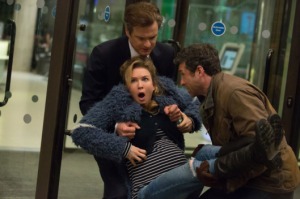
Bridget Jones, luckily, is a little more tolerable. Older now, she’s less obsessive about her weight (though this might be attributed to Renee Zellweger’s refusal to gain weight for the role), and accordingly more focused on her age. But 15-bridget-jones-baby_w529_h352she’s also got a nice social life and a good job, so she feels more well-rounded and less pathetic. Well done, feminism! And she isn’t whining and pining over two men, either. This time she’s chosen both, laid them both, and wound up pregnant. Who’s the daddy?

In a way it doesn’t matter. Bridget is 43 now, and more mature. She’s not man-hunting, she’s content to be by herself, to parent by herself. This message isn’t exactly served by the love fantasy it constantly alludes to. Firth’s character, actually called “Mr. Darcy” is every bit the prototypical Pride & Prejudice hero. Dumpsey gets a Cinderella storyline and does his best Prince Charming impression. Austen vs Disney: who would you choose? Bridget is as maddeningly flip-floppy as ever, but never mind. The real love story here is between Bridget and her baby, which is possibly the first thing this trilogy really gets right.


TIFF: The Levelling

When her brother commits suicide, Clover does something she hasn’t done in ages: she goes home. ‘Home’ is a relative term – right now it’s the trailer beside a crumbling farmhouse damaged by floods where her surly father sleeps at night. Having just deeded the farm to his now-deceased son, her levelling_01father is working at keeping what’s left of the farm running. Clover, meanwhile, is trying to piece together what would make her young, whole-life-ahead-of-him, brother put a gun to his head. Neither is mourning in a conventional way, and they’re certainly not doing it together.
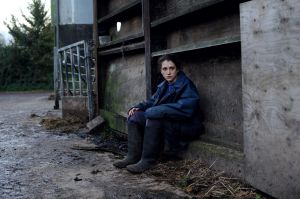
The Levelling is somehow beautiful without trying to be. So is its star, Ellie Kendrick. There is strength and vulnerability to both. Shot on location in  Somerset where floods actually did threaten farms, director Hope Dickson Leach was fascinated by the plight of farmers who invest so heavily in something so fickle as land. The Levelling, her first feature, is told from the stark perspective of people for whom life and death are matters of course. levelling_03When death is part of business, part of the lifestyle, part of every day, what toll does it take, and at what remove do they experience more personal brushes with mortality?
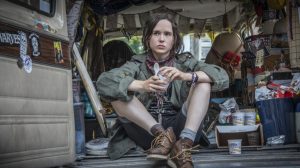
Blunt emotions roil beneath a landscape of precise, economical film making. Dickson Leach keeps a cool, steady tone. Her lead, Ellie Kendrick, is perfectly distilled in her restrained performance, never boiling over in a role that could easily have been histrionic in less capable hands.

The Levelling had its world premiere at the Toronto International Film Festival, in its discovery section. Dickson Leach is in fact a discovery, and having discovered her, it will be just as important to keep an eye on her for great things to come.

Tallulah

The last time Ellen Page and Allison Janney shared the (figurative) stage, it was in Juno: Page was the pregnant teen and Janney the surprisingly supporting stepmom. Now they’re reteamed in similarly maternal roles. Page plays a young drifter who kidnaps a baby, and Janney is the duped divorcee who believes herself to be a Grandma.

This is not a perfect movie by any means and yet you’re going to spend the next 4 minutes reading about its virtues. Why? Because this movie was written and directed by a woman Tallulah_Unit_00820R-1000x562(Sian Heder) and features three of the most complexly-written and -rendered female characters you’re going to see on the big (well small – it’s on Netflix) screen this year.
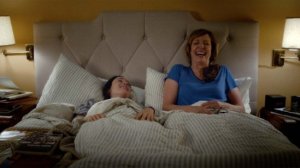
Although the movie goes through the obligatory police-crime drama, its focus is really on these 3 women and their relationship to the world. Tallulah and Margo in particular yearn to feel connected, to feel necessary to someone, but are terrified of what that means. To love so enormously is also to risk loss. Wanting to be needed can lead to feeling disposable. Carolyn, on the other hand (Tammy Blanchard), is the dismayed if distracted mother now missing one baby. Although her young child needs her very much, she neglects her in order to get those same feelings from a man. She ends up utterly alone – blamed, shamed, and full of regret.

The movie shifts tone rather abruptly – one minute Page and Janney are trading stiletto-sharp barbs, the next they’re unloading some Louis Vuitton-worthy emotional baggage. Page is a petite powerhouse and Janney an exceptionally talented opponent and the film is never better than when the two are struggling to find a path between their fierce independence and the need to show someone else their pain. Theirs is about as fucked up as a mother-daughter dynamic can get, but they come from such a real and honest place6840c860-4efc-11e6-86d5-59965f7b75f9_20160721_Tallulah_Dead you can’t help but be drawn in. I am so proud to tell you about a movie in which women are taking care of themselves, and taking care of each other, and finding strength, not weakness, in accepting help from others. It’s heartening, just fucking inspiring, to see women taking this leap on behalf of all of us: reach out. Connect. It’s scary and risky and worth it.


Editor’s note: this post was not intended as an endorsement of kidnapping. Back away from the baby.

Tank Girl

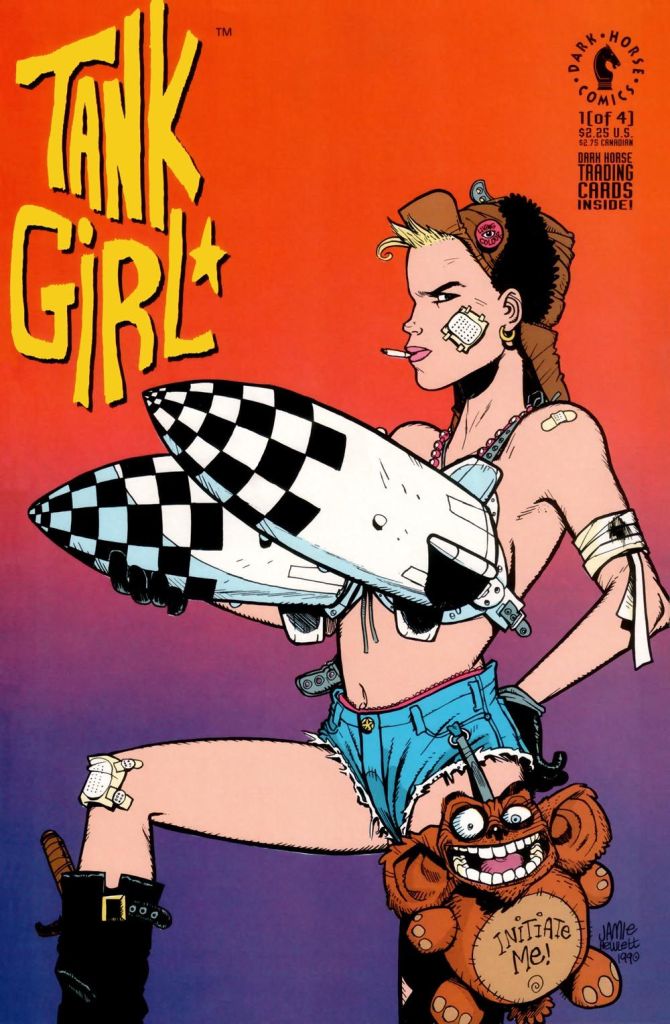
This movie speaks to the 90s kid in all of us and was MADE for cult status, which is to say, it isn’t very good. But it was quite quotable and a little risque, which is really all it took back in 1995. tank-girl-323And of course Lori Petty fulfilled all our alt-chick fantasies.

Tank Girl is based on a badass British comic strip but of course lost most of its uniquely British humour in the Hollywood rewrites. Studios, in fact, objected to a lot of the original material, such as showing Tank Girl in bed with her half-kangaroo boyfriend, this DESPITE the fact that it was a waste of a perfectly good $5000 10-inch prosthetic penis.

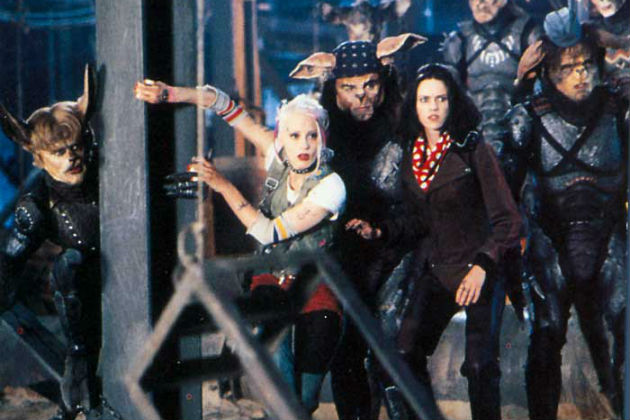
The year is 2033. We’re post apocalypse, naturally, and there’s been no rain for 11 straight years. Tank Girl and friends live in a wasteland fighting the oppression of “Water & Power’ led by Malcolm McDowell.

Audiences turned out to be mostly apathetic, and critics unkind, but it soon garnered an 4094473-2266063370-15327underground cult following who love the feminist, anti-heroine themes, and who can blame them? Flaws aside, Tank Girl IS a lot of fun to watch. She’s brash and bombastic and despite the fact that it’s the end of the world, she’s got an unending 90s-fabulous wardrobe. And as incredible as Petty is in the part, it’s also fun to occasionally see her animated counterpart leap into action.

I mean, in what other movie could you seek revenge for the prostitution of young kids to pedophiles by humiliating the pimp (or, well, madame) by making her sing Cole Porter at gunpoint? And in what other world would drought and murder combine to make the most fabulous weapon of recycling ever (because the human body is of course 60% water, and waste not, want not)?

Unlike most comic book movies where women are sexually objectified (or just plain absent), Tank Girl was herself sex-positive and comfortable in her dominance. She is competent, anti-establishment, strong, and fierce. Her sidekick, Jet Girl, is brilliant but less confident – and worth checking out because it’s probably the earliest we American audiences saw Naomi Watts, in a movie she now claims to be ashamed of.

Possibly the best thing about the movie is its obligatory 90s-alt soundtrack, assembled by Tank-GirlCourtney Love, and including tracks by Bjork, Bush, Portishead, Hole, Joan Jett, Veruca Salt, and of course Ice T (because he costars).

With a proud place on Luke Buckmaster’s list of 10 “weirdest superhero films”, it’s really something that has to be seen to be understood. Love it or hate it, it’s a film with longevity, and begs the question: is Tank Girl due for a remake?


Tank Girl can be seen on the big screen this Wednesday, July 13th in Toronto at The Carlton.

Me Before You(thanasia)

We saw this movie against our wills. It was part of a double bill we had no interest in seeing but it was at the drive-in on the warmest, most starry, most perfect drive-in night of the year, and it couldn’t be helped.

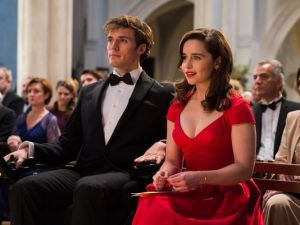
The premise: a young woman named Lou (Emilia Clarke) goes to work at a castle, caring for a recently quadriplegic man, Will (Sam Claflin). Cut down in the prime of his life and 635906306787211507-XXX-ME-BEFORE-YOUunable to accept his new limitations and circumstances, Will is surly and depressed. It makes for an unpleasant work environment for Lou but her financial desperation keep her hanging on, just barely, and that’s BEFORE she finds out he’s wickedly suicidal. Will’s in favour of going to Switzerland for end of life treatment now that life’s rather small and joyless, but he’s promised his parents six months, so he’s gritting his teeth as he suffers through them. Lou’s going to save him of course, with her quirk and her chattiness and her colourful penchant for terrible shoes, even if she has to make him fall in love with her to do it.
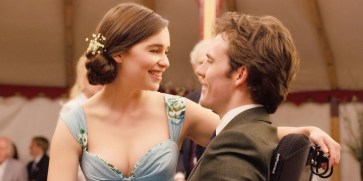
First of all, this felt very much like a poor man’s rip off of The Intouchables, in which another unlikely friendship blossoms between quadriplegic and caregiver, also marked by a disparity between social class. But I’d heard that Bryan Cranston and Kevin Hart were set for that particular  (unnecessary) remake (read: lazy Americans hate subtitles!). I guess this one justifies itself by having a predictable and pedestrian romantic twist that even the dude’s mother (Janet McTeer!) sees coming from a mile away, even without help from her turret. Because again: they live in a freaking castle. It’s a good thing that disabled people Emilia-Clarke-and-Sam-Claflin-in-Me-Before-Youare always so ridiculously wealthy. Life might actually look a little bleak without the tricked out vans, front row orchestra seats, fully accommodated living spaces, round the clock care, and even accessible tropical travel destinations. It kind of makes you wonder whether these poverty-stricken caregivers are falling in love with their patient, or with their patient’s lifestyle. And in this movie at least, Will truly does not have anything to give but his money. He’s just an angry guy in a chair.

And his tissue-thin character isn’t even the worst. Lou is played over-exuberantly by Emilia Clarke in such a way that I just wanted to hold her down, knee on neck, and wax those damn eyebrows off. I usually love a big juicy eyebrow but watching hers jump all over her face like not one but two hungry caterpillars were performing a pixi-stix-fuelled ballet made me want to lob a bug bomb at the screen and call it a night. Her tone was completely wrong for the film and as much as Will was a grump unworthy of love, I think she’d be even less of an attractive mate, particularly to someone who can’t get away. Luckily, if you begin to feel queasy about the whole Cinderella\sugar daddy in a wheel chair “plot”, you can distract yourself with the many swelling ballads obnoxiously shoved into the movie willy-nilly. Worst movie music ever? You decide, but I will say this: this is a two-Ed-Sheeran-songs kind of movie. That’s probably enough said.

So now we can get to the meat: the disabled community HATES this movie. Will wants to die because life as he knew it is over, and they feel like that’s a pretty horrible attitude to me_before_you_lowresproject onto the world, and they’re not wrong. Is this a disability snuff film? Disabled lives are worth living, and many are living well. However, living with a disability and living with pain are not the same. I live with both, and am extremely glad that I live in a place where I have the “right” to die. It’s not in my immediate plans, but some days just knowing I have that option is all that gets me out of bed. When the pain is bad, I know that I can end my suffering when I choose, and that gives me strength. If you think love conquers all, then you’ve never walked a mile in my shoes. Pain conquers all. Pain is bigger than the whole world.
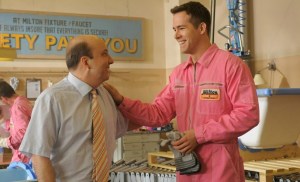
Disabled people are people: they should be respected and portrayed fairly in TV and film as part of our diverse world. And it’s a really sad commentary when the only time they’re included in the conversation is when they’re being presented like this, the object of an impossible romance and too big a burden to live. But the right to die is about dignity. Whether Will (or anyone) decides euthanasia is the right thing for them or not, it’s a deeply personal decision, and maybe it’s time the rest of us stop judging.

The Voices

Ryan Reynolds. Ryan Reynolds. Ryan Reynolds.

No, I’m not trying to conjure him. I’m just trying to remind myself why I put myself through this in the first place.

I first watched and liked Reynolds when he was on a TV show called Two Guys, A Girl, And A Pizza Place. Yes, it’s a terrible name, and surprisingly, they shortened it a couple of seasons in to just the Two Guys & A Girl (even more surprising that there were a couple of seasons). Horrid as the show was, I’ve liked Reynolds on a scale sloping markedly downward ever since, probably because he’s coasted on being a pretty but empty husk of a the-voicesman. In fact, the more I think about this, the more I realize I didn’t watch this to see if Ryan Reynolds is capable of breaking the mold. I watched it for the talking animals.
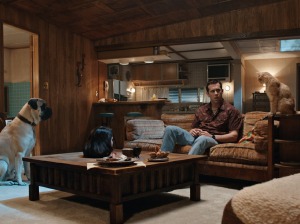
The premise: Jerry is just a normal, likable guy who happens to have pets who can talk to him. His cat, Mr. Whiskers, is particularly evil, as I completely expect all cats are, so no one is overly surprised when the cat takes things to a sinister place when an office-crush stands Jerry up for a date. The only thing more satisfying than wet cat food is gruesome serial murder!

The movie is actually kind of interesting in a way – it does a good job of showing us Jerry’s psychosis by giving us contrasting views of what he’s experiencing vs. what everyone else is experiencing. The difference is chilling the first time you notice it, and it’ll haunt you for the rest of the movie.

Jacki Weaver is a stand-out as his court-appointed psychiatrist, which you can 06-voices-review.w750.h560.2ximagine is a doozie of a job. Weaver is always a delight, a god-damned delight, and she’s an excellent stand-in for the audience as Jerry moves from cute to creepy. Is Reynolds any good? It’s clear he’s really into this role, but he kind overdoes the vacant eye thing. Unless those are his real eyes and he’s been wearing convincing puppy dog contacts this whole time! But he’s got a touch of that pre-Deadpool, charming psychopathy that just kind of works.
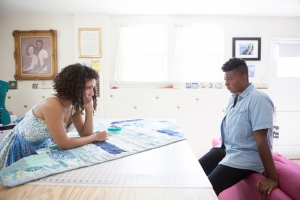
I’ll make no bones about it: ‘The Voices’ is an odd duck. I’d venture to call this a black comedy, but I’m also wondering what’s blacker than black? Okay, just Googled it, and here’s the scoop: there is in fact a colour blacker than black, and it’s called Vantablack. It absorbs all but 0.035% of light. It’s so black that our puny little brains can’t even understand it, so if you were wearing a Vantablack unitard, your hands and feet would appear to be floating around magically. Which is about right for when your Scottish-accented cat tells you to behead the pretty blonde and stash her in myriad tupperware. You heard it here first, folks, a new genre called the Vantablack comedy, only to be unfurled when the black just doesn’t cover it. It’s the kind of movie you should list on your internet dating profile just to suss out the wackos who respond “Me too!” It’s a great barometer for the people you don’t want to meet in a non-public place, and if you dare to date, then do not stand them up, and if stand them up you must, be sure to call your mother and tell her you love her first.

The Voices isn’t as funny as it thinks it is, and never achieves any true suspense. If you take it at face value you’ll find some cheap voyeuristic thrills, and a good dose of madness (served cold, without the insight sidedish). So yeah. This one’s memorable if you embrace the wacky and don’t mind the macabre.


Suicide Kale

Moral dilemma: one couple hosts another for a pleasant, mostly-vegan dinner party, and a little light snooping on the part of the guests turns up a suicide note.

What to do, what to do? Obviously the visitors, Penn (Lindsay Hicks) and Jasmine (Brittani Nichols), themselves a newish couple, are concerned for their friends, who up until now have been role models for a happy relationship. But you can’t be blunt about a note you just stumbled upon, can you?

BillieAndJasmineThe brilliance of this film is that it makes you question what you would do, and it challenges our notions of propriety.
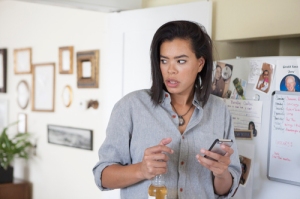
The quality’s a little wonky. It doesn’t quite have the production values you might hope for, and during the dinner scene the camera jitters around so much I had to look away to settle my stomach. Luckily, the conversation is jaunty and captivating enough to conquer some of the flaws. It flows authentically, and you’ll feel like they should have set a 5th place setting for you, the guest who definitely would have went for some wine.

The trick is that there’s a subtext that we’re aware of but not everyone at the table is. PennJordan and Jasmine know a dark secret and are steering things to play sleuth. Billie (Jasika Nicole) and Jordan (Brianna Baker) know that something’s up but the note is the furthest thing from their minds. They’re just trying to navigate this incredibly uncomfortable encounter – and we’ve got front row seats!

So it’s noticeably an indie, but it’s also smartly written and well-acted and I’m very glad I gave it a chance because it’s quite endearing, and an interesting little slice of life.


This review first appeared on Cinema Axis as part of the Inside Out film festival coverage, a festival dedicated to showing LGBT movies.