
I love dogs. I have 4 dogs and I like them more than I like most people. They’re just more genuine, you know? You always know where you stand with a dog. I have 2 shih-tzus, 1 yorkie, and 1 beautiful little mutt. No wiener dogs, but not because I don’t like them. It’s because Sean thinks it’s cruel to breed a dog to be disabled. And he’s right; the short legs and long back of a Dachshund causes them to suffer from ruptured vertebral discs on top of bowed legs and elbow dislocation. Seeing my dogs joyfully running around outside, I would be heartbroken to have one little dog who just couldn’t join in.
Wiener-Dog is a movie ostensibly about a super cute Dachshund who gets  passed from one weird owner to another. The film is more like 4 shorts that only have a dog in common. I didn’t even believe that it was the same wiener dog in all 4 vignettes. The first two are clearly linked, the last 2 not so much. The shorts also become increasingly non-entertaining. I thought the first one was the strongest: a father picks up a puppy for his young son, who has recently survived cancer. The dog sparks many serious conversations between mother (Julie Delpy) and son – motherhood, personality, free will, death. But all of the conversations are straight out of a what-not-to-say handbook, with Delpy literally telling her son that her childhood dog Croissant was raped by a dog with AIDS named Mohammed. The satire is delicious. There’s an explosion of joy on the screen as a boy and his dog play together, but this outburst of happiness is quickly punished, and the dog changes hands.
This is how it is with director Todd Solondz. He doesn’t care about your  comfort, he’s not here to cushion the blow. And he’s sure as hell not here to give you a happy ending, so keep that in mind. Next up for Wiener Dog, she gets adopted by a character from another Todd Solondz movie, Welcome to the Dollhouse. Dawn is all grown up now, and played with Greta Gerwig. She runs into childhood…acquaintance (?) Brandon (Kieran Culkin) in a 7-11, and suddenly Wiener Dog’s on a road trip through some really heavy issues. She also meets disgruntled professor Danny DeVito and bitter old hag Ellen Burstyn. Through it all, Solondz’s camera is unflinching, perversely lingering over the gross and unbearable.
Solondz’s rage is evident in spades, from the meta film school vignette to the open mocking of the audience’s queasiness with a tongue-in-cheek intermission (and a great song – The Ballad of the Wiener-Dog). Solondz is all about finding humour in the darkness, and Wiener-Dog is an innocent bystander to all kinds of human stupidity. The film drips with cynicism. It was too much for Sean. And while I can’t really profess to enjoying it, I deeply appreciated the fuckedupness of it.
 Liam Neeson is a writer doing writerly things in Paris, estranged from his wife (Kim Basinger) after a family tragedy, and making up for lost time with his damaged young mistress (Olivia Wilde).
 weird triangle with an awkward “third person”? Or something a little more…literary? I found this flick on Netflix and wondered how such a monstrously recognizable cast had flown under the radar.
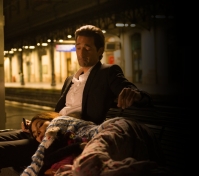 ask your partner “Okay, what?” Haggis’s gimmick overwhelms the movie, and the cracking chemistry between stars just isn’t enough to make up for it.
 immediately suspicious of his impractical, ego-driven work. Drew, however, is flattered to be his muse and determined to be a “good client.” But as the two work more and more closely together building this dream home (whose dream is it?), Colin starts to be the third wheel in an awkward little triangle. And he’s footing the bill!
 They had songs in common off their respective The 20\20 Experience and Magna Carta Holy Grail albums, so it felt like a good fit to co-headline a tour that ended up playing to more than half a million fans over 14 sold-out dates in just under a month. It was a great show in Toronto’s Rogers Centre (where the Blue Jays play). Sean treated me to luxurious floor seats and I can’t think of any other show where I felt so wrapped up with love, with 53 000 happy people surrounding me. JT and Jay-Z had great chemistry and impressive collaboration, and although I hadn’t intended to see Timberlake, I was glad that I did. With great back and forth and no one-upmanship, the two ended the show on an exceptionally high but sad note: Young Forever dedicated to the memory of Trayvon Martin.
 gives you front-row access so you feel like not only are you there, you’ve got terrific seats. But apart from the brief before and after footage, there’s no real interviews or behind the scenes access. And since I’m only familiar with his radio hits, there are lots of songs that I find hard to get into. So if you’ve always wanted to see JT up close and personal without emptying Sean’s wallet, here’s your chance: it’s playing on Netflix, and it’s a great concert doc. But it’s no more and no less than that.
 outside of it would have time catching up to them in a hurry. Inside their cozy little loop, they can be as peculiar as they like without repercussion. Or they could until a peculiar gone rogue (Samuel L. Jackson) invents monsters to hunt them. That’s why Abe (Terence Stamp) chooses to live outside the loop – true he has to leave behind his love, but he keeps her and everyone else safe by hunting the monsters in turn. But in his old age, Abe meets an ugly demise and his eyeless body is discovered by his teenaged grandson, Jake (Asa Butterfield ), the only one suspicious enough (or peculiar enough?) to avenge his grandfather’s death.
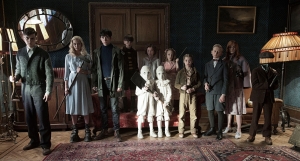 black man he’s cast in a leading role EVER, and you know he’s playing a villain. Jackson aside, Tim Burton’s casting takes on a very pale shade of white. His sets may be designed in technicolour but Tim Burton himself only dreams in caucasian. And it’s not really Tim Burton’s fault. We’re the dummies who have accepted this unthinkingly for years. He’s had huge ensemble casts with not even a tan among them and I for one haven’t even thought to question it.
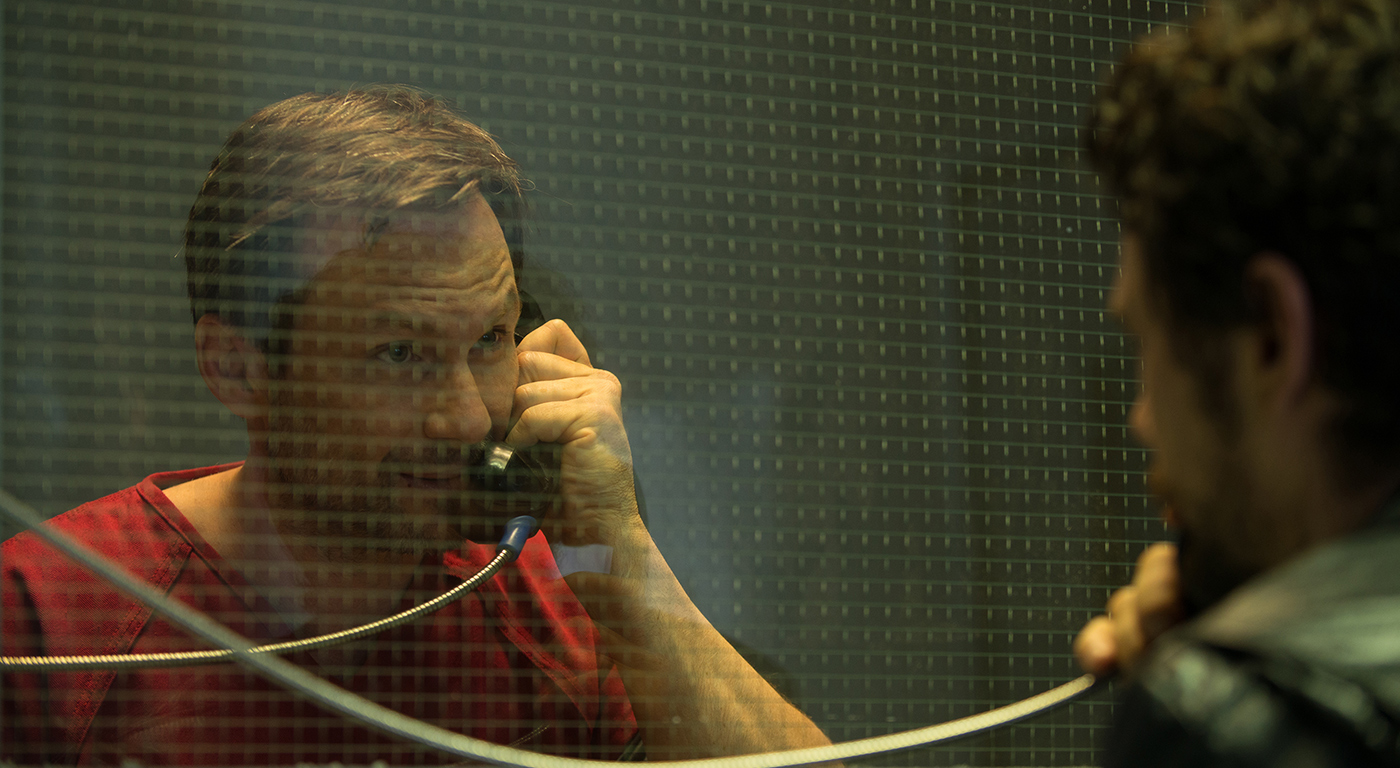
 Disoriented. I walked out of the theatre disoriented. Was it the strobe light effect while the power failed? Was it the glass shards being pulled by Kurt Russell out of his own foot? Was it the bone sticking out of a redshirt’s leg? Was it that 11 people died and I wondered how the other 115 on the rig survived?
 Mike Williams (Mark Wahlberg) gets bloody. Jimmy Harrell (Russell) gets bloodier. The stand-in for greedy BP, Donald Vidrine (John Malkovitch), does not get as bloody as you’d hope. They are some of the lucky ones. Deepwater Horizon takes us into the heart of the mess. Tons of mud, oil, fire, explosions, and rag dolls flying all over the screen. It is hard to watch but not too hard to follow. We are provided with title cards and a grade school explanation of the Deepwater Horizon’s mission. They help the exposition fly by so we can get to the destruction faster.
 starts believing it, truly believing that her beauty is important and holds power over other people, that’s when things start to bubble.
 up with that head-stomping scene in Drive. And all the other scenes in Drive. I described Neon Demon to Sean as “less plot than Drive, and with super models” and also as “this year’s weird movie” to which he replied “Beasts of the Southern Wild weird?” and I answered “No, more like
  not really either of those two things. Surprise third option! I definitely didn’t hate it. Lord it has some of the coolest images I’ve seen in a film, ever. Gorgeous. Stunning. It’s one of the boldest things I’ve ever seen on film and I’m giving lots of credit to Refn’s cinematographer Natasha Braier (what! a female cinematographer??) Together, Refn and Braier create an unforgettable world that is hyper-real, extreme in both its beauty and its grit. The colour palette tells a story all on its own, progressing seamlessly from beginning to end.
 found it to be kind of empty. Like there’s obviously an allegory here, about our culture’s emphasis on female beauty, and on a certain kind of white girl skinny beauty in particular. And the dangers of narcissism. And female cattiness, which I almost hate just on principle. But this movie didn’t make me think. Like, at all, beyond “Oh, that’s gross.” So treat it like a high fashion magazine with pretty pages to flip through. I just can’t give it much more credit than that.
 inadequate replacement is Patrick Dumpsey. I am very firmly NOT aboard the McDreamy train. I am on the station platform, eyebrow cocked, arms crossed, unamused ember in my eye, willing it to just get on with it already. Good riddance. The only thing I’ve known him from is Can’t Buy Me Love, and I’ve not been induced to rectify that. Still, I was unprepared for how astoundingly bad Dumpsey is in Bridget Jones’s Baby. Dear god. He’s really, really bad.
 she’s also got a nice social life and a good job, so she feels more well-rounded and less pathetic. Well done, feminism! And she isn’t whining and pining over two men, either. This time she’s chosen both, laid them both, and wound up pregnant. Who’s the daddy?

 ASSHOLES WATCHING MOVIES