Tag Archives: Half-assed

Films in this category have something to offer but also have one or more flaws that detract from the experience. Still, these movies are probably better than most of the shit on Netflix.

Strange Days

What do you get when you cross Ralph Fiennes and Angela Bassett with Kathryn Bigelow and James Cameron?  A Blade Runner wanna-be that doesn’t get over the hump but is not even close to the worst thing you can find on Netflix, as long as you can get past how dated the movie feels.

Given that Strange Days was co-written by James Cameron, it’s very odd that the
technology central to the movie feels so old-fashioned.  Even if the effects don’t hold up, Cameron’s near-future technology usually does, from Terminator to Aliens to the Abyss.  Not here.  I shuddered every time a character waved around a mini-CD containing a clip of someone’s memories (literally a first-person-view replay of whatever the person experienced).  Because I’m so over CDs; I’m a vinyl guy.  That means I shuddered a lot while watching Strange Days, because the plot of the movie revolves around those little plastic relics – they’re everywhere!

While it may be silly to criticize a movie set in the year 2000 for using CDs, that sort of logic is not going to stop me even for a second.  Any world that has the technology to record and replay memories in the year 2000 must also have invented storage technology that is far better than CDs, right?  Who’s with me?

The acting is dated as well – it’s from the silent era.  Watching these characters experience other people’s memories is entertaining for all the wrong reasons.  The facial expressions, the moaning, the anguish, it’s all way, way, WAY too much.  I didn’t need to see those reactions even once but just like the omnipresent CDs, we get at least one shot of each main character overacting when they plug into a SQUID (which, unfortunately, is what the memory recorder and player is called).

In particular, Ralph Fiennes’ off-the-charts overacting and general greasiness in the film makes it surprising that he ever found work again.  I think in order to enjoy Fiennes’ catalog from now on, I will have to pretend that the star of Strange Days was actually Bradley Cooper.  Which probably won’t be that hard since they may be the same person.

So if you’re a fan of the English Patient, you should probably skip this one.  On the other hand, if you are a more a fan of cheeseball 90s sci-fi than cheeseball 90s romances, then Strange Days will be right up your alley.

Strange Days gets a score of five unrealistic Y2K parties out of ten.

Batman v. Superman: Dawn of Justice

batman-v-superman-reviewsJust when you thought the title of this movie was as pretentious as it could get, Zack Snyder delivers a pre-movie PSA on spoilers. I was offended. What else is the internet for aside from spoilers and porn? And since Snyder and crew spoiled some key parts about this movie in the title (namely the Batman VERSUS Superman part) and trailers (revealing the big bad guy), it was doubly ridiculous to waste time on a PSA that I could have spent watching a post-credits scene (SPOILER ALERT: THERE ISN’T ONE).

There’s really not much to spoil anyway. Batman v. Superman: Dawn of Justice is exactly what you’d expect. The script is so cookie cutter and routine that the writers could skip exposition or backstory whenever convenient (and they take full advantage). But don’t worry, Batman fans! SPOILER ALERT: you will get to see Thomas and Martha Wayne get gunned down outside a movie theatre. Because we haven’t seen that often enough…

batman-v-supermanAt least we don’t rehash Superman’s origin (thank Krypton). But (SPOILER ALERT) we don’t get any hint of Lex Luthor’s origin or his motivations, other than (SPOILER ALERT) he’s evil and crazy and rich and smart and an orphan. It’s the same way with Wonder Woman – the no-origin part, not the evil crazy rich smart orphan part (as far as I know). That left me to guess as to why Lex hated everyone to the point he was willing to cause the destruction of Metropolis and Gotham (which, SPOILER ALERT, are right next to each other in a very lazy move by the writers), and why a literal greek goddess (I’m assuming) is conveniently hanging out in these twin cities waiting for an opportunity to (SPOILER ALERT) don her metal bathing suit.

One final SPOILER ALERT: despite all its issues, Batman v. Superman is actually fun in its brainless way. Batman’s costumes look great, the much-anticipated fight between the two titular characters is awesome, and the stakes are suitably high by the final battle that Wonder Woman’s participation feels like a necessary deus ex machina (and seeing all three on screen together was worth the price of admission).

batman-v-superman-trinitySo if nothing else, Batman v. Superman accomplishes its objective. It made me want to see the Justice League movie. A lot. And despite my griping, Batman v. Superman is not nearly as bad a film as many critics would have you believe. I mean, it’s your typical trashy comic book movie but it delivers exactly what it promised. Judge it as art if you want, and on that scale it fails, but so does every Marvel movie! Genre fatigue is the only reason I can think of to explain the backlash, and to that I say: if you are tired of superhero movies, you will not enjoy this film. But you also won’t enjoy any “critically acclaimed” superhero movies past, present or future. And if you are still up for more, well, see this one, and then start saving your money for May’s double feature of Captain America: Civil War and X-Men: Apocalypse. Both of which will probably be much better reviewed EVEN THOUGH THEY WILL BE THE SAME EXACT MOVIE AS BATMAN V. SUPERMAN. Critical scores are so meaningless.

And on that note, Batman v. Superman: Dawn of Justice gets a score of seven holy trinities out of ten.


Rio 2

If you’re going to see one Jesse Eisenberg movie this week, please, please let it be this one.

Er.Okay, I don’t really mean that. In fact,if my house was on fire and I had to say which I was more tired of, super hero movies or Jesse Eisenberg being alive, I’d sweat. And not just from the flames, which would be licking at my feet.

How’s a body supposed to make an informed choice between Rio 2 and Batman v Superman: Dawn of Justice? Well, based on titles alone, I’m voting Rio 2. If you’re going to be typing this thing on the reg, you’ll appreciate how few characters you can get away with, even considering it’s a sequel. Batman v Superman is a franchise first and it’s already got a colon! If you’re still unconvinced, I present to you Jay’s Guide for Choosing Between Inevitably Disappointing Jesse Eisenberg Movies.

  1. When you watched Les Miserables, did you feel grateful to get out alive,lesmiserables yet secretly nurse the urge to hear Anne Hathaway sing again? If so, Rio 2’s your best bet. Sure you’ll have to sit through some trite shit about family and the environment, but you already endured Russell Crowe singing about sewers, so you’re a survivor. You got this.

2. Do you love Rio de Janiero and look forward to seeing it lovingly rendered in 3D animation? If so, keep walking. Despite the misleading title, Rio 2 does not take place in Rio. Console yourself with the lush tropical look and feel of the Amazon, or with Metropolis getting stomped to smithereens yet again (gosh those people are resilient!).

3. Do you love heroic themes of alienation, altruism, and justice? If your heart sighs yes, then check out Rio 2! Did you know that one little city-bird, out of his element in the jungle, can redifine machismo while taking on the logging company and Amazonian deforestation and heraldiBatman-v-Superman-Dawn-of-Justice-Jesse-Eisenberg-as-Lex-Luthorng cross-species cooperation? Neither Batmam nor Superman have anything on a little macaw named Blu.

4. Conversely, are you maybe in it just for the evilest of villains? I hear Lex Luthor’s got yet another doomsday device (yawn), but Rio 2 is so terrorized by its villain it can afford to practically gloss over the obvious villainy of “progress”, “loss of habitat”, and “corporate greed” to create the greatest antagonist of all time: a Shakespeare-quoting cockatoo with a heart full of vengeance.

5. Or maybe you just like a good old-fashioned ensemble cast of strong performers who will unite against a common enemy. Again: slight edge to Rio 2. I’m going to be honest. There’s no avoiding Jesse Eisenberg in either of these movies, and for that, I truly apologize. But Rio 2 has an excellent voice cast consisting of Leslie Mann, Andy Garcia, Tracey Morgan, Bruno Mars, Jamie Foxx, and especially Jemaine Clement and Kristin Chenowith. Like most sequels meant for children, this one’s bigger and bolder, almost an onslaught of primary colours and laughing at one’s own jokes, of taking the first movie rio2jemaineclementand not doing much with it, recycling what worked, and putting up some extra musical numbers that only its target audience, kids aged 5-7 bereft of attention spans, can stomach. But Jemaine Clement is the best (and only) reason for an adult to sit through this. Can you really say the same about Ben Affleck? I said good day, sir!

6. The only reason I can think of to watch Batman v Superman, and I assume this happening under some kind of duress, is because of Wonder Woman. It’s about damn time, amirite? I mean, super hero movies make a bunch of macho Brazilian birds look progressive for fuck’s sake. I give zero fucks about any super hero anywhere, but I confess I’ve taken a bit of a shine to Ms. Wonder wonderwomanlegoever since Sean started playing a game called Lego Dimensions. If you haven’t seen it, it’s a video game where you buy characters in a store to literally build out of Legos. There’s Lego Back to the Future (with a Lego DeLorean), and Lego Jurassic World (with a Lego velociraptor), and Lego Ghostbusters (with a Lego Bill Murray!). I felt the game was a little testosterone-heavy so I brought home Lego Wonder Woman (and her invisible jet!) so I could do things like mind-control people with my goldenwonderwoman lasso, and hit things with my fancy tiara, and make smarmy pronouncements, and recklessly fly about in my invisible jet, making lots of Lego things explode into coins. Kids may like the Lego warrior Princess of the Amazons, but I for one do not want to have to explain to a 6 year old why a lady is walking around in a metal bathing suit. Rio 2 for the win.


Requiem for the American Dream

Requiem for the American Dream opens with Noam Chomsky reminiscing about the good ol’ days of the Great Depression.  As bad as it got during the Depression, he recalls a shared understanding among the people that this shall pass. Now things are bad again, he claims, and this time nobody seems as optimistic that things will get any better. Of course, it’s perfectly normal that the outlook of a young boy packing into the back of the family truck with Grandma, Grandpa, Ma, Pa, and Uncle Tom and heading to California looking for work (assuming of course that his childhood was exactly like The Grapes of Wrath, which is my only point of reference) is probably a little rosier than that of a cranky 85 year-old linguist but he has my attention. He claims that the disparity between the rich and poor in the US has never been higher, predicting the death of the American Middle Class. Which worries me a little, as a member of said Middle Class.

It all started with America’s beloved forefathers, who understood Democracy’s biggest problem. In a true democracy, with poor people having the right to vote, what’s to stop the underprivileged from voting to take the big fancy houses away from the rich? Hardly seems fair, doesn’t it, since the rich worked so hard for said property? So they were left with two choices: take steps to reduce inequality or to limit democracy. So, according to Chomsky, begins the process of building a system that limits the access of the underprivileged to the highest office in the land.

Honestly, I’m not a fan of documentaries like these. Requiem features four years worth of interviews with Chomsky. Visually,  we’re offered only tight close-ups of the renowned political activist’s face that even the most vain of starlets would never agree to along with the occasional stock footage of skyscrapers and highways. The filmmakers seek no other opinions, neither dissenting or complementary, and Chomsky’s lecture is accompanied only by an irritating score from Malcolm Francis.

So it’s not much of a documentary. That doesn’t mean its subject isn’t worth listening to. His observations are as alarming as they are timely. Even better, he has the decency to offer some hope for the future, reminding the American people that their system is set up so that regular people can bring about real change as long as they stop fighting amongst themselves and stand up and make themselves heard. Still, the documentary has nothing to offer but the words of Noam Chomsky. So you’re probably better off just reading some Chomsky.


One Floor Below

This summer, I wrote a little about my appreciation for some harmless eavesdropping. Not in a creepy way. But if you’re having a conversation while I’m in earshot, I’m listening in. For instance, just a moment ago, I overheard one colleague saying to another “I brought soup for supper tonight but will go out to get some salad so I can get my vegetables too. Not that salad is vegetables”.

The comments from some of our readers could not have been more validating. Who would have thought that so many bloggers loved to watch out of the corner of their eye as strangers live their lives? I’ve never felt better about not minding my own business.

The response I got was a little surprising. It seems to contradict my favorite Morgan Freeman speech of all time, where he tells Brad Pitt “In any major city, minding your own business is a science”. This line from Se7en, despite being delivered with the conviction of a great actor in his prime, may seem a little strange given our obsession with office gossip and the private lives of celebrities. Of course, this isn’t what Freeman was talking about. What if the person you’re watching happens to need your help? Suddenly, it can be quite tempting to play the “Hey, this is none of my business” card.

So it goes with Patrascu in One Floor Below, a Romanian thriller from director Radu Muntean. Climbing the stairs to his apartment, Patrascu can’t help overhearing, especially since he stops for a moment to listen in, a scandalous argument between two lovers in an apartment one floor below. From the sounds of it, the heated discussion quickly escalates into a case of domestic violence, at which point the middle-aged husband and father decides “Hey, this is none of my business” and moves on. The next day, he learns that the young woman one floor below has been murdered.

Why introduce my review with three paragraphs of questionably relevant references to eavesdropping, salad, and Morgan Freeman? Well, I had to talk about SOMETHING! What do you say about a movie where nothing much happens? However thought-provoking Patrascu’s moral dilemma, Muntean makes his point in one or two short scenes, leaving very little to talk about for the rest of the movie. The ambitious director struggles to find drama in a murder case where the main character makes no effort either to investigate or find justice (in fact, he lies to the police to avoid getting involved).

Muntean asks some good questions and makes some unsettling observations in One Floor Below but there aren’t enough of them- and not nearly enough plot- to fill 93 minutes. I admire the restraint with which he tells a story that could have so easily given in to melodrama. I couldn’t help feeling like I really should be liking this movie. But it really couldn’t hold my attention. And this coming from a guy who is captivated by two colleagues talking about soup.

The 100 Year Old Man Who Climbed Out The Window and Disappeared

I read this book many moons ago and didn’t particularly like it. Sean’s 92 year old Grandma read it too and she didn’t like it either, because the book made fun of former presidents, and she’d “lived through all that.” Though if you can’t make fun of anything that happened during her nearly 93 years, it’s reduced me to cracking plague jokes and doing neanderthal bits.

I wasn’t overly excited about seeking this out when it became a movie, but out of respect for its Oscar-nominated makeup job, I decided to give it a go.

It literally is about an old man named Allan who, on his 100th birthday, avoids his nursing home many-candled cake by climbing out a window. He doesn’t exactly disappear though – at least, not to us. We follow him out the window and on to an incredible series of events, 08HUNDRED-facebookJumboincluding a suitcase full of drug money and a homicidal elephant, which is still secondary to the other trip he takes, the one down memory lane.

It turns out Allan has led a pretty incredible life, in part because his love of blowing shit up, and in part because he’s routinely been in the right place at the right time.

It stars Robert Gustafsson, a well-known comedian and actor in Sweden, who just happened to be less than half a century old when he shot this film. This presented a real challenge to the team who did the makeup and prosthetics as we see Allan not just as a 93419247-7904-4753-a65b-67018a827987centenarian, but through many decades of his life thanks to a series of flashbacks.
Whether or not you like this film will depend a lot on your tolerance for absurdist humour. There are high-jinks upon high-jinks here, and they add up to a sweet film with some chuckles that obviously has some appeal, but the movie, like the book, left me feeling like it should have been so much more.

Deadpool

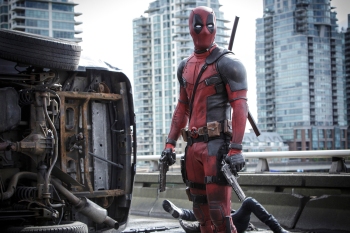
It’s always nice when a comic book movie doesn’t take itself too seriously. Deadpool makes clear from the opening credits that there is no danger of any seriousness here. Throughout the movie, Ryan Reynolds keeps that lighthearted vibe going by dropping references to every other comic book movie he’s been in, as well as a few that he hasn’t, and keeping the patter going even during what would be serious scenes in any other superhero movie.

Deadpool-Guns-OutDeadpool delivers, plan and simple. It is big, loud and stupid, just like it should be. After all, the main character(a) is insane; (b) is immortal; and (c) knows he is a comic book character. There’s really not any need for pretense – we came to see craziness and that’s what Deadpool gives us, from start to finish.

There’s even a bit of love to be found, but only to inject some tension. Since Deadpool can’t be hurt, someone else has to be in danger so the climactic fight means something. But for the most part, Deadpool gives us the merc with a mouth in all his glory, drawing with crayons, forgetting his guns, doling out terrible life advice, and generally being the worst hero imaginable.

And that’s okay! We don’t need all our superheroes to imitate 1960s Batman. Deadpool didn’t teach me anything and I respect it for not trying to. Though I could have done deadpool_clip_hd.0without another superhero origin story. It’s not necessary, it’s lazy, AND I’m pretty sure they already did Deadpool’s origin in Wolverine: Origins (though I’m also pretty sure they screwed it up). So Deadpool makes a misstep there but it’s forgivable since it keeps us laughing while it spins its wheels.  And really, the comedy is the whole point anyway so it’s not a major complaint, it’s just my critical two cents.
Overall, I enjoyed Deadpool a lot (and a lot more than I expected to).   I give it a score of seven self-mutilating escapes out of ten.


The Abyss

Rewatching the original Star Wars trilogy seems to have made me nostalgic for the 80s.  And when the latest Star Wars instalment recently sailed past Avatar and Titanic to become the highest grossing movie ever in North America, I couldn’t help but think of James Cameron’s other work, the stuff that he made before appointing himself the king of the world.

Aliens, Terminator and Terminator 2 are all wonderful and all high on my list of movies to make Jay watch (a list that has shrunk considerably in the last few weeks), but the first James Cameron movie that comes to my mind is The Abyss.  To me, that’s the true precursor to Avatar and Titanic, the movie that hinted at what James Cameron was capable of (both good and bad).

The Abyss is near and dear to me, mainly because it provided one of the first signs that I was destined to become an Asshole Watching Movies.  In the early 90s I became really obsessed with letterboxed movies even though we had a 30 inch (at best) tube television.  This was before DVDs so my options

LDDVDComparison-mod

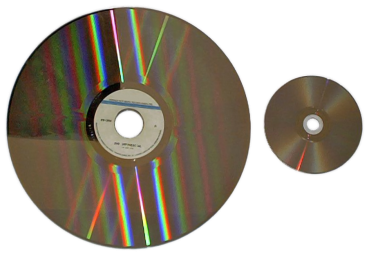
LaserDisc on the left, DVD on the right.  I have enough trouble finding shelf space for my DVDs, thank you very much.

were either letterboxed
VHS (few-and-far-between) or LaserDisc (too-expensive-for-an-unemployed-teenager).  But my parents, seeing my interest, indulged me by renting a LaserDisc player on a few occasions, and The Abyss was the first movie I ever watched on that strange format (on two 12″ discs!).

As for the movie itself, The Abyss is an underwater odyssey that is a bit of a mess, both on screen and behind the scenes.  Again, it seems obvious in hindsight given James Cameron’s later works, but at the time it seems to have been a surprise that The Abyss’s production went way over time and way over budget.  Filming consisted of 15-18 hour days and lasted 140 days total.  Total cost: a reported $70 million, which if accurate would make it the most expensive movie ever at the time (surpassed by Terminator 2, which was surpassed by True Lies, which was surpassed by Waterworld, which was surpassed by Titanic).  It is not a coincidence that all but one of those movies was made by James Cameron.  He clearly has a talent for spending money.abyss13

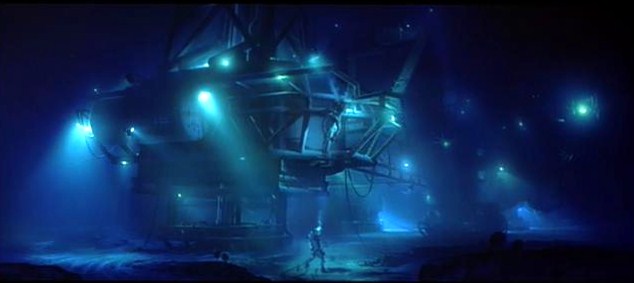
When you watch the Abyss, though, you can see where the money went.  All the diving scenes are practical effects and the movie looks amazing for it.  The underwater scenes were shot 30 feet deep for up to five hours at a time in 40 pound helmets.  There were
other costs than money that resulted from this underwater mayhem.  Complaints from cast and crew were rampant.  Ed Harris refuses to ever talk about the film to this day.  James Cameron almost died when he lost track of time and ran out of air at the bottom of the 7,000,000 gallon water tank, and then on his way to the surface was given a broken emergency regulator, so when he thought he would finally get a much needed breath of air, he got a lungful of water instead.  Knowing all that makes me wonder whether the end product, as beautiful as it is, was worth the trouble.  Watch it and tell me what you think.  In my view, the climactic visit to the “aliens” is a bit of a letdown and the ending seems rushed (which is particularly problematic for a movie that’s this long).

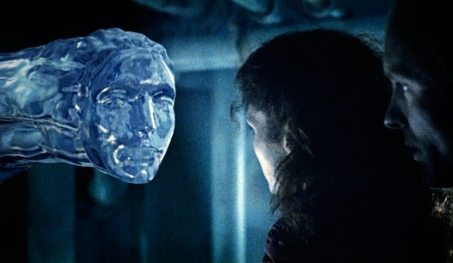
The original theatrical cut (which I have never seen) was released in 1989 and was 145 minutes long.  The Abyss is one of the first forays into CG but the technology was not quite there yet so a climactic scene had to be cut because Industrial Light & Magic just couldn’t get the world-The-Abyss-Water-Facedestroying waves to look right.  Technology had advanced significantly by 1993, and so a special edition was released with 25 minutes more footage, including the ending as it was originally conceived.  The CG effects hint at what is to come from Cameron and ILM (or, by the time the special edition was released, what had already come).  The tentacle water effects in particular are very close relatives of the T-1000’s liquid metal goodness in T2 and they seem to hold up a lot better than most early CG (maybe because CG is used so sparsely in The Abyss).
Interestingly, we’ve kind of come full circle, moving away from CG in favour of practical effects (Mad Max: Fury Road being a prime example).  Kwame Opum of The Verge calls practical effects, “vinyl for cinema”, and as someone with a large record collection, that comparison feels right.  It makes me wonder where James Cameron, formerly a practical effects adherent, stands on the issue today since Avatar was so CG-heavy.  Perhaps we’ll get a sense of that if Avatar 2 ever gets made, but that’s a long way off as it’s been delayed again and will not come out until 2018 at the earliest.

In the meantime, dust off your LaserDisc copy of The Abyss and enjoy!

Dirty Grandpa

Robert De Niro clearly relishes his role in Dirty Grandpa as, you guessed it, the dirty grandpa. He cusses lots and spikes drinks with Zanex and flirts with Aubrey Plaza and takes his shirt off a lot and clearly is having a ton of fun all the way through.  Zac Efron also takes his shirt off a lot but throughout this movie he looks as uncomfortable as the middle aged, flip-phone owning couple sitting directly in front of us at last night’s screening. Maybe, as Jay observed, Efron is coming to the sobering realization that being shirtless is his thing and the best he can hope for is to be brought back as the shirtless grandpa if this movie is the start of a Rocky-like franchise.

My money’s on there being no sequel. Dirty Grandpa has a lot of laughs and an abundance of dick jokes, but it also seemed unnecessarily long and unnecessarily concerned with plot. I didn’t need to see everyone learn a lesson. I certainly did not need three generations of lessons being taught to De Niro, Efron, and Dermot Mulroney. And we see stereotypes of hippies, lacrosse jocks, and gang members learn something too. The only ones exempt from this rule seem to be the very funny Jason Mantzoukas (a.k.a. Rafi from the League!) as a Daytona Beach drug dealer, and Adam Pally as Efron’s cousin.  At least the writers had the good sense to allow those two to do their crazy guy routines the whole way through Dirty Grandpa.  I wish they had given everyone such free reign.  I was just there to laugh and didn’t need everything to be wrapped up perfectly, or at all.

I thought all the lessons really took away from Dirty Grandpa’s momentum, mainly by taking the focus off dirty De Niro.  That hurt this movie a lot because De Niro as the dirty old guy is by far the best part.  He’s really, really funny, but all too often he’s jolted out of that role when sad Efron calls him the worst grandpa ever (which happens every ten minutes or so).  Take out all the grandpa-grandson make-up sessions and Dirty Grandpa would have been far more enjoyable.

Dirty Grandpa is a decent comedy, much better than I expected, but since the story seriously impedes these characters’ escapades, it seems like an opportunity missed.  I give it a score of seven horny octogenarians out of ten.

How to Change the World

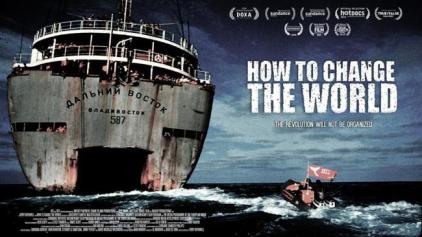
From How to Change the World’s title, you may be expecting a self-help documentary or at least a few useful life tips. If that’s the case, look elsewhere. The subjects of this documentary do not in any way seem qualified to dispense that sort of wisdom, nor are they interested in doing so.

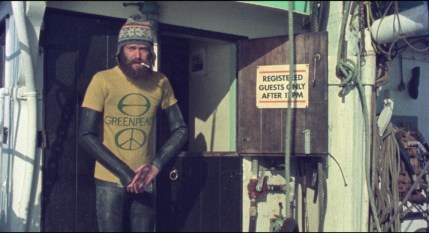
How to Change the World tells the story of Greenpeace’s founders. They were (/are) a bunch of hippies, 99% white males, and absolutely unqualified for the job. They couldn’t agree on much as a small group and then when film of their anti-whaling stunts gave them fame/notoriety, they how to change 1completely imploded. Protests are aborted, physical injuries are sustained, lawsuits are commenced (Greenpeace v. Greenpeace!), turncoats are identified, and shots are taken liberally at one another. Essentially, it’s an episode of Big Brother starring a bunch of 65-year-old grouches.
That sort of thing normally does not appeal to me. Still, I found How to Change the World very interesting for several reasons.

First, the amount of footage these hippies compiled in the 1970s is astounding and makes the film feel alive. We do not just hear interviews about their adventures, we see these escapades on screen, and that makes this movie extremely easy to watch (aside from the awkwardness of the in-fighting) as well as entertaining (possibly because of all the awkward in-fighting!).how-to-change-the-world-3

Second, the rise and fall of this branch of Greenpeace is a fascinating study of the effect of fame. Most of the conflict we see seems to arise out of the external attention and accompanying pressure this group faces after they hit it big. Not that they all get along at the start (they don’t, even then they fight regularly), but initially they can look past those disagreements because they are agreed on the bigger goal. But once there are no clear goals, or too many, the interpersonal issues take centre stage. It doesn’t help that none of these guys is remotely qualified to run a multinational organization, but it sure adds fuel to the fire!

Third, it is remarkable to see the different paths these characters take after their initial adventures. The conflict between the turncoat and the injured member in particular is given a whole new perspective by movie’s end.

Overall, I enjoyed How to Change the World even though I was frequently annoyed or exasperated by these characters, especially by the pseudo-philosophical musings of the journalist-turned-leader of this motley crew. The fact the movie overcame that annoyance says a lot about the content. How to Change the World is well put together and it feels very honest, which makes it feel real.

I give How to Change the World a score of seven bumbling hippies out of ten.