
According to critics, I really shouldn’t like this movie. They make some pretty valid arguments, yet I’m going to stray from the path and mow one of my own, over the green, green hills of Ireland, which provide such lusty landscape porn over the opening credits alone that I need very little further convincing.

Neighbouring farms belonging to the Muldoons and the Reillys have supplied friction as well as friendship over the years, and if this was anywhere else this might have made them enemies, but these two generational farming families are wise enough to know not to completely estrange the very people who will be counted upon in a pinch should the need arise, and the need is always arising. Rosemary Muldoon (Emily Blunt) and Anthony Reilly (Jamie Dornan) have known each other their entire lives, and since there’s not exactly an excess of options, it’s been assumed by locals that they would someday marry. Now their elderly parents are dying off, but the relationship hasn’t deepened much beyond “Good morning to ya'” because Anthony is terminally awkward and believes too strongly in a family curse. And he’s always at odds with his father (Christopher Walken), who decides to pass over bachelor Anthony in favour of keeping the family name and the farm’s inheritance alive and well. Enter Anthony’s American cousin Adam (Jon Hamm), a Yank in every sense of the word. Arrogant, showy, with no real concept of farming, Adam’s worst crime is of course this his eye is immediately caught by the girl next door, Rosemary, who is understandably growing antsy waiting for “shy,” “slow” Anthony to come around.
Writer-director John Patrick Shanley adapts his own play for the screen and gives us a unique love story specific to a corner of Ireland just outside Mullingar. Rosemary and Anthony remain separated by a gate and a silly family feud, but they’re emotionally separated as well, never really able to connect. Since we spend privileged time with both, we’re privy to them each burning up from wanting the other, which makes their failure to connect all the more frustrating.

You’ll need three things to even have a hope of enjoying Wild Mountain Thyme: 1. patience; she’s a slow burn, folks 2. a willingness to overlook some pretty dodgy accents, and 3. a willingness to let go of convention and embrace its offbeat charm. Wild Mountain Thyme isn’t just set in Ireland, but set in its own time and place, a place that looks Irish and a time that seems like the 21st century, and yet is so rural and insular not only have modern conveniences barely touched them, our grown-ass protagonists also seem almost child-like in their (lack of) lived experience. They’re naïve. The film has its own rules and internal logic but doesn’t feel compelled to share them with us, things just are how they are and you can either love it or leave it, and honestly I won’t blame you either way. Like all truly quirky movies, this one is not meant for everyone. For those of us whose souls thirst for the truly eccentric, it is a puzzle not to be solved but to be admired for its opacity. When things come out of left field, we should merely note what a lovely field it is, and remember to admire the right one as well, while we’re at it. I know first hand what it is to spend a movie yelling “WHAT THE HELL IS HAPPENING” at the screen and checking wild-eyed with our co-watchers to see if they, too, are experiencing the brain melt. But this one simmered just above that level for me, an enjoyable stew of lyricism, unconventionality, and idiosyncratic story-telling that exists well outside the normal realm of romance I couldn’t help but admire its bold posture.
The last time John Patrick Shanley adapted his own work for us, we got Doubt, a small film with big impact. This is not Doubt. It is very much its own thing, without comparison or peers. Emily Blunt, of course, could make me watch almost anything; every performance seems to find some new undiscovered corner of her essence as she stretches to reach corners of the human spirit she hasn’t shown us before. She’s the best thing in this, and reason to watch all on her own, as long as you’re up for some uncommon trappings.
Wild Mountain Thyme is in select theatres now, and will be available on digital and on-demand Dec 22.
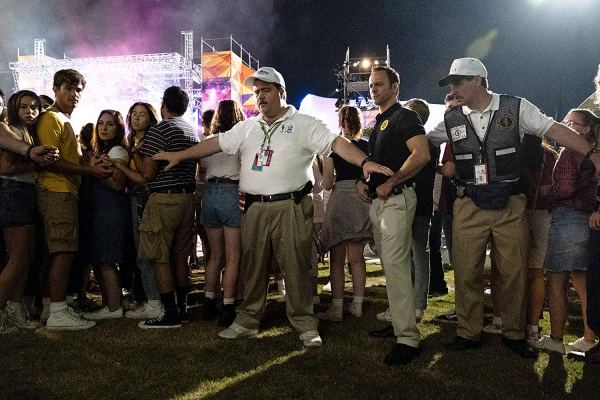
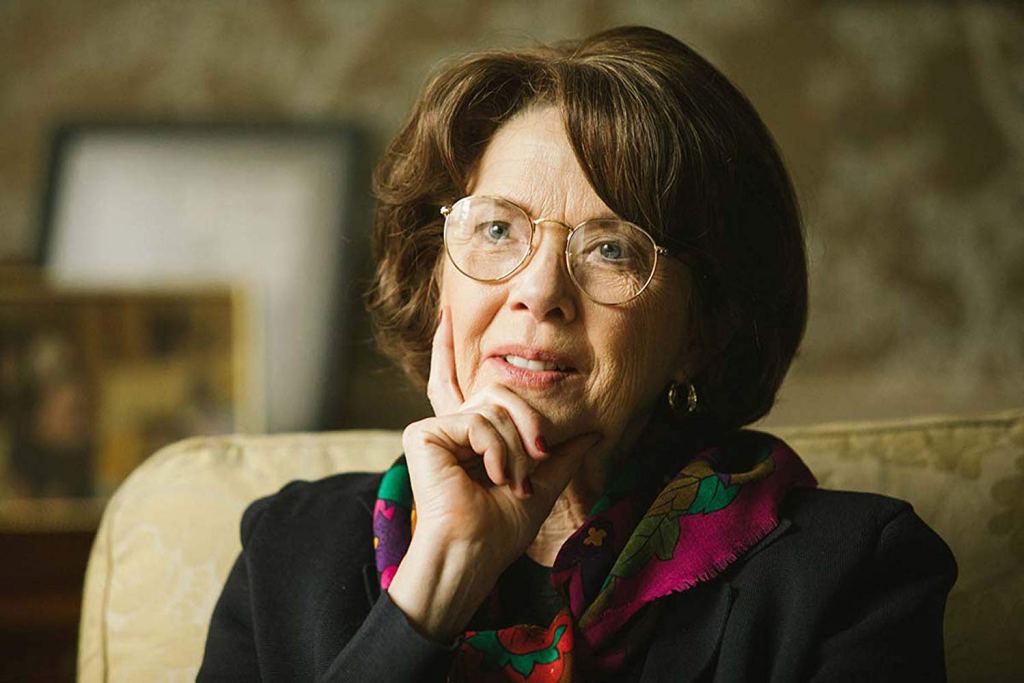
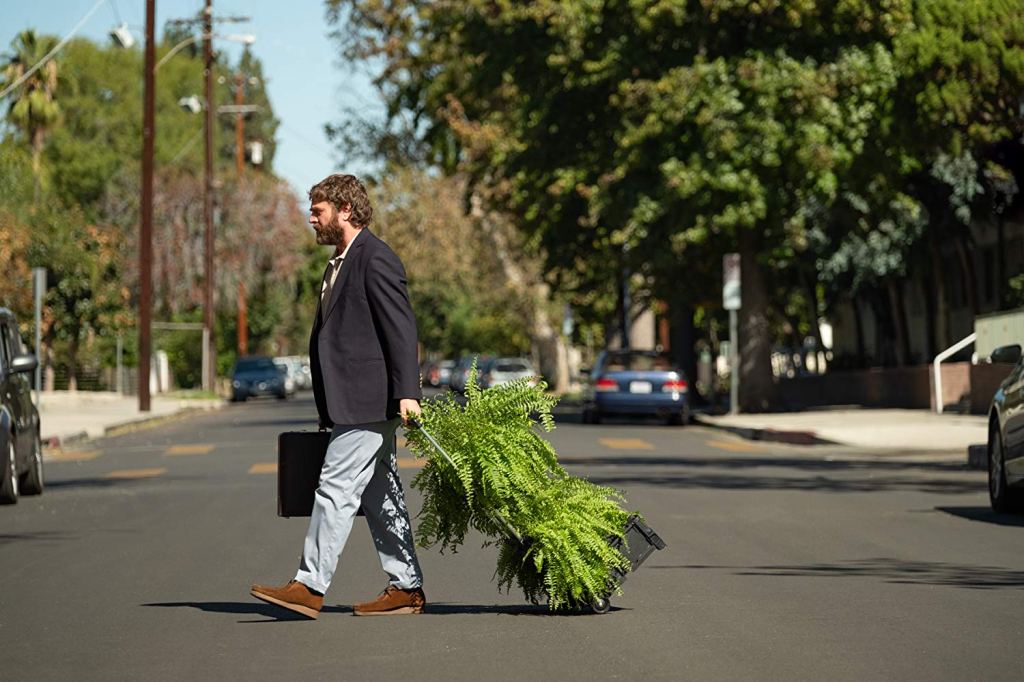
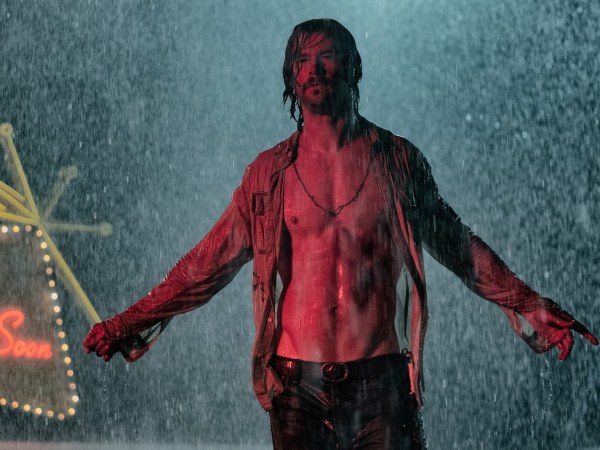 The main events in Bad Times at the El Royale unfold over the course of one rainy night on the Nevada-California border. The El Royale is literally split in half by the state line, so the first challenge for each guest is to decide in which state they’d like to stay. Unfortunately, things have gone downhill at the El Royale ever since it lost its Nevada gaming licence, so the hotel is essentially deserted. Ringing the bell doesn’t summon the desk clerk; it takes several seconds of beating on the “staff only” door to wake him. Once he’s up, the guests are able to check in – there are four at first, and two more will show up before the night is done. Hardly any of the guests are what they seem, and only a couple of them will live long enough to check out in the morning.
 the movie, the guys find it a good excuse to get together and stay close well past the time that most friendships fall to the way side. Wives and girlfriends (Rashida Jones, Leslie Bibb, Isla Fisher) are not allowed to play because they made the rules when they were 9 (no girls allowed) but over the years the game has been mythic and this year a reporter from The Wall Street Journal is following them around so the stakes are extra extra high and nothing, believe me NOTHING, is sacred.
 people want to keep everything, even if they cannot bear to look at it. Some people want to toss everything, keep only memories. There is no right answer. Toughest of all, the movie also explores the notable difference between losing an elderly father and discovering the hand-written love notes he once sent your mother while traveling on business, and losing your teenage daughter and discovering that without her passwords you have no access to any of the dozens of pictures she took every day of her short life.
 The film makes you think about memory, and what that means, and how it is shared, and if it is real. And it makes you think about humanity and what makes us truly ourselves, and if we can separate ourselves from memory, or if indeed that’s all we are is our memories. And it makes you think about love: can it be recreated, does it live on after death, does it exist independently outside a couple, is it found in the details or does it truly live in our hearts? So if you’re in the mood for a talky, thinky piece with very little action, Marjorie Prime may just be the film for you. Based on a play, most of the film takes place within just one room. But within that room, the acting is superb. Lois Smith is a phenom. Jon Hamm, Geena Davis, and Tim Robbins orbit around her, fueling her sun.
 Clearly things have changed since Ben Affleck last spent the night in Charlestown. When we visited, it was gentrified as hell, Beamers parked up and down the street. It’s also been a while since we last watched the film, so without the benefit of bellydancers or couscous, we gave it a re-watch.
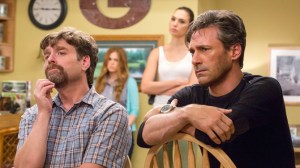 they should do differently. And no one’s talking about the big hairy elephant in the room: how does a Grade A hottie like Fisher settle for Zach Galifianakis? It’s not just that he has pervasive neck beard. His character doesn’t make serious bank, he isn’t independently wealthy, and he’s about as charming as a toddler who ate cake for breakfast and is now hearing the word No for the first time. He’s a buffoon. He’s what the word buffoon was invented for. It’s under these questionable circumstances that they meet their new neighbours, the Joneses.
 ASSHOLES WATCHING MOVIES