
I was a little caught off guard by audience reaction to this movie at TIFF. I’d read the book and liked it well enough but the movie didn’t strike me as particularly must-see. Boots on the ground at TIFF though had me hearing something different. In fact, had me hearing that it was giving La La Land a run for its money as People’s Choice. People’s Choice! So I did what any sane woman would do: I gave up my tickets to I Am Not Your Negro and secured tickets to a last-minute additional screening of Lion.
 Lion tells the true story of a 5 year old Indian boy named Saroo. Separated from his brother one night, he falls asleep on a train and wakes up miles away from his home, his family, from people who speak his language. He survives on his own for weeks before being thrown into an orphanage and then shipped down to an Australian family who adopt him.
Once grown, Saroo finds himself thinking about the mother he disappeared from, who might very well still be looking for him. So he uses the only tool he has available to him: Google Earth. With little information to go on, he scans the internet every night for signs of his childhood home. It’s an impossible  task but Saroo is miraculously lucky. Off he goes to India, to see if he can locate any family near the place he once called home.
Sunny Pawar will quickly win your heart as 5 year old Saroo. His big, adorable eyes immediately indicate his innocence and vulnerability. His half of the movie is gripping and heart-wrenching because Pawar easily elicits our sympathy. While a lost child living on the streets would surely be attended to here, in India it is unfortunately all too common a sight. His pleading is ineffectual. I felt ready to shout at the movie screen myself. And such a tiny thing navigating the streets of Calcutta – it’s an indelible image that speaks directly to your heart.
When Saroo is sent to his new Mummy (Nicole Kidman) in Australia, it becomes a new movie: a fish out of water experience for a little boy who probably didn’t even know that such a country existed. But for all intents and purposes, Saroo grows up Australian. His brown skin gives him away, but he feels a fraud among other immigrants, his culture and background a mystery to him. Dev Patel plays grown-up Saroo, a man searching the Internet not just for his hometown but really also for himself. He doesn’t want to hurt his adoptive mother though, so he pulls away to protect her.
Unfortunately, Google Earth isn’t all that interesting or cinematic. Garth Davis chose to stick with Saroo’s real-life methods but it’s not thrilling or sexy on 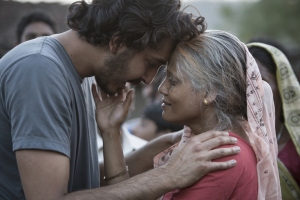 the screen. It literally is just a guy staring a screen night after night for weeks, months, years. He’s moody and emotional in between, throwing his relationship (with Rooney Mara, in an underwritten role) onto the rocks. Nicole Kidman gives an admittedly strong and stirring performance as his mother and helps bridge the gap, but there’s a marked lag until Patel goes back to India.
The Indian scenes are triumphant, but they also raise a lot of questions. Where was Saroo better off? What happens to kids adopted outside their culture? Which one is his real home, his real mother?
I worried that Lion was garnering attention at TIFF because the audience, who skews older, might have felt good about watching something multi-cultural while still safely ensconced in a white lady’s movie. The film, however, won me over. Maybe it tries a little hard to be upbeat, but a feel-good ending is hardly a negative. Davis acquits himself well in his first directorial feature. The chapters are perhaps a bit uneven but the victory is not.
On a TIFF sidebar: While La La Land did end up receiving the People’s Choice award (Lion was the runner-up), the tickets I gave up, I Am Not Your Negro, would have had me watching the People’s Choice documentary winner. Ah well. You win some, you lose some. I can’t regret much since I was watching a great movie either way.
 As you may know, Pixar started the trend of releasing shorts before their films. It was a great way to showcase some stellar work that often gets overlooked. Disney has taken a page from the Pixar handbook and saw lots of success with its Frozen short, Frozen Fever, which aired before Cinderella. Inner Workings is slated to debut before their November release of Moana.
 and his heart. From the moment he wakes up, we see the interplay between his two most boisterous organs, and the way they direct the others as well. The organs have been properly Disneyfied – they are cute, they are funny, but they are never gross or full of blood and guts. Paul is just a regular guy who’s got to get to work. His brain marches him toward the office while his heart is distracted by the many other tempting options. The pace is jaunty, the jokes are clever, the short is colourful.
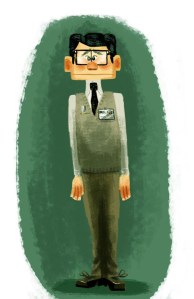 the encyclopedias he studied as a child, clear plastic pages holding the nervous system, circulatory system, etc of a man that could be overlaid on a body to see what fit where. Working at Disney as a storyboard artist, Leo along with many others, was invited to an open-pitch, where anyone could present their idea to John Lasseter and one would be chosen for production. Leo wrote his story with those encyclopedia images in mind. Spoiler alert: Leo won. Lurie mentioned that his deadpan pitched coupled with fanciful and humourous drawing really made his presentation stand out.
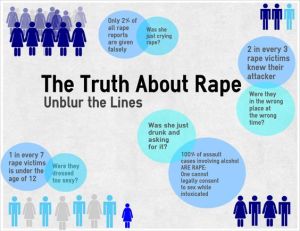 not only sexually assaulted by gangs of their peers, but that assault is being recorded. Welcome to the digital age. These photos and videos are widely and quickly disseminated and before the bell even rings on Monday morning, everyone knows. The public shame feels overwhelming, all-encompassing. It’s nearly impossible to convince such a young girl that in fact things won’t always be this way, won’t always feel this bad.
 failing our sons in some very basic way. Two of them, sentenced to testify on camera for this documentary, have learned nothing. No remorse, no responsibility. One young man volunteers that the only thing he’s taken away from this is that “girls gossip.” And these boys are free – to graduate, attend college, rape again, whatever. Free, and alive, unlike Audrie, unlike Rehtaeh, unlike so, so many.
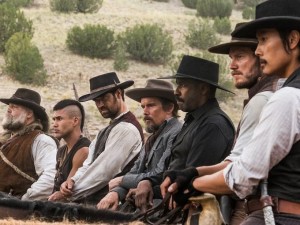 This is a western where the good guys wear black. Where you cheer for the outlaws, where a woman shoots better than most of the men, and where a black man can be the unquestioned leader of the posse. It is a more multicultural west than we are used to seeing, and it feels natural, like this is how it always should have been.
 All the outlaws he recruits fall into line and work with him and for him, to save a little town that a gold baron has taken
 The movie’s success lies in what a small, personal story this is. We never feel like the whole south is against them – but it feels worse that it must be one of their neighbours who keeps ratting them out. The police come, guns drawn, to break down their door in the middle of the night in order to catch them in a crime – that of sleeping next to itch other in marital bliss.
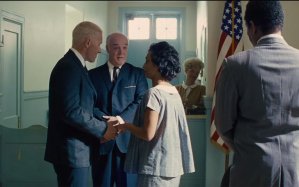 reserved. There’s not a lot of grandstanding. In fact, he turns his back (and his camera) away from the big, sweeping court scene in order to keep it once again in the heart of the family. Easily eliciting a flood of emotions, it’s actually a relief to see them played out so superbly on Negga’s face, and in Edgerton’s shoulders, rather than some melodramatic speech. The restraint here is a credit to Nichols’ directing, but also to this wonderful casting.
 Psiconautas finds beauty in unusual places: decimation, addiction, and poverty, to name a few. In a word, the art is stunning. It feels like a throwback in its hand-drawn aesthetic, and yet feels modern in subject matter and futuristic in its setting.
 Like why a mouse’s stepfather is a human dressing up as a mouse, why her “fake brother” is a bulldog wearing a luchador mask, and why her bird boyfriend is possessed by horrific crows.
 in a good way. All of it has meaning, all of it is a blurry reflection of our society, from our proclivity to make trash to our struggles with addiction to police brutality. I left the theatre wanting to immediately watch Psiconautas again to see what other threads could be tied together.


 world, praised him for his quick thinking and skill. His maneuver saved every soul on board. It was quickly labelled “The Miracle on the Hudson.” He made the rounds of late night talk shows, smiling politely as hosts feted him, but that smile was a facade.
 lives on the line, his own included. Aaron Eckhart plays Skiles, the right-hand man with an equally formidable mustache (what is it with pilots and mustaches?). Laura Linney has is relegated to an even smaller part, as the wife on the other end of a telephone. Both are fine, but this is clearly Hanks’ show, and Sully’s story. He’s the one not just with his reputation on the line, but his career and pension and ability to support his family in flux too.


 aliens, she’s the one who listens well enough to actually crack the code. And it’s a hell of a code, unlike anything our puny human brains can really comprehend. This deep gulf of understanding makes plenty of people nervous – people with their fingers hovering over big red buttons. Annihilation-type buttons. Dr. Banks puts her own life at risk to keep things from escalating to an out-and-out global (universal? galaxal?) war.
 arresting. It works in synchronicity with a hauntingly beautiful score by Jóhann Jóhannsson. Twinned together they remind you that though the plot feels startlingly realistic for a sci-fi film, there’s something otherworldly at play. Young’s work is atmospheric, Jóhannsson’s is pulsating.
 ASSHOLES WATCHING MOVIES