
Violet sets her alarm extra early so she can sneak out of bed, fix her hair, and sneak back into bed so her boyfriend thinks she wakes up like this. She does not. An exacting mother made sure that Violent has spent her whole life hiding her true hair. But even with all the tools and chemicals and salon appointments in the world, Violet is still Cinderella waiting for the clock to strike midnight. When it rains, or is even humid, the magic disappears and her hair reverts back to its natural state. So her life revolves around monitoring the weather and keeping her boyfriend’s hands away from her head.
On her birthday, Violet’s hair is perfect (though not without some drama). She is 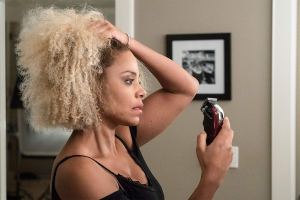 expecting a ring from her boyfriend of 2 years and instead gets a puppy. Boyfriend accuses her of being “too perfect” so a breakup tailspin ensues, including stops at ‘fuck you hair’ and ‘drunkenly buzzing it all off.’ But can Violet change her attitude and values to reflect her newly bald head?
So, okay. I’m white. Violet is black. I am not the best person to review this film. I mean, on some level, many if not most women will relate. So much of our identity is tied up in our hair. But it’s different for Violet, for women of colour. Black hair, for some unknowable reason, has been viewed as…inferior? Is that the right word? Even very young girls may feel that their hair is somehow ‘wrong.’ A black woman who wears her hair naturally may be viewed as unprofessional at work, unkempt at school, perhaps even viewed as her making a political statement to the world. Culturally, hair may serve as a bonding tool, a thing that unites black people (even black men – there’s a whole franchise of Barbershop movies) but it can be misunderstood outside the culture. Black women make up 70% of the hair care market, but the marketing always features white women with long, straight, glossy locks. As do TV shows and movies and magazine covers. So to attain white standards of beauty, black women blow through time, money, and PAIN to achieve the kind of hair that grows naturally out of white heads but not their own. They’ve felt the need to suppress the natural texture of their hair not just to look attractive but to be accepted at work and in the world. But it takes a toll. Viola Davis said in an interview recently how nice it was to wear her hair naturally in Widows (which had a black director, Steve McQueen). She’s used to wigs, weaves, and chemical relaxers just to present ‘the right kind of black’ to Hollywood and audiences. As you know, there’s still a huge gulf to be overcome in terms of media representing people of colour, but even when a film does hire a black actress, she will often arrive on set to find that the hair and makeup team have not thought through her particular needs. They may be unequipped, in terms of tools and experience, to deal with her hair. It is rare to see a black woman on screen rocking her own natural hair. And that’s okay if it’s a real choice. I don’t wear my hair natural either. But for me it’s a matter of style and personal preference. For a woman of colour it may not feel like any choice at all.
So yeah, Nappily Ever After is a romance, but it’s one tied into culture and identity and hair and femininity and acceptance. Sanaa Lathan is really terrific in it, and relatable too. Even though the script itself is very much about the black woman experience, there are universal themes of authenticity that anyone can appreciate. There’s something very powerful about having the courage to be yourself – but I think there’s something even more powerful about living in a world where that wouldn’t be discouraged in the first place, even if that doesn’t exist yet.
[Women of colour, feel free to correct me or to add to the conversation. And to anyone interested in the topic, Chris Rock (yes, THAT Chris Rock) has a cool documentary about it called Good Hair.]
 found male identities received more sympathy. Eventually she found a way to turn it into art, and several stories and books were published under the name. She wouldn’t be the first writer to write under an assumed name, but she might be the first to have gone to such great lengths to present a pseudonym as a real person. She recruited her boyfriend’s androgynous sister Savannah to “play” JT in person, granting interviews and posing for pictures as him – even signing the rights to a movie contract. Of course, when the truth comes out, as it nearly always does, the world was kind of mad about being duped, and there was a big backlash.
 thing could happen, because of course they’ve seen it happen before. So they swing into action, because they know the drill. Though they have little money, they will fund-raise and do whatever it takes to work the case themselves because they know whatever lawyer’s appointed to them will be inadequate (though he’s actually not painted as a bad guy, interestingly), and that the system is rigged is against them. They aren’t wrong.
 other hand, gives Eli a slightly sweeter disposition. He dreams of retirement but remains in the game to keep watch over his brother, who’s a drunk always looking for trouble, and always, always finding it. Eli pines for a woman who was kind to him once. He laments the fate of his pitiable horse. He cuts his brother’s hair.
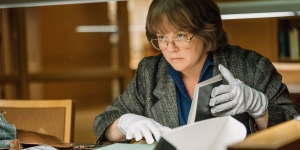 McCarthy only has her own skin to live in, face naked save for an inept smear of lipstick on only the most special of occasions (ie, when asking for money), hair constantly overdue for its next dye job, frumpy clothes in various shades of poop. But it’s Israel’s personality that poses the real problem. She’s abrasive and reclusive and just doesn’t really know how to exist among people, so she’s basically stopped trying. It’s just her and her cat – a daunting thought when it’s just her and a blank page. A once-celebrated writer of biographies, her agent nowadays can’t get so much as a $10 advance for a book on Fanny Brice that nobody wants.
 What’s left is a story without a single breath of uniqueness. Drugs are bad, behaviour off the rails, shipped to rehab against his will, detox makes you sick, “I don’t need to be here,” resistance, rule-breaking, temptation, uncovering trauma, cautious optimism. Insert new names and this could literally describe at least a dozen movies about addictions, and those are just the ones I can name and I can’t name shit. Although Sam Taylor-Johnson makes things pretty (save her own husband, with cracked teeth and a broken nose), this feels like a very familiar, very formulaic iteration.
 crave it even more: a vicious cycle. It doesn’t always happen like this, but sometimes it’s a normal, happy, middle-class kid from a good and loving family who falls prey. Nic feels he’s disappointing his family. His parents feel they’ve somehow failed him. But now what? Do you support/enable him indefinitely, do you watch his teeth rot and his flesh waste and the life behind his eyes disappear? Do you allow his behaviour to tear your whole family apart, exposing younger siblings to it? Or do you cut him loose, not knowing where he is or if he’s safe, hoping every day that his rock bottom isn’t 6 feet deep?
 whole town’s on the brink of disaster. In 1960, the whole country’s on the brink of a sexual revolution, and women’s lib. But they’re not there yet. It’s shameful that Jeanette has to work instead of staying home with her son (who is 14 and never home). And they clearly don’t know how to do divorce; they forget the part about telling each other, and not committing adultery in front of the children. It’s a crazy time to be alive!
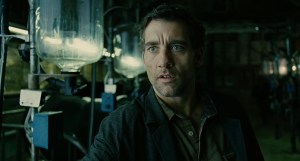 First, this doesn’t need to be said but I will say it anyway: fucking Alfonso Cuaron. What a brilliant director. This is just such an astonishing work in film. The sense of urgency is brilliantly sustained throughout. There are so many scenes in this one movie that are best of career, highlight reel stuff that you can never quite catch your breath. There’s a long scene, kind of a car chase in reverse, where the car in question is specially outfitted so that a custom-rigged camera can rotate not just inside the vehicle, but outside the windshield as well. It’s fantastic, heart in throat stuff.
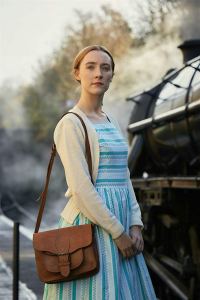 they have a history! Their courtship was often influenced (often negatively) by their pasts, by their families, by what they know and what they don’t. Sound familiar? That’s probably because it’s true of absolutely every human who has ever lived. So how did this movie get made?
 ASSHOLES WATCHING MOVIES