
Graduation
From time to time, we all have to compromise our own values. It’s part of growing up. But do you remember the first time that you betrayed your own moral code?
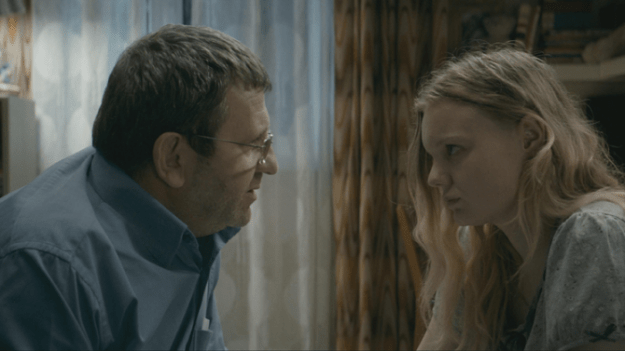
According to Romanian filmmaker Cristian Mungiu, director of the brilliant and beautiful 4 Months, 3 Weeks, and 2 Days (which I have not seen), Graduation is about a lot of things. “It’s about family. It’s about aging. It’s about you. It’s about me”. But mostly, as the Cannes Best Director winner articulated at the North American premiere, it’s about that pivotal moment in one’s life where they make a conscious decision for the first time to do what they know in their heart to be wrong.
Romeo (Adrien Titieni) couldn’t be more proud of his daughter Eliza (Maria-Victoria Dragus) when she gets accepted into a fancy British school but he still can’t relax. Despite her stellar grades, she still needs to pass her finals to get out their Romanian town. When a vicious random assault threatens to shake Eliza’s confidence just days before her exams, Romeo can’t help feeling tempted to use his position as a well-respected surgeon to bargain with her educators in exchange for some leniency.
Graduation takes its time. It takes time to establish the relationships, set up the scenario, and let the story play out. Mungiu doesn’t resort to melodrama or even a musical score to beg for our attention. Almost every scene plays out in just one meticulously framed take. It’s an approach that gives his actors plenty of room to shine and his story the time to come alive. If you don’t mind the slow pace, Graduation asks big questions and will get you talking. It’s a very rewarding experience.
My Entire High School is Sinking Into the Sea
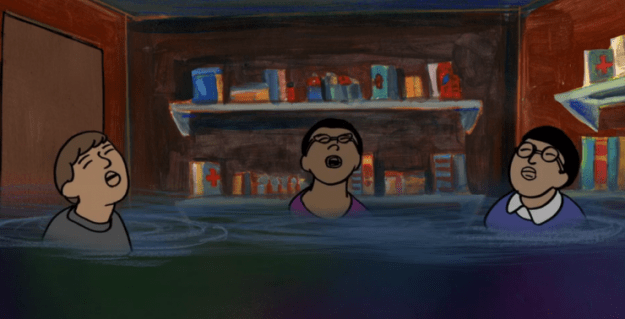
Dash Shaw was in high school when James Cameron’s Titanic was in theaters and couldn’t help imaging what it would be like if his school sank like the famous ship with all of his classmates inside. When you think about it, to avoid drowning to death in a sinking building, the smartest would head for the top floor and try to get to the roof. Once Shaw, director of My Entire High School is Sinking Into the Sea and apparently quite an accomplished comic book writer, started imaging each floor being occupied by a different grade level, he knew he had a story worth telling.
To see a film called My Entire High School is Sinking Into the Sea without feeling like you’re seeing something completely unique would be a letdown. So I’m pleased to announce that, whether you love it or hate it, Shaw’s debut feature will not let you down. The unusual animation style takes a little getting used to at first and, even once you get comfortable, there is so much to look at that many of the movie’s jokes- and the jokes are almost constant- can be easy to miss. My Entire High School may eventually be best remember for its carnage (those who are spared from drowning are mostly impaled, electrocuted, or eaten by sharks) but it’s made all the more special by the hilarious and sometimes touching dynamic between three adolescent friends whose bond is in crisis just as their lives are in imminent danger. And it’s all brought to life by some of the best voice acting you’ll hear this year from Jason Schwartzman, Lena Dunham, Maya Rudolph, Reggie Watts, and Susan Sarandon.
It’s Only the End of the World
I was one proud Asshole walking out of the Toronto premiere of Quebec director Xavier Dolan’s latest family drama. I was genuinely moved by a Xavier Dolan film. I admired Mommy, his last movie, I really did. It was just too self-indulgent for me to really relate to it in any real way.
So I was pleased to find myself loving this movie, more than almost anything else I saw at the Festival this year. I was finally starting to get it. I was quite disappointed to see that not everyone was as impressed as I was. It’s Only the End of the World currently has a score of 48 on Metacritic. If you’re not familiar with that site, let me put that in perspective. That’s only four points higher than Batman v. Superman’s score. Ouch.
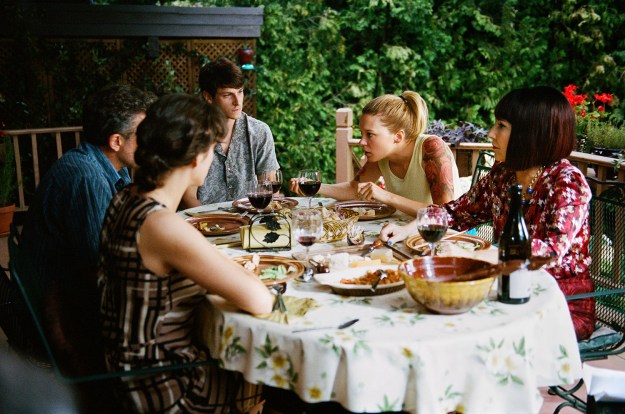
I stand by my recommendation though. Based on a play by Jean-Luc Lagarce, It’s Only the End of the World tells the story of a family who are easier to relate to than to understand. After a 12-year absence, Louis (Gaspard Ulliel) is finally coming home but he is bringing sad news with him. He is very sick and doesn’t have much time left. He’s not quite sure how to bring it up but it wouldn’t matter anyway because his mother, brother, and sister can’t stop alternating between picking fights with him and each other and awkwardly trying to force reconciliation. They try to bond over trivial things and fight over tiny details but can’t seem to bring themselves to talk about anything important.
The claustrophobic family reunion atmosphere seems to rein Dolan in a bit. He still manages to make Lagarce’s play his own though. For such a talky film, it’s surprisingly cinematic with its unnerving score and great performances from Ulliel, Nathalie Baye, Marion Cotilliard, Lea Seydoux, and Vincent Cassell. Using his signature tight close-ups, Dolan works with the actors to find subtext amid all the shouting. No easy task. Hard to act like you’re holding back when you’re screaming at each other.
I’m still not entirely sure what they were fighting about. But the story feels real and profoundly sad.

Nocturnal Animals
Careful with this one. The people around me at the TIFF encore screening of Nocturnal Animals were basket cases watching it.
It’s easy to imagine yourself in the same position as Tony (Jake Gyllenhaal), a husband and father whose family finds themselves terrorized while driving a lonely Texas highway in the middle of the night. The tension is nearly unbearable as this story unfolds. Those around me could barely sit still watching it and Susan (Amy Adams) is getting even more stressed reading about it. See, the scary part of Nocturnal Animals is but a story within a story. It’s the plot of a manuscript that Susan’s ex-husband (also Gyllenhaal) has sent her of his latest novel. As unnerving as the novel is to watch, it’s even worse for Susan. She’s quite sure the novel is about her.
The three narratives (there are also a lot of flashbacks of Susan’s marriage) are balanced beautifully in the second film from director Tom Ford (A Single Man). Susan is a successful art dealer and everything around her is beautiful and fake. In the story within the story, Tony’s world is harsh and all too real. Nocturnal Animals is sure to be divisive. Ford lays out his themes very clearly and I’m sure I feel comfortable with all of his implications. But there’s so much to look at and so much to feel, think,about, and talk about that you kind of just have to see it.

Oh, and if you’re not sold yet, Michael Shannon plays a crazy cop in it.
 The landscape has significantly changed, the salt flats growing exponentially. A volcano that runs underneath shows signs of erupting as a result, which would mean a global disaster. Like a wiping out of humanity disaster. So, in a strange bid to fix things, a misguided man (Michael Shannon) kidnaps a scientist (Veronica Ferres) and abandons her on the salt flats along with two blind boys.
 suggest that there is a thrill to be had here (other than the panicked state of Bernal’s panties) is laughable. Most of the film is just unending shots of salt. There’s a good 10 minutes just watching the kids play Trouble (the board game) for the blind.
 The talking head interviews are culled extensively from the guest list of the 2015 festival, and include the likes of Toni Colette, Michael Moore, Patricia Clarkson, Judd Apatow, Mimi Leder, Paul Feig, Catherine Hardwicke, Angelica Huston, Jill Soloway, Mira Nair, and so many more.
 carpet when she broke out a sign reading ‘Budget the Baby’. She says “As an actor I can claim a massage or a facial but I can’t claim childcare. Actors are the most pampered people on sets. It’s the crews — the electricians, catering, camera people — who are often on set at 4am.” Hope Dickson Leach is a mother of two herself; you can imagine what a grueling 20 hour day on the set can mean to a family with young children.
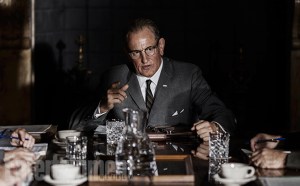 Rob Reiner, a venerable talent who hasn’t directed anything of note in a couple of decades. As he introduced this film to the TIFF audience, however, it was clear that this movie really meant something to him. He talked of being a young man during LBJ’s time in office, and hating him because he was the man who could send you to your death in Vietnam. Only with time, age, and political engagement could he look back at Johnson as something more. He was the president who had to shoulder the burden and responsibility of John Kennedy’s legacy. He took over lots of the civil rights work that JFK had begun, and LBJ is the one who pushed it through, though history sometimes forgets to give him credit for this.
 the way Jackie does. That said, I still found it to be quite enjoyable. The film neglects to give us a complete picture of the man, but does focus interestingly on LBJ’s rivalry with JFK, allowing Harrelson to swing between cockiness and shame and a whole presidential gamut in between – it’s refreshing to watch him flexing so readily after a string of second-banana performances. He’s playful bordering on hammy, showing us wit, vulgarity, searing intelligence, and frustrated ambition.
 sheets, on his hands, their breathing, the sounds drifting in from outside, the memories that keep cropping up. It’s a strong enough start but when she becomes a candidate for surgery that would restore her eyesight, things start to shift.
 aliens, she’s the one who listens well enough to actually crack the code. And it’s a hell of a code, unlike anything our puny human brains can really comprehend. This deep gulf of understanding makes plenty of people nervous – people with their fingers hovering over big red buttons. Annihilation-type buttons. Dr. Banks puts her own life at risk to keep things from escalating to an out-and-out global (universal? galaxal?) war.
 arresting. It works in synchronicity with a hauntingly beautiful score by Jóhann Jóhannsson. Twinned together they remind you that though the plot feels startlingly realistic for a sci-fi film, there’s something otherworldly at play. Young’s work is atmospheric, Jóhannsson’s is pulsating.

 It stars Mark Duplass and Sarah Paulson, almost exclusively. They play high school sweethearts who bump into each other 20 years later. Agony and ecstasy, right there on the screen. And heaping spoonfuls of awkwardness, don’t forget that. Because they were in luuuuurv. The real deal. And now they don’t even know each other. It reminded me of a friend who had recently posted on Facebook that it was her ex-husband’s birthday, a date she can’t help but remember even if she no longer even knows if he’s alive. Isn’t it weird that we can lose track of people who used to be our whole worlds?
 sex was hot and heavy, and Annie Lennox was everything. Jim and Amanda will take you down your own worm hole, and if you don’t end the movie thinking about your own First Love, then you my friend have a cold, cold heart.

 It sounds promising on paper: a dystopian thriller meets sci-fi Groundhog Day. The protagonists, Renton and Hannah, keep waking up in bed when a bunch of bad guys burst in on them. Things don’t go well. But every time Renton gets shot in the face, they wake up in bed again, to do it all over, though not necessarily with better results.
 isn’t worth it. The dialogue put me off immediately. It has the look and feel of the kind of television show I would never watch. Even worse, it ends like it’s the pilot of a TV show that hopes to continue this mystery in vague and infuriating terms for the next 6 years. It isn’t, though. It genuinely believes itself to be a whole movie. Don’t believe it, not for a second: ARQ is to be avoided at all costs. Keep swiping left.
 ASSHOLES WATCHING MOVIES