
You know the story. The whole world knows the story. Neil Armstrong, an aeronautical engineer and Apollo astronaut, was the first man to walk on the moon. “One small step for man, one giant leap for mankind” – that was him. American hero, international phenomenon, global icon. First Man is his biopic, tracing the 304400 km path he took from humble test pilot to living legend.
First Man is Damien Chazelle’s follow-up to the ethereal La La Land, which made him the youngest Best Director to ever be awarded the prize at the Oscars. To say I was highly anticipating screening this movie at TIFF is like saying Armstrong was kind of an interesting guy – a resounding understatement. But when the lights came back up, I was feeling a little…underwhelmed? Bored? Disconnected.
Feeling uncomfortable with my initial reaction, I turned to my favourite critic in a whole cinema full of press, and invited him to discuss and unpack this movie over sushi burritos. First – Ryan Gosling. He gives a terrifically reserved, very stoic performance as a famously quiet, attention-shirking man. Armstrong is surprisingly passive when encountering life-altering choices. He’s dispassionate. He’s obsessed with technical detail and getting things right but he never seems overly impressed with the great heights involved in his job. Wait a minute – is it possible Neil Armstrong was on the spectrum? To be clear, I’ve never heard that he’s an Aspie, or had high-IQ autism. Nor have I heard it mentioned in the context of this film. However, his wife at the time, Janet (played in the  movie by Claire Foy), called him “emotionally disconnected.” In the film, he struggles to speak to fellow astronauts and even his own children, and goes out of his way not to. But it’s not that he doesn’t care. He clearly grieves the loss of his infant daughter, and thinks of her often. And he’s sensitive to the deaths of his colleagues. But these are internal struggles that rarely get expressed, or expressed correctly. He’s not unfriendly or unapproachable, exactly, but human connection is hard for him. Is undiagnosed autism what Gosling is hinting at with such a performance? And with that question in mind, the rest of the movie unlocks before me.
I trust Damien Chazelle as a director. If I’m feeling underwhelmed, isn’t it because he wants me to? After all, this is the guy who made me sweat while watching a movie about jazz (sorry, jazz). If he wanted me soaring among the stars, he certainly has the vision not to mention the skill. He swept me away with La La Land; I danced out of the theatre even as I ugly-snot-cried. If my feet are more firmly planted on the ground for this film, there has to be a reason.
What if Chazelle is attempting to put us not just in Armstrong’s shoes, but in his head? I felt very removed during the movie, but maybe that’s exactly his intention: to show the greatest, most ambitious, most adrenaline-fueled achievement in the history of humankind through the eyes of someone who doesn’t express feelings in the usual way.
Whoa.
Now that I’m re-examining the film through this new filter, I realize that I don’t remember Gosling smiling even once in the whole 120+ minutes. He doesn’t cry when he’s sad, nor does he ever appear to be particularly happy. At a pre-flight press conference, a journalist asks him how it feels to find out he’ll be the first to walk on the moon, to which he simply responds “I’m pleased.” Finding this response lacking, the reporter probes further, asking him to compare it to finding out he’d been selected for NASA’s astronaut program, to which Armstrong can only repeat “I’m pleased.” Although he’s certainly capable of more complex emotions, communicating them seems impossible. Another scene that struck me is one in which Armstrong is trying to sneak out of the house without saying goodbye. He’ll be gone for 2 months, strapped to a bomb that will explode him out of the atmosphere to land or crash on the moon and no one knows for sure if he’ll ever come back. His family has attended the funerals of many friends and colleagues who’ve perished in various missions. His two young sons are sad and scared and he tried to sneak away. His wife has to beg him to say a few words, but “I love you” are not among them. Knowing his father doesn’t like hugs, his brave son offers a handshake instead, not knowing if this is to be their last embrace.
This film is strangely muted, with even the score a tad alienating with unfamiliar instruments. And check out that photo from above – doesn’t that blue wash make him seem lonely, and isolated? This great adventure in the sky should be exciting and staggering, but the biggest sensation we’re given is physical discomfort as we’re rumbled and tumbled about during liftoff sequences. Not that Armstrong complains. There’s no swelling pride or patriotism, no heroic speeches or manly tears. In fact, there’s very little awe. In the vastness of space, the screen is often filled with a solitary face. I wonder if the emphasis on extreme close-ups is supposed to symbolize Armstrong’s challenge in deciphering non-verbal cues, or if it’s merely to give us a better view of his consistently flat affect.
The camera seems to offer things up from Armstrong’s point of view – one small chunk of moon dust rather than an entire lunar landscape. His trip into the infinite universe feels very small, and very humble, but he’s not unmoved. He just has a narrow focus, more fascinated by his own boot print than by the multitude of stars. Does Armstrong feel more at home in the empty quiet of space? Maybe. But we’ll never know because he sure as heck didn’t say so.
If my little theory is correct, I wish I had know it going in rather than piecing it together in hindsight. What more would I have noticed? I can’t wait to re-watch and find out. I can’t wait to appreciate Armstrong and his accomplishments in this new light, and to celebrate Chazelle as a director who can so completely immerse and saturate you in someone else’s experience. Remarkable.
 McCarthy only has her own skin to live in, face naked save for an inept smear of lipstick on only the most special of occasions (ie, when asking for money), hair constantly overdue for its next dye job, frumpy clothes in various shades of poop. But it’s Israel’s personality that poses the real problem. She’s abrasive and reclusive and just doesn’t really know how to exist among people, so she’s basically stopped trying. It’s just her and her cat – a daunting thought when it’s just her and a blank page. A once-celebrated writer of biographies, her agent nowadays can’t get so much as a $10 advance for a book on Fanny Brice that nobody wants.
 childhood when his beloved maid’s unexpected pregnancy collided with his parents’ bitter divorce. It marked him for life, and all these years later he’s strung together the haunting images from that period and used his memory to paint in the rest. He’s only a minor character in the film, it’s really an ode to the women who raised him: his mother, the two servants, and Mexico herself.
 his kids, his little dog Olivia. Sure they’re criminals but they’re also doting dads, bill payers, lawn mowers, trash taker-outers. So you’ve got this brilliant back and forth of the two, somewhat disparate, halves of their lives. The hard and soft, the why and the how of tough jobs with lots of risk. We don’t spend much time with them, but we already know they are much than just their crimes, and when they meet their end, it’s not without sadness, a loss that is earned. And it’s also a highly effective way of introducing both theme and character. Brilliant, nimble work.
 The ever-evolving Predator crash lands on earth and interrupts a U.S. sniper’s top secret Mexican mission. After ejecting from its ship, the Predator kills the sniper’s support team but the sniper (Boyd Holbrook) manages to escape, mailing a few pieces of the Predator’s gear home as evidence of the encounter. The gear finds its way to the sniper’s son (
 Of course, ridiculousness is a Black staple and while Predator does not quite measure up to Black’s best (namely, the amazing Lethal Weapon), it is a wonderfully entertaining film thanks to Black and the extremely solid cast. The standouts of the teriffic ensemble are Tremblay as the protagonist’s code-cracking son and This Is Us’s Sterling K. Brown as a scenery-devouring special agent whose motives are never clear but always nefarious. The Predator keeps up a steady stream of action and laughs from start to finish, and as a result, I’m now waiting eagerly for the even-more-ridiculous sequel that the Predator blatantly and shamelessly promises.
 composes poetry that is beautiful and eloquent beyond his years. Lisa feels an addictive high when she recites it as her own in poetry class, receiving praise by peers and teacher (Gael Garcia Bernal) alike. But mostly she just becomes obsessed with this kid, believing she’s the only one who can nurture his talent. Her behaviour becomes increasingly troublesome, though even on the mild end of the spectrum (depriving him of naps, luring him into bathrooms, alone, with candy bribes), I was uncomfortable.
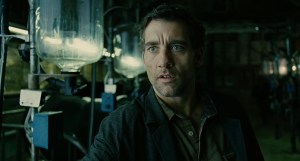 First, this doesn’t need to be said but I will say it anyway: fucking Alfonso Cuaron. What a brilliant director. This is just such an astonishing work in film. The sense of urgency is brilliantly sustained throughout. There are so many scenes in this one movie that are best of career, highlight reel stuff that you can never quite catch your breath. There’s a long scene, kind of a car chase in reverse, where the car in question is specially outfitted so that a custom-rigged camera can rotate not just inside the vehicle, but outside the windshield as well. It’s fantastic, heart in throat stuff.
 being held in a brothel. Her father works for the government and doesn’t want to get police involved. And if Joe could, you know, fuck up the men who did this to her, he’d be pleased. But walking a mile in Joe’s boots is never straight forward. He’s plagued by violent images, by death, by his own abusive childhood.
 campaign gives it a crisp edge, and the constant allusions to Trump’s eventual win, thanks in part to his KKK ties, give it a sharp one. Damn it’s smart. And also depressing. And funny. Like, really funny. And so sad. Because as astutely-observed as this stuff is, it’s astonishing and disappointing to realize that 40 years on, we haven’t made much discernible progress. White people were horrified and baffled by 45’s election, which is funny because it was obviously white people who elected him. The two kinds obviously don’t talk. But nearly every black American I’ve spoken to was not overly surprised by the result (which is a far cry from being happy about it). They knew the country’s true temperature since they live with its consequences every day. And now those things have been outed, given permission to be voiced, and suddenly 2018 is resembling 1972 is some very uncomfortable ways.
 ASSHOLES WATCHING MOVIES