Category Archives: Movie Reviews

Our reviews and thoughts on the latest releases, classics, and nostalgic favourites. Things we loved, things we hated, and worst of all, things we were ambivalent about.

TIFF: Voyage of Time

Voyage of Time: The IMAX Experience is the 45 minute version of Voyage of Time: Life’s Journey, written and directed by Terrence Fucking Malick; a 30 year labour of love.

We watched the shorter version in the IMAX theatre where Sean watched Spider-Man 2 with a girl named Tall, Stupid Rebecca. Did you guys know Sean dated other women before me? How rude. But he did, apparently, when he used to live in the fine city of Toronto (and voyage-of-time-copertinaby the way, I also lived here at the time, and yet: Rebecca BitchFace. I’m sure she’s a lovely girl.) Where was  I? Oh yes.

It takes a special brand of masochism to attempt a Terrence Malick flick as your fourth film of the day, and yet there we were, sitting in the same seats where Sean once fumbled an “accidental” boob graze of another woman’s tit. I KNOW YOUR MOVES, SEAN. Ahem. I digress.

Voyage of Time is billed as an examination of “the origins of the universe, the birth of stars and galaxies, the beginning of life on Earth and the evolution of diverse species” but that’s COMPLETE HORSESHIT. Calling it a documentary at all feels like a stretch. Or, you know, a flat out lie. But it is the movie Terrence Malick was born to make. His feature films tend to be languorous, dreamy imagery interspersed with the vaguest tendrils of plot. Voyage of Time is all the imagery and none of the plot. It’s loaded up with his signature “sun flares through a leafy tree” but these alternate between CGI renderings of what Terrence Malick thinks the beginnings of life might have looked like. Terrence Malick is many things, but: astrophysicist? Nope. He’s definitely got some scientific advisers on tumblr_o9l8rnmwj61r5ixiao2_540board but the result isn’t science at all. It’s conceptual; more contemplative than comprehensive. No science teacher will ever show this in class – but a yoga teacher might. Getting the gist? It’s a thing of beauty, often thoughtful, but far from educational.

Brad Pitt narrates, often in such a way that you can hear the italics in his voice. It’s like he’s reciting poetry with his eyes closed (Cate Blanchett narrates the longer version, for some reason). I tried very hard not to snort because the director of photography was sitting directly behind me, and that’s a lot of pressure. I felt sometimes that I should sigh appreciatively just so that he didn’t get a complex. Or lean back for a high five every time there was a sun-dappled field or rays of sunshine peaking from between limbs of a majestic tree.

It’s obvious even from Malick’s narrative films that he has a thing for nature and philosophy and theology, for lack of a better word. The pace of the movie is soulful, at the rate of about 1 fact per 1-2 minutes of silent reflection.

Did I enjoy it? Well, fuck. It is an experience. Plus, making it to the end of any Malick movie is an accomplishment, almost equal with having climbed Everest. It’s definitely CV-able. And he did raise a question I’ll be chewing over for days to come. Most documentaries in the vicinity address life – what, where, when, why. But Terrence asked about death – when did death first appear? And you know what? Not only do I not know the answer, I didn’t even know to ask the question. We think of life and death as inseparable, but who’s to say?  Life’s first ambition is to go on living, and maybe that’s exactly what it did. Until. Until what? I don’t know. Neither does Malick, but at least he’s asking, and you know he’s asking in the most magical way he knows.

 

TIFF: Snowden

I feel much better now. If you read my Amanda Knox review, you may remember that I was close to TIFF burnout last night. Well,  I did what I hate doing: I made the tough choice of skipping my Midnight Madness movie last night and finally got some good sleep. Nothing like watching four more movies to make an unsettling documentary but a distant memory. I’m excited about TIFF again.

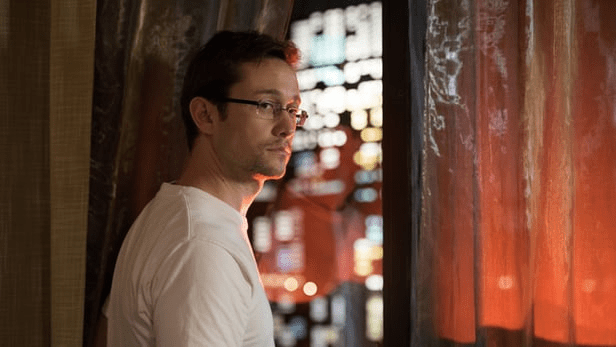
Seeing Oliver Stone take the stage to introduce Snowden (which I’ve been dying to see) didn’t hurt. Stone hasn’t made a particularly good movie in awhile and, come to think of it, has never really made a film that I love, but seeing him at TIFF still feels like a big deal. And, thankfully, my concerns about whether or not he could handle this tricky material were unnecessary.

I mean, it’s not perfect. It tries to do way too much and is about 20 minutes longer than it really should be. But it tells and/or speculates about the story that I felt 2014’s Oscar-winning documentary Citizenfour missed out on. It tells us about Snowden the man. Wonderfully played by Joseph Gordon-Levitt, Snowden is easy to root for and easy to relate to. I’d even argue that Stone’s film does a better job of  making the case that all of us should care about illegal NSA surveillance. Even if we feel we have nothing to hide.

Of course, this isn’t a documentary and it’s easier to inspire outrage in a dramatization of events. Snowden isn’t a substitution for Citizenfour, which is an important documentary that everyone should see. It is, however, an interesting and worthy companion piece that will likely make you appreciate Snowden’s sacrifice even more and think twice about getting changed in front of your laptop.

I’ll Sleep When I’m Dead

Steve Aoki is a world-famous EDM DJ. Mile for mile, he’s the most-traveled musician in the world (via his private jet, natch). He started a record label when he was 19 years old and turned it into a success, breaking Bloc Party among others. He parlayed that into a DJ gig, and attracted a cultural following. His energy kept driving him forward. Now he plays aoki_bulletin_voake_hiressel_1433as many shows per year as there are days, or more. He’s ambitious. He never stops. He helped transform EDM into a personality-based business. On any given night there are thousands of voices chanting his name. But it’s not enough. It’s never enough.
Steve’s dad was the guy who invented Benihana. Success runs in the family. But Steve’s dad was never impressed, and never supported him financially. Steve’s  dad is dead now, but Steve’s still trying to impress him.

This documentary forces Steve to sit still for maybe 6 minutes, total, in an attempt to be introspective for a damn minute. The film attempts tension and conflict, but there’s only so high-stakes you can make a dance music concert. Still, his family situation is sad and it’s clear that even as a man he’s still yearning for a validation that will never come. Can only come from himself, ultimately, but until he can sit down in earnest and look inward for it, he will be fated to repeat this pattern indefinitely.

TIFF: Amanda Knox

It’s so great to be back at the Toronto International Film Festival! I felt nostalgic the moment I stepped off the train. The rushed breakfasts, the possibility of a close encounter with your favourite celebrity, the feeling that I’m finally starting to know my way around this once intimidating city, and the hope of catching one of the year’s best films keep me coming back every year. And, for the first time, I get to share the experience with my parents. So why am I tempted to just skip my next movie and go to bed early?

Partly, it’s because I woke up at 4 a.m. yesterday to catch my train and got back to my hotel at 2:30 a.m. this morning after a Midnight Madness screening. Partly, it’s because I’ve been catching four screenings a day since I got here. Both good reasons I think for me to be getting close to early TIFF fatigue but Amanda Knox, which just had its world premiere at the Festival, is another big reason why I couldn’t sleep last night.

Though it was apparently international news back in 2007, I really don’t remember Knox’s story. Amanda Knox was in her early twenties when she was arrested and convicted of murdering her roommate while vacationing in Italy. This wonderful documentary follows her road to exoneration over a period of several years.

What’s unsettling about this film is what apparently captivated the media nearly a decade ago. It’s Amanda. Young, pretty, charismatic, and full of life, she doesn’t look or sound like she’d be capable of such a heinous crime. So when she looks directly into the camera and calmly says, “Either I’m a psychopath in sheep’s clothing, or I’m you,” I get the shivers.

As a true crime documentary, Amanda Knox is every bit as gripping as Netflix’s Making a Murderer. But, despite having only a fraction of the running time with which to do it, it manages to give a more balanced look at the case than the controversially one-sided Netflix phenomenon.  Knox and her Italian now ex-boyfriend and co-defendent are interviewed extensively, as is the Italian homicide detective that maintains their guilt to this day. You’re bound to like and trust some of the interviewees more than others but, according to the filmmakers, each of them have seen the film and every one of them feels that they have been represented fairly.

I still don’t know what happened that night nine years ago. Maybe that’s why the police, media, and public turned on Amanda so quickly. Not knowing is scary. It keeps us up at night (or, in my case, last night). The good news is that, even if you couldn’t make it to Toronto this year, you’ll get a chance to decide for yourself. Amanda Knox will be on Netflix later this month.


Looking for more on Netflix? Try

Audrie & Daisy

Where To Invade Next

A Million Ways to Die in the West

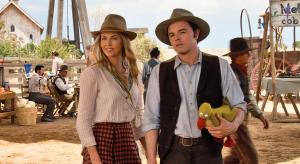
So my mother gave me a film recommendation last weekend. She couldn’t remember the title, naturally, but she said it was an 1800’s western where they “say modern jokes.” Had my brother-in-law not come to the rescue I may never have guessed Seth McFarlane’s A Million Ways to Die in the West. A critical and commercial flop, I would never thought that its only thought was my mother of all people: the woman who taught us that “shut up” and “vagina” were bad words, and who to this day can barely utter “Frig” when the absolute worst has happened.

a-million-ways-to-die-in-the-westYet just ten seconds in, someone’s shouting “Pussy!” – a term I’m sure was used very sparingly in the western novels by Louis L’amour her father always read. Then there’s the death by flatulence, and Oscar winner Charlize Theron’s fat ass, and Sarah Silverman’s sore asshole. And MY MOTHER WATCHED THIS.

The premise of the movie is “the west fucking sucks and I bet I can get a lot of mileage out of that.” In truth, you can get a little mileage out of it.  Seth McFarlane, managing to only half sound like Peter Griffin, somehow attracts not just Theron but Amanda Seyfried as well, even though he’s a terrible sheep herder and looks stupid in a bolo tie. There are a few laughs along the way but the plot is useless-to-nonexistent, yet it still takes entirely too long for nothing to ever happen.

So, Mom, what was your favourite part? The daisy up the butt? The 15 year old spinsters?maxresdefault The sheep penis? No, wait. It was the pooping in hats, wasn’t it? I bet it was the diarrhea-filled cowboy hats that really got you giggling. A Million Ways to Die in the West will cost you 116 minutes of your life, but finding out your mother has a dirty, disgusting sense of humour? That’s priceless.
 

Captain Fantastic

Captain Fantastic, the movie and the man, asks big questions, gives brutal answers, and leaves you with deep thoughts for analysis.

Captain Fantastic, played with vigour by Viggo Mortensen, is a man raising 6 kids in the woods like a pack of wild coyotes. They’re off the grid. They hunt web1_160715_edh_captfantastic_m-1024x682and grow food, read meaty novels by campfire light, and train their bodies strenuously, sometimes dangerously. Each kid has a unique, made-up name so they’ll be the “one and only” in the world. It sounds heavenly or lonely, depending on your perspective. Not all the kids are happy. Not all the parents are happy either, although so far I’ve only mentioned Captain Dad. Mom, as it turns out, is off in a mental health facility, and has been away from the family for several months before they learn she’s committed suicide.
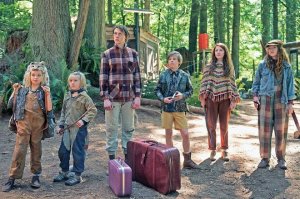
Her death is the catalyst for the family returning to civilization to attend her funeral.

Viggo Mortensen is fantastic, although not always likeable. I’ve seen enough documentaries to know that raising a family off-grid, though idealistic, is not always so great for the kids. In Surf Wise, a doctor raises his kids on the beach, establishing a surf school. He turns out some great athletes, but the kids are otherwise totally unprepared for real life. Without education or even identification, it’s tough for them to rejoin the ‘real world.’ In The Wolfpack, a bunch of kids are kept pent up in a New York apartment. They develop rich inner lives and lots of art, but are totally unaware of what real life entails. In Captain Fantastic, the kids are book-smart but lacking in experience. They don’t know how to interact with the modern world, so unless all of them are prepared to continue subsistence living, and form an incestuous colony, it’s not really a sustainable lifestyle. And the kids are growing resentful.

Captain Fantastic raises a lot of interesting questions about parenting. Should a parent’s decisions always be respected? Are anti-capitalist, anti-movies_captainfantasticestablishment values best addressed by dropping out of society? How much freedom is too much freedom for children? And what kind of risk is acceptable? And do children need to sometimes be shielded from difficult or painful concepts, or is complete honesty always the best policy?

This film is quite funny in parts, and quite serious in others. And by serious I mean I cried a small ocean’s worth of salty tears. The kid actors are mercifully good, and Mortensen is generous with them in their shared scenes. Writer-director Matt Ross delivers some pretty satisfying emotional release, and a captivating twinning of joy and sorrow. Unfortunately the script dips a bit in its final acts, letting Captain Fantastic off a little easily, but it’s already a philosophical triumph by that point, a good movie that’s actually about something.


The Light Between Oceans

The Light Between Oceans is a film for the literary sort. It’s poetically paced, languid in its development. It’s about a man (Michael Fassbender) who, having survived the war, is keen on some isolation and takes a job as a lighthouse keeper on a lonely island. He doesn’t count on falling in love, and is delighted to double the population of his rock when he takes a wife (Alicia Vikander). Now all they need is a baby and they’ll have a real population boom on their hands.

the-light-between-oceans-heroine-alicia-vikander-picturesBut wait. The babies aren’t coming so easily for this young couple. In fact, the only baby that comes is one that washes ashore, screaming in her dead father’s arms. It’s the lighthouse keeper’s duty to report orphaned baby to the mainland, no matter how much his distraught, infertile, grieving wife may want to keep her. Right?

The Light Between Oceans is beautifully shot by DP Adam Arkapaw; you’ll be sick of the postcard-perfect scenery by the end of the movie. We get it, it’s gorgeous. Fassbender and Vikander fit right in (once she shaves off his mustache anyway), pantomiming love so well they actually fell in love themselves, and are a couple to this day. They’re committed in their roles and aren’t to be blamed when this film ultimately falters.

What makes it stumble?  The pace may be a deterrent. While I was okay with the unhurried the-light-between-oceanspace, I worried that Sean was bored. Or asleep. He assured me he was neither, and I nearly believe him. Second, and hugely, is the contrived plot which forces the characters to behave rather stupidly. As much as you want to like them, and have liked them, you will grow frustrated. And emotional: director Derek Cianfrance is adamant that you cry. He will not be satisfied, or leave well enough alone, until you do.

Hell or High Water

This movie is more high-noon western than high-octane thriller, but there is indeed a heist at its heart.

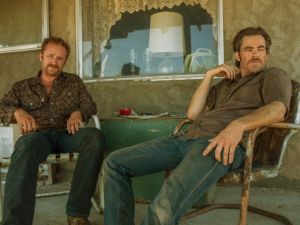
Two brothers, Toby, tall and handsome (Chris Pine), and Tanner, short and surly (Ben hell-or-high-water-chris-pine-ben-fosterFoster), have little in common except for the rough past they come from, which they are both desperate to escape. Toby has spent the last few years caring for their mother while the family ranch slips away. Tanner has spent the past year since he’s been released from jail tempting the fates to put him back. Now they’re working together to save the family ranch from default – and will do so by robbing a bunch of Texas Midland bank branches, and paying the bank back with its own stolen money.

The only catch: sheriff Marcus (Jeff Bridges) is close to retirement but not keen to go, and this one last case is not going to be the blemish on his career. He chases the brothers all over Texas until he pinpoints the next branch they’re about to hit, and lies in wait.

Hell Or High Water is superbly acted. You can’t even say with certainty which of the three leads steals the film, but they’re all making the right choices, the quiet choices that make for the most interesting of character studies. That said, the secondary characters – and hell, even the one-liners – are all praise-worthy here. And I am obliged, once again, to worship at the altar of Jeff Bridges, chronically underrated but truly one of the wonders of the world.

The pace helps set this movie apart. It’s not fast or furious: it blows by at about the speed of a tumbleweed in a gentle breeze, which means you have time to get to know everyone, 97178_044and in getting to know them, maybe you actually care. There is a certain sympathy accrued for both the cops and the robbers. It’s the kind of movie that made the car ride home extra engaging, as we figured where they all stood on the Bad Guy Scale. Toby, for example, is robbing the bank that robbed him. He’s doing it to give his kids a future. But he’s using a gun, which means people could get hurt. So is he good, bad, or somewhere in between? 49% good? 51% good? 75% relatable? 100% justified?
One thing’s for sure: the blackest hat of all is reserved for the banks. The Big Short was last year’s testament to the American Dream’s foreclosure, and although my hat’s off to Adam McKay for making a narrative film out of a nonfiction book (and I don’t mean a biography – this baby was characterless, plotless, and read more like a textbook, by which I mean full of facts and figures, but not remotely dry or boring), it never really resonated with me. Hell or High Water puts a name and a face to poverty, and calls it a disease. An epidemic, even. Director David Mackenzie has accomplished something significant here, dragging the good old Western into the 21st century, a time of economic anxiety, where the little towns look even more derelict and neglected than they did in the wild, wild west. There’s an ache to this film cultivated by fantastic dialogue and scenic shots, handily catapulting itself into my top 5 of 2016.

Three Days in Auschwitz

Auschwitz may or may not be on your list of places to visit. It’s not your typical holiday fare, to stand on the ground where millions were murdered. A trip to Auschwitz is not a day easily spent. It is somber and it is difficult, and it is meant to be. Living history is what makes it real for us, turns a textbook event into something concrete that happened to real people, not very long ago in our human  history. The evilness makes it feel surreal, and it takes a real emotional impact to ground the experience for us once again.

The act of remembering belongs to all of us. This is how we heal. It’s also how we learn, and how we make sure it never happens again. It seems just as important today as it’s ever been to  challenge prejudice, discrimination and hatred.

And it’s a tribute to the dead. Millions of lives lost, cruelly. People made to suffer, to live in agony, to live with the constant loss of loved ones, to live with ghosts, to live without the promise of a future. There are fates worse than death.

And it’s in memory of the survivors, those who survived the camps but lived with the scars. Who were faced with the daunting task of rebuilding. Who struggled with grief. Who scraped their hearts raw in the search for forgiveness. Who went on, alone.

We are all saddened\enraged by what we know of the Jewish genocide at the hands of the Nazis. The Holocaust is a dark shadow for humanity. We all owe a debt of some kind, and we pay it in part by bearing witness.

Three Days in Auschwitz is a documentary by Philippe Mora covering his own trips to visit the site. His mother had been thrown in a concentration camp and was rescued from it just one day before she would have been shipped to Auschwitz herself. Eight other family members perished there. It’s a tough subject but we’re soothed by its graceful score by Eric Clapton.

Mora’s film is not filled with facts or figures, none of the statistics we’re all familiar with anyway. It’s just a humble attempt to grapple with its reality: an act of mourning, an act of vengeance.

Visiting Auschwitz with a heavy heart and a troubled stomach, you find the thing that speaks to you: will it be one shoe, left behind? The remains of an oven built to roast people? The electrified, bard-wired fence that represented hopelessness to the millions of people imprisoned and starving behind it? For Mara it seems to be the train tracks. It’s an image he comes back to often. Auschwitz was chosen by Hitler because of its easy access by train. Bodies were crammed into cars, many dying before they reached their final destination. The trains were incessant. People were “sorted” as they disembarked, some sent straight to death, others sent into slavery first. The train tracks great disturb him.

And that’s the thing. A visit to Auschwitz may make you feel sick. Watching this documentary may do the same. It should. Don’t turn away. Don’t say it’s “too hard.” Remembering is the easiest part of this thing, and you’re lucky that this is the role you were born to play. If ignorance and hatred are what allow atrocities like these to be committed, then education and remembrance can help fight them. Do your part: it’s available on DVD and VOD and in select theatres September 9th.

Nine Lives

How bad was it?

There was never any question of it being good. You knew it, I knew it. We went because it’s the last drive-in weekend of the season, and this is what was playing (double-billed with The Mechanic, and I bet you can’t wait to find out which was worse). We also brought some pizza and 4 dogs. In my little Beetle.

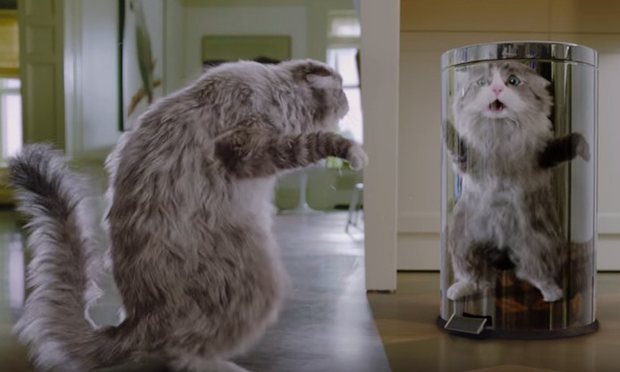
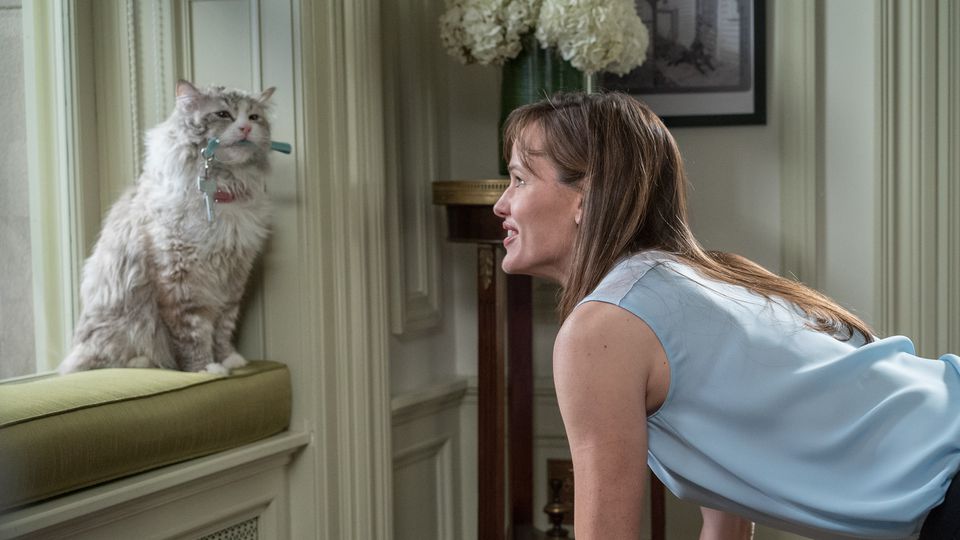
690Fudgie the 6 pound Yorkie growled every time the cat came on the screen. And the can comes on screen a lot. You know why? Because it’s Kevin Spacey. And I don’t just mean voiced by him, I mean the movie does a Freaky Friday switcheroo where Kevin Spacey’s human character somehow gets transposed into the body of a cat (while the real him is in a coma).

The movie looks as bad as it sounds, the production values shouting Disney channel, and made for TV. Jennifer Garner plays the put-upon wife but the poor thing can almost never get anyone to take her seriously as an actress so she’s used to this kind of mistreatment. She may not even realize she’s in a bad movie. This probably isn’t even the worse thing she’s in this year. And Christopher Walken is just feeling lucky to still be invited. To keep things simple they’ve had him reprise his role from Click. He’s the guy who makes you reevaluate your life by trapping you into a very unhappy scenario. He’s basically the modern day Ghost of Christmas Past. Kevin Spacey, however, is an Oscar winner. What’s his excuse?

In this movie, he plays a gross caricature of a businessman. He’s an egotistical, money hungry 960absentee father with zero nuance or dimensionality. When he gets turned into a cat you feel he got off lightly. And then he does every “help I’m a man trapped in a cat’s body” joke my 5 year old nephew could have come up with given some light prompting and a box of crayons. It’s horrible. It’s beyond horrible. Even the effects animating the cat are horrible, and mistakes are visibly noticeable. Cringe.

So, to recap, a short history of Kevin Spacey’s career:

1995: The Usual Suspects, a career high

1999: American Beauty, wins him another Oscar, this time lead

(long, hard fall, involving lows such as K-PAX, Fred Claus, and Horrible Bosses)

2016: Nine Lives, utter bottom

Why? Why has this happened, Kevin?

a) He owes someone at the production company serious money.

b) He mistakenly thought the script was ironic and\or symbolic.

c) He got paid a lot of money for probably like 10 days worth of work, and that subsidizes his true love, working in the theatah.

Nine Lives is bad. As bad as they say, and worse. But it has at least one fan: about 3 cars over from us, with its windows rolled way down, a little boy was laughing his guts out.