
 Spider-Man. Ant-Man. Falcon. Black Panther. These are the top four characters, in order, in Captain America: Civil War. You might think it’s a bad sign that neither Captain America nor Iron Man is on that list, but you’d be wrong! Although you would be right in thinking I wish this had been a Spider-Man movie with a Captain America/Iron Man cameo, rather than the other way around.
The downside to all of this is we’ve seen it all before. Not only in the sense that it’s roughly the six hundredth comic book movie that came out this year, but also because DC’s eulogy to the millions of fictional civilians killed every year by superheroes came out just six weeks ago.
One big difference between the two movies: Marvel’s is far better. Though like Batman v. Superman, Civil War is too long. With that said, I’m willing to forgive Marvel since that extra run time was used to shoehorn in Spider-Man. Who, as mentioned at the start, was AWESOME.
Another big difference: Marvel’s movie is way funnier. Civil War would have won by default anyway since there were no laughs at all in BvS, but Civil War is legitimately funny in between the dead family member melodrama.
But as with BvS, don’t expect anything new, don’t expect a good villain, and don’t expect the story to make any goddamned sense. Really, the only differences between the two movies are that (a) we’re glad to see/meet Marvel’s supporting heroes while DC’s just felt like filler; and (b) most of Marvel’s heroes are eager to make us laugh even while fighting, which is a welcome change from DC’s rainy night fights between surly mumbling demigods. Spider-Man is the perfect example of Marvel’s success in both categories, and that’s enough to make this movie worth watching.
Mostly, that’s because Spidey is the best superhero ever and I’m pumped he’s back in the MCU, where he belongs. Though I am suffering from chronic end-credit-scene-fatigue, as a Spider-Man fan I’m glad I stuck around ’til the very end. Hint, hint.
Captain America: Civil War gets a score of eight webslinging vigilantes out of ten.
 lauded career after being launched in the theatre playing Sigrid, a sizzling ingénue. Now, years later, the playwright and her mentor has died, and there’s interest in re-staging the play, and Maria is approached to star. The catch? This time she’d of course be playing the role of the older woman, Helena, in a complicated May-December lesbian office unrequited romance (whoa, that’s a mouthful).
 I didn’t find the story-telling in this movie to be quite satisfactory, but the performances were top-notch. There’s an intense, almost sexual chemistry between Binoche and Stewart that makes their rehearsals a rare treat to watch. Not often are two such strong female characters allowed to shine on the screen together with such naked feeling.
 believably deliver a line about acting in blockbusters.
 In Cheer Up, we meet Finland’s second-worst cheer leading squad. On the heels of a humiliating loss, Garland explores what it takes to keep going in the face of defeat. Where will the girls find motivation? The documentary follows three of the women in particular – coach Miia, and team members Patu and Aino. We soon realize that their struggles and failures are not just confined to the gym. Miia’s personal life is on the rocks, Patu is grieving her mother while her father impregnates a new girlfriend, and Ainu follows the highs and lows of first love, and all the teenage angst that comes with it.
 tears, tumbles, and bloodshed. Miia travels to the cheer leading mecca of the world, Texas, to seek inspiration but finds that their aggressive, winner-takes-all spirit just doesn’t translate back home.
 pep and ponytails. It’s refreshing to remember that not everyone goes home with a trophy. For these women, and many others, success will have to be defined elsewhere.
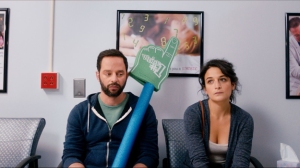 In 2001, Goodhart channeled these feelings into a script for a short film called My Blind Brother, starring Tony Hale, and it’s taken all this time to hustle that short into her first feature length, but here it is, in all its unflinching, unpolitically correct glory.
 wonderful documentary. Its gorgeous cinematography looks better than most features do. Better yet, as likeable as her subjects are, Nayar resists the urge to portray Arile and Matambo as one-dimensional inspirational symbols and doesn’t try to hide the fact that these are real and flawed human beings. She makes them easy to relate to and impossible not to root for.
 A Swarovski crystal-studded bathtub for your dog: $39 000
 3 x-rays of Marilyn Monroe’s chest: $45 000
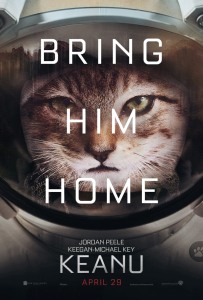 Keanu is not just a dark haired, sunglasses wearing Canadian. He’s also a kitten with a rare disease: cuteness. Or so we are led to believe by Comedy Central duo Key and Peele, playing cousins who would do anything to get Keanu back after he’s kitten-napped by a gang of street toughs led by the one and only Method Man. And so goes Keanu, a film that takes the two cousins from one life-threatening situation to the next, in pursuit of a cat.
 in real life, you just put up a poster and call it a day. But for a dog, that’s different. If your dog gets lost you don’t look for an hour and then call it quits. You get your ass out there and you find that fucking dog!


 The film’s biggest problem is that it took 40 years to convert J.G. Ballard’s novel of the same name into a movie. In the meantime, Snowpiercer happened and was a way more awesome movie than High-Rise, or really anything else ever.
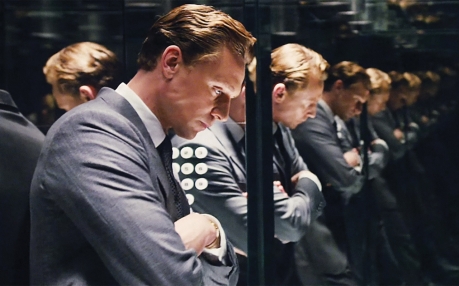 and garbage bags that line the halls, and scavenge for dog meat rather than drive to the nearest supermarket for hot dogs. That’s something that was impossible for me to swallow.
 emotions. Everything is pleasantly flat. Nothing bothers them. But some are subject to a disorder in which those feelings are somehow switched back on. This disease is fatal – if you aren’t driven to suicide, you’ll be euthanatized, because being the only sensitive person in a void of flat affect is simply too much to bear.
 feels rather cold and lonely to us, the viewers, but the people living it don’t seem to notice until they come down with the disease, which sets them even further apart from their peers. But the one good thing is that Silas can see that his work mate Nia (Kristen Stewart) must also be infected. She hides her disease from others but cannot escape his awakened intuition. The two inevitably fall in love, though “coupling” is distinctly prohibited. The only way they can be together is to leave society and head for the outside world, where primitive humans still exist.
 The problem, however, is with the story. The truth is, it just feels recycled. It feels like you’ve seen this before. It’s like every second Margaret Atwood novel and does little to distinguish itself from other movies in the genre. What it doesn’t borrow from Atwood it steals from Shakespeare and it never really does its own thing. Equals is a highly-polished piece from a second-hand store. It’s not trash but it could never compete with the real thing. If you’re the kind of person who’s comfortable buying a couch off Kijiji, then maybe this one’s for you.
 Wider and Wider have used Bishop’s case to exemplify the broader problem of how mental illness is addressed both in medical and justice settings, but also take the time to ask intelligent questions regarding individual rights. Because Linda Bishop was in fact an individual: a mother, a sister, a gardener, a knitter, a reader. She died tragically, needlessly, but in life, when she was well, she was vibrant and engaging. Wider and Wider treat her with dignity, and are able to do so in large part because of detailed journal entries she left behind at the time of her death.
 what her last days would have looked like with truly stunning, poetical cinematography rare in a documentary. Hopelessness and beauty intermingle, making for some stirring if haunting images. Did I sometimes find it a little pretentious? Sure I did. But even an Asshole like me can admit and admire when a documentary is trying to elevate itself. Combined with her journal entries read aloud, these images make her story all the more personal. God Knows Where I Am is both an intimate portrait and a rousing call to action.
 ASSHOLES WATCHING MOVIES