Going into Anomalisa, I had already seen (and greatly enjoyed) some of the strange things Charlie Kaufman creates. But even with that little bit of preparation, as I left the theatre after seeing Anomalisa, it occured to me that I may have just had the strangest experience of my movie life. And I mean that as the highest possible compliment. Duke Johnson’s animation work is unbelievable and fits perfectly with the story being told here to make a seamless whole. I have never seen animation look like this, or used to tell such a weird yet believable story. I don’t want to go into the plot at all because I think going in cold will be the best way to experience this movie. I am sure you can find details elsewhere if you want them, and i am sure the movie will be amazing either way. Just find a way to experience Anomalisa, but please don’t be like the people directly behind us at yesterday’s screening – leave your 11 year old son at home.
The writing here is remarkable. I am realizing that more and more as everyday things remind me of a part of the movie and make me laugh again at the movie’s jokes. They come quick and often here in what is not at all a happy story. The jokes feel integral to the movie without taking away from the very real and very sad journey that Anomalisa will take you on. That is a very difficult balance to strike and Anomalisa nails it.
The writing would make this a must-see on its own even if the animation was awful. But here is the remarkable thing about Anomalisa: its animation would make this a must-see even if the writing sucked. Anomalisa is absolutely breathtaking to watch. I have never seen anything like this. The two directors deliver a mind-blowing visual experience. The characters and sets are unbelievably beautiful and have such a striking visual style. Anomalisa makes absolutely perfect use of animation – almost real but not quite, which for me only added to the movie’s charm and mystery. The visuals tell us this is not necessarily our world, which keeps us wondering what is possible and what the rules are in the world we’re seeing. Anomalisa’s art is amazing and expands what I thought was possible for animation. I have no idea how this masterpiece came to be. Anomalisa totally blew me away.
Of all the great movies we saw at TIFF over the last ten days, I think Anomalisa is going to be the one that sticks with me the longest. It is unique. It is spectacular. It is brilliant. Anomalisa is a movie for the ages. Just not all ages – leave the kids at home.
Anomalisa gets a rating of 190% (because 90% just isn’t enough).
The Toronto International Film Festival is non-competitive. There are no juries, and there are no conventional prizes, like best picture, or best actress. It is a festival for the people, by the people, so it is fitting that it is the people who vote.
Every feature film shown at TIFF is eligible, but only the people who saw that film can vote. The winner always generates some Oscar buzz, and many do go on to win best picture at the Academy Awards (Chariots of Fire in 1981, American Beauty in 1999, The King’s Speech in 2010). You can vote as many times as you want; if you see 20 films and love 18, you can vote for all 18. Of course, only the movies that are screening at TIFF are eligible, but since TIFF is now second only to Cannes in terms of influence, and the timing is good, well, it’s a powerful start to the race.
Past winners include The Imitation Game, 12 Years A Slave, Slumdog Millionaire, Amelie, The Princess Bride, and Roger & Me. Gavin Hood, director of Eye in the Sky, which is in competition this year, was thrilled to have his film Tsotsi win in 2005, which helped spark his career and really put him on the map.
A great big congratulations to this year’s People’s Choice winner: Lenny Abrahamson’s Room. You may have heard me whining and complaining about how I didn’t get to see this one, and it was the one I MOST WANTED TO SEE (#firstworldproblems) but then a TIFF miracle occurred and we ended up making a last-minute screening on Friday evening (it was supposed to have been Johnny Depp’s London Fields, but the director sued the producers and the movie got pulled, and Jay & Sean got to see an incredibly good movie that’s already humming with Oscar buzz).
Brie Larson plays a young woman abducted and kept captive by her abuser for many years. While living her miserable existence inside Room (a garden shed, as it turns out), she has a son, and their bond, as you can imagine, is uniquely strong and close and complicated. They eventually manage to escape, and it’s this reintroduction to the world (and in her son’s case, his first meeting of it) that is the biggest challenge of all, and the crux of the film. It’s nuanced, highly emotional, and superbly acted.
Congratulations also to:
Best Canadian Short Film goes to Patrice Laliberté for Overpass. Sol Friendman of Bacon & God’s Wrath got runner-up, and many of you noticed its appeal right here.
Best Canadian First Feature Film goes to for Andrew Cividino’s Sleeping Giant.
Best Canadian Feature Film goes to Stephen Dunn’s Closet Monster. The jury remarked, “For its confidence and invention in tackling the pain and yearning of the first love and coming of age of a young gay man in Newfoundland, the jury recognizes the remarkable artistry and vision of first-time feature director Stephen Dunn for Closet Monster.” This award carries a cash prize of $30,000 and a custom award, sponsored by Canada Goose. The Assholes were big supporters of this film and are so glad it got some well-earned attention.
The prize of the International Federation of Film Critics (FIPRESCI) for Special Presentations is awarded to Jonás Cuarón’s Desierto. The jury remarked, “For using pure cinema to create a strong physical sensation of being trapped in a vast space and hunted down by hatred in its most primal form, FIPRESCI presents the prize in the Special Presentations programme to Desierto by Jonás Cuarón.”
We had a super great time at TIFF this year and look forward to actually being in our home next weekend for the first time in 5 weeks. It’s the best kind of tiring to see all of these labours of love appear on the big screen for the first time. Thank you so much to everyone who has taken the time read along – you don’t realize how much that means to us, but it’s a real treasure to hear from you and we hope that to continue the conversation because movies are our passion and some of them really are worth all the words.
I was moved- and pissed off- by Freeheld, as I’m sure director Peter Sollett and screenwriter Ron Nyswaner intended and I can only imagine what it must have been like to attend the premiere the night before.
Freeheld tells the true story of veteran police officer Laurel Hester’s battle for the right to pass on her pension benefits to Stacie Andree, her same-sex partner, when she’s diagnosed with lung cancer. Justice doesn’t come easy. Some cops have a big problem with a domestic partner having the same benefits as their wives do and those that don’t are too afraid to speak up. Some freeholders, despite having the legal right to honour her request, refuse on the grounds of their own religious beliefs.
This movie made me mad. “God will be mad” as an excuse for withholding from others what is rightfully theirs, has been getting old for a long time. How gay marraige affects straight people in any way is something I will never understand. Still, the right finds ways to insist that their own rights are being violated. So, yes, I rooted very strongly for these characters and against those who stood in their way and I could tell that Monday’s TIFF audience did too.
Freeheld succeeds admirably as a piece of Preaching to the Choir, even if not necessarily as a piece of cinema. Nyswaner’s script seems carefully designed to beg for as many Oscars as possible, with almost every character being given their Big Speech Oscar moment.
He pretty much gets away with it too. Julianne Moore, Ellen Page, Michael Shannon, and Steve Carell elevate the lazy writing, nail their speeches, and each bring something special and unique the the project. The outstanding acting and undeniably interesting and important story go a long way in saving this otherwise conventional drama.
Matt got up early to see Christopher Plummer in Remember. Director Atom Egoyan appealed specifically for a spoiler-free review, and that’s exactly what you’ll get.
Desierto: Described to me as a deranged serial killer stalking Mexican immigrants trying to sneak across the border, I was hooked. And a little worried. Jonas Cuaron (yes, son of Alfonso) directs Jeffrey Dean Morgan (the killer), Gael Garcia Bernal (the immigrant), and the vast and unforgiving desert (a third and equally important character) toward a very tense and thrilling and relentless chase movie. I liked that Bernal’s character isn’t a traditional hero. He’s good, he’s bad, he’s human. Either way, he doesn’t deserve to be slaughtered in the desert. This movie is all about the chase – the philosophy is up to you. A really solid effort.
Our friend Courtney Small at Cinema Axis has all kids of dedicated TIFF reviews, but I’m directing you to one in particular: Room. Room is the film I’m most miffed about missing at TIFF. I read and enjoyed the book and have heard that Brie Larson’s performance is star-making (and it’s about time she’s recognized). She plays a woman who was abducted and kept captive in a windowless room by her abuser for years, where she conceived and gave birth. This child has never seen anything beyond the Room, but this doesn’t stop his mother from plotting their escape. But what will happen to them as they try to become reintroduced to the big bad world?
EDIT: An extra screening was added last minute, and I got my butt into a seat! My own review is coming soon.
You might also drop in on Dan from A Tale of Two Dans. He got to see another one I was sad to miss, Youth. Starring Michael Caine and Harvey Keitel, you know you’re in for a treat.
The Family Fang: Jason Bateman is a little hit or miss with his movies, but I ended up liking this quite a bit. It’s got a strong premise: performance artist parents (Christopher Walken is the dad!) rope their kids (Jason Bateman, Nicole Kidman) into a childhood of pranks and skits. As soon as they’re old enough to get out of there, they do, and the relationship is strained because the art suffers. Then suddenly, the parents go missing. The cops presume them dead but the kids are convinced it’s just another prank. Or is it? Unravelling the mystery is not really the point. The point is a very real and interesting dynamic between neglected siblings (“They fuck you up, your mom and dad”) . If you keep that in mind, you’ll probably quite enjoy this slow-burner. It’s a drama with some funny parts, warns Jason Bateman: not Bad Words. Not his usual stuff. There are a lot of layers here, more than meets the eye. I read the book a while back and now I think I’ll have to re-read it just to hear it in Walken’s voice. During the Q&A, Jason Bateman made a fangirl out of himself, fawning over his hero, Christopher Walken, and likened editing anything with him in it to “killing babies”, as everything of Walken’s is “painfully usable.” Both men were charming, and Bateman clearly proud of his work. As he should be.
So begins Day 4 of my trip to the Toronto International Film Festival. It’s 9:30 in the morning and I’ve already seen 9 films and am worried that TIFF fatigue may be setting in. How much enthusiasm ccan I possibly muster up in four days?
If I didn’t have such high hopes for the latest film from Atom Egoyan (The Sweet Herafter), I probably would have been more tempted to sleep in. Unfortunately, the trailer and write-up on the festival’s website had really caught my attention. I was not disappointed.
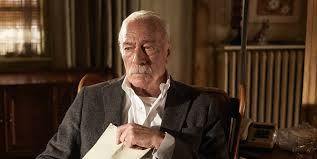
Egoyan specifically asked us to write spoiler-free reviews, which I have to admit made me feel pretty special to be getting a direct appeal from such a respected filmmaker so I want to respect his wishes. I can tell you that Christopher Plummer plays Zev, a Holocaust survivor who is now living in a nursing home. With his memory beginning to incline, he has no choice but to follow the mysterious Max (Martin Landau)’s step-by-step instructions to escape from the home and track down and exact vengence on the former Auschwitz guard who murdered both their families over 70 years ago.
Remember works equally well as a thriller as psychological thriller as it does meditation on memory and trauma. There are elements throughout the film that you may have seen before but the creative casting of the 85 year-old Plummer as the lead keeps the story from ever feeling too derivative.
On the one hand, rain makes you feel a little less guilty about spending the last few days of summer sequestered in movie theatres. On the other hand, there’s the standing in long lineups outside the movie theatres getting icy cold rain down your back, and the dampness in your shirt never dries in the movie theatre air conditioning. So you spend the whole day with a case of the shivers. But you also get to meet really cool people – a gentleman outside the Scotiabank theatre who sheltered me with his umbrella (while occasionally sending a big dump of sub-zero rain down my cleavage, but the intentions were good), an older woman I dubbed the blue angel for her raincoat who insisted I take her umbrella while waiting outside Bloor Hot Docs in the very early morning.Toronto festival goers are nothing if not courteous.
Miss You Already: This was the earliest I’ve ever been up for a movie, so if it was anything less than I was hoping, I would have been pissed. And the thing is, my expectations were tempered. It was directed by Catherine Hardwicke, who did Thirteen, but also Twilight. It stars Drew Barrymore, one of my favourite celebrities, and Toni Collette, one of my favourite actresses. Note the difference. Drew Barrymore does best when just allowed to do her bubbly self, and in this case she’s well-cast and well-used. She and Collette play lifelong BFFs who have their friendship tested when Barrymore finally gets her innermost wishes granted with a long-awaited pregnancy and Collette has her innermost fears realized with a cancer diagnosis that means she is possibly dying, her children soon to be motherless. Collette is an amazing actor, capable of anything, and she handles this material with exactly the aplomb you’d expect. But this isn’t a movie likely to make the Oscar circuit. It’s meant to be crowd-pleasing, in a ten-pack of tissues sort of way. And it is. It’s a solid commentary on women and friendship, and what it means to be there for someone through thick and thin.
Maggie’s Plan: Greta Gerwig is the Diane Keaton of her generation. She’s kind of amazing in this neurotic, bohemian way. In this, she plays a young woman who is ready to have a baby, no matter what her best friend (and former lover) Bill Hader thinks. Of course, the minute she makes her move, she meets a man and falls in love. He’s married? So what! You can’t let a stale marriage come between you and your true love – so the marriage between Ethan Hawke and Julianne Moore must crumble. Julianne Moore, by the way, is pretty much my favourite in everything lately. I will see her in two movies on this day at TIFF and can’t imagine two more different roles if I tried. Here she’s playing this European shrew with a wildly entertaining accent and immeasurable emotional peaks and valleys. I obviously hoped that this would be a good movie but was still pleased at how funny it was. And clever-funny too, which is always a relief. Kudos to another capable female director, Rebecca Miller. So thrilled to have seen so many talented women at this festival!
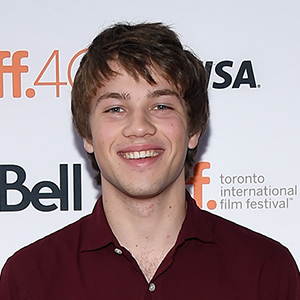
Closet Monster: Matt saw a talented young Canadian actor at TIFF several years ago in a movie called Blackbird. He knew that Connor Jessup was someone to watch out for, and he has. When he was announced to be starring in Stephen Dunn’s feature debut, Closet Monster, he was sold, and he sold us on it too. Thank you, Matt, for that. Stephen Dunn directs a highly personal film about a young man “coming of age” (good lord I hate that expression) in small and small-minded Maritime town. As a kid, Oscar witnesses a brutal hate crime that leads to internatlized homophobia. His teenaged coming out, and coming to terms, are therefore traumatic. Dunn creates a stylized world of escape for his protagonist, with just a hint of “magical surrealism” to help the bitter medicine go down. It’s a beautiful debut and we were all glad to have been part of it.
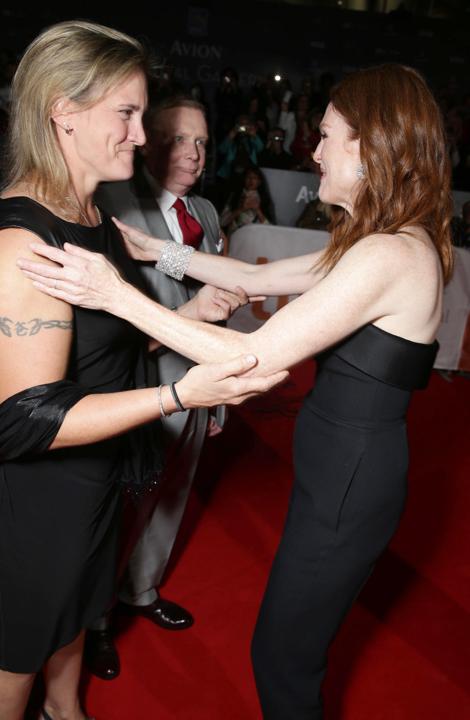
Freeheld: An embarrassingly short time ago, as in earlier this century, two women met and fell in love, and when one got sick, the other was going to be left holding an empty bag because domestic partnerships still weren’t really respected in their backwards-thinking country, and her partner’s benefits couldn’t legally be inherited by her. This true story, belonging to Laurel Hester and her widow Stacie Andree, is brought to the big screen with heaping sensitivity. You couldn’t ask for more from Julianne Moore or Ellen Page, who play the two lovers. Michael Shannon, as Hester’s partner, does a bang up job as the guy with a lot to learn. He’s a placeholder for the audience: we experience their story through his eyes. Sean and I saw Michael Shannon on Broadway a few years back (in an intense play along with Paul Rudd and Ed Asner, believe it or not) and we’ve watched him with greater interest ever since. Steve Carrell pops up in the movie too – you may have noticed him in the trailers for this movie, as he’s the clown through which we achieve some catharsis. He plays a “big gay Jew” who basically manipulates a sick woman into stumping for his cause – gay marriage. And causes like that do need a face to make them real to people, but I couldn’t help but sympathize with Andree, who must have just wanted to spend that time with her dying spouse. It’s of course an emotional movie (Kleenex sponsored the premiere, and handed out tissues as we went in). It’s a good but not great movie – but it IS a great story, and I’m so glad it’s been respectfully told. And seeing it with real-life counterparts, including Stacie Andree herself in attendance was something that I will never forget.
Wow, Julianne Moore and cancer both featured heavily in this day’s viewings!
Finally, Matt took on Missing Girl, which you may be intrigued to know, or mystified to learn, that Matt describes as a “charming comedy about a missing persons case.” It’s not every day you hear that one.
Colin Geddes, director of both the Vanguard and Midnight Madness programs at the Toronto International Film Festival, introduced The Missing Girl as “probably the gentlest” of the films that he would be introducing to Festival audiences this month. Normally a fan of the sick and twisted, Geddes deserves a lot of credit for introducing us to this surprisingly charming comedy about a missing persons case.
Character actor Robert Longstreet plays Mort, a middle-aged comic book store owner who’s found himself in a bit of a rut after the death of his father, a well-respected detective with the local police. Painful memories of the disappearance and presumed murder of his high school crush still haunt him and come flooding back in a big way when his young and hot employee fails to show up to work one day. The longer her absence, the more extreme the measures he’s willing to take to find out what happened to her.
“Gentlest” or not, The Missing Girl did stress me out a little about having to walk back to my hotel alone after midnight in a strange city. Director A. D. Calvo takes our expectations of the genre as well as the film’s title and makes them work in his favor for awhile until he doesn’t need them anymore. While the mystery of whatever happened to the two missing girls will grab your attention, the character of Mort will hold it until the end. Longstreet is both believable and charismatic in a sad way, not an easy task given that you’re likely to find his behaviour increasingly bizarre. Less a story about a missing girl than a lost man, The Missing Girl examines the ways our growth can be stunted at any age and what it takes to come back to the land of the living.
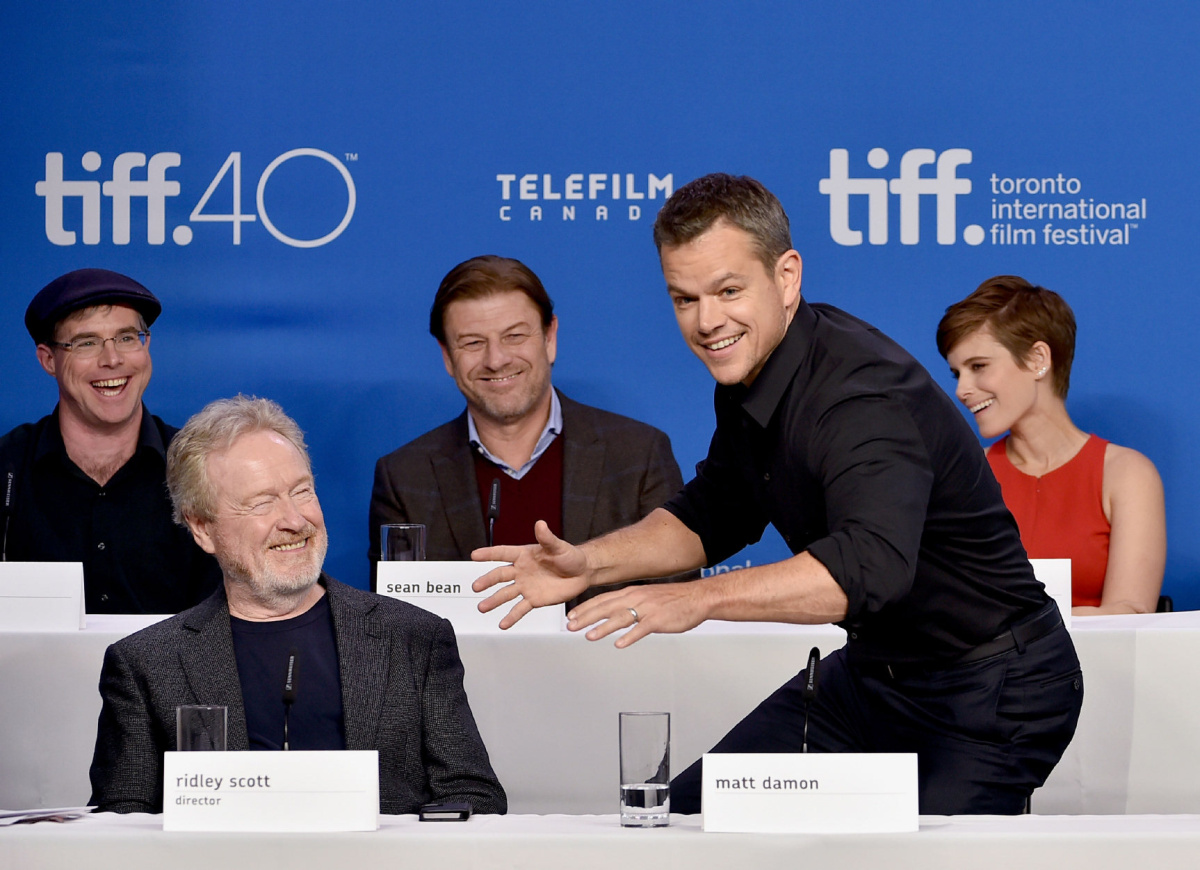
The Toronto International Film Festival converted Roy Thomson Hall, normally an orchestral theatre, into a massive 3D screening room in order to bring The Martian to the masses. Sean and I were lucky enough to get tickets. When I read the wonderful book by Andy Weir, I immediately passed it along to Sean. He doesn’t read much, but he always reads what I recommend, and I knew he’d love this. It was smart, funny, and action-packed. When they announced that Ridley Scott was making it into a film, I admit, I was wary. So many of my favourite books have been badly adapted to the screen. But a part of me had hope. It did have a cinematic feel to it. It could work. But would it?
The answer: yes. Without reservations or qualifications, yes. I can’t imagine a single person not enjoying the hell out of this film. Sean was initially in mourning for the bits of the book left on the editing floor, but not me. I felt it totally captured the spirit of the book while giving a little more screen time to all the famous faces on Earth. The Martian is accessible. It’s not science-fictiony; it’s not about aliens or time travel. It’s about an astronaut who goes on a mission to Mars and is accidentally left behind. The world is watching, and rooting for him. NASA is panicking and trying to redeem their reputations. His crew is guilt-ridden for having left him. But he’s just trying to survive until someone can rescue him. It takes a lot to stay alive alone on Mars, but this guy is an astronaut MacGyver and a very watchable problem-solver. Matt Damon does a great job in the role – absolutely no complaints. from me, or from real NASA astronauts who loved the book so much they gave him a call – from outer space! Now they’re hoping to beam the movie up to their space station on October 2nd when it hits theatres – and possibly the outer reaches of our galaxy. How cool is that?
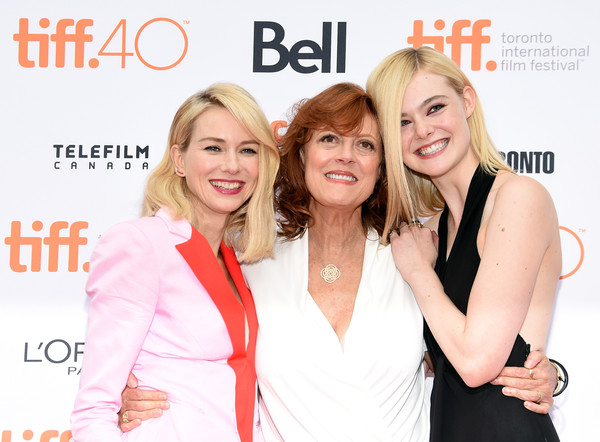
We followed that up with the world premiere of About Ray. I knew this would be important to see at the festival, but I was worried that it was too trendy a topic. The movie really laid my fears to rest. Yes, it’s about a transgendered teenager, but it’s also about a family, conventionally unconventional, who love each other and support each other but struggle with change and acceptance just like everyone else. Ray (Elle Fanning) is a young man and has known this for some time. He was born in a female body but is ready to start living full-time as the gender he knows in his head he is meant for, and that means getting his parents to sign a consent form to start hormone treatments, and to change schools as his body transitions. He’s focused on this goal because he can’t truly live authentically until it happens. His mother (Naomi Watts) is amazingly supportive, and I say that because she’s supportive because she knows and believes it’s the right thing, not because it’s easy for her. Privately, she mourns the loss of her daughter and worries about what kind of life she’s consigning to her son. And when they must involve an absentee father who voices all kinds of concern along with generous doses of ignorance, things go sideways. A meddling mother\grandmother (Susan Sarandon) doesn’t help. But it does make for a very warm family feeling. There’s more here than an “issues movie.” It’s real. The three actresses are all great, and believable, and honest in their approach. Nobody gets off easily. This movie isn’t afraid to veer away from the PCness of it all, and we shouldn’t be afraid of that.
Elle Fanning does an incredible job tackling a touchy role. One wrong move and you can upset a whole community of vulnerable people. And I have heard criticism from some corners that Elle is too ‘feminine’ for the role, which is hogwash. What does that even mean? You do understand that transgendered mean born in a female body? Yes, Ray was born a girl, a girl who could have looked exactly like Elle Fanning. Transgendered bodies aren’t conveniently born butch. I’m sure that Ray is doing everything in his power to present himself the way feels he should look, but without any medical intervention, there’s only so much he can do. But no one in the transgender community should be judged on how well (or not) they ‘pass’ and neither is it fair to hold Fanning to that same standard. With Hollywood at her disposal, director Gaby Dellal could have opted to have her look fall anywhere on the spectrum, yet she’s exactly where she out to be.
In the end, this was not the sweeping triumph we hoped it would be, but with stellar performances across the board, it is a very good movie about a very interesting family.
Note: Finally hitting theatres in 2017, the movie is now called 3 Generations.
Matt, meanwhile, was taking in Ninth Floor, a moving documentary about a student protest against racism at the very University where Matt was once a student.
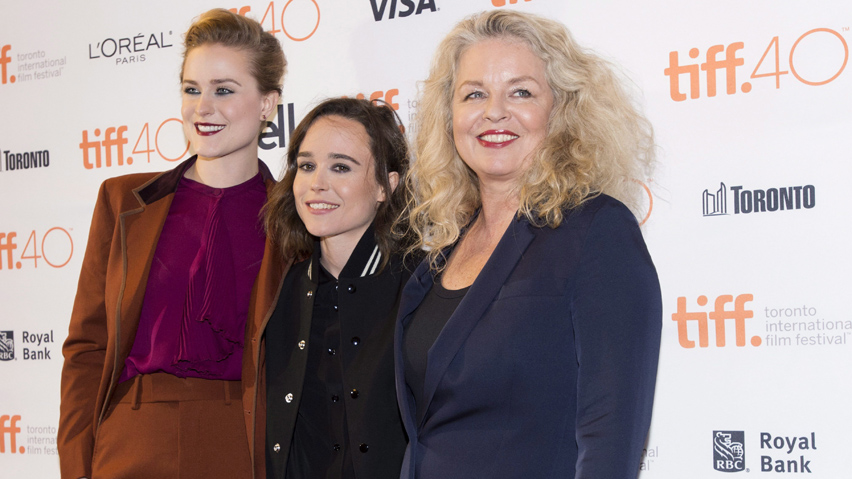
Next, Sean and I attended the premiere of Into the Forest, another booked turned into movie. Whereas being familiar with the story in The Martian only made me salivate for what I knew was coming, in this movie, it made me dread it. The knowledge was like a burden that I felt heavy around my neck. It’s not an easy movie to begin with: suddenly, and for no known reason, the apocalypse is nigh. The power goes out. Food and gas are scarce. People act like animals. It doesn’t happen all at once, but every day the power stays out it gets a little worse, a little more frantic. Two sisters, played by Ellen Page and Evan Rachel Wood, live in a remote location out in the forest. Their isolation helps keep the safe but also leaves them vulnerable. The movie is tense, and I felt like it was almost worse not knowing what was out there. Most apocalypse movies are action-driven, bloody, violent, and scary, but this one is the quietest movie about the end of the world as we know as you’ll ever see. But the quiet is ominous. Director Patricia Rozema is masterful in the creation of mood – the forest creeps around them, reclaiming what belongs to it. The movie avoids the awful tropes that usually come along with an apocalypse scenario, but doesn’t quite achieve the character study it seems to want to be either. This is really about the relationship between the sisters, and both Wood and Page give great performances with the thin material they’re given.
Matt attended Midnight Madness, a TIFF tradition programmed by Colin Geddes that features all kinds of horror, fantasy, sci-fi, comedy, and action, with one catch: it has to be BANANAS. This year Matt bravely attempted Hardcore, a POV movie that was a gamble that didn’t quite pay off. But we salute Matt for the attempt – after all, this is what TIFF is all about!
On Monday, I attended the North American premiere of Spotlight, an entertaining and infuriating film about four reporters at the Boston Globe who investigated the Catholic Church’s cover-up of sexual abuse at the hands of their priests. Seeing the likes of Mark Ruffalo, Rachel McAdams, Michael Keaton, and Liev Schreiber walk onstage was exciting enough but the good people at TIFF really brought the house down with the surprise appearance of the real Pulitizer Prize-wnning journalists themselves to, of course, a standing ovation and a speech from Ruffalo about “unsung heroes”.
Somehow, as usual, Wandering Through the Shevles seems to know what’s going on in my life because this week we’re paying tribute to these “unsung heroes”.
All the President’s Men (1976)– Pretty much every movie about investigative journalism that I’ve ever loved has been compared to this movie. “In the tradition of All the Presidents Men”, the TIFF website wrote of Spotlight. It’s been years since I’ve seen this story of the two Washington Post reporters who investigated the Watergate scandal but what has stayed with me is the way that it manages to hold our attention and build suspense from behind a desk. Instead of car chases, we get phone calls, research, and checking sources. It doesn’t hurt that the journalists are impeccably played by Robert Redford and Dustin Hoffman.
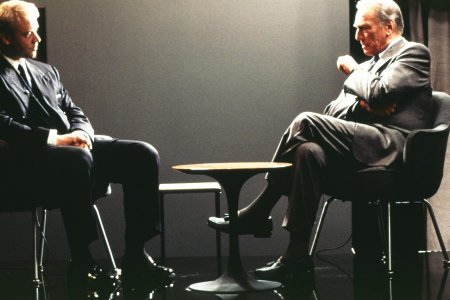
The Insider (1999)– In his best film by far, Michael Mann tells the story of 60 Minutes producer Lowell Bergman’s battle with the brass at CBS to get his interview with a whistleblower against Big Tobacco on the air. Having Al Pacino’s and Russell Crowe’s names above the title wouldn’t be as exciting today but Mann was lucky enough to catch both actors in their prime. Only Crowe managed to earn an Oscar nomination from his performance but the great Christopher Plummer (doing an uncanny Mike Wallace) was somehow overlooked.
Zodiac (2007)– This movie scares the shit out of me. The murder scenes are as chilling as they come but David Fincher’s return to the serial killer subgenre isn’t really about the Zodiac killer at all but about a small group of people who became obsessed with finding him and practically had their lives ruined as a restult. Jake Gyllenhaal and Robert Downey Jr. do some top-notch reporting (even though Gyllenhaal is employeed only as an editorial cartoonist). What’s most impressive about Zodiac is the ammount of information they throw at us without it being impossible to follow and how much of the information we already knew without it being boring.









 ASSHOLES WATCHING MOVIES