
Motherless Brooklyn looks a lot cooler than it is. Gosh it pains me to say that. I really wanted Edward Norton’s Motherless Brooklyn to be great, and it isn’t bad, but it doesn’t do a lot to distinguish itself.
Norton plays Lionel Essrog, a private detective who works for friend and boss Frank Minna (Bruce Willis), who’s into something deeper than he should be. Lionel doesn’t know what, but when Frank winds up dead on his watch, you can be sure he’s going to find the fuck out.
Lionel, with his tics and Tourette’s, is not your typical P.I. – it’s hard for him to really stay under the radar when he’s yelling out rude things. But he does good work, and he’s very motivated to do right by his friend. Following the clues leads him to Laura Rose (Gugu Mbatha-Raw) and to exactly where these things always lead: dirty politicians. Is there any other kind?

Anyway, the movie is a send-up to ye olde film noir of yesteryear, when men wore trenchcoats with deep pockets stuffed with revolvers and fedoras worn specifically so they could be doffed each time a dame walked into the office, though you could barely see her through the yellowed fog of cigarette smoke. The detective was haunted by his past, of course, possibly by a dame he didn’t save in time, but he was stoic, never talked about it much. Just fingered his gun and smoked some more. Motherless Brooklyn puts a slight spin on things by introducing a detective who can’t shut up. And gives him a dame who is, and I’ll whisper this part: not white.
The film is so meticulously put together that sometimes it feels more like a history lesson than gumshoe caper; the diorama of NYC is gritty and seedy, so lovingly rendered that it doubtless earns its A+ but also serves as a distraction in an already bloated movie. And the maddening thing about Motherless Brooklyn is the performances are roundly very good, engaging and solid. But when you throw in the period setting and the metaphors and the big moods and Norton’s search for political relevance, something is bound to get lost. And clocking in at 2.5 hours, that’s a long time to devote your attention to each of the film’s moving parts, especially when things don’t quite add up to what they’ve promised. I also, if I may, think this was a missed opportunity to shoot in black and white. I mean, go all in if you’re gonna go all in. The actual result is a bit of a mixed bag. I think the good outweighs the bad, but at 144 minutes, I think there was opportunity to excise some of the bad completely, but no one has the courage to really wield the knife.
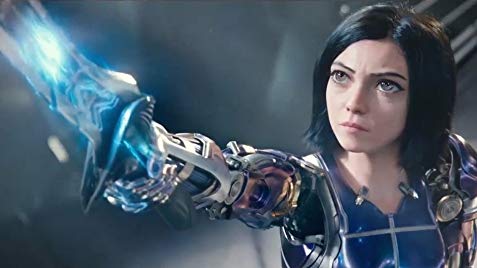 The titular Alita (the Battle Angel, as it were) is found by Dr. Ido (Christoph Waltz) in an Iron City garbage heap. Well, Alita’s head and shoulders are, but the rest of her body is missing. Turns out, Alita is a 300 year old cyborg from before the “Fall” and Dr. Ido really easily brings her back to “life”. Like, it’s no trouble whatsoever for him to reboot her, and you might wonder why no one else has tried for the last 300 years. But don’t, because if you start asking questions like that about this movie, you will never be able to stop. Trust me.
 sometimes wonder if I prefer dogs to people, and I certainly do prefer my dogs to most people. I think dogs are so much better than we deserve. They are 100% heart. So it’s hard for me to imagine a bunch of dog owners so willing to sentence their dogs to a terrible, lonely, miserable life and death. Of the thousands (hundreds of thousands?) of dogs sent to live and die on Trash Island, only one is lucky enough to have an owner come looking for him – a 12 year old boy named Atari. When Atari becomes stranded on the island, a scruffy pack of dogs generously decides to help him find his beloved Spots. Duke (Jeff Goldblum), King (Bob Balaban), Rex (Ed Norton), Boss (Bill Murray), and even the reluctant Chief (Bryan Cranston) band together to reunite boy and dog on a journey that you might just say belongs in a Wes Anderson movie.
 While searching for Will Smith’s filmography, I was surprised to see the pleasure with which critics are tearing this movie apart. The reason I was looking for Smith’s info was to try to figure out whether Collateral Beauty is his best dramatic performance (and I quickly realized that since I haven’t seen Ali, I’m disqualified from weighing in on that topic). With that lead-in, it probably goes without saying that I again think it’s been too long since the critics were thrown a juicy morsel, they’re searching for anything to bite down on as a result, and Collateral Beauty has been flagged as an easy target.
 The basic premise is: what if your food had feelings? Like, every night when the grocery store closes, the food comes alive in almost exactly the same way the toys do in Toy Story. But in Toy Story, the worst thing we do is neglect our old toys. Worst case play with them too roughly. But we flipping eat food! And before we eat it, we torture it: we cut it, mash it, boil it up, set it on fire. At first the food is blissfully unaware of its weird relationship with us, but when they eventually find out it’s supermarket anarchy.
 sausage fest. And of course I cracked a few laughs. I absolutely did. But mostly I didn’t enjoy myself much. I feel too guilty to laugh at something so obvious and offensive as a bottle of “fire water” with a Native American accent (provided by white guy Bill Hader). And while that might be the most culturally inappropriate, it’s not the hardest to watch. Not with a used condom sloppily lamenting its fate, or toilet paper experiencing PTSD.


![Main Quad_AW_[26611] Grand Budapest](https://assholeswatchingmovies.com/wp-content/uploads/2014/12/characters.jpg)
 ASSHOLES WATCHING MOVIES