
Moana is the daughter of a chief of an island nation, destined to one day be a chief herself. Her father keeps his people land-locked, afraid of the ocean and 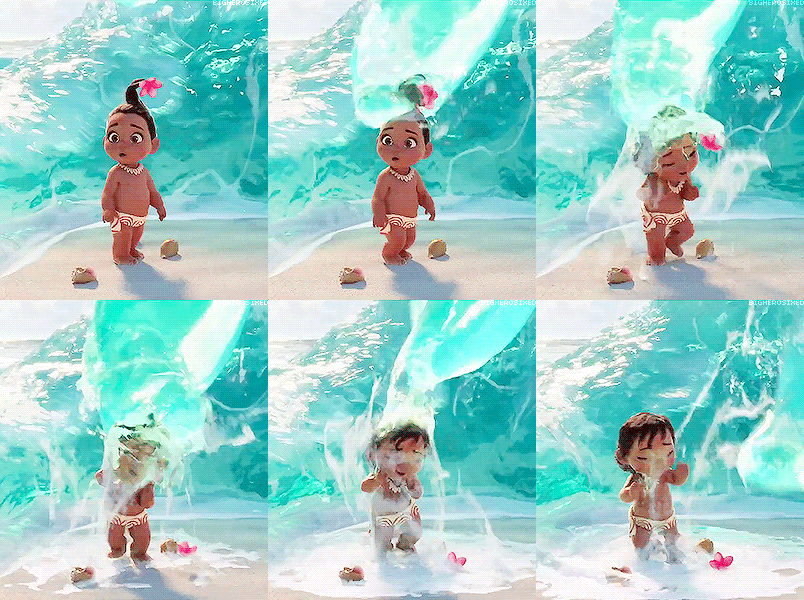 its violence. But Moana is called by the sea, and encouraged by her water-loving grandmother, she discovers that her ancestors were once voyagers who travelled the ocean in impressive “canoes” to find new islands to inhabit. With this in mind, she takes off on a self-taught sailing adventure to find the demi-god Maui and set things right for her ailing homeland.
Moana is a simpler story than Zootopia. It’s about a young woman who defies her father and follows her calling in order to be the leader and hero of her people. I’ve heard some people critique it as having less of a social message than the latter, but let’s remember that while Zootopia does have a subversive message about race, Moana is a Disney princess who happens to be a person of colour, and maybe that’s an even bolder statement about diversity than any bunny could hope to make. Moana, 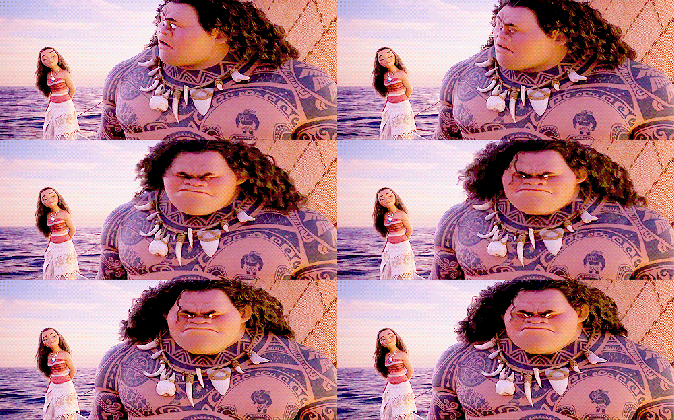 like Lilo & Stitch before it, should be celebrated for being a Hawaiian movie that actually features Hawaiian people (I’m looking at you, Aloha).
Moana looks incredible. The marine influences are everywhere, colourful and wonderfully animated. And the songs are an absolute delight. As you may know, the guy responsible for the raging success that is Hamilton, Lin-Manuel Miranda, is behind a lot of the lyrics and songs, but he shares credit with Opetaia Foa’i who provides a necessary and flavourful injection of Hawaiian influence that make Moana’s music distinctive and familiar. While perhaps not instantly hummable by 5 year olds the way Frozen was, I think Moana is a step up in terms of Disney’s  musical ventures. Jemaine Clement, playing a oversized crab, sings a song called Shiny which sounds an awful lot like something Flight of the Conchords would have done, though it is indeed written by Miranda (and performed with a David Bowie flair by Clement). And of course I’d be remiss if I didn’t mention the little girl (14 at the time of recording) who voices Moana herself, Auli’i Cravalho, who has a powerhouse of a voice, rich and full, and sounds authentic in the role too. I’m very glad to report that Disney cast this movie using a plethora of Polynesian performers, and it really pays off.
Moana is a bit feminist in terms of Disney films: female wayfinders would have been extremely rare in the Polynesian culture since navigators typically read the swells of the ocean by sitting cross-legged on the bottom of their boat to feel the movement of the ocean in their balls. In the movie, she learns to  read currents and measure the stars from the demi-god Maui, voiced by Dwayne Johnson. The animators do a really great job of bringing a few identifiable Johnson traits into Maui’s features, and Miranda carefully crafted a song that he could sing successfully, without having a traditional talent for singing (“You’re Welcome” is a heck of a song!). Maui’s body is covered in tattoos that represent acts of heroism, or particular challenges that he’s overcome. Unlike the rest of the computer-animated film, his tattoos are hand-drawn, and add an extra layer of fun to the story, as well as acting as his moral compass. Maui often pokes fun at
 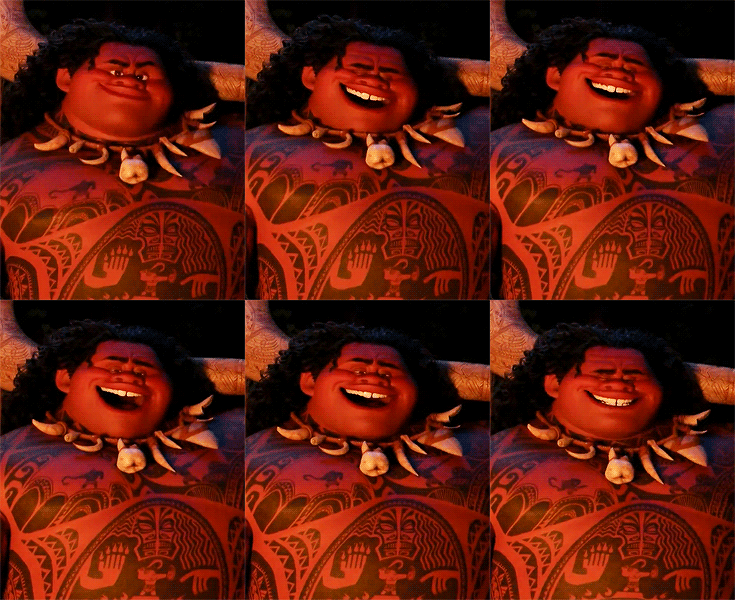 Moana’s insistence that she is “not a princess”, a self-aware bit of humour from a studio known for relying on certain formulas.
There’s a lot to like in Moana: she’s a plucky, courageous self-starter surrounded by a lush and magical world on which to feast your eyes. There’s even a tribute of sorts to Mad Max: Fury Road, if Imorten Joe’s army had been a lovely bunch of coconuts. That sounds odd, or impossible, but trust me. Moana doesn’t hold on to you the way a great movie might, but it’s sure to win over audiences this holiday season, and there’s not likely to be a better way to spend two hours with your family.
[Moana is preceded by a fun and vivacious Disney short called Inner Workings. It’ll remind you a little bit of Inside Out since it’s about one man’s struggle between head and heart. Inside Out was accompanied by a short called Lava, about an island volcano. Synergy! Read more about Inner Workings here.]
 . Really, really good.
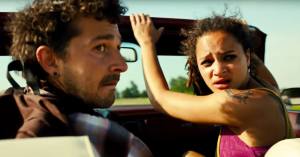 I struggle to communicate what it is that works so well about American Honey. My writer’s block was so bad that I went to see it a second time, quite a commitment with its 163-minute running time. All I’ve really learnt from two sittings is that writer-director Andre Arnold creates a believable world around these characters and makes it easy for the audience to feel like they’re a part of it. (Well, maybe I should just speak for myself. At my first screening, the film had lost over half its audience by the end).
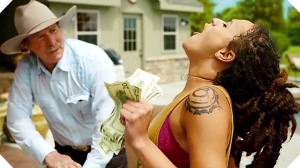 any number of traditions and rituals that are often somehow both unsettling and charming. Their favourite songs, games, and chants serve the film well in helping create a subculture that we can believe and relate to. Beautifully naturalistic performances from an exceptionally well-chosen cast, great choice of music, and some terrific (though sometimes elf-indulgent) cinematography help bring their world to life.
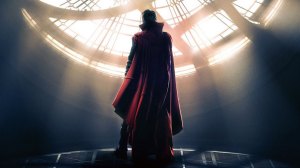 Marvel did it again. They took another obscure supporting character, built a movie around him, and made me eager to see his next appearance in the ever-expanding Marvel Cinematic Universe. This time, that obscure character was Doctor Strange, Earth’s Sorcerer Supreme.
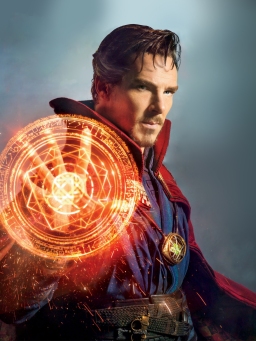 But in this movie, because Doctor Strange is the star, we get to follow him through those portals and see what happens next from his perspective. And it’s a hell of a ride. Naturally, I could have done without the origin story but fortunately it’s injected with a welcome dose of humour that makes it speed by. It helps that the opening scene features a battle that will leave the viewer wanting more and provides purpose and urgency to Strange’s magical training.
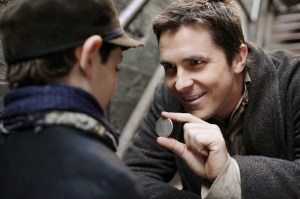 Christopher Nolan’s bad movies are better than most people’s good ones. I count three of them (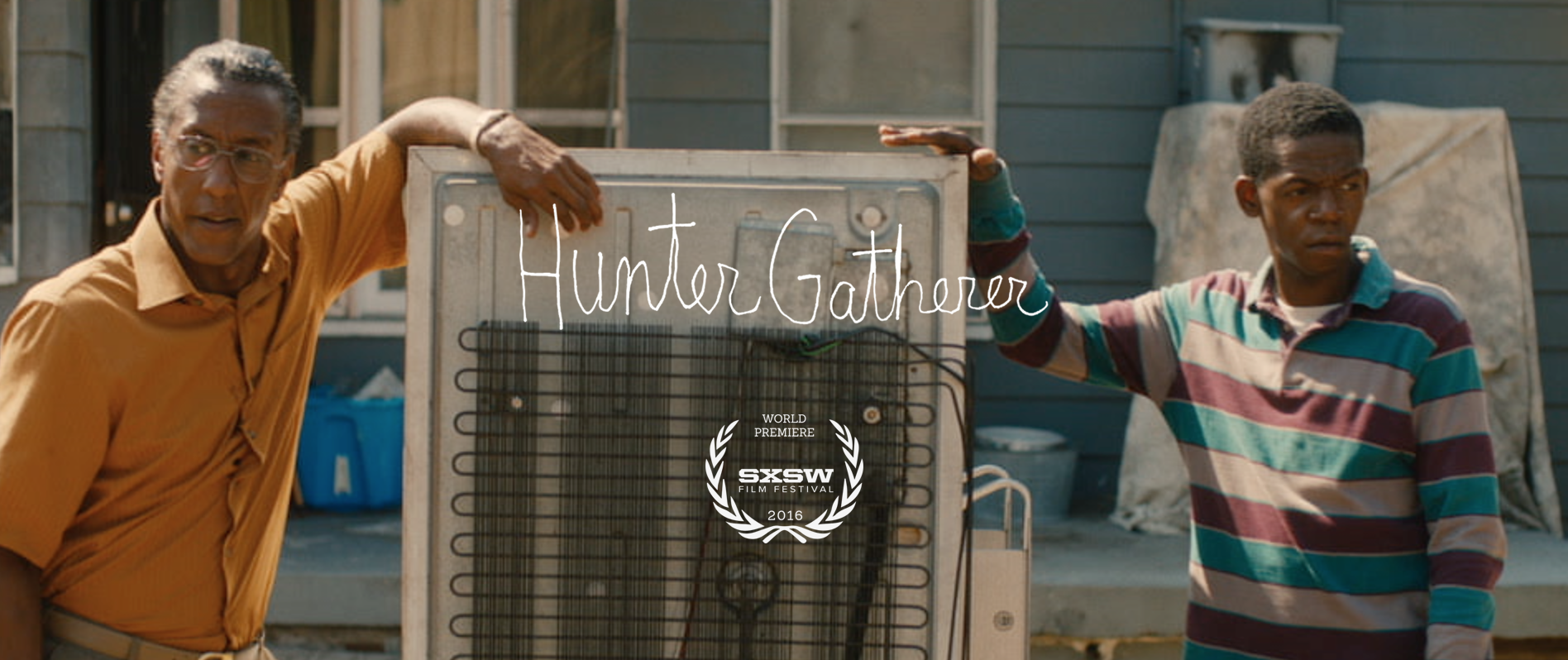
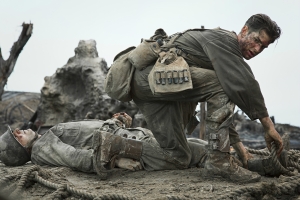 There are two main takeaways from Hacksaw Ridge: (1) even American acting jobs are now going overseas, as aside from Vince Vaughn every American soldier in this movie seems to be played by an Australian (included in that tally is Andrew Garfield, who I have since learned is British, not Australian, but still…); and (2) if the Japanese had just prayed harder they might have won the Second World War.
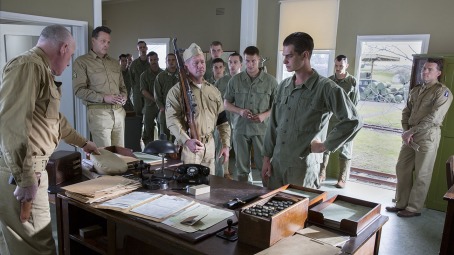 Incidentally, if the intent behind not putting Mel Gibson’s name up front in the marketing was to create some separation from those all-too-frequent racist comments in Mel’s past, it might also have been a good idea to cast at least one non-white guy. Just saying.
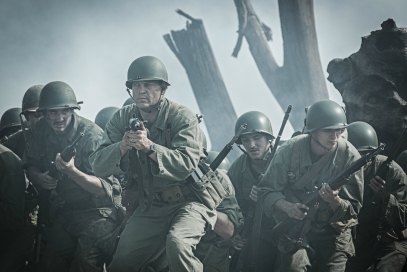 he doesn’t hold a grudge, and hauls 75 of them off the Okinawa battlefield even after they made his life so rough.
 man extraordinaire, Canadian superstar Gord Downie had recently announced that he had a brain tumour and was terminally ill. Since making music has always been his passion, he and the Hip went on a farewell tour and despite the ravages of cancer, he performed full-throttle at each and every show, somehow finding the energy and the courage to power through. Their final
 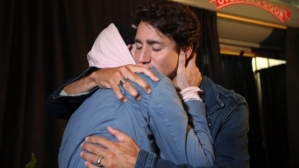 date was in their hometown of Kingston Ontario, just a little ways down the road from Ottawa. Our Prime Minister, Justin Trudeau, was in the front row, and spoke for all of Canada when he thanked Gord and the whole band for their decades of artistic serviced to the country. It was a stirring night. The end is coming for Gord and he knew it, you could see it in his eyes, feel it every time he was overcome by emotion, but instead of making it about him, he chose to use this spotlight (and believe me, about 32 out of our 33 million strong
 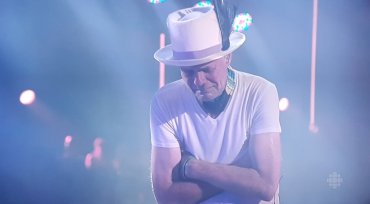 population were tuned in one way or another) to speak on behalf of Canada’s indigenous population.
 Prohibited from speaking their languages, practicing their spirituality, or honouring their cultures, teachers stripped them of their identity. Many children suffered terrible abuse, but all of these kids were deprived of their childhoods, and all of the families suffered terribly as I’m sure you would if your child was removed, perhaps never to be seen again, or if you were lucky enough to be reunited, we can only hope that you can find a common language in which to communicate. Communities were destroyed in what many Aboriginal people refer to as a genocide. It’s a dark part of Canadian history that wasn’t acknowledged until very recently. Today our First Nations peoples often live in poverty and other consequences of this intergenerational tragedy. Healing is not an Aboriginal problem, it’s something we need to address as an entire country. Gord Downie is doing his part.
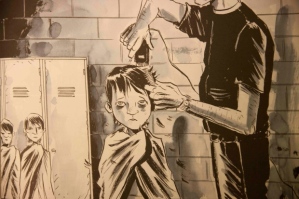 and hundreds and maybe even thousands of Chanies dotting our countryside. Lonely and miserable, many children made an escape an attempt only to lose digits or limbs to frostbite, arms and legs on traintracks, or lives to exposure, or to punishment when recaputured. How many tiny bodies are still unaccounted for? The fact that we don’t even know is proof of how little white Canada cared for Aboriginal people, and this is a guilty fact we struggle to reconcile even today.
 ASSHOLES WATCHING MOVIES