
Nuts: a pejorative term indicating insanity; a slang word for testicles. In the case of “Nuts!”, it’s both.
 J.R. Brinkley was a doctor in small town Kansas who, through the grace of his revolutionary goat-testicle transplant surgery, cured many men of impotence and infertility while bringing vitality and prosperity to the town. Brinkley had to build hospitals just to deal with the growing demand, and almost accidentally became a radio pioneer simultaneously, broadcasting ads for his services and answering write-in medical questions between blasts of good ole country music. Despite exponential interest and a horde of faithful followers, the American Medical Association accused Brinkley of “quackery.” Just as they set out to discredit him, he came out with an elixir just as
  effective as the goat-testicle procedure but with much less risk. And then he ran for governor, with a slogan borrowed from a laxative commercial. True story.
How have you never before heard of this broadcasting maven and trailblazing doctor? Whatever the answer, Nuts! director Penny Lane will make sure you never forget him. Her mixed-media documentary uses his official biography as a jumping-off point, and whatever archival footage and modern day interviews can’t cover is brilliantly animated. And I do mean brilliantly: not only is the animation a perfect match for this strange and whimsical tale, it’s also impeccably timed and used judiciously. Different animators are 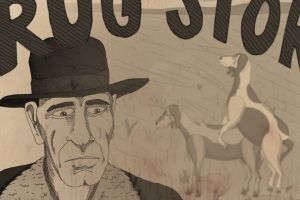 used for each segment, but there’s a uniform style that injects a lot of kinetic energy into a story hilariously but dryly narrated. You won’t believe how quaint goat fucking can look.
Eventually the film moves from eyebrow-raising to downright subversive, with enough old-timey euphemisms for erections (or the lack thereof) to keep you in patter for your next hundred dinner parties. Lane has already shown herself to be a thoughtful and engaging filmmaker (Our Nixon) but with Nuts! she proves herself worthy of a Brinkley-esque empire. You can’t help but admire the way she weaves the story together; she examines what amounts to an American folk tale but she does it with modern tools that turn the story on its head. Penny Lane is her own brand of documentarian, and quite possibly on to becoming this generation’s best. Nuts! is not to be missed.
This post was first published over at Cinema Axis, where you can find lots more great Hot Docs coverage.
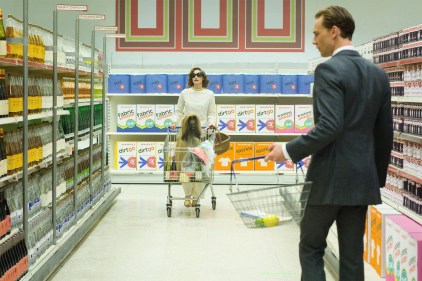 The film’s biggest problem is that it took 40 years to convert J.G. Ballard’s novel of the same name into a movie. In the meantime, Snowpiercer happened and was a way more awesome movie than High-Rise, or really anything else ever.
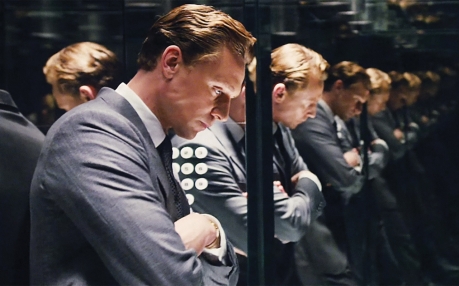 and garbage bags that line the halls, and scavenge for dog meat rather than drive to the nearest supermarket for hot dogs. That’s something that was impossible for me to swallow.
 If you don’t know that name yet, stay right here while I get a nice wooden baseball bat to beat you over the head with. Don’t move, I’ll be right back.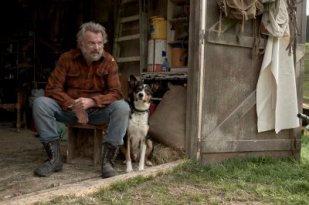
 nd bush is on proud display in soaring shots that will give you serious travel envy. Ricky Baker (Julian Dennison) is a boy who’s had a run of bad luck with foster homes, and his child welfare worker is quick to give a laundry list of his transgressions. This doesn’t deter his determined newest foster mum Aunt Bella (Rima Te Wiata) but Uncle Hec (Sam Neill) is a lot more reticent and gruff. Their primitive way of life is a bit of a shock to gangster-wannabe Ricky, but that’s just the tip of the iceberg because soon events will have him and Uncle Hec running from the law and hiding out in the bush as an intensive manhunt for them is underway.
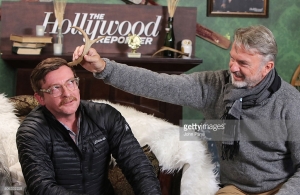 For such an endearingly quirky comedy, it has no right being even half as beautifully shot as it is. There’s a gloss to the film thanks to some real cinematography that’s been missing from his previous work. A lot of care has gone into this film and the casting is just one easy example of how diligently the thing is put together. Sam Neill is an interesting choice and brings the right mix of gravelly loner bluntness and a secret longing for connection. But it’s Julian Dennison who will leave the largest impression. A kid actor can make or break your movie when he’s in a central role, but Dennison is a professional, easy and natural in front
  of the camera. There’s pain behind his farcical behaviour, and in allowing us to see both, there’s real depth and emotional investment in the characters. Waititi, Rachel House, and Rhys Darby provide excellent supporting roles that’ll leave you cramped from laughter. Positively bruised from chuckling. It’s a new personal best for Waititi and a new sentimental favourite for me, but one that deserves its place among the very best movies of the year, period.
 nd so of course this book was immediately on my nightstand and then devoured into my brain and then shelved politely to await its fate. Little did it, or I, know that just a few years later it would be turned into a movie, prompting Sean to finally give it a read as well (don’t judge him too harshly, he’s mostly literate).
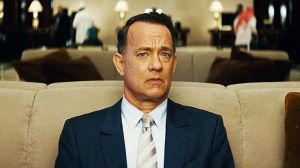 struggled to picture Hanks as Alan Clay. Alan is a loser. He’s beaten down by life, but not in Hanks’s usual sad-sack way. He was too pathetic. But Tom Hanks is not only starring, he’s producing, which means he really likes this project, and he knew what he was getting into.
 to be a fish out of water – not just the cliched culture clash crap of an American abroad, but of an aging salesman with an old bag of tricks in a newfangled world of young, tech-minded colleagues. The world is shrinking, and moving quickly, and Alan is getting left behind. Movie Alan has more verve than Book Alan, which sounds like a strange thing to complain about, but the truth is, the world already had enough of these Alans. For a movie that could have been refreshingly unHollywood, it sure made some safe choices and went for the audience-friendly ending that smacks of missed opportunity.
 nd terrifying me at age 14, and
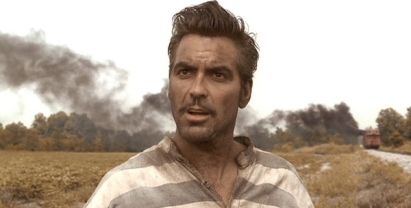
 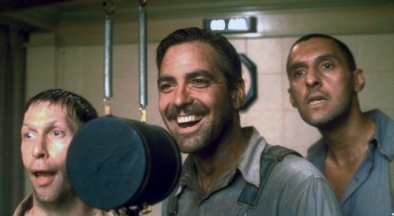 middle of the pack for the Coens, but it’s a great appetizer for their other stuff. It’s also a fun standalone movie that has a fantastic soundtrack and a bunch of crazy characters doing strange things. And if you have seen it, why not see it again, if only to notice for the first time (like I just did) that frequent Coen collaborator John Turturro is one of O Brother’s main characters. Either way, you can’t lose!
 a thing for sharp and feisty young women, and the two are a love match and plan to be at Oxford at the same time (unchaperoned, even). But every great love story needs an obstacle and feminism wasn’t enough, so along came The Great War to shake things up.
 hool to become a nurse.
 epic, called Birdsong (based on the Faulks of the same name). He plays a young man who goes off to war remembering the affair he had with his French (married) sweetheart. Clemence Poesy is beautiful as ever, but this one may leave you feeling faintly unsatisfied.
 And boy do I visit. I hit that city like a hurricane of cash and I only leave when I’ve spent myself out. It sparkled in every nearly scene of this movie, which is more than I can say about the leads – Alison Brie, a total snore; Dakota Johnson, devoid of personality; Rebel Wilson against whom I am loathe to say a bad word except she’s working a shtick that’s tired and offensive (dear Hollywood producers, including Drew Barrymore, the name behind this particular mess: I have it on very good authority that it IS possible for a female to be fat and NOT obnoxious. I promise you it’s true!). I didn’t have a problem with Leslie Mann, resident old lady (seriously, it’s great that she’s game to play the
  least used of the four.
 remember wincing in several spots – like when it quietly referenced a
  dom tasted sweet and the possibilities felt truly exhilarating. I was tingly feeling genuinely awake and I embraced being happy on my own. And I was. Very. And then I met Sean and became very happy with him. In fact, he made me unsingle five years ago this Saturday and I am plump with satisfaction. It is extremely gratifying to go through life with someone who gets you and wants the best for you. But I was happy being on my own, truly happy, and I wasn’t missing anything. And I certainly wasn’t missing this movie in my life, and neither are you. Not even a little.


 ASSHOLES WATCHING MOVIES