Tag Archives: strong female leads

TIFF18: Homecoming

Has TV been more exciting than movies lately? People have been saying so for some time and, given that we aren’t Assholes Watching Television, the idea sometimes makes me a little defensive. I have to admit though that the first four episodes of Homecoming were the most challenging and exhilarating two hours that I spent at TIFF this year.

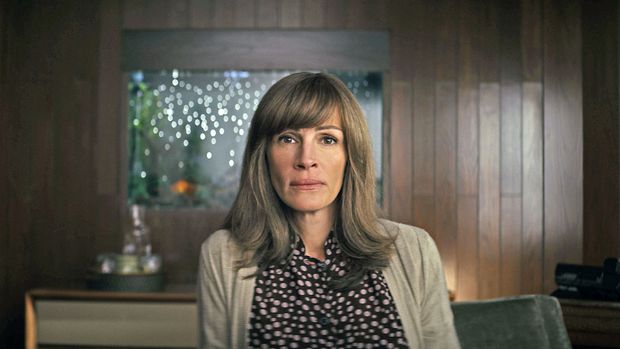
The current legitimacy of episodic television is hard to deny when Julia Roberts, one of the biggest movie stars in my lifetime, starts turning to tv for interesting roles. In the new series directed by Mr. Robot creator Sam Esmail, Roberts plays a counselor in a facility whose mandate is ostensibly to help American soldiers returning from their deployments to adapt to life back home. It’s clear from her first phone call with her superior (Bobby Cannavale, as awesome as ever) that there’s something more nefarious or at least more secretive going on at this facility. What is less clear is exactly what that is. Things start to reall get interesting when Julia’s favourite patient (If Beale Street Could Talk’s Stephan James, who will almost definitely be a huge star this time next year) starts to suspect something is amiss.

Homecoming may not be quite the best thing I saw at TIFF this year. That honour probably goes to Widows. But it’s definitely the most original. Just like in Mr. Robot, Esmail’s strange choice of camera angles and Maggie Phillips’ score which often doesn’t seem to match the tone of what we think we’re seeing all contribute to the feeling that there’s so much more going on here then we realize. I can’t wait for the show to finally air in November so I can watch the rest and find out what that is.

Somehow, Homecoming is an adaptation of creators Eli Horowitz and Micah Bloomberg’s podcast which I’ve never listened to nor do I understand what it could possibly be. Together with Esmail, they have assembled an impressive cast that also includes Sissy Spacek, Alex Karpovsky, Shea Whigham, and Dermot Mulroney. Together they have made one of many compelling examples of how television can be just as creative and satisfying as an Oscar season feature film.

TIFF18: Can You Ever Forgive Me?

If you’re asking for forgiveness, Melissa, you’ve got it. Not that I really believe you have anything to be sorry for. The Happytime Murders was a misfire, but hardly your fault, and I admire any attempt to do something different.

With this movie, both Melissa McCarthy and the character she plays are trying something different. McCarthy is trying on a more dramatic role, and though Lee Israel has a teriffic wit, she’s got no slapstick about her at all. canyoueverforgiveme_0HEROMcCarthy only has her own skin to live in, face naked save for an inept smear of lipstick on only the most special of occasions (ie, when asking for money), hair constantly overdue for its next dye job, frumpy clothes in various shades of poop. But it’s Israel’s personality that poses the real problem. She’s abrasive and reclusive and just doesn’t really know how to exist among people, so she’s basically stopped trying. It’s just her and her cat – a daunting thought when it’s just her and a blank page. A once-celebrated writer of biographies, her agent nowadays can’t get so much as a $10 advance for a book on Fanny Brice that nobody wants.

Living in semi-squalor, Lee finds there’s good money selling literary mementos from great authors. Is it her fault that better content fetches higher prices? Isn’t it just good business sense to exploit her natural gift for writing and put it to use making money again?

Crime pays, for a while. And then the FBI gets curious about all the fraud and forgery and whatnot.

I love this script. McCarthy’s very first line earns a laugh out loud, and the script continues to reflect Lee’s caustic humour throughout. And McCarthy is just brilliant in the role, aggressively unpersonable, but also sympathetic. There’s a whole framework of supporting cast to admire too, particularly Jane Curtin, Anna Deavere Smith, and Marc Evan Jackson.

This isn’t just a film about forging letters, it’s about loneliness, and friendship, and purpose. It’s hard to say which Lee needs more – human connection or the sense that she is creatively fulfilled. Of course, when you’re crediting your best work to someone else, it’s plagiary of the heart and perhaps this is what hurts her most in the end. Lee Israel is not anyone’s idea of a hero, but her flaws are all-too-human, and it’s fascinating to slide down the rabbit hole with her.

Peppermint

In two heartbeats, Riley North loses everything. Her husband and young daughter are gunned down in a drive-by shooting. The only thing that licks at her grief is justice. She stumbles out of the hospital to identify her assailants in a line-up, and then confronts them in court. But the justice system fails Riley (Jennifer Garner), and the killers walk free.

Contorted with rage and sadness, Riley disappears, and spends the next several years obsessing about revenge. When she resurfaces in Los Angeles on the 5th anniversary of Peppermint-1her family’s murder, she’s got a plan, and she’s got the skills and weapons to see it through. First, a trio of dead gang members are found hanging, execution-style, from the carnival ride where Riley spent her last moments with her daughter. It’s a message to the city, to the cops, and to the criminals she holds responsible. She’s coming for them.

And for the next 24 hours her time (102 minutes our time), it’s a goddamned bloodbath. The cops don’t know how to stop her and the city rallies behind her, their angel, their vigilante.

Jennifer Garner steps very nimbly back into badassery, and it feels like the genre has missed her. Although her character benefits from movie magic as the bad guys politely wait their turn to attack, single file, never overwhelming or completely outnumbering her, she still feels somewhat real. Maybe it’s the mom in her that never dies – she’s a kamikaze filled with revenge lust, but she still remembers to buckle her seat belt. Maybe it’s because Garner is a fierce mama bear in real life, admirably so. Riley is tough, but she hasn’t forgotten her humanity. She is haunted by the ghost of her little girl but has a soft spot for all children, sometimes to her own detriment. Otherwise, she’s not playing around. She wears boots, not heels, because she means business. Does she maintain unrealistically cute beachy waves? She does. But her hair is dirty, and her body is coated in blood and grime and she basically goes through hell – twice.

Director Pierre Morel knows a little something about putting families in jeopardy – he’s the guy behind Taken. Peppermint has a certain visual style that’s fun to watch. Morel takes us to the gritty streets of Los Angeles, plants us firmly in skid row, and the wrong side of the boulevard, but he also has Garner shooting up a pinata shop in gleeful contrast. The action sequences are tight, the action is hot, and Garner has fun uttering the perfect one-liner as the body count multiplies.

Cam

Mostly, we’re very lucky to travel the world, attend film festivals, and see great movies eons before any of you jerks. But, to be honest, there are a few downsides. Popcorn isn’t a food group. It’s hard to take notes in the dark. There’s only so many times you can sincerely shake Matt Damon’s hand and say “Pleased to meet you.” But worst of all: sometimes you see a really great, or really interesting, or really controversial film and all you want, in fact NEED, to do is talk about it with fellow film fanatics but you can’t because literally no one else has seen it yet. I remember seeing La La Land at TIFF, my eyes stinging as I went from my dark corner of the theatre to broad daylight, sobbing as I walked through downtown Toronto to my next film, and walking straight into Arrival. Back to back massive, amazing films that I needed to discuss and debrief – but with whom? And then I saw Jackie and Lion and Loving and The Lobster, 4 or 5 movies a day for 10 days, at the end of which, I’m punch drunk. And then I have to sit on all this movie madness for anywhere from 3 months (lots of Oscar contenders are aiming for Christmas releases) to 3+ years (if the festival fails to bring in offers for distribution). Thank goodness I drink; if my memory were any better, I’d probably be fucked.

Cam is one of those movies that I’m dying to talk about, and it proves that a press pass is a nice thing, but 17 press passes for my 17 friends would be much nicer. Of course, I MV5BNjI1MTQ2YWEtYmE0OS00NzJkLWFhMDgtNmM3OTJkYzFlZDYwXkEyXkFqcGdeQXVyODc4ODY5Mzc@._V1_SX1776_CR0,0,1776,998_AL_come home and stare at this white, white screen, trying to distill my thoughts, keep them straight, not confuse them with any of the other 32 trillion movies I’ve seen, and find a way to sort of talk about them with all of you. And that’s possibly the hardest part for me because I’m a bit of blabber mouth but a review is not about telling, it’s about hinting, hinting just enough so that you have an idea whether you should see it or skip it or read some other, more cohesive review that doesn’t waste 400 words complaining about having seen a terrific film.

I buried the lead there. Surprise: Cam is a terrific film!

I’m so glad I got that off my chest. I was playing it so cool during that first paragraph, trying to distract us both with all my reminiscing (I’m pretty sure those are my  memories anyway – of course, I wouldn’t swear to it. Not on my mother’s life. Not even on yours – no offense, of course, but I don’t even know the lady).

Cam is about a sex worker named Alice – though her fans know her as Lola. She’s a cam girl. She works for a website where men can live-stream women for “free” – although getting her to do pretty much anything requires a lot of “tipping.” Lola is quite popular. She’s able to maintain relationships with several men outside the chatroom – not in the real world per say, but in other digital venues, where they’re encouraged to spend more money, and even send gifts, for a more personalized show. Alice (Madeline Brewer) is a surprisingly ambitious sex worker, and she’s smart too. She pushes her shows to the limit, choreographing, staging, and even faking gruesome suicide scenes which her horny, horrible customers seem to gobble up. Alice has her eye on the top: she wants to be the #1 camgirl. But that pride in her work only extends so far – her mother don’t know shit about how Alice pays her rent. She keeps her two lives separate and firmly on lockdown – and that works, until it doesn’t.

One day she finds herself locked out of her account, and stranger still, someone else is using it. Well, not someone else. It’s still her. It’s just not her her. Who is this impostor? How is this sneaky, thieving lookalike even possible?

Cam descends into this pulsating vortex where we must question everything. What is digital identity? At this point, is it even separate from our “offline” identity? How valuable is it? How do we prove it? How do we safeguard it?

Alice is a many-flavoured protagonist, and Madeline Brewer will FREAK YOU THE FUCK OUT. Damn she’s good in this, in a can’t-watch, must-watch kind of way. Fierce and fearless, she’ll turn you on, she’ll mess you up, she’ll  haunt your dreams.

Cam is a smart, timely movie about sex work, but it’s also this swirling, confounding, complicated piece of cinema that manages to look stylish and cool even as it challenges some pretty core notions. I like its subversive nature, how it pokes the bear in sly and cool ways, how it opened me up to an underground world I’ve never really seen before. I was “lucky” enough to be in the audience for its world premiere at Fantasia Film Festival, but I won’t be truly happy until you’ve all been infected with it also, so I can finally dissect it the meaty, enthusiastic way it deserves.

Eighth Grade

What was eighth grade like for you? Sweaty palms and horrible class photos and nerve-racking social encounters? A bad haircut, perhaps? An unrequited crush? Does anyone ever feel cool in the eighth grade? Is that even possible?

Kayla does not. She’s wading miserably through her last week of the eighth grade, friendless and sort of petrified, living a double life. At home she creates Youtube content teaching others to be confident like she is – although at school, of course, she is not. She knows classmates would describe her as quiet if they describe her at all, but that’s not how she feels inside, even if she can never quite communicate this gregarious alter ego to anyone, ever.

Kayla is portrayed by Elsie Fisher, who is so good and so talented she’ll take you right back to your eighth grade shoes. And boy are they awkward shoes. But it takes great MV5BZDYxZWY4NjQtYzM2Ni00YmE0LTlmZDItNTZlZGMwYWVkZWI0XkEyXkFqcGdeQXVyNDg2MjUxNjM@._V1_SY1000_SX1500_AL_wells of courage in an actor to be as vulnerable as she is up on that screen, so raw and real that we are instantly transported to our own childhoods. And Fisher is indeed a very young woman herself, (otherwise best known as the voice of Agnes from Despicable Me, for which she improvised that delightful little tune about unicorns) which makes it even more impressive that straight out of the box, she’s amazing and transcendent.
Eighth Grade is about that tender age, around 13, when kids are transitioning to young adults. To when everything feels big and important and all-consuming. When a spot of unhappiness feels like it might last forever. But in reality, things are changing so fast, and life is lobbing surprise after surprise, and it’s really only in the looking back that we can pinpoint all these little episodes that helped make us who we are. The Eighth Grade itself probably felt like it went on for decades, but it’s something we all have in common, and it’s the reason like someone like Bo Burnham, who as you might have guessed is a man, can still relate so well that he’s made a pretty accurate account of that time in a young person’s life. And even if Elsie has slightly different trappings: iPhones and Instagram and FMO, her base desires and fears and neuroses are universal.

Elsie is a brilliant character. Despite her social failures, she is sweet and smart and resilient. We see ourselves in her, but we also want to befriend her, mother her. She is the sun and we orbit around her, experiencing her different angles until all are exhausted and all we want is to hug her, to tell her it gets better.

We didn’t all have the same voyeuristic roommate at University, we didn’t all have the same embezzling first boss, we don’t all have dads who are dentists/truck enthusiasts, but we were all knobs in the 8th grade. Bo Burnham has captured this gracefully in this feature; Eighth Grade is a movie for all of us. Except, of course, for eighth graders themselves, who can only watch a movie about themselves when they are old enough to take it. Yeah, let’s just sit with that one for a minute. This movie is rated R, for language, for some teen drug and alcohol use, and some sexual material. All things the typical 8th grader will encounter in their every day lives but cannot be trusted to witness in movies. Which is kind of fucked up. So if nothing else, this movie reminds us all how hard it is to be that age, to be in tricky situations that we aren’t really prepared for, to have the burden of expectation without the benefit of experience. If you know an eighth grader, this movie will have you wanting to cut them just a little extra slack. Life is hard. Kindness costs nothing. Set a good example.

Miss Stevens

Miss Stevens is a 29 year old high school English teacher taking 3 students on a weekend away for drama club. Student Sam (Anthony Quintal) is bright and sensitive and dedicated. Margot (Lili Reinhart) is studious and uptight. Billy (Timothee Chalamet) is “having trouble caring about a lot of things” – a kid with behavioural problems Miss Stevens is supposed to keep an eye on, but actually he’s the one she most relates to. And it doesn’t seem like she relates to much these days. Outside of the classroom, Miss Stevens (Lily Rabe) is sloppier, less responsible, more potty-mouthed. And on this drama outing in particular, she seems to let her guard down.

Julia Hart is a super talented director who I might never have known if not for MV5BMjA5MTc2Njg4OV5BMl5BanBnXkFtZTgwMzY1MzMwMDI@._V1_SX1500_CR0,0,1500,999_AL_touring around to various film festivals. She makes beautiful, sad, detailed films about strong women. Miss Stevens is such a character. As chaperone, she’s discovering that this whole “coming of age” thing isn’t just for teenagers – you do it first when you actually become the age of majority, and a second time when your adulthood really takes. For Miss Stevens, it is perhaps only truly gelling now, on this trip, as the only grown-up jumping on the hotel bed.

Life is hard. Miss Stevens is fragile. But the fact that she’s navigating these conflicting things, and the spongy, tricky thing that is friendship between students and teachers, means she is growing and learning and becoming the self she’s supposed to be. And it’s kind of amazing to see something so authentic on the screen. This movie is small but perfect in its smallness, uniquely positioned to bring out those tiny intimacies that string us together in life.

Lily Rabe is terrific in this, heart breaking and complex and frustrating and real. Timothee Chalamet proves that he’s got star-making stuff up his sleeve. Everyone and everything just comes together to make this movie mature and fascinating, balanced and natural, intimate but familiar. Check it out.


Ocean’s 8

The Metropolitan Museum of Art in New York City has an annual gala to celebrate its epic costume exhibits. It’s the most exclusive party in town, and guests compete to see which top-tier designer will outfit them. It’s a parade of jaw-dropping gowns and over the top accessories worn by the biggest celebrities who don’t mind being incredibly uncomfortable for an evening. It’s paparazzo heaven, and whoever dons the most shocking and exquisite dress WILL make the front page of every magazine and newspaper the next day. I live for this shit: the shoes, the jewels, the blatant disregard for theme. The MET gala is an institution. And it’s a fucking lot of fun to watch some badass women rob the damn thing.

Sandra Bullock plays Debbie Ocean, Danny’s sister who’s fresh off a 5-year stint in the slammer. That’s 5 whole years she’s had of dedicated heist planning, so on the day of her release, she hits the ground running, and the first place she runs to is her old friend and MV5BMzk0M2Y0YWQtZWVlYy00MGU2LTk1NmQtOGRlYWM4ODhlYjkwXkEyXkFqcGdeQXVyNTc5OTMwOTQ@._V1_SY1000_CR0,0,1502,1000_AL_partner Lou (Cate Blanchett) who doesn’t need much convincing. The plan is not to rob the museum, but to rob the neck of famous actress and red carpet savant Daphne (Anne Hathaway) of the 6lbs\$150 million dollars worth of diamonds that will be hanging there ever so tantalizingly.  Who could resist? Debbie and Lou assemble a crack team including a jeweler (Mindy Kaling), a hacker (Rihanna), a soccer mom fence (Sarah Paulson), and a master of the sleight of hand (Awkwafina) to pull off the ultimate crime.

When Ghostbusters got an all-female reboot, sad little cockmuppets cried that their childhoods had been ruined. It seemed like there was less vitriol for an all-female version of Ocean’s, perhaps because the Ocean’s fans are adults rather than manbabies suckling at the teat of nostalgia. Still, I couldn’t help but be sad when Debbie herself justifies her all-female team: women are far more likely to be overlooked.

Ocean’s 8 is good but not great. It’s a heist movie and you’ll never question where it’s going, but the fun is how it gets there. And there is some fun here. Helena Bonham Carter, splendidly cast as a kooky designer, has the time of her life. Anne Hathaway, who I normally cannot stand, earns some laughs with her starlet parody. And Cate Blanchett, hooo-eeee, let’s just sit here and ignore the fact that I’m about to objectify her, big time. Those bangs. Wispy blonde bangs that fall into her eyelashes just so. She’s constantly blinking under their weight, and I’m constantly imagining how I might sweep them away for her. Knock me over, knock me right over.

But with nearly every ensemble, my complaint is similar: just not enough time with all of my favourites. Sarah Paulson is a working mother conwoman, a criminal type we do not often glimpse in Hollywood’s depiction of the underworld, and Paulson’s talent is so enormous she maximizes her screen time and paints her character with charisma and relatability. Mindy Kaling is effervescent but underused. Newcomer Awkwafina has clearly got star power, but she’s not exactly getting equal screen time with the Oscar winners on either side of her. Even though you only need 8 women to do the job of 11-13 men, the movie still feels crowded and the cast just doesn’t always get what it deserves. There are way too few female characters in this genre, and the 8 here are still just a drop in the bucket. We need to see a lot more lady (crime) bosses to even up the score, but maybe next time a lady boss behind the camera might also be in order – you know, if you want it done right.

Tomb Raider

Lara Croft is the tough and independent daughter of a wealthy adventurer who disappeared 7 years ago and is presumed dead. So when she learns his secret obsession with an ancient Japanese myth, she pursues him to the unknown island that seems to have swallowed him whole. It seems like a really bad decision to follow in the footsteps of a dead man, but Lara (Alicia Vikander) doesn’t just put her life on the line, she involves an innocent stranger too (Daniel Wu), just as her father did. So if you’re wondering who the Croft family is, they appear to be in it solely for themselves, and fuck every body else.

So Lara makes her way to this evil island where she meets up with a bad man named Mathias (Walter Goggins) and things go from merely murdery to a whole shit tonne MV5BMTBjZDBiNGEtYjhlMC00YmM1LThmZWEtOWE1ZjhhMDg5MDEzXkEyXkFqcGdeQXVyODAyMDA1MDk@._V1_of worse.  And even though she’s been violently shipwrecked and then hunted, actually hunted on an island that seems intent on killing her, she somehow maintains a perfectly shaped brow and stubble-free armpits, which are constantly on display thanks to a skimpy outfit that seems particularly ill-advised when visiting malaria-infested countries. So while Lara may be about to out-box me, I’ll still take the victory because I packed the DEET. Though I suppose I should concede that the Vikander version of Lara is slightly more grounded and slightly less lustily rendered on the screen than was Angelina Jolie.

Tomb Raider is fine, I guess, except for some painful green screen moments that are ENTIRELY unconvincing. And the fact that it’s boring as shit to watch someone solve a puzzle when the puzzle is never shown or known to us. It’s just a lot of knob twisting. Vikander is tough as balls but the story is uninspired and makes no arguments for its own existence. This franchise didn’t need a reboot and it got a rather lacklustre one, despite Vikander’s charm.


Dude

I’m glad that teenage girls are finally having their moment as three dimensional characters in film. Shopping and boys, that was the John Hughes model. Teenage boys were the hunters and girls their prey, and it’s taken until 2018 to flip the script, first with Blockers, which dared to show young women actually in charge of their own sexuality. Dude follows in its footsteps.

Lily (Lucy Hale) and her friends are in their last year of high school. That’s all that I knew going into this film that recently popped up on Netflix. That, and they were stoners. Not promising, I thought. So colour me surprised when, in between masturbating and getting high, they made friends with me.

Amelia (Alexandra Shipp), Chloe (Kathryn Prescott), and Rebecca (Awkwafina) have MV5BMTk5MDk1NTQ0NF5BMl5BanBnXkFtZTgwMjM4ODk5MzI@._V1_been super tight as far back as they can remember, and can hardly envision a future that doesn’t include each other – like, on a daily, hourly basis. So the ultimate theme of this movie is not so unusual: it’s letting go. Letting go in more ways than one, sure, but it’s not exactly groundbreaking stuff.

But what is remarkable is the depth to the characters and the way the script (by director Olivia Milch) refuses to infantilize them. These ladies are EMPOWERED. Their virginity isn’t idolized. They can smoke pot AND be valedictorian. These girls are me (like 4 minutes ago, when I was in high school). Portraying young women as they are shouldn’t feel so monumental, so brave, but it is. This may be how lots of girls act, but it’s not how society wants to see them, and so we don’t. We pretend that girls don’t want these things because it threatens the status quo.

The cast is good, with Awkwafina being a particular stand out for me: I’m crushing hard. And I can’t wait to see literally everything Milch does for the rest of her life. But most of all I’m just kind of feeling all puffy-chested that a movie like this can finally exist. And that you can still find diamonds amongst the usual Netflix coal. And that someone, somewhere, is willing to take a risk on a movie like this.


A Wrinkle in Time

This movie came out when I was in Austin, Texas seeing a billion movies at SXSW, and even so, I still considered taking a time out just to see another movie, one that was just hitting theatres. I never made it to A Wrinkle In Time then, but I finally got around to it this weekend, and I wasn’t the only one: our cinema was packed on Easter Monday, and I was pleased to note how many families were in attendance.

For those of you who haven’t read the book (by Madeleine L’Engle), A Wrinkle In Time is about a young girl named Meg – troubled at school, grieving at home. Her parents are both brilliant scientists, or were – her father disappeared years ago while MV5BNzhkYzRlNzUtNzFhNy00MzllLWFkZGEtNDg0ZTE0YTYzOWNjXkEyXkFqcGdeQXVyMjk3NTUyOTc@._V1_working on a theory about a tesseract, which would involve “wrinkling” time and space in order to travel through it. One dark and stormy night, a mysterious woman named Mrs. Whatsit appears to tell Meg, her friend Calvin, and Meg’s little brother Charles Wallace, the child genius, that she has heard her father calling out to them through the universe. Turns out, Mrs. Whatsit and her friends Mrs. Who and Mrs. Which are supernatural beings prepared to engage in a rescue mission.

The book was repeatedly rejected – possibly because it was a work of science fiction with a young, female protagonist, and possibly because it asked a lot from its young readers. Not only does it use physics and philosophy as basic concepts, it directly tackles the nature of evil, and pits children against it. The movie, too, follows in its footsteps, embracing what made the novel so special and unique, proudly displaying the magic AND the science, and trusting a young audience to appreciate them both. If anything the movie is a little too ambitious – though I quite enjoyed it, I did, in the end, have the sense that parts of it were quite condensed.

Director Ava du Vernay gets the casting exactly right: Storm Reid as Meg is what we want every 13 year old girl to be – smart and strong and curious and cautious. Her determination in the face of her fear and vulnerability make her an exceedingly compelling character. She may at times be insecure but her love and loyalty toward family see her through difficult times. But of course it’s the larger than life characters that Meg meets that give the story so much colour. The Mrs. Ws are particularly enchanting, and I cannot imagine a more satisfying trio than Reese Witherspoon, Mindy Kaling, and Oprah, large and in charge.

At just under 2 hours, the movie does unfortunately lose some of the detail that MV5BMTU5Njg0NTA0MF5BMl5BanBnXkFtZTgwOTgwNDU4NDM@._V1_SX1777_CR0,0,1777,929_AL_make the book wonderful, but it also paints a fantastic picture that I cannot stop myself from going back to in my mind. The visuals are exotic and beautiful and the world-building just divine. I can only guess at the kind of impression it makes on young imaginations.

Though the movie has some flaws, its themes are just as courageous and necessary today as they were when the book was first published in 1962. Light vs darkness, good triumphing over evil, and the only real weapon used is love. It’s also got a (somewhat diluted) message against conformity; Meg has to embrace her flaws in order to win the day.

See this movie with a child’s wonder and you will be delighted. Adapting this book was always going to be difficult, and the worst thing it does, necessarily, is rob us of the opportunity to do some of the imagining for ourselves. But in committing to the visuals, Ava du Vernay does the source material more than justice. She gives us a film full of hope and bravery, and shows little girls everywhere that they too can be the heroes of their own stories.