Author Archives: Matt

Weiner

“Good to see a bunch of political junkies like me,” quipped a beaming NHFF programmer as he introduced last week’s screening of Weiner. “You’d think most people have had enough of political scandals at this point. But not you”. The packed Music Hall Loft cheered in agreement.

I’ve been so busy feverishly reading everything I can find about the American election lately that I couldn’t help seeking out anything the festival had to offer on elections and the issues facing voters this year.

There’s nothing quite like a public meltdown. I’ve caught myself snickering out loud all morning just thinking about some of Trump’s most quotable sulking from last night’s debate. I didn’t know nearly as much about Anthony Weiner’s crash and burn so was looking forward to learning more with Josh Kriegman and Elyse Steinberg’s documentary Weiner.

Directors Kriegman and Steinberg were given seemingly unlimited behind the scenes access to Weiner’s 2013 campaign for Mayor of New York City, just two years after his resignation from Congress after his first sexting scandal. Amazingly, everything seems to be going just fine with the campaign until another embarrassing photo resurfaces. Kriegman and Steinberg’s cameras are there from day one to capture his staff’s attempts at damage control and some seriously uncomfortable moments between Weiner and wife Huma Abedin.

“So, yes, I did the thing,” Weiner admits at the very start of the film. “But I did a lot of other things too”. His self-destructive habits, of which his fits of public anger are as damaging as his possible sex addiction, make it hard to find anyone but himself to blame for his downfall. But as tempting as it is to laugh at him (the festival audience laughed, cheered, and jeered at he screen so much you’d think you were at a midnight genre screening), a nagging feeling  of weird sympathy for him may give you pause. There’s something almost unjust about seeing a charismatic politician fighting so passionately for his constituents brought down by such an embarrassing scandal. Sure, the story plays well on late night comedy shows and his last name- hilariously appropriate to the fourteen year-old boy in all of us- makes his mistakes impossible to forget. But he did other things too. And this documentary makes a strong case that his wiener isn’t the only thing he should be remembered for.

Holy crap. Never mind. I literally just read an article about him carrying on texting a 15 year-old girl. Fuck that guy.

So…. still. It’s worth watching for the voyeuristic pleasure of watching an ambitious and prideful man dig a hole for himself. And it might just make you ask some important questions about what really matters when deciding who to vote for and about the media’s obsession with scandal.


The Girl on the Train

I felt such an affinity for Rachel, the main character in The Girl on a Train, that it was easy for me to love Paula Hawkins’ novel. Partly, it’s because I’ve woken up with a hangover more times than I’d care to admit with an instinct to immediately check my email, text, and call history to see if I need to apologizing to anyone. But, just as important, I love people watching and especially enjoy speculating about the lives of strangers.

So Rachel (played in the film by Emily Blunt) wakes up from a night of drinking to find that her favourite stranger to watch (Haley Bennett) has gone missing and she may have seen something that could help find her. If only she can remember what it is. As the story unfolds, her behavior is frequently frustrating and not always easy to empathize with but I’d be lying if I said that she didn’t feel completely real to me. A great protagonist is really all you need to make even the simplest murder mystery seem gripping and, told from Rachel’s point of view, I found this one nearly impossible to put down.

The best film adaptations are able to identify what worked best from their source material and build a story around those elements that suits the medium. Because the film version of The Girl on the Train is a shitty adaptation, director Tate Taylor and screenwriter Erin Cressida Wilson try to pack in as many of the events of the book as possible without seeming to give any thought to how well the structure would play on screen. Neither seem interested in Rachel’s state of mind.

These may seem like the typical “the book was better” complaints but I can’t imagine the movie would impress anyone who hasn’t read the book either. Considering the popularity of the novel, the roll that Emily Blunt has been on lately, and the fact that just two movies ago Tate Taylor directed a Best Picture nominee (The Help), The Girl on the Train feels surprisingly TV-movieish. For a book that was marketed as an edge-of-your-seat thriller, its film is curiously boring, talky, and whiny.

The good news, as you may have heard, is that Blunt is terrific. She makes Rachel a lot easier to sympathize with even when her actions risk making her unlikeable. She plays the various levels of drunkenness quite well. But her efforts are wasted in a boring, lazily structured movie.

TIFF 2016: The Best


graduation

Graduation

From time to time, we all have to compromise our own values. It’s part of growing up. But do you remember the first time that you betrayed your own moral code?

According to Romanian filmmaker Cristian Mungiu, director of the brilliant and beautiful 4 Months, 3 Weeks, and 2 Days (which I have not seen), Graduation is about a lot of things. “It’s about family. It’s about aging. It’s about you. It’s about me”. But mostly, as the Cannes Best Director winner articulated at the North American premiere, it’s about that pivotal moment in one’s life where they make a conscious decision for the first time to do what they know in their heart to be wrong.

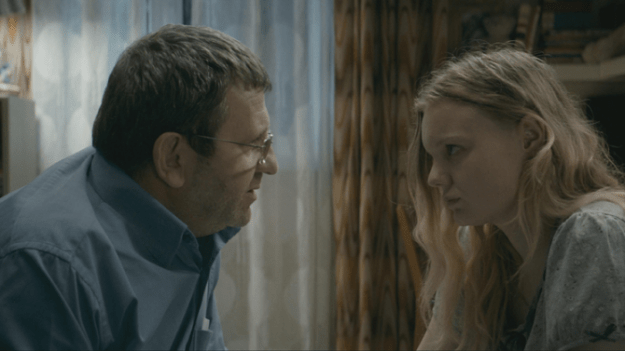
Romeo (Adrien Titieni) couldn’t be more proud of his daughter Eliza (Maria-Victoria Dragus) when she gets accepted into a fancy British school but he still can’t relax. Despite her stellar grades, she still needs to pass her finals to get out their Romanian town. When a vicious random assault threatens to shake Eliza’s confidence just days before her exams, Romeo can’t help feeling tempted to use his position as a well-respected surgeon to bargain with her educators in exchange for some leniency.

Graduation takes its time. It takes time to establish the relationships, set up the scenario, and let the story play out. Mungiu doesn’t resort to melodrama or even a musical score to beg for our attention. Almost every scene plays out in just one meticulously framed take. It’s an approach that gives his actors plenty of room to shine and his story the time to come alive. If you don’t mind the slow pace, Graduation asks big questions and will get you talking. It’s a very rewarding experience.
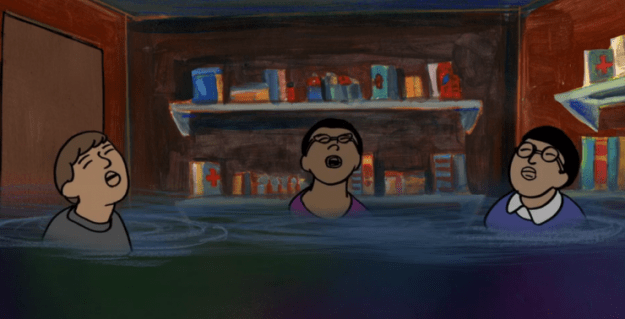
my_entire_high_school_sinking_into_the_sea

My Entire High School is Sinking Into the Sea

Dash Shaw was in high school when James Cameron’s Titanic was in theaters and couldn’t help imaging what it would be like if his school sank like the famous ship with all of his classmates inside. When you think about it, to avoid drowning to death in a sinking building, the smartest would head for the top floor and try to get to the roof. Once Shaw, director of My Entire High School is Sinking Into the Sea and apparently quite an accomplished comic book writer,  started imaging each floor being occupied by a different grade level, he knew he had a story worth telling.

To see a film called My Entire High School is Sinking Into the Sea without feeling like you’re seeing something completely unique would be a letdown. So I’m pleased to announce that, whether you love it or hate it, Shaw’s debut feature will not let you down. The unusual animation style takes a little getting used to at first and, even once you get comfortable, there is so much to look at that many of the movie’s jokes- and the jokes are almost constant- can be easy to miss. My Entire High School may eventually be best remember for its carnage (those who are spared from drowning are mostly impaled, electrocuted, or eaten by sharks) but it’s made all the more special by the hilarious and sometimes touching dynamic between three adolescent friends whose bond is in crisis just as their lives are in imminent danger. And it’s all brought to life by some of the best voice acting you’ll hear this year from Jason Schwartzman, Lena Dunham, Maya Rudolph, Reggie Watts, and Susan Sarandon.
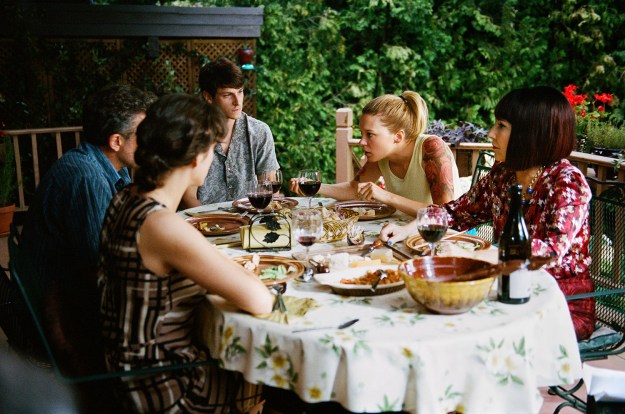
its-only-the-end-of-the-world

It’s Only the End of the World

I was one proud Asshole walking out of the Toronto premiere of Quebec director Xavier Dolan’s latest family drama. I was genuinely moved by a Xavier Dolan film. I admired Mommy, his last movie, I really did. It was just too self-indulgent for me to really relate to it in any real way.

So I was pleased to find myself loving this movie, more than almost anything else I saw at the Festival this year. I was finally starting to get it. I was quite disappointed to see that not everyone was as impressed as I was. It’s Only the End of the World currently has a score of 48 on Metacritic. If you’re not familiar with that site, let me put that in perspective. That’s only four points higher than Batman v. Superman’s score. Ouch.

I stand by my recommendation though. Based on a play by Jean-Luc Lagarce, It’s Only the End of the World tells the story of a family who are easier to relate to than to understand. After a 12-year absence, Louis (Gaspard Ulliel) is finally coming home but he is bringing sad news with him. He is very sick and doesn’t have much time left. He’s not quite sure how to bring it up but it wouldn’t matter anyway because his mother, brother, and sister can’t stop alternating between picking fights with him and each other and awkwardly trying to force reconciliation. They try to bond over trivial things and fight over tiny details but can’t seem to bring themselves to talk about anything important.

The claustrophobic family reunion atmosphere seems to rein Dolan in a bit. He still manages to make Lagarce’s play his own though. For such a talky film, it’s surprisingly cinematic with its unnerving score and great performances from Ulliel, Nathalie Baye, Marion Cotilliard, Lea Seydoux, and Vincent Cassell. Using his signature tight close-ups, Dolan works with the actors to find subtext amid all the shouting. No easy task. Hard to act like you’re holding back when you’re screaming at each other.

I’m still not entirely sure what they were fighting about. But the story feels real and profoundly sad.

nocturnal-animals-2

Nocturnal Animals

Careful with this one. The people around me at the TIFF encore screening of Nocturnal Animals were basket cases watching it.

It’s easy to imagine yourself in the same position as Tony (Jake Gyllenhaal), a husband and father whose family finds themselves terrorized while driving a lonely Texas highway in the middle of the night. The tension is nearly unbearable as this story unfolds. Those around me could barely sit still watching it and Susan (Amy Adams) is getting even more stressed reading about it. See, the scary part of Nocturnal Animals is but a story within a story. It’s the plot of a manuscript that Susan’s ex-husband (also Gyllenhaal) has sent her of his latest novel. As unnerving as the novel is to watch, it’s even worse for Susan. She’s quite sure the novel is about her.

The three narratives (there are also a lot of flashbacks of Susan’s marriage) are balanced beautifully in the second film from director Tom Ford (A Single Man). Susan is a successful art dealer and everything around her is beautiful and fake. In the story within the story, Tony’s world is harsh and all too real. Nocturnal Animals is sure to be divisive. Ford lays out his themes very clearly and I’m sure I feel comfortable with all of his implications. But there’s so much to look at and so much to feel, think,about, and talk about that you kind of just have to see it.

nocturnal-animals-3

Oh, and if you’re not sold yet, Michael Shannon plays a crazy cop in it.

Ottawa International Animation Festival 2016: Louise en hiver

Louise values her peace and quiet so she barely even seems disappointed when she misses the last train of the season from the small seaside town where she likes to spend her summers. Through voiceover, she claims to be more annoyed than afraid to be left alone in this increasingly stormy abandoned town.

As I mentioned yesterday, I’m no good at describing animation but at least here I can tell you that the OIAF website praises Louise en hiver for its “beautiful pastel imagery”. I can also show you some pictures.

Louise may not be a people person but 9 months is a long time to spend by yourself. Plus, there’s the whole “no one seems to be looking for me” thing which can eat at you a bit, especially when left alone with your own thoughts. So, like Tom Hanks in Castaway, she needs someone to talk to. And with no other people or volleyballs around, a talking dog named Pepper will have to do.

Yes, the dog talks. Unlike in Castaway, where Hanks’ conversations with Wilson were largely one-sided, we see everything from Louise’s point of view. It’s not always easy following this story through the eyes of the occasionally confused and forgetful protagonist. Reality, fantasy, memories, and dreams are interwoven so beautifully that it isn’t always easy to tell which are which.

Louise en hiver is worth the trip into a lonely woman’s mind. It’s quite a beautiful film from its simple yet effective animation to its sad yet hopeful meditation on aging, memory, and looking back.

Here’s the trailer.

Ottawa International Animation Festival 2016: Window Horses

Young Canadian Rosie Ming has kept her interest in poetry a secret so her grandparents and best friend are shocked when she announces that she has been invited to a poetry festival in Iran. Though she can’t help wishing that the festival was in Paris instead, Rosie soon discovers that she has a lot to learn from her fellow poets from around the world about ancient Persian poetry and her own family history.

Of course, some of my favourite movies are animated but I am realizing lately how little I know about animation itself. I know very little about the different styles of animation and wouldn’t know how to go about describing the look of this film.

Luckily, I have some stills.


Window Horses is as much a story about multicultural identity as it is about family. Rosie was born and raised in Canada to a Chinese-Canadian mother and a Persian father. With her mother now deceased and her father now estranged, she knows very little about either family’s heritage. When asked about her father, she has only one thing to say “My father abandoned me when I was 7”. As she starts to realize that nearly every local she meets in Iran seems to know him, she is forced to revisit the oversimplified story she’s been telling herself about her father.

Yes, the resentments we hold on to, maybe especially when it comes to our own family, are more complex than we let on. We’ve seen this before in movies and I did find the family drama a little played out and predictable. Thankfully, Window Horses has a lot more to offer than just a mystery surrounding Rosie’s family. Window Horses works best when it shows us the transcendent power of art. Rosie spends a lot of the movie discovering Chinese and Iranian culture through poetry and barely even needs to speak a word of Mandarin or Farsi to relate to the words. German, Mandarin, French, and Farsi verses are all brought to life with some beautifully creative animation all without a single subtitle. It is the film’s most brilliant device by far.

Window Horses may drag a little when it relies too heavily on exposition  and voice actress Sandra Oh is badly miscast as Rosie but, for the most part, director Ann Marie Fleming has made quite a nice film. Its unique sense of humour and literally poetic animation more than make up for its any minor complains I might have.

TIFF: The Rest

carrie-pilby

Carrie Pilby

Awkward, isolated and disapproving of most of the people around her, a precocious 19 year-old genius is challenged to put her convictions to the test by venturing out on to the NYC dating scene, in this adaptation of Caren Lissner’s best-selling 2003  novel.

-tiff.net

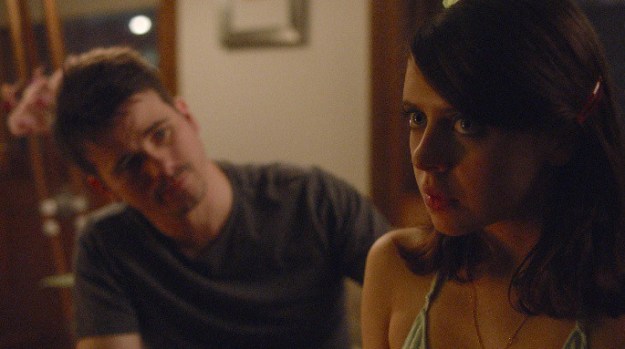
I was especially excited about the world premiere of director Susan Johnson’s debut feature because I knew I would get to share the experience with my parents. I also liked the sound of Carrie as described by the TIFF website. I’ve always enjoyed unlikeable characters who become easier to empathize with once we get to know them.

As it turns out, Carrie Pilby isn’t nearly as misanthropic or as unsympathetic as the website would have you believe. In fact, when played by Diary of a Teenage Girl’s Bel Powley, she’s actually quite charming. She may be a little too sarcastic for her own good but she’s never mean and her posture suggests such obvious vulnerability that you may just want to give her a hug.

You may find Carrie’s exasperation with those around her easy to relate to considering the unforgivably forgettable supporting cast. Nathan Lane and Gabriel Byrne phone in their performances as her therapist and father and potential love interest Jason Ritter finds a way to make sleazy seem boring. Only Saturday Night Live’s Vanessa Bayer, who I was pleasantly surprised to see at the premiere, holds her own against Powley as Carrie’s co-worker and new friend.

In the end, the script is nowhere near as smart as Carrie is. Though it offers a number of big laughs and some seriously sweet moments, the dialogue is way too obvious most of the time. I found I was able to anticipate line after line almost as if I was dreaming the film into existence myself.


headshot

Headshot

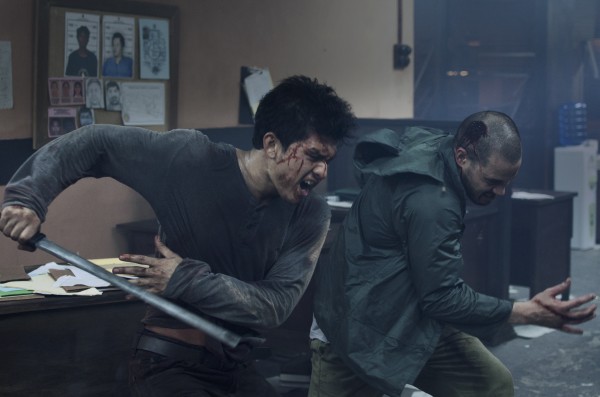
The indomitable Iko Uwais (The Raid) stars in this fast and furious actioner as an amnesiac whose mysterious past as a killing machine comes to the fore when he takes on the henchmen of a vengeful drug lord.

-tiff.net

I ended my first night at TIFF 2016 the best way I know how- with my annual Midnight Madness screening. You never know what you’re in for with the Midnight Madness program but this year I felt like I was in good hands. Back in 2011, I caught a midnight screening of The Raid at the festival and I was so exhilarated by the experienced that I’ve made sure to catch at least one midnight film each year. No matter how many bad movies I have to sit through.

The Raid isn’t just a bloody good time. It’s actually an impressive film. There isn’t a wasted moment in the whole movie and every shot serves to build suspense. This combined with outstanding fight choreography and a less-is-more approach to dialogue make The Raid one of the best action films so far this century.

The Raid works in large part because of director Gareth Evans who I really wish was directing Headshot. The latest vehicle for Indonesian martial arts superstar Iko Uwais is nowhere near as tense or as tightly edited. Not that directors Kimo Stamboel and Timo Tjahjanto do badly. They do an admirable job of capturing every chase and fight so that we always know who’s kicking who. But there’s something missing. Maybe it’s that The Raid managed to avoid the kind of silliness that Headshot has so much of (amnesia, for example, not to mention a sometimes corny love story).

That being said, Uwais’ hands, feet, elbows, and whatever else he can find always connect like they’re supposed to and Headshot manages to outgore The Raid. Friday’s Midnight Madness crowd seemed to have a good time and if you don’t mind a few heads being split open I’m sure you will too.


a-monster-calls

A Monster Calls

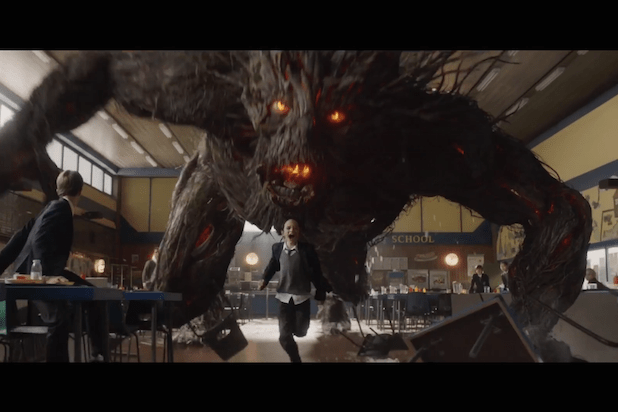
Liam Neeson, Sigourney Weaver and Felicity Jones star in this adaptation of the award-winning children’s book by Patrick Ness, about a lonely young boy struggling with the imminent death of his terminally ill mother who is befriended by a friendly, shambling monster that arrives in his room nightly to tell him stories.

-tiff.net

I read on Wikipedia that Toronto’s Roy Thomson Hall holds over 2,300 people. I am quite sure that on Saturday afternoon I heard 2,000 cry. I could hardly stop myself from crying through the final moments of the latest film from director J. A. Bayona (The Impossible) and didn’t do much better through the closing credits or walking down King Street after.

I was surprised by my emotional reaction given that I was finding most of the film disappointingly uninspired. As much as I loved the design of the monster and the outstanding voice work of the great Liam Neeson, I expected more wisdom from his stories (which are brought to life in lovely animation).

Only in the end do the monster’s lessons really become clear. As frustrated as the young boy is by the seemingly pointless stories at first, it becomes clear that he is being taught lessons unusually mature for a children’s story. I can think of several family films where a child has to learn to cope with the loss of a parent but I can hardly think of any that are less condescending and more painfully honest.


hello-destroyer

Hello Destroyer

Jared Abrahamson (Fear the Walking Dead) plays a painfully shy but ruggedly capable enforcer on a minor-league hockey team who discovers the cutthroat nature of his locker-room “family” in the forceful first feature from Canadian director Kevan Funk.

-tiff.net

Tyson Burr (Abrahamson) may not be the star player of the Prince George Warriors but he’s an enforcer – the guy you can count on when the game gets rough. In one particularly rough game, Tyson puts someone in the hospital and soon sees how quickly his team, his coach, and the community at large can distance themselves in hopes of avoiding responsibility for the culture of violence that they helped to create.

When introducing the film on Saturday, Funk was quick to insist that Hello Destroyer is not intended as a commentary on Canada’s infamously violent national sport. He’s more concerned with violence in general and the social context around aggressive behavior. There’s very little hockey played onscreen and some fans of the sport may be disappointed by the slow pace of the film. I’ll admit to being frustrated as it slows down even more in the second half. (It was my third film of the day and I was starving). It’s only after the fantastic Q and A with Funk and the cast that I let it all sink in.

This is one tragic, hard-hitting, and beautifully acted film. It’s the kind of movie that gets better and better the more you think about it.


TIFF: Barry

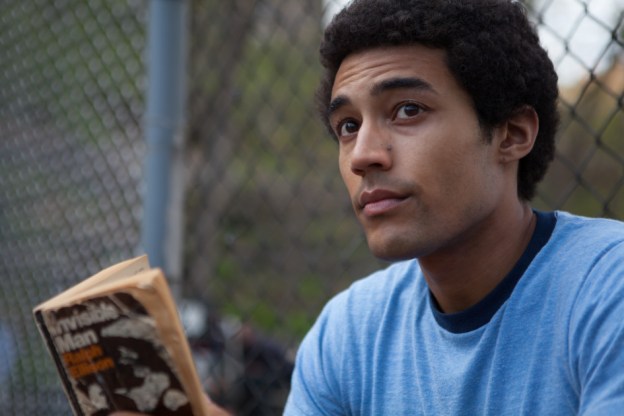
It’s 1981 and Barry is just starting his junior year at Columbia University in New York. His estranged father is Kenyan and his mother is a white American. Some of his friends insist that he is fortunate to be mixed race because he should be able to fit in everywhere but for Barry it feels like he can’t fit in anywhere. Barry is the story of a young man finding his identity and searching for self-acceptance.

By the way, “Barry” is short for Barack. Yes, that one. Starring in his first feature film, Australian actor Devon Terrell is brave enough to portray the 44th President of the United States while the real one is still in office. It’s an impressive performance. Yes, he looks and sounds like him (though Avi Nash as Barry’s friend Saleem does an even better impression in two of the film’s funnier scenes). The real trick though is making the emotions seem believable while mimicking the future president’s signature speaking style without looking like he’s auditioning for Saturday Night Live. Terrell succeeds at convincingly playing a 20 year-old college student who swears, gets drunk, and gets punched in the face for chatting up another guy’s girl while never letting you forget that he is in fact playing the Barack that we know.

Director Vikram Gandhi and writer Adam Mansbach are less concerned with reminding you that young Barry will one day become the first black President. They are mostly concerned with the internal struggle of young men of mixed race in the US and use the details of the real Barack Obama’s life mostly to provide interesting context. I’ll admit that the context worked for me. I would have surely found this movie less gripping without knowing that this same young man’s historic inauguration will one day inspire hope for a brighter future for millions of Americans. (Not to mention around the world).

If you can believe Oliver Stone’s Snowden, which I saw at the festival the day before, Edward Snowden watched President Obama’s inauguration with a renewed faith in government. As he told filmmaker Laura Poitras, he really allowed himself to think that this is a leader who could bring some real change. As it turned out, when it came to illegal surveillance of law-abiding citizens, Snowden watched things go from bad to worse under Obama’s watch.

It can be hard to reconcile the idealistic young man of Barry with the president that we see in archival footage in Snowden. How do you claim a passion for social justice while sanctioning (or, at the very least, defending) illegally spying on your own citizens? Don’t get me wrong. I still love him and will miss him no matter who wins in November. But he is the President of the United States and every president has a certain amount of blood on their hands.

I understand that you don’t get to occupy the highest office in the land without getting your hands dirty. I’m just saying that there’s a story there, between the events of Barry and the events of Snowden. Barry, deliberately paced and completely unpretentious, has a story worth telling as does Snowden, which was self-important but undeniably gripping. But somewhere out there there’s got to be a movie that tells the story of the journey from hero of a nice little indie to the villain of an Oliver Stone movie. That’s the movie I’d really want to see.

TIFF: Snowden

I feel much better now. If you read my Amanda Knox review, you may remember that I was close to TIFF burnout last night. Well,  I did what I hate doing: I made the tough choice of skipping my Midnight Madness movie last night and finally got some good sleep. Nothing like watching four more movies to make an unsettling documentary but a distant memory. I’m excited about TIFF again.

Seeing Oliver Stone take the stage to introduce Snowden (which I’ve been dying to see) didn’t hurt. Stone hasn’t made a particularly good movie in awhile and, come to think of it, has never really made a film that I love, but seeing him at TIFF still feels like a big deal. And, thankfully, my concerns about whether or not he could handle this tricky material were unnecessary.

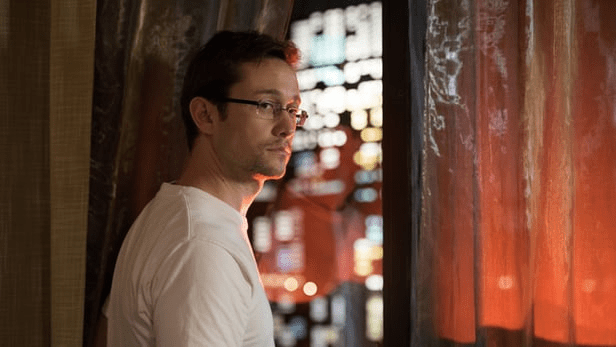
I mean, it’s not perfect. It tries to do way too much and is about 20 minutes longer than it really should be. But it tells and/or speculates about the story that I felt 2014’s Oscar-winning documentary Citizenfour missed out on. It tells us about Snowden the man. Wonderfully played by Joseph Gordon-Levitt, Snowden is easy to root for and easy to relate to. I’d even argue that Stone’s film does a better job of  making the case that all of us should care about illegal NSA surveillance. Even if we feel we have nothing to hide.

Of course, this isn’t a documentary and it’s easier to inspire outrage in a dramatization of events. Snowden isn’t a substitution for Citizenfour, which is an important documentary that everyone should see. It is, however, an interesting and worthy companion piece that will likely make you appreciate Snowden’s sacrifice even more and think twice about getting changed in front of your laptop.

TIFF: Amanda Knox

It’s so great to be back at the Toronto International Film Festival! I felt nostalgic the moment I stepped off the train. The rushed breakfasts, the possibility of a close encounter with your favourite celebrity, the feeling that I’m finally starting to know my way around this once intimidating city, and the hope of catching one of the year’s best films keep me coming back every year. And, for the first time, I get to share the experience with my parents. So why am I tempted to just skip my next movie and go to bed early?

Partly, it’s because I woke up at 4 a.m. yesterday to catch my train and got back to my hotel at 2:30 a.m. this morning after a Midnight Madness screening. Partly, it’s because I’ve been catching four screenings a day since I got here. Both good reasons I think for me to be getting close to early TIFF fatigue but Amanda Knox, which just had its world premiere at the Festival, is another big reason why I couldn’t sleep last night.

Though it was apparently international news back in 2007, I really don’t remember Knox’s story. Amanda Knox was in her early twenties when she was arrested and convicted of murdering her roommate while vacationing in Italy. This wonderful documentary follows her road to exoneration over a period of several years.

What’s unsettling about this film is what apparently captivated the media nearly a decade ago. It’s Amanda. Young, pretty, charismatic, and full of life, she doesn’t look or sound like she’d be capable of such a heinous crime. So when she looks directly into the camera and calmly says, “Either I’m a psychopath in sheep’s clothing, or I’m you,” I get the shivers.

As a true crime documentary, Amanda Knox is every bit as gripping as Netflix’s Making a Murderer. But, despite having only a fraction of the running time with which to do it, it manages to give a more balanced look at the case than the controversially one-sided Netflix phenomenon.  Knox and her Italian now ex-boyfriend and co-defendent are interviewed extensively, as is the Italian homicide detective that maintains their guilt to this day. You’re bound to like and trust some of the interviewees more than others but, according to the filmmakers, each of them have seen the film and every one of them feels that they have been represented fairly.

I still don’t know what happened that night nine years ago. Maybe that’s why the police, media, and public turned on Amanda so quickly. Not knowing is scary. It keeps us up at night (or, in my case, last night). The good news is that, even if you couldn’t make it to Toronto this year, you’ll get a chance to decide for yourself. Amanda Knox will be on Netflix later this month.


Looking for more on Netflix? Try

Audrie & Daisy

Where To Invade Next

Suicide Squad

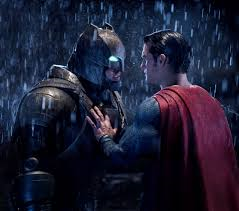
Anything I say about Suicide Squad needs to be weighed against the possibly discreditingbatman v superman fact that I liked Batman v. Superman. It was a mess, I’ll give you that. And a whole lot of it didn’t make a bit of sense, even by superhero standards. While there were at least a couple dozen things that I wish had been done completely differently, I walked out feeling exhilarated, as if I had just witnessed the start of something huge. And, for all that Marvel has done right, it’s never really produced a film (with the possible exception of Civil War, which hadn’t come out yet) that felt like such an event.

With Batman v. Superman, I was prepared for the worst. Even the trailers couldn’t hide some of the movie’s bigger problems. With Suicide Squad, which many had dared to hope would save the DC Extended Universe and put it back on the right track, the trailers were filled with bizarre and exciting images and I couldn’t wait to see how they fit into the larger story.

suicide squad 2By now you’ve probably read that a lot of people have felt let down by Suicide Squad. I was too. Its missteps aren’t as embarrassing as BvS’s were but its best moments weren’t as impressive either. Actually, while BvS ended with me feeling like I’d seen the biggest movie of the year, Suicide Squad ended with me wondering “Was that it?”.

Like in BvS, Suicide Squad has a lot to get done and a lot of characters to introduce and ten minutes in it becomes pretty clear that they have no idea what order to do it all in and just decided to throw scenes at you at random. This disorganization continues the whole way through.

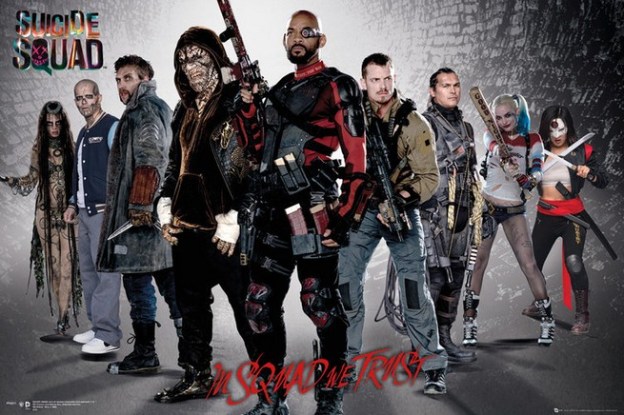
As Harley Quinn, Margot Robbie steals every scene she’s in. Clearly insane and easy to suicide squad 1love, Quinn is the only character in the whole ensemble whose actions always make sense and Robbie is the only actor of the bunch who never makes a false move.
I’m a little less enthusiastic about the rest of the team. They include the ruthless hitman and unspoken group leader Deadshot (well, sort of a hybrid between Deadshot and Will Smith, played of course by Will Smith), Australian boomerang nut and notorious asshole Captain Boomerang (Jai Courtney), human flamethrower and recent pacifist El Diablo (Jay Hernandez), Reptilian cannibal Killer Croc (Adewale Akinnuoye-Agbaje), and rope specialist Slipknot (Adam Beach, who as the trailer suggests is barely in the movie). They don’t always come to life like they should but are at their best by far when they interact with each other. That’s the whole fun of the Suicide suicide squad 3Squad. Unfortunately, they don’t get nearly enough chance to just be themselves and play off one another. Like BvS, it’s far too interested in its needlessly complicated plot than it is in its characters.

Jared Leto’s Joker is the biggest disappointment. Not that it’s a bad performance. The Joker is every bit as menacing and captivating as he should be and Leto makes some very interesting choices but he’s barely in the movie and, when he is, his scenes are rarely relevant to the larger story. Leto’s take on the character never really gets a chance to resonate and deserved a film that used him better.

Suicide Squad has some terrific scenes and gets a lot of things right but overall it’s a missed opportunity to get the Extended Universe back on track. What’s worse, it doesn’t give much reason to hope it’ll get any better in future films.