Category Archives: Kick-ass!

The highest honour we can bestow on a film. Anyrhing in this category is a must-see.

Long Shot

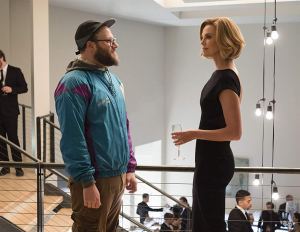
On my more cynical days, I sometimes feel the only reason we have cinema is so that unattractive men can kiss beautiful women who would otherwise be unattainable to them. No shade against Seth Rogen, but let’s face it: the man is a schlub. An endearing, lovable schlub, sure. But Rose Byrne? Michelle Williams? Elizabeth Banks? Let’s call it a stretch of the imagination, one that Hollywood asks us to take a little too often. In this particular movie, it’s Charlize Theron, while Seth’s character, in a ubiquitous teal windbreaker, is actually mistaken for a homeless man.

Charlotte Field (Theron) is not just a beautiful, out-of-his-league woman, she’s the goddamn Secretary of State. Fred Flarsky (Rogen) is not exactly a slouch: he’s a journalist MV5BZWVhODA5ZmItOWYwOC00OTU3LWJiNTEtODcwMDIyMTBjZWY3XkEyXkFqcGdeQXVyNTc5OTMwOTQ@._V1_SY1000_CR0,0,1291,1000_AL_who goes the extra mile to get a juicy story, BUT he just got fired. Well, okay, he quit on principle, but the net effect is, he’s unemployed. Which kinda works out perfectly because the Secretary of State is about to announce her run for President, and she just needs someone with a comedic touch to punch up her scripts a bit. Enter Fred, who in fact has crossed paths with her before. She was the babysitter he had prepubescent chub for, and maybe he’s been carrying just the tiniest lit torch ever since.

Anyway, Fred is the last man on earth Charlotte should be falling for just as she’s about bet her life on the polls. And yet, hormones. Theron and Rogen have some major oddball chemistry going. It turns out Theron can hold her own in pretty much any movie. But this one is more interested in pointing fingers at the ridiculousness of their pairing than exploring who either of them are as people, or explaining how exactly Fred is worthy of Charlotte (or indeed the other way around – their romance is largely inexplicable).

It works adequately as a superficial, no questions asked rom-com, and moderately better as a political comedy. There’s a familiar cynicism there, but it’s nowhere near as biting or incisive as Veep. Still, I laughed. And Sean snorted. That counts for something in an era where the comedy genre should probably be renamed “attempt at comedy.” It’s kind of a crap shoot, but Long Shot turns out to be a pretty good bet.

Inception

Inception, to me, is a near-perfect movie. It’s immersive and cerebral but also stunningly visual. It has some complex concepts but the script is so fine-tuned that it reveals only exactly as much as we can digest at a time so that the world opens up to us like a flower.

It’s about a man, Cobb (Leonardo DiCaprio) who goes inside people’s dreams to steal or plant ideas. It’s a dangerous world because when you fuck with the mind, screws come loose and there’s just no telling when the whole thing might come apart at the seams. But the money’s good, and Cobb’s got some troubling personal circumstances that make the game worthwhile. Arthur (Joseph Gordon-Levitt) is his right-hand man, and often the voice of reason. Eames (Tom Hardy) can impersonate anyone. And Ariadne (Elliot Page) is the architect – she’s the world-builder, the one who buries mazes inside of dreams. They’re hired by Saito (Ken Watanabe) to plant an idea in a business competitor’s mind so that he will sell off the company he’s just inherited from his dead father. Robert (Cillian Murphy) is the mark: he’s the grieving son who’s about to undergo inception – planting an idea so subtly that he’ll never suspect it’s not his own. And Mal (Marion Cotillard) is the one who can bring it all crashing down around them at any moment. Look out for her.

Neu8

To pull off this memory heist, they’ll have to build a dream within a dream within a dream – levels that director Christopher Nolan is clearly all too gleeful to construct. In one, rain pours down in sheets; the dreamer has to pee. But just like the dreams themselves, Nolan’s movie is always working on multiple levels. The first is this new world of corporate espionage. But the second is Cobb’s sacrifice. It’s the things he has lost in pursuit of the ultimate theft, and his last shot at redemption.

When Inception becomes about Robert’s dream, there are multiple worlds on the go, so we flip deftly between them. But there’s a catch: each world is experiencing time differently – the further down you go, the slower time moves. There are some very worrying consequences to this. But then there’s also “reality” – though their bodies are sleeping, they have to be somewhere, and someone has to be taking care of them. In fact, someone has to care for sleeping bodies in each dream within a dream for them to be able to access the next level. It’s complicated stuff that Nolan somehow makes feel perfectly reasonable, a true testament to his talent as a writer as well as his precision as a director. He is the audience’s true friend, unwilling to lose us.

My favourite set piece is Arthur (Gordon-Levitt) in the hotel. At this point in time, they have lost gravity, so everything is floating around him. Not only is Arthur caring for the bodies of his comatose friends, he’s also coordinating an important and infinitely precise detonation, and he’s fighting off bad guys. I didn’t know it until I saw it, but a zero-gravity fight scene was exactly what I was missing in my life. Nolan prefers practical effects, so you can imagine the lengths he went to in order to breathe awe into the spectacle. JGL performed all but one stunt himself.

inception-gif

The film has a tantalizingly ambiguous ending. Cobb has a totem, a fool-proof method of testing whether he’s still dreaming, or back in reality. But in the movie, his character walks away – either distracted, or uninterested, or certain of the result. But not the camera. The camera stays with his totem, and it’s the most epic rim shot of all time. Will it or won’t it? Nolan focuses on the totem rather than on any human character. Nothing else matters. But it just keeps going and going, never giving us its judgment until – the screen goes black before a conclusion can be reached. I know it drives some people nuts, but I love an ambiguous ending. To me, it’s the ultimate mark of respect for one’s audience, that Nolan has trusted us to participate in his film’s end, to choose our own ending, in effect. And for someone who produced such a tight and specific script, it’s a ballsy move to put the ending in our hands. But that’s what he does. I believe there IS an answer, a right answer, and the movie is littered with clues that should point you in the right direction. But it’s okay not to know. It’s okay to debate it. It makes us collaborators.

giphy

Of course, the whole film is a show of respect for his audience. Inception is possibly the most complicated blockbuster of our time. Nolan is careful and exacting but he doesn’t dumb things down. He introduces concepts about the subconscious mind: the genesis of ideas, the source of pain, the malleability of memory, the vulnerability of reality itself. It’s a lot. And the more we chew on this, the more meaningful the movie becomes. It’s a thriller with higher stakes than anything before it, because Nolan has tapped into something worse than death. But he also makes the movie a game; it can be won, or it can simply be enjoyed. If there are bits of the plot that go over your head that first viewing, it’s okay. Inception is one of Nolan’s airiest and most forgiving pieces. There’s a gracefulness to the way this movie moves through its layers. Even if there’s something you don’t quite grasp, you don’t get stuck on it. It’s fluid, almost suspiciously fluid, as if plot holes don’t matter. Now why would that be?

Inception is also a capital M Metaphor. As in: to film is to dream. If you inspect Cobb’s team, you’ll see what I mean. Cobb is the director. Arthur is the producer. Ariadne is the production designer. Eames is the actor. Even more than that: Saito is the studio, and Robert is the audience.

We watched Inception recently because I had a dream wherein I was engaged to Prince Harry. We were working on the guest list for our wedding, and I was being all bubbly thinking about how Grandma would be so excited to meet the Queen. Grandma is 96 and a big fan of Elizabeth II, who is nearly her own age. Grandma is sharp as ever, sweet and bright and entertaining, but her mobility has taken a sharp hit recently, and even in my dream I knew that an overseas trip would be a stretch for her – but that the Queen would be quite the motivation. But then I realized: Grandma is not actually MY grandmother, she’s Sean’s. If I’m marrying Prince Harry, I’m not married to Sean and I don’t know Grandma. And the minute I had that thought, my dream started to crumble. Literally, the walls fell over as if they had been the set of a play that was being struck down. I had contradicted myself and shown the dream for what it was: a fiction. I routinely inflict my dreams on Sean while we shower the next morning, and being the disgusting cinephiles that we are, talk naturally turned to Inception (and, in fact, to Inside Out, wherein characters are seen “filming” dreams for the sleeping Riley). Movies and dreams have always mixed, and have always shared blurry boundaries. Inception exploits that. Nolan invites us to dream alongside him.

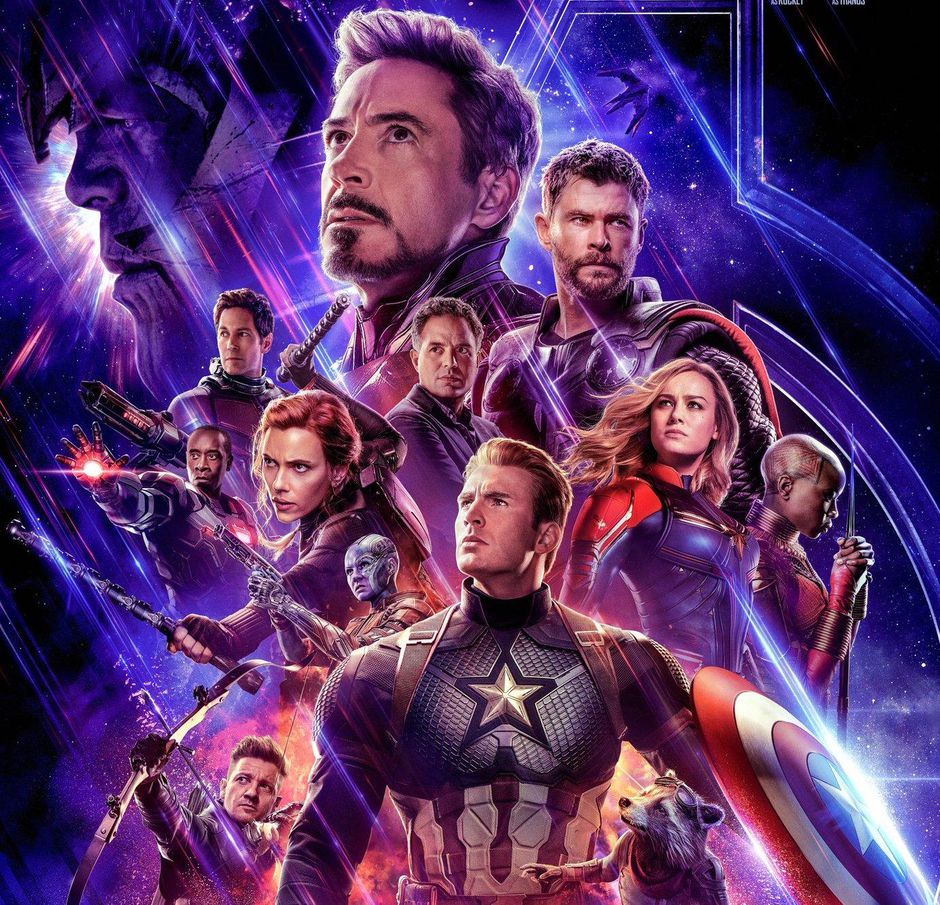
Avengers: Endgame

Avengers: Endgame is three hours of payoff for anyone who liked the MCU’s 21 other films to date. If you loved them, all the better – Endgame will fill your geeky little heart with joy. And if you couldn’t stand them? Then stay far, far away from this one as it is everything you hated about the other films times 3,000.

Without getting into details, and in the interest of avoiding spoilers, I think it’s safe to say that after Thanos turned half the universe into dust at the end of Avengers: Infinity War, the survivors are set on undoing Thanos’ finger snap. Other than that, I’m going to let you go in blind like I did, because it’s always best that way, isn’t it?

Despite being somewhat disappointed by Infinity War’s ending because it felt inevitable that it would be undone, I was still excited going into Endgame and I was not let down. For superhero fans, Endgame is three hours of greatness. So many story arcs are wrapped up in this film and each feels like a fitting conclusion to everything we’ve seen so far. Directors Anthony and Joe Russo have been here before (also directing Infinity War, Captain America: The Winter Soldier, and Captain America: Civil War) and it shows, as they expertly manage the on-screen action. I’d say this is their best work.

We can debate that, and we can also debate whether or not Endgame is the best of the MCU movies (it’s definitely in the running). But I am confident in saying that Endgame is hands-down the most remarkable entry in the MCU and the most stunning superhero achievement so far. Endgame is a three hour film that is over in a snap, it’s a perfect capper to the last ten years of Marvel films, and it contains some of the greatest moments in the entire series, especially for the MCU’s big three, Captain America (Chris Evans), Iron Man (Robert Downey Jr.), and Thor (Chris Hemsworth).

I loved Endgame. It is far better than it needed to be, far better than I expected it to be, and an absolute must-see for every superhero fan.

Killing Patient Zero

Patient Zero: the man who brought AIDS to North America, sparking the gay plague epidemic, killing several hundred thousand gay men. His name was Gaetan Dugas – a French Canadian flight attendant for Air Canada. His name was published, his lifestyle vilified, his family shamed.

Except it turns out Patient Zero didn’t really exist, and even if he did, he wasn’t Gaetan Dugas.

When the CDC was frantically trying to crack this strange and terrifying disease, they interviewed a bright young flight attendant who was quite forthcoming. They greedily drank up every piece of information he offered. Ultimately, Gaetan’s extensive recollections helped them piece together a cluster chart that helped them identify the sexually transmitted nature of the disease. He was labelled patient O – O as in Out of California (which is where the first 56 men they interviewed had lived; Gaetan was the 57th, and he did not). But that O would later be mistaken for a 0 and that erroneous 0 would be interpreted as meaning the beginning, the originator, the first case of AIDS in North America. Obviously that was 100% factually incorrect, but a reporter who seethed at the government’s lack of response decided to galvanize the world with a book. In it, he constructed the Patient Zero narrative, which guaranteed that the book would be published, read, talked about, regardless of whether it was completely or even remotely true.

Killing Patient Zero is about correcting this notion and rescuing Gaetan’s name, a man who history has wrongfully accused. Director Laurie Lynd interviews many: friends and coworkers, leaders at the forefront of gay civil rights and AIDS advocacy, doctors and researchers and sociologists. Together they weave a portrait of a man joyfully enjoying his life. One man among many who are enjoying newfound freedoms, exploring possibilities, exploiting opportunities, embracing life. AIDS happened just as the world was opening up to gay men. Some called it the ultimate punishment for a sinful life. Gay men lived in terror, but terror of the unknown, because AIDS proved elusive, hard to define, impossible to treat, easy to contract, but by what means? No one could say.

Gaetan too would have lived with that fear. And when the telltale purple splotched appeared, he knew he would soon die. Still, he took the time to talk to the authorities and tell them what he knew. He did more than most.

Killing Patient Zero is as enlightening as it is profound. It’s an important historical record, one that honours not just Gaetan’s memory, but all of those who witnessed a vital community’s near-extinction and did something about it.

Missing Link

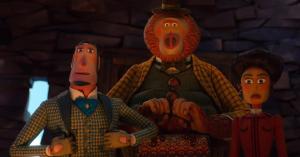
Sir Lionel Frost (Hugh Jackman) is an investigator of myths and monsters but his charismatic exploits have failed to yield any actual proof. There’s a boy’s club of pompous explorers Frost would kill to be a part of, but they won’t have him. In fact, Lord Piggot-Dunceby (Stephen Fry) would kill to keep him out – and unfortunately, he means that a little more literally than does Frost. Frost feels like his best and last chance is to go to America to find the elusive Sasquatch, and Lord Piggot-Dunceby sends Willard Stenk (Timothy Olyphant) to make sure he doesn’t.

Frost does indeed meet the Sasquatch (Zach Galifianakis), who turns out to be rather a MV5BNDFmMjlmNjEtN2RhNS00NWNhLWFjODgtN2IxYTY1NzExYWZlXkEyXkFqcGdeQXVyODEwMTc2ODQ@._V1_pathetic figure. The last of his kind, “Mr. Link” is lonely, and hopes Frost will help him find long-lost cousins, Yeti said to live in the Himalayas. With the help of Frost’s friend Adelina Fortnight (Zoe Saldana), who hikes the mother fucking Himalayas in heels, they have an adventure worthy of even the greatest explorer, facing adversity bigger than even Big Foot himself.

Laika’s last effort, Kubo and the Two Strings, is an absolutely incredible feat of animation and story-telling. It looks and feels like something truly special, almost magical. Missing Link, while quite charming, is no Kubo. Which is not to say it’s bad, not at all. It’s sweet, actually, and its straight-forward plotting is kid-friendly and accessible. The animation is what we’ve come to expect from over-achieving Laika, and the voice work is first-rate. The film manages to be funny and heart-warming throughout. But it doesn’t have that edge, that sliver of darkness I’ve come to expect from Laika.

Missing Link is a nice movie, a genuinely nice movie, but it’s less sophisticated, less complex than Laika’s usual fare, so for me it fell short of the high bar set by Kubo.

The Oath

A fear-mongering, power-hungry president has decided to asked his fellow Americans to sign a loyalty oath to prove their patriotism. There are incentives to signing – tax breaks, of course – but signing will be totally optional. Americans have nearly a year – until Black Friday – to opt in or out. No pressure. But during that year, things are not as easy-peasy as first promised. ‘Patriots’ turn vitriolic. Hate crimes increase. Protests often get violent. Protestors start to mysteriously disappear. ‘Concerned’ citizens start turning each other in.

Sound disturbingly plausible?

But of course holidays must still be observed, so we join Chris and Kai as they host is family for Thanksgiving.

MV5BNDM3ODAwMTc1NV5BMl5BanBnXkFtZTgwMTM1NDQxNjM@._V1_SX1500_CR0,0,1500,999_AL_Chris (Ike Barinholtz) is staunchly against signing the oath; he and Kai (Tiffany Haddish) agree on that. But while Kai just wants to survive the family and survive her in-laws, Chris is glued to the television and obsessed with minute-to-minute reports from across the country. It’s hard to blame him: these are indeed crazy times.
Chris’s mother (Nora Dunn) insists on “no politics” at the table, but Chris can’t help but clash with his right-wing, oath-signing brother Pat and Pat’s alt-right, fake news spouting girlfriend. Even Chris’s “more reasonable” sister Alice (Carrie Brownstein) can’t get a word in. The first half of the movie plays out exactly like many of our own family gatherings would under similar circumstances. Ike Barinholtz, who also writes and directs, gets right to the heart of things, satirizing and underlining America’s troubling and polarizing partisanship. He keeps things interesting by casting Chris as equally culpable. He’s on the opposite side of the spectrum, but he’s every bit the blowhard, intolerant of every opinion but his own.

And then John Cho shows up. He and Billy Magnussen play CPU agents – that’s Citizens Protection Unit to you. It seems someone has reported Chris for his unAmerican activities. Cho plays a relatively reasonable guy, but Magnussen plays exactly the kind of guy who would be attracted to the position. Never mind that this oath was supposedly voluntary, he believes Chris is the worst kind of traitor, and he’ll stop at nothing (and I do mean nothing) to serve his country in the manner he’s deemed necessary. Shit goes south FAST. The film takes a detour toward the increasingly absurd, and yet Barinholtz never loses us because it never quite feels unrealistic. And maybe that’s the scariest part.

What I’ve failed to mention is that although this is technically a political comedy, it’s also a horror movie. It’s not gory or graphic or particularly scary to watch, but it is deeply frightening to feel how close we are to this very situation.

I may have enjoyed the concept more than I enjoyed the execution of this film, but damn if it didn’t keep me 100% mentally engaged and 110% emotionally enraged.

Every single character is acting out of love of family and love of country – every single one. But they’re coming at it from such different directions it feels impossible that they should all want the same thing. This is exactly American’s biggest problem right now, and the gap between the sides widens every day. No matter which side of the problem you think you’d come down on yourself, you must admit that in 2019, the most revolutionary act we can commit is one of compassion.

The Oath is a smart, thoughtful movie that I wanted to end only because I couldn’t wait to start talking about it.

Us

“Why is nice Jordan Peele making such scary movies?”

As is often the case, Jay’s question is one that I can’t answer. But f you thought Get Out was too much, like Jay did, you will want to skip Us altogether. Maybe see Captain Marvel again while you wait for Dumbo, because Peele has clearly decided he’s made us giggle enough and now his goal is to induce heart attacks instead of belly laughs.

And yet, I still have to tell you to see it, even though you will kind of hate every minute. Us is just too good to miss. Like Get Out, there is a lot going on under the surface of Us, and like Get Out, it works as a thriller so if you want, you can ignore all the subtext and just enjoy the ride, or cringe in terror until the ride ends. In Us’ case, the ride is both metaphorically and literally a hall of mirrors, as a vacationing family is forced to face off against their evil twins. It’s like goateed Spock four times over, only in Us it is clear that the family from the mirror universe is out for blood and won’t stop til they get it.

Peele writes, directs and produces here, and in his sophomore outing as director he has already proven to be a monumental talent. He doesn’t appear as an actor but he’s imparted many of his mannerisms to Winston Duke, the family’s easygoing dad who seems more than anything is excited to get out on a rented motorboat that hangs slightly left. Duke provides a welcome dose of comic relief even as he does whatever is necessary to protect his family. He is equal to Lupita Nyong’o, and that’s the best anyone can ever do, because she brings it every time. Shahadi Wright Joseph and Evan Alex, as their kids, are both great as well. It’s awesome seeing them work together to survive as the stakes get raised higher and higher by the minute. Even more impressively, those four, and almost everyone in the movie, play dual roles, and there’s not a weak link to be found.

Us is one of those rare movies that stands above by being better executed, more thoughtful, and shamelessly cleverer than the rest of its genre. And like Get Out before it, Us is not a typical Oscar contender but it better get some attention next February. Because Peele and company deserve to be praised for what they’ve given us with Us: a brilliant film that manages to be brutal and restrained, and one that 24 hours later I still haven’t fully digested or shaken.

Captain Marvel

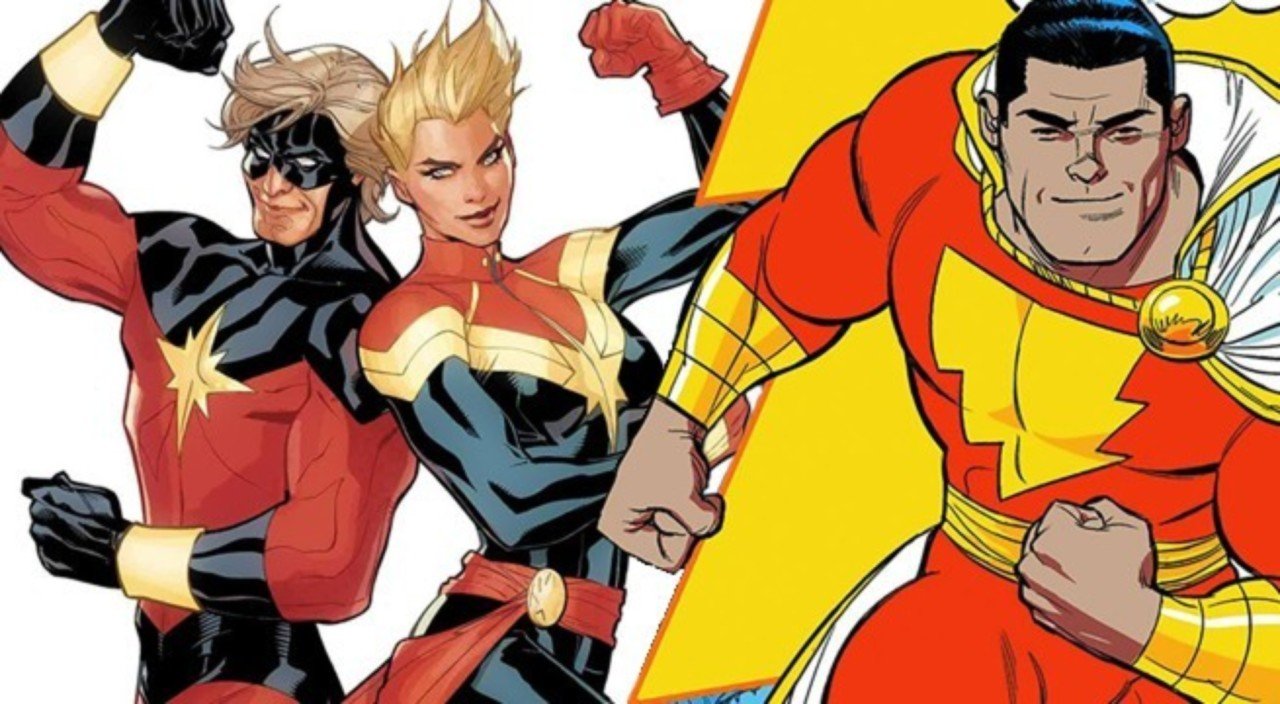
Mar-Vell! Shazam! Mar-Vell! Shazam! There is a long and interesting legal saga surrounding the Captain Marvel name (though if you are not a law geek it’s probably much more long than interesting). Basically, the red and white Captain Marvel (a.k.a. Shazam) came first as a blatant Superman rip-off. DC sued, put the creators out of business, bought Shazam for cheap and quickly forgot they owned him. Meanwhile, Marvel captain-marvel-mar-vell-shazam-differences-header-1108262-1280x0Comics decided that if any comic publisher should have a Captain Marvel, it should be them, so Marvel threw together a half-baked story about an alien named Mar-Vell to secure a trademark for the Captain Marvel name, won a lawsuit against DC and others, then gave Mar-Vell cancer and made him the only comic character in history to stay dead.

Given that history, I don’t think it is a coincidence that DC’s Shazam will follow within a month of Captain Marvel’s debut in the Marvel Cinematic Universe.  If there’s a lesson here, and there may not be, it’s that “legal reasons” give birth to a lot of strange things (and don’t even get me started on the 90s Captain America and Fantastic Four films).

Incidentally, Marvel’s Captain Marvel is not a resurrection of the alien who died from cancer. Marvel revamped the character through a whole other convoluted saga, and she’s primed to be the first female hero to get her own MCU movie.

Captain Marvel (Brie Larson) is a space-faring Kree soldier with memory problems, a self-described noble warrior hero fighting a war against the shape-shifting Skrulls. After captain-marvel-international-poster-top-1200x675a Skrull ambush, she crash-lands on mid-90s Earth (smashing through the roof of a Blockbuster Video, as probability would dictate) and realizes that she’s been on this planet before. Teaming up with Nick Fury (Samuel L. Jackson), Marvel chases after the Skrulls who came to Earth along with her (led by Ben Mendelsohn) while also trying to uncover her forgotten past.
In many ways, Captain Marvel is a standard solo origin story, which at this point they can crank out with no effort at all. But this film still feels like a necessary addition to the MCU. Captain Marvel is a worthy star and the galactic stakes are high enough here to make this film stand on its own. A great deal of those positive feelings are due to Larsen, who does a great job of keeping us invested in the character even before we (and she) know who she really is: the cosmic-powered superstar who is going to undo all the bad stuff that Thanos got away with last time (as you probably can guess, I’m still mad that he turned Spidey into dust). And the icing on the cake is the 90s nostalgia reminding us that no matter how bad your internet is during a snowstorm, things used to be much worse.

Aside from Shazam (which is almost certain to be terrible), Captain Marvel is bound to be compared to Wonder Woman, and for the only time ever, DC’s entry is the better one. Captain Marvel does not have the same crossover appeal as Wonder Woman does, but Captain Marvel is a really fun superhero movie on its own merits, as well as a great lead-in for the new Avengers film next month.

How to Train Your Dragon: The Hidden World

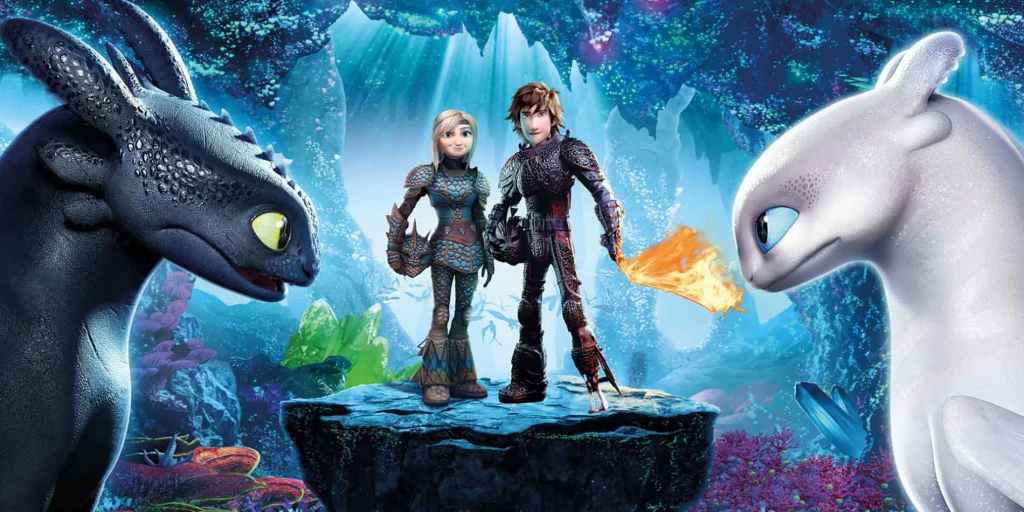
With two feature films and countless Netflix series under their belts, the creative team behind the How to Train Your Dragon franchise is very comfortable. They are content to spend as much time as they need on their story, resulting in what may be the world’s first dragon-centric rom-com.

Toothless, the black dragon from the first two films, is back and gets his own story thread, as he meets a lovely white dragon and is instantly smitten. She’s not so sure about him at first, and his courtship attempts are more than a little awkward, but we all know he’s going to win her over eventually. The outcome of that romance is also obvious to his best human friend, Hiccup, the leader of the dragon-how-to-train-your-dragon-3-headerriding Vikings that live in the island village of Berk, and that’s where things get interesting.

In addition to figuring out how to deal with his dragon’s dating, Hiccup and his Vikings have their own problems. They’re being pursued by the drsgon hunter Grimmel and his massive fleet. Against some resistance, Hiccup decides that the Vikings’ best chance to survive is to find the hidden dragon world located beyond the edge of the world.

Hiccup and Toothless have both grown up a lot over the course of the trilogy, and they grapple with some fairly complex relationship-related issues in this third instalment. The result is an emotional third act as life pulls Hiccup and Toothless in very different directions and they have some hard choices to make.

How to Train Your Dragon: The Hidden World shows that we are still in the midst of a golden age for animation. The Hidden World is full of beautifully animated scenes, with particularly amazing lighting effects, but more importantly, it’s a story that my 40-something self could relate to, engage with, and be moved by. It’s a satisfying conclusion to a very enjoyable series.


Knocked Up

A little later than most, we’ve been watching Dirty John on Netflix. It’s apparently based on a true story, about a woman who gets stuck in an abusive relationship with a pathological liar, thief, and drug addict – John, played by Eric Bana. To cleanse our palettes I suggested we find a movie featuring Eric Bana in a  nicer light but perusing his filmography on IMDB, we discovered that Bana’s good movies are fewer and further between than we’d imagined. Troy? King Arthur? Lone Survivor? No thanks. I had this foggy memory of a movie where the characters discuss Eric Bana, and how his role in Munich would get them all laid that night. So, logically, instead of watching Munich, we watched Knocked Up, which doesn’t have Eric Bana at all, but does have the above mentioned scene. It seemed easier to digest.

26JPMAUDE1-jumboIn it, a straight-laced TV producer, Alison (Katherine Heigl), gets drunk and has sex with an improbable mate, stoner Ben (Seth Rogen), and though that encounter is destined to be a one-night stand, she gets pregnant and it forces them together way beyond what’s reasonable for a couple of opposites.

Actually, I accidentally just referenced this movie the other day. Seth Rogen has another movie coming out, another romantic comedy (or as romantic as a guy like Rogen can tolerate) and in my mind, I thought it was Katherine Heigl again. It isn’t. It’s actually Charlize Theron. Sean suggested my mistake meant that somewhere in the world, Charlize was feeling vaguely insulted without knowing why. Sorry Charlize.

Anyway, Knocked Up is sort of funny. Actually, it’s definitely funny, thanks in no part to Katherine Heigl, but thanks in large part to its very talented extended cast – including early inclusions of Bill Hader and Kristen Wiig who both maximize small roles. And VF_OSCAR_2019_JB_190224_CARD_03_0324Harold Ramis as Rogen’s father, who is a delight for every single moment he’s on screen. Leslie Mann plays Alison’s sister, married with kids, who were played by her real-life kids with writer-director Judd Apatow, Maude and Iris Apatow. Which is crazy because the kids are teeny tiny in this movie, but in 2019, Maude Apatow just went to the Vanity Fair Oscars party with her parents, looking very grown up. And we saw her last year at SXSW at the premiere of her mother’s movie, Blockers. She’s a lady now. Katherine Heigl is washed up. And Oscar winner Charlize Theron is signed on for the next Seth Rogen movie. What a crazy world in which we live.

Anyway, this is a better movie than you’d think. It kind of has some smart and sad stuff to say about marriage – it’s weirdly wise for a movie that makes fart jokes, and more raw and explicit about the realities of birth than any drama has dared to be. It may not have Eric Bana in it, but it did restore our faith in humanity, so job done, DVD we found in our garage.