
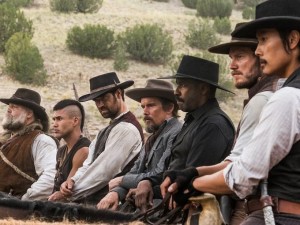
 This is a western where the good guys wear black. Where you cheer for the outlaws, where a woman shoots better than most of the men, and where a black man can be the unquestioned leader of the posse. It is a more multicultural west than we are used to seeing, and it feels natural, like this is how it always should have been.
And why not? If you have Denzel Washington in your western, then he should be in charge. He’s the lead. He takes command here and it’s clear right from the start that what Denzel says goes. 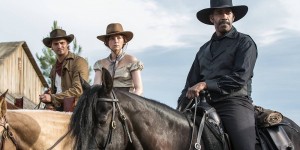 All the outlaws he recruits fall into line and work with him and for him, to save a little town that a gold baron has taken
by force.
Chris Pratt is the first to sign up and it’s great to have him along for the ride. His brand of comedy is welcome and he also manages a convincing quick draw.
The other five join up quickly thereafter, from Ethan Hawke’s shellshocked southern sniper, to Byung-hun Lee’s soft-spoken knife expert, to Vincent D’Onofrio’s nigh-unstoppable hick
who’s been in the sun too long. Manuel Garcia-Rulfo’s Mexican outlaw and Martin Sensmeyer’s kick-ass Comanche warrior sing up as well. I would have liked to see more opportunities for the last two to contribute, as the movie was at its strongest when the entire crew was riffing off one another while preparing for the final showdown against Peter Saarsgard’s gold baron and hundreds of his henchmen. That’s an indication of the strength of the cast, from top to bottom.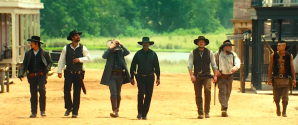
We seem to be in the middle of a western revival over the last few years, illustrated by the fact this was not my first western this month. The Magnificent Seven is not an instant classic like Hell or High Water, but Antoine Fuqua delivers an enjoyable popcorn movie that earnestly serves up a high noon showdown. Feeling like a throwback already, catch it as a matinee for extra authenticity.
Naturally, the Magnificent Seven gets a score of seven rootin’ tootin’ gunslingers out of ten.
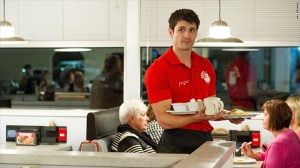 resume thrown out of places from carpet fitters to mechanics. Only a chicken and waffle restaurant will take him, where he’ll fall under the tutelage and benevolence of grill man Danny Glover, who insists on being called Waffle Daddy.
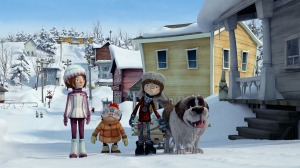 territory, the whole school would assemble into our tiny gym, and one of the few movies screened for us on a 24-inch TV was La guerre des tuques. It was a movie about a bunch of kids who wage an all-out snowball fight in the vicinity of a huge snow fort during their winter break. La guerre des tuques literally translates to war of the tuques, but the English version was called The Dog Who Stopped The War.
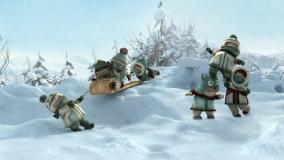 yes there are hockey sticks, but also lacrosse sticks and curling brooms.
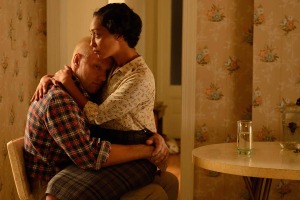 The movie’s success lies in what a small, personal story this is. We never feel like the whole south is against them – but it feels worse that it must be one of their neighbours who keeps ratting them out. The police come, guns drawn, to break down their door in the middle of the night in order to catch them in a crime – that of sleeping next to itch other in marital bliss.
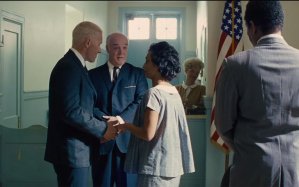 reserved. There’s not a lot of grandstanding. In fact, he turns his back (and his camera) away from the big, sweeping court scene in order to keep it once again in the heart of the family. Easily eliciting a flood of emotions, it’s actually a relief to see them played out so superbly on Negga’s face, and in Edgerton’s shoulders, rather than some melodramatic speech. The restraint here is a credit to Nichols’ directing, but also to this wonderful casting.
 not going to query studios or go to auditions, they’re done with doing it the Hollywood way. Now they’re desperate enough for the lowest kind of fame: Internet fame.
 underground tape X-V, literally a supercut of every fantastically horrific, violent, gory thing that has ever happened on film, set to some delicious pop. It’s nauseating good fun.
 Psiconautas finds beauty in unusual places: decimation, addiction, and poverty, to name a few. In a word, the art is stunning. It feels like a throwback in its hand-drawn aesthetic, and yet feels modern in subject matter and futuristic in its setting.
 Like why a mouse’s stepfather is a human dressing up as a mouse, why her “fake brother” is a bulldog wearing a luchador mask, and why her bird boyfriend is possessed by horrific crows.
 in a good way. All of it has meaning, all of it is a blurry reflection of our society, from our proclivity to make trash to our struggles with addiction to police brutality. I left the theatre wanting to immediately watch Psiconautas again to see what other threads could be tied together.
 The talking head interviews are culled extensively from the guest list of the 2015 festival, and include the likes of Toni Colette, Michael Moore, Patricia Clarkson, Judd Apatow, Mimi Leder, Paul Feig, Catherine Hardwicke, Angelica Huston, Jill Soloway, Mira Nair, and so many more.
 carpet when she broke out a sign reading ‘Budget the Baby’. She says “As an actor I can claim a massage or a facial but I can’t claim childcare. Actors are the most pampered people on sets. It’s the crews — the electricians, catering, camera people — who are often on set at 4am.” Hope Dickson Leach is a mother of two herself; you can imagine what a grueling 20 hour day on the set can mean to a family with young children.


 world, praised him for his quick thinking and skill. His maneuver saved every soul on board. It was quickly labelled “The Miracle on the Hudson.” He made the rounds of late night talk shows, smiling politely as hosts feted him, but that smile was a facade.
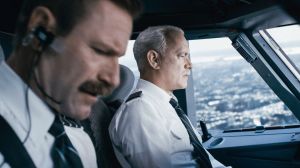 lives on the line, his own included. Aaron Eckhart plays Skiles, the right-hand man with an equally formidable mustache (what is it with pilots and mustaches?). Laura Linney has is relegated to an even smaller part, as the wife on the other end of a telephone. Both are fine, but this is clearly Hanks’ show, and Sully’s story. He’s the one not just with his reputation on the line, but his career and pension and ability to support his family in flux too.
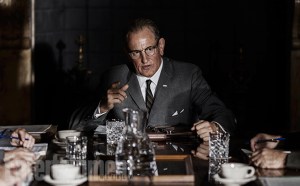 Rob Reiner, a venerable talent who hasn’t directed anything of note in a couple of decades. As he introduced this film to the TIFF audience, however, it was clear that this movie really meant something to him. He talked of being a young man during LBJ’s time in office, and hating him because he was the man who could send you to your death in Vietnam. Only with time, age, and political engagement could he look back at Johnson as something more. He was the president who had to shoulder the burden and responsibility of John Kennedy’s legacy. He took over lots of the civil rights work that JFK had begun, and LBJ is the one who pushed it through, though history sometimes forgets to give him credit for this.
 the way Jackie does. That said, I still found it to be quite enjoyable. The film neglects to give us a complete picture of the man, but does focus interestingly on LBJ’s rivalry with JFK, allowing Harrelson to swing between cockiness and shame and a whole presidential gamut in between – it’s refreshing to watch him flexing so readily after a string of second-banana performances. He’s playful bordering on hammy, showing us wit, vulgarity, searing intelligence, and frustrated ambition.
