TIFF: Unicorn Store

Full disclosure: I own a unicorn named Mindy. She’s magical. She’s a goddamned magical creature. She’s also inflatable but don’t you DARE call her a pool toy. You can, however, call her the centre of attention, which is exactly what she was when I threw a goddamned magical unicorn party earlier this summer. I sent unicorn invitations. I had unicorn party hats, a unicorn pinata, and unicorn names for all the guests. I even made a unicorn cake. No, that’s not true. I actually made TWO unicorn cakes because Sean smashed the first one about 30 seconds after I finished it. And when you throw a unicorn party, people bring you unicorn presents, which is why I own unicorn slippers and a unicorn tape dispenser named Stuart and briefly had unicorn-coloured hair. This either makes me uniquely qualified to review this film, or I should recuse myself for the glaring conflict of interest.

I’m not actually obsessed with unicorns, but you know who is? Kit. Kit (Brie Larson) has literally been obsessed with unicorns her whole entire life. And after painting yet another unicorn-as-self-portrait, she’s unceremoniously flunked out of art school and returns home to mope in her parents’ basement (Joan Cusack, Bradley Whitford). In an effort to Not Be A Disappointment to them, she takes an uninspired job with a temp agency and just when it seems the world might be ready to beat the whimsy right out of her, the universe sends her a pop-up store that only sells unicorns, and only to her, run by a tinsel-afroed Samuel L. Jackson, of naturally. Turns out that owning a unicorn is something you have to earn, so Kit sets about getting her life unicorn-ready, and that’s going to take some major changes. But is unicorn ownership really the cure to what ails a directionless, fully grown woman who seems stuck in a perpetual unicorn phase? Isn’t there more to life than glitter and rainbows?

Samantha McIntyre’s script is winkingly funny. For some odd reason neither Sean nor I had gone into this expecting it to be funny, and yet the audience was in stitches. McIntyre has a very quirky style that endeared itself to me immediately. She creates sparks in the smallest little details. I also have to send a shout-out to costumer Mirren Gordon-Crozier who must have combed the known universe to find THE most fanciful pieces of clothing ever produced. Kit wears her personality on her body. Her shirt collection is all blue skies and rainbows. It reminded me of Kimmy Schmidt in that way, who is always seen in sunshine yellows and bright fuchsias. Their clothing is a reflection of who they are. That said, it might be Samuel L. Jackson’s suits that make the biggest and brightest wardrobe impression in this movie.

But the real rock star here is Brie Larson, who makes her directorial debut. She’s just finding her voice as a director so her style isn’t quite as quirky as the tone of the movie, but considering how much it shifts around, I think she handles it well, and I already can’t wait to see what other stories she’ll tell. She assembles a really great cast who are a lot of fun to watch. Cusack and Whitford are everyone’s embarrassing parents, and Mamoudou Athie as The Guy Who Will Build a Unicorn Stable Even Though He’s Not A Carpenter is a particular stand-out.

I really enjoyed Unicorn Store; it’s a sweet reminder that growing up doesn’t necessarily mean giving up on childhood dreams. Underneath the glitter there’s a message about conformity and how women are told to pull away from “girlish” things in order to fall into one of two male-approved categories: the drab, grim businesswoman, or the oversexualized dreamgirl. Anything seen as overtly feminine is assumed to be less serious, and even women themselves can internalize this notion. Not Kit. Brie Larson flexes her comedic chops by playing her as earnest but not naive. In a world where every man’s inner child is constantly catered to with movies about super heroes, robots, pirates, and zombies, this one, finally, is just for us.

TIFF 2017: High Fantasy

High_Fantasy_06Lexi is a white South African millennial who has recently inherited a ridiculous amount of farmland in the middle of nowhere. She is fully aware that her family stole this land from some black people and she gets a little touchy whenever the subject comes up. Which it often does when she brings her three black South African millennial friends on a camping trip on her family’s land.

The four friends (3 girls and a guy) have very different histories and worldviews, but the mood is light and friendly on the first day. Things take a turn for the awkward on Day 2 though when they wake up to discover that they’ve somehow swapped bodies overnight. The fallout is brilliantly captured by director Jenna Bass on her iPhone in found footage/mockumentary format.

Whether in South Africa or even right here in Canada, 2017 is a tricky time to make a film about racial tensions. The worst thing one can do is to reinforce the myth of easy answers just to get your Hollywood ending. Bass -and her four stars who co-workers the script with her- are very careful to avoid this trap. The interaction between the characters are every bit as messy and unpredictable as they should be. It’s a little bleak, refreshingly honest, and avoids the typical lazy talking points.

As for the fantasy gimmick, it works and it doesn’t. It does provide some opportunity for some comic relief that seems to emerge organically from the situations without resorting to too many Freaky Friday clichés. It is confusing though; I did spend a lot of time trying to remind myself who was in whose body. Which is a bit of a problem. Given how much of the story lies in subtext, it becomes important who’s saying what.

That’s all fine though. I don’t mind having to work to keep up with a film this sincere and well-acted. It just seems that much of the conflict between the characters boils to the surface due to extreme stress and not always specifically because they’ve swapped bodies. So I had to wonder if this all would have been less confusing had they just ran out of gas.

High Fantasy is exactly the kind of film that most of us go to festivals for. It’s a low budget and unique film that is surprising and challenging. You’ll probably be begging your friends to watch it so you can have someone to talk about it with.

Originally published at www.cinemaaxis.com

TIFF 2017: Bingo! I Got Bingo!, Part 3

So if you’ve made it this far, you know that I’ve thanked some volunteers, watched 3 movies from female directors, and carried around a dead phone. Impressive, if I may say so myself, but it’s not enough to get TIFF Bingo.

Make a New Friend in Line

With hours spent sitting in uncomfortable theater seats punctuated by hours spent standing in line, the people you stand with and sit next to can really make or break your TIFF experience. A good conversation can make the two hours spent waiting for the perfect seat just fly by. Just as an annoying person can make the minutes drag on like hours. And if you’re thinking “Wait a second, I wonder if he’s talking about me. I am a total jackass after all and I did spend all of Euphoria with my elbow in his personal space,”, yes. I’m talking about you.

downsizing_01

Downsizing– If Downsizing isn’t my favourite movie at the festival this year, it’s definitely close. I couldn’t wait for the latest from Alexander Payne, a filmmaker whose nearly every imdb credit (Election, Sideways, The Descendants, Nebraska, and even Downsizing) has been praised by one of us at one point or another. Fans of his work may be surprised by the science fiction elements of his latest film but Payne, who introduced the film, sees this as a disappointing rehashing of the same themes. “Just a poor {‘schmuck’ I think was the word he used’] from Omaha middling his way through life trying to make some sense of it all. Just this time with some science fiction thrown in,” he joked.

Downsizing has lots of subtext to ponder and debate but it’s hard to take it all in on your first viewing because it’s all way too much fun to watch. This may be Payne’s most entertaining and laugh-out-loud funniest film so far and I’m quite sure that I’ve missed some of the best jokes because they were drowned out by the Elgin Theater crowds’ laughter.

The new friends I made while waiting to see Downsizing took TIFF just as seriously as I did. Like me, their rough drafts of their schedule looks like the wall of an insane person trying to solve a murder. The thing is, once the line starts moving, you lose each other in the crowd . So if you’re reading this and you bought seven 10-packs to share with all your friends and you think you may have stood in line with me, leave a comment. I’d love to hear what you thought of the movie. And I hope that Karen has finally paid you back.

Pronounce “Saoirse” Correctly


The Current War– Saoirse Ronan wasn’t in The Current War but I did talk about her in line to see it. “Who’s in Lady Bird again? Is it Saoirse Ronan or Elle Fanning?” I asked the nice couple in line ahead of me. I pronounced Saoirse correctly. Everyone seemed really impressed. What’s ironic, I realize now, is that I got her last name wrong. I always say “Rowan”. But TIFF Bingo said nothing about “Ronan” so it still counts.

I wish I’d seen Lady Bird instead of The Current War. It’s not like The Current War is a bad movie, it’s just more forgettable than it should be. The second feature from Alfonzo Gomez-Rejon (Me and Earl and the Dying Girl) dramatizes the rivalry between Thomas Edison (Benedict Cumberbatch) and George Westinghouse (Michael Shannon) as they race to heat and light the entire country with electricity. So it’s got potential. Cumberbatch and Shannon are pretty much the Pacino and DeNiro of leading men born in the mid-70s who specialize in playing eccentrics so the thought of seeing them go head to head put this at the top of my list. I passed on Suburbicon for The Current War!

There is some really good writing in this script but for every scene that captivates there are two more that look and sound like they were filmed for a Made for the Edison Museum movie. Both actors are good but are usually even better and they share disappointingly little screen time.

There’s a good movie in here somewhere. The Current War’s best scenes concern the lead-up to the first execution by electric chair and, for a movie that suffers from lack of focus, this subplot may have worked even better as the main plot.


TIFF 2017: Bingo! I Got Bingo!, Part 2

Catching 3 films by female directors is easy. The TIFF lineup this and every year has lots of interesting films to choose from, many of them directed by women. Getting full TIFF Bingo isn’t so easy.

I have stress dreams about the Midnight Madness ball and avoid it like it’s a not deep-fried vegetable so that’s out. And, while Battle of the Sexes had its moments, I can’t honestly say that I thought “Now this I’ve got to try”.

But I did…

Thank a Volunteer

Mom and Dad– The festival and the city that hosts it can be a little overwhelming at first. Even though I feel like an expert by the end of my stay, every year I’m feeling a little disoriented when I first get into town. So I’ve just checked into my hotel, it’s 11:40 at night, and I’ve got a Midnight Madness screening of Brian Taylor’s Mom and Dad in 20 minutes. I’m running around trying to find Ryerson theater and I’m getting stressed out imagining all the ways that I could humiliate myself trying to volley a beach ball in a crowded theater. Luckily, a friendly orange shirt is never far away and I was very thankful to the volunteers who helped me find where to line up. I never miss a chance to thank a volunteer and I applaud for them every time the TIFF commercial prompts us to.

So, anyway, Mom and Dad. Taylor (Crank, Ghost Rider: Spirit of Vengence) seems to be just begging us to make this a cult classic. An unexplained virus suddenly hits suburbia in the middle of the school day that infects parents with an uncontrollable urge to violently murder their offspring. Poor Carly (13 Reasons Why’s Anne Winters) and Josh Ryan (Transparent’s Zackary Arthur) are forced to fend for themselves against their now-deranged parents played by Nicolas Cage and Selma Blair.

Mom and Dad is bananas. Almost every aspect of the film- from the basic concept down to the music and over-caffeinated editing- seems driven by the same manic energy that fuels Cage’s typically unhinged performance. The actor, who in the eyes of the enthusiastic Midnight Madness crowd may as well have been John Lennon, already starts overacting long before the virus starts making everyone crazy. He outCages himself in this movie and- while it would be a stretch to call it a good performance- it feels like the right performance for this movie. But it’s Blair, surprisingly, who somehow finds a way to keep this runaway train from going off the rails. From the start, we can tell that her character is a good mom. She loves her kids but she’s exhausted and taken for granted. She’s the only believable character in the whole thing and her presence brings Mom and Dad back to earth. It’s through her that we start to sense that the virus is tapping into an existential crisis that was already in place before the infection.

To call Mom and Dad good would be ridiculous but it’s not really trying to be. It just wants to be fun and, for the most part, it is. It’s often funny, even coming dangerously close to smart, especially when it’s in terrible taste.

Phone Dies

I got some great photos this year, many of which you can see if you follow us on Twitter. I like sitting in the front row so I was able to get some shots of Nicolas Cage, Alicia Vikander, Alexander Payne, and Darren Aronofsky that I’m really happy with. But you won’t see a photo of Ellen Page (who, if I’m not mistaken, counts as a superhero out of spandex) because my phone died.

The Cured– So I did manage to get a couple of pictures of Ellen Page during the Q&A for The Cured. They’re just not tweetable because my phone didn’t have enough juice left for the flash to work. So it’s not a great picture. It’s a shame because I love her.

And, yes, fortunately for my TIFF Bingo card, my phone officially died on my way back to my hotel.

On to The Cured. This debut feature from Irish director David Freyne finds yet another way to breathe new life into a genre that seems to never run out of ways to reinvent itself: the zombie movie. Once this version of the zombie apocalypse has died down, two thirds of the “infected’ have been successfully cured and are slowly being reintegrated into society. Ex-zombies don’t have it easy though. They still have painful memories of the suffering that they inflicted and most people still don’t trust them.

Senan (Sam Keeley) has just been released from a treatment facility and is taken in by his brother’s wife Abbie (Page) who has been widowed by the outbreak. When he falls in with a militant group of zombie rights activists, Senan struggles to find a balance between his desire to fit in and atone for his crimes and his instinct to stand up for his fellow cured.

To Freyne, his film is really about how we treat each other in today’s mixed up world. It’s a serious movie with serious themes that somehow finds time to deliver the goods when it comes to zombie scares. Freyne’s direction is confident and precise, more so than almost any other movie I saw at the festival this year.

So there you have it. I wore out my phone battery, saw 3 films by female directors, thanked every volunteer that I spoke to, and even managed to see some good movies while I was at it. By now, experienced Bingo players have probably already spotted my path to victory but please feel free to stay tuned for more details.


TIFF 2017: Bingo! I Got Bingo!, Part 1

I got TIFF Bingo! I never get TIFF Bingo!

I get close every year but I’m always missing something. Either I didn’t see enough foreign films or didn’t eat enough vegetables. And even for TIFF Bingo, I refuse to ARRRR!

But TIFF victory was mine this year and let me spend my next 3 posts telling you how I pulled it off.

3 Films By Female Directors

Battle of the Sexes– Okay, so only half of the directors are female but judges say… Still counts! Directed by Jonathan Dayton and Valerie Faris (Little Miss Sunshine), Battle of the Sexes tells the behind-the-scenes story of the now-famous exhibition match between Women’s Tennis star Billie Jean King (Emma Stone) and has-been Bobby Riggs (Steve Carell). It’s a hard movie to google or even mention without hearing about how this is the movie we need in these troubled times. “We could use more of those values today,” Dayton quipped while introducing the film. (While the directors deny that the 2016 election had anything to do with their interest in the project, its hard not to see the parallels between the 1973 match and the first Presidential debate last year).

Dayton and Faris’ film, written by Slumdog Millionaire’s Simon Beaufoy, relies a little too heavily on their positive message. It’s as if they felt that they were excused from making a smart movie jsut because most of us can agree that, yeah, sexism in general is bad and that King should be allowed to sleep with whichever gender she chooses. Battle of the Sexes has some serious pacing problems throughout the first half and Carell’s scenes tend to drag. And for something that’s billed as a “comedy”, it’s not very funny. Thankfully, things start to come together once King and Riggs start promoting the match and, by the end, the entire Princess of Wales theater was cheering for King to “whoop his ass”, as one audience member put it during the Q&A.

Stone and Carell are well-cast and do right by their characters, even if they both have done better work in better movies. Stone, in particular, nails King’s conflict with her own sexuality and the scenes between her and new lover Marilyn Barnett (Andrea Riseborough) are the best in the film. So the script and direction are uneven but it’s enough to make all of us cheer for King by the end and the men in the audience howl at the screen in outrage at the old timey sexism of the early 70s as if they’ve never heard women described as “irrational” before. It’s just not enough to make anyone remember Battle of the Sexes on nomination day.

Euphoria-  Writer-director Lisa Langseth cast Alicia Vikander in her first lead role in 2009’s Pure and Vikander has never forgotten who gave her her big break. She took a break from winning Oscars and starring in franchise films to produce and star in her old friend’s English-language debut.

Vikander’s Ines and Eva Green’s Emilie are sisters who rarely speak to each other. When the two reunite for a mysterious road trip, Ines is shocked to discover that Emilie has taken her to a country retreat that specializes in assisted suicides. It turns out that Emilie has been secretly battling cancer for the last 3 years and has decided to end her suffering. Her euthanasia is six days away and she has chosen to spend her final days eating her favourite foods and reconciling with her estranged sister.

In an extended Q&A, which as far as I can tell is just as long as a regular Q&A just where guests sit in chairs, Langseth denied that her new film makes any kind of statement one way or another on assisted suicides. To her, the film is really about two sisters. Euphoria has plenty of intriguing ideas about its fictional retreat but it’s the relationship between Ines and Emilie that drives the film. And it’s that relationship that fails to convince. It’s a shame too because Vikander and Green are completely believable as sisters. From the very first scene, their chemistry works and their body language alone raises questions about their shared history that Langseth’s script doesn’t offer very interesting answers to. The two actresses try their best to breathe life into characters that never really come together on the page but it’s just not enough. The climatic scene is so beautifully acted and directed that it almost makes up for the film’s many faults but it only winds up driving home what a missed opportunity the whole thing was.

Angels Wear White– I don’t love that my first two films of my post on Female Directors at TIFF were so uninspired. Thank God for Vivan Qu.

Angels Wear White is the second feature from Chinese writer-director Vivian Qu. Unlike Battle of the Sexes and Euphoria, it takes its time developing complex and believable characters. While working at a quiet seaside inn, eighteen year-old Mia witnesses the assault of 12 year-old Wen by a prominent male member of the community.. Despite possessing physical evidence that could jump start a police investigation that’s getting nowhere, Mia is reluctant to get involved. It soon becomes clear that she has reasons of her own for keeping her head down.

Angels Wear White is a multi-layered look at the exploitation of women by powerful men and how some men of privilege can easily escape the consequences of their actions. It’s a film that trusts its audience to be outraged by the outrageous instead of manipulating its audience to feel a certain way. I highly recommend Qu’s latest film. I only wish that I had stuck around for her Q&A.

So, there you have it. Three films by female directors. Stay tuned for more behind the scenes details of my TIFF Bingo victory.

TIFF: Soldiers. A Story from Ferentari

Ferentari is an impoverished ghetto of Bucharest. Adi, an anthropology student, moves there to work on his thesis on manele pop music. He soaks up the local culture at a seedy bar where he meets a guide, Alberto. Alberto is a colourful character, to put it politely, a gregarious man with a gambling addiction and 14 years of prison under his belt. Alberto knows how to work Adi, scheming for drinks and smokes on top of cash payment. He’s got the whole neighbourhood figured out.
The relationship between the two blossoms curiously; Soldiers is an exploration of the soldiers_story_from_ferentari_02tough and the tender, the blurring of the line between the two. Adi (Adrian Schiop) is a fish out of water, and Alberto (Vasile Pavel), rough as heck around the edges, provides interesting if skewed insight. Soon their companionable partnership turns into something sexual, quasi-romantic. It’s a quite modern gay love story from behind the poverty line and director Ivana Mladenovic’s lens is intimate and gritty.
Soldiers is Mladenovic’s feature length debut but her work is already assured and distinguished. Based on the fictionalized biography of screenwriter (and actor) Adrian Schiop, the story follows the two lovers as they move from friendship to lust to love, but it’s when things start to turn sour that the movie really has something to say. The cultural, ethnic, and economic power dynamics become unmistakable as we glimpse a side of Romania we don’t often consider.


West of Sunshine

A deadbeat dad picks up his son to spend the day. Scratch that: the deadbeat dad forgets to pick up the son, gets an irate phone call from his ex, and son reluctantly goes with him with dad finally shows up.

Of course, this day which must now be spent with his young son is also the day on which Jim has promised to pay back a loan shark. Jim has problems with dogs and casinos and gambling all his family’s money away. He’s not a great guy. And now he’s got to watch 35654-west_of_sunshine_1____photo_credit_thom_neal-h_2017Alex while also evading violent criminals. Instead of getting his son to safety, he drags him into all kinds of terrible scenarios which they often escape by the skin of their teeth. The thing about crazy loan sharks is that they don’t really allow for excuses. They don’t make special allowances for a child. It’s pretty clear that Jim doesn’t really rearrange his life for his son either. So that’s awesome.
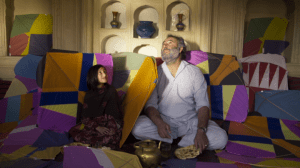
Things don’t go well, and Jim gets increasingly desperate. Of course, I believed that things still went better than he had any right for them to. I wanted to see this guy crushed. The script seems to believe Jim is undergoing some sort of growth but I was just so steaming mad at the risk he took with his kid, the constant harm he dangled him in front of, I just couldn’t do it. I couldn’t forgive the guy.

Little Alex seems to lean toward forgiveness, and that made me mad too. Mad on behalf of all the single mothers who work so hard to provide a loving and stable life for their kids only to have their deadbeat exes waltz in when it’s convenient for them and fuck shit up. Not all dads are crap, but far too many are. They act like they can also divorce their kids. And the kids will still want to adore their fathers, because he’s dad, and isn’t he awesome? Meanwhile mom gets all the flack. Because life isn’t fair. This movie doesn’t bother to really point any of this out, but it’s my honest reaction to it and I never warmed to the film, or to the dad who never redeemed himself in my eyes. I am slightly endeared by the fact that Jim is played by Damian Hill and Alex is played by his real-life stepson, Ty Perham, a really cute kid with apparently no prior acting experience. I hope they had more fun making the film than I did watching it.

TIFF: Black Kite

blackkite_tiff2017Afghanistan is the last place I’d expect to find a kid flying a kite. After watching Black Kite and seeing kites be such a prominent part of life, bringing a tiny bit of joy to those who are trapped in this war-torn land, it seems strange that I ever had a presumption on kites one way or the other.  The smallest of assumptions, something taken for granted without basis, led me to think I knew more about another’s circumstances than I do.  Being wrong about kites reminded me that actually, I know absolutely nothing about what it’s like to live in Afghanistan!  I have Black Kite’s writer/director Tarique Qayumi, a Canadian who came from Afghanistan as an eight-year old refugee, for brilliantly and effortlessly challenging my preconceptions.
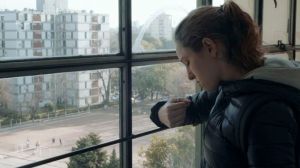
Black Kite follows Arian, an Afghan man who has been captured by the Taliban and convicted of the highest crime.  Through a series of flashbacks, we learn how Arian came to be imprisoned and sentenced to death.  Kites feature prominently in his story, from childhood, through adolescence, to adulthood.  There’s a remarkable contrast between the bright coloured kites and Arian’s drab, washed out existence, not only in the prison but throughout most of his life as Afghanistan is oppressed by one ruling body after another.

There are some absolutely beautiful shots of the desert and sky, and some very poignant animation that conveys a lot about what these kites represent: freedom, a means of expression and communication, and a marker of milestones in a man’s life, both good and bad.

Another assumption that Black Kite dispels is that freedom is free.  Freedom is a foreign concept for Arian, not the inherent right that I treat it as.  Arian and his family constantly live in fear, under the boot of one regime or another, with seemingly arbitrary rules that have the sole purpose of keeping them down. The rulers may change but the rules remain more or less the same, so Arian and his compatriots are denied even the simplest pleasures.  It hurts to experience these denials second hand, making the first hand experience all the more difficult for my privileged mind to imagine.

Black Kite is a wonderful film and a timely one.  It showed me how much can be stripped away from individuals, and reminded me that the little freedoms are as important as the big ones.  If those little freedoms were preserved for all, this small world would be a much better place.  There is no easy solution but we should spend our energy searching for ways to help people less fortunate than us.  Instead, we spend our time arguing over how many refugees we should accept from war-torn countries like Afghanistan, places where every day could be your last and little freedoms, like flying a kite, cannot ever be taken for granted.

By the way, the answer to how many refugees we should accept is: as many as we can fit.  And we’ve got plenty of room.

Invisible

Director Pablo Giorgelli has it in for us. His protagonist, Ely, is a marginalized teenaged girl who finds herself pregnant by  the adult, married son of her after-school employer. She’s brilliantly played  by Mora Arenillas, no small accomplishment because much of what is conveyed is done in total silence. Arenillas must constantly reach into her bag of tricks in order to portray the insight and the mental toughness, and the resilence shown by her character.

For his part, Giorgelli sets his gaze upon the social margins of Argentina with a sparse aesthetic that will test your limits. He likes agonizingly long, silent shots in which we contemplate our heroine as she stares out the window of a moving bus [which, by the 35482-invisible__2_way, why do movies always make this seem so peaceful? If you’ve ever rested your forehead on a bus window in real life, you’ll know it feels more like going through the wash with a bunch of rocks, but whatever, don’t mind my grumbling, that’s neither here nor there]. The point is: looooooooong shots with little to no action, little to no dialogue, little to no plot. The whole movie can be summed up as: She’s pregnant. Oh jeez. How to get an abortion in a country where abortion is illegal? It’s only 87 minutes long but it feels more like 87 hours. Case in point: Sean fell dead asleep.

Invisible is a love letter to spartan film making. Although Ely dominates the screen in almost every shot, the things that remain unseen are as significant. We don’t know much about her home life, and glimpses are enigmatic. Her living situation and long commute suggest poverty but Giorgelli doesn’t rub our noses in it. His lens is sympathetic but we get a sense of her loneliness as she faces the biggest decision of her life.

There’s no pointed political criticism to the film but Ely’s exploration of the underground abortion scene is chilling. She is so matter of fact, so responsible, it’s easy to forget that Ely is still a young student. The actress is formidable as she bravely, stoically faces down an impossible situation. But as interesting as I found the topic, I couldn’t forgive the long, boring stretches of just watching her mute in her daily routine. It felt stagnant, bled of life, like a carnival ride that pelts you with boredom.


Little Evil

Little Evil is not an exceptional entry into the genre, but it’s a quirky little horror-comedy hybrid that’s just clever enough. This film is of the ‘possessed child’ variety but the focus is on Gary (Adam Scott), the demon child’s stepdad. Step-parenting is hard, y’all! And it’s slightly harder when your new wife’s kid is the spawn of satan. You really get put through the ringer. And of course his Mom (Evangeline Lilly) is always going to take her darling son’s side – how dare you suggest that he might be, you know – a little evil? He’s an angel! Besides, how much trouble can a 6 year old really get into, even if he is the Antichrist?

99e58ff3fb9373b5bb8760617c7674f23bddd0d1Director Eli Craig clearly has some fondness for the genre, and little odes to other possessed-kid movies pop up from time to time. Another thing that pops up is Craig’s own mother, Sally Field, as a social worker who thinks Gary just isn’t trying hard enough. It’s a small but terrific role for her – possibly the kind of role only her son could ask her to play.

The film’s weakness is that it never fully embraces its own identity. It doesn’t go full goofy, but it can never be full horror. The result is perfectly watchable but a little frustrating knowing what it might otherwise have been. It also sort of neglects little Lucas (Owen Atlas, the titular Evil himself). We don’t know him well enough to judge whether he truly wants to bury people alive, or whether he’s just not fond of Mom’s string of boyfriends. Our early impression is that he likes to dress like he’s in ACDC and he’s mostly silent, only talking through a creepy goat hand puppet. He’s only just turned 6, still small enough for us to feel naturally protective over, so if you want me to contemplate stabbing him through his unholy heart, you’d better give me good reason and some to spare.

All in, this is a fairly throwaway movie. The beats are familiar, it’s just that Gary’s merry band of misfits consists of a step-dad support group. There are some laughs to be had here, and if you’re a fan of horror, it’s fun to play Where’s Waldo with the references. This is Netflix original content, and it’s streaming there right now.