
As often happens in Hollywood, two films came out around the same time about the same subject, in this case Christine Chubbuck, a real-life reporter who took her life during a live broadcast in the 1970s. I reviewed Kate Plays Christine previously, and didn’t much care for its treatment of the subject. I needed a breather so have only now braced myself for the second film, Christine.
And this one is better, if I’m still not entirely sure we’ve gotten to the bottom of who she was and why she did what she did. If you do research on her as I have, much has been 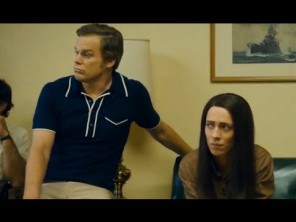 made of the fact that she (played by Rebecca Hall) was 30 and horrified of it, still a boyfriendless, childless virgin. I’m sort of offended on behalf of women everywhere that this is seen by anyone as the reason for her suicide. She was a troubled woman who’d struggled with depression and had left a job and life behind elsewhere in order to ‘rebuild.’ But this new place wasn’t going much better. A year in, she pined for the news anchor (Michael C. Hall) yet pushed him away when he got near. She yearned to do important investigative reporting but the station manager insisted on a “if it bleeds, it leads” policy. She couldn’t get promoted and wasn’t being taken seriously. She lived with her mother, sometimes happily, sometimes not.
Her on-air personality was quite cheerful but she was much more socially awkward in real life. Hall portrays her as troubled and disappointed, but not depressed beyond repair. So when the suicide comes, as you know it inevitably will, it still caught me off guard. Certainly we’d need to see her mental state unravel far more before this point arrives? I was shocked by it, and am not sure if the director, Antonio Campos, is trying to tell us that perhaps she wasn’t truly suicidal, or if the story was just lacking. I can’t rule 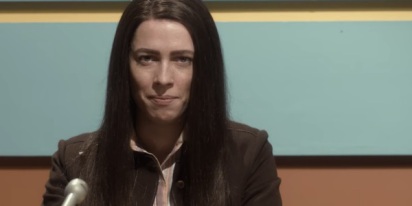 out the former since I’ve always found the circumstance of her death a little fishy. Before she put the gun to her head, she read out a brief statement, basically accusing the station of pushing her to do this drastic, bloody thing. She’d also prepared a statement for a colleague to read out afterward, though none did. In that, she described her actions as a “suicide attempt” and reported that she’d been taken to hospital alive but in serious condition. Had she not planned or wanted her suicide to be “successful”? We’ll never know.
The film has a yellowed look to it, no doubt added afterward to achieve a vintage feel authentic to a 1970s era. It’s also well-acted by both Halls (no relation), with Rebecca Hall adopting a lower and more formulated voice, and Michael C. Hall slipping into a shiny-haired broadcaster’s charm. Although I don’t feel like the film offers us a complete (or at least a true) look at her life, the convincing and often gripping performances make Christine worthwhile.
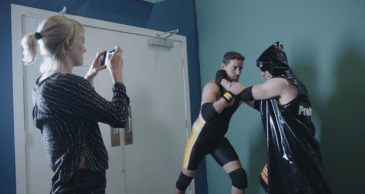 friend Lawrence gamely tags along. They take vacation time from work in order to work out at a wrestling school to learn the moves, and to develop characters. Old home video of James proves that wrestling has indeed been a life-long obsession of his. It also proves that he should be embarrassed about this, but he isn’t, not even when the costumes arrive and PVC is the material of choice.
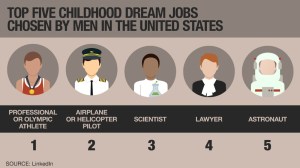 encountered, stayed damp constantly from the merest of hand-washings, and developed a distinct, pervasive smell. A smell that I LOVED. So obviously to work in a Bandaid factory and be surrounded by these miraculous little sympathy-earners all day long would be a dream come true. One of my sisters dreamed of becoming a berry picker, another of being a gas pumper, and another aspired to become a member of Barbie’s band (sure they were cartoon fictional characters, but why not dream big?). I have no idea how we all turned out to be educated, gainfully employed adults, but it has a little something to do with letting go of our foolish childhood dreams, I’m guessing.
 Their love story unfolds slowly, as it must when one person is physically removed from the other. In the novel they communicate by text or instant messaging. To make that play a little less boring on screen, director Stella Meghie imagines them within the architectural models that Maddy’s always working on. It’s a device that works while still reminding us that these conversations don’t actually take place in a face-to-face reality. Still, it’s a talk-heavy, plot-light movie that doesn’t move around too much. If you aren’t swooning over Olly’s too-long-locks, you’re probably going to find this long.
 things. Amandla Stenberg is very charming as Maddy, the brave, beautiful, but socially awkward girl next door trapped in a glass castle. She succumbs to the kind of romantic gestures no teenage boy would be caught doing and only a young-adult novelist could dream up. There’s some major eye-rolling to be had in this movie, and it starts rather early, when Olly first appears in his driveway, tossing his luscious locks in the unfiltered sunlight, shooting his pretty neighbour a cocksure grin while showing off on his skateboard. I was so sure he was about to eat it, and truthfully hoping he would, that it set a really weird tone to the movie for me. I guess my lusty teenage days are too far behind me. Your enjoyment of this movie will depend on the calculation between yourself and your own misspent youth.
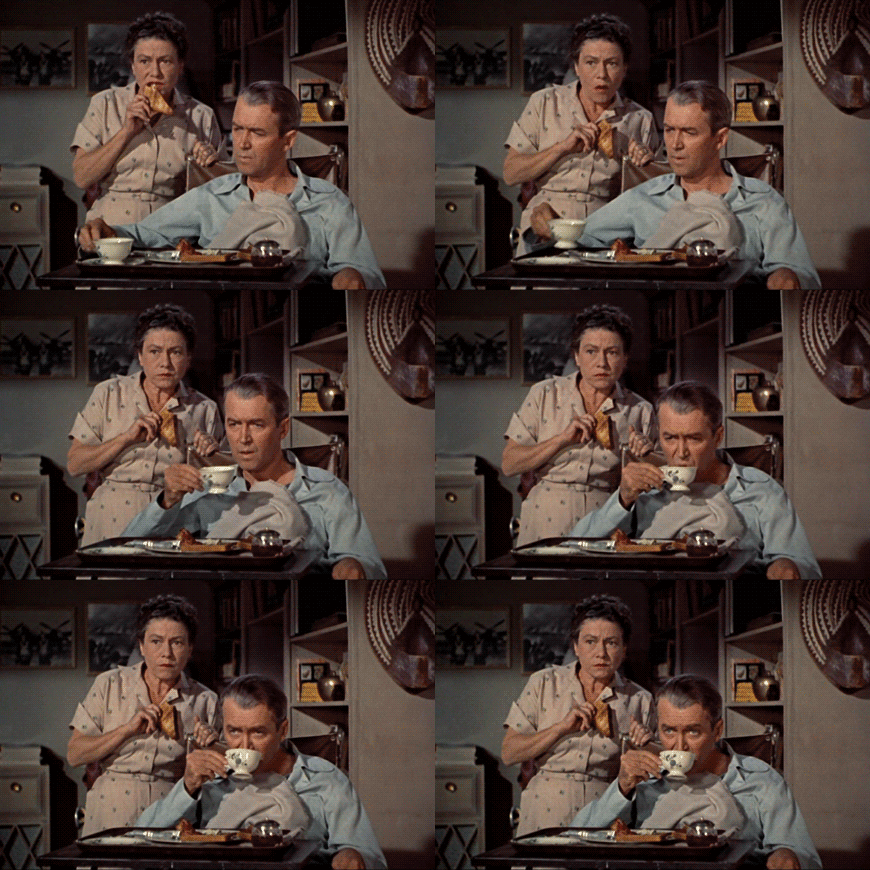 everyone’s got their windows open and their business on display. It’s a lesson in voyeurism that probably also comments upon the movie going experience, our own gaze from within a darkened theatre into the secret lives of others. “We’ve become a nation of peeping toms,” complains Stella (Thelma Ritter), Jeff’s nurse, and she’s not wrong. But immobilized in a wheel chair, Jeff is spellbound by the people across the courtyard, and becomes convinced that one of them has committed murder. Soon the skeptical nurse gets pulled into his nonsense as well, as does Stewart’s love interest Lisa, played by Grace Kelly.
 the perspective is just right. The set’s buildings consisted of 31 apartments wired for electricity and plumbed for water; a dozen of them were completely furnished. Georgine Darcy, who played Miss Toros (the dancer), lived in the apartment all day long, resting there between takes as if it were really her home. There were 1000 large lights and 1000 smaller ones to simulate sunlight; once it got so hot on set that it set off the sprinklers. Hitchcock directed the whole thing from Jeff’s apartment. The actors in the building across the courtyard wore flesh-coloured ear pieces and took direction that way.
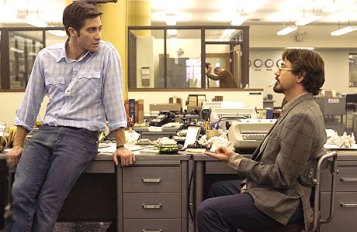 communities but evading police and justice to this day. The Zodiac Killer had held a dimming spot in our collective conscious for years when David Fincher got his hands on the material (a new book on the case by Robert Graysmith was the inspiration, though not terribly well-written) and turned a tired story into something that could take your breath away.
 Murderer, OJ: Made in America), 10 years ago it was unknown. Maybe it was Fincher who invented it. He definitely perfected it, and without an entire season’s worth of episodes to devote to his subject, he imbues each scene with loads of meaning, making each one impactful and riveting. Maybe not as riveting as Wild Hogs, that atrocious piece of shit starring Tim Allen, John Travolta and Martin Lawrence (it opened the same weekend and beat Zodiac by about 30 million dollars), but in the past decade, it has impressed nearly everyone who’s sought it out. The cast is splendid, the script smart, the direction thoughtful and meaningful. But it did not win the Oscar. Know why? BECAUSE IT WASN’T EVEN NOMINATED!
 movies that mix fantasy and historical.” Sean let out a breath. “You’re going to hate this.” He was right. I kind of knew it too. But as soon as I’d said those words, I realized they were too general. I can’t think of anything off the top of my head, but I’m certain there are plenty of movies who get it right. I know I was thinking of
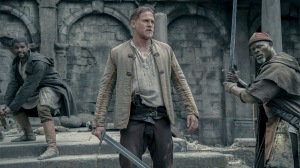
  knows that only his nephew will be able to handle it, so he rounds up all the age-appropriate young men in the kingdom and eventually Arthur (Charlie Hunnam) is revealed. And then it’s game ON. Arthur isn’t really motivated to do battle with his ruthless uncle, but a beautiful mage (Astrid Berges-Frisbey) persuades him that it must be so.
 As someone who grew up in Ontario (mostly) and now lives in Quebec, I can say with authority that Bon Cop, Bad Cop is a fantastic send up of the occasionally pained relationship between the two provinces. There’s a lot of history and a lot of angst to be found in that relationship, and somehow we now seem more distant from each other than do the English and French, whose historic animus is the basis for our long-standing conflict.
 cheap booze. Between men they live out of their piece of shit car. They have almost nothing going for them but Rita makes keeping Ruthie out of child services her top priority, and so far, she’s always succeeded.
 who will strike you as half bumbling fool, half savant. His partner Fleur (Natasha Lyonne) is more interested in getting laid and his superior (Amy Sedaris, playing delightfully against type) is a stranger case still. Not to mention the fact that Handsome is in charge of “detective school,” training up the new recruits, not all of whom are destined to become ace detectives. So he’s got his hands full when a decapitated body is found on the manicured lawns of a minor celebrity (Steven Weber), splayed out in the shape of a Star of David. Handsome tracks down all of the dead girl’s known associates, including his own beautiful new neighbour, in order to crack the case.
 ASSHOLES WATCHING MOVIES