Passengers

passengersImagine being stranded on a deserted island. Would you wish for company, even though you knew that that person would then be stranded too? What if you discovered that you had the power to make that dream come true?

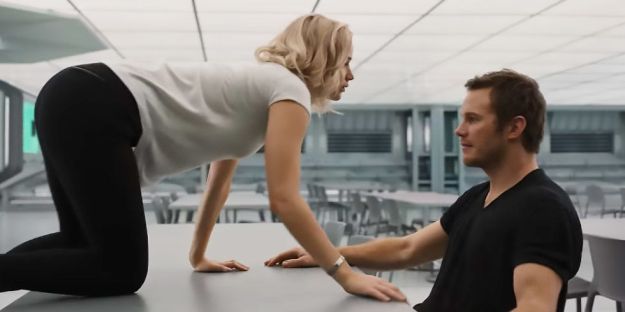
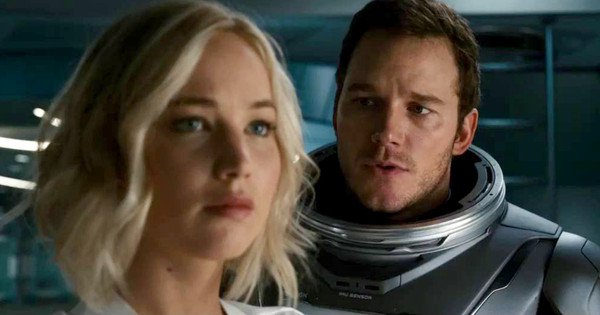
Jim (Chris Pratt) faces a futuristic version of this very dilemma in Passengers, director Morten Tyldum’s follow-up to The Imitation Game. Jim, along with 5,000 others, has chosen to leave his life on Earth to start fresh by colonizing a distant planet. When his hibernation pod malfunctions, Jim finds that he has somehow woken up 90 years before the ship is scheduled to reach its destination. Meaning that he will almost certainly die of old age long before he’ll get the chance to even speak to another person.

passengers-2

The loneliness is palpable but becomes downright excruciating once he discovers that he’s figured out how to wake another passenger. One sleeping beauty in particular has caught his eye. Aurora (Jennifer Lawrence), as Jim discovers through extensive research of the ship’s files, is smart, pretty, and funny and seems like the perfect companion for this 90 year voyage.

It’s quite an interesting predicament. What if Tom Hanks had gotten so lonely in Cast Away that he was able to magically sentence Helen Hunt to life on the island with him? Or if James Franco had been able to trap his buddy Seth Rogen under that rock so that he would have some company? Obviously, it’s a pretty shitty thing to do to someone and Jim knows it. He doesn’t take the decision lightly and it’s a tribute to Pratt’s talent that we can feel his struggle enough to forgive him.

Passengers begins to unravel though once Aurora wakes up. A brief meditation on what isolation can do to a person quickly becomes a typical romantic comedy with an atypical setting. Boy meets girl based on a lie. Everything seems to be going great until girl discovers lie. Girl makes up with boy. If you think the fact that Jim’s deception is somewhat more serious than a How to Lose a Guy in 10 Days article (“He murdered me,” as Aurora puts it) would alter this formula in any way, unfortunately you’d be disappointed.

passengers-3

It’s also worth commenting that Jim chooses Aurora for her looks and charm. Yes, she’s actually quite bright but she’s a journalist. Out of 5,000 passengers, you’d think he could have found someone more qualified to help maintain a spaceship for 90 years and maybe even help him figure out how to get back to sleep. She’s clever and tough but still pretty useless once the ship starts to fall apart and Jim the mechanic needs to figure out how to save her and everyone else on board, thus winning back her heart. The cop-out is downright insulting.  Besides, as cinema, watching someone fix a broken spaceship is neither as suspenseful or exciting as you might think.

What many critics panning Passengers won’t tell you is that the first 20-30 minutes are actually quite gripping. From there on it’s pretty much as bad as they say.

Nocturnal Animals

As the film opens, Susan (Amy Adams) feels guilty for not being happy, despite having ‘everything’ – Armie Hammer plays her current husband, but apparently they were maybe never truly supposed to be together.

A successful art gallery owner, Susan’s home is perfectly styled, filled with lacquered objets, 18nocturnal1-master768-v2beautiful things, much like herself, impeccably dressed, heavily made up. Her “bare” (movie bare, of course) face comes as a shock when she curls into bed to read a manuscript that has arrived that earlier that day, a surprise from the ex-husband she hasn’t heard from in 20 years.

She’s immediately engrossed in the story, which we see recreated as a movie within a movie. Jake Gyllenhaal and Isla Fisher play two halves of a couple travelling down a remote road at night. Aaron Taylor-Johnson plays a sinister man threatening them. It’s immediately tense. Disturbing. Distraught, Susan slams the book shut.

But that’s not the end, is it? No, she keeps going. And things get darker, and trickier. Director Tom Ford pulls a nasty trick on us: in casting Isla Fisher, he is intentionally making her a very easy substitute for Amy Adams (Isla Fisher once sent Christmas cards to friends and family with Amy Adams photo-shopped in her place, and no one noticed). But we’re not the only ones to notice the similarities: Susan starts to feel a little unsettled too.

This is only Tom Ford’s second film; I was blown away by his first effort, A Single Man. He has a distinctive style, he’s incredibly visual, but the story in A Single Man held up. More than that: it crawled right into my soul and crushed it, just a tiny bit. Colin Firth was robbed when he didn’t maxresdefault-6win an Oscar for it (well, he lost to Jeff Bridges for Crazy Heart, and that was certainly deserved as well; luckily Firth one the very next year for The King’s Speech). You may know that Tom Ford is a fashion designer, but that’s clearly not the only trick up his sleeve. His direction is not a gimmick (it likely helps that he leaves the costuming to someone else, and that no Tom Ford suits appear in the film). Maybe it’s little more style than substance, but it’s not without substance, or merit, or worth. Nocturnal Animals is dark and moody and horrible. It is sometimes graphic, and psychologically tortured, and stunning.

It’s the kind of movie that will haunt you for days. There are lots of performances worth talking about: Amy Adams, and the sadness she can convey in her downturned eyes; Jake Gyllenhaal’s fire, and his anguish. Aaron Taylor-Johnson was nominated for a Golden Globe for his supporting skeevy work here, but I think it’s Michael Shannon who maybe deserved the nomination, mustache and all. Can this man do any wrong? Oh wait

Most people bill Nocturnal Animals as a work of revenge, but I feel it’s more about regret. I suppose your interpretation may rest on the ending, which is intentionally vague, but I believe an indictment on Susan’s character. What did you think?


La La Land: Discussion

If you’re looking for a spoiler-free review of the film, please check it out over here. I wrote it all the way back in September, fresh from seeing it at TIFF, and I’ve been waiting all this bloody time just to talk about what for me is the best film of the year. I was absolutely giddy for this movie, how it made me feel, how it made me think, how it whisked me away into something both surreal and familiar. We exited the theatre from La La Land and rushed on to the next (I think it must have been Lion) but between the two, I wept. I wept for heartbreak, and for beauty, because La La Land  is brimming with both.

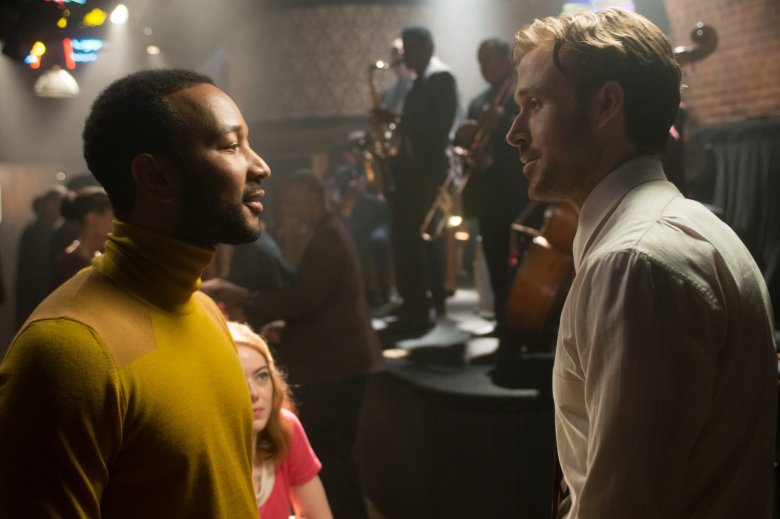
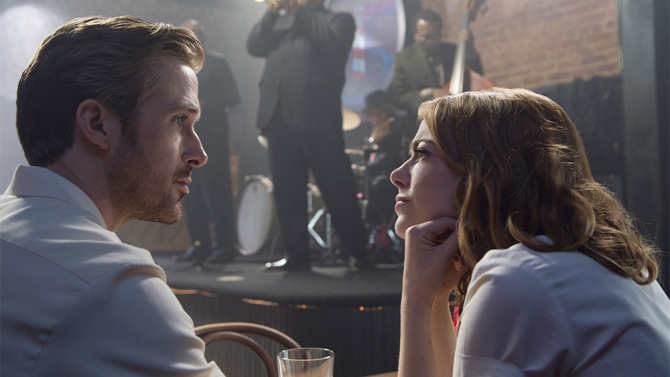
If you’ve kept reading, then you know by now that La La Land, for all of its romance, does not have a traditionally happy ending. But are the characters unhappy? Mia and Seb separate in part because their ambitions overshadow their love. Was this the right move? Do they have regrets? Certainly they’ve both gone on to achieve the success they so coveted. Mia is married, la-la-land-1with children. When she sits in Seb’s club at the end, we are treated to an alternate version of events in which they manage to stay together. Do they wish that this was so? Do they still love each other? Have they moved on?

One of Chazelle’s unspoken themes must be “Is it worth it?” – is it?

During their courtship, the movie takes cliches about love and makes them true: love lifts them, they dance on air, they sing from rooftops. Did this feel organic to you in the movie? I often felt that when things felt intense to them, they broke out into song as a metaphor for feelings that are too fervent to verbalize. When words fail, they’d sing, or dance, which is often the way we feel in our excited little hearts when we’re first falling in love (reminds me of a certain scene in 500 Day of Summer).

Sean noticed that when the relationship got rocky, the movie got a little more ordinary, and frankly, a little repetitive. The songs are reused. But in time he felt like that was sort of the point: that the newness and wonder of the relationship had worn off, that they were beyond the first crush and settling into patterns and habits and less passion. The film itself reflects it. Did you find new meaning in songs as they were revisited? During the second half of the film, during the relationship’s demise, there is noticeably less music, which means less joy, less intensity. Their world goes a little drab when the shine has worn off. Did you miss the music when it was gone? Certainly when it returns in that final scene, it’s a heart breaker.

Originally Chazelle imagined that Miles Teller and Emma Watson would fulfill the lead roles. I can’t picture Teller ever being right for the part. Watson left the project so she could do another musical, Beauty and the Beast. Ryan Gosling ended up turning down the opportunity to play the Beast so he could do this instead, with frequent collaborator, Emma Stone. Chazelle has stated they were hired together intentionally, because they’re a modern-day version of an old-Hollywood couple, frequently working together and already having an established chemistry. Do you think anyone else could have pulled off these roles? Do you think either of them has a legit chance at an Oscar?

Seb states that jazz has to be experienced. He’s disgusted by people who use it as ‘background music.’ It’s a special language that he teaches her and she comes to appreciate. He takes full advantage in the final scene, telling her he still loves her using only his music, and he plays so passionately that she can see how he wishes things had been different. However, there’s an interesting part in the movie, the “sellout” phase where Seb is playing jazz in the background during a scene. Is this where it all went downhill? What would you say was their final straw?

Chazelle has deliberately taken this musical off the backlots and grounded it in modern-day Los Angeles. The opening number helps set the tone. This is the world in which they live, but both are outsiders amongst that set. At the end of the number, Gosling gives Stone the finger before driving off. The offramp used in this number is the same one they used in Speed, where they had to jump the gap. Lots of real locations were used in the film – even Seb’s apartment is an actual apartment, not a set. Let’s not forget that the movie isn’t called Mia or Seb, it’s called La La Land: the city is also a character. City of stars, city of dreams. Did the locations help give the movie a sense of reality to you?

The one criticism I’ve heard of this movie is that it never addresses the true roots of jazz: does La La Land “whitesplain” jazz? Is it racist in its portrayal? Did Damien Chazelle fail us by casting white actors in a movie about jazz? Then I wondered – wouldn’t Whiplash have faced the same controversy? It’s another movie about jazz starring two white dudes, but I don’t recall hearing any hooplah over it [turns out the criticism was there all along]. Of course it’s not for me to say, but I can understand how it might sting a little to have an art form that was “invented” by African-Americans, music by Black people for Black people, be told by white people. Not to say that jazz belongs to any one people, but if these are the only stories being told about jazz, then maybe the stories belong to the people who truly wrote them. And it does feel regressive in 2016 to see a white man play jazz, and a white woman dance to it, while people of colour make up the blurry background characters surrounding them, out of focus, besides the point. What do you think – is there cultural misappropriation going on here? Is Ryan Gosling a “white man saviour” in his quest to save jazz?

Mia and her friends are resplendent in primary colours because they’re young, and they dream in technicolour. She’s dressed in emerald, saphire, yellow. At the end of the movie though, she’s wearing white. She’s supposedly made her dreams come true, but she’s leached of colour. What’s that about?

Top 10 for 2016

As we say goodbye to 2016, Assholes are asking what’s the best thing you saw this year? And more hilarious for us, what was the worst? Happy new year to all of you, and a special thanks to all of you who stop by and leave comments. They are the oxygen of this site.


thumbnail_2508910. Peter And The Farm: I saw a lot of terrific documentaries this year. For the Love of Spock, Gleason, and Life, Animated all come to mind. But the one that never left my mind, not for a minute since I saw it, was Peter And The Farm. It’s unflinching and disturbing.

9. Hell or High Water: The best thing about this movie is that it sneaks up on you. It’s not flashy. It just builds. The writing is good and it earns every minute of screen time.

8. Jackie: Natalie Portman is spot-on in this film, but what I really enjoyed is seeing very familiar events, events we are so hyper-aware of they’re part of our collective conscience, be re-told from her perspective. And suddenly it’s fresh and eye-opening, yet still mysterious in the way only Jackie could be.

7. Arrival: A sci-fi movie that’s cerebral and genre-defying is exactly what I needed without even knowing it. The set-up is very precise and thoughtful, so even if you see the twist coming, it still unravels quite elegantly. Amy Adams is sublime.

6. Hunt For The Wilderpeople: Funny as fuck.

5. Manchester By The Sea: It’s a tough watch, and not exactly a ‘rewarding’ one but it takes a lot of courage to deviate from the ending we want and expect and instead go towards what’s real and honest, even if it leaves us feeling hollow.

4. Moonlight: Haunting in its portrayal of a perspective that feels at once unique, and universal. The film is well-crafted, the character unforgettable, the acting note-worthy across the board. Disarming, graceful, truthful.

3. Swiss Army Man: This movie just made my heart sing. It’s offbeat and original. It’s also maybe a little inconsistent, but the highs were so damn high I can forgive it nearly anything.07bluejay-master768

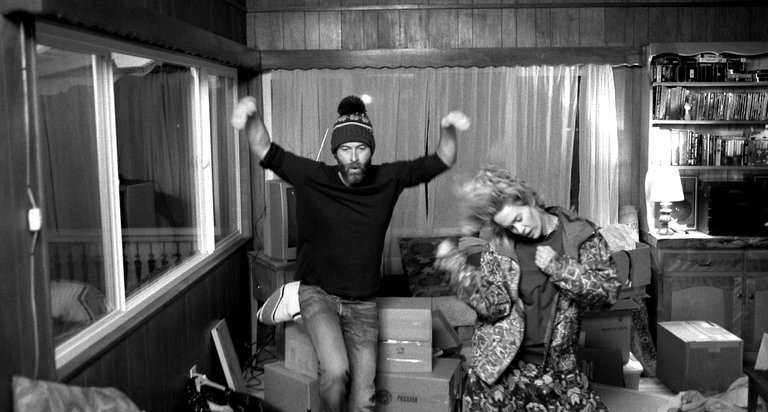
2. Blue Jay: Gutting. Superbly acted. Blew me away.

1. La La Land: the magic of this movie is almost indescribable. Stylish, joyful, smart, and above all, bittersweet.


For further reading, please check out the top 10 lists of our friends: Steve, Vern, Keith, Niall, Parrot, Becky, Sarah, 2 Eyes, Wendell, Caz, Brian, Tom, another Keith, Liam, Wilson , Mel, Paul, Lolo ….if we missed you, add your link in the comments!

Kate Plays Christine

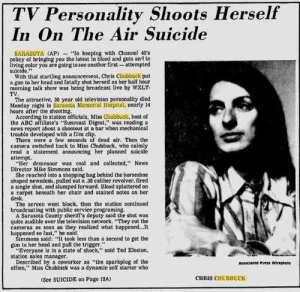
Christine Chubbuck was a newswoman in Sarasota, Florida in 1974. Originally hired as a reporter, she was writing and hosting her own community affairs talk show, called Suncoast Digest. She took her position seriously and sought out important local officials to discuss the community. On the morning of July 15th, Christine changed things up. As her guest waited in the wings, she sat behind the news anchor desk to read aloud a statement to her live audience. It read:

“In keeping with Channel 40’s policy of bringing you the latest in ‘blood and guts’, and in living color, you are going to see another first—attempted suicide.”

She pulled out a revolver, placed it behind her right ear, and pulled the trigger. Her hair puffed up, as if from a gust of wind, and blood spattered everywhere. Chubbuck fell forward, hitting the desk with a resounding thud, and then slipped slowly out of sight. The show’s technical director went immediately to black, but the damage was done: anyone tuning in had just seen a suicide live on TV.

christine-chubbuckShe had been depressed and spoke about suicidal feelings with her family, but never mentioned specific plans. Her mother thought her personal life was “not enough” and a recently removed ovary put pressure on Christine to find a man before it was too late and the door on her fertility closed forever.

On the bloodied desk, after Christine had been removed to hospital, was a hand-written, third-person account of her suicide, which she’d written for someone to read out as a statement. The article, written long-hand by herself, listed her condition as “critical” which makes me flinch. The prepared speech that she read out referred to the suicide as an attempted suicide. The statement lists her not as dead, but as critically wounded. Was this just an elaborate call for attention that she had every intention of surviving?

This movie is not a documentary, or at least not a straight-up one (docudrama, anyone?) and it’s the second of two films about this event that hit film festivals this year. The first, simply titled Christine, stars Rebecca Hall as Christine and Michael C. Hall as George Peter Ryan, a colleague of hers that she may have had an unrequited crush on but who was already in a relationship with Christine closest work colleague, the station’s sports reporter. This film, however, is not a straight-forward narrative. Instead, it’s more about actress Kate Lyn Sheil preparing to play the role of Christine.

Kate seems fairly genuine in her intention to portray Christine with empathy, and to not “fetishize the crazy woman” as she puts it.

The footage of Christine’s suicide has never been seen again. Lots of theories exist on where exactly this footage ended up, but it seems that the station owner Robert Nelson kept it, but removed it from the station. It seems now that his widow has passed it along to a law firm for safekeeping. No word on why it has never been destroyed. In preparing 000068-19843-16580_kateplayschristine_still1_katelynsheil_byseanpricewilliams_-_h_2016for the role, Kate finds it nearly impossible to access any footage at all, even of the many hours in which Christine was just the normal host of a daytime talk show on local television. Christine Chubbuck has vanished. Until these movies put her into the public’s consciousness again, her death (and life) was all but forgotten.

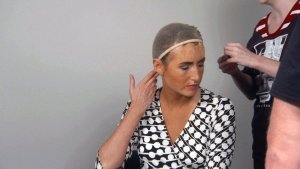
Early on in the film, Kate muses as to whether acting is compulsive, whether the impulse to act is perhaps unhealthy for her. As the film progresses and she interviews subjects increasingly on the periphery of events, she does seem obsessive in her pursuit. But for me, it feels like this movie never becomes any one thing. It blurs all the lines but never really takes a stand. It’s a deliberately frustrating experience for the audience. When we do see random snippets from this questionable movie that they’re supposedly making, they seem disjointed and random. Were they ever really making a movie? Those parts are the least convincing in a not-very-convincing film. But watching Kate get spray-tanned and shop for thrift-store stuffed animals that Christine might have had in her own bedroom…it’s just not very edifying. I think there’s supposed to be something in here about the nature of truth, but it’s not sitting right with me. Maybe it’s because that in some disturbing way, the director is making me complicit in the society of “gawkers” which the film claims to be skewering.

Anyway, there’s a lot of navel-gazing here, so much so that this feels like a self-indulgent performance piece more than an actual movie, and the more I watch, the more I question the motives of the people making it.


The Art of the Steal

Crunch and Nicky Calhoun are conman brothers, part of a merry little gang who steals art. Crunch (Kurt Russell) gets double-crossed by his own brother (Matt Dillon) when a heist goes wrong and winds up spending 7 years in a Romanian prison where he learns that trust, not cash, is the ultimate currency. When he gets out, he lives a semi-legit life with a new wife, a new sidekick (Jay Baruchel), and a second-rate motorcycle-daredevil career.

hero_artofthesteal-2014-1But then Nicky comes calling. One last heist, he says (is there really such a thing?). And since Crunch is so low on funds, they assemble the old gang and pursue a tricky art swap, even with Interpol (Terence Stamp) breathing down their necks.

I found this movie recently added to Netflix, but not very generously reviewed. I gave it a chance because: Kurt Russell. He’s kind of a badass. And Jay Baruchel, who I have enormous love for. And you know what? It’s not a bad movie. It’s not overly great either, it’s just an easy-watch heist movie that borrows a little to heavily from better movies. But the cast is extremely watchable, and the writing’s not bad, it’s just formulaic. So if you have no time to waste, skip it. But if you like the genre, I think you’ll get along just fine with the film.

Bonus for Canadians: much of the film is not just filmed in Canada but takes place ADMITTEDLY in Canada, and stars a whole bunch of Canadians, aside from Baruchel, including Katheryn Winnick, Niagara Falls, Kenneth Walsh, Chris Diamantopoulous, Quebec City, Jason Jones, Devon Bostick, Tim Hortons, and piles of fluffy home-grown snow.

Debbie Reynolds

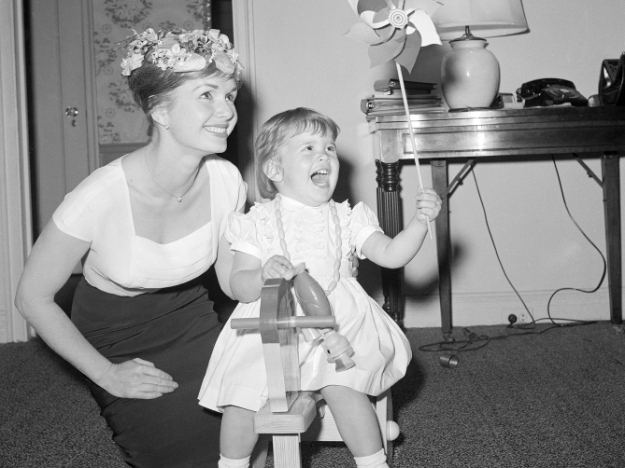
Just one day after the death of her daughter, Carrie Fisher, Debbie Reynolds succumbed as well. It sounds like the official cause of death will read stroke, but the truth is likely closer to a broken heart.

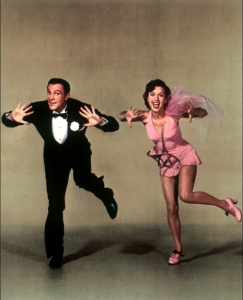
I knew Debbie Reynolds before I knew her daughter. Fisher gained stardom in a galaxy far, 002-singin-in-the-rain-theredlistfar away from the household I grew up in, but my love for Singin In The Rain is nearly timeless. She was just 19 when she saw the soaring success of that movie, but she followed it up with many other notable roles, including in movies such as Bundle of Joy, The Catered Affair, How The West Was Won, The Unsinkable Molly Brown, Mother, and In & Out. She was also on Broadway, in cabaret, and reached a whole new generation through her work on television (Will & Grace, Halloweentown).

Debbie and Carrie infamously had a rocky relationship, some of which was portrayed in Carrie Fisher’s book\script Postcards From The Edge. Needing to find her own identity, Fisher sought distance from her famous mother’s shadow and the two were estranged for a decade, while Fisher dealt with addictions and mental illness.

The pair have since reconciled, and were never more closely bonded than they were before their deaths. During a sitdown with Oprah a few years ago, Reynolds said: “I would say that Carrie and I have finally found happiness. I admire her strength and survival. I admire that she is alive, that she has chosen to make it. It would have been easy to give up and give in and to keep doing drugs. I always feel, as a mother does, that I protect her. I want happiness for my daughter — I want Carrie to be happy.”

Carrie responded: “What I say about being happy is that I am ‘also happy.’ I’m happy among other things. Happy is one of the many feelings or experiences that I will have throughout a day. I think happy has been sort of made into this Hallmark card of a word, and I don’t know what that means. So I will just say that I enjoy my life, I make choices, I do what I want to do. I am a strong person, I’m not afraid of almost anything, and that’s a lot because of your example.”

We weren’t ready to lose either one of them, but wherever they are, at least they’re together.

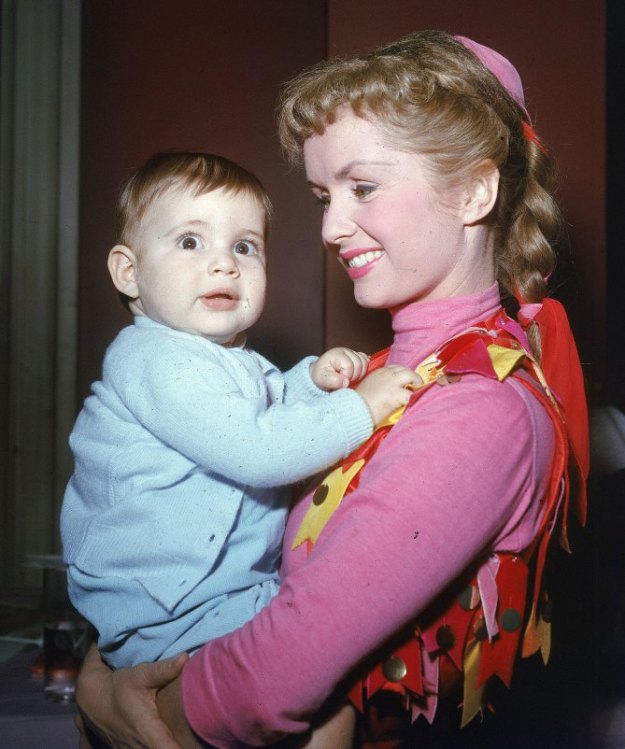
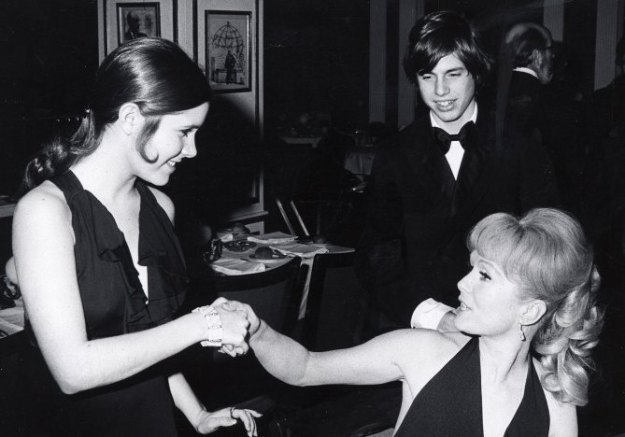
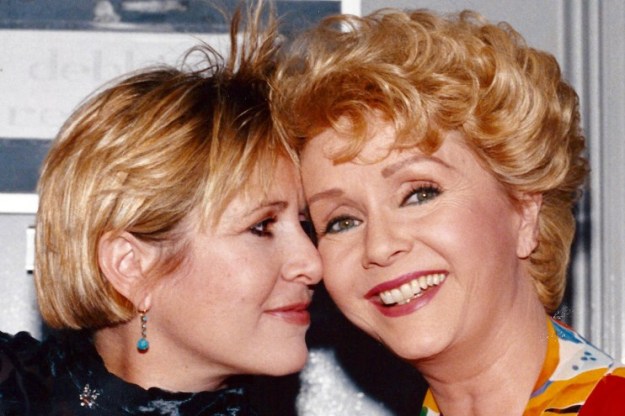
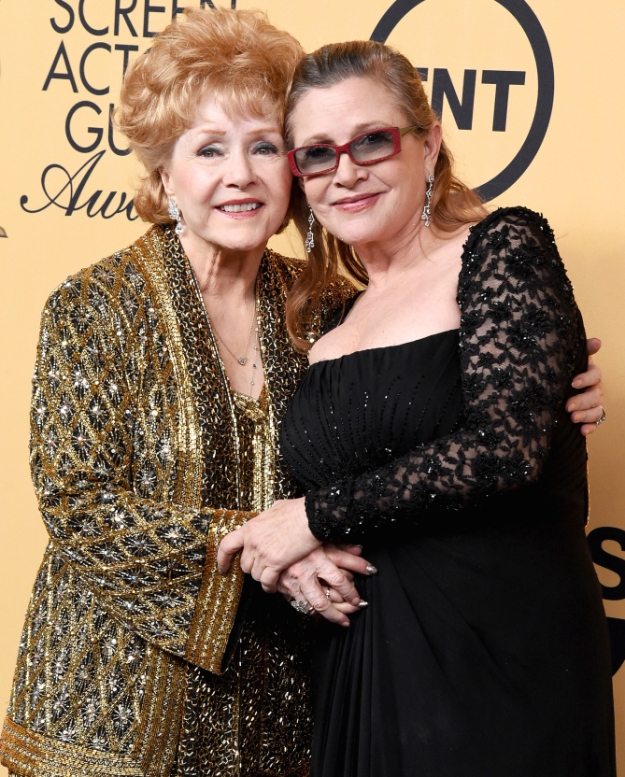
Debbie And Carrie

carrie-fisher-12

Opening of "Irene" - March 13, 1973

debbie-reynolds-16

21st Annual Screen Actors Guild Awards - Press Room


Toni Erdmann

Ines Conradi is a successful businesswoman currently stationed in Bucharest but poised for promotion and transfer to Singapore when this next deal goes well. Winfried Conradi is her father, a lonely man, socially handicapped and prone to the dumbest, most trying “pranks” on the planet. There is no such person as Toni Erdmann. Toni Erdmann is just what Winfriend calls himself when he’s wearing ludicrous false teeth and an even worse wig, which is his go-to costume for “pranking.” His pranks, by the way, consist mainly of toni-erdmann-5-rcm0x1920ujust showing up and being this weird alternate personality. He more or less stalks his daughter and endangers her career by showing up at her office and various work functions. If he was your father, you’d either die of embarrassment, or you’d kill him. No two people should survive a relationship like this.

Nothing happens in Toni Erdmann. It’s dull as shit. It’s 2h40min of fumbling through “comedy” that didn’t even induce me to crack a half-smile. What am I missing? This film has been a hit at festivals, including Cannes and TIFF, and was just nominated for a Golden Globe (best foreign film). But I didn’t get it. Sure Ines needed some unbuttoning, poor corporate stick i the mud that she’d become, but I don’t see the humour in a father constantly humiliating his daughter. I didn’t get the public nudity, or the unironic belting out of a Whitney Houston song. The whole thing missed me completely. What the father accomplishes, to my eyes, is not the unburdening of his daughter but rather her undoing – some of her choices seem unhinged and nervous-breakdownish, especially since they’re so often done at work or in front of colleagues. And it feels anti-feminist to say that because this woman is business-minded she’s also cold and in need of saving.

Toni Erdmann was agony for me, maybe more so because I’d actually been looking forward to it. But it was a chore, one that felt interminable for a time, a long time, a period of time that felt even longer than the nearly-three hour runtime.


Manchester By The Sea: Discussion

If you’re looking for a spoiler-free review of the film, please see Matt’s excellent offering. I don’t want to ruin the movie for anyone, but if you’ve seen the film, then you understand the need to discuss it. It’s deeply affecting and disturbing and it’s one of the best things I’ve seen this year.

When Lee’s brother dies, the reclusive janitor reluctantly returns to his hometown to help out with the arrangements. He’s kept there longer than expected when he’s revealed to be his nephew’s new guardian.

Casey Affleck stars as Lee, a spook more than a man, a ghost still barely among the living, haunted by his past, carrying a huge burden of guilt, grief, and regret that we can almost physically see sitting atop his slumped shoulders. His performance is really restrained, as befits an emotionally blunted character. He manages to be subtle and to find lots of power in quiet moments. His performance will almost certainly be rewarded with an Oscar nomination, if not a win. What do you think his chances are? Did you see anyone out-act him this year? And what part do you think the allegations of sexual harassment against him will play in whether or not he wins?

Lee has a new life in a new town, though it’s pretty clearly only a half-life at best, given his physical and emotional isolation. During his questioning by the police, it’s clear that Lee feels he should be punished, and directly after he tries to take his own life. While clearly still trying to punish himself, do you think Lee is still suicidal?  When he tells Patrick “I can’t beat this thing” – is he talking about depression, guilt, grief? His reputation? Or something else?

I thought the movie started off pretty slow, but looking back on it with context, I wonder if the lethargy was deliberately representative of Lee’s depression. The movie never says the D-word, but certainly exhibits all the Hallmarks: violent outbursts, hopelessness, emptiness, the inability to enjoy life or take pleasure from thinks you used to enjoy, pushing people away.

The idea for the story didn’t originate with writer-director Kenneth Lonergan: in fact, it was Matt Damon and John Krasinski who came to him with the idea and asked him to develop the script. Damon would star and direct. But conflicts with The Martian prohibited him from doing so, and they turned control of the movie over to Lonergan. Do you think Lonergan stands a chance for best screenplay, or for that matter, best director?

The script is often praised for its “masculinity” which rubs me the wrong way. I don’t think Lee’s refusal to deal with anything should be lauded in any way, and his continued self-torture isn’t exactly gender specific. But the story is told in a refreshingly sparse sort of way, where the lead character speaks only under duress, and as a little as possible. And so much is implied rather than spoken outright: the unspeakable things his ex wife said to him, the town’s rejection of him, his own struggle with addiction, his attachment to pain,  his father’s death, the legal proceedings\media scrutiny that must have surrounded his case. Was there anything you felt the film missed? Any glaring holes you needed to see filled?

Some people felt the score was sufficiently bad to pull them out of some of the movie’s most impactful scenes (the house fire, in particular). Did you notice the score being good, bad, or ugly? Were there any stand-out supporting performances for you? Did you think the nephew, Patrick, was a realistic character? He really showcases the dark humour of the film, but sometimes I thought it odd how adult he seemed for a 15 year old.

We see Patrick trying to reconnect with his mother, who seems to have sobered up and carved out some sort of life with her new conservative Christian husband. But she’s not stable. She can’t handle things not going well. What purpose do you think this subplot served? Was it jarring or distracting for you to have Matthew Broderick in the role of her husband? Did you feel sympathy for the mother?

In the scene where Patrick’s girlfriend’s Mom comes out to Lee’s car to invite him for dinner and he says no, she responds that if he changes his mind in the next 10 minutes, “we’ll all be here”. The night of the fire, Lee remembered about the fireplace grate 10 minutes into his walk. He could have changed his mind, gone home, and his wife and kids would have all still been there. But he didn’t, and that scene is such a brutal reminder. What scene was the most emotionally engaging for you?

I think when Joe makes Lee the guardian, Joe is telling him: “You’re a good dad. I trust you with my kid. It’s not your fault.” And Lee can’t handle that. It’s too much like being absolved, and Lee cannot stand to be forgiven. In some ways, the guilt might be his only connection to his girls, and he’s unwilling to give it up. He doesn’t believe he deserves a second chance. Do you think there’s any hope for Lee?

Lee’s common refrain, uttered when things get too intense, is “Can we talk about this later?” only there is no later. We never see Lee deal openly with his emotions. He never lets us in. The audience is denied closure: how well has this film sat with you? Were you able to connect with a character who is so detached?
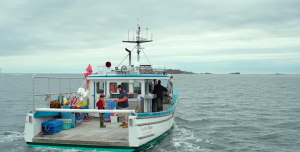
manchester-by-the-sea-boatI noticed that in flash back scenes with the 3 Chandler men aboard the boat, there was a big white pole stretched across the back of the craft, but in more recent scenes where just Lee and Patrick take to open waters, the pole is noticeably absent. Do you think this loss of a safety net is symbolic of anything else?

I felt like the film really addressed the ways in which we can judge parents. Clearly the town blames Lee for the accident that took the lives of his children. This is hammered home when he has a close call making dinner – he passes out and wakes up to an angry fire alarm. Some may see this as further evidence of his negligence, but who among us hasn’t made a similar mistake? Either way, it seems to be a catalyst for him giving up guardianship. Maybe it’s that his own self-doubt will never abate. One mistake proved fatal to his young family, and it’s clear that society has judged him harshly for it, perhaps because it makes us feel more insulated from our own mistakes. What really slapped me in the face though was when Lee is trying to make awkward conversation with Patrick’s girlfriend’s mother. I think she knows what is most likely going on in her daughter’s bedroom and she says something like “At least we know where they are.” Lee, however, knows damn well that kids are not necessarily safer in their own homes. No wonder he couldn’t get the conversation back on track. Even the most banal things paralyze him with fear. Remember how he overreacts when his nephew tries to exit the truck at the hospital when Lee thought he was meant to drive off? He admits that he just “gets scared” and his mind immediately goes to the worst possible scenario. In part, parenting often means confronting those fears. We try to keep our children safe but have to come to terms with the fact that we won’t always be there. Lee could have changed his mind just 10 minutes into his walk; 30 minutes later, his kids were dead. When he gets the phone call about his brother, he rushes to the hospital only to discover that Joe died an hour ago. He didn’t make it back on time. He wasn’t there. He couldn’t save him. There are so many near misses. But his reaction here is so real and raw. Do you think this sets the tone for the film? Does it foreshadow some of the later revelations?

One thing that I found very profound and very interesting is that the movie levels diseases. Three main characters suffer from disease: Kyle Chandler’s character from congenital heart disease, Casey Affleck’s from depression, and Gretchen Mol’s from addiction. None of them can “beat it.” But just as in real life, sympathy is usually only given to physical illness, whereas mental illness is stigmatized, and certainly here Joe is practically remembered as a saint whereas the other two are vilified.

We’re used to happy endings, or at least hopeful ones, but this one does little to console us. The ending is a bit abrupt, and just as bleak as the rest of the movie. Lee has sentenced himself to returning to the prison cell he’s built for himself. The only difference is that now he’s maybe possibly open to visitation. But could it have ended any other way?


In addition to discussing these points in the comments, feel free to ask your own questions, and to link to your own reviews.



Carrie Fisher

Carrie Fisher is dead at the age of 60. She drowned in moonlight, strangled in her own bra. That’s not remotely true, but it’s what she would have wanted me to say.

To most, she was their Princess, having played Leia in the Star Wars universe. To me, 978319-carrie-fisherunfamiliar with the Star Wars franchise for most of my life, she was a writer and a funny lady. She penned the semi-autobiographic Postcards From The Edge (and later, its screenplay) about her drug addiction and her relationship with her mother, Debbie Reynolds. She was also a notorious script doctor, doing uncredited polishes on other people’s scripts, including the Star Wars prequels, Hook, Sister Act, Outbreak, The Wedding Singer, Coyote Ugly, and Mr & Mrs Smith.
Then she did a one-woman show called Wishful Drinking, which has been one of my favourites, ever. She had such a great sense of humour about herself, above all else, and a keen eye for the ridiculous. Check it out:

She actually has a new book, The Princess Diarist, out just last month, based on journals she kept while she filmed the original Star Wars trilogy. You may have heard the bomb she dropped: she and Harrison Ford had an affair back in the day.

Of course you know she’d recently returned to her Star Wars roots, playing General Leia (badass warrior princess that she was) for a whole new generation. She could poke fun at screen-shot-2015-11-13-at-10-13-52-am-pngher character and her “cinnamon bun” hair style, but she clearly also has respect for the films and their fans. She recently completed work on Episode 8 and was slated to begin filming for Episode 9 this spring. No telling how they’ll treat her death in the films but safe to say it’s a blow for them as it is for us.

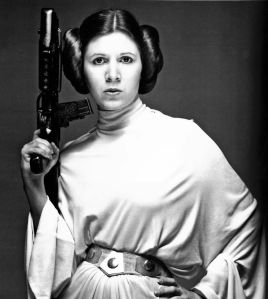
You may have heard that George Lucas told her on the set of the first (fourth) film that she couldn’t wear a bra under her iconic white dress. When she demanded to know why not, he famous replied “Because there’s no underwear in space.” When pressed for details, he explained “What happens is you go to space and you become weightless. So far so good, right? But then your body expands. But your bra doesn’t—so you get strangled by your own bra.” Fisher thought it had the makings of a “fanastic obit – so I tell my younger friends that no matter how I go, I want it reported that I drowned in moonlight, strangled by my own bra.”