It might help you to know that the vaguely-titled production design category used to be called Art Direction, and it’s an award shared among the art director and set decorators. They’re responsible for the visual feel of the film, from designing sets to the style and look of the movie. They read the script and talk to the director to come up with a visual style – what is needed, but also what’s envisioned, what’s possible, and what’s affordable.
The production designer will research art history, politics, and historical information to get ideas. They might provide scale drawings and models of the sets they want to create for the studio to look at. They’re also sourcing studio locations to shoot on, or on-location sites that might be appropriate. They’re in charge of overseeing the construction of whatever needs to be built, and hiring and managing the whole art department to get this stuff done, down to the smallest prop on set. Knowledge of interior design, architecture, and fine art are all necessary. They either make a movie look believably real, or fantastically enchanted, or somewhere in between. Last year art director Adam Stockhausen and set decorator Anna Pinnock won for The Grand Budapest Hotel, a great illustration of every last detail mattering, everything coming together to immerse the audience in this particular world, a hotel in which Matt would readily stay any day of the week.
This year Stockhausen is nominated again along with set decorators Rena DeAngelo and Bernhard Henrich for Bridge of Spies; Michael Standish and Eve Stewart for The Danish Girl; Colin Gibson and Lisa Thompson for Mad Max: Fury Road; Celia Bobak and Arthur Max for The Martian and Jack Fisk and Hamish Purdy for The Revenant.
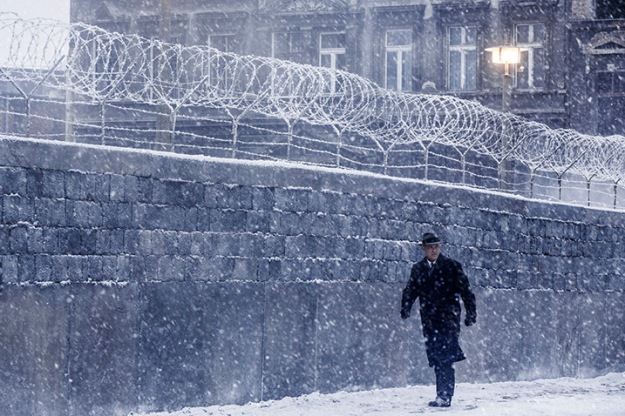
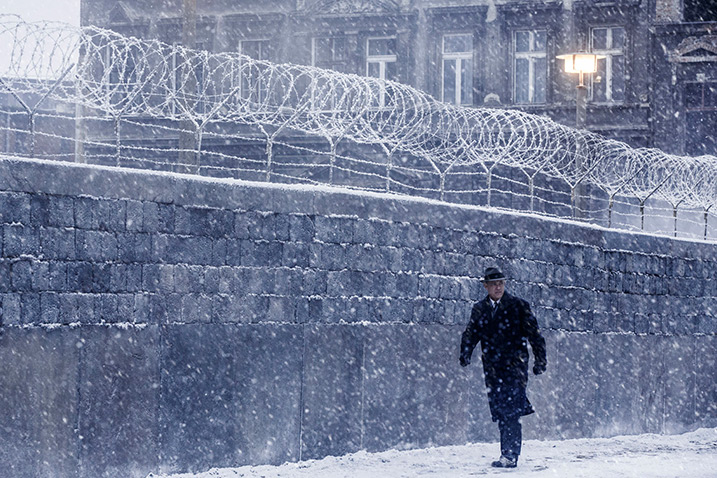
For Bridge of Spies, production design had to not only faithful recreate 1960s Americana, but also to reproduce same-era Berlin in the throes of the cold war. Stockhausen has to find New York locations that could 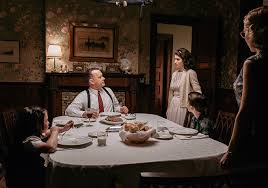 double as the courtrooms of that era, then go through the unenviable process of getting permits, and then make sure those locations would actually allow for the “geometry” of the shot – can the cameras move around, can Tom Hanks look out a window and see the Statue of Liberty, can roads be closed down for shooting, will the building allow aesthetic changes to make sure it looks period-appropriate. Then he had to go to Germany and do it all over again (and then to Poland when Germany couldn’t quite do it). And while some locations can be physically manipulated to fit the bill, others will have to be enhanced with visual effects. A whole block had to be realistically
 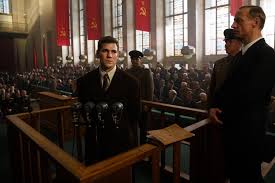 recreated so a character could ride their bike through town. Then they have to make sure that the film crew is arriving at the right time of year if locations are weather-specific (like foliage being in season, or snow-covered streets) and have a back-up schedule in case mother nature doesn’t cooperate, or a rain machine if she’s really temperamental. Some locations, like the Supreme Court, mean only shooting at night when it’s closed, so set decorators rush in last minute to convert the space and use colour to make them stick out in the minds of the audience – a warm palette for New York, and cooler tones for Berlin.
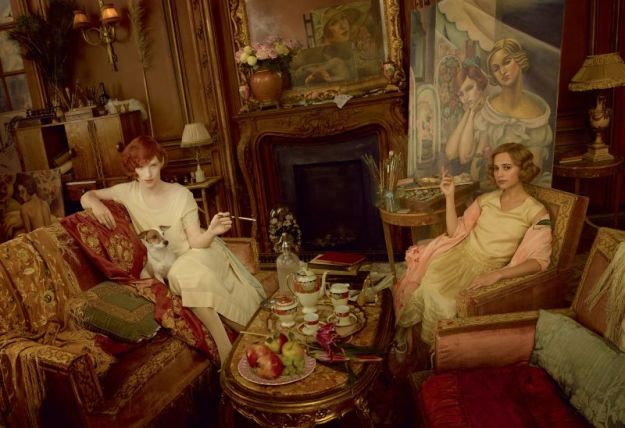
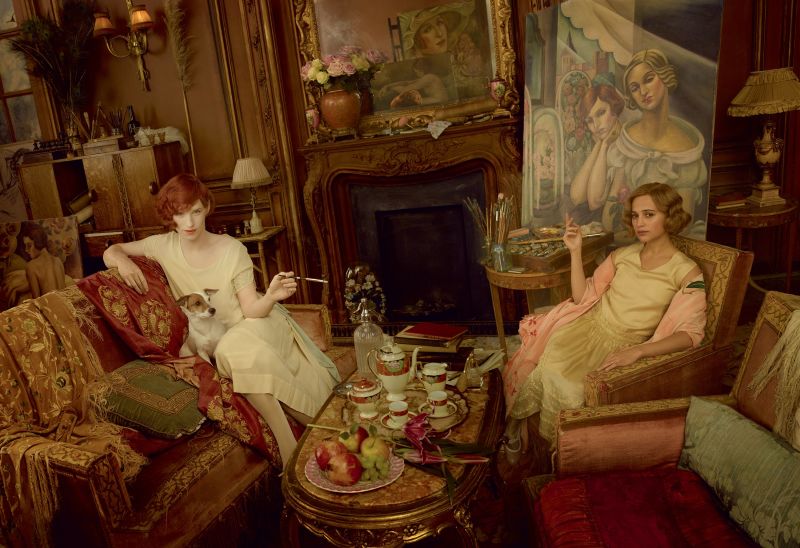
The Danish Girl is visually stunning, as it should be, since both Danish girls in question – the transitioning Lili Elbe and her partner, Gerda – are both artists. Eve Stewart was inspired by Scandinavian artists of the time and used a colour palette of blues and grays for their apartment initially, and 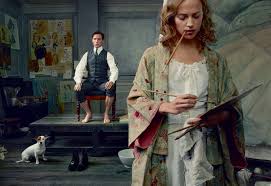 then broadened it once the characters start to blossom, the colour shift signaling to audiences that the characters are shifting too. When they move to Paris, art nouveau is all the rage, and as Lili begins to emerge, we see that more feminine, curvy architecture, and pinks and golds emerge. Stewart has now worked with director Tom Hooper five times, and finds that his films allow her to be “nosy”, to fully investigate characters’ lives. The major coup of this
 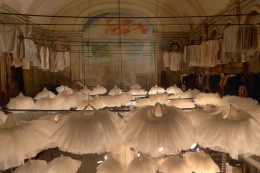 shoot though, Stewart attributes to not only landing a harbor location on Copenhagen, but “cajoling” historical boat owners to bring their ships down for the filming. People skills are a must for production design – Stewart also had to get permission to film in museums in Brussels that had never allowed such a thing before. But for the apartments, a tight shooting schedule meant building the sets, and Stewart took to Ebay to find moulding and wood paneling that would cheaply fit the bill. She describes her work as a “treasure hunt” and if you’ve seen The Danish Girl, you know her efforts paid off.
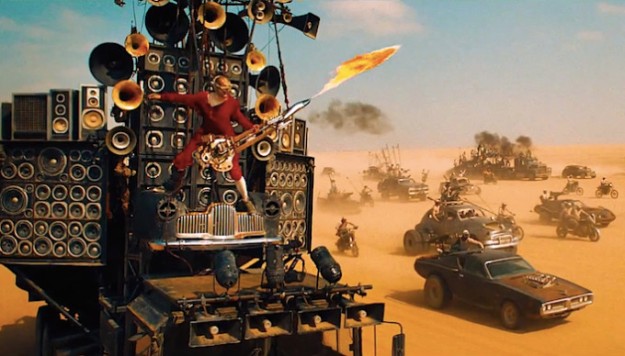
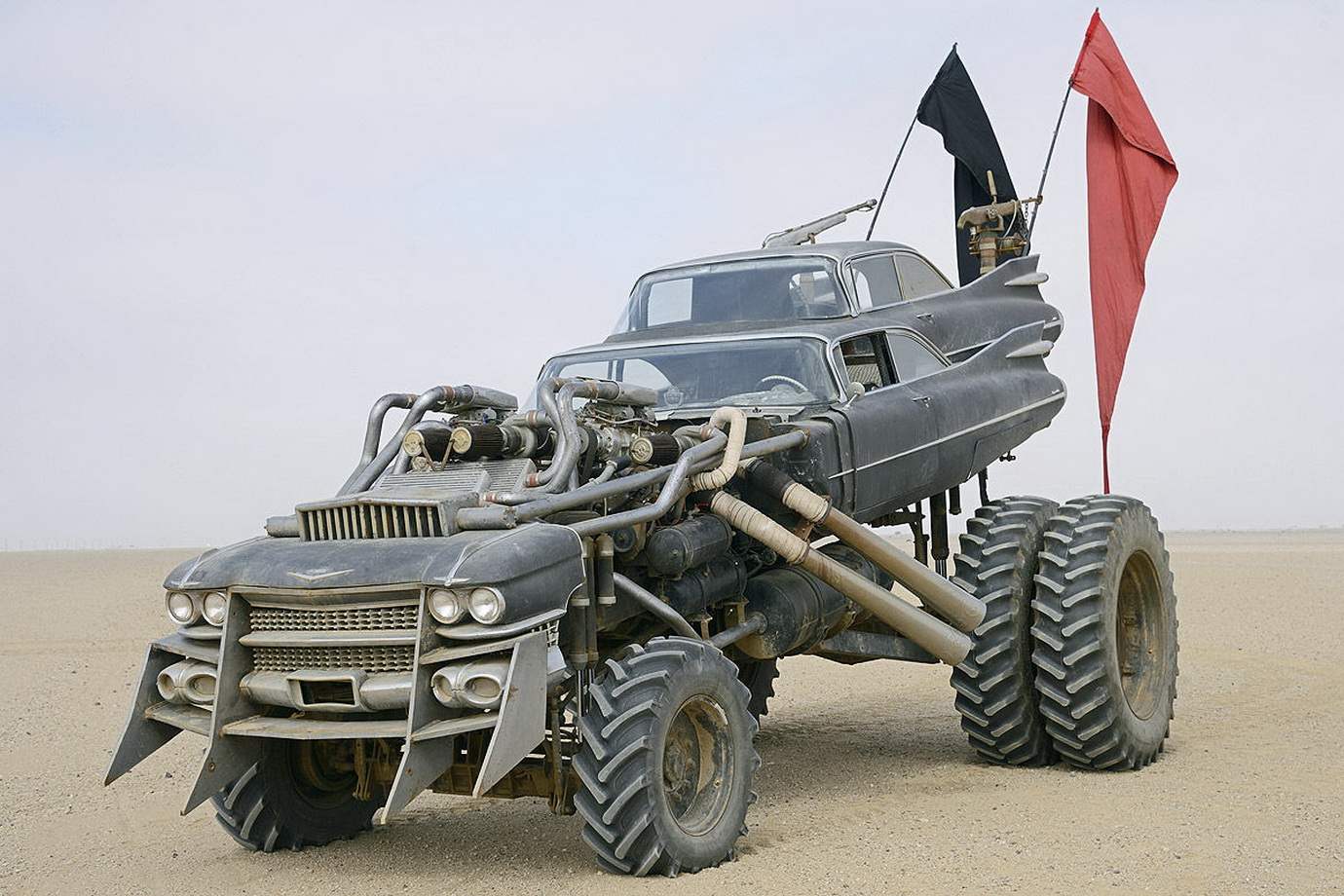
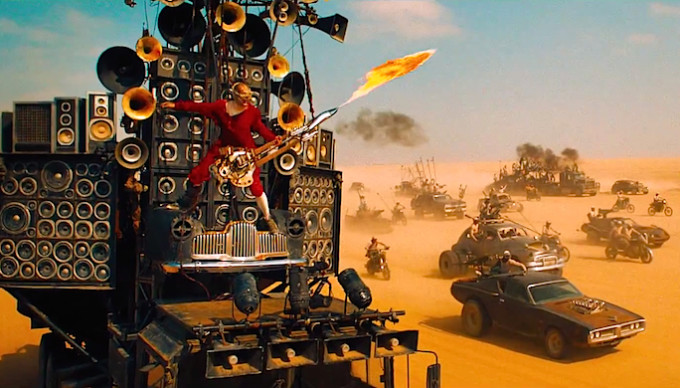
Mad Max: Fury Road is a different animal. When Sean was making his picks for our Oscar pool, he asked if this category would include “all the  cool cars” and when I said yes, he immediately put Mad Max down as his choice to win it all. Colin Gibson definitely set out to show what could be done – not just to dream big, but to really physically make it real. “If we defy gravity we first must show its existence, and then go out of our way to make sure that what we design and build can really do what we imagine it can do.” Out of the amazing fleet of vehicles, Gibson can hardly stand to choose a
 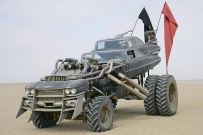 favourite among his babies but admits “Probably Joe’s Gigahorse because it was built from the ground up. Everything was basically built by hand; it’s the one that’s dearest to my heart.” But in order to accommodate the actors, Gibson not only had to build this army of badass vehicles, he also had to recreate the cabs and driver’s seats in other locations to make close-up shots more feasible. He also had to constantly contend with safety – these things had to not only look cool, but also drive, and be a safe place for the stunt work to take place.
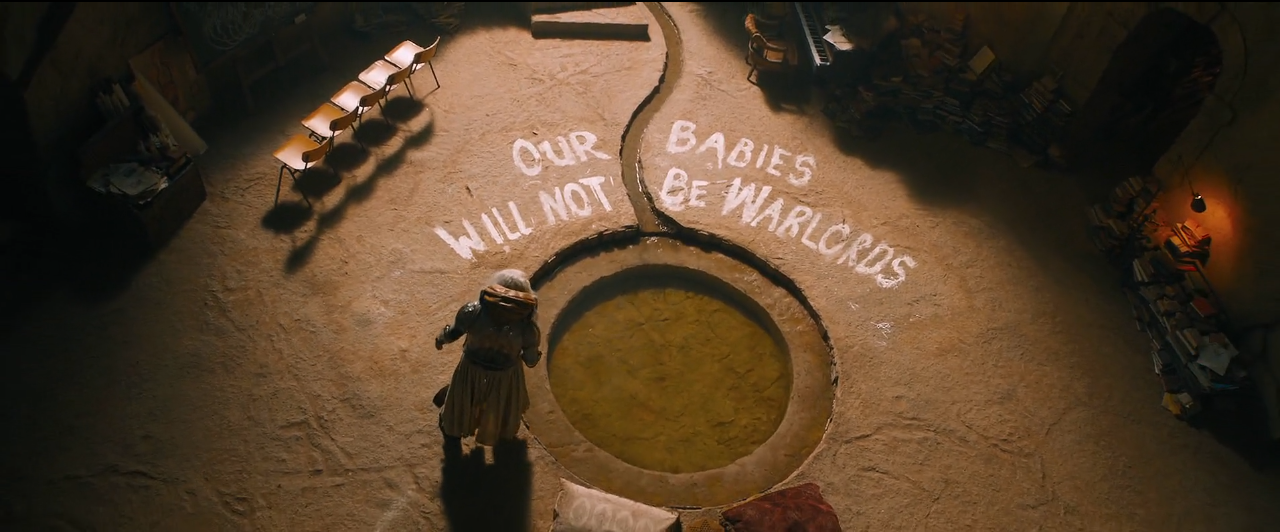
  Gibson’s real herculean task was to find the perfect desert to shoot in. He travelled the most arid locations in the world – the Chilean Atacama, the salt lakes of Bolivia, boggy flats of Tunisia, sandscapes from Jordan to Libya to Dubai – until finally finding “Arid riverbed canyons, huge orange and pink dunescapes, gibber plain and empty open nothingness for 360 degrees, and a mountainous ridge half an hour from town crying out to be our opening shot” in the Namib desert. But keep in mind this isn’t a period piece, and Gibson wasn’t recreating the apocalypse, he was reimagining it.
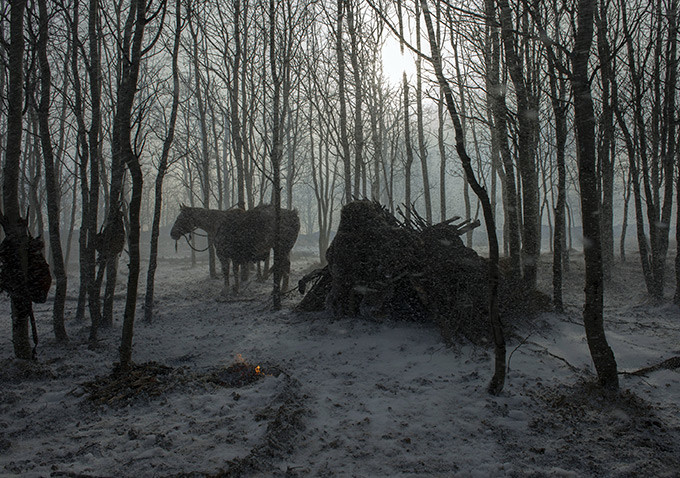
Back to period pieces, The Revenant’s production design crew got to bring 19th century frontier life to the big screen, but it also had some of the  same challenges of Mad Max in terms of hostile settings. Jack Fisk hiked for months to find the perfect slices of forest or terrain for each shot – and then a back-up one as well in case of flooding or blizzard – systematically covering “every inch of Alberta.” The physical sets were built from the ground up – the fort in its entirety was actually functional, the Indian villages authentic, the campsites thoughtfully laid out – even the canoes were built by hand. Fisk had an additional challenge because director Inarritu and d.p. Emmanuel Lubezki chose to shoot entirely in
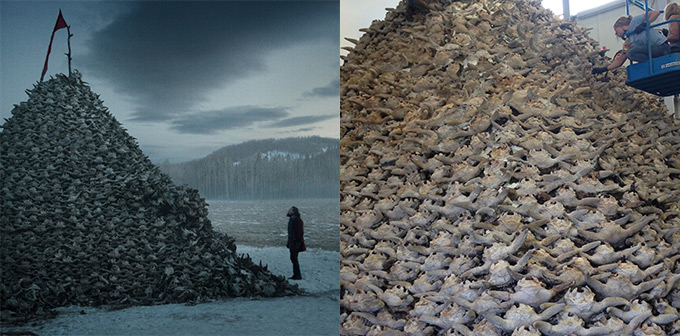
 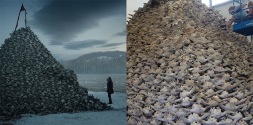 natural light, so Fisk had to make sure none of his props casted unwanted shadows or reflected\revealed the camera. Fisk and Purdy worked together to build the infamous mountain of skulls – buffalo skulls to be exact. Buying real ones was difficult and expensive, so they made casts of the 5 they had, made a hundred replicas, and assembled them in a way that could be replicated quickly on set (this scene was shot the same day as Leo and the cliff-horse scene, so it was a
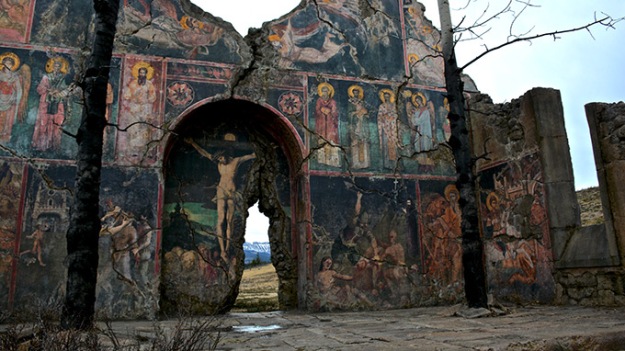
 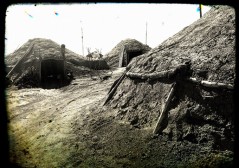 busy one to say the least). Fisk did anthropological research to get the Pawnee village just right – there weren’t any photographs back then so he had to rely on paintings instead. The church ruins were built out of Styrofoam blocks in a warehouse and transported to the location when they found the perfect trees to build around. The blocks were painted with Russian frescoes and a bell was carved out of Styrofoam last-minute on Inarritu’s whim. The work of a production designer is never done!
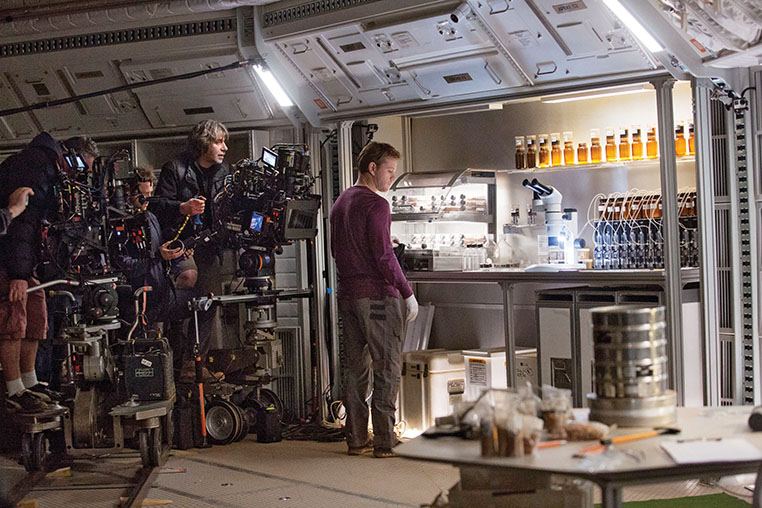
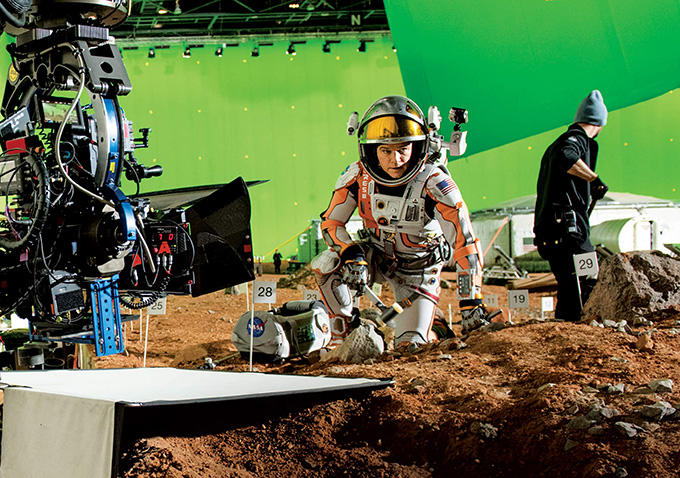
And finally, a movie that didn’t mess around with different periods – it messed around with different worlds. The Martian takes place both on Mars and on Earth – and also on a shuttle in space. Production designer  Arthur Max has worked exclusively with David Fincher and Ridley Scott – mostly Scott – both of whom he met while they were all working on commercials. He’s run the gamut between more intimate dramas like G.I. Jane and more sweeping historical stuff like Gladiator. He thinks of his job in terms of “How do you tell a story in 30 seconds?” Max’s story in The Martian started at NASA, where he quickly learned that
  black\silver and gold\orange were a MUST in terms of colour palette simply because the tape that real astronauts use all the time (called Kapton, resistant to gamma rays and solar radiation) is amber, plain and simple. The Johnson Space Centre was very open with its latest designs (as long as Max signed a non-disclosure agreement to keep it under his hat until the movie came out) but of course Max took the science and then
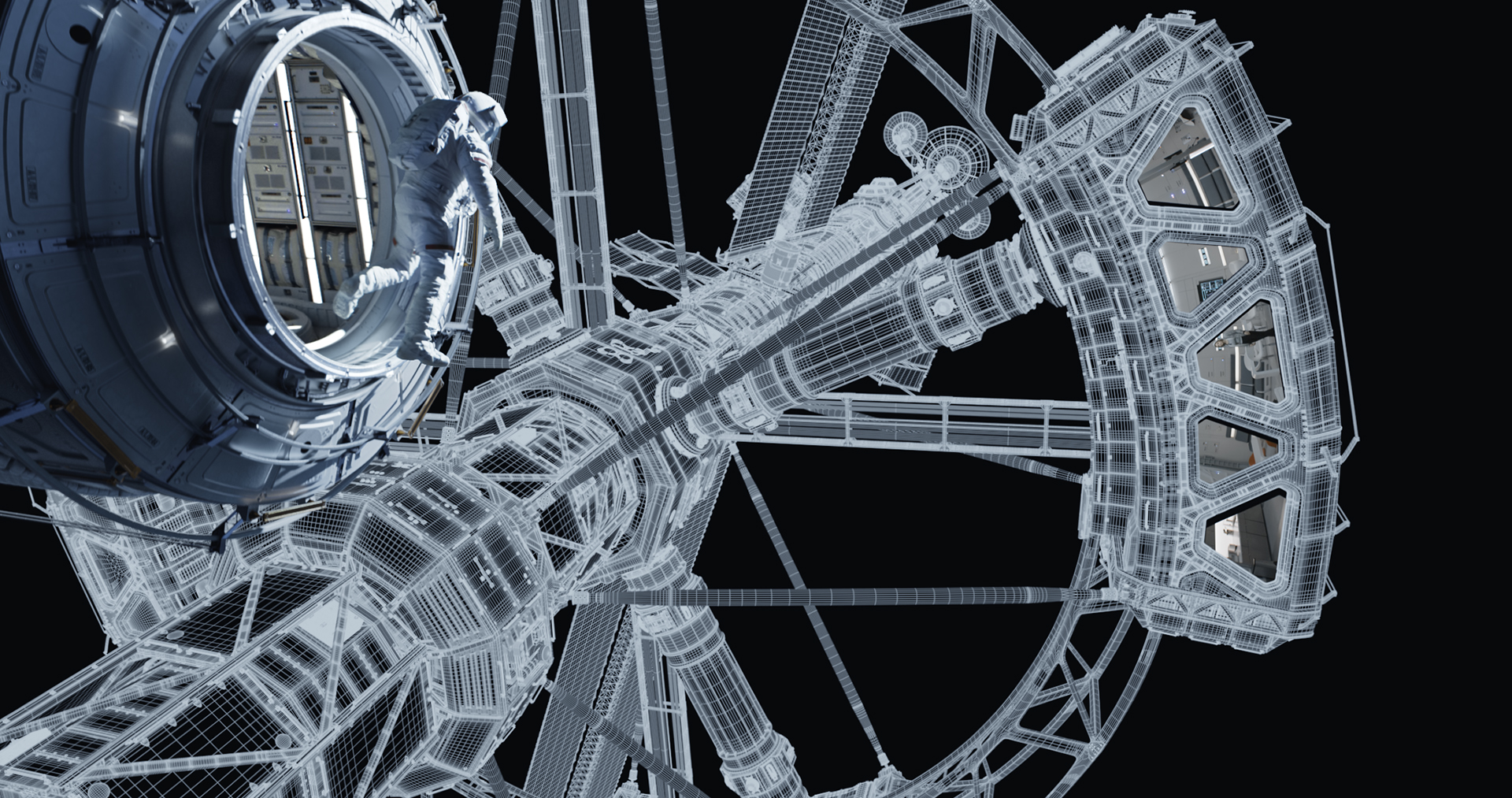
 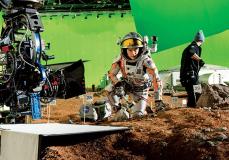 made it look cool (NASA is not known for its aesthetic sense). Anything bearing the NASA logo had to be approved by then, and had to be based on existing technology, the movie being “near-future”, not futuristic. Max’s biggest challenge was that gravity wheel. The actors are literally seen going down it and it couldn’t be faked – or not entirely! They built these sets on a sound stage in Budapest, the biggest in
 the world, just barely big enough to fit all of Mars, and for Matt Damon to get into his rover and drive it around. But for most of “Mars”, Damon and crew went to Wadi Rum (also known as the Valley of the Moon) in southern Jordan. Leave it to Max to find a little bit of Mars right here on Earth.

Who’s got your vote?
The Oscars are handed out this Sunday – be sure to follow us on Twitter where we’ll be live-tweeting from our Oscar party. And check out other pieces in our series – costumes, hair & make-up, documentaries.

 wife’s) bring him low, low, low, low.
 Scottish liked bloody everyone else. But in this adaptation, she’s got this slight sense of foreignness and we begin to think what it might be like if she was just a little outside the community to begin with. Where exactly does her allegiance lie?
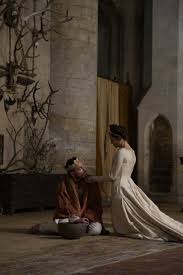 while I’d say Kurzel stays 90-95% faithful to the source, 5% is still cheating, isn’t it? The world hardly needed yet another Macbeth adaptation, so if you’re going to the trouble, you’d better have something new to say. But who is brave enough to believe they can best the bard? Justin Kurzel, evidently, a young director of just one prior movie, which I’d never heard of before. And there are three writer’s names in the credits, 3 brazen takers of liberty. Are they right? Can you take liberties with Shakespeare? Will the audience accept it? Forgive it?
 thing for bad boys, and he’s trying very hard to live up to her fetish. But it’s clear he isn’t as strong as she is. She is the driving force. Lady Macbeth has always been the one to watch, and Cotillard has always been eminently watchable. But then, having relished playing Dr. Frankenstein, she suddenly feels guilty for having created the monster. They’re a couple of complex characters, perhaps the best ever written, and if there are indeed actors worthy of them, these two come close.
 Taylor Schilling), who move their young family to L.A. and find it a challenge for making new friends. A fortuitous meeting in a park leads them to the swanky home of mysterious hipster Kurt (Jason Schwartzman) and his French wife, Charlotte (Judith Godreche).
 unraveling. Can it be saved by drugs?
 debauchery. You start to get the sense that writer-director Patrick Brice is just trying to shock us, and is relying on an onslaught of unpredictability to do so rather than any true wit or edginess. I guess I’m supposed to think it was cool and naughty but the next day I’m just feeling like I’ve got a bad comedy hangover. Like – did that really just happen? For me this was a great big no thank you, with a side of please, sir, put your pants back on.

 I’m fascinated by this immigrant story, an allegory in the vein of Animal Farm, but geared toward children. It was personal for producer Steven Spielberg; some scenes were taken directly from stories of his own grandfather, not coincidentally named Fievel.
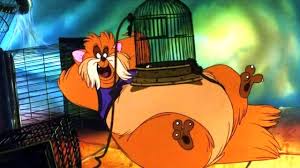 for radio by Linda Ronstadt and James Ingram at the behest of Spielberg, who knows a good pop tune when he hears one. It went on to win Song of the Year at the Grammy as was nominated for an Oscar (but lost to Take My Breath Away, from Top Gun). We remembered this song in particular when
  gave it two thumbs down, calling it “gloomy”, “downbeat”, and “way too depressing for young audiences.” The numbers proved them wrong, and never had children so gleefully sang about Cossacks and oppression before. The film’s success inspired Steven Spielberg to pursue this cartoon making, eventually developing DreamWorks Animation, the studio behind Shrek, Madagascar, and How To Train Your Dragon. An American Tail has held up pretty well over time, in part because of its deliberate old-fashioned animation style, hearkening the glory days of 1940s Disney, a huge nostalgia factor for baby boomers. Finally this
  was a film they could not only share with their children, but enjoy it as well.
 incidentally, is also where his leading ladies are selling their bodies to get by. The girl in question Sin-Dee (Kitana Kiki Rodriguez) has just been released from a month-long stint in jail and her best friend Alexandra (Mya Taylor) reveals that her boyfriend\pimp, Chester (James Ransone) has spent it philandering. Sin-Dee goes on a rage-filled road trip to find the other woman and get even while dodging her best customer, cab driver Ashken (Alla Tumanian).
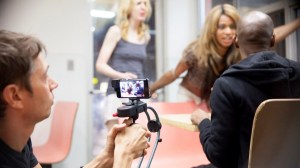 or so. It’s raw, both emotionally and in reality: Baker shot it on a budget of 100k and filmed it with an iPhone. This makes for a stylistically arresting movie that doesn’t look nearly as bad as you might think, and in any case you forget about it within the first 10 minutes anyway, because at its heart it’s a snappy girlfriend movie that you can’t help but be charmed by.
 nomination but cemented their legitimacy). Baker had a standing offer from Mark Duplass to make a micro-budget movie, and he’s always wanted to do something where a couple of characters meet up at Donut Time, and this is the movie that resulted. Jaded audiences have seen L.A. on the big screen a million times, but Baker shows it like we’ve never seen it before. He also gives us a behind-the-curtains peek at the sex-trade workers who populate the area. As co-writer, he immersed himself in the culture and found Taylor hanging out at a nearby LGBT centre, and the story started unfolding from there. It was a fascinating look and I felt privileged to be taken along for the ride.
 This movie looks different, feels different, sounds different. Actually, I’d heard it was a silent film, and that’s not quite true. There’s a smattering of dialogue, unsubtitled, but that didn’t bother me. The images and the score are so evocative they’ve already buried under your skin, and you know what’s going on even if you can’t decipher the words. I probably shouldn’t admit this next bit, but upon looking it up, I see that the language is actually just a made up one – backwards Portuguese, apparently – so
  that may reassure you while making me look stupid. Incidentally, I don’t speak Portuguese forwards either.
 his father, only to find many identical men exiting an office building. Has his father become a clone? Has the city stolen his soul? Is there simply no difference between men who don’t make things with their own hands?I’m not sure of the exact sentiment the Brazilian film makers were hoping to convey, but that’s kind of the beauty of the thing. In its quiet, it allows the viewer to be making judgments for herself, and my reading of it was obviously pretty damning.
 images we’ve ever seen” and I think that’s putting it mildly. It’s some of the most innovative work I’ve seen in a while, despite the fact that the main character is basically a stick man, truly thrilling to watch and absorb. There we go, that’s what I’ve been getting to this whole time: it’s a movie that you don’t just watch. You experience it. The visuals feel quite personal and they take you back to your own childhood while thrilling you and keeping you guessing. All the drawings were hand-made
  by the Director, Alê Abreu, and I just love how he makes this very basic character come to life against a geometric, swirling, abstract background. It’s moving. This is an image-heavy post, and I think you can tell it’s for good reason. Yes, I could talk about this all day but honestly, this is one you’ll have to see for yourself, if only you feel up to risking the nontraditional style.
 including a suitcase full of drug money and a homicidal elephant, which is still secondary to the other trip he takes, the one down memory lane.
 centenarian, but through many decades of his life thanks to a series of flashbacks.


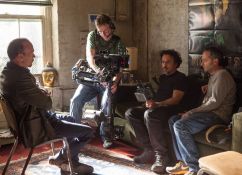 tight). They aren’t just recording the actors, they’re making choices that craft, manipulate, and interpret what we see. They oversee the camera operators, grips, and lighting crew to achieve this vision.
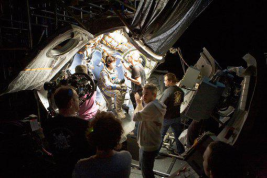 about to threepeat with
 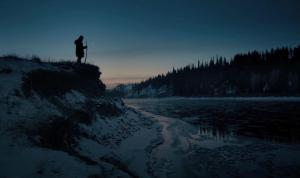 moving cameras, either handheld or Steadicam cranes, but the camera is constantly moving. We did a lot of these shots that we call the elastic shots where we go from a very objective view from the audience’s point of view, to a very subjective point of view that is the point of view of the character, because we wanted to feel what he’s feeling but also see it as he would be if you were standing close to the action.”
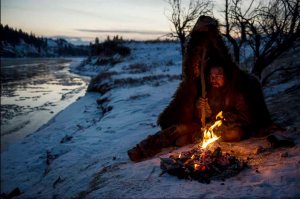 long, limited by the hours during which they could shoot. They raced the sun each day, and battled the stars at night. The only extra lighting they used was during the camp fire scene – there was lighting off-screen to compensate for the wind making the flame flicker in a distracting way. The natural light also forced him to abandon film for digital, using the Arri Alexa 65 digital camera with lenses from 12mm to 21mm because film “didn’t have the sensitivity to capture the scenes we were trying to shoot, especially the things we shot at dawn and dusk. I felt this was my divorce from film — finally.”
 The shoot was famously arduous but Lubezki insists it was worth it, citing a particular scene in the movie where Leo comes out of the freezing water, with his breath visible and lips blue, which wouldn’t have been possible without “We would never have gotten anything like that. And while natural light is very complex because it’s constantly changing — which can be a problem for continuity — it’s beautiful.”





 ASSHOLES WATCHING MOVIES