Tag Archives: female directors

TIFF18: Can You Ever Forgive Me?

If you’re asking for forgiveness, Melissa, you’ve got it. Not that I really believe you have anything to be sorry for. The Happytime Murders was a misfire, but hardly your fault, and I admire any attempt to do something different.

With this movie, both Melissa McCarthy and the character she plays are trying something different. McCarthy is trying on a more dramatic role, and though Lee Israel has a teriffic wit, she’s got no slapstick about her at all. canyoueverforgiveme_0HEROMcCarthy only has her own skin to live in, face naked save for an inept smear of lipstick on only the most special of occasions (ie, when asking for money), hair constantly overdue for its next dye job, frumpy clothes in various shades of poop. But it’s Israel’s personality that poses the real problem. She’s abrasive and reclusive and just doesn’t really know how to exist among people, so she’s basically stopped trying. It’s just her and her cat – a daunting thought when it’s just her and a blank page. A once-celebrated writer of biographies, her agent nowadays can’t get so much as a $10 advance for a book on Fanny Brice that nobody wants.

Living in semi-squalor, Lee finds there’s good money selling literary mementos from great authors. Is it her fault that better content fetches higher prices? Isn’t it just good business sense to exploit her natural gift for writing and put it to use making money again?

Crime pays, for a while. And then the FBI gets curious about all the fraud and forgery and whatnot.

I love this script. McCarthy’s very first line earns a laugh out loud, and the script continues to reflect Lee’s caustic humour throughout. And McCarthy is just brilliant in the role, aggressively unpersonable, but also sympathetic. There’s a whole framework of supporting cast to admire too, particularly Jane Curtin, Anna Deavere Smith, and Marc Evan Jackson.

This isn’t just a film about forging letters, it’s about loneliness, and friendship, and purpose. It’s hard to say which Lee needs more – human connection or the sense that she is creatively fulfilled. Of course, when you’re crediting your best work to someone else, it’s plagiary of the heart and perhaps this is what hurts her most in the end. Lee Israel is not anyone’s idea of a hero, but her flaws are all-too-human, and it’s fascinating to slide down the rabbit hole with her.

TIFF18: A Million Little Pieces

A Million Little Pieces is a technically competent (and occasionally impressive) film that lacks perspective and personality. In life generally and this festival particularly, we have been inundated with films about addictions and recovery. If you’re going to pile on, I expect you have a hot take, a fresh point of view. It’s not unreasonable to expect that A Million Little Pieces might have had one; several years ago (2003, in fact), James Frey released his memoir (of the same name) and it was a monster best-seller. But when questions of authenticity surfaced, Frey’s shooting star burned out quickly, thanks in large part to Oprah’s dragon-fire condemnation.

The film was relegated to back burner, then cold storage, then deep freeze as the controversy was allowed to cool. But now that people have all but forgotten his name, Sam Taylor-Johnson brings his story to the big screen but curiously leaves the scandal unthawed, with only a Mark Twain quote to excuse away his dishonesty.

AMillionLittlePieces_0HEROWhat’s left is a story without a single breath of uniqueness. Drugs are bad, behaviour off the rails, shipped to rehab against his will, detox makes you sick, “I don’t need to be here,” resistance, rule-breaking, temptation, uncovering trauma, cautious optimism. Insert new names and this could literally describe at least a dozen movies about addictions, and those are just the ones I can name and I can’t name shit. Although Sam Taylor-Johnson makes things pretty (save her own husband, with cracked teeth and a broken nose), this feels like a very familiar, very formulaic iteration.

Taylor-Johnson’s husband, Aaron Taylor-Johnson, co-writes the script with her (which seems not to be a strength) and stars as Frey. She has enormous faith in his abilities as an actor, and directs him well. He’s committed and intense, and would have been great in a great role, except they failed to write one, and this “Frey” character is bland and superficial. We hardly get to know him, and the few flashbacks are not informative or expository, they’re hardly more than images. That said, his costars, including Billy Bob Thornton, Giovanni Ribisi, Juliette Lewis, Charlie Hunnam, and Odessa Young, get even shorter shrift. Back stories? Ha. These people barely get front stories. They fill the obligatory sharing-circle chairs and that’s about it.

I think there might have been a little life to this story had they not shied away from the truth of it. But as is, it’s a million little pieces of ordinary that add up to 113 minutes of boring, minus the 40 seconds or so when Aaron rocks out with his cock out. With so many options at the cinema, this just doesn’t cut it. An easy miss.

TIFF18: The Kindergarten Teacher

Lisa is having a mid-life crisis. No, Lisa (Maggie Gyllenhaal) is having an existential mother fucking emergency. She’s been a kindergarten teacher for 20 years and she’s tired of teaching a curriculum she doesn’t believe in. She feels invisible at home, a mother to grown kids who don’t need her anymore, a wife to a man she doesn’t feel connected to. A continuing education class in poetry only highlights her unrealized potential and stifled creativity.

So Lisa is ripe for a prodigy, and what do you know, she “discovers” one right in her own classroom. Five (and a half) year old and full-time cutie-patootie Jimmy (Parker Sevak) MV5BMTYxODY2NDU5MV5BMl5BanBnXkFtZTgwNDE3MTgyNDM@._V1_composes poetry that is beautiful and eloquent beyond his years. Lisa feels an addictive high when she recites it as her own in poetry class, receiving praise by peers and teacher (Gael  Garcia Bernal) alike. But mostly she just becomes obsessed with this kid, believing she’s the only one who can nurture his talent. Her behaviour becomes increasingly troublesome, though even on the mild end of the spectrum (depriving him of naps, luring him into bathrooms, alone, with candy bribes), I was uncomfortable.

Lisa is a complex character. You’re picking up on that, right? She legitimately believes she’s got a Mozart-level genius on her hands, and also that our current culture crushes creativity. And she’s not wrong, definitely not about one of those things, and maybe not about both. But she believes that gives her the right to overstep her bounds in some pretty major, pretty outrageous ways.

Maggie Gylleenhaal deserves every good word you have to say about her performance. It’s melancholy, human, and desperate. There’s something universal about a woman’s unsatisfied needs. But you don’t quite know where or how far Lisa will take this – it’s just slightly unhinged, which keeps you riveted despite the fact that the film sometimes feels like it’s not quite sure what it should be.

Director Sara Colangelo explores the many facets of her protagonist even when motivations are muddled and compromised. There’s almost a dark comedy running through the veins of this movie, throbbing and daring in a way that’s surprising given it takes place in a kindergarten class. You’ll laugh, you’ll wince, you’ll sympathize, you’ll condemn, but you won’t look away, even when it stumbles, even if it can’t commit. The Kindergarten Teacher offers a confident performance and a fascinating character study.


Catch The Kindergarten Teacher on Netflix October 12.

TIFF18: Female Voices

I am proud to say that the Toronto International Film Festival has been at the forefront of committing to diversity and gender parity in its films. Everyone with half a brain is doing it this year, but TIFF’s been doing it for a while. They have shown us repeatedly that screening a higher proportion of female-directed films doesn’t affect the overall quality of the films shown at all. They have continued to curate fantastic films no matter who’s in the director’s chair. It’s just that programmers have to dig harder to unearth gems that aren’t always backed by studios. For every Wonder Woman or A Wrinkle In Time, there are dozens of indie films with hardly any attention, just waiting for someone smart enough to see it for what it is (Julia Hart’s Fast Color comes to mind as a recent example).

This year at TIFF, 34% of films are helmed by women. A few to look out for:

Can You Ever Forgive Me? Marielle Heller directs Melissa McCarthy in this movie about a sad sack writer (Lee Israel) who can’t get any work so she turns to forgery to pay her rent.

High Life: Claire Denis directs Robert Pattinson, Juliette Binoche, Andre Benjamin, and Mia Goth in a sci-fi film about a bunch of criminals who get sent into space for an experiment on human reproduction that of course goes wrong because IT’S IN SPACE and then they just have to struggle to be, well, not dead IN SPACE. Despite the caps lock, I honestly cannot wait to see this one.

Galveston: We’ve already seen this one, so we can recommend it wholeheartedly. Mélanie Laurent directs Ben Foster and Elle Fanning in a real doozie of a crime thriller, with a distinctly European flavour despite its very American setting.

Destroyer: Karyn Kusama directs Nicole Kidman as an undercover agent who has to reconnect with the gang member she once worked, a situation that ended in life-altering tragedy. There’s already Oscar buzz about Kidman’s performance.

The Weekend: Toronto-born writer-director Stella Meghie directs Sasheer Zamata in this film about a stand-up comedian who gets embroiled in a weird love-triangle with her ex and his new girlfriend on an awkward weekend away.

Quincy: Who better to (co)direct the documentary about Quincy Jones than his talented daughter, Rashida? It’s sure to be an intimate portrait of an influential man, and I can’t wait to see what she does with it.

A Million Little Pieces: After James Frey’s “autobiography” got a lambasting from Queen Oprah for its inauthenticity (read: fabrication, read: lies), this screenplay cooled its heels while the furor died down and apparently Hollywood thinks we’re as ready for it now as we’ll ever be. Aaron Taylor-Johnson plays the “Frey” character and his wife, Sam Taylor-Johnson directs him and a cast including Charlie Hunnam, Billy Bob Thornton, and Juliette Lewis.

Where Hands Touch: The crazy-talented writer-director Amma Asante tells the story MV5BZDIxNjIwNjktZTQzNS00ODI1LTkyZGItNDhkYjJlM2FhODcyXkEyXkFqcGdeQXVyMTMxODk2OTU@._V1_SY1000_CR0,0,690,1000_AL_of a biracial teenage girl struggling to survive in Nazi Germany, starring Amandla Stenberg and George Mackay.
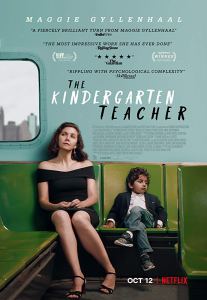
The Kindergarten Teacher: Sara Colangelo’s film already has tremendous buzz coming out of Sundance. Maggie Gyllenhaal plays a teacher (duh) who becomes obsessed with a young student she believes may be a child prodigy (is that redundant? I think adult prodigies are just, you know, educated).

The Land of Steady Habits: Nicole Holofcener directs Ben Mendelsohn in this film about a man who has everything but still feels vaguely dissatisfied so he leaves his job and family and ends up down a rabbit hole of regret.

So, yes, it’s entirely possible to feast on female-directed films alone at TIFF, and leave feeling fully sated. But before you go, there are a couple other initiatives you should know about.

  1. Via Brie Larson, who was herself a director at TIFF last year, the festival announced a commitment toward media inclusion. They accredited 20% more journalists this year to bolster their under-represented numbers. I absolutely believe that female critics are essential to female-directed films being seen and appreciated, and I want and need all voices to be heard and represented. Love this initiative.
  2. TIFF has made a five-year commitment to increasing participation, skills, and opportunities for women behind and in front of the camera, with a focus on mentorship, skills development, media literacy, and activity for young people. Join the movement!
  3. TIFF’s Festival street will host the Share Her Journey rally on Saturday, September 8th. Everyone who’s remotely able to should come fill the streets (King St. West between University Ave. and Peter St.) and talk about the inequality plaguing the industry. Sign up here to live-stream the event if you can’t make it – beginning at 10am we’ll hear from Mia Kirshner, co-founder of #AfterMeToo, the above-mentioned Amma Asante, and many others.


Thanks for helping make this the best TIFF yet – because movies only matter when everyone’s represented.


 

You Were Never Really Here

Joe (Joaquin Phoenix) is a troubled war veteran and basically a hired gun, specializing in the finding and retrieving of missing and trafficked young girls. He lives with his elderly mother (Judith Roberts), who is the only person left in his life. And once you start seeing what’s in his head, you’ll understand why. He’s haunted by flashbacks, riddled with PTSD. It’s rough stuff, and it’s hard to keep straight. It actually appears hard for him to keep straight, and as he grapples with thoughts of suicide and questions of sanity, it seems his past might be catching up with him.

But the present’s not much better. His next job is to rescue Nina, a 13 year old girl MV5BNDQwOGQyYTMtNTc2MS00Nzg3LTgyMjctOWFmM2YzZWE3YTBlXkEyXkFqcGdeQXVyNjUwNzk3NDc@._V1_being held in a brothel. Her father works for the government and doesn’t want to get police involved. And if Joe could, you know, fuck up the men who did this to her, he’d be pleased. But walking a mile in Joe’s boots is never straight forward. He’s plagued by violent images, by death, by his own abusive childhood.
Once the killing starts, it doesn’t end, and Joe is basically a zombie, barely evading death, and barely caring. Writer-director Lynne Ramsay keeps us off kilter with static-y flashbacks. We’re as unbalanced as Joe is, and we’re unable to really trust everything we see. It’s disorienting and clever, unhinged and a little scary since we never know what we’re walking into. It’s gory, or course, likely enough blood to fill an Olympic-sized swimming pool, but we start to feel anesthetized to it because Joe barely registers it. Joaquin Phoenix really sells it. He sells a man who stopped caring about himself a long time ago. Who doesn’t trust his own reality, and isn’t particularly bothered by it. He suffers from these violent memories but nothing really jolts him from his stupor. It’s a great performance. And Ramsay somehow manages to evoke sympathy for this wounded soldier. She makes this action movie something special, something worth watching, even if the finished product is rather like a nightmare.

Risk

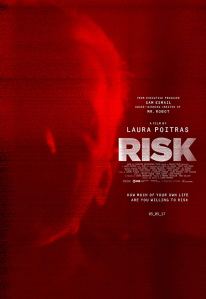
Julian Assange, as you may know, is the founder of WikiLeaks, a website that publishes secret information contributed by anonymous sources in the name of truth. Laura Poitras is the Oscar-winning director of Citizenfour, the documentary about another famous leaker, Edward Snowden. Filmed over a period of 6 years, Risk is Poitras’ documentary about Julian Assange.

Early on in the documentary, WikiLeaks is attempting to contact Hillary Clinton regarding some secret documents that are about to get leaked – not intentionally by them, but because their password got “exposed.” This is the least of their trouble. As MV5BMzIzNzYzMDM0NF5BMl5BanBnXkFtZTgwNzA1OTgwMjI@._V1_SY1000_CR0,0,687,1000_AL_you may know, they go on to publish a document dump leaked by Chelsea Manning, which earns them a criminal investigation by the American government. Shortly afterward, Sweden issues an arrest warrant for Assange over allegations of sexual assault and rape. He denies guilt but is more concerned that he’ll be extradited to the U.S. So, he breaches bail and flees to Ecuador where he’s been living at the embassy ever since
I didn’t really love Citizenfour and I think I like Risk even less. Laura Poitras has a knack for inserting herself into documentaries, and going easy on her subjects. I feel like I didn’t learn much about Julian Assange, though this documentary isn’t much more than a character portrait. He does say some crazy stuff about women that reminds us that though he’s got high and mighty principles when it comes to freedom of information, his morals to do extend to people, or their freedom to say no.

My takeaway from Risk is that if we’re looking to Assange for a saviour, we’re fucked. Dude is not a good guy. His ego and self-righteousness are astounding. Poitras comes off as being cowed in his presence, and fails to temper his own unreliable narration with any counterbalance. It’s uneven, and frustrating in that it lacks any meaningful commentary on more contemporary events. After all, WikiLeaks worked hand in hand with Russia to release the info they hacked which shaped the U.S. presidential election. And Assange has admitted that a Trump win was his preference. So while WikiLeaks pretend to be about ‘freedom of information’ it’s actually about curating that information in false and misleading and one-sided ways, for their own benefit or for others. And while Edward Snowden did what he did at least in part because he believes that every individual’s privacy is something to hold dear, WikiLeaks has destroyed personal privacy, releasing social security numbers, medical history, and credit card numbers of private citizens.

I wish this documentary had the balls to paint this dubious hero as the true villain that he is, but Poitras doesn’t quite commit. The finished work feels compromised. And as usual, I find her work to be without point of view. Risk feels like a bunch of footage, some of it revealing, some of it interesting, some of it randomly and inexplicably featuring Lady Gaga, but it never really comes together. Is there a movie in there somewhere, I wonder? But mostly I don’t care.

To All The Boys I’ve Loved Before

Netflix is trying to resuscitate the rom-com. I remain unconverted. How does their latest attempt fare?

Lara Jane is about to be a junior in high school. Her older sister Margot has just left for college in Scotland, leaving behind a huge gap – a gap only grown wider because she broke up with her boyfriend Josh, literally the boy next door, before leaving, and he was an every day presence in their home – not least of all because he was Lara Jane’s friend and secret crush first. With Margot gone, it’s just Lara Jane and little sister Kitty, who isn’t afraid to call out her sister for being super lame and not having any weekend plans of her own. Their mother is dead so it’s just them and their dad.

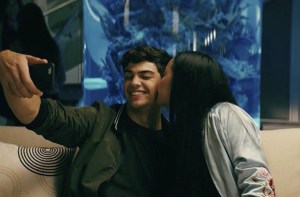
But then something weird happens. Lara Jane’s old, secret crushes all receive letters MV5BYWNhOTJiMzYtNmY5NS00ZDNkLTg4NjUtNTRhNzRkODg5MTQ4XkEyXkFqcGdeQXVyNTk5MTc3MTc@._V1_from her. Letters that she wrote eons ago when the crushes were new and exciting but never, EVER, intended to send. Josh receives one, and so does Peter, Lara Jane’s first kiss but current boyfriend of her arch-enemy. Ah, high school. But she’s so desperate to avoid Josh that she consents to have a fake relationship with Peter in order to divert attention. It’s the kind of plan that can only seem reasonable to a 16 year old.

Lana Condor is all kinds of adorable as Lara Jane. She’s sweet and charming and nearly everything you’d want in a romantic lead in 2018 (dorky, smart, independent). Is adorkable a thing? It should be. Lara Jane is it. But just as 2018 demands a new kind of romantic lead, it also needs a new kind of boyfriend. No more brooding, distant, too-cool-to-give-a-shit guys. Peter Kavinsky is not just the floppy-haired, Jeep-driving boyfriend you want, he’s the kind of teddy bear you deserve – kind and thoughtful and loving. He puts more work into a fake relationship than every mopey 80s hunk or neurotic 90s hearthrob combined. 2018’s boyfriend ideal is in touch with his feelings, and he just wants you to be happy.

The movie takes no risks and offers no surprises. The two blandly handsome possible love interests, played by Noah Centineo and Israel Broussard, look similar enough that Sean couldn’t tell them apart. Sean is no teenage girl. Teenage girls, I bet, will have no problem choosing which one to swoon over (and apparently there IS a right answer). For me, this movie felt very Disney channel, and its constant 16 Candles references didn’t really earn it any favourable comparisons (in fact, it made Sean mourn some distinct missed opportunities). To All The Boys I’ve Loved Before is not a rom-com for old ladies like me. It’s innocent in a lot of ways, but with a 2018 flavour that’s still alien to me. But I have no doubt it will find its audience – it’s just not going to be anyone born in the previous century, and not even John Corbett (no longer the leading man, relegated strictly to dad status) can change that.

The Spy Who Dumped Me

As its title would suggest, The Spy Who Dumped Me isn’t exactly the most original, or, frankly, funny. The jokes, like the bullets, are hit or miss. They don’t all hit their targets. Director and co-writer Susanna Fogel is perhaps too inexperienced to spin this uninventive fare with a twist of creativity, but she gets at least one thing absolutely right: Kate McKinnon.

Kate McKinnon is a luminescent show pony who just trots across the screen pooping comedy gold. Even her facial contortions are helping to sell mediocre material. She’s worth the price of admission. She works harder here than I wish she had to, but on MV5BYjkzNWZmMDgtODM2NS00MTM4LThlMTgtMGM4Yjg3OTc3YTE5XkEyXkFqcGdeQXVyNTc5OTMwOTQ@._V1_SY1000_CR0,0,1442,1000_AL_the whole the movie still worked for me, as a light and breezy r-rated comedy. I came to laugh and I did – mostly at her, granted, but she’s so fantastic and so talented and if the movie doesn’t quite measure up, I think this is her best role to date. I could have watcher her and her cat earrings fangirl over Gillian Anderson for hours.

The movie probably doesn’t need a lot of illumination in terms of plot: Audrey (Mila Kunis) was recently dumped via text by bad boyfriend Drew (Justin Theroux). Best friend and roommate Morgan (McKinnon) is nursing through heartache when they’re rudely interrupted by men claiming to be CIA – they’re after Drew, who turns out to be a spy and not just a podcaster as Audrey had always believed. This immediately turns into raging gunfire and a dead ex-boyfriend whose dying wish is for Audrey to deliver a “package” to Vienna. And being very obliging girls, Audrey and Morgan jet off to Europe and are immediately in wayyyy over their heads.

The sweet thing about this movie is the friendship between Audrey and Morgan. Morgan is the kind of supportive cheerleader we all deserve to have in our lives. She thinks Audrey is kicking ass as an amateur spy, and she’s not wrong. It’s completely implausible that they survive even the first 10 seconds of this adventure (the movie’s got surprisingly intense action sequences), but if Daniel Craig can do it, so can they. I just wish the friendship felt as good as it was described; the chemistry just wasn’t there. I love McKinnon and have no particular objection to Kunis (though I think she probably over-relies on those big doe eyes of hers), but all the glowy, wonderful vibes seemed to flow in one direction. Kunis is a very pretty receptacle for other people’s good acting, but I’m not sure she gives back very much as a costar. The CIA guys (Sam Heughan, Hasan Minhaj) are a bit on the bland side too (Heughan is Tom Brady with a British accent, if that helps) but there are lots of other supporting cast that I was quite pleased with – not least of all Jane Curtin (!!!) and Paul Reiser as Morgan’s incredibly understanding parents (I would watch a sequel involving just this family), and the aforementioned Gillian Anderson as the big boss lady. Being a Lady Dynamite fan (that’s Maria Bamford’s amazing show), I was particularly glad to see both Fred Melamed and Ólafur Darri Ólafsson pop up. I was less enthusiastic about Ivanna Sakhno as the Ukrainian model\gymnast assassin. The first glimpse we get of her is half nude and totally emaciated, which just felt off in a movie that’s got two fantastic, strong female leads and is directed and co-written by a woman. We can do better. 

Which is perhaps a good way to sum up this review: we can do better. And with Kate McKinnon on board, there really is no excuse.

Before I Fall

It’s cupid day. High school student Sam, goes to school with her friends, where they all receive some mystery roses, plan for Sam to lose her virginity to boyfriend Rob later that night, and hit up a party where they drink, predictably taunt an unpopular girl. Then they get in a car and drive home. Only they don’t make it. There’s an accident, and when Sam wakes up…it’s the morning of the same day again. Cupid day is getting the Groundhog Day treatment.

MV5BNGI2ZjQ0MGUtZTQyYS00ZjNkLTg4NjctY2U1Yjg1Y2Y3MzBiXkEyXkFqcGdeQXVyNjU4MjYzMjk@._V1_By the third day she’s trying to live differently, to do things “right.” But even when she manages to avoid the accident, she still wakes up on the same morning and lives the same day. Sam (Zoey Deutch) is half right. Her ‘perfect’ life is a mystery that needs unraveling, and she’ll have to start questioning everyone and everything in it before she can begin to make adjustments. Sounds predictable, doesn’t it? I didn’t think much more highly of the book, so I wasn’t exactly in a rush to see this movie.

It’s not bad, it’s just not meant for me. This is a story intended for young adult audiences, and I guess that makes me an old adult. I’ve seen the real Groundhog Day. I remember how it counterbalances its existential angst with dark humour. This one takes itself very seriously, so it dips into melodrama, the familiar milieu of so many high school soaps. And you know, forgive me for this massively unfair comparison, but Zoey Deutch is no Bill Murray. It’s hard to make repetition feel cinematic. Feel anything but boring. But for Murray, even a twitch of the eyebrow can make a scene feel transformative. In the case of Before I Fall, Deutch doesn’t even feel well-cast as a high school student (she’s 24, but seems older than her same-age castmates). And the voice over is really just a big stick with which to beat us over the head with the message, which the director apparently does not trust to absorb otherwise. It’s actually not that deep. I think we would have managed, but now we’ll never know, unless tomorrow she wakes up and has to make this movie over again and again until she gets it right. Let’s just hope I’m not stuck in my own time loop, having to watch them.

Like Father

Rachel, a workaholic, gets left at the altar by stinky Owen who never deserved her anyway. But that’s only the second worst thing that happens to her that day: her estranged father, a shithead who doesn’t even have cupholders, crashes her wedding and witnesses her heartbreak and humiliation. Ouch.

Rachel (Kristen Bell) compounds the chaos by agreeing to go drinking with dad Harry (Kelsey Grammer) and in their inebriation, they somehow end up on the cruise that was meant to be her honeymoon. Drama!

Rachel and Harry make loads of friends on their weird little daddy-daughter cruise (including a dashing, divorced Canadian) but will they help their rapprochement or MV5BNzI2MTc5OTEyOV5BMl5BanBnXkFtZTgwMjE1NjIwNjM@._V1_SX1500_CR0,0,1500,999_AL_drive them further apart? Oh who am I kidding – there’s isn’t a single inch of this movie you don’t see coming, but somehow I don’t mind the cornball cutesie comedy of it all because Grammer and Bell have such a sweet chemistry between them. There’s pretty much nothing of Bell’s that I won’t give a go, she’s so luminous and honest and I just find her enjoyable and I’m pretty sure that would be true even if she was changing a tire, or the laundry, or her mind for the 15th time as we stand outside the movie theatre in the rain.

Like Father was written and directed by the dashing Canadian’s wife, Lauren Miller Rogen, who I only know from Hilarity for Charity, a comedy event that fund-raises for her Alzheimer’s foundation, which does spectacular work. I think it’s cool that she’s testing out her talents and interests, and Netflix is a good place for a budding director (she’s only got a couple of shorts that are more than a decade old under her belt) to gain some experience. And even if she’s a noob, she’s clearly been around film making for some time, and for every generic scene there’s just a hint of something better.

Although, to be fair, as the daughter of an estranged father, there’s pretty much no amount of sequined blazers that have the power to reunite us. But even a cold, dark heart like mine can be made slightly lukewarm by the power of forgiveness and karaoke.