Tag Archives: social issues

Miss Peregrine’s Home for Peculiar Children

Despite never having read the book(s?) upon which this movie is based, it still felt all too familiar to me while watching Miss Peregrine’s Home for Peculiar Children. Could it be that we’ve finally seen the bottom of Tim Burton’s bag of tricks, and now we’re just watching the shadow of his talent?

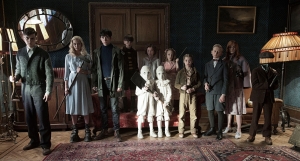
Miss Peregrine (Eva Green) keeps the wards in her charge safe by keeping them in a 24 hour time loop, the 24 hours before their beautiful home is to be bombed by the Nazis, circa 1943. Neither she nor her peculiar children age while in the time loop, but to step peregrins-gallery10outside of it would have time catching up to them in a hurry. Inside their cozy little loop, they can be as peculiar as they like without repercussion. Or they could until a peculiar gone rogue (Samuel L. Jackson) invents monsters to hunt them. That’s why Abe (Terence Stamp) chooses to live outside the loop – true he has to leave behind his love, but he keeps her and everyone else safe by hunting the monsters in turn. But in his old age, Abe meets an ugly demise and his eyeless body is discovered by his teenaged grandson, Jake (Asa Butterfield ), the only one suspicious enough (or peculiar enough?) to avenge his grandfather’s death.

Once Jake discovers the time loop and the peculiars, Tim Burton is in his element. He’s excellent at creating worlds, giving them texture and meaning and magic, and populating them with loads and loads of white people. Oh, haven’t you heard? Tim Burton’s a racist now. Well, not so much “now” as always, it’s just that only now are we really paying attention. Tim Burton is visionary; he can conjure ghosts in cheap suits, demon barbers and talking caterpillars – but cast a person of colour as one of his peculiars? That would just be weird. That is too much of a stretch of Burton’s imagination.

If it was just the Peculiar Children who suffer from his pale proclivities, we might forgive him, but a cursory glance over his IMDB list has me horrified. Samuel L. Jackson is the firstperegrins-gallery9 black man he’s cast in a leading role EVER, and you know he’s playing a villain. Jackson aside, Tim Burton’s casting takes on a very pale shade of white. His sets may be designed in technicolour but Tim Burton himself only dreams in caucasian. And it’s not really Tim Burton’s fault. We’re the dummies who have accepted this unthinkingly for years. He’s had huge ensemble casts with not even a tan among them and I for one haven’t even thought to question it.
We’re awake now, though, and the cat’s not getting back into the bag, no matter how many claw marks Tim Burton accrues trying to stuff the fucker back in. His words, you see, have proven even more damning than his pasty casting choices. “Things either call for things, or they don’t” he’s said, meaning, if a script says “African American”, he’ll cast an African American. But if a script says “person”, Burton reads it as “white person.” And that’s exactly the kind of inherent bias we most especially have to watch for. White tends to be the default far too often in Hollywood (and in life). But audiences are not. Audiences are made up of real people, a whole rainbow’s worth. And in 2016, we demand to see that reflected on the screen.

Tim Burton is just another old white dude defending the old guard. He wants things to stay the same. Dude with scissors for hands? Sure. Obsessive candy man? Why not. Orphan in a rubber suit playing god? As long as he’s not black, have at it!

“I remember back when I was a child watching “The Brady Bunch”and they started to get all politically correct, like, OK, let’s have an Asian child and a black — I used to get more offended by that than just — I grew up watching blaxploitation movies, right? And I said, that’s great. I didn’t go like, OK, there should be more white people in these movies.”

-Tim Burton, ladies and gentelmen

Of course his ignorant comments have done nothing but confirm the need for the very thing he’s eschewing. The truth is, for as long as this white default exists, we need to fight it consciously by countering it at every turn. If a script doesn’t demand it, society should. There is no room for lazy racism like Burton’s in 2016; it’s time to stop casting movies like they’re segregated.

Never mind that Blaxploitation movies were born in response to systemic racism and preached empowerment. Let’s just take his statement for what it is: white privilege, white ignorance, and an embarrassing amount of #alllivesmatter racist thinking. Tim Burton needs to pull his white head out of his white ass, and we all need to hold him accountable. And maybe while he’s at it he might also make a movie not so nakedly derivative of his old work. 😉
Audrie & Daisy

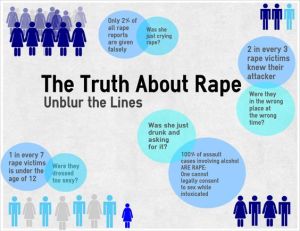
Audrie & Daisy is a documentary on Netflix that provides an in-depth look at the effects of cyber-bullying on two teenaged girls in the aftermath of their sexual assaults.

We live in a fucked up world. I was sick, and sad watching this. Sick that this is the world we’ve made for teenagers today, and it’s goddamned horrible. These little girls (14, 15 years old), nearly comatose with alcohol poisoning, are being 8747a7dd79a1b69c9906f86148c4a53cnot only sexually assaulted by gangs of their peers, but that assault is being recorded. Welcome to the digital age. These photos and videos are widely and quickly disseminated and before the bell even rings on Monday morning, everyone knows. The public shame feels overwhelming, all-encompassing. It’s nearly impossible to convince such a young girl that in fact things won’t always be this way, won’t always feel this bad.

Hearing Audrie Pott’s story made me ask Sean – was this the Canadian case, the one out in Nova Scotia? It wasn’t. Her name was Rehtaeh Parsons but the case was strikingly similar: rape, pictures, bullying, suicide. How often has this pattern repeated? OFTEN. So, so often. Daisy faced not just bullying after her attack, but open disbelief and derision from a whole town when she attempted to face the perpetrator in court. The mayor of Maryville, Jim Fall, and sheriff Darren White will make you see red. It wasn’t their sons who committed this crime, but it could have been. These are the disgusting individuals raising young men to be so crass and so entitled that they will boast about rape and take pictures for evidence. And these are the men who turn their backs on the victim, and the law, when such a crime occurs.

I was livid watching this movie, and you will be too. Good. We need to get riled up about this. Because we are endangering our daughters and quite obviously 479832cdcef9699caec033974a50b507failing our sons in some very basic way. Two of them, sentenced to testify on camera for this documentary, have learned nothing. No remorse, no responsibility. One young man volunteers that the only thing he’s taken away from this is that “girls gossip.” And these boys are free – to graduate, attend college, rape again, whatever. Free, and alive, unlike Audrie, unlike Rehtaeh, unlike so, so many.
There is something broken in our culture if something like this is a trend. Directors Bonni Cohen and Jon Shenk don’t condemn the Internet, they sensibly promote it as a tool for these girls to band together, to realize they are not alone. But it clearly has far-reaching implications that we need to take more seriously. Sending or sharing a video of a 14 year old girl getting raped isn’t just taking part in the sexual assault, it’s disseminating child pornography. Penetration isn’t the only crime here. Social media is making all the looky-looks culpable. As Daisy so eloquently quotes in the film, the words of our enemies aren’t as hurtful as the silence of our friends. It takes a whole community to do the right thing. This isn’t just a bad apple scenario, it’s a blight on the whole damn orchard.

Waffle Street

Waffle Street is a slice of life with too much syrup and not enough sustenance.

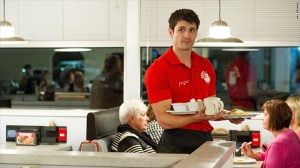
A Wall Street-type loses his job at a financial firm – doesn’t just lose it actually, gets fired and scapegoated for the firm’s shady dealings, of which he is also guilty. Wanting to redeem himself by doing “honest work” for a while, his fancy suit and attache case get his 160316114714-waffle-street-still-01-780x439resume thrown out of places from carpet fitters to mechanics. Only a chicken and waffle restaurant will take him, where he’ll fall under the tutelage and benevolence of grill man Danny Glover, who insists on being called Waffle Daddy.
This career downgrade means he and his wife have to sell their nice cars and sprawling home just as they are expecting a baby. But driving a Honda and owning a bungalow don’t elicit a whole lot of sympathy. The financial crisis that this dude helped create had far more dire consequences for millions of people.

This “riches to rags” tale is apparently based on a true story, but the movie feels the furthest thing from authentic. Low budget, bad acting, and sub-par script are all at play. This just doesn’t ring true. The voice overs, however, are unforgivable, and inspire almost as much nausea as the disgusting clogged toilet scene that for some reason was necessary to show in gory detail.

Since this is a rich white dude’s story, he of course isn’t satisfied with being a lowly server for long. Instead, he’s punching his time card with the ambition to soon open up his own franchise. And don’t worry – if the path isn’t as straight-forward as he thinks, he’s got a rich white father and a rich white grandfather both prepared to step in with wads of cash at a moment’s notice – but only if he’ll agree to take some time off soon. Because it turns out that working as if you’re poor and your life and family depend on it is really hard. It’s just too bad the film doesn’t know enough to be self-conscious about this.

TIFF: Loving

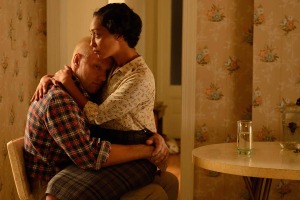
Director Jeff Nichols quietly tackles the subject of racism by holding up one Loving couple. Richard and Mildred Loving (their real last name) went to jail in Virginia in 1958 just for being married. Well, for being married to each other. For being married to a person of a different race than their own.

loving-movie-posterThe movie’s success lies in what a small, personal story this is. We never feel like the whole south is against them – but it feels worse that it must be one of their neighbours who keeps ratting them out. The police come, guns drawn, to break down their door in the middle of the night in order to catch them in a crime – that of sleeping next to itch other in marital bliss.
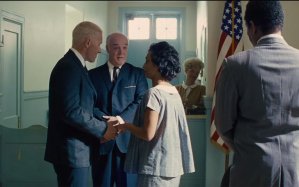
Richard Loving is the world’s quietest man, and Joel Edgerton has quite an uphill battle to portray him and not come off as unemotional. Ruth Negga exudes talent beside him as his wife, Mildred, who is also shy and meek but the talkier of the two out of necessity. Neither wants any trouble. You get the sense they’d be happy not to challenge anything if only they could be left alone. But in order to avoid prison they get exiled from the entire state of Virginia for 25 years. 25 years of raising their babies with no parents, siblings, or friends around to watch. Their love of family is what encourages them to push back, with the help of a nervy lawyer from the ACLU (Nick Kroll). He wants to present the case to the Supreme Court. He’s ready to fight against discrimination and prejudice. Richard and Mildred just want to be married.

Jeff Nichols embraces their humble nature and keeps his movie similarly loving-movie-trailer-focus-features-ftrreserved. There’s not a lot of grandstanding. In fact, he turns his back (and his camera) away from the big, sweeping court scene in order to keep it once again in the heart of the family. Easily eliciting a flood of emotions, it’s actually a relief to see them played out so superbly on Negga’s face, and in Edgerton’s shoulders, rather than some melodramatic speech. The restraint here is a credit to Nichols’ directing, but also to this wonderful casting.

The decision in their case, Loving v. Virginia, was not unanimous, but they did declare Virginia’s “Racial Integrity” law to be unconstitutional, which voided similar laws in other states as well. Actually, it’s the Loving v. Virginia case that was cited in the 2015 decision to allow same-sex marriage as well. Richard and Mildred, two humble people who just wanted to be a family, allowed the same for countless others.

It’s the kind of movie you’ll want to applaud.

Yes, #OscarsSoWhite, but can we really blame the Academy?

The truth is, the Academy’s demographics are a problem. They’re too damned white. But this year’s white-washed ballots are only a symptom of a much larger problem: the fact that talented black actors just aren’t getting cast.

A lot was made earlier this year when a role that was originally meant to be male (and in fact was based on a real-life man) was rewritten for Sandra Bullock (in Our Brand is Crisis). That movie aside, it turned out to be a banner year for women in film. So why can’t we do the same for people of colour? White has been the de facto race for far too long, the product of unimaginative directors and casting agents who refuse to acknowledge that most parts could and should be colour-blind.

The race for best actor and best actress Oscars this year lacks diversity. It’s a fucking vacuum where only white people may enter. But what choice did the voters really have? Last year we could easily feel that Selma had been grossly ignored, but can you think of a black actor, or any non-white actor, who was unfairly overlooked this year?

Don’t say Will Smith. Sure the Globes love him, he’s the freaking Fresh Prince, but he didn’t deserve an Oscar nomination for his work in Concussion. You could maybe argue Idris Elba, for Beasts of No Nation, but you’d have to argue. It’s a tight race this year, and only 5 roles can be acknowledged. Mark Rylance, Tom Hardy, and Sylvester Stallone are likely locking up most votes for best supporting actor. Christian Bale and Mark Ruffalo are more interchangeable, but it’s not clear cut. I do wonder, though, if perhaps the roles those two played could have been fulfilled by a non-white actor? I realize they’re both based on real-life people, but don’t we have a moral obligation to represent all people a little more fairly in the mainstream media? Movies are supposed to represent and reflect the audiences watching them, but they’re failing to do that over and over and over. And relying on “black movies” like Selma or 12 Years A Slave to provide the only colour at an awards ceremony is egregious and embarrassing. It’s also a little embarrassing that the only nominations for Creed and Straight Outta Compton, movies that actually did feature black talent, still somehow went to white people.

We can do better.


This Changes Everything

I have a confession to make. Lately, I’ve been sick of the Earth. Or at least sick of hearing about how we’re ruining it.

Before you judge, you should know that I make a monthly donation to a Save the Planet charity that shall remain nameless (because I’m about to talk shit about them). In fact, some guy from the organization called me last year and told me that my annual donation was in the 95th percentile of their donors, which now that I think about it can’t possibly be true. But they still want more. Not more money, believe it or not. They want my time. They want me to read their emails about whales, tar sands, and our old Prime Minister and how hell-bent he was on destroying the planet. They don’t even ask for more money. They just want to say hi and tell me how bad things are getting.

So I’m burnt out on the topic, I’ll admit it. And, apparently, so is Naomi this-changes-everythingKlein. Klein, narrator of This Changes Everything and author of the book on which it’s based, opens her climate change documentary with a confession much like mine. She doesn’t usually like documentaries about climate change. She can’t bring herself to care much about polar bears and she feels she’s heard it all before. “Is it possible to be bored with the end of the world?” she asks.

It’s the perfect setup for yet another climate change documentary. I literally AM bored with the end of the world and, if this is going to be the climate change documentary for people that are, then I’m keeping an open mind. Although skeptical at first, I was surprised to find myself thinking, “Okay, I’m with you so far”.

So, for 89 minutes, I decided to set aside my boredom with the end of the world and just let myself relax and be bored by this movie instead. Klein’s thesis, that global warming isn’t about polar bears or statistics but a story that we’ve been telling ourselves for four centuries, makes sense to me. For the last four hundred years (although, in fairness, I’m only willing to accept any personal responsibility for the last thirty), we have stopped seeing nature as something to be respected and revered and started seeing it as something to be conquered and manipulated for our own ends.

this changes everything 2While I admire her for reframing the problem of climate change as a story that we keep telling ourselves, Klein and director Avi Lewis lose some points for telling us the same story over and over. This Changes Everything is structured in five short segments that take us to Canada, the United States, Greece, India, and China, documenting the consequences of corporations’ attemtps to conquer nature and the concerned citizens who are actively trying to make a change. Because Klein seems to be making the same point with each segment, the impact of these stories diminishes with each new chapter.

All kidding aside about how I’m kind of bored with the end of the world, we are without question killing this beautiful planet that we are so lucky to have found ourselves on. I finally got to see The Martian last night and it only reconfirmed my feeling that of all the planets in our solar system, we got the best one. Climate change IS very sad, even if I too often feel numb to it. If corporations are allowed to keep doing what they’re doing, disaster is inevitable and, if you doubt it, I’d recommend this movie or Klein’s book or, better yet, I’ve got lots of informational emails from charities that I’d be all too happy to get off my hands. But if you’re already part of the choir, maybe it’s okay sometimes to get tired of listening to the preacher.

TIFF: The Agony and the Ecstacy

Matt wrote last week about the choices he made for his viewing pleasure (and hopefully your reading one) at the Toronto International Film Festival, slated to open with a bang (or rather, a star-studded screening of Demolition) on September 10.

I  held mine back because the truth is, the TIFF selection process was not a fun one for me. TIFF  has weird rules where it takes your money and then weeks later gives you a “randomly” selected window of just 60 minutes for making your choices – I’m seeing maybe 20 movies out of over 430, by my count, so that’s an awful lot of frantic sifting, choosing, replacing, and scheduling to do in just 60 minutes. It goes without saying that I was “randomly” selected to choose more than 24 hours later than Matt, which meant that a lot of my first, second, and third choices were “off-sale”. Off-sale doesn’t mean sold out, it means that they’re holding some tickets back for when they go on sale to the general public. And nothing against the general public, but I paid my oodles of money, I’m travelling in from out of town, and I don’t think it’s very nice or very fair to force me (since I’ve prepaid for tickets) to see movies that aren’t selling as well, when someone who pays a nominal $25 on the day of will have better luck than me.

I’ll stop my belly-aching now. We’re still pretty lucky to be going at all and I know that. So, without further whining about first world problems, my TIFF picks:

Demolition: I’m actually going to see this one with both Matt and Sean, so it’s a rarity, and I’m not only looking forward to seeing what director Jean-Marc Vallée can squeeze out of Jake Gyllenhaal, I also can’t wait to discuss it with my favourite movie-going friends.

The Lobster: This one is quirky as hell and right up my alley, and I never thought I’d be saying that about a Colin Farrell movie. Newly heartbroken, he checks into a hotel where he’s under the gun to find a mate within a super tight time period – or risk being turned into an animal and put out to pasture? It sounds more like a child’s drawing than a movie, but there you have it.

Eye in the Sky: We ‘re doing the red-carpet treatment of this one on Friday night, and Dame Helen Mirren is confirmed to attend. She’s looking less glamorous in the still from this movie, playing a Colonel who’s spent a long time tracking down a radicalized citizen who must be stopped. But when drone operator Aaron Paul reports that a small child has wandered into the kill zone, the team has to decide whether the casualty of this little girl is acceptable collateral damage. Yowza!

The Martian: You may know that I have been frothing about this movie for months now. I luuuurved the book and passed it along to all of my literate friends but then waved a flag of skepticism when I heard that a) it’s directed by Ridley Scott b) it’s a reteaming of Matt Damon and Jessica Chastain, lately seen together in Interstellar. But I hope hope HOPE that they “science the hell” out of this thing and blow my fucking socks off.

The Danish Girl: Eddie Redmayne is almost certainly in the running for a second Oscar for his portrayal of Lili Elbe, the 1920s Danish artist who was one of the first known recipients of sexual reassignment surgery. The trailer alone looks so lush that I’m drooping to see it – which is fortunate, because TIFF stuck me with TWO pairs of tickets to this. Woops! Anyone know someone who’s looking for a pair?

Freeheld: We’re seeing this one on flashy premiere night as well and will see both Julianne Moore and Ellen Page walk the red carpet. They star as a real-life couple from New Jersey who just want Moore’s pension to go to Page when Moore passes away. It was a huge case for LGBT rights and I’m betting that both of these ladies really bring it.

The Dressmaker: Funny story. I read this book recently, in anticipation of this movie. And I really, really liked it. Only: it’s about a young dressmaker who survives the sinking of the Titanic thanks to her wealthy employer. Knowing that Kate Winslet was set to star, I was shocked that she’d choose to go back to Titanic in this way. I mean, if anyone can put it off, it’s Winslet, but still. The more I read, the more I thought maybe she’s not playing the dressmaker, maybe she’s playing the plucky journalist. I still couldn’t believe the press wasn’t making a bigger deal out of this, but it wasn’t until I finished the book that I realized that I’d read the wrong Dressmaker. Same title, different author. Oopsie daisy again. But I’m confident this one’s good too, and it’s Kate Winslet, so we’re almost guaranteed to see boob.

Into the Forest: Here’s a movie that looks so familiar to me in the trailer that I believe I have read the book. I do not know for sure that it’s based on a book and I’m not looking it up. This way even I’ll be surprised (or, REALLY surprised!). Evan Rachel Wood and Ellen Page star as sisters who live in a remote cabin in the woods. The world is on the verge of the apocalypse and their location keeps them safe, but also leaves them vulnerable…

Anomalisa: This is the Charlie Kaufman-directed stop-motion animated ode to a motivational speaker and his bleak existence. I have no idea what to expect from it and that’s why I’m so crazy excited. It could go a lot of ways but no matter what, I do believe I’ll be seeing something special.

About Ray: Have you ever attended a red carpet event in the middle of the afternoon? Me neither! TIFF is so jam-packed with gliterry premieres that it starts packing them in at odd times just to get through them all. I’m tickled we got tickets to this (hard won, believe me) and I’m anxious to see if it’s as good as it looks, and if this and The Danish Girl will cancel each other out (though this one is also about a gender transition, it’s set in modern day, with Elle Fanning as the young woman who wants to be a young man, Naomi Watts as her mother, and Susan Sarandon as her mother.

Miss You Already: This might be a little too chick-flicky to be regular festival fare, but it’s Toni Collette so say what you want, but my ass will be in that seat at the ungodly hour of 8:45 in the goddamned morning. Toni and Drew Barrymore play lifelong friends whose friendship hits a bit of a roadbump when one discovers she’s pregnant just as the other gets a cancer diagnosis. Note to Sean: bring tissues, or an extra-absorbent shirt.

Maggie’s Plan: Starring the delightful Greta Gerwig, Maggie’s plan to have a baby on her own is derailed when she falls in love with a married man (Ethan Hawke) and destroys his relationship with his brilliant wife (Julianne Moore). I like Gerwig a whole lot but to be honest, I’m really wondering how this dynamic is going to work – and I’m super intrigued to find out how Bill Hader fits into the mix. Julianne Moore is going to be one busy lady at this festival!

The Family Fang: Directed by and starring Jason Bateman, he plays a brother to Nicole Kidman, both returning to the family home in search of their super-famous parents who seem to have disappeared. Jason Bateman is a little hit or miss for me but I committed on the off chance that the man playing his father – legendary Christopher MotherFucking Walken – might be in attendance. He’s not slated as far as I can tell, but I’d kick myself right in the sitter if he was and I wasn’t.

Legend: Tom Hardy plays real-life English gangsters. Yes, plural: the Kray twins. This dual role is getting a lot of buzz and since I seem to be mesmerized by Hardy in nearly everything he does, I’m super excited to check this one out.


Biggest TIFF regret: Missing Room. We’ll be back and forth between Ottawa and Toronto, but this particular movie only plays twice during the whole festival, and neither screening is on a day I’m there. I loved this book and am anxious to see the movie treatment. Good or bad, I want to pass judgement. I want to feast my little eyes. I am heartbroken to miss this one.

Two questions:

  1. We still have some tickets to alocate. Any suggestions?
  2. If you were in The Lobster hotel and failed to find a mate – what animal would you be turned into. Me? An otter. Definitely an otter.

We’ll be posting updates as we go, and be sure to check out our Twitter @assholemovies for photos of the red carpet premieres!


The Wolfpack

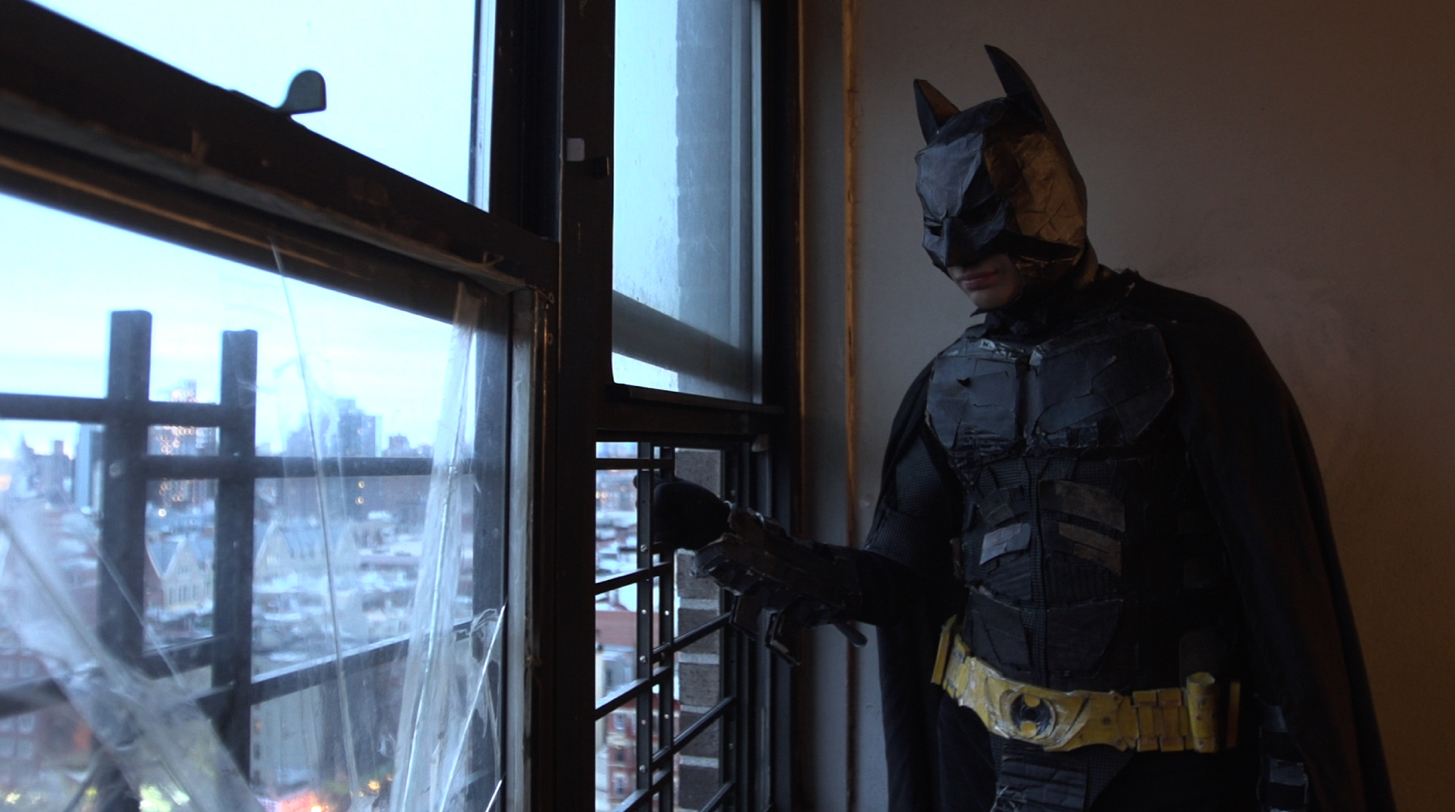
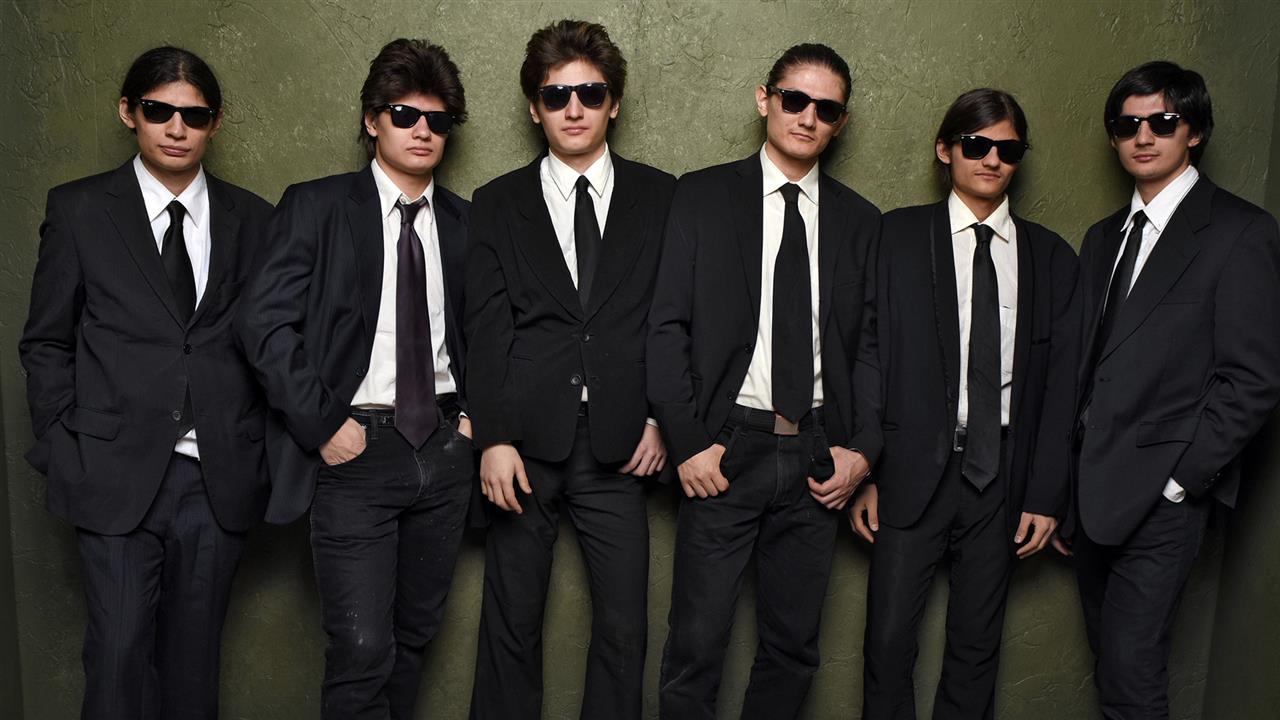
This is a documentary featuring a crackpot couple of parents and the 7 children they’ve home school and raised in near-complete isolation. The family lives in a 4-bedroom apartment in 060815wolfpack_1280x720Manhattan and have rarely left it. The kids are totally ignorant of the world outside their windows, but spend their time looking at another screen – their television. Enamoured with movies, they seem to have saved themselves from the nuthouse by finding a creative outlet in faithfully recreating their favourite movies.

They write scripts literally by taking long-hand dictation from the movie, one line at a time, and then typing it up with an ancient typewriter. They make astounding costumes and props using notebook paper and cardboard but end up with a product so realistic the police raided them on a gun charge.

It’s hard to watch this movie because this crazy way of life was imposed by a father who apparently hates the country that is feeding and housing him (he “shows his rebellion” by not working, although he would make an exception for a recording contract, (so obviously his beliefs are quite sincere) and has infected his family with such a pervasive feeling of paranoia that neither his wife nor children met with the outside world for 14 years.

When the 6 boys are finally old enough to venture out, everything is new and strange and bright; maybe too bright. Everything appears to be suddenly “3D” to them, and when they see trees up close and glorious, they can only compare them to a forest they’ve seen in Lord of the Rings.

The kids are well-spoken and capable – despite, not because of their upbringing. They are the-wolfpack-im-batmanfiercely protective of their mother who has fostered their creativity and seems to have been abused and subjugated by her husband right alongside her children.

The father remains a blurry presence in the life of his family, and within the documentary. He appears occasionally but seems to know he’s this movie’s villain. Worse still, the 7th child, a sister, is nearly completely ignored.

The boys met film maker Crystal Moselle by chance on one of their first outings as a group. A film student, the 6-pack of brothers with waist-long hair, dark suits and Raybans caught her eye, and she’s followed them ever since. Their world is definitely fascinating, and at times frustrating (like it or not, they’ve caught their father’s paranoia) but unfortunately, this documentary doesn’t have much to say. Yes, this was a crazy upbringing, a crazy life – but so what? Moselle doesn’t seem to have a point to make. And while I found this to be an eminently interesting watch, it wasn’t an enlightening one.


Ode to John Cusack

It’s impossible not to encounter an AWFUL lot of John Cusack when you’re perusing teen comedies. He practically had right of first refusal back in the 80s.

Say Anything

This one seems to lose a lot of sparkle the more I see it, and I’m not sure if it’s because it’s not aging well, or I’m not. Either way, the things that used to get me – the Peter Gabriel on the boomsayanything box, the post-virginity snail mail, it all starts to feel like not quite enough. Like, is this really the gold standard? I’m not sure if it used to impress me, but nowadays I just can’t shake the feeling that Lloyd Dobler is a loser. “Noble underachiever” is a phrase that can only be used by someone with the word teen at the end of their age. Unemployed, unambitious lazybones is more like it. Does that make me sound like my mother? Sure he’s sweet, but I like my sweet with a steady paycheque and some hobbies that go beyond stalking.

Better Off Dead

This movie is so bad I can’t even. Hadn’t seen this before, and should have kept it that way. The effects are terrible, although not quite as terrible as the wigs on the stunt doubles, but nothing holds a candle to the terribleness of the sentient hamburger animation. I can’t believe this didn’t derail Cusack’s career then and there. This comedy, which deals repeatedly with Lane (Cusack) better-off-dead-burgerwanting (and attempting) to kill himself because his girlfriend dumped him, should be much too dark for a burger playing an Eddie Van Halen song. And yet!

Turns out, no one hates this movie more than John Cusack. He walked out of the movie after 20 minutes of the screening and accused writer-director Savage Steve Holland of tricking him. “Better Off Dead was the worst thing I have ever seen. I will never trust you as a director ever again, so don’t speak to me.” He felt used and foolish and finished working with Holland only out of contractual obligation. Too bad they don’t mention any of this on the back of the DVD.

Sixteen Candles

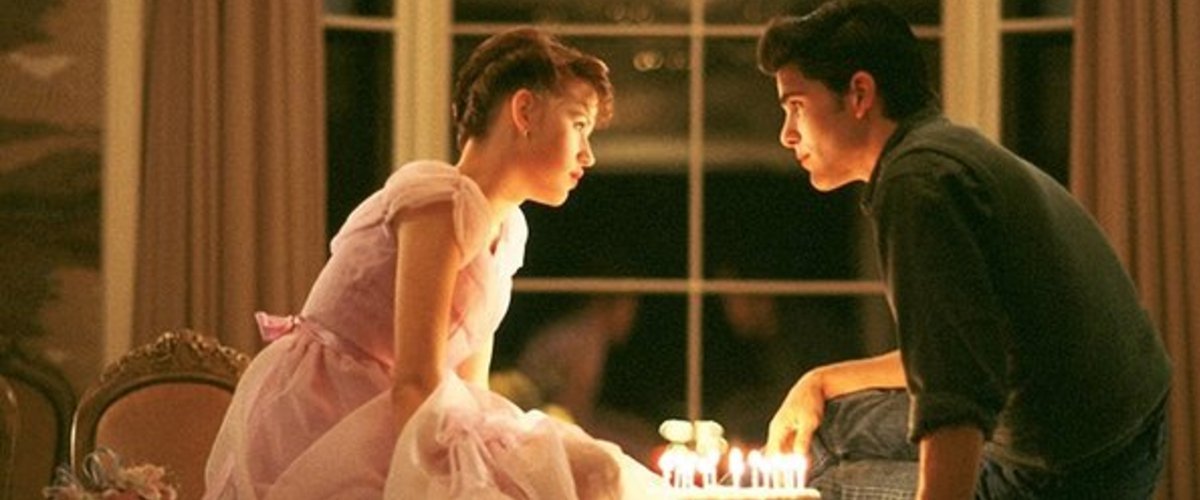
Poor Molly Ringwald. She’s trying to turn 16 and it’s all going horribly wrong. John Cusack is only in this peripherally, as a skinny little nerd, but even he’s not enough to keep the nostalgic glow sixteencandlesalive. Matt recently re-watched this and couldn’t get over the overt racism – a gong literally sounds every time not-at-all-racistly-named Long Duk Dong comes on-screen. For me, it was the rape that was unbearable. There’s sexism throughout the movie, of course, but rape is rape. This isn’t creepy or questionable. It’s legally, certifiably, conviction-worthy rape, but the movie plays it like it’s just par for the course. John Hughes died in 2009, recently enough that a look back should have been painful, but we’ll never know what he thought because he all but retired from the spotlight in 1991 after John Candy died suddenly of a heart attack. He wrote a few terrible scripts – Maid In Manhattan, Drillbit Taylor – under a pseudonym but kept his privacy well-guarded. He was nevertheless a genius of his generation and I wish we could have heard him say he knew now that it was wrong. Because this movie does get it very, very wrong.

Twofer: Get Hard & Furious 7

What can these two movies possibly have in common, other than me miraculously sitting through both?

Matt wrote all you need to know about the new Will Ferrell\Kevin Hart movie Get Hard. If you’re wondering if you should see it, talk to Matt. If you did see it and you’re wondering what the hell, read on: (spoilers ahead!)

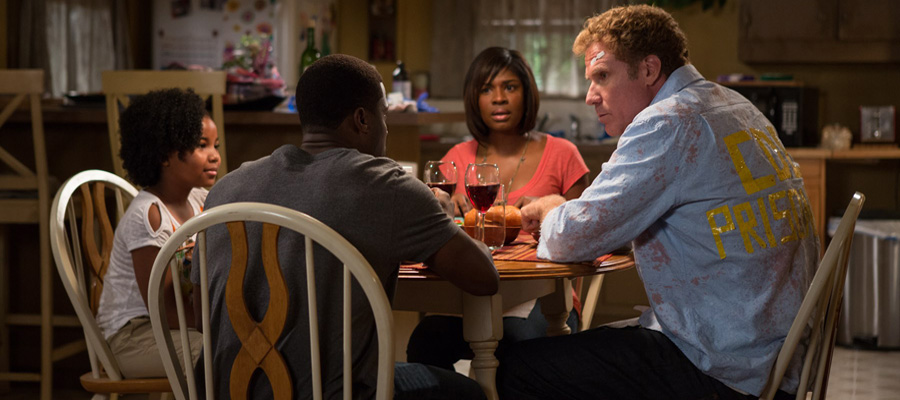
Get Hard has all the nuts and bolts of a smart social farce but never really puts it together. The first 15 minutes have a lot of potential in their view of the haves vs the have nots, but the movie ti-will-ferrell-get-harddevolves into all of the racial stereotypes it’s supposed to be making fun of. I thought it was super damaging and sad that they made the Kevin Hart character so uneducated. Will Ferrell is the dumb one, the one who got framed and never noticed, who is terrified of black people but isn’t afraid to offend them by misappropriating their culture, who treats any person of colour so indifferently he subjects them unthinkingly to his nudity because they might as well be just another fixture in his palatial home. And yet the script goes out of its way (3 times that I noticed) to have Will Ferrell make a literary reference that Kevin Hart just doesn’t get.

The whole premise of the movie relies on Will Ferrell’s (incorrect) assumption that like most black men, Kevin Hart is an ex-convict. Actually, he’s spotless…although it turns out that he does have a cousin who’s a gang banger. So there’s that. You know, because even the non-criminal black men roll with thugs. Is that the worst of it? Hardly? One scene that goes on way too long has Kevin Hart pretending to be prison characters – a scary black dude, and an angry Hispanic GH_D42_009.dngone. He throws out every stereotype he knows but we never once talk about why prisoners are overwhelmingly one minority or another when we have verifiable proof of white guilt right in front of us. I came out of this movie thinking a lot about what it failed to do or say.  It had every opportunity to talk about race, and about economic disparity, and white privilege, but it didn’t. Instead it was a tired, two-hour long repetitive rape joke, and what does that say about our culture that we feel better laughing about rape than we do about confronting racial bias? Yeah, I know this was a comedy that exists to make us laugh, not to be a teachable moment. But Trading Places managed to be both. There’s a lot of great satire out there, funny as heck, and while this one has the veneer of social commentary, underneath it’s just cheap particle board.

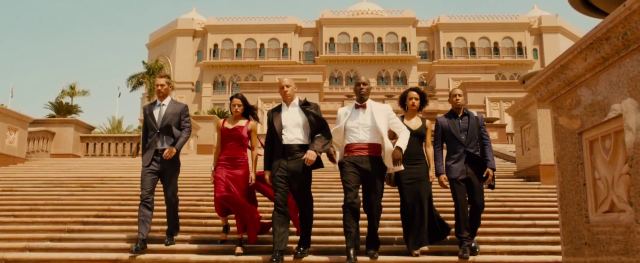
Furious 7 manages to tell us more about race without even trying. It’s hard to believe we’re seven movies into this franchise – you may think that’s seven too many, or you may already be eagerly awaiting number eight. But have you ever noticed how ethnically diverse the cast is, and has been since day one?

It feels a little tacky for me to sit here and list all the non-white people, but there are lots, and not just side kicks and bit parts – real marquee characters with back stories and dimensions, and they’re not necessarily the first to get killed off! The series has also visited a lot of non-English speaking countries along the way – trips to Brazil, Japan, and Mexico have only expanded the diversity of the cast, proving it doesn’t matter what colour you are so long as you’re buff and can drive a stick.

And that’s a great thing, actually. 54% of North American movie goers are white, but the actual Fast 5population is actually a little over 60%, which means minorities, and Hispanics in particular, are the fastest-growing ticket buyers. If audiences are multi-cultural, so should be the movies they watch. And whatever else The Fast and Furious franchise has been, it has consistently delivered a varied group of people capable of interracial relationships. And this inclusive trend exists behind the camera as well. The second one was directed by black filmmaker John Singleton, movies 3 through 6 were done by Justin Lin, and the most recent two were directed by Malaysian-born James Wan.

But the most impressive part (aside from y ability to start so many sentences with the word But) is that race is just a fact of li fe in these movies. It just is. Your boss might be Asian, your girlfriend could be Iranian, your best friend could be The Rock, your own step-kid could be Hispanic, but nobody need mention any of it, let alone pat themselves on the back for it. furious-7-header-1Generally, when Hollywood makes a movie starring a white guy and a black guy, the movie is about a white guy and a black guy: the culture clash! the misunderstandings! they’re so different but maybe also kinda the same! It can never just be a guy and his friend, who happens to be black. Get Hard is dripping with exactly this kind of guilt, which is sad because Ferrell and Hart are both funny guys and (I’m guessing that) in real life, Ferrell doesn’t talk down to Hart, isn’t afraid he’ll steal his car, and has maybe even shared a bowl of popcorn with him while watching Boyz N The Hood (directed by John Singleton, by the way! — coincidence? Yeah, probably).

Movies are the one place in America where segregation is still allowed to exist. There are tiny pockets of all-black Tyler Perry movies to counter the enormity of Hollywood’s white washing, but that misses the point. We don’t need more segregation, we need integration. And I’m not talking about movies “about race”, I’m talking about movies that have people in them, stupidly beautiful versions of people from all backgrounds standing around in tight tank tops talking about what really matters to America: fast cars and freedom.