
I was leery of this movie – I was leery of a Disney version of Africa, which I didn’t have the heart to see. I was worried they would polish over the poverty and we’d get some “family friendly”, watered down version.
Luckily Mira Nair is sitting in the director’s seat, and I have great confidence in her ability to paint a portrait that is beautiful in its truth. And in fact, Queen of Katwe is beautiful, and it doesn’t shy away from the less desirable side of  Africa. The whole point of this film is rooted in poverty. A chess club is started in Katwe because of poverty – because mothers are too afraid of medical expenses should a child break a bone during soccer. So a board game is just more appealing. One of the big draws in getting the children to come in and learn the game is that the chess is served up with a free cup of porridge.
Phiona is poor even in comparison to these other Katwe kids in the chess club. She is being raised by a single mother (Lupita Nyong’o) and helps earn income by selling corn in the streets. But it turns out that Phiona might just be a prodigy – she’s certainly learning faster than anyone expected and quickly outpaces her other competitors, even her teacher. She lobbies for literacy just so she may read chess books in her spare time. Her mother sells possessions for a little extra lamp oil to burn at night so that Phiona may study.
The kids are enthusiastic about their first away tournament playing “city kids” until they get a look at them – poised, clean, well-dressed, book smart. The little Katwe kids are swiftly intimidated, many giving way to hives and hyperventilation. Their coach (David Oyelowo) knows how to steady them, and their superior chess skills carry the day. Phiona is particularly talented, good  enough to represent Uganda internationally. As she begins to win, and to travel, she glimpses the life that could be hers if her chess game complies. But now that she’s playing not just to win, but to change her life, and support her family, it’s a lot of extra pressure any little girl’s shoulders.
Mira Nair does a wonderful job bringing Katwe to life. Even the slums are vividly rendered with colour and energy. Yes the story hits familiar beats but Nair bolster’s the film’s predictability with strong performances anchored to weighty characters.
Oyelowo as Coach Katende is as good as he always is, radiating a warmth with maybe a touch of twinkle in his eye, but he knows his role is to prop up the strong women in the cast. Lupita Nyong’o gives a heart-breakingly restrained performance as a young widow who knows her kids are sometimes going to bed hungry. She so carefully balances the fear of the unknown and a mother’s strong will to keep her kids safe with this siren call of a better life that she herself can’t comprehend. She refers to herself as an “uneducated woman” but that only serves to reinforce how fiercely smart she is, whether or not she can read. The film doesn’t talk down to or look down on anyone. Nyong’o is so sensitive in her portrayal it really elevates the whole film. Madina Nalwanga, though, is the revelation. She’s the unknown cast by Nair to star as Phiona. Despite having never acted, she clearly has the grace and poise to make this her career, and it has to help that though Madina escaped the slums with dance rather than chess, her story is eerily similar to Phiona’s.
Queen of Katwe would feel a lot like any other underdog tale, except for its setting. Nair makes sure that Africa comes alive. A small girl reduces chess to this: “a small one can become a big one.” Chess is still fairly boring to watch, on film and in person I’m sure, but when you give it such a strong parallel to their lives – where the small can become big, where the Queen is most powerful, it starts to strike a chord. Is it unabashedly feel-good? Yes, it is. But isn’t it nice to have such a positive story out of Africa for once?
 Disoriented. I walked out of the theatre disoriented. Was it the strobe light effect while the power failed? Was it the glass shards being pulled by Kurt Russell out of his own foot? Was it the bone sticking out of a redshirt’s leg? Was it that 11 people died and I wondered how the other 115 on the rig survived?
 Mike Williams (Mark Wahlberg) gets bloody. Jimmy Harrell (Russell) gets bloodier. The stand-in for greedy BP, Donald Vidrine (John Malkovitch), does not get as bloody as you’d hope. They are some of the lucky ones. Deepwater Horizon takes us into the heart of the mess. Tons of mud, oil, fire, explosions, and rag dolls flying all over the screen. It is hard to watch but not too hard to follow. We are provided with title cards and a grade school explanation of the Deepwater Horizon’s mission. They help the exposition fly by so we can get to the destruction faster.
 starts believing it, truly believing that her beauty is important and holds power over other people, that’s when things start to bubble.
 up with that head-stomping scene in Drive. And all the other scenes in Drive. I described Neon Demon to Sean as “less plot than Drive, and with super models” and also as “this year’s weird movie” to which he replied “Beasts of the Southern Wild weird?” and I answered “No, more like
  not really either of those two things. Surprise third option! I definitely didn’t hate it. Lord it has some of the coolest images I’ve seen in a film, ever. Gorgeous. Stunning. It’s one of the boldest things I’ve ever seen on film and I’m giving lots of credit to Refn’s cinematographer Natasha Braier (what! a female cinematographer??) Together, Refn and Braier create an unforgettable world that is hyper-real, extreme in both its beauty and its grit. The colour palette tells a story all on its own, progressing seamlessly from beginning to end.
 found it to be kind of empty. Like there’s obviously an allegory here, about our culture’s emphasis on female beauty, and on a certain kind of white girl skinny beauty in particular. And the dangers of narcissism. And female cattiness, which I almost hate just on principle. But this movie didn’t make me think. Like, at all, beyond “Oh, that’s gross.” So treat it like a high fashion magazine with pretty pages to flip through. I just can’t give it much more credit than that.
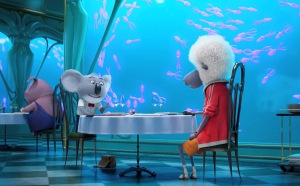 living. The theatre’s bankrupt. He hasn’t had a successful show in – well, maybe ever. The bank’s about to swoop in and take it from him, so in a last ditch effort to save it, he plans a singing competition.
 Gunther, a flamboyant dancing pig (Nick Kroll) partnered with Rosita, a shy momma pig with a big voice (Reese Witherspoon); an arrogant crooner of a mouse (Seth McFarlane); and a timid teenaged elephant with stage fright (Tori Kelly).
 Catrin (Gemma Arterton) hired to write “slop” (ie, the female dialogue) appeases him by enlarging the role of the drunk uncle just for him. Convincing her boss Tom (Sam Claflin) to let her do this is as infuriating and degrading as you’d imagine – until he starts to fall in love with her, of course.
 She mustn’t get too attached to feeling useful or creative. The war makes everything tenuous.
 The good news is, it’s on Netflix now, and you can satisfy your curiosity as to how Norwegians handle disaster flicks. The easy answer: a lot like us. Sure they sound a bit like the Swedish Chef (yes I really am this ignorant!), but they’re privy to all the same tropes that we are:
 geologist who knows what’s coming, only no one will believe him. Classic case of ignored scientist syndrome. His wife Idun (Ane Dahl Torp) and son Sondre (Jonas Hoff Oftebro) are at a resort hotel in town. He and his young daughter Julia (Edith Haagenrud-Sande) are of course elsewhere so of course when the alarm finally does sound, it’s too late for most, and this family will have to further test the odds by dividing them.
 Lion tells the true story of a 5 year old Indian boy named Saroo. Separated from his brother one night, he falls asleep on a train and wakes up miles away from his home, his family, from people who speak his language. He survives on his own for weeks before being thrown into an orphanage and then shipped down to an Australian family who adopt him.
 task but Saroo is miraculously lucky. Off he goes to India, to see if he can locate any family near the place he once called home.
 the screen. It literally is just a guy staring a screen night after night for weeks, months, years. He’s moody and emotional in between, throwing his relationship (with Rooney Mara, in an underwritten role) onto the rocks. Nicole Kidman gives an admittedly strong and stirring performance as his mother and helps bridge the gap, but there’s a marked lag until Patel goes back to India.
 As you may know, Pixar started the trend of releasing shorts before their films. It was a great way to showcase some stellar work that often gets overlooked. Disney has taken a page from the Pixar handbook and saw lots of success with its Frozen short, Frozen Fever, which aired before Cinderella. Inner Workings is slated to debut before their November release of Moana.
 and his heart. From the moment he wakes up, we see the interplay between his two most boisterous organs, and the way they direct the others as well. The organs have been properly Disneyfied – they are cute, they are funny, but they are never gross or full of blood and guts. Paul is just a regular guy who’s got to get to work. His brain marches him toward the office while his heart is distracted by the many other tempting options. The pace is jaunty, the jokes are clever, the short is colourful.
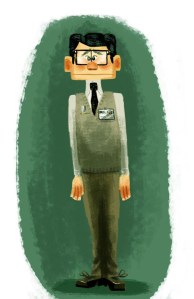 the encyclopedias he studied as a child, clear plastic pages holding the nervous system, circulatory system, etc of a man that could be overlaid on a body to see what fit where. Working at Disney as a storyboard artist, Leo along with many others, was invited to an open-pitch, where anyone could present their idea to John Lasseter and one would be chosen for production. Leo wrote his story with those encyclopedia images in mind. Spoiler alert: Leo won. Lurie mentioned that his deadpan pitched coupled with fanciful and humourous drawing really made his presentation stand out.
 Marnie has a little bit of money and an awful lot of time, so she packs up her New Jersey home and finds herself a condo in L.A. where her daughter Lori writes for television. Marnie’s California awakening is intoxicating. She loves all the things that most of us hate about L.A. But shopping at The Grove and volunteering only fill up so many hours. The rest are spent calling or visiting her daughter. Her daughter is not impressed.
 encouraged her to set boundaries with her mother, Marnie sees the therapist herself. And when that doesn’t go as expected, she finds other people to mother, like the ‘genius’ she overuses at the Apple store, and a friend of her daughter’s who’s more receptive to advice and well-intended intrusiveness.
 ASSHOLES WATCHING MOVIES