
 2016 Golden Globe nominee Jessica Chastain plays Elizabeth Sloane, a notorious Washington anti-regulation lobbyist taking on the biggest challenge of her career when she’s asked to help take on the powerful gun lobby.
It’s timely and potentially divisive subject matter that will surely be attacked in many online comment sections as Liberal Hollywood Elites trying to take your guns away. But, honestly, can’t we use a rational discussion on gun control right now?
Well, you won’t find any of that here. Neither Sloane nor her opponents are particularly interested in facts or rhetoric. They are masters of spin, manipulation, and trickery. Never mind guns or politics, this is really a movie about sleight of hand. It has more in common with movies about magicians, con artists, or thieves than movies about politics.
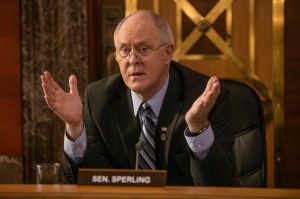 And maybe this is supposed to be the point. The only problem is that and Miss Sloane (the movie) seems to love the thrill of the chase as much as it claims to be outraged by her methods. For awhile, this behind-the-scenes look at what it takes to pass a bill in Washington (or keep one from passing) is almost fascinating and thought-provoking but the endless double crosses and Sloane’s nearly superhuman foresight make it harder and harder to take any of this seriously.
Needless to say, Chastain is pretty much the best thing about the movie. Any insight  we get into her character comes more from her performance than Jonathan Perera’s script. But even she occasionally fails to convince during some scenes where she seems to be acting more for the trailer than the actual film. I can only assume director John Madden is to blame for this given that Miss Sloane also showcases inexplicable overacting from the likes of Michael Stuhlbarg, Sam Waterston, and Mark Strong that I can’t believe made the final cut. You’d think a director of a Best Picture winner (Shakespeare in Love but still) would have done a better job of reining them in.
Madden may have had trouble keeping control of his hammy cast but he still manages to make a watchable film. It is slickly edited and never boring. And I have to admit, its most outrageous twists are the best ones. It just feels like a bit of a missed opportunity.
Maybe I shouldn’t complain. I knew almost nothing about this movie going in and expected something serious and dry. I was anticipating a chore and got a preposterous guilty pleasure that I’m still trying to forgive myself for kind of liking.
 Rogue One is the movie the prequels should have been. It is fresh, entertaining, and necessary. Rogue One’s humour works for adults as well as five year olds (though any self-aware Star Wars fan must acknowledge that the gap there for us is not all that wide). Rogue One links to what we’ve seen before in a way that feels natural and rewards fans who are familiar with every scene of the original trilogy, and leads into the known end point of A New Hope without any trouble whatsoever.
 occasionally feels like an awkward mix of serious war movie and hopeful space odyssey, but only rarely did I have that feeling. It definitely did not ruin the movie for me and that Star Wars feel is an overwhelming positive overall (especially an amazing Darth Vader scene during the climax that shows us the power we always knew he had).
 While searching for Will Smith’s filmography, I was surprised to see the pleasure with which critics are tearing this movie apart. The reason I was looking for Smith’s info was to try to figure out whether Collateral Beauty is his best dramatic performance (and I quickly realized that since I haven’t seen Ali, I’m disqualified from weighing in on that topic). With that lead-in, it probably goes without saying that I again think it’s been too long since the critics were thrown a juicy morsel, they’re searching for anything to bite down on as a result, and Collateral Beauty has been flagged as an easy target.
 has made a fantastic film about family, grief, and how easy it is to push people away when we’re hurting. It’s one of 2016’s best films not because it has any particularly new ideas or innovative style but simply because it’s refreshingly honest.
 she’s simply paying tribute to those of us who will never get enough of Edina and Patsy.
 time they’re finding that perhaps being hounded by the paparazzi isn’t quite what they’d always hoped.
 not been deliberately trying to kill time AND had this particular movie not been playing in the convenient slot. Should YOU see it? Not unless you find yourself in similar circumstances. I mean, it’s not awful. Check it out next year on Netflix, maybe. It’s got a pretty good cast and the odd chuckle, so it’s not a complete waste of space. It just wouldn’t quite make it onto Santa’s Nice list, we’ll say. Is that generous of me? Am I in the holiday spirit? Gross.
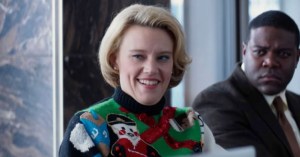 non-denominational holiday mixer where Kate McKinnon is stretching out a 3 minute bit and she’s the best thing on screen.
 friend Maggio (Frank Sinatra) keeps running into trouble with a stockade sergeant (Ernest Borgnine) with a mean streak. And Prew himself is falling in love with Lorene (Donna Reed). It might seem like normal every day stuff, except you and I know what’s coming: Pearl Harbor. It’s awful to know what’s around the corner for them, how petty all of these problems will seem soon enough, if any of them are left to still have them.
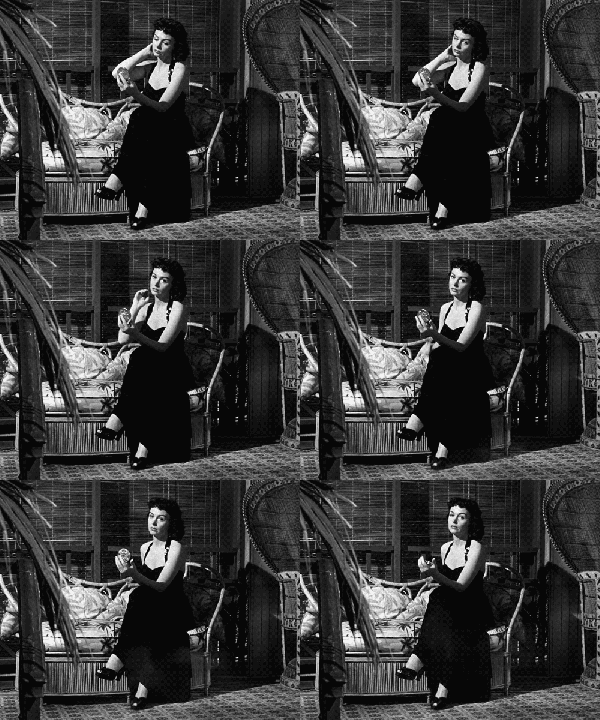 performances from his cast mates. Burt Lancaster was so nervous to act alongside him he’s visibly shaking in their first scene together. Sinatra was just grateful for the part. You may know that Mario Puzo fictionalized his movie career in The Godfather; a certain studio exec is convinced to hire him after finding his prized horse’s head in his bed. In real life, it was a lot less dramatic: Sinatra was married to Ava Gardner at the time, and she happened to have some pull with Columbia. Or at least that’s the version everyone agrees to.
 lots of naughty projectionists would cut out a slice to keep as a souvenir. Censors demanded that Kerr’s swimsuit be skirted so as not to be too “provocative.” And that wasn’t the only modification made. In the book, the captain’s wife gets gonorrhea from her philandering husband, but that part is conveniently edited out. And in the credits, Donna Reed is credited as a “social club employee” which is 1950s code for hooker. And the military had their own standards to contend with: you couldn’t portray military sloppiness, hypocrisy, brutality…or homosexuality. Not to worry. The gay stuff was also left out, along with all the other juicy bits that led to the novel being called From Here to Obscenity by some. But that scene. The scene on the beach. Makes me want to recreate it when we’re in Oahu today (it was in Halona Cove), but only if I can find a modest skirted swimsuit.
 ASSHOLES WATCHING MOVIES