Our reviews and thoughts on the latest releases, classics, and nostalgic favourites. Things we loved, things we hated, and worst of all, things we were ambivalent about.
When GJ returns home from school, his mother, Cindy, has a surprise for him: “I quit drinking!” An even bigger surprise than her 15 months of sobriety? She’s also spent all of his savings. So it turns out he’s home for good. Deprived of film school, he turns the camera on his fuck-up Mom and her has-been rock-star husband, Frank.
This film is actually a dramatic reenactment of a documentary of the same name, by G.J. Echternkamp. And his parents are undoubtedly larger than life, which in this case is a kind euphemism for colourfully pathetic, hopeless losers. Rene Russo and Oliver Platt play the titular characters and you’ve got to admire their abandon. They each give strong performances, and you’ve got to give props to Russo in particular for her willingness to throw herself into such an unflattering role.
When GJ has enough of their codependent craziness he seeks out his biological father for some commiseration but he surprisingly turns out to be in Frank’s corner. It’s way too easy for GJ to blame his struggles on his underachieving parents, but when that’s not getting him anywhere, what then?
Watching this film and reminding myself that Frank and Cindy are real people makes this a particularly excruciating experience. And to be honest, the screenwriters trying too hard to stick to the source material means this movie has no real backbone. It ambles but doesn’t amount to much. And weirdly, GJ seems to be the least developed character – it’s his story but he’s a pretty passive player. And that feels ironic since Echternkamp himself helped bring this script to life, and he’s also sitting in the director’s seat, although at times he seems to forget about the advantages of feature vs documentary – he could make the scenes look amazing yet seems to enjoy filming in dank little corners.
At any rate, this is clearly a personal film for Echternkamp. There’s catharsis happening here. And self-indulgence. Lots of that. But Russo and Platt are good, good enough to make up for the film making foibles.
When you get to see a movie like this, it’s kind of a privilege to get to talk about it.
Life, Animated is a documentary featuring the amazing Suskind family. Actually a fairly typical, loving American family who happen to have a son named Owen who’s autistic.
Owen, the youngest of two boys, was a happy and rambunctious little 3 year old when autism reared its head, and suddenly the Suskinds had a boy who wouldn’t talk and who’d lost many of his newly-acquired toddler abilities and motor skills. He remained quiet and withdrawn for many years until his mother recognized a pattern in his gibberish – it was actually a line of dialogue from The Little Mermaid.
Owen was a big fan of Disney cartoons and often watched them with his family. What they hadn’t realized until then was that Owen wasn’t just watching them, he was studying them. He’d already memorized the complete scripts of several movies, and was learning to equate emotions with the exaggerated facial features on his favourite cartoon characters. One day Owen’s father is able to hold his first conversation with him in years simply by pretending to be Iago, the talking parrot from Aladdin.
Fast forward to today, and Owen is a bright young adult. He’s learning skills to help him be more independent, and when he graduates, he’ll be moving into his own condo in a group home. Owen has flourished because his family was able to communicate with him through his beloved Disney movies. Disney canon became their family bible and Owen came out of the autism shell because of it. The Suskind family knows that Disney films won’t do it for all autistic kids, but they are encouraging families to find that one thing their child is passionate about, and to make it family culture. This is how they brought back their son and they only wish the same for others.
Owen’s dad Ron met the filmmaker, Roger Ross Williams (technically the first black Oscar-winning director, for a short he did in 2010), when both worked at Night Line. Ron had just written a book about his family’s experience and thought it might make an interesting documentary. Williams agreed. So do I.
I don’t know about this film’s potential to “save” other autistic kids. Owen is of course still autistic, but his parents and his brother can reach him now, they can express their love and see it reflected back, even if it’s a line originally quoted by Belle to the Beast. What I do know is that this film opens a lot of doors. This isn’t just a talking-head piece, we actually get to visit with Owen in his new situation, and his family as they continue to take on new challenges. We get to see autism in action, impacting a family and influencing a community. And we get to see that Owen is a guy with wants and needs like any other. He expresses them differently, and once you get the hang of his language, it’s not necessarily even worse, it’s just different.
Now as a young man, there’s still nothing Owen likes better than to chill with a Disney flick. When he’s feeling anxious, it’s 3 scenes of Dumbo. When he needs to overcome odds, Hercules will do the trick. When he grapples with growing up, it’s The Lion King to the rescue. It’s a code, but once deciphered, it’s actually pretty ingenious.
I do hope loads and loads of people will see this, and be encouraged to start a dialogue about what autism is and how we can all be part of a workable solution. Autism is a spectrum disorder, which means not all are like Owen. Some will be more or less affected, but I think the takeaway is that perhaps all lives could be improved if only we were looking for the right kinds of answers.
This isn’t the first documentary to look at autism, but what makes this one so interesting and watchable is Owen himself, a very dynamic individual. He’s at his best at the helm of his Disney Club, where other learning-disabled young people gather to watch and discuss Disney animation. They may even run lines afterward, or play the score, and once in a while Jonathan Freeman, voice of Aladdin’s villain Jafar, drops in to lend a hand, and even Gilbert Gottfried, voice of Iago himself, has attended, but nobody knows the lines better than Owen himself.
Owen proved this at our screening at the Tribeca festival where he proudly put his skill on display, playing opposite Gilbert Gottfried, and even feeding him the lines. Many of the film’s crew were on hand, as well as the entire Suskind family, to launch this movie into orbit. There’s a lot of love and care gone into this work, and some of the best bits are when Owen’s own stories are beautifully animated (by Mac Guff). Owen identifies more with the sidekicks rather than the heroes of his beloved films, and he brings them to life in a very moving way.
They hope to take it to theatres this summer and I hope that you will all take the time to see it – it’s something special.
Spider-Man. Ant-Man. Falcon. Black Panther. These are the top four characters, in order, in Captain America: Civil War. You might think it’s a bad sign that neither Captain America nor Iron Man is on that list, but you’d be wrong! Although you would be right in thinking I wish this had been a Spider-Man movie with a Captain America/Iron Man cameo, rather than the other way around.
One big difference between the two movies: Marvel’s is far better. Though like Batman v. Superman, Civil War is too long. With that said, I’m willing to forgive Marvel since that extra run time was used to shoehorn in Spider-Man. Who, as mentioned at the start, was AWESOME.
Another big difference: Marvel’s movie is way funnier. Civil War would have won by default anyway since there were no laughs at all in BvS, but Civil War is legitimately funny in between the dead family member melodrama.
But as with BvS, don’t expect anything new, don’t expect a good villain, and don’t expect the story to make any goddamned sense. Really, the only differences between the two movies are that (a) we’re glad to see/meet Marvel’s supporting heroes while DC’s just felt like filler; and (b) most of Marvel’s heroes are eager to make us laugh even while fighting, which is a welcome change from DC’s rainy night fights between surly mumbling demigods. Spider-Man is the perfect example of Marvel’s success in both categories, and that’s enough to make this movie worth watching.
Mostly, that’s because Spidey is the best superhero ever and I’m pumped he’s back in the MCU, where he belongs. Though I am suffering from chronic end-credit-scene-fatigue, as a Spider-Man fan I’m glad I stuck around ’til the very end. Hint, hint.
Captain America: Civil War gets a score of eight webslinging vigilantes out of ten.
To be honest, I watched this movie some time ago, it’s just that writing about it in any meaningful way was a little daunting.
It’s about an actress, Maria (the fabulous Juliette Binoche), who has had a lauded career after being launched in the theatre playing Sigrid, a sizzling ingénue. Now, years later, the playwright and her mentor has died, and there’s interest in re-staging the play, and Maria is approached to star. The catch? This time she’d of course be playing the role of the older woman, Helena, in a complicated May-December lesbian office unrequited romance (whoa, that’s a mouthful).
Should Maria take the role? Initially she declines. She finds the older character to be a bit pathetic, too much of a doormat. But the director is tenacious and Maria is not exactly afraid of a challenging role, so she accepts. She retreats to a remote chalet with her personal assistant (Kristen Stewart) and they begin rehearsing the play, only in the rehearsing, Maria again grapples with her distaste for the weakness of the character, and must face her own feelings about aging.
Chloe Grace Moretz floats in as the scandal-prone Hollywood It Girl who is to play the younger woman. She flatters Maria with fandom but ultimately plays the role much differently than Maria did, which further drives Maria to feel obsolete, and to wonder if this older character is perhaps an uncomfortable reflection of herself.
I didn’t find the story-telling in this movie to be quite satisfactory, but the performances were top-notch. There’s an intense, almost sexual chemistry between Binoche and Stewart that makes their rehearsals a rare treat to watch. Not often are two such strong female characters allowed to shine on the screen together with such naked feeling.
Binoche loved the idea of this movie so much that she approached director Olivier Assayas with it and convinced him to write the script as well. In a funny meta twist, Assayas co-wrote the script of Rendez-Vous, which was the film that helped make Binoche a star. Binoche claims she strove for such authenticity that she accepted a brief role in Godzilla just so she could believably deliver a line about acting in blockbusters.
Chanel (the fashion house) stepped in not only with wardrobe but with financing so that Assayas could film in 35mm. The movie does in fact look totally gorgeous, not least because it’s filmed on location in Sils Maria, Switzerland. And Binoche reins over this film with stately grace, simmering jealousy, raging insecurity – every bit of it layered and nuanced to perfection. Maria is dealing with a changing industry and a role that requires alarming introspection, but what Binoche and company accomplish is to make us ask ourselves – are we Sigrids, or are we Helenas?
Director Sophie Goodhart has a sister with MS and a willingness to tell the ugly truth: that as uncouth as it may be, sometimes we’re jealous of people with disabilities. They’re lauded for their bravery and showered with attention, and every one of their accomplishments is framed all the more positively in light of their disability.
In 2001, Goodhart channeled these feelings into a script for a short film called My Blind Brother, starring Tony Hale, and it’s taken all this time to hustle that short into her first feature length, but here it is, in all its unflinching, unpolitically correct glory.
Directing from her own script, Goodhart introduces us to two siblings, Bill and Robbie. Robbie (Adam Scott) is the blind brother, an athlete who raises money for visually-impaired children with various athletic feats. His brother Bill (Nick Kroll) is his virtual guide dog, running every race right beside him, keeping him out of harm’s way, while receiving absolutely none of the glory. Our expectations are reversed when the disabled saint actually turns out to be a bit of a prick, and his do-gooder brother is secretly seething with resentment and guilt. These are ingredients to a pretty awkward stew, but when you throw in a fucked up girl (Jenny Slate, drunkenly hooking up with Bill on the eve of her boyfriend’s funeral) trying to redeem herself by unwittingly volunteering with her one-night-stand’s blind brother, you get a pretty juicy jambalaya.
The casting also thwarts expectations, with Adam Scott dangerously good as a smug, vain, puffed-up pompous ass who just happens to be blind and Nick Kroll playing the relatively straight though unambitious brother. Slate, meanwhile, walks a thin line between charming and neurotic, and gets it mostly right. So they’re a fun trio to eavesdrop on, even though they’re encouraging you to do the one thing your mother would rap your knuckles for: laughing at the disabled.
But Goodhart makes sure that we’re never laughing at blindness per se (except for a few sight gags, ironically) but at all the constructs that make us tiptoe around a disability. Which maybe makes the movie sound a little more “issue movie” than it is. It’s a comedy, and a pretty easy breezy one at that. But you will laugh. I certainly did – and not just the guy at our screening who obliviously asked “Has the blind community seen this yet?”
I was a little uncomfortable when I discovered that this documentary about Kenyan warriors had a pun in its title.
With armed cattle rustling getting out of hand, the Kenyan government introduced a disarmament program in 2004 to end the violence. Warriors like Julius Arile and Robert Matanda were encouraged to turn over their guns in exchange for amnesty and a pair of running shoes. With their new shoes, many Kenyans decide to leave their life of violence and begin training as marathon runners. Hence the title of Anali Nayar’s documentary.
The transition from warrior to athlete isn’t an easy one. Arile and Matambo, friends since boyhood, got their first guns when they were in primary school and have grown accustomed to the seductive feeling of power and fearlessness that they bring. For Atale, who has been fortunate enough to never have had to kill anyone, the notion of putting all those years running from the police to good use by racing is an exciting one. For Matambo, who has earned much more of a reputation for violence, turning in his weapon is a much scarier decision because he risks retribution for his past crimes.
So they both begin training for the Tegla Loroupe Peace Race. Arile shows tremendous potential and gets to compete in Prague and at the New York City Marathon. Matambo, on the other hand, can’t quite keep up and stays fighting the good fight for peace at home, eventually getting involved in politics. The more opportunities come Arile’s way, the more Matambo feels that his friend has forgotten where he came from and the more jealous he becomes. Filmed over 8 years, Nayar’s film follows the impact on a lifelong friendship when their two paths diverge. No fiction could feature story arcs that are more epic.
As much as I wish that Nayar had thought of a better title, Gun Runners is a wonderful documentary. Its gorgeous cinematography looks better than most features do. Better yet, as likeable as her subjects are, Nayar resists the urge to portray Arile and Matambo as one-dimensional inspirational symbols and doesn’t try to hide the fact that these are real and flawed human beings. She makes them easy to relate to and impossible not to root for.
This post first appeared at Cinema Axis as part of their Hot Docs coverage.
This movie was shot in 2012 and it took 4 years for the heat of everyone blushing in embarrassment to die down enough to release it. Maybe they should have given it 4 more.
In it, Anna Kendrick and Miles Teller play self-obsessed millennials who graduate and are astounded to not immediately be handed their dream jobs with rockstar perks. This premise is so flimsy they try to pad it out with a whole bunch of friends also struggling in the real world, thus ensuring that there is never a whole story being told anywhere, but lots of odds and ends you can’t possibly bring yourself to care about. Bryan Cranston is the best thing in this movie, playing the guy who has aged out of his job and is facing unemployment in a job market crawling with shallow selfie-resumes.
Under no circumstances should you attempt to watch this movie. If you do, please contact your local poison control centre immediately, and flush the area with water.
The less said about this ass-munching movie the better, so instead let’s discuss the myriad better ways this money could have been spent. Assuming a very modest budget of 8 million dollars, you could have bought:
A Swarovski crystal-studded bathtub for your dog: $39 000
A bejeweled, 18-karat gold Monopoly set: $2 000 000
Exclusive gold shoelaces by Mr. Kennedy: $19 000
A bottle of 100 year old champagne recovered from a shipwreck which may or may not still be potable let alone drinkable: $275 000 Add a champagne bucket by Aston Martin (it’s insulated with carbon fibre) for $38 000
A plain white t-shirt “designed” by Kanye West: $120
A custom-made suit of armour: $20 000; add one for your pet guinea pig: $24 300
A lock of Elvis’s hair, as far as you know: $115 000
A stamp of Nicholas Cage’s face: $19
A ziploc bag of air from Kobe Bryant’s last basketball game: $16 000
A cornflake shaped like Illinois: $1350
3 x-rays of Marilyn Monroe’s chest: $45 000
A banana slicer: $4.75
A ghost in a jar: $50 992
A 1/8 model of aLamborghini Aventador. It doesn’t move but it does take up lots of space on your desk: $4 700 000 (just to be clear: an actual Lamborgnini will set you back about 400K)
A gold, diamond-encrusted Nintendo Wii system. Be sure to save your crappy old plastic wii-motes because this baby doesn’t come with any! The kicker? It’s already obsolete!: $500 000
William Shatner’s kidney stone: $25 000
Plastic surgery to look “like” Justin Bieber: $100 000
You could buy all of these items for the cost of 1 Get a Job, they’d all be a better use of your time and money, and you’d still have enough cash left over to make The Blair Witch Project. Think on that.
Keanu is not just a dark haired, sunglasses wearing Canadian. He’s also a kitten with a rare disease: cuteness. Or so we are led to believe by Comedy Central duo Key and Peele, playing cousins who would do anything to get Keanu back after he’s kitten-napped by a gang of street toughs led by the one and only Method Man. And so goes Keanu, a film that takes the two cousins from one life-threatening situation to the next, in pursuit of a cat.
Being a dog owner, I am duty bound to object to the whole premise. This movie would have been a million times more believable if Keanu was a dog. Cats are too cold and cranky for you to want to chase one all over Los Angeles. Deep down you know that cat doesn’t care about you at all. So if you lose a cat in real life, you just put up a poster and call it a day. But for a dog, that’s different. If your dog gets lost you don’t look for an hour and then call it quits. You get your ass out there and you find that fucking dog!
Poor pet choice aside, Key and Peele’s adventure is an entertaining one. While there are not a ton of belly laughs, there are a lot of memorable scenes, including a fantastic George Michael singalong and some hilarious movie-themed cat pictures.
There is also something refreshing about seeing these normal guys (who happen to be black) play with stereotypes, not only with their choice of music but also with their attempts to fit in with a plethora of cat-loving gang members. That element of satire is a welcome improvement on Hollywood’s usual reliance on racial tropes.
Writers Jordan Peele and Alex Rubens deserve a ton of credit for departing from that formula. Keanu successfully subverts the usual tropes and shows that the stereotypes we cling to are an unconscious attempt to fit into a role rather than being innate characteristics. And that’s why this dog-lover enjoyed a movie about a kitten, because it’s not really about a kitten at all.
High-Rise is the cinematic equivalent of a raisin muffin: it’s okay as long as you weren’t expecting chocolate chip. But why not have chocolate chip to begin with?
The film’s biggest problem is that it took 40 years to convert J.G. Ballard’s novel of the same name into a movie. In the meantime, Snowpiercer happened and was a way more awesome movie than High-Rise, or really anything else ever.
It’s not just that Snowpiercer had better acting, writing or directing than High-Rise (though it did). High-Rise looks good but has a structural problem. Call me an optimist but I couldn’t accept High-Rise’s premise of an isolated lawless world developing inside a skyscraper, not when the outside world remained completely accessible to the building’s inhabitants. There’s no apocalypse event in High-Rise. The building’s main doors aren’t ever blocked. Mid-movie, a cop even pokes his head in to check whether things in the building are okay. But for reasons that aren’t at all clear, instead of calling 911 to report any of the murders, suicides or sanitation issues inside the building, the residents all choose to stay inside, ignore the dead bodies and garbage bags that line the halls, and scavenge for dog meat rather than drive to the nearest supermarket for hot dogs. That’s something that was impossible for me to swallow.
It’s too bad that conceptual problem is baked into High-Rise. I wanted to like the movie but I just couldn’t. Am I naive in thinking that people would take a bit of time between drunken orgies to leave the building and restock their snacks? I hope not, though the numerous food references in this review tell me I’m very hungry, yet instead of going upstairs to our kitchen I’m still here typing…
High-Rise is not a bad movie, but if you’ve seen Snowpiercer then High-Rise feels like a pale imitation. And if you haven’t seen Snowpiercer, what are you waiting for?
If you don’t know that name yet, stay right here while I get a nice wooden baseball bat to beat you over the head with. Don’t move, I’ll be right back.
Seriously, I talk obsessively about Waititi and his movies because I just adore them. He’s remained mostly under the radar with offbeat, cult hits like Boy and Eagle Vs Shark, which have made him famous in his native New Zealand but all but undiscovered over here in North America. WHICH IS A FRICKIN CRIME.
Last year his vampire mockumentary What We Do In The Shadows was a modest breakthrough that earned him some well-deserved and super duper overdue attention. It will also help that he’s had a hand in writing Disney’s upcoming animated film Moana and will direct Thor: Ragnarok, which will be his first budget exceeding $12.
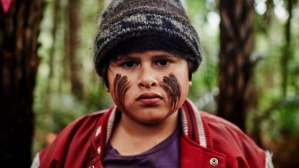
But back to Hunt for the Wilderpeople, perhaps the best thing I saw at the Tribeca Film Festival and maybe the best thing Waititi’s done to date. He adapted it for the screen himself and as the film opens up, you immediately get the sense that it is a labour of love. The beautiful, lush New Zealand bush is on proud display in soaring shots that will give you serious travel envy. Ricky Baker (Julian Dennison) is a boy who’s had a run of bad luck with foster homes, and his child welfare worker is quick to give a laundry list of his transgressions. This doesn’t deter his determined newest foster mum Aunt Bella (Rima Te Wiata) but Uncle Hec (Sam Neill) is a lot more reticent and gruff. Their primitive way of life is a bit of a shock to gangster-wannabe Ricky, but that’s just the tip of the iceberg because soon events will have him and Uncle Hec running from the law and hiding out in the bush as an intensive manhunt for them is underway.
The movie becomes an odd-couple adventure with Waititi’s niche sensibility and loads of mass appeal. Seriously – who on this green earth could fail to be charmed by this movie? For such an endearingly quirky comedy, it has no right being even half as beautifully shot as it is. There’s a gloss to the film thanks to some real cinematography that’s been missing from his previous work. A lot of care has gone into this film and the casting is just one easy example of how diligently the thing is put together. Sam Neill is an interesting choice and brings the right mix of gravelly loner bluntness and a secret longing for connection. But it’s Julian Dennison who will leave the largest impression. A kid actor can make or break your movie when he’s in a central role, but Dennison is a professional, easy and natural in front of the camera. There’s pain behind his farcical behaviour, and in allowing us to see both, there’s real depth and emotional investment in the characters. Waititi, Rachel House, and Rhys Darby provide excellent supporting roles that’ll leave you cramped from laughter. Positively bruised from chuckling. It’s a new personal best for Waititi and a new sentimental favourite for me, but one that deserves its place among the very best movies of the year, period.

 This film is actually a dramatic reenactment of a documentary of the same name, by G.J. Echternkamp. And his parents are undoubtedly larger than life, which in this case is a kind euphemism for colourfully pathetic, hopeless losers. Rene Russo and Oliver Platt play the titular characters and you’ve got to admire their abandon. They each give strong performances, and you’ve got to give props to Russo in particular for her willingness to throw herself into such an unflattering role.
 to stick to the source material means this movie has no real backbone. It ambles but doesn’t amount to much. And weirdly, GJ seems to be the least developed character – it’s his story but he’s a pretty passive player. And that feels ironic since Echternkamp himself helped bring this script to life, and he’s also sitting in the director’s seat, although at times he seems to forget about the advantages of feature vs documentary – he could make the scenes look amazing yet seems to enjoy filming in dank little corners.
 exaggerated facial features on his favourite cartoon characters. One day Owen’s father is able to hold his first conversation with him in years simply by pretending to be Iago, the talking parrot from Aladdin.
 can express their love and see it reflected back, even if it’s a line originally quoted by Belle to the Beast. What I do know is that this film opens a lot of doors. This isn’t just a talking-head piece, we actually get to visit with Owen in his new situation, and his family as they continue to take on new challenges. We get to see autism in action, impacting a family and influencing a community. And we get to see that Owen is a guy with wants and needs like any other. He expresses them differently, and once you get the hang of his language, it’s not necessarily even worse, it’s just different.
 interesting and watchable is Owen himself, a very dynamic individual. He’s at his best at the helm of his Disney Club, where other learning-disabled young people gather to watch and discuss Disney animation. They may even run lines afterward, or play the score, and once in a while Jonathan Freeman, voice of Aladdin’s villain Jafar, drops in to lend a hand, and even Gilbert Gottfried, voice of Iago himself, has attended, but nobody knows the lines better than Owen himself.
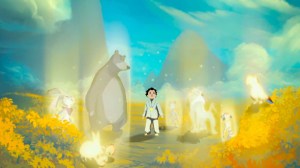 the lines. Many of the film’s crew were on hand, as well as the entire Suskind family, to launch this movie into orbit. There’s a lot of love and care gone into this work, and some of the best bits are when Owen’s own stories are beautifully animated (by Mac Guff). Owen identifies more with the sidekicks rather than the heroes of his beloved films, and he brings them to life in a very moving way.
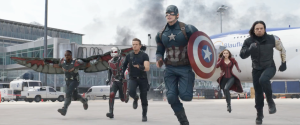 Spider-Man. Ant-Man. Falcon. Black Panther. These are the top four characters, in order, in Captain America: Civil War. You might think it’s a bad sign that neither Captain America nor Iron Man is on that list, but you’d be wrong! Although you would be right in thinking I wish this had been a Spider-Man movie with a Captain America/Iron Man cameo, rather than the other way around.
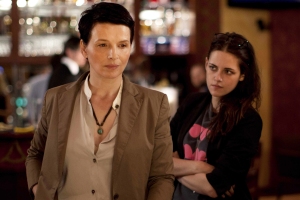 lauded career after being launched in the theatre playing Sigrid, a sizzling ingénue. Now, years later, the playwright and her mentor has died, and there’s interest in re-staging the play, and Maria is approached to star. The catch? This time she’d of course be playing the role of the older woman, Helena, in a complicated May-December lesbian office unrequited romance (whoa, that’s a mouthful).
 I didn’t find the story-telling in this movie to be quite satisfactory, but the performances were top-notch. There’s an intense, almost sexual chemistry between Binoche and Stewart that makes their rehearsals a rare treat to watch. Not often are two such strong female characters allowed to shine on the screen together with such naked feeling.
 believably deliver a line about acting in blockbusters.
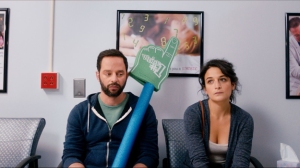 In 2001, Goodhart channeled these feelings into a script for a short film called My Blind Brother, starring Tony Hale, and it’s taken all this time to hustle that short into her first feature length, but here it is, in all its unflinching, unpolitically correct glory.
 wonderful documentary. Its gorgeous cinematography looks better than most features do. Better yet, as likeable as her subjects are, Nayar resists the urge to portray Arile and Matambo as one-dimensional inspirational symbols and doesn’t try to hide the fact that these are real and flawed human beings. She makes them easy to relate to and impossible not to root for.
 A Swarovski crystal-studded bathtub for your dog: $39 000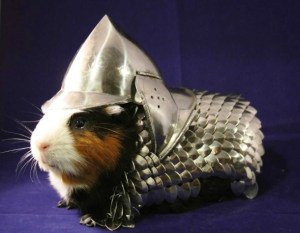
 3 x-rays of Marilyn Monroe’s chest: $45 000
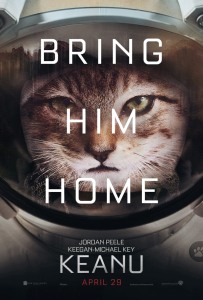 Keanu is not just a dark haired, sunglasses wearing Canadian. He’s also a kitten with a rare disease: cuteness. Or so we are led to believe by Comedy Central duo Key and Peele, playing cousins who would do anything to get Keanu back after he’s kitten-napped by a gang of street toughs led by the one and only Method Man. And so goes Keanu, a film that takes the two cousins from one life-threatening situation to the next, in pursuit of a cat.
 in real life, you just put up a poster and call it a day. But for a dog, that’s different. If your dog gets lost you don’t look for an hour and then call it quits. You get your ass out there and you find that fucking dog!


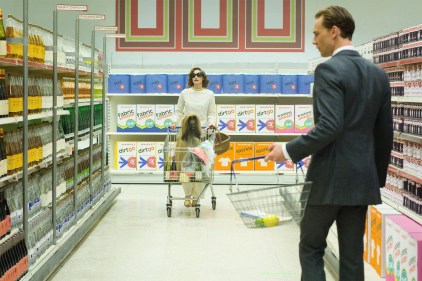 The film’s biggest problem is that it took 40 years to convert J.G. Ballard’s novel of the same name into a movie. In the meantime, Snowpiercer happened and was a way more awesome movie than High-Rise, or really anything else ever.
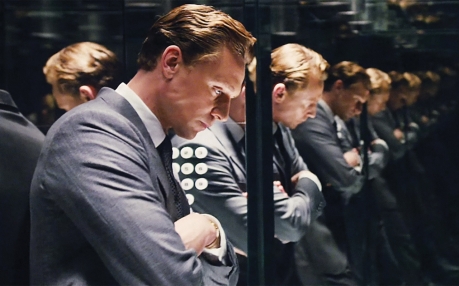 and garbage bags that line the halls, and scavenge for dog meat rather than drive to the nearest supermarket for hot dogs. That’s something that was impossible for me to swallow.
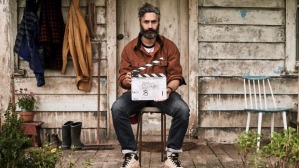 If you don’t know that name yet, stay right here while I get a nice wooden baseball bat to beat you over the head with. Don’t move, I’ll be right back.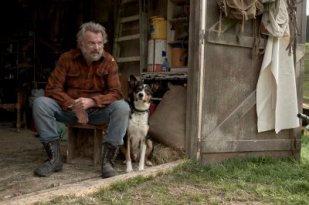
 nd bush is on proud display in soaring shots that will give you serious travel envy. Ricky Baker (Julian Dennison) is a boy who’s had a run of bad luck with foster homes, and his child welfare worker is quick to give a laundry list of his transgressions. This doesn’t deter his determined newest foster mum Aunt Bella (Rima Te Wiata) but Uncle Hec (Sam Neill) is a lot more reticent and gruff. Their primitive way of life is a bit of a shock to gangster-wannabe Ricky, but that’s just the tip of the iceberg because soon events will have him and Uncle Hec running from the law and hiding out in the bush as an intensive manhunt for them is underway.
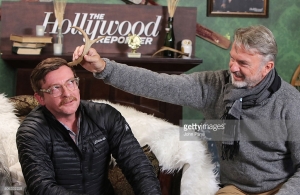 For such an endearingly quirky comedy, it has no right being even half as beautifully shot as it is. There’s a gloss to the film thanks to some real cinematography that’s been missing from his previous work. A lot of care has gone into this film and the casting is just one easy example of how diligently the thing is put together. Sam Neill is an interesting choice and brings the right mix of gravelly loner bluntness and a secret longing for connection. But it’s Julian Dennison who will leave the largest impression. A kid actor can make or break your movie when he’s in a central role, but Dennison is a professional, easy and natural in front
  of the camera. There’s pain behind his farcical behaviour, and in allowing us to see both, there’s real depth and emotional investment in the characters. Waititi, Rachel House, and Rhys Darby provide excellent supporting roles that’ll leave you cramped from laughter. Positively bruised from chuckling. It’s a new personal best for Waititi and a new sentimental favourite for me, but one that deserves its place among the very best movies of the year, period.
