
You may have noticed there was a day this summer when Canada “went dark.” It was August 20th, the day the Tragically Hip performed for the last time. Hip lead singer, front  man extraordinaire, Canadian superstar Gord Downie had recently announced that he had a brain tumour and was terminally ill. Since making music has always been his passion, he and the Hip went on a farewell tour and despite the ravages of cancer, he performed full-throttle at each and every show, somehow finding the energy and the courage to power through. Their final
 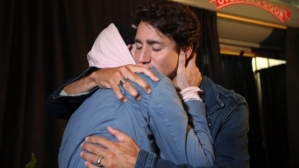 date was in their hometown of Kingston Ontario, just a little ways down the road from Ottawa. Our Prime Minister, Justin Trudeau, was in the front row, and spoke for all of Canada when he thanked Gord and the whole band for their decades of artistic serviced to the country. It was a stirring night. The end is coming for Gord and he knew it, you could see it in his eyes, feel it every time he was overcome by emotion, but instead of making it about him, he chose to use this spotlight (and believe me, about 32 out of our 33 million strong
 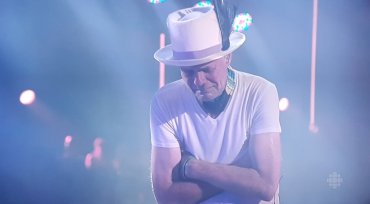 population were tuned in one way or another) to speak on behalf of Canada’s indigenous population.
Since that night, as Downie inches closer to his final days, he’s still pouring his last energies into speaking up for our Aboriginal people. His latest endeavor is a tribute to Chanie Wenjack – in music, graphic novel, and animated form. 10 poems were turned into an album, which was turned into a graphic novel, which was turned into an animated film. They all tell the story of one boy, who represents the many, many more just like him, our first nations children ripped from the arms of their mothers, out of their communities, and into residential schools. Residential schools were run by church and state with the sole purpose of ‘civilizing’ the savages.  Prohibited from speaking their languages, practicing their spirituality, or honouring their cultures, teachers stripped them of their identity. Many children suffered terrible abuse, but all of these kids were deprived of their childhoods, and all of the families suffered terribly as I’m sure you would if your child was removed, perhaps never to be seen again, or if you were lucky enough to be reunited, we can only hope that you can find a common language in which to communicate. Communities were destroyed in what many Aboriginal people refer to as a genocide. It’s a dark part of Canadian history that wasn’t acknowledged until very recently. Today our First Nations peoples often live in poverty and other consequences of this intergenerational tragedy. Healing is not an Aboriginal problem, it’s something we need to address as an entire country. Gord Downie is doing his part.
If you are so inclined, The Secret Path can be streamed here for free (or in fact, down below). I hope you take the time to do so, and to share it with a friend. The images are haunting, but the lyrics will punch you in the gut. I was in tears by the third track.
Chanie Wenjack was only 12 years old when residential school became unbearable to him and he tried to find his way home. Not knowing where he was or where he was going, he walked until he collapsed in the snow, tired, lonely, starving, and he died. But there are dozens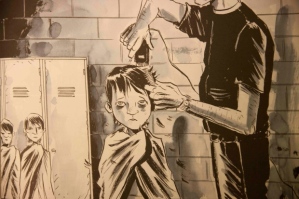 and hundreds and maybe even thousands of Chanies dotting our countryside. Lonely and miserable, many children made an escape an attempt only to lose digits or limbs to frostbite, arms and legs on traintracks, or lives to exposure, or to punishment when recaputured. How many tiny bodies are still unaccounted for? The fact that we don’t even know is proof of how little white Canada cared for Aboriginal people, and this is a guilty fact we struggle to reconcile even today.
One day, likely sooner than later, Gord Downie will die and our whole country will mourn a great man, and a good man too. But Downie’s using his last work, and his last breaths to remind us that there are many others worth mourning too.
[As great and heartfelt as Gord Downie’s work is, it’s also really great to hear from Aboriginal artists themselves. Check out our coverage of the ImagineNative film fest]
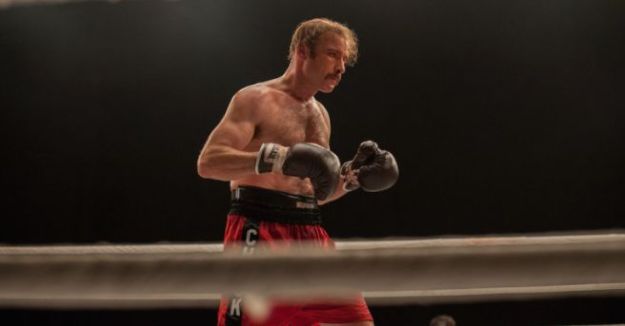

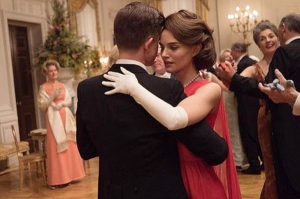 Larrain thought to himself, what if it was the other way around. What if he was sitting beside her? And in that thought was born a beautifully conceived film that puts its female character front and centre.
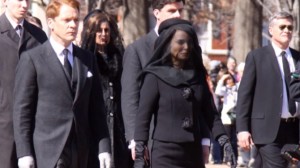 precise and offers up tantalizing looks behind the closed doors of Camelot.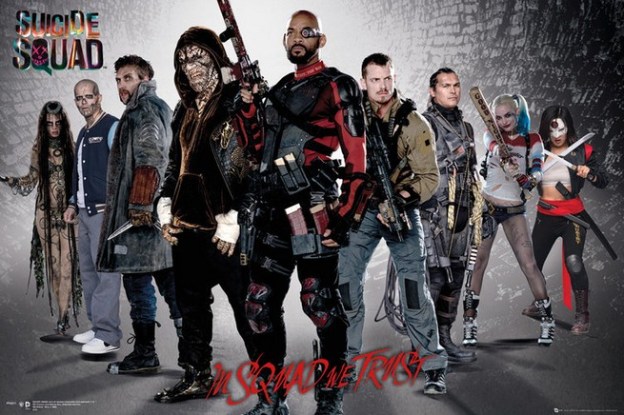
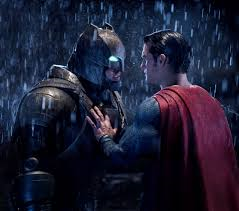 fact that I liked
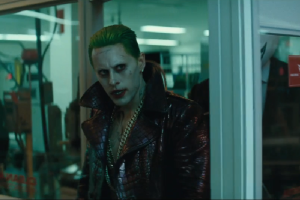
 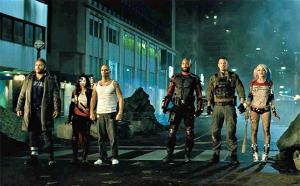 By now you’ve probably read that a lot of people have felt let down by Suicide Squad. I was too. Its missteps aren’t as embarrassing as BvS’s were but its best moments weren’t as impressive either. Actually, while BvS ended with me feeling like I’d seen the biggest movie of the year, Suicide Squad ended with me wondering “Was that it?”.
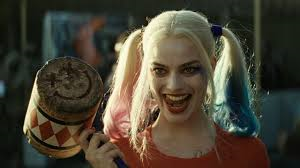 love, Quinn is the only character in the whole ensemble whose actions always make sense and Robbie is the only actor of the bunch who never makes a false move.
 Squad. Unfortunately, they don’t get nearly enough chance to just be themselves and play off one another. Like BvS, it’s far too interested in its needlessly complicated plot than it is in its characters.
 As you may remember, I had a great time last weekend watching a
  Which is not to say Assassination Classroom: Graduation is a bad movie. I mean, it’s not really a GOOD movie by any measure, but my post-screening research shows that it adheres quite closely to the source material (incidentally, this is a sequel to last year’s Assassination Classroom with each movie covering about half of the original manga’s story) and was a big box office hit in Japan. But this movie had no intention at any time of embracing the complete ridiculousness of its concept or the yellow squidlike teacher. Instead, Assassination Classroom: Graduation plays it almost completely straight, delivering life lesson after life lesson as the middle school class grows up and learns the ways of the assassin from a big yellow squid. How you can play that concept straight at all, I don’t even know.
 So back to those green tea Kit Kats. Apparently Kit Kats are a huge deal in Japan because the name sounds like “kitto katsu”, which means “you will surely win”. That nice sentiment has given rise to a whole host of ridiculous Kit Kat varieties being eaten up by the Japanese (and also at least two white Canadians), including Shinshu Apple, Edamame Soybean, Purple Sweet Potato, Hot Japanese Chili, and Wasabi, among others.
 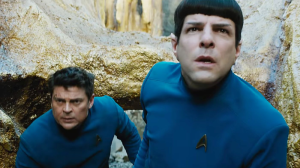 We were treated tonight to a marathon of the new trilogy of Star Trek movies, including a screening of Star Trek Beyond. Seeing the first two reminded me how good Star Trek and Star Trek Into Darkness are, and seeing them all in a row made me all the more sure that Star Trek Beyond is my favourite of the three.
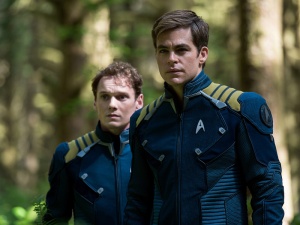 Yelchin, having died so tragically after filming was complete, is a key cast member in all three and is excellent in Star Trek Beyond (as always). But it’s bittersweet to watch, as his posthumous presence is harder to take than his absence would have been. Every one of his scenes serves as a reminder that there will be no more Chekov in the instalments to come. He will be sincerely missed but it feels right that his role will not be recast. May he rest in peace.
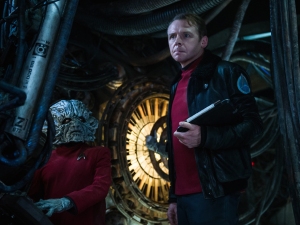 wonderful job of capturing the sarcastic Bones and the quiet pleasure Spock takes in driving Bones crazy, while letting us see that underneath it all there is nothing but love and respect between them.
 Reese’s Pieces were actually part of the plot. In the original script, it was M&Ms Elliott used to bribe E.T., but Mars wouldn’t allow their candy in the film if they couldn’t see the final script, so Reese’s Pieces stepped up and made history. Hershey didn’t pay a cent, but they did provide the movie with 1 million dollars worth of free tie-in advertising. Worth it? They saw a 65% increase in sales during the film’s run, so I’d say yes.
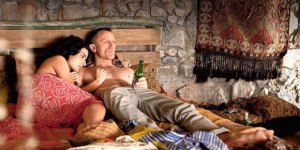 renowned for preferring a martini, to be caught drinking a beer. It’s a sad day when film makers are willing to forgo characterization, history, tradition, and story for the all-mighty dollar, but it’s not just one dollar, it is after all 45 million of them. How many cars can you smash up for 45 million? They destroyed about $34M worth in Spectre.
 Cooper, which became the star of the movie. BMW provided 30 Minis to be used in the film and they saw a 22% rise in sales that year – not bad for a feature-length car commercial. I even rode an Italian Job roller coaster once where the cars were in fact little Minis. The movie made people reconsider the Mini Cooper – what was once thought to be a ‘girly’ car was no rebranded as sporty, speedy, and cool.
 cancelling their Wayfarer line when it suddenly got a big bump thanks to Tom Cruise in Risky Business. He made the sunglasses cool again, and the brand attributes the sale of 360 000 pairs to the
 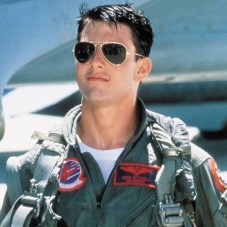 movie. So you can bet that 3 years later they were only too happy to enter into partnership with Top Gun, which this time high-lighted their Aviator line, which gave them a nice 40% increase.
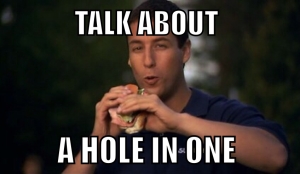 it’s actually a plot point that the golfer becomes a spokesman for his favourite sandwich shop, Subway – he’s seen eating a sub while wearing a Subway t-shirt and SHOOTING AN ENTIRE SUBWAY COMMERCIAL. It’s unclear whether Subway paid a dime for this, but that movie was also responsible for increased ratings for The Price is Right, so anything is possible.
 It’s not exactly ground-breaking material but here’s the gimmick that’ll put butts in theatres: it’s Green Day’s Billie Joe Armstrong playing Perry. And is it pretty effing cool to see him play the guy he might have been had his own post-punk outfit not taken off when it did? Yes, yes it is.
 moment that he was watching Billie Joe Armstrong. I, on the other hand, thought it was a scootch worse than that. Unnatural. Self-conscious. Very “you can tell I’m acting because my hand is over here on my hip, which means I’m going through some internal conflict I’m not subtle enough to convey any other way.” And yet I’m not going to condemn him because the movie really is a vehicle for him. He’s what makes it cool and relevant, makes the movie rise above the other mid-life-crisis\path-not-taken meditations. Plus, Kirk pads the cast with some better talent: Judy Greer as the old flame, Selma Blair as the current wife, Chris Messina as the scowling brother, Fred Armisen as an ex-bandmate.
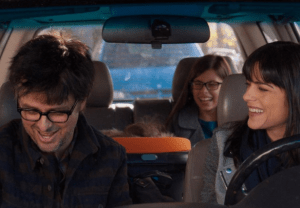 The regret without resentment shows maturity I’m surprised to see in a character like Perry. Billie Joe never quite transcends the role, but there is an honest vulnerability there that’s a little charming. And Billie Joe is not just a casting liability, he’s an asset to the soundtrack because he’s written some original music for it, and the movie is never more confidant than when Armstrong is performing. In this he excels. The songs he wrote are great and I imagine they’ll be invading your radio waves sometime soon, lending the movie some major credibility.
 an energy that defies the fact that Armstrong is in fact a middle-aged father of two. They played a couple of Green Day tunes as well, Scattered and then American Idiot, which morphed into Bad Reputation. Oh, did I not mention that Joan Jett was in the house? Yeah, she has a small cameo in the film but she got up on stage and showed the boys what a scene-stealing badass she still is. Her voice hasn’t aged a single minute and the woman’s still sporting leather pants. Armstrong closed the night with Ordinary World, the film’s acoustic ballad, and I couldn’t help but wonder at the twinkly goodness of my life. In the movie of my life, there is no path not taken.
 Spider-Man. Ant-Man. Falcon. Black Panther. These are the top four characters, in order, in Captain America: Civil War. You might think it’s a bad sign that neither Captain America nor Iron Man is on that list, but you’d be wrong! Although you would be right in thinking I wish this had been a Spider-Man movie with a Captain America/Iron Man cameo, rather than the other way around.
 ASSHOLES WATCHING MOVIES