Disney is releasing a whole slew of “live action” remakes of its most beloved classics, so Sean and I are taking a stroll through the Disney vault to revisit movies we haven’t seen since childhood. So far, the only one of these that I’ve genuinely enjoyed is Cinderella; the others – like Beauty & The Beast, Mary Poppins, and Dumbo – have missed the mark, and I downright disliked The Jungle Book. And unfortunately, I’ve tended to assume that I’ll feel the same about The Lion King, mostly because I don’t approve of calling this “live action” when it’s clearly also animated, just animated in a more realistic, CGI-style. But it’s still just computers. In real life, lions don’t sing and dance and cuddle up to warthogs in a strictly platonic, non-hungry way. BUT it does have an AMAZING voice cast that I admit intrigues me. More on that later.
The Lion King (1994) doesn’t need improving upon. It’s quite a lovely film. The animation holds up. The songs are part of our cultural lexicon. We all know the story: Simba is a young lion prince who will won day rule the pride lands when his father Mufasa passes. But Mufasa’s death is hastened by evil uncle Scar, who wants the seat of power for himself. Scar murders his brother and exiles his nephew. He  allows his pals the hyenas to share hunting grounds with the lion tribe, which totally fucks with the circle of life, and pretty soon they’re all starving. Meanwhile, Simba has grown up with a sweet gay couple, Timon and Pumbaa, who adopt him despite their initial misgivings about him being a meat eater and all. Their worry-free existence is pretty sweet until Simba’s past shows up to shame him into returning. And once he knows how bad things are, he can’t help but engage. He returns, but he’ll have to face his uncle Scar if he wants to take his rightful place as King.
As a kid I didn’t pick up on the Shakespearean undertones of this film because I was just a dumb, Sesame Street watching baby. It’s definitely Hamlet-adjacent. But as an adult, I have so many more experiences that are informing my viewing.
Like any good Canadian who often escapes the winter by going down south, I first saw The Lion King musical experience at an all-inclusive resort where they pirate  the heck out of anything they can and squeeze it until the lawsuits come. The first time I saw it, it was an excellent production (I think I was in Mexico). It made me want to see the real Broadway version, so when it came to my city, I saw it with my in-laws, and it was even better than I’d imagined. Then I saw several low-rent versions at less ambitious resorts – my favourite at a Cuban hotel where my friends got married and their young daughter was cast as the baby Simba.
Hakuna Matata (such a wonderful phrase!) was a full-on craze in the 90s. People cross-stitched it onto pillows. Nothing trendier than that! It means “no worries for the rest of your days” and was lampooned by Matt Stone and Trey Parker in The Book of Mormon. In that Broadway musical, which Sean and I were lucky enough to see with its original cast, Josh Gad and Andrew Rannells), the phrase they pick up is Hasa Diga Eebowai. It inspires its own musical number which is every bit as perky and upbeat as Hakuna Matata – only imagine the little Mormons’ consternation when they find out it means Fuck You, God. Oops.
Last month Sean and I took the niece and nephews to see Disney on Ice, and they had quite the generous Lion King portion, no doubt to generate interest for a movie hitting theatres later this year. But the original film is also celebrating its 25th anniversary, and sure, you could figure that out with simple math, but we found it out at Disney World, where they’d outfitted Animal Kingdom with photo ops celebrating it. We also frolicked at the animation hotel, where an entire branch of the resort is dedicated to the film, its rooms are movie-inspired and the grounds are full of scenes from the movie. I turned to Sean and said: “Hey, remember when YOU played in an elephant graveyard?” and I kid you not, he responded “At the hotel?” Now, like most (all) men, Sean is an idiot. But he’s also the King of Stupid Questions. Now let me ask you, perfect stranger: how many times do you think Sean has played in an elephant graveyard? We’re CANADIAN. I think the fact that he’s done it once is remarkable. Why, then, the clarifying question, as if he’s done it so many times he’s not even sure to which one I’m referring. Hasa Diga Sean.
When Scar undertakes to kill his brother, he orchestrates the murder so that it looks like an accident. He plants Simba in a gorge and then sparks a wildebeest stampede. It’s a frantic, pulse-pounding scene that took 3 years and the invention of new software to animate the thing. Musafa of course saves his son, but Scar pushes him to his death. In the aftermath, little Simba finds his father’s body and curls up next to it, wrapping his father’s dead paws around him. It’s a very tender scene of course, but it reminds me of my nephew and something he once said. This kid loves his family and insists he’ll never marry and never move out – he simply can’t imagine a time when he won’t be vitally attached to his parents. He’s even insisted that when he dies, he wants to be buried in his father’s arms. These are soul-destroying words to his sensitive aunt’s heart. I wept over it then, and I wept over it again when Simba all but reenacts the scene.
So there’s no doubt, really, that Scar must be among Disney’s very worst villains. But there’s a secret (or not so secret) side to Scar that I never considered as a kid. The LGBTQ community has adopted him as a coded-gay character. Of course it’s problematic as hell because he’s a reprehensible guy, but when you were gay in the  90s, you didn’t exactly have a lot of choice. Scar IS slightly effeminate, I suppose. And he’s camp. He’s snide. He slinks around. He has a goatee! He’s scrupulously correct and he’s British for christ’s sake. Is he a mean old Queen? Possibly. He’s definitely the bachelor uncle who, while inheriting his brother’s kingdom, has absolutely no interest in the pride’s lionesses. He spends his time with a singing parrot. So when people saw the trailer for the “live action” Lion King, fans of Scar were dismayed. In the cartoon he comes off as very vain and very feline, but in the trailer for the new one, he just looks emaciated. Anyway. I think we can do better than Scar for gay icons, but so far Disney really hasn’t. There’s a void there, and a gaunt, bedraggled Scar isn’t going to fill it.
Anyway. Jon Favreau’s The Lion King will hit theatres in July, with James Earl Jones providing continuity as the voice of Mufasa but Jeremy Irons has been replaced as Scar – and so has everyone else.
Simba: Donald Glover
Nala: Beyonce
Scar: Chiwetel Ejiofor
Pumbaa: Seth Rogen
Timon: Billy Eichner
Zazu: John Oliver
So it’s not The Lion King of your childhood. But might it still be good?

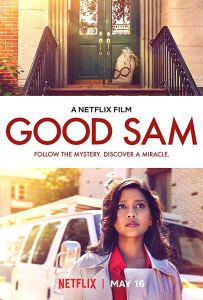 Kate, who started off reluctant to report on something so negligible, now has quite a story on her hands. And it’s not just that it’s something positive making the news for once. It’s the mystery of the thing. Who is this guy, who becomes known in the media as Good Sam, short for good samaritan, and why is he changing lives without taking credit? Kate is obsessed with but skeptical of the notion that someone might be doing good without expecting anything in return – is this naiveté, or wishful thinking, or a new kind of philanthropy set to inspire a whole city?
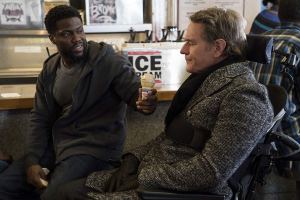 the same problem. They’re about a wealthy white dude introducing a poor black man to “culture.” The condescension implicit in the premise is so problematic it’s hard to look beyond it. Kevin Hart and Bryan Cranston have passable chemistry but you’re going to love or hate this film, mostly depending on whether you can embrace the formula. Because The Upside doesn’t even pretend to deviate from The Intouchables’ formula. Not for one stinking minute.
 Despite the fact that she’s undervalued and underpaid, Lisa clearly cares about her job, and about doing her best. And she definitely cares about her girls. Usually when your employer starts calling you ‘family’ it’s because they’re about to ask you to do something for nothing. But when Lisa says it, she means it. She’s got misplaced optimism coming out the wazoo but on a day like this, even Lisa’s perky sunshine demeanor will be tried.
 implications that are not just beyond their understanding, but beyond ours. Even the tiniest unintentional change can have unpredictable consequences.
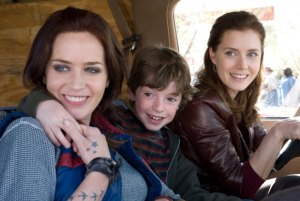 husbands of 50 years being reduced to a blood stain in the living room. Not to mention the fact that Rose and Norah’s mother committed suicide when they were young girls. So, you know, this is potentially triggering work, and Rose and Norah aren’t hardened enough yet to have strict professional boundaries.
 The documentary is replete with never before seen footage and home video. It shows John and Yoko in repose, at play, at work, the midst of inspiration. Lots of session musicians and music journalists are interviewed – director Michael Epstein has literally sought out every and any person who was in or around the Tittenhurst recording studio at that time, including Yoko Ono herself, and son Julian.
 who clearly answered the casting call for a Mark Zuckerberg type and fits the hoodie perfectly). Penny poses as a blind woman to remind Thomas of his blind grandmother, and Josephine as the German doctor who can possibly treat her (hysterical, don’t ask) blindness. There are a thousand princes in Nigeria who could tell you this scam is unnecessarily convoluted, but where’s the fun in that?
 slight edge. However, women really are a mystery and Mel Gibson really is an idiot, so at least that version made sense. Taraji P. Henson clearly knows how to handle men. Ali is a confidant, competent, sexy woman. So let’s not sit around pretending that she’s the problem in search of a mind-reading solution. What this movie should have been is How Not To Be A Misogynistic Asshole At Work (Or Ever!). And also: How Not To Group All Men Into One Disgusting Category. What’s that you say? Men like sports and cars and not talking about their feelings? How very 1958 of you.I mean, sure, those things describe Sean rather perfectly. But he also farts and eats a lot! I mean, that’s not ALL he’s good for. He also carries heavy bags and holds my credit card and orders for me in restaurants. Wait. What? The onslaught of unadulterated sexism in this movie has jumbled my brain. If only a man was around to write this review for me!
 ASSHOLES WATCHING MOVIES