
Taika Waititi.
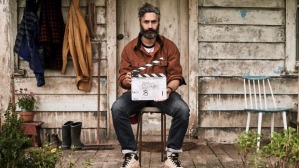 If you don’t know that name yet, stay right here while I get a nice wooden baseball bat to beat you over the head with. Don’t move, I’ll be right back.
Seriously, I talk obsessively about Waititi and his movies because I just adore them. He’s remained mostly under the radar with offbeat, cult hits like Boy and Eagle Vs Shark, which have made him famous in his native New Zealand but all but undiscovered over here in North America. WHICH IS A FRICKIN CRIME.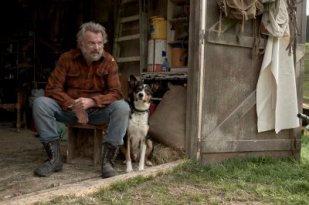
Last year his vampire mockumentary What We Do In The Shadows was a modest breakthrough that earned him some well-deserved and super duper overdue attention. It will also help that he’s had a hand in writing Disney’s upcoming animated film Moana and will direct Thor: Ragnarok, which will be his first budget exceeding $12.
But back to Hunt for the Wilderpeople, perhaps the best thing I saw at the Tribeca Film Festival and maybe the best thing Waititi’s done to date. He adapted it for the screen himself and as the film opens up, you immediately get the sense that it is a labour of love. The beautiful, lush New Zeala nd bush is on proud display in soaring shots that will give you serious travel envy. Ricky Baker (Julian Dennison) is a boy who’s had a run of bad luck with foster homes, and his child welfare worker is quick to give a laundry list of his transgressions. This doesn’t deter his determined newest foster mum Aunt Bella (Rima Te Wiata) but Uncle Hec (Sam Neill) is a lot more reticent and gruff. Their primitive way of life is a bit of a shock to gangster-wannabe Ricky, but that’s just the tip of the iceberg because soon events will have him and Uncle Hec running from the law and hiding out in the bush as an intensive manhunt for them is underway.
The movie becomes an odd-couple adventure with Waititi’s niche sensibility and loads of mass appeal. Seriously – who on this green earth could fail to be charmed by this movie?  For such an endearingly quirky comedy, it has no right being even half as beautifully shot as it is. There’s a gloss to the film thanks to some real cinematography that’s been missing from his previous work. A lot of care has gone into this film and the casting is just one easy example of how diligently the thing is put together. Sam Neill is an interesting choice and brings the right mix of gravelly loner bluntness and a secret longing for connection. But it’s Julian Dennison who will leave the largest impression. A kid actor can make or break your movie when he’s in a central role, but Dennison is a professional, easy and natural in front
  of the camera. There’s pain behind his farcical behaviour, and in allowing us to see both, there’s real depth and emotional investment in the characters. Waititi, Rachel House, and Rhys Darby provide excellent supporting roles that’ll leave you cramped from laughter. Positively bruised from chuckling. It’s a new personal best for Waititi and a new sentimental favourite for me, but one that deserves its place among the very best movies of the year, period.

 son even though we detested both leads. Not the actors, per se, but the characters are just awful human beings and it’s hard to forgive the actors for that. So I’m carrying around this chip on my shoulder for Gillian Jacobs and was not super happy to bump into her in this movie. But clever Demetri Martin won me over by writing a love interest for Dean who did not exist solely for his pursuit. She had back story. She had depth. She was a person. This sounds weird, I’ll grant you that, but so often in movies the love interest exists solely to be adored and consumed and nothing else. She has no job or apartment or opinions. Gillian Jacobs had scenes without Demetri Martin. She was independent of his lust. It was refreshing even if it did make me confront my hostility toward the bitch from Love.
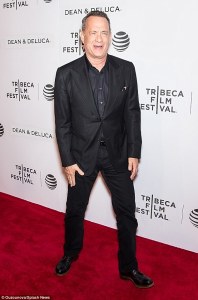 braved a crowded rush-hour subway to get back down to Tribeca and run right past the Ghostbusters building to arrive breathless at the Borough of Manhattan Community College only to be redirected to another entrance that meant dragging my swollen, sprained ankle several more blocks with the remnants of my back surgery burst open and freely bleeding just so that we could stand in line for 40 minutes and then be denied a seat. Denied a seat? But we had tickets in hand – tickets we’d paid for three weeks prior! But us, and the two people in front of us, and the hundred or hundreds behind us (hard to tell) were denied entrance because they’d way, way, way oversold the event and we were shit out of luck. We were also really, really pissed.
 toward the guy with the clipboard. He unclipped the rope and I was being ushered alone up a sad, empty red carpet, the very one we’d just watched John Oliver and Tom Hanks ascend, me still lumping my sore and swollen ankle along. I wasn’t happy to be going in alone and it was only the element of surprise that made me do it. I felt awful that Sean would sit outside with his $50 ticket to nothing, after having driven all the way from another bloody country, while I would be tickled fairly pink. Maybe even almost red. But the guy with the clipboard was so impressed with Sean’s self-sacrifice he basically invented another seat for him and got him in, even though he had to stand. I felt a little guilty because the couple in front of us rightly deserved those seats but hadn’t thought to split up (and actually, we’d already seen a few other singles be plucked from the line behind us) and a little guilty about the dozens and dozens behind us who hadn’t gotten in either, and super mad at the fuckfaces at Tribeca who oversold the event and didn’t tell anyone. But mostly I just felt elation the minute those two men took the stage, and fuck everyone else.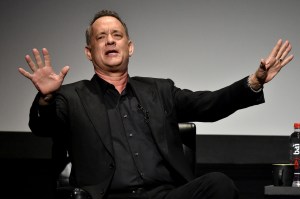
 nd so of course this book was immediately on my nightstand and then devoured into my brain and then shelved politely to await its fate. Little did it, or I, know that just a few years later it would be turned into a movie, prompting Sean to finally give it a read as well (don’t judge him too harshly, he’s mostly literate).
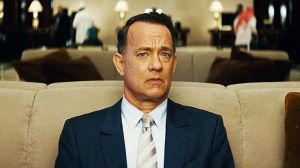 struggled to picture Hanks as Alan Clay. Alan is a loser. He’s beaten down by life, but not in Hanks’s usual sad-sack way. He was too pathetic. But Tom Hanks is not only starring, he’s producing, which means he really likes this project, and he knew what he was getting into.
 to be a fish out of water – not just the cliched culture clash crap of an American abroad, but of an aging salesman with an old bag of tricks in a newfangled world of young, tech-minded colleagues. The world is shrinking, and moving quickly, and Alan is getting left behind. Movie Alan has more verve than Book Alan, which sounds like a strange thing to complain about, but the truth is, the world already had enough of these Alans. For a movie that could have been refreshingly unHollywood, it sure made some safe choices and went for the audience-friendly ending that smacks of missed opportunity.
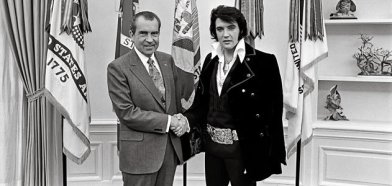 one he coveted the most but could never land was a badge from the Bureau of Narcotics and Dangerous Drugs (he believed having one would mean he could travel to any country with drugs and guns). Unable to convince the bureau, Elvis being Elvis went over their heads and straight to the top – to President Nixon. He showed up at the White House in a purple velvet suit with a huge gold belt buckle and his trademark gold sunglasses, and a white-house-warming gift—a Colt .45 pistol mounted in a display case, which was of course confiscated at the gate. Elvis got his badge though, and asked that the meeting be kept secret. But once he died, the Archives made a fortune selling the official photo, the most-requested Archive photo in the history of the world.
 apart but Michael Shannon was soon onboard, maybe not the most obvious choice to play The King, but he waved his magic wand of executive productionship, and convinced Liza Johnson who’d previously directed him in Return to helm the whole damn thing. With Shannon filling the King’s rhinestoned shoes, it just made sense that Kevin Spacey would slide into the President’s shiny loafers.
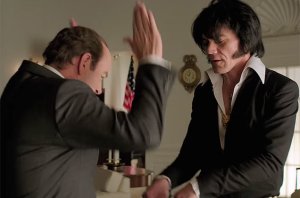 “tonally eccentric” script and wanted the film to match and “embrace the absurdism of the situation. Michael Shannon, describing Elvis as “mysterious”, relied on interviews with Elvis from right around that time to inform his performance, but the film also benefited from Elvis’s good friend (played by Alex Pettyfer in the movie) Jerry Schilling and a White House staffer (portrayed in the movie by Colin Hanks) Egil Krogh to give invaluable insight. Johnson said that “Any day working with Michael Shannon is better than a day not working with Michael Shannon” and that Spacey was a natural fit being an equal in acting, and having previously worked on a Nixon portrayal when he screen-tested for Frost\Nixon.
 It’s National
 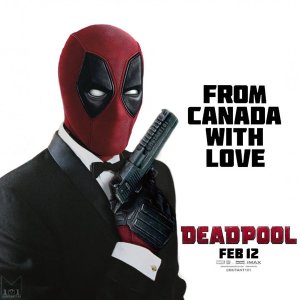 Shatner. Michael Cera. Ellen Page. Jay Baruchel. Catherine O’Hara. Eugene Levy. The Sutherlands. Will Arnett. Victor Garber. Michael J. Fox. All the funny people from SNL. There are talented Canadians in the director’s chair as well: Cronenberg. Cameron. Atom Egoyan. Norman Jewison. The Reitmans. Sarah Polley. Patricia Rozema.
 Xavier Dolan’s Mommy: Before Dolan was directing
  nominated Les invasion barbares (The Barbarian Invasions), an older work in his catalogue, Jesus of Montreal, is quite a trip. A group of actors are hired to put on the passion of the Christ in Montreal. Jesus is interpreted a little differently than usual and the church is not happy. The movie works on its literal level and also as a biblical allegory, so you can watch and rewatch this one and always come away with something new.
 Denis Villeneuve’s Incendies: He’s now known for Prisoners and
 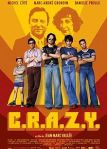 or
or 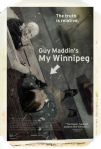 Guy Maddin’s My Winnipeg: Described by Maddin as a “docu-fantasia” and by perplexed critics as a surrealist mockumentary, nobody knows exactly what the hell this is, but it IS both an experiment and an experience in cinema. Maddin casts someone else as Maddin and then paints a mythologized, metafictional tribute to his beloved town of Winnipeg. If you love movies, you have to check this out. You’ll feel it in your toes.
 Vincent Valentino. We met him briefly at the
  Christopher Walken in the role he was born to play: a lady-killing crooner. Paul’s on his fifth, maybe sixth, maybe seventh wife. He’s one of (maybe even THE, depending who’s version of his Wikipedia page you believe) most romantic singers of all time, but his star’s been fading of late. It’s not quite the kind of album kids are buying these days, and when he’s asked to open for The Flaming Lips, it’s ironically. He’s living in the slums of The Hamptons for crumb’s sake!
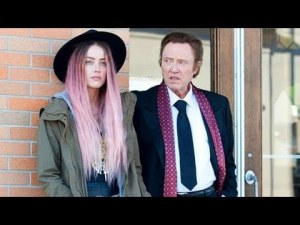 two daughters – the dependable Corinne and the mess Jude (Amber Heard), who actually kind of takes after him. So of course they hate each other. He can’t resist giving her advice about her fledgling musical career, and she can’t help reminding him of the many ways he’s disappointed her. And the other sister mopes about hoping any of her soaring, impressing achievements will be noticed by someone, anyone.
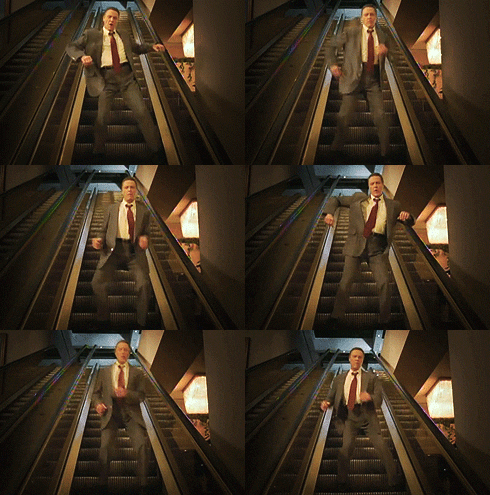 Christopher Walken is genius in this. You know you want to watch him sing and swing his little hips, so stop resisting. You must see him do this. The surprise is that Amber Heard is not awful. And believe me, I’d written her off as a floozy. And maybe this was just a fortuitous role for her, but she really seemed to have some substance. You know it pains me to admit that. Plus, her Walken impression is SNL-jeopardy-worthy, and I do mean that from the bottom of my heart.
 could have spent those on a dime bag and a make-out sesh in the backseat of my car to a rockin 80s soundtrack and had a much better time.
 ASSHOLES WATCHING MOVIES