
Writer-director Greta Gerwig has a clear feminist point of view when retelling the classic tale Little Women. She doesn’t deviate much from the novel penned by Louisa May Alcott (two novels in fact – more on that later) and doesn’t need to. Alcott was surprisingly modern unconventional for her time (1832-1888), writing about domesticity and women’s work but making it clear that they all had minds and passions and ambitions of their own, even if society was set up to constrain their use.
The novels are largely classified as autobiographical or semi-autobiographical fiction, with Jo March standing in for Alcott herself as she pulls stories from her own life to illustrate herself and her sisters transitioning from childhood to womanhood. The first novel was such a success that Alcott quickly wrote a follow up which she titled Good Wives, telling more about her characters are their lives as grown women. An avalanche of fan mail had poured in, much of it demanding a happy ending for Jo, happy meaning married of course, so Alcott wove that into her own story, but bucked against the traditional and created a second option for Jo, one she hoped would appease readers (she was, after all, needing to support her family on the earnings from her work) but would still honour the true spirit of the character she and so many others had come to love. But 150 years later, Gerwig restores Alcott’s true intentions, bending the ending just a bit, leaving it not a little ambiguous so that we may choose which of the paths was truly more important to Jo.
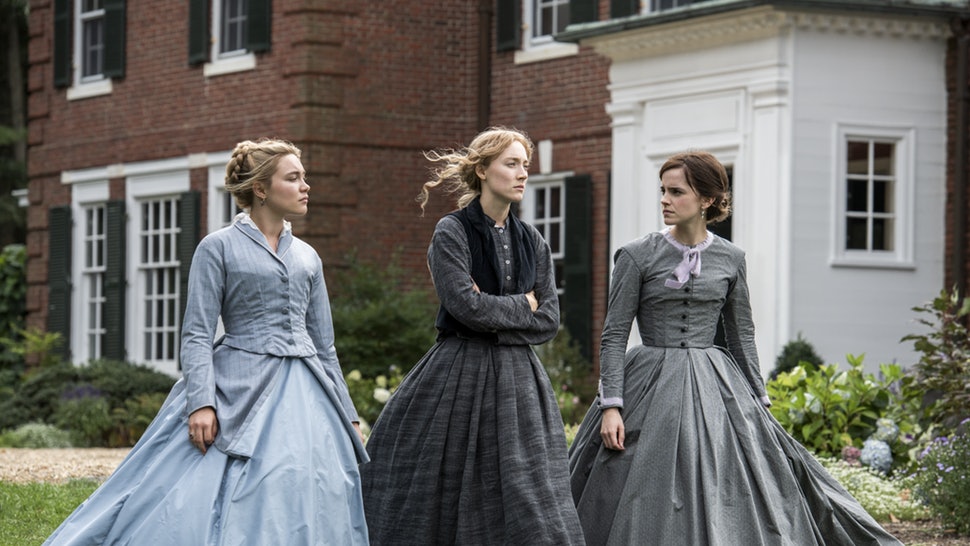
As a writer with 3 sisters myself, who often put on plays together in the basement (we had no attic) of our home, you can probably guess why I loved this novel from a young age. It wasn’t its radical (for the time) point of view, it was the wonderful bond of sisterhood so deeply felt within its pages. Even as the sisters fight (sometimes physically, as illustrated in the film), their attachments are secure, their love never wavering. Modern sisterhood is often portrayed as catty and competitive but we too were a home of Little Women with big personalities and are close to this day, as our Snapchat can attest.
Jo (Saoirse Ronan) is the writer, not just of their childhood productions but also evidently of this retelling. Big sister Meg (Emma Watson) is the actress, Amy (Florence Pugh) the dreamer and youngest Beth (Eliza Scanlen) the sweet, shy musician. Marmee (Laura Dern) presides over her family with unending patience and affection even as she spreads the family’s resources thin taking care of others in the community. The next door neighbours are almost as rich as they are irresistible; Mr. Laurence (Chris Cooper) cuts a sad figure from the window of his large but empty house, and young Laurie (Timothee Chalamet) clearly feels stifled as its only other occupant. Both men will get folded into the March family home in their own ways. Mr. Laurence is fond of young Beth, who reminds him of his own departed daughter, while Laurie and Jo get on like a house on fire, often to the exclusion of Amy who feels on so spurned.
The brilliance of Alcott is that even as some of these sisters settled into marriage and domesticity, the work never seems to judge them. Their paths are held in equal esteem to that of Jo’s. Alcott, who remained unmarried herself, was revolutionary in her thinking, in painting love and career in equal measure and equal worth. 151 years later, we still haven’t truly caught up, still trying to balance those wants and needs in a way that feels satisfying and right. Although I loved the spirit of this adaptation, I suppose I thought Gerwig might have a little more to say on the matter. I imagined that she might have stamped just a bit more of herself into the proceedings.
Saoirse Ronan and Florence Pugh are the stand-outs among the cast; as this is the seventh movie adaptation I suppose by now we know these are the plum roles (Jo having been played by the likes of Katharine Hepburn and Winona Ryder, and Amy by Elizabeth Taylor and Kirsten Dunst). All great directors have their muses and it seems Ronan may be that for Gerwig, playing her leading lady twice now, and likely to secure an Oscar nomination. Pugh has already had a dizzyingly successful 2019, and she certainly makes the most of her scenes in this. As Gerwig must, she trims many of the novel’s excesses, choosing scenes for plot and character development and losing many of the fun and funny anecdotal ones that make the novel feel so lively and warm. But Gerwig’s adaptation is both faithful and wise. It’s only that I admire her unique voice so much that I wish she had respected her source material a little less and allowed her own perspective to shine through a little more. If it is possible to love something while being just the tiniest bit disappointed, then that’s my verdict. Gerwig gives Little Women 100% but I unfairly hoped for 110%. Still, it’s a pleasure to see a female story be so lovingly preserved through the years, in timeless and timely ways.
 sometimes wonder if I prefer dogs to people, and I certainly do prefer my dogs to most people. I think dogs are so much better than we deserve. They are 100% heart. So it’s hard for me to imagine a bunch of dog owners so willing to sentence their dogs to a terrible, lonely, miserable life and death. Of the thousands (hundreds of thousands?) of dogs sent to live and die on Trash Island, only one is lucky enough to have an owner come looking for him – a 12 year old boy named Atari. When Atari becomes stranded on the island, a scruffy pack of dogs generously decides to help him find his beloved Spots. Duke (Jeff Goldblum), King (Bob Balaban), Rex (Ed Norton), Boss (Bill Murray), and even the reluctant Chief (Bryan Cranston) band together to reunite boy and dog on a journey that you might just say belongs in a Wes Anderson movie.
 George and Amal Clooney welcomed their twins Ella and Alexander in June (at the same hospital where Kate and William’s royal children were born), so people were ecstatic to see them looking terribly in love at the Venice Film Festival in early September. George was there promoting his directorial effort,
  crisscrossing Italy on their motorbikes. After one of the bikes broke down outside its gates, the owners ushered them in and proceeded to sell Clooney their house for $7.5 million. And it was in Italy where George first met Amal and it was in beautiful Venice itself where they later wed. After the Venice Film Festival, Clooney and family flew to his hometown of Kentucky to show off the twins to his father, who’d been
  too ill to travel to meet them overseas. Then, sadly, George had to put down his beloved dog Einstein (who co-starred with him in an ad campaign for Omega watches in 2015) in L.A., before dashing back up to Toronto for TIFF, without wife Amal or darling babies.
 spot was Carey Mulligan. She made her first public appearance since having her second child in August. Her husband, Marcus Mumford (frontman for Mumford & Sons), stayed home with the kids while she graced TIFF with her presence; she was there for her new film, Mudbound.
 Annette Bening, who was the jury president in Venice, was at TIFF to promote her new film, Film Stars Don’t Die In Liverpool in which she plays a Hollywood leading lady who catches the interest of a much younger actor, played by Jamie Bell. Both stars brought their famous counterparts: Warren Beatty and Bening have been married since 1992, whilst Jamie Bell and wife Kate Mara have been married all of 2 months. Incidentally, Bell walked the red
  carpet in kind at the premiere of Mara’s TIFF offering,
 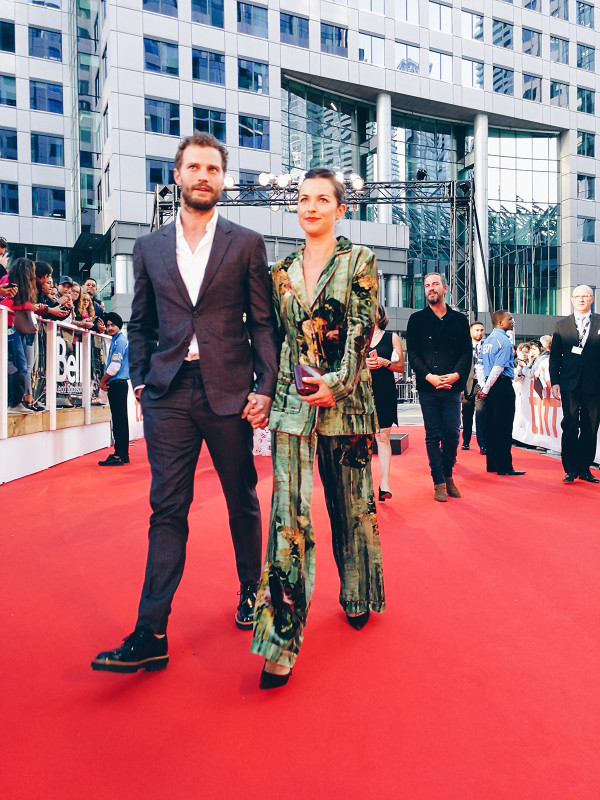 Amelia Warner walked the TIFF red carpet. She’s the composer for the new Mary Shelley reincarnation starring Elle Fanning. Her famous date: husband Jamie Dornan. Married for 4 years, they have 2 kids together, who were evidently being babysat elsewhere while Mom and Dad enjoy a glamourous night out.
 Jennifer Lawrence is currently dating her director, Darren Aronofsky (they are usually careful to sneak one or more costars between themselves when taking group photos). Her co-star Javier Bardem is married to the lovely Penelope Cruz (7 years and counting). Bardem and Cruz star together in a film on offer at the Venice Film Festival, Loving Pablo. And let’s not forget Michelle Pfeiffer and her longtime
  partner, David E. Kelley, who accompanied his wife to her photo call in Venice and then she in turn went to the Emmys with him, where the show he was writing for, Big Little Lies, scored some major gold.
 arm candy. Her husband, Keith Urban, was on hand for the TIFF premiere of The Killing of a Sacred Deer, and was also by her side at said Emmys (she was nominated and won for her work on the very same Big Little Lies – it’s very good, you should watch).
 Alicia Vikander attended the TIFF premiere of
 Ebbing, Missouri
 brother James directs and co-stars, and their other brother Tom Franco also appears (briefly!). So does Dave’s very new wife, Alison Brie – she plays his sometime girlfriend.
 attended together – particularly when they’ve done a movie together, like


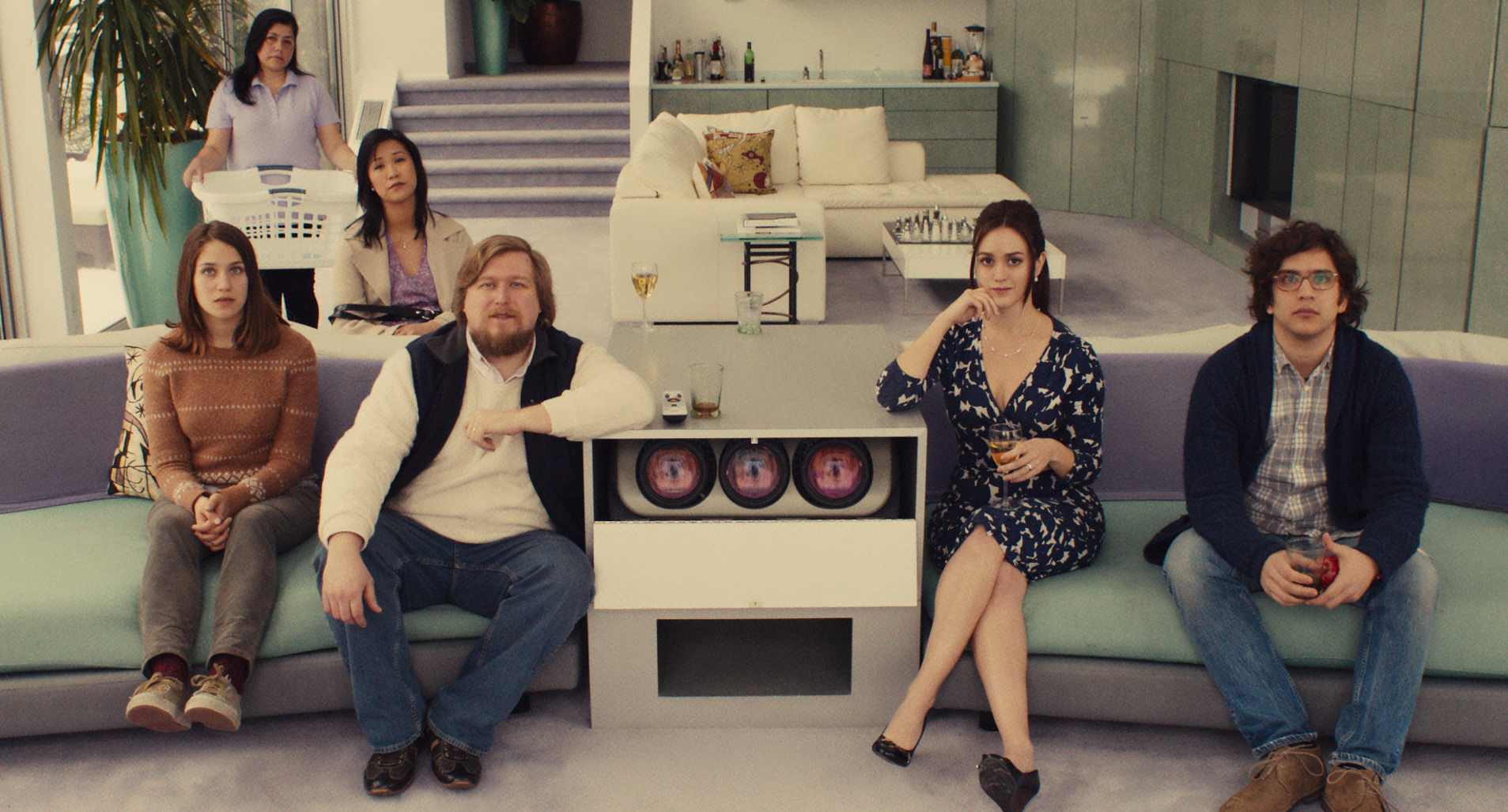
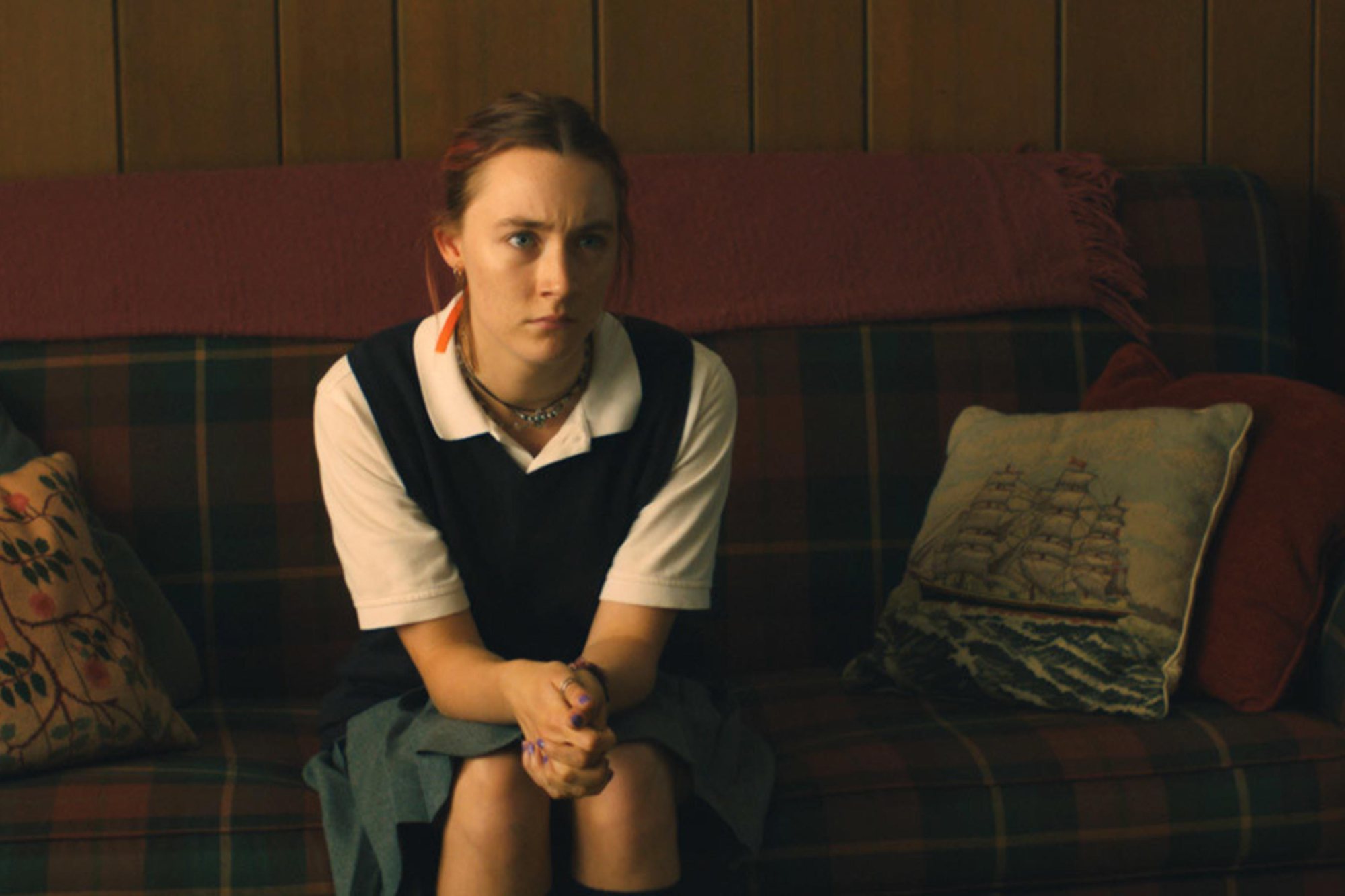 In making a coming of age film about a high school student, Greta Gerwig has come into her own – as a writer, as a director, as a woman with a voice.
 Mills, feel very much like real people because their problems are so distinct. The women don’t bleed into each other; they are each accorded with specific neuroses, anxieties, passions, and influences. We know a little about how they were born, and how they will die, but mostly we know how they are living. 20th Century Women is not plot-driven; nothing “happens” except truth is revealed through meticulous character study.
 better endorsement for a film that couldn’t be further from his own experience. And that’s what’s so remarkable. Though its genius is in the details, the specificity of the characters, it’s all somehow very relatable. And any movie that’s also a mirror is definitely worth its salt.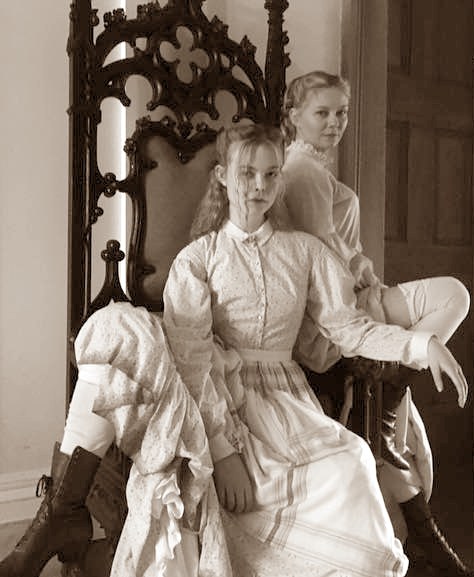
 anticipation! It’s about a woman named Kit who moves back home to live with her parents and then gets an invitation that makes things interesting. Brie Larson will star AND direct, despite the fact that she’s got an absolutely packed 2017, what with Kong: Skull Island, Free Fire, Basmati Blues, and The Glass Castle all being released, but this quirky future Captain Marvel always has time to surprise us.
 passed from one weird owner to another. The film is more like 4 shorts that only have a dog in common. I didn’t even believe that it was the same wiener dog in all 4 vignettes. The first two are clearly linked, the last 2 not so much. The shorts also become increasingly non-entertaining. I thought the first one was the strongest: a father picks up a puppy for his young son, who has recently survived cancer. The dog sparks many serious conversations between mother (Julie Delpy) and son – motherhood, personality, free will, death. But all of the conversations are straight out of a what-not-to-say handbook, with Delpy literally telling her son that her childhood dog Croissant was raped by a dog with AIDS named Mohammed. The satire is delicious. There’s an explosion of joy on the screen as a boy and his dog play together, but this outburst of happiness is quickly punished, and the dog changes hands.
 comfort, he’s not here to cushion the blow. And he’s sure as hell not here to give you a happy ending, so keep that in mind. Next up for Wiener Dog, she gets adopted by a character from another Todd Solondz movie, Welcome to the Dollhouse. Dawn is all grown up now, and played with Greta Gerwig. She runs into childhood…acquaintance (?) Brandon (Kieran Culkin) in a 7-11, and suddenly Wiener Dog’s on a road trip through some really heavy issues. She also meets disgruntled professor Danny DeVito and bitter old hag Ellen Burstyn. Through it all, Solondz’s camera is unflinching, perversely lingering over the gross and unbearable.
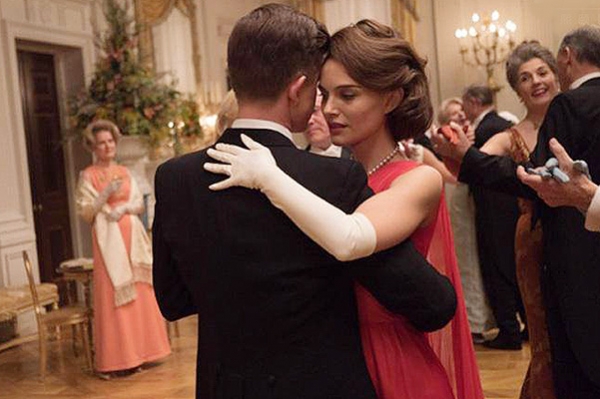 Larrain thought to himself, what if it was the other way around. What if he was sitting beside her? And in that thought was born a beautifully conceived film that puts its female character front and centre.
 precise and offers up tantalizing looks behind the closed doors of Camelot.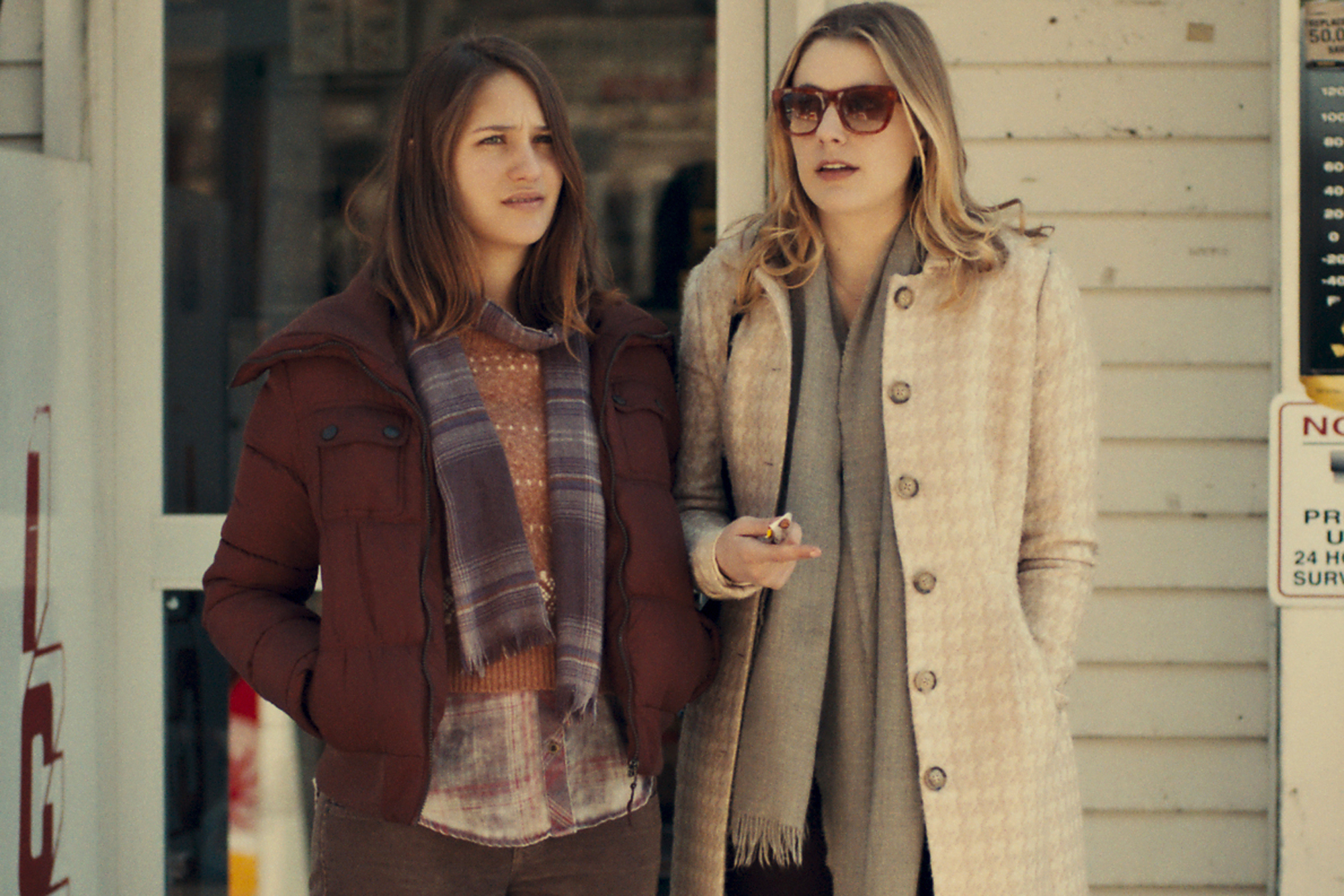





 ASSHOLES WATCHING MOVIES