
Fans were shocked when Jared Leto’s Joker had only about 7 minutes of screen time out of Suicide Squad‘s bloated 123, but Hollywood has a long history of assigning big names to small roles – and it’s not always a bad thing.
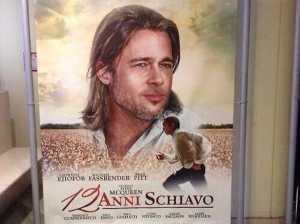 Okay, sometimes it’s a bad thing. Brad Pitt was in 12 Years a Slave for only a couple of minutes, just long enough to establish himself as the only nice white guy, but some countries (not naming any names, Italy) really ran with the white guy and blew his big white face up on the posters, relegating the star (and the slave), Chiwetel Ejiofor, to a small corner.
Anne Hathaway shaved her head and followed a life-threatening diet in order to play the part of Fantine in Les Miserables. She had only 15 minutes of screen time, but it was enough to win her an Oscar and shape her career.
Know who did more with even less? Darth Vader. He appeared in the original Star Wars for just about 12 minutes, but he was an instant bad guy icon. His presence is so magnetizing he truly doesn’t need much. What’s a little more head-scratching to me is Boba Fett. I still don’t even know who he is, or if that’s the correct pronoun for this person. And yet I hear about him ALL THE TIME. He’s in the top 5 favourite characters despite being a glorified  extra; he manages about 18 minutes across the entire trilogy mind you, and only got that much when fans seemed to really respond. Mark Hamill got second billing in Star Wars: The Force Awakens because Hollywood is a sexist machine. He’s in that movie for about 6 seconds – sneeze and you miss him.
Beetlejuice is one of Michael Keaton’s most famous roles, and he plays the title character, but he only gets roughly 17 minutes worth of screen time, all told. How crazy is that? But it’s true: he doesn’t appear til quite late in the movie, but boy does he maximize every crazy moment he’s there.
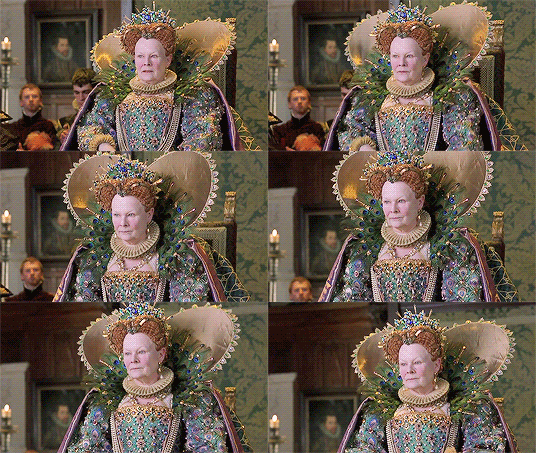 Judi Dench will see your 17 minutes, Michael Keaton, and she’ll raise you: she won a best supporting actress Oscar for only 8 minutes of a role. She played Queen Elizabeth I in Shakespeare in Love and clearly made quite an impression from her modest 6% of the film. Accepting the award, she joked “I feel for eight minutes on the screen, I should only get a little bit of him.” I’m sure that was some consolation to the likes of Lynn Redgrave and Kathy Bates, who lost to her.
Anthony Hopkins only managed to double that screen time when he took on his (arguably) most famous role: Hannibal Lecter in Silence of the Lambs. In just 16 minutes he managed to creep out an entire generation, and caused chianti sales to plummet. Sean Connery was originally approached for the role and turned it out down, which means he lost out on an iconic role, an Oscar, a big day, and sequel opportunities.
There was a lot about the movie Doubt that got under my skin, but Viola Davis’s 5-8 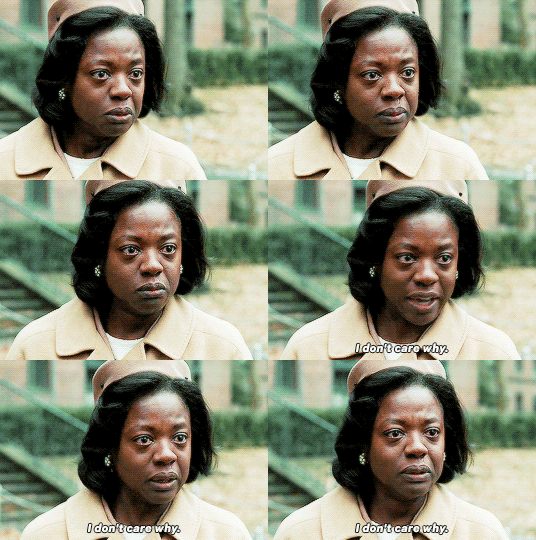 minutes were consistently under there. She plays the mother of a young boy who may or may not have been molested by a priest. She goes toe to toe with Meryl Streep and doesn’t just hold her own – she steals the scene, earning a supporting actress nomination to boot.
5-8 minutes? Bah! Ned Beatty earned his best supporting actor nomination in under 6. He had one riveting scene in Network, which he shot in a single day, but it sure had us glued to our seats.
Beatrice Straight shaves about 13 seconds off Beatty’s time with her Oscar win for her work in the same movie. As William Holden’s poor, wretched wife in Network, Straight made quite an impact, stealing away the record for least screen time for an Oscar win from Gloria Grahame, who took a leisurely 9 and a half minutes to earn hers for The Band and the Beautiful.
It seems as thought it might be difficult for anyone to earn an Oscar with a sub – 5 minute role, but who knows: has anyone actually racked up Michelle Williams’ screen time in Manchester By the Sea? It’s not a whole lot more, I’m guessing. But the truth is, someone came close: Hermione Baddeley was nominated for best supporting actress for just 2 minutes and 20 seconds worth of screen time in Room at the Top, in 1960. The bar’s been set: who will be the first to duck under it successfully?
.
What’s your favourite tiny role? Matthew McConaughey in The Wolf of Wall Street? Tom Cruise in Tropic Thunder? Daniel Craig in The Force Awakens?
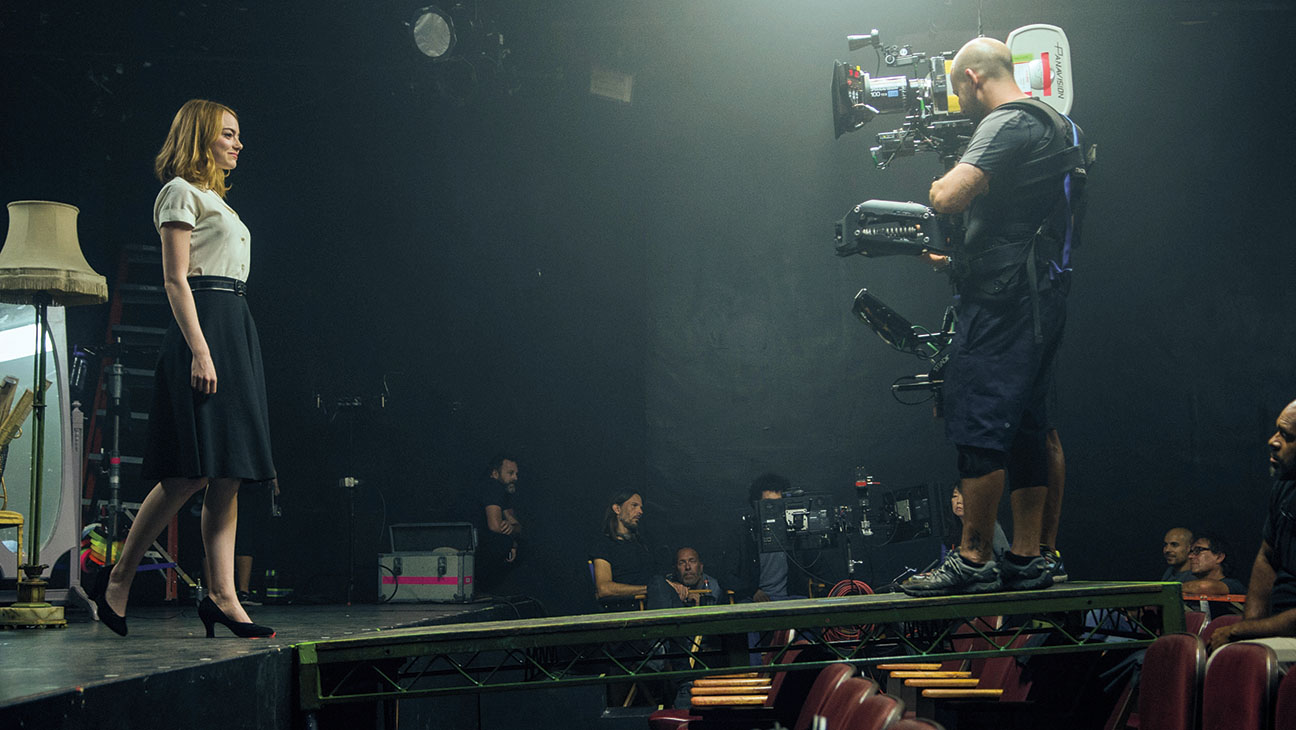
 cartoonish, but McAvoy gives each personality a distinctive flavour without ever resorting to stereotypes. And that’s hard work period, never mind the fact that he’s fighting Shyamalan’s confused script, that seems to want to have something meaningful to say about this controversial disorder, but also really just wants to be an exploitative horror film. You can’t have it both ways.
 having introduced any of his characters. He bestows back stories on two of them through flashbacks, hoping it’s not too late. The rest remain paper thin. The girls (Anya Taylor-Joy, Haley Lu Richardson, Jessica Sula) are mostly there to scream on cue, and to wear progressively less clothing.
 Mills, feel very much like real people because their problems are so distinct. The women don’t bleed into each other; they are each accorded with specific neuroses, anxieties, passions, and influences. We know a little about how they were born, and how they will die, but mostly we know how they are living. 20th Century Women is not plot-driven; nothing “happens” except truth is revealed through meticulous character study.
 better endorsement for a film that couldn’t be further from his own experience. And that’s what’s so remarkable. Though its genius is in the details, the specificity of the characters, it’s all somehow very relatable. And any movie that’s also a mirror is definitely worth its salt.
 I suppose it was to be expected that Ray Kroc, the “founder” of McDonald’s, was an asshole. But, wow, was he ever an asshole. He died well before this movie was made but it seems he would have agreed with that assessment and been fine with it since it got him where he wanted to be – it made him rich, eventually.
 victory. But only until the movie starts, because so far, about 5 minutes into each movie I proudly show to Jay, she wonders why I bothered to beg her to watch this one, asking things like, “Do you remember it being this bad?” when the flying cars first come into view.
 Still, there is something to be said about Blade Runner and something reassuring about its continued relevance. A big reason that the movie feels thin today is because it has been so influential. We’ve seen so many films build on what Blade Runner started, and in comparison, Blade Runner is like a wheel made out of stone. In that way, it’s important but if choosing between the original or the best that the genre has to offer today, the modern film is going to be the better one. But there is still room in my heart for the rickety original, the one that was ahead of its time (and ahead of ours, as Blade Runner is set in the “distant” future of 2019).
 Terrorists are despicable. They take lives or limbs and create chaos and fear, sometimes in support of twisted ideology, sometimes just for kicks, and always demonstrate a complete lack of humanity. Sensational as their actions are, what deserves recognition are not the acts themselves, but the responses by the terrorists’ targets.
 doesn’t kill me. Having read the book, I knew exactly what we were in for with the movie, and I warned anyone who would listen, but that doesn’t mean I didn’t want to see it. It’s Scorsese. I mean, that alone is enough. But I also know that Martin Scorsese has something to say about spirituality, and if he’s gotten away from it with his last few movies, this one is a major reinvigoration of his theme.
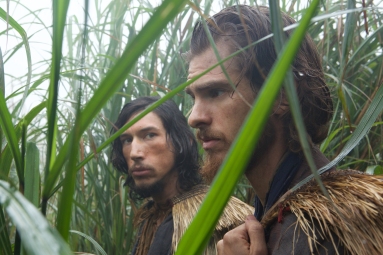 that Rodrigues faces, or the hell that he’s in now. Even though the movie is relentlessly brutal, you’ll still be wowed by the images, the beauty lurking within the swamp.
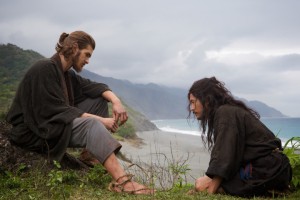 This Asshole Atheist really noticed the distinction between religion and faith – religion being something a government can choose to eradicate; faith, however, is much more difficult. Silence is really a question of belief, not just what you believe, but how strongly you believe it, how strongly you think others should believe it, how far you’re willing to go to impose those beliefs, how much pain you can endure before you abandon those beliefs. And if god himself can hide in silence, can belief dwell there also?
 ASSHOLES WATCHING MOVIES