
If you need a refresher on all the fun stuff a costumer actually does, please check out last year’s post. If your memory’s a steel trap, then delve right into this year’s Academy Award nominees for costume design.
Joanna Johnston, for Allied: Johnston has a challenge in this film in that she has to somehow integrate glamour and the war. Marion Cotillard is a spy, and a wife, and a 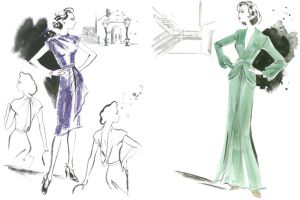 mother. She moves from cocktail parties with politicians to London’s air raids. But with such disparate films as Who Framed Roger Rabbit and Saving Private Ryan under her belt, you might say that Johnston was up to the task. We are first introduced to Cotillard in Allied as she’s wearing a purple dress ” I wanted her to look sexy and beautiful, but not in a “base sexy” way, so we put the sex [appeal] in the back because I knew we were going to see her first from the back. It’s a beautiful Italian fabric; very fine, very delicate silk with this silver shimmer through it, which picks up on the highlights on her.” Later, Cotillard is seen in a green evening gown “I wanted to do a classic column-style dress—very statuesque. I wanted the fabric to be quite liquid. When she’s on the move, she’s got this liquid quality to her,
 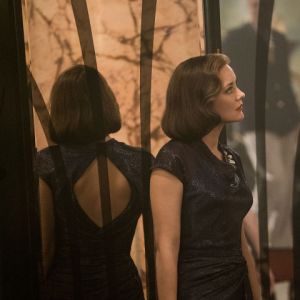 which silk satin does beautifully. Because it was nighttime, the light hit all those highlights [in the fabric]. Again, it’s this sort of old-fashioned quality, but it also had to be quite functional; she had to be able to run in it and do all those things. At one point she actually had a weapon underneath it, in the skirt, so there was a lot of stuff about that [laughs].” The costumes in Allied are indeed very beautiful, but that was something that sometimes felt disingenuous to me – like it didn’t quite fit into a movie set during wartime. The character does transition into more tweeds when she’s at home during the raids, but she’s always just a little too glamourous for my understanding of the time. Johnston has a long history of working with Allied director Robert Zemeckis and Steven Spielberg; she received her previous Oscar nomination for Lincoln.
Colleen Atwood, for Fantastic Beasts and Where To Find Them: Colleen Atwood is a name you may recognize even as a complete neophyte to costuming. A frequent collaborator of Tim Burton’s you can imagine that her costumes are often fanciful, colourful, and 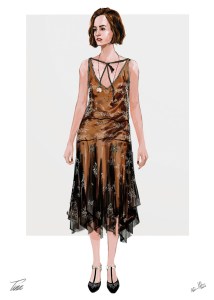 surreal, just what J.K. Rowling had ordered. She’s worked on Chicago, Memoirs of a Geisha, and Alice In Wonderland, for all of which she won Oscars. The secret to her success? “I’m controlling like that. I look at and approve every fitting, no matter who anybody is, and I am very controlling in how I want everything to look. It’s important: it matters, and you never know what you’re going to see. I learned a long time ago that you can’t control what happens with pieces you care about unless you’re there, so I’m there.” Fantastic Beasts takes place in 1920s NYC, in a universe where magic exists. “I love the fantasy stuff, I love that. That’s why I took on this movie. I like the challenge of it, and I like integrating fantasy into a period like this. You get to step out of it slightly and make something that’s a version of that time. Which is what movies have always done: in a way, they glamorise time.” How does she get her inspiration? “I reread a couple of [F Scott] Fitzgerald books,
 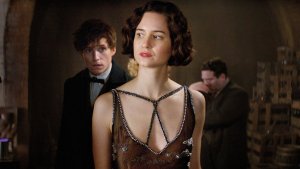 which are always fun to go back to because he’s very descriptive about the frenzy and the romance of the period. It has so much heart that it’s helped me, and this story has so much heart.” She tracked down period pieces from all over the world, hunting in all the best costume shops, but lots had to be made from scratch as there just aren’t a lot of period wizarding outfits to be had, no matter how hard one scours. Eddie Redmayne’s signature peacock blue overcoat is one-of-a-kind.
Consolata Boyle, for Florence Foster Jenkins: Boyle is director Stephen Frears’ go-to costumer; she was previously nominated for The Queen. Boyle did just as much research for this film, as it is once again a biopic with a real woman’s wardrobe for reference, and each piece was recreated from scratch. Meryl Streep wore padding to flesh out her  character, and each costume had to be built around the padding. “The performance costumes had a very specific aesthetic. They were overblown and a lot of her clothes she would’ve made herself or her friends made, so there was an amateurish feeling about them. But then also the way she dressed in her daily life had that quality of being childish and over-decorative.” Boyle used a consistent colour palette of “naive pastels”to bring Florence to life, and to delineate different costumes for different aspects of her life, all of which were fairly theatrical. Stephen Frears is full of praise for her work: “I barely need to speak to her as I know what she’s doing is going to be dazzling. I’ve worked with her for 25 years, so I’m very lucky.” Florence made all sorts of garish costumes and it’s a complete delight to see them recreated
  on the big screen, along with her penchant for accessorizing within an inch of her life. “I worked incredibly closely with Meryl every step of the way, we had a lot of discussion early on about how she would express her inner emotions in her clothing. [Florence] was a supreme performer, so her clothes were gorgeously outrageous. They were high camp but with a softness so she drew people in. And she had no embarrassment about how she looked.”
Madeline Fontaine, for Jackie: Fontaine also had a lot of real-life references for her work in Jackie – we’re talking about style icon and former first lady Jacqueline Kennedy, after all. Natalie Portman gives a tour de force performance as Jackie and Fontaine makes sure she’s got the goods to back it up. Photos and footage of the first lady are so iconic that if even one brass button was out of place, people would notice. She worked with Chanel to get the famous pink suit down to perfection, even hand-dying the wool to achieve the perfect shade of pink (the actual dress is preserved in the National Archives and wasn’t available for consultation). Historical accuracy was important, but for filming purposes, so was duplication: “All the “original” pieces are handmade in our workshop. We needed to create more than one – we made five of the
  pink dress, for instance. Chanel supplied the buttons, the chain of the inside jacket, (“couture” detail for the weight of the jacket, and a signature…), and a label, in case the jacket would fall down [onto] the floor.” Since the film jumps between colour and black and white, the dresses sometimes had to be done in different shades so that our eye would not perceive a difference. Every piece in the film was true to Jackie herself “The elegance she showed in every situation, even while relaxing on holiday, proves this: she was never captured by surprise not looking perfect.”
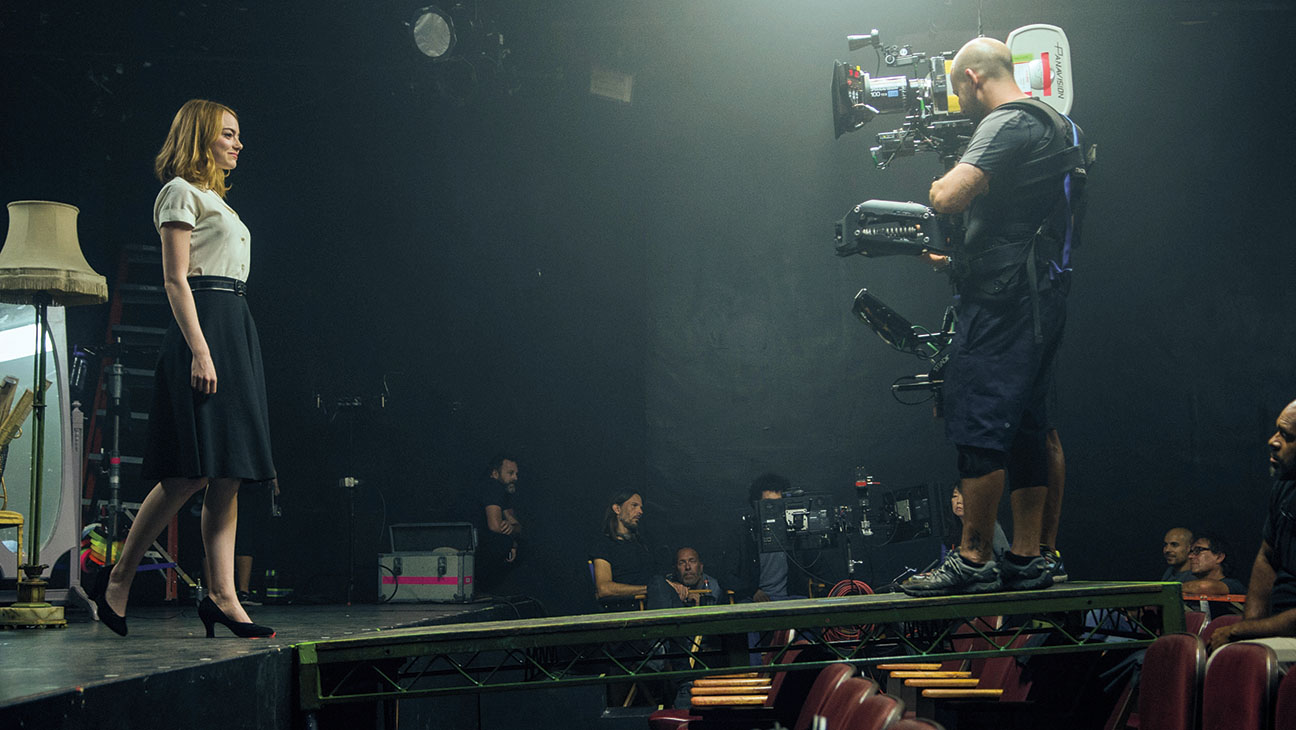
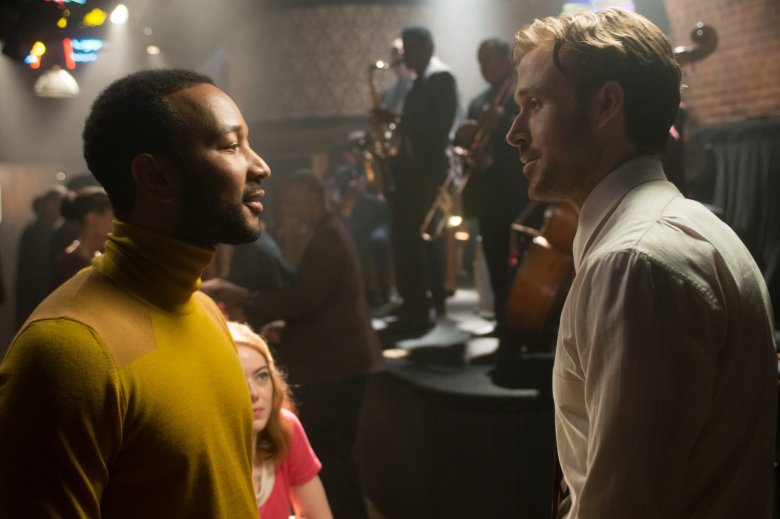
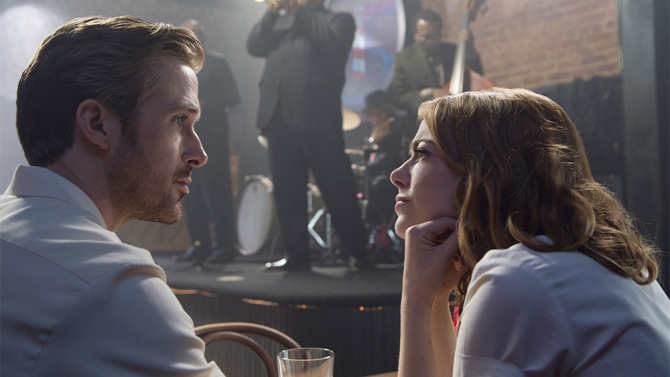
Mary Zophres, for La La Land: Lots of people wondered how this particular nomination was snagged. Hadn’t Zophres just gone to the mall and bought some brightly coloured  dresses, after all? It would be an unlikely win for sure – in the past 20 years, 17 have been period films, 2 were fantasy-based, and last year was post-apocalyptic Mad Max. It might be argued that Chazelle’s La La Land doesn’t exactly feel strictly contemporary. With so many references and throw-backs to old Hollywood musicals, La La Land exists in a stylistic world of its own. Mia and Seb wore classic, timeless looks, and Zophres embraced a fusion of styles. “In my mind, there’s a bit of an arc to Mia. It starts off grounded in reality and by the time you get to the epilogue, she’s wearing that fantasy
  white dress when they’re dancing in Paris. I put a lot of fabric and I wanted it to feel like air.” Zophres looked to old Hollywood for inspiration and was deeply rewarded. “The two models for Mia were Ingrid Bergman (a poster adorns her bedroom wall) and Judy Garland. I found a pink halter dress for one of the montages that’s similar to the one Ingrid Bergman wore for her Hollywood screen test. For the Planetarium peak, Damien and I both landed on green because we both loved the image of Judy Garland in ‘A Star is Born,’ where she wears almost like a jade green dress.”
Which of these ladies has your vote?
 retiring music throughout, but manages to speak directly to your heart. That’s sort of the catch with this film, you have to let go of the normal film-going experience, and just feel your way through this one.
 trial aren’t wrong, they’re explored with new understanding, through a lens of his being a black man, sort of, but not really.
 the LAPD be acquitted in he Rodney King beating. Here was a chance to right that wrong and make the system work for a black man for once. Everyone conveniently forgot that OJ had spent his entire adult life distancing himself from the black community and they made him a civil rights hero. His lawyer, Johnnie Cochran, played the race card and he played it hard “dealt it from the bottom of the deck” it’s said. And he got off. But instead of relishing his incredible good luck, OJ’s life continued to derail until he found himself in court once again, this time found guilty and sentenced to some 33 years in prison, whether or not his crimes truly warranted it. This, again, was retaliation rather than justice.
 known for the white helmets they wear while rushing into the crumbling buildings and raging fires left after an airstrike. They live in and around Aleppo, and are committed to saving as many of the innocent but somehow still targeted civilians that get attacked every single day in Syria.
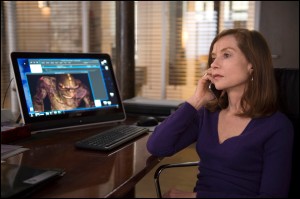 mother. She has exes, lovers, and erotic fixations. Some of them may surprise you. She reminds us that there are many ways to respond to this kind of violation, and none of them are necessarily wrong. But victimhood does not sit well with Michèle; Michèle plots revenge. Michèle’s complexity is a welcome layer to this psychological thriller, and it’s superbly executed by Isabelle Huppert. Huppert won the
  footage and deliberate storytelling that allows us to consider what documentary can do. It is urgent, imaginative and necessary filmmaking.” Meryl, love ya, but I respectfully disagree.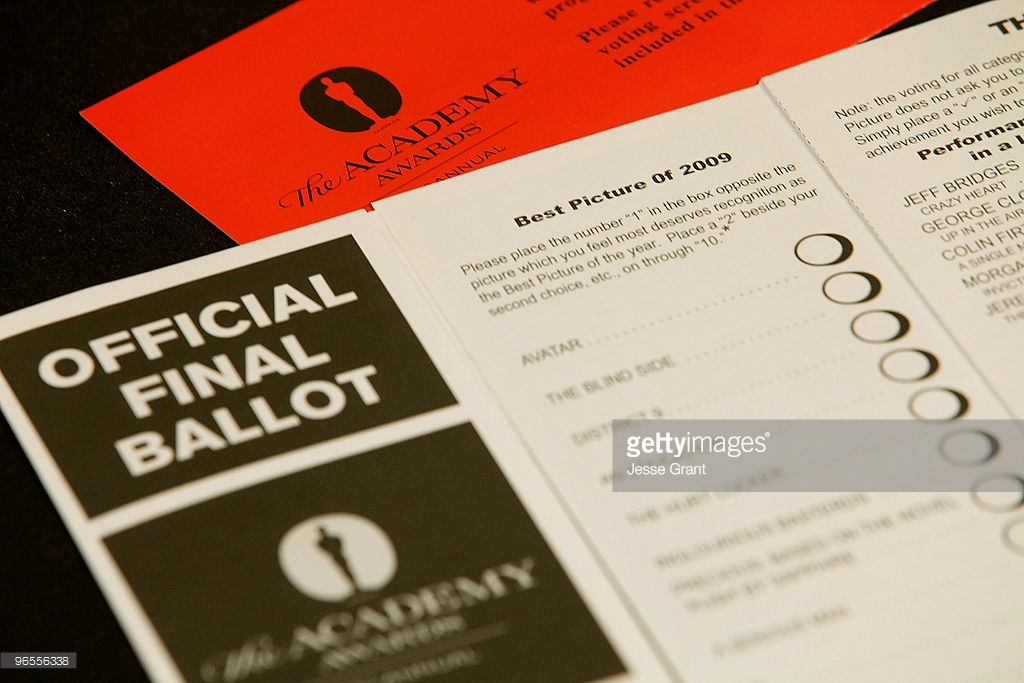

 just showing up and being this weird alternate personality. He more or less stalks his daughter and endangers her career by showing up at her office and various work functions. If he was your father, you’d either die of embarrassment, or you’d kill him. No two people should survive a relationship like this.
 ASSHOLES WATCHING MOVIES