Scars are a movie shorthand. Bad guys often have visible scars, gruesomely healed. Austin Powers’ Dr. Evil has a huge scar, from the corner of his right eye down to his jaw. Freddy Krueger from Nightmare on Elm Street is extensively scarred. Staff Sergeant Bob Barnes in Platoon has a face meant to tell you how crazy he is, right from the start. Most but not all of the scars on this list are found on villains, but in real life scars can criss-cross the bodies of all kinds of people, even, occasionally, good ones. Scars are portraits of courage and bravery, reminders of stupid decisions, the markers of time and change. My left arm was left completely scarred after a car accident; oddly, it is NOT the arm covered in ink (okay, it’s partially covered in ink). They make me a little sad, but also a lot grateful: scars mean you’re still alive.
The Joker: I suppose there are probably dozens of back stories as to how The Joker got his scars, but I love how Chris Nolan approaches them in The Dark Knight. The Joker himself tells several vastly different tales involving their provenance, which reveals nothing about their true nature, but tonnes about his sanity. The way he accents the scars with makeup makes us think he’s proud of them. He wants them to be noticed. Perhaps he wants us to believe they’re self-inflicted. Perhaps they are.
Tony Montana: It’s inevitable that a character nicknamed ‘Scarface’ will make this list. Tony is blasé about his scar, laughing it off, attributing it to his youth but never getting specific. It’s obviously a reminder of the past he left behind, and it’s a focal point to his enemies, something that makes him look scary and intimidating, perhaps warning them that he’s capable of violence. But in true Tony spirit, he addresses his scar only thusly: “You should see the other kid; you can’t recognize him.” I bet that’s true.
Harry Potter: Harry got his distinctive lightning-bolt scar in a failed murder attempt, when Lord Voldemort put a killing curse on him (his mother’s sacrifice saved him from death, but he would bear the mark of the attack). The scar is legendary among the magic set, and it tingles whenever the Dark Lord is near. It wasn’t just a warning system, but a link to what Voldemort was thinking and feeling – actually a small piece of his soul, yearning to escape. Which is pretty crazy.
Edward Scissorhands: Edward’s face (and not just his face) is covered with fine scars, the obvious result of learning the hard way how to live with scissors for hands. They aren’t terrible to look at, and actually give him a sympathetic look, reminding us of his hardships. Since the movie skewers conformity, Edward’s scars are just another thing that set him apart.
Randy ‘The Ram’ Robinson: Randy shows stripper Cassidy some of the many scars he’s accumulated over his years in the ring as ‘The Ram’ in The Wrestler. His broken body is a good indication of his mental state as well, beat down and tired. “He was pierced for our transgressions, he was crushed for our iniquities; the punishment that brought us peace was upon him, and by his wounds we are healed” Marissa Tomei quotes from the Old Testament. But his worst scar is yet to come: he undergoes bypass surgery on his heart, leaving the tell-tale scar down his chest, a constant reminder that his heart can no longer take the stress of his career. He’s forced into retirement, but can’t quite commit to it.
Marv: Sin City’s Marv puts Mickey Rourke on this list twice, ironic considering his own not-insignificant scars. In the 1990s he took up boxing, and had to have lots of reconstructive surgery as a result – two broken noses, a smashed cheekbone – but admittedly went to the wrong doctor to put things right. Finally, after massive amounts of plastic surgery, he’s starting to look good again. Regardless, in Sin City, Rourke’s face is covered in prosthetic scars. Marv is supposed to be too “ugly” to attract the opposite sex, which is why his relationship with Nancy is so pure and good, and highly cherished by him.
Scar: In Lion King, Mustafa’s brother is marked for evil by eye-skimming scar that leaves him disfigured. The movie doesn’t tell us how he got it, but we do know he’s defined by it, bearing its nickname.
Gill: Gill has terrible scarring to his face and fins after an escape attempt left him badly
wounded by dental tools. Voiced by Willem Dafoe, Finding Nemo’s Gill seems dark and brooding because of his scars, but we come to understand that they’re a symbol of his fight for freedom, and what the fish are willing to risk in order to be free.
Inigo Montoya: “Hello. My name is Inigo Montoya. You killed my father. Prepare to die.” A mysterious man with 6 fingers attacked Inigo’s father, and presumably Inigo’s scar is from that same fight. His greatest wish is to avenge his father’s death, and he spends much of The Princess Bride pursuing the man who left so many scars in his wake.
Darth Vader: Vader’s scars represent his turn from annoying emo brat to pure evil. As the ghost of Obi-Wan tells Luke: “When your father clawed his way out of that fiery pool, the change had been burned into him forever – he was Darth Vader, without a trace of Anakin Skywalker. Irredeemably dark. Scarred.” Those scars are kept underneath a menacing helmet for much of the series, but when that helmet comes off, oof: impact.
Ridley Scott intended to kill off beloved butt-kicking hero Ellen Ripley in the very first of the Alien franchise. His script saw her harpooning the alien in her escape pod but it making no bloody difference, so the thing tears through her mask and rips her face off. Then the alien takes over the controls and sets his course – well, you can imagine the rest. The studio wouldn’t hear of it. “The first executive from Fox arrived on set within 14 hours, threatening to fire me on the spot,” Scott has said. “So we didn’t do that [ending].”
And this might be the first ever case of me agreeing with studio interference, purely because the world needs more Ripleys. We admire her because she was tough and she was smart. I admire her, and Scott, because Ripley cried at work and it didn’t weaken her, didn’t sap her power.
As recently as last year, the New York Post ran an article literally entitled ‘Cry At Work If You Never Want To Succeed.’ It contains helpful nuggets such as “Sure, ladies, it’s OK to cry at work. If you want every male (and female) boss to think you’re a useless little Nancy who can’t and shouldn’t be trusted with a challenging assignment again.” And evidence that writer Kyle Smith has confused women with toddlers: “Crying is an absolutely spiffing way to get what you want — in the short term. But once you’ve hosted a one-person snivel party, people tend to remember it.” Crying at work is not the same as throwing a temper tantrum. Sometimes tears are a natural (and unavoidable) reaction to anger or frustration. Some men (and frankly, some women) might take those same feelings to a bathroom stall where they’ve made an indent in the plaster punching the wall. Others might take those feelings out an on unsuspecting trash can which gets kicked and spilled all over the office floor. Doors and drawers and phones slam. Assistants get verbally abused. Half a dozen donuts get guilty devoured. Most of those are much worse than crying, but only crying gets a bad rep. “Women will be set back 100 years if they start believing it’s OK to cry on the job” Smith tells us. “But hey, OK, fine, if you just want to remain on the Girl Track for the rest of your life, by all means interrupt the weekly departmental meeting to fill your empty venti cup with your hot, salty tears.” Um, Girl Track? Fuck you, buddy.
When Facebook CEO Sheryl Sandberg wrote her best-seller Lean In, she wrote that it was okay to cry at work. Crying just happens, it’s part of our biology, part of our survival mechanisms. For many women, and many men, it’s just part of being human, part of having emotions, and most of us do not shut those emotions off at the start of our shift. 41% of women and 9% of men said they’d cried at work during the previous year and that it had made no difference in terms of their success (note: women have six times more prolactin – a hormone related to crying – than men).
All that to say: Ellen Ripley was a force to be reckoned with. She cried at work, not to manipulate her coworkers, not because she was helpless and sad, but because she was in a tough situation and it just damn well called for it. All her male colleagues perished while she survived. She kicked alien ass so hard they brought her back for a sequel.
Once in a while I wish I had a more literary mind. When I write, it’s pretty direct and while I used to attempt subtext I’ve pretty much given up on it at this point – too much effort for too little payoff. But that’s for my writing, where no marks are given for artistry. All that matters is the end result.
Whereas for Maya (Lena Olin), the protagonist in A Critically Endangered Species, artistry is all that matters. She’s a very successful writer, possibly too successful in that she has decided her best work is behind her and she will kill herself rather than crank out any more mediocre books. Her last project is to select a young male writer to inherit everything and safeguard her work after her death.
She holds tryouts that inevitably include detailed examinations of the applicants’ work, and with one notable exception end in sex. The field is quickly narrowed to two finalists, a showdown between intellectual and sexual appeal. For Maya’s part, she takes pleasure in sex but she obviously does not get pleasure or happiness from anything else, and sees no value in her life aside from her work. The beautiful but muted shots of northern California are a good match for Maya’s melancholy state of being.
Which candidate wins is incidental. The process is what matters. Just as incidental is the fact of Maya’s imminent suicide. Refreshingly, this is not a moral examination of Maya’s choice. The focus of the movie is the competition between two very different suitors and the discussions between them about some very interesting writing. The movie is extremely well-written and writers Zachary Cotler and Magdelena Zyzak deserve particular praise for producing so many stylistically different pieces of poetry for the applicants to read and defend against Maya’s criticism. The acting is spot-on as well, giving us main characters that are both well-written and well-executed.
A Critically Endangered Species is heavily intellectual and took less than five minutes to go over my head as far as literary analysis goes. Even so, it was extremely interesting to take in the poetry and the discussions that followed each piece. This is a different sort of movie than I’m used to, and while I would have found the difference refreshing on its own, the quiet excellence of this film is what really made a lasting impression. Added to that, if you have more than a passing interest in literature (which for me basically starts and ends with comic books), then A Critically Endangered Species is not only a good movie, it’s an intricate discussion piece that should rub you in a few different ways at once. Which may be what Maya was searching for all along.
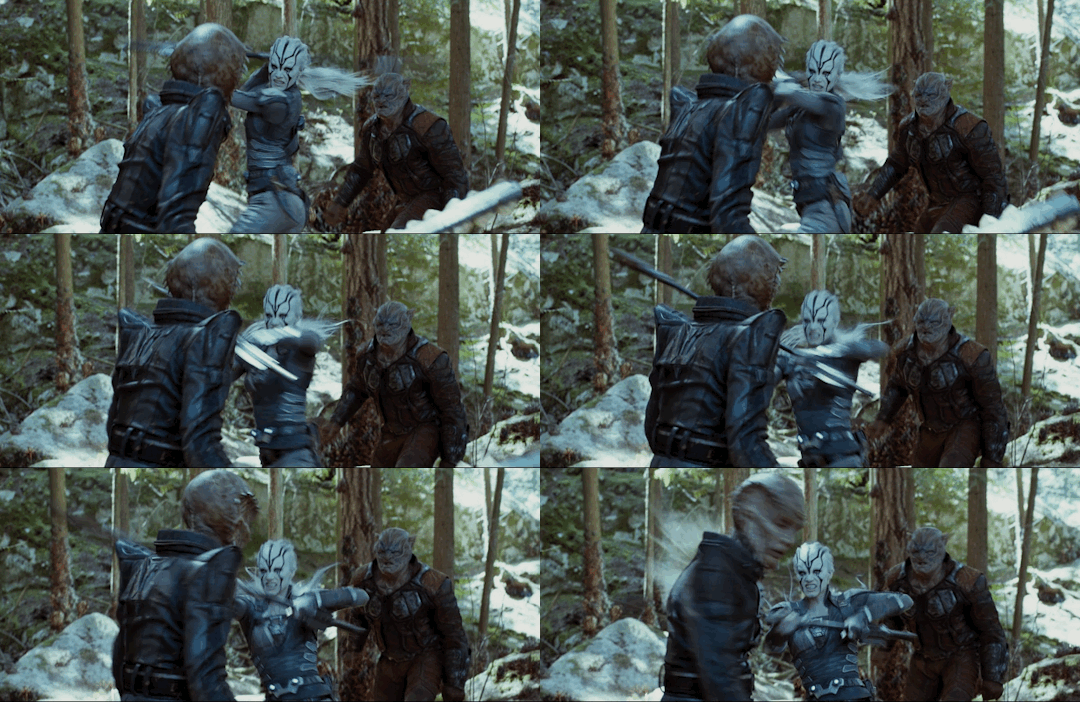
Fans of Community might have been delighted to see Danny Pudi in Star Trek Beyond; they may also be forgiven if they missed him. Pudi was playing an alien and was unrecognizable. The role was the fulfillment of a childhood dream, and just 3-4 hours in a makeup chair transformed him into a creature only a mother could love.
He learned fight choreography and studied the alien language alongside Kim Kold and Sofia Boutella. Despite the fact that sweat pooled under his prosthetics and his character gets beaten by Boutella, Pudi sounds ecstatic.
There are lots of famous Trekkies: Mila Kunis, Daniel Craig, Angelina Jolie and Ben Stiller are all confessed die- hards. Whoopi Goldberg of course. Tom Hanks was such a fan that he went snooping on the Paramount lot where he was shooting Bosom Buddies at the time – it just so happened that The Wrath of Khan was shot there also, and he seized the opportunity to board the Starship Enterprise. He sadly turned down a role in First Contact due to his first directing job, That Thing You Do! Eddie Murphy nearly snagged a role in The Voyage Home and is probably a little heartbroken that it was re-written. I totally avoided the show growing up, relegating The Next Generation to ‘Boring Dad Stuff’ and not giving it a second thought until JJ Abrams decided to make my life a little more complicated by rebooting the franchise and obligating all the men in my life to insist that I watch. I have. I’ve even had my own Star Trek transformation. But only recently did I experience a Star Trek fan film – a story that exists within the Star Trek framework\universe, lovingly created by talented film making fans.
Paul Laight, a gentleman kind enough to have been visiting us here for some time, just so happens to be a writer and producer on the film, and he and director Gary O’ Brien generously granted us answers to some of our most burning questions. But first, please watch the film, Chance Encounter.
This is a bit rude, but I was frankly surprised by how good it is. We are sent all kinds of movies to review, and lots of them are amateur jobs that make us cringe with their bad writing or terrible acting. This little piece, however, is well polished. It isn’t just made with good intentions, but with talent and professionalism. Thematically it’s an excellent fit for the Star Trek family, but the story could and would hold up without it.
Without further ado, an interview with the filmmakers.
ASSHOLES: What came first, did you decide to make a Star Trek movie, or did the story just seem like a natural fit in the ST universe?
PAUL: The latter. Myself and Gary have made some very dramatic war and horror short films, plus comedies, in the past as Fix Films so when he came to me with the idea of something more gentle and romantic I thought that would make a great change of pace and genre. Gary suggested a short involving an older man and a younger woman. Now, usually this idea can lend itself to something more sleazy but we did not want that. We wanted something emotional which would resonate rather than titillate. So, I had a think about it and eventually came up with the idea you kind of see in Chance Encounter. Originally it was set on a rooftop and it was just two people meeting and having an impact on each other’s lives despite only meeting briefly. Then Gary suggested we could make it as a Star Trek fan film and I agreed it would a fascinating project to attempt.
GARY: Yes exactly, once Paul introduced a Sci-fi element to one of his story outlines it suddenly opened up a new area to us that I could see was very much Star Trek shaped!
ASSHOLES: What level of fandom do you have to achieve before attempting fan fiction? Do you worry about upsetting other fans?
PAUL: I guess Gary may be able to answer this question better than me as he is a proper Star Trek fan. My feeling was that as a writer I wanted to do my utmost to tell a compelling story with intriguing characters which connects with everyone. I wrote the screenplay not just for Star Trek fans but for those who enjoy good stories. I was very confident no one would be upset by the story as the characters are intrinsically positive and at no time are we parodying Star Trek or the franchise in general. What was always great about Star Trek is that the characters and concepts were always compelling, so while open to satire, I was not interested in that. If someone is upset at Chance Encounter then they probably have anger issues.
GARY: I think you have to just tell your story first and then fit the expected “fan” elements in around it, which is how the staff writers across all the series approached things too I suspect. “Star Trek” evokes certain things that one might assume you have to include – aliens, transporters, warp drive, photon torpedoes, etc, all of which are absent from our film, and so maybe if there is a level of fandom you need to reach before writing fan fiction, it’s knowing the franchise well enough to strip out all the surface elements like those and yet still feel true to the source material.
ASSHOLES: What was it like making a film with so many visual effects on a limited budget?
PAUL: Gary is the tech genius and it is a testament to his years of training that he was able to produce such great results on a limited budget. Kudos to him.
GARY: Thanks mate! I think on such a low budget, part of getting the visual effects “right” is knowing when not to do them. It’s tempting to think that once you’ve got the computer and the software the sky’s the limit and so why not go crazy. But that’s not how the shows were made. Why green-screen and motion track stars outside the spaceship windows when we can do it just as effectively in-camera with a black fabric and bits of tin foil? Less is more was our philosophy!
ASSHOLES: What was the casting process like? Had you worked with any of the actors before?
PAUL: Having made over ten short films and various promos over the years our casting process is very organised now. We use online casting websites such as Shooting People and Casting Call Pro and have also built up an ensemble of actors we have used in the past. There are SO many talented people out there and when we post on the sites you will get a hell of a lot of responses. We then sieved the actors down to a shortlist and then we either meet in person (where the leads are concerned most definitely) or Skype first contact before meeting them. We had only worked with Phil Delancy before (Captain Janssen) so this was a whole new cast generally on this one.
GARY: Yes the casting went pretty smoothly and we feel blessed that we found such good people for all the roles. Everyone was very professional and did a great job – a pleasure to work with them all.
ASSHOLES: What are the challenges of making a short film rather than feature length?
PAUL: Well, I haven’t made a feature film but I have worked on them as crew and obviously everything is bigger on a feature; even a low budget one. Personally, though I think the amount of hard work you need to put in is commensurate for both. Most importantly in any production is you must have a good story and screenplay as your basis, then you can get talented people to commit to the project. Of course, a short film for me is a microcosmic feature but the biggest challenge is me and Gary pretty much did EVERYTHING from start to finish. I guess it would be difficult to do that on a feature, but maybe not impossible – as Robert Rodriguez has demonstrated.
GARY: My only experiences on features were as a tiny cog in a very large machine, but as director on numerous shorts you have to do everything. I guess film-making always boils down to being incredibly hard work though, just different kinds of work.
ASSHOLES:How do you run a successful crowdfunding campaign?
PAUL: Gary was the brains behind our campaign and I chipped in with a little clip. I think the most important thing is not ask for too much money! Be realistic and HAVE A GOOD STORY or IDEA you feel passionate about. We believed in our story and the angle of making a Star Trek fan film really helped us too. I mean, if you’re asking for $1,000,000 to make a film about paint drying you could struggle!
GARY: Exactly – we didn’t want to ask for any more money than we thought was needed. Also, it’s our first, and so far only campaign so I don’t know if our success was a fluke or not! We were just open, honest and did what we said we’d do – the rest is just left to fate I guess.
ASSHOLES: What feedback have you received from your backers?
PAUL: Amazing! One guy has even done a fan review on YouTube. All the feedback so far for Chance Encounter has been SO positive. People love the story and characters and effects, so nothing but good stuff so far. No nasty Star-Trek-Klingon-Trolling on YouTube comments either. Well, not YET!
GARY: Yes at this point people have been overwhelmingly positive about the film. With so much content out there we’re really flattered that people have even taken the time to watch it – that they like it too is just wonderful. Also, many of the comments say how true to Star Trek it felt, so that is a huge compliment in itself of course.
ASSHOLES: You’ve (Paul) described various roles as “caterer, florist, dead body” – what has surprised you most as a producer on a low budget indie?
PAUL: Oh yes, that was an attempt at humour on my part on my blog article. Basically, with Fix Films me and Gary have taken on various duties in the filmmaking process over the years and we love that aspect of it. But the most surprising thing is that film is ultimately a collaborative process and the amount of assistance and support we have had with our projects has been amazing. I’ve had friends and family and people I’ve never met before helping us on productions; and Chance Encounter is a case in point. Being a bit of a cynic I kind of thought that raising even £2000 for a Star Trek fan film would be tough but people came through for us and helped us make a wonderful story. I thank you all.
GARY: Yes, both the effort and money from so many people that made Chance Encounter happen was a thing to behold – we’re incredibly grateful.
ASSHOLES: Any plans to revisit these characters?
PAUL: I wouldn’t rule it out at all. It depends on writing a script that would work and of course getting finance on another production. But we spent a lot of time working on the characters, creating their back stories and biographies, so there is a great foundation with which to work from.
GARY: Well these characters were created for this specific story, so as Paul says – if they do return would depend on if they fit into a future story or not. I suspect that there is another Star Trek film lurking somewhere within us, with or without these characters – but at the end of the day it would have to depend on whether future fund raising efforts were successful or not. Watch this space!
When I watch the Oscars, I watch for 2 reasons: to see all the dresses, and to win money off my dearest friends. I often don’t agree with the choices, or even that awards should be given for art at all. At least half the time I think the host is a drag and the speeches are pretentious. But I’ll give respect where respect is due: it’s not easy to take home an Oscar. You can’t even earn an Oscar by acting, no matter how hard you try. No, an Oscar must be bought, and Oscars don’t come cheap.
Variety has estimated that an Academy Award will set you back somewhere in the vicinity of 3-10 MILLION DOLLARS. It’s not George Clooney who’s paying out of pocket, mind you. It’s the studios. An Academy Award will likely give their movie a push in the box office, or certainly in at-home rentals (Clint Eastwood’s Million Dollar Baby went from just $8.4 million pre-nomination, to gross over $90 million after its Best Picture win). It’ll put a fancy gold sticker on the DVD box in stores. And it’s a shiny piece of hardware not only for their office, but for any movie poster coming out of their studio for the next several years. Prestige!
If you’re anything like me, you may have cringed over some blatant Oscar name-dropping. Take Collateral Beauty for example (this is the first and last time it’ll be mentioned in the same sentence as Oscar this year, poor dud). The trailers likely introduced the stars as “Oscar winner Helen Mirren”, “Oscar winner Kate Winslet”, “Oscar nominee Edward Norton,” “Oscar nominee Will Smith,” “Oscar nominee Keira Knightly,” “Oscar nominee Naomie Harris,” and “plain old Michael Pena.” Well, okay, not so much the plain old, but you catch my drift. It’s always a little embarrassing when inevitably someone in the cast has been left out. Michael Pena might be a little put out with his ranking, but on a movie like this, the studio will do everything in its power to remind you that the cast is stellar (the story: well, that’s another question – hopefully we’ve blinded you with all the Oscar talk!).
Two rounds of ballots go out to Academy members. The first went out to secure nominations. Now everyone can vote on who will actually win. People are encouraged to only vote if they know enough about the category to make an informed choice (possibly the costumer knows little about visual effects), and are encouraged to see all of the nominees in order to judge accurately. But these Hollywood types are busy people! They can’t be hitting up the cinema like us regular folk! Solution: studios can send out free screeners so big important people can watch the contenders in the privacy of their own homes. It will cost the studio about $300 000 to do that (it’s a lot of free DVDs – and there’s always a chance of piracy) but that’s just a drop in the bucket when it comes to buying an Oscar.
Next you have your print and TV ads, billboards and all the rest of the ‘For Your Consideration’ items to be paid for: all kinds of crap with the movie’s name tarted out all over it. And then there’s the constant round of balls, parties and teas, plus the special screenings with the stars in attendance, and all the talk shows and private lunches and everything else that come with pressing the flesh and hoarding votes. An Oscar campaign is like a political campaign. You have to be bold and ruthless. You have to want it, and you have to tell everyone you’re running. But you also have to pretend not to want it too much, while basically begging for every vote you can get.
If you’re really serious about toppling over, say, Natalie Portman, you may even hire an Oscar consultant. Yup, that’s a real job, and it’s their heavily-paid job to predict what voters are thinking, and try to swing it in your favour. Meanwhile, you’re going to rack up ridiculous airmiles, wear millions of dollars in outfits and jewels (about half a mil per event), and talk about the same damn movie over and over at press junkets for a good 9-10 months. You can make a human baby in less time!
Since we’re in the nitty gritty of Oscar voting now, there are some rules as to what the studio can do officially, so they’ve invented ways around, of course. The Santa Barbara film festival exists only to give fake awards to actors and industry in order to remind Academy voters who they are (this year, Barry Jenkins, Damien Chazelle, Denis Villeneuve, and Kenneth Lonergan ALL received Outstanding Director – suspicious much?).
If that made Damien Chazelle nervous then he could always start a whisper campaign about how Kenneth Lonergan needs to coat himself in pickle brine in order to fall asleep. That sounds like I’m joking and indeed I’ve never heard anything about Lonergan and any kind of pickle, but Harvey Weinstein is famous for being – er – quite competitive, stopping at nothing, including the nasty rumour mill, and lavishing expensive gifts on Academy members just out of the “goodness” of his heart, no strings attached (except vote for my movie or I’ll blackball you forever).
This year there is arguably a three way frontrunner for best picture: La La Land, Manchester By The Sea, and Moonlight. So all three will ramp up spending in order to compete.Manchester was made by Amazon, who has deep pockets and is looking to establish itself as a powerhouse. Moonlight on the other hand was an indie film, with a budget of just 5 million. This is where the personal touch comes in: it’s not enough to take out print ads (what are those?) – studios are making sure that the stars are available for selfies with each and every voter. Brie Larson, who took home best actress last year for Room said that her worst Oscar fear was “getting pinkeye” – she shook a LOT of hands, and god knows where they’ve been!
Harvey Weinstein is pretty much responsible for the modern, despicable Oscar campaign. He pours lots of money into wins, and he gets results: over 300 Academy Award nominations to date. 1990’s My Left Foot was Harvey’s first big campaign and he went hard: he had Daniel Day-Lewis testify to the Senate for the Disability Act; he chased people on holiday; he even set up screenings at the Motion Picture Retirement Home. He spent a record setting amount securing a Shakespeare in Love upset over Saving Private Ryan, and insisted the British crew move to Hollywood for the duration of award season. In 2002 he mounted a smear campaign against A Beautiful Mind, accusing the film of editing out the biography’s mention of homosexuality, and later pointed to “Jew-bashing passages” from the book. To take advantage of a loophole, he rereleased City of God 3 times to eventually secure it some nominations; it was first eligible in 2002 but received nothing, so Harvey kept it in theatres for 54 long weeks. He targeted Jewish voters for nominations for The Reader by screening at Jewish cultural events and seeking endorsements form the Anti-Defamation League and from Holocaust survivor Elie Wiesel. While campaigning for Inglorious Basterds, he engaged a whisper campaign against The Hurt Locker, hiring soldiers to come forward and call out the film’s lack of realism. When The King’s Speech went up against The Social Network, he had Jennifer Lopez and Mick Jagger host star-filled events. With The Artist, he reached out to Charlie Chaplin’s granddaughters. In 2013 he went so far as to hire Obama’s campaign manager to bolster The Silver Linings Playbook.
Harvey’s not quite a pioneer though. The first real campaign reaches back to 1945 when Joan Crawford hired a press agent to get her a win for Mildred Pierce. He kept her name in the news and planted items in the gossip columns. Still, she was too nervous to attend the ceremony, fearing a loss. Her agent, however, dispatched hair and makeup to her home while he covered for her: a fever of 104 degrees, I believe he said. She won, and when press raced to her house, she was sitting up in bed, full hair and makeup, sexy negligee, and an Oscar cradled in her arms. Success!
Nowadays you have to have swag. When The Descendants was up for an Oscar, it sent out personalized ukuleles to members. More perplexingly, the team behind Lincoln sent out turkey roasting pans. Universal sent out iPod shuffles that just happened to be pre-loaded with music form Les Miserables. Disney sent out toy bows and arrows for Brave. None of this is exactly legal, but studios are willing to bend the rules to secure wins, and why on earth would the gift recipient ever complain? So yeah, the Oscars are a complete sham – or worse: they’re a 4-hour movie commercial.
I had heard she had some sort of music career fallback, but I didn’t really understand that I’d been hearing her on the radio consistently for quite some time. Hailee Steinfeld: you may know her as the little girl from True Grit, or else the young woman in The Edge of Seventeen, but a whole lot of young folk know her as a top 40 pop artist. She “broke out” after appearing in Pitch Perfect 2 and just like that she had a record deal and a music video.
Of course you may know that Pitch Perfect alum Anna Kendrick also landed on the Billboards with her annoying song, Cups. The music video, which I’ve neglected to see before today, is a bit aggravating since she’s play some working class baker in a horrid little diner that apparently refuses to sell drinks. Anyone else start bleeding from the eyeballs when this comes on? Anna Kendrick’s gotten singy in a whole bunch of her movies, including Trolls and Into the Woods, so it seems unlikely that her vocal stylings are going anywhere soon (god help us all).
Kendrick’s not the only co-star of Hailee Steinfeld’s to have music on the radio. Her True Grit co-star Jeff Bridges is super musical too. Of course you were likely blown away by his performance in Crazy Heart, but that’s not a one-off. He studied piano as a kid but now he’s usually seen with one of several guitars in hand, on set and everywhere else. In 1980, while filming Heaven’s Gate, he’d often jam with his co-star, singer\songwriter Kris Kristofferson, between takes. Kristofferson helped inspire Bridges’ Crazy Heart character, Bad Blake, who is described as being the fictional 5th Highwayman, alongside Willie Nelson, Kristofferson, Waylon Jennings and Johnny Cash.
A bunch of actors tour with bands in their down time. Steve Martin’s bluegrass sound isn’t surprising to anyone who’ll recognize his banjo from his stand-up comic days. He’s put some real time and effort into his second career as a musician, and he’s picked up some Grammy awards to show for it. Billy Bob Thornton has released music with The Boxmasters and Tres Hombres. Michael Cera plays bass in Mister Heavenly. Kevin Costner’s band, Kevin Costner and Modern West, tours the NASCAR circuit. Keanu Reeves’ band Dogstar reportedly gave Weezer their first touring gig opening for them in the early 90s. Kevin Bacon makes music with his brother in (you guessed it) The Bacon Brothers. Russell Crowe started out with 30 Odd Foot of Grunts before he was super successful over here, and then graduated to Russell Crowe & the Ordinary Fear of God once he did. And perhaps most famously (or at least most successfully), Jared Leto formed alt-rock band 30 Seconds to Mars the minute he was done with My So-Called Life and has always gone back to it between film projects, ensuring the stability of the black eyeliner industry.
Jamie Foxx revealed his musical talent in the movie Ray, and then followed it up with a convincing Ray Charles impression in Kanye West’s song, Gold Digger. Foxx has also been feature on a Drake track (another actor turned musician; Canadians will never let him forget that he got his start on the Degrassi reboot). Solo, he’s released 4 R&B albums since Ray. His most commercially successful single, the heavily auto-tuned Blame It, has a music video that weirdly “stars” Jake Gyllenhaal, Ron Howard, Forest Whitaker, and Samuel L. Jackson. Never mind the Grey Goose sponsorship deal. Feel free to check it out and let me know what gives.
One of my favourie actor crossovers is Zooey Deschanel, who has a good thing going with M. Ward called She & Him. She’s pretty legit – she plays keyboards, percussion, banjo, and ukulele – and M. Ward lends a lot of blues\folk credibility. We know she can sing from her duet with Will Ferrell in the movie Elf, but she’s also appeared on a Coconut Records album, a band by fellow indie actor Jason Schwartzman. In this She & Him video, she’s helped out by her 500 Days of Summer co-star, Joseph Gordon-Levitt.
In case you doubted that Ryan Gosling was singing (he was a Mousketeer alongside Justin Timberlake you know!) and playing the piano long before La La Land ever existed, here’s a pretty raw video of him and his band Dead Man’s Bones. The sound’s not great because it was recorded live, but you’ll get the gist.
There are many more besides who tried to sing and probably shouldn’t have, and I’m not even sure if William Shatner belongs on that list. He’s released so many albums at this point that I have to take him at least semi-seriously, or as seriously as the Shatner spoken-word singing can be taken. Which is still better than Cory Feldman sing-ranting about the pitfalls of being a former child actor. And I can only begin to imagine the highs and lows contained on an album by Steven Seagal, Bruce Willis, or David Hasselhoff, and apparently there are 18 of those in existence! Can you even believe it? Well believe it:
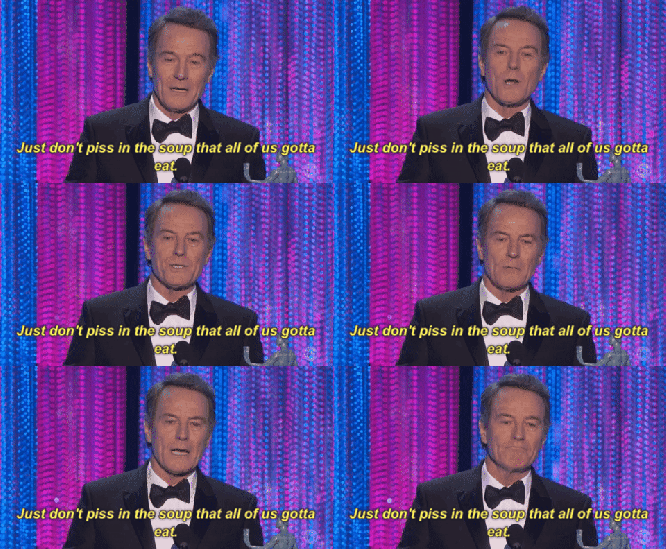
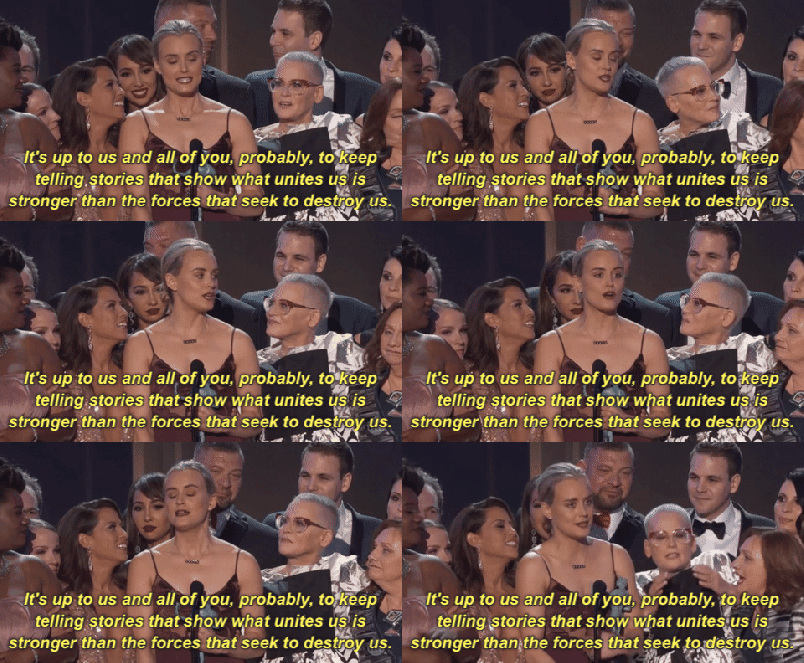
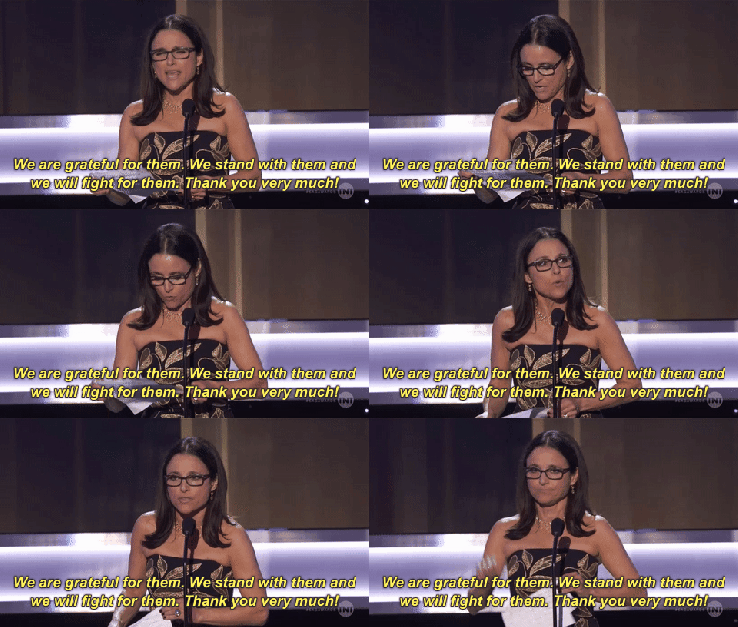
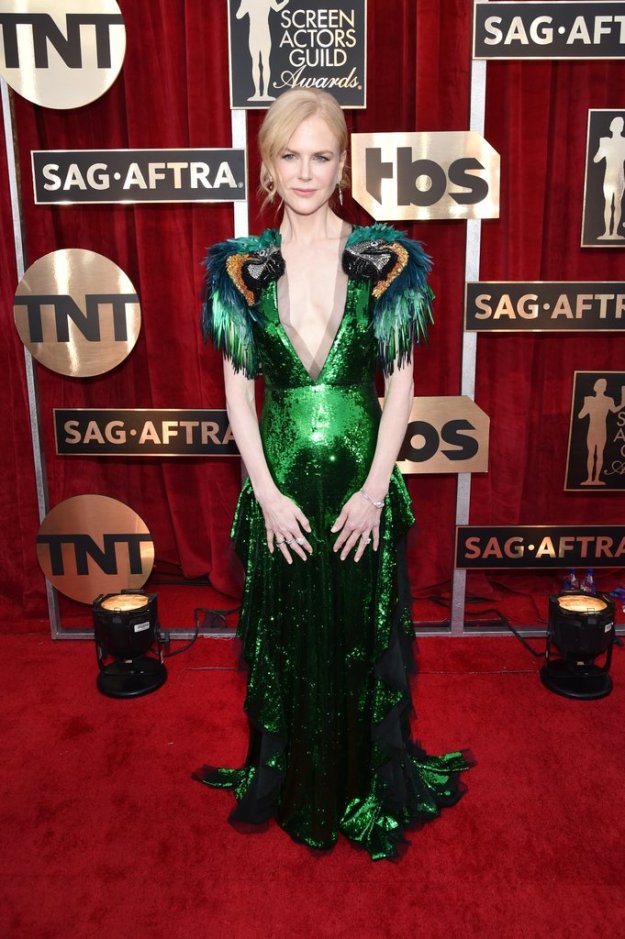
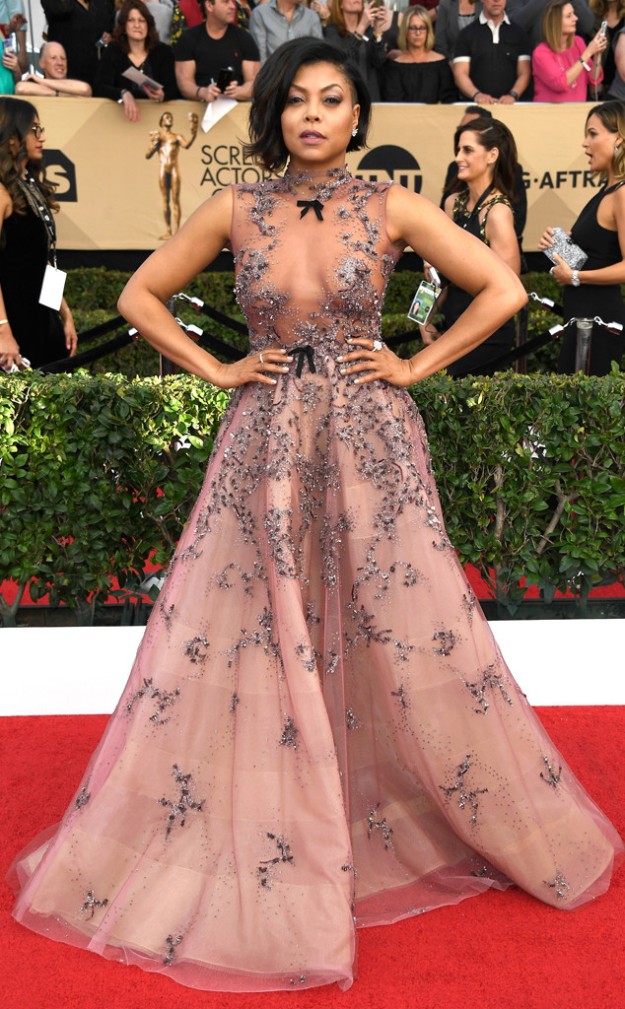
This past weekend, Donald Trump signed a deliberately hateful and ignorant document into law, making racism and Islamophobia national policy. Critics derided it as UnAmerican, and yet it was America who voted this buffoon into presidency just a few short months ago. In the face of one man’s cowardly discrimination, however, were many more acts of love and fraternity. American citizens stormed airports with signs of welcome and solidarity. Lawyers littered the floors working pro-bono around the clock. And a group of actors at the SAG-ACTRA awards used their acceptance speeches to give voice to millions of people who say: Not my America.
Over the next 90 days, visas will not be issued to nationals from Iran, Iraq, Libya, Somalia, Sudan and Yemen. Existing visas will not be honoured. People who boarded planes intending to legally enter the country, even those with green cards, were detained for hours, questioned, and deported.
In the face of this injustice, it seems almost petty to talk about the Oscars, but since this is a movie review site, this is what we will do.
Asghar Farhadi is the Oscar-winning director of A Separation; it made awards history in 2012 when it was the first Iranian film to win an Oscar. This year he has toured the festivals with The Salesman, and won Best Screenplay at Cannes. Iran submitted it to be considered in the foreign film category at the Academy Awards and it won a nomination. Asghar Farhadi will not be allowed to attend the ceremony because of Trump’s “Muslim ban.” This is who his ban keeps out – not terrorists, but people who come here to work, to study, to visit friends and family.
The star of The Salesman, Taraneh Alidoosti, one of the most acclaimed actresses in her country, will boycott the Oscars in order to protest Trump’s racist ban. “I decided not to go even if I could, because it hurts me deeply to see ordinary people of my country being rejected for what might be their legal right to have access to their children abroad or to their school classes as students,” Ms. Alidoosti told The New York Times in an interview.
In a statement, the Academy of Motion Picture Arts and Sciences said it was “extremely troubling” that Mr. Farhadi and the cast and crew of “The Salesman,” could be “barred from entering the country because of their religion or country of origin.” I’d say that’s a bit of an understatement.
Meanwhile, Asghar Farhadi had this to say on the subject: “I hereby express my condemnation of the unjust conditions forced upon some of my compatriots and the citizens of the other six countries trying to legally enter the United States of America and hope that the current situation will not give rise to further divide between nations,” Farhadi said. He’s not the only one with this fear on his mind: “Our most important allies in the fight against ISIL are the vast majority of Muslims who reject its apocalyptic ideology of hatred. This executive order sends a signal, intended or not, that America does not want Muslims coming into our country. That is why we fear this executive order may do more to help terrorist recruitment than improve our security” [italics are mine]. It wasn’t Bernie Sanders or Obama who said that, it was a joint statement from two Republican senators, John McCain and Lindsey Graham.
It isn’t just Farhadi who will be affected by this ban come February 26th (Oscar broadcast).
The filmmakers behind The White Helmets, a film about Syrian volunteer first responders in that country’s bloody civil war, had planned on bringing two representatives of that group to the ceremony, but Trump’s travel ban – which impacts Syria – will prevent that from happening. The White Helmets, mind you, have been nominated for a goddamned Nobel Peace Prize, and yet Trump sees fit to keep these heroes out. Producer Johanna Natasegara said in a statement “These people are the bravest humanitarians on the planet, and the idea that they could not be able to come with us and enjoy that success is just abhorrent.”
The Syrian family at the heart of Watani: My Homeland, another short documentary up for an Academy Award, is also unable to attend the Oscars due to the travel ban, even though they are now German citizens. But movies and stories like this, and Fire At Sea, which tell the human story of refugees are even more vital at a time like this. Watani director Marcel Mettelsiefen said “We must reconnect with the common humanity of the refugee experience and we must all remember that the founding story of America is dependent upon people who have fled war, hunger and poverty in search of a better life.”
“I think this whole notion that somehow we can just say no more Muslims, just ban a whole religion, goes against everything we stand for and believe in. I mean, religious freedom has been a very important part of our history and where we came from.” These words were not spoken by “overrated” actress Meryl Streep but by Dick Cheney, who was vice president at the time of the 9-11 attacks.
Muslims are our friends, neighbours, and colleagues. They may serve you street food from a food truck or treat you in your local emergency room. They’re also in movies, sometimes entertaining us, sometimes helping to tell urgently important stories. Oscar-nominated (and best supporting actor heir presumptive) Mahershala Ali is Muslim (Moonlight, Hidden Figures). Rogue One’s Riz Ahmed is Muslim. So are Dave Chapelle, Ice Cube, Mos Def, Amal Clooney, Omar Epps, Janet Jackson, Aziz Ansari, Ellen Burstyn, Muhammad Ali, Shaq, Kareem, and some of my favourite members of the Wu-Tang Clan. Muslims are not terrorists. Muslims are terrorized by terrorists, who use any reason, including religion (including Christianity) to do evil.
Taraneh Alidoosti, an actress known to very few over here in the west, is boycotting the Oscars. Wouldn’t it really mean something if others did as well? If the Oscars had to broadcast hundreds of empty seats, each tagged with the name of a celebrity who didn’t come because the thought of Trump’s America was so unpalatable that it’s better to stay home than to schmooze and be lauded by one’s colleagues? If they stood in solidarity with fellow film makers who are just as deserving but are prohibited from celebrating just because of their religion? Now that’s a story worth telling; let’s continue to take part in it.
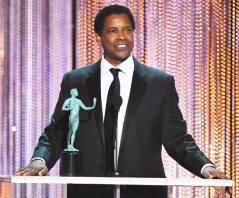
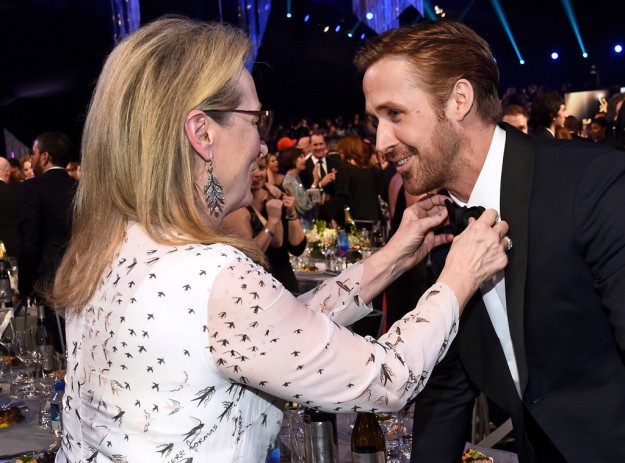
Denzel Washington took home his first SAG award for his work in Fences, which means Casey Affleck for Manchester By The Sea got shut out, as well as Andrew Garfield for Hacksaw Ridge, Ryan Gosling for La La Land, and Viggo Mortensen for Captain Fantastic. This is a rare exception in the Casey Affleck train. Do you think it’s likely to be repeated?
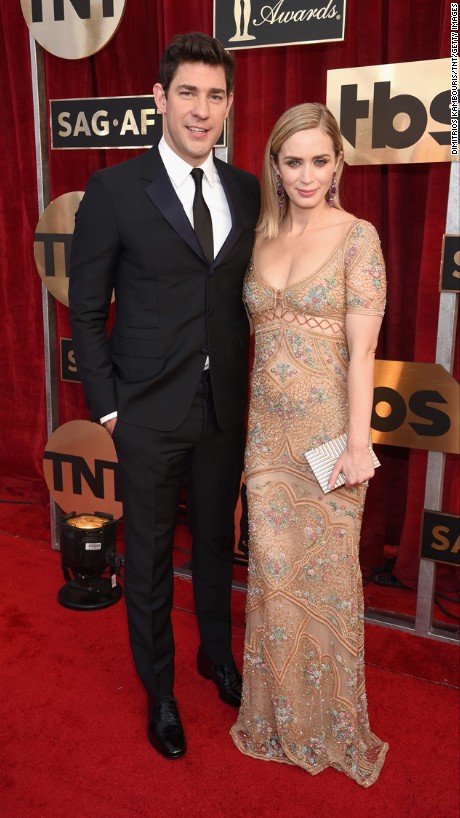
Emma Stone’s performance in La La Land topped Amy Adams for Arrival, Emily Blunt forThe Girl on the Train, Natalie Portman for Jackie and Meryl Streep for Florence Foster Jenkins. This makes her the frontrunner for the Oscar, with Isabelle Huppert and Natalie Portman possible upsets.
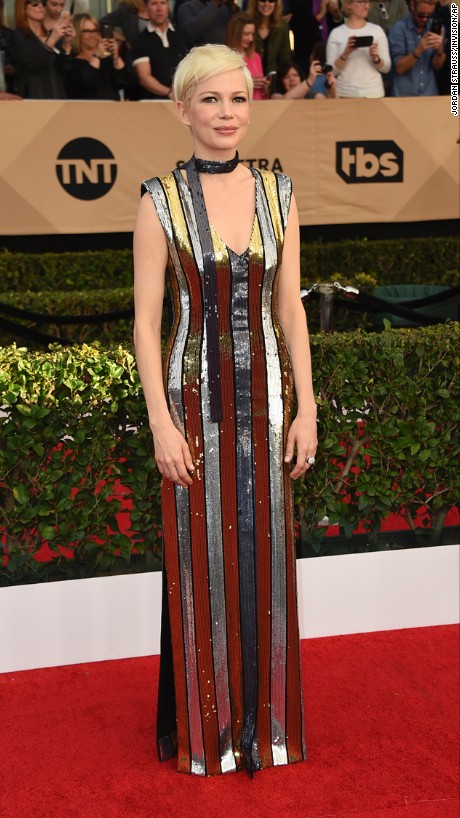
Viola Davis won for supporting actress for Fences over Naomie Harris for Moonlight, Nicole Kidman for Lion, Octavia Spencer for Hidden Figures, and Michelle Williams for Manchester By The Sea. She’ll be pretty unstoppable come Oscar time. I applaud her bold performance even though I radically disagree with her presence in the supporting category at all.
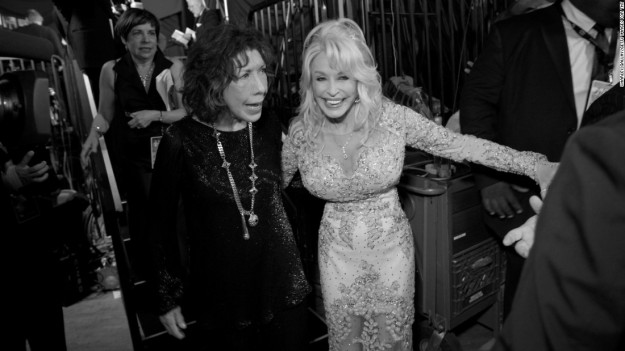
Lily Tomlin received the SAG Lifetime Achievement Award, presented by Dolly Parton and Jane Fonda. Amid the many political speeches of the night, including digs against Donald Trump and his insane ban on Muslims, Tomlin quipped What sign should I make for the next march?
So, what do you think? Best dressed? Biggest upset? How did it stack up to your expectations and how will it affect your Oscar pool?
Fans were shocked when Jared Leto’s Joker had only about 7 minutes of screen time out of Suicide Squad‘s bloated 123, but Hollywood has a long history of assigning big names to small roles – and it’s not always a bad thing.
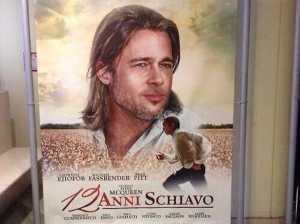
Okay, sometimes it’s a bad thing. Brad Pitt was in 12 Years a Slave for only a couple of minutes, just long enough to establish himself as the only nice white guy, but some countries (not naming any names, Italy) really ran with the white guy and blew his big white face up on the posters, relegating the star (and the slave), Chiwetel Ejiofor, to a small corner.
Anne Hathaway shaved her head and followed a life-threatening diet in order to play the part of Fantine in Les Miserables. She had only 15 minutes of screen time, but it was enough to win her an Oscar and shape her career.
Know who did more with even less? Darth Vader. He appeared in the original Star Wars for just about 12 minutes, but he was an instant bad guy icon. His presence is so magnetizing he truly doesn’t need much. What’s a little more head-scratching to me is Boba Fett. I still don’t even know who he is, or if that’s the correct pronoun for this person. And yet I hear about him ALL THE TIME. He’s in the top 5 favourite characters despite being a glorified extra; he manages about 18 minutes across the entire trilogy mind you, and only got that much when fans seemed to really respond. Mark Hamill got second billing in Star Wars: The Force Awakens because Hollywood is a sexist machine. He’s in that movie for about 6 seconds – sneeze and you miss him.
Beetlejuice is one of Michael Keaton’s most famous roles, and he plays the title character, but he only gets roughly 17 minutes worth of screen time, all told. How crazy is that? But it’s true: he doesn’t appear til quite late in the movie, but boy does he maximize every crazy moment he’s there.
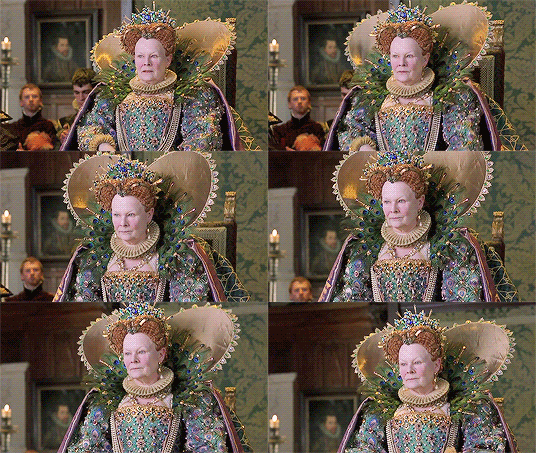
Judi Dench will see your 17 minutes, Michael Keaton, and she’ll raise you: she won a best supporting actress Oscar for only 8 minutes of a role. She played Queen Elizabeth I in Shakespeare in Love and clearly made quite an impression from her modest 6% of the film. Accepting the award, she joked “I feel for eight minutes on the screen, I should only get a little bit of him.” I’m sure that was some consolation to the likes of Lynn Redgrave and Kathy Bates, who lost to her.
Anthony Hopkins only managed to double that screen time when he took on his (arguably) most famous role: Hannibal Lecter in Silence of the Lambs. In just 16 minutes he managed to creep out an entire generation, and caused chianti sales to plummet. Sean Connery was originally approached for the role and turned it out down, which means he lost out on an iconic role, an Oscar, a big day, and sequel opportunities.
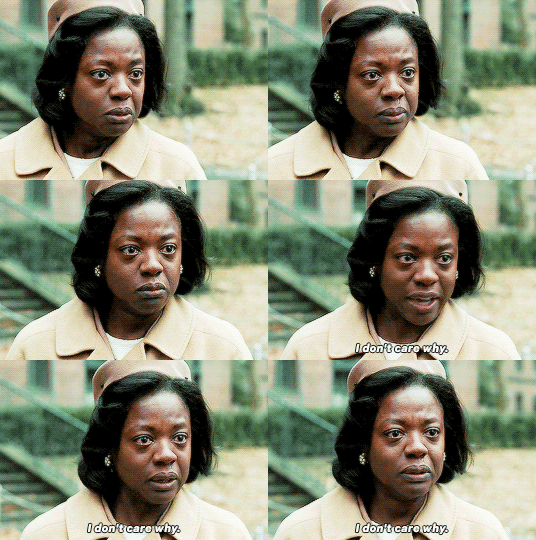
There was a lot about the movie Doubt that got under my skin, but Viola Davis’s 5-8 minutes were consistently under there. She plays the mother of a young boy who may or may not have been molested by a priest. She goes toe to toe with Meryl Streep and doesn’t just hold her own – she steals the scene, earning a supporting actress nomination to boot.
5-8 minutes? Bah! Ned Beatty earned his best supporting actor nomination in under 6. He had one riveting scene in Network, which he shot in a single day, but it sure had us glued to our seats.
Beatrice Straight shaves about 13 seconds off Beatty’s time with her Oscar win for her work in the same movie. As William Holden’s poor, wretched wife in Network, Straight made quite an impact, stealing away the record for least screen time for an Oscar win from Gloria Grahame, who took a leisurely 9 and a half minutes to earn hers for The Band and the Beautiful.
It seems as thought it might be difficult for anyone to earn an Oscar with a sub – 5 minute role, but who knows: has anyone actually racked up Michelle Williams’ screen time in Manchester By the Sea? It’s not a whole lot more, I’m guessing. But the truth is, someone came close: Hermione Baddeley was nominated for best supporting actress for just 2 minutes and 20 seconds worth of screen time in Room at the Top, in 1960. The bar’s been set: who will be the first to duck under it successfully?
.
What’s your favourite tiny role? Matthew McConaughey in The Wolf of Wall Street? Tom Cruise in Tropic Thunder? Daniel Craig in The Force Awakens?
For some reason, the Oscar nominations were not presented in front of a live audience this morning. Pre-taped bits with past Oscar winners like Jennifer Hudson (best supporting actress, 2010 for Dreamgirls) and Brie Larson (best actress 2016, for Room) preceded an automated list announcing the Oscar nominations for 2016’s best movies, interrupted with a commercial for itself. The Academy Awards will take place February 26th, hosted by Jimmy Kimmel. I just realized that I won’t be in the room to win my Oscar pool this year – Sean and I will be in Philadelphia, perhaps not even watching the ceremony!
An accounting firm called PricewaterhouseCoopers has taken care of the Academy balloting process for over 80 years. They send out the nomination forms in December and tabulating them in January takes about 1700 hours. There are over 6000 voting members of the Academy, and they’re all industry professionals. Each branch has different rules as to who can become a member – visual effects supervisors have to be active for a certain number of years, while an
actor must have a credited role in at least 3 films, and a writer should have at least 2 credits, and all must have “achieved distinction” in the motion picture arts and sciences. The tricky part is that you can only be a member of one branch, so someone like Ben Affleck has to decide whether he wants to be there as an actor, a director, or a writer. Each category votes only for itself – on editors can decide who will be nominated for best editing, and only actors vote for best actors nominees. Everyone can vote for best picture, however.
For a film to be considered, it has to meet some basic requirements: it must be over 40 minutes, it must have had at least a 7-straight-day run at a paid-admission L.A. theatre, and it can’t have debuted on television or the internet.
When an Academy member receives a ballot, they get to list their 5 nominee choices in order of preference, and are encouraged to “follow their heart”. The ballots are counted by hand, and the accounting firm looks for the “magic number” – the number of mentions it takes to turn a name into a nomination. The formula they use is: total # of ballots, divided by total possible nominees plus 1. So for Best Director, say you have 600 ballots, and you get to have 5 nominees (plus 1 = 6), that’s 600 divided by 6, or 100 ballots to become a nominee.
The counting starts based on a voter’s first choice until someone reaches the magic number. Once Damian Chazelle (for example), reaches the magic number, all the ballots that had him as first choice will be set aside. The director with the fewest first-place votes is automatically knocked out, and those ballots are redistributed based on the voters’ second choice (the directors still in the running keep their calculated votes from the first round). Once the nominees are announced today, the accounting firm will now send out new ballots and everyone can vote in all categories for the actual awards, although people are discouraged from voting for categories that they don’t understand.

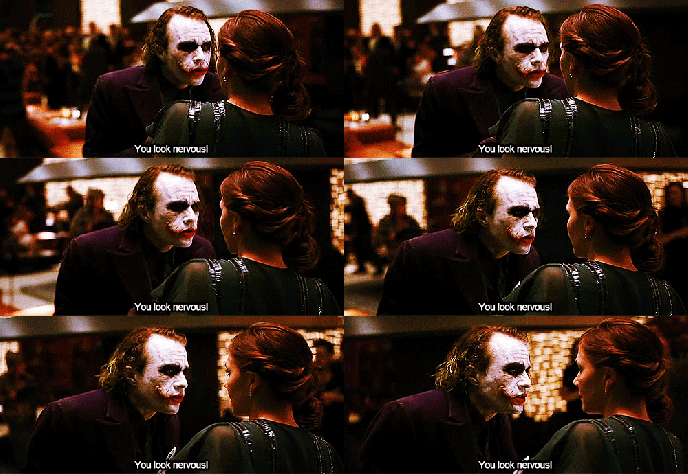 The Joker: I suppose there are probably dozens of back stories as to how The Joker got his scars, but I love how Chris Nolan approaches them in The Dark Knight. The Joker himself tells several vastly different tales involving their provenance, which reveals nothing about their true nature, but tonnes about his sanity. The way he accents the scars with makeup makes us think he’s proud of them. He wants them to be noticed. Perhaps he wants us to believe they’re self-inflicted. Perhaps they are.
 Tony is blasé about his scar, laughing it off, attributing it to his youth but never getting specific. It’s obviously a reminder of the past he left behind, and it’s a focal point to his enemies, something that makes him look scary and intimidating, perhaps warning them that he’s capable of violence. But in true Tony spirit, he addresses his scar only thusly: “You should see the other kid; you can’t recognize him.” I bet that’s true.
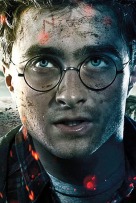 Harry Potter: Harry got his distinctive lightning-bolt scar in a failed murder attempt, when Lord Voldemort put a killing curse on him (his mother’s sacrifice saved him from death, but he would bear the mark of the attack). The scar is legendary among the magic set, and it tingles whenever the Dark Lord is near. It wasn’t just a warning system, but a link to what Voldemort was thinking and feeling – actually a small piece of his soul, yearning to escape. Which is pretty crazy.
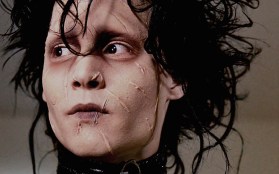 the obvious result of learning the hard way how to live with scissors for hands. They aren’t terrible to look at, and actually give him a sympathetic look, reminding us of his hardships. Since the movie skewers conformity, Edward’s scars are just another thing that set him apart.
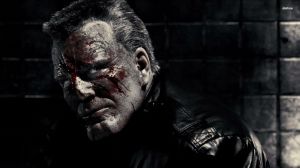 Marv: Sin City’s Marv puts Mickey Rourke on this list twice, ironic considering his own not-insignificant scars. In the 1990s he took up boxing, and had to have lots of reconstructive surgery as a result – two broken noses, a smashed cheekbone – but admittedly went to the wrong doctor to put things right. Finally, after massive amounts of plastic surgery, he’s starting to look good again. Regardless, in Sin City, Rourke’s face is covered in prosthetic scars. Marv is supposed to be too “ugly” to attract the opposite sex, which is why his relationship with Nancy is so pure and good, and highly cherished by him.
 ow he’s defined by it, bearing its nickname.
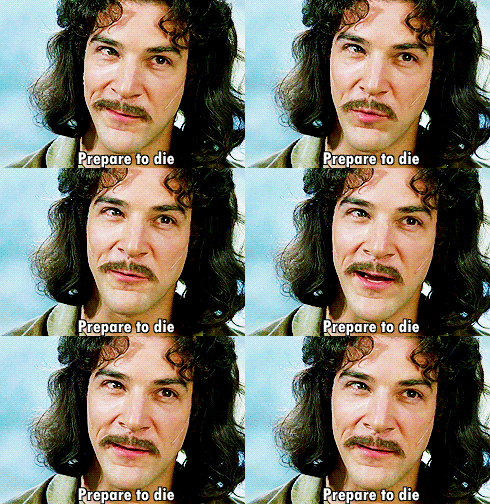 Inigo Montoya: “Hello. My name is Inigo Montoya. You killed my father. Prepare to die.” A mysterious man with 6 fingers attacked Inigo’s father, and presumably Inigo’s scar is from that same fight. His greatest wish is to avenge his father’s death, and he spends much of The Princess Bride pursuing the man who left so many scars in his wake.
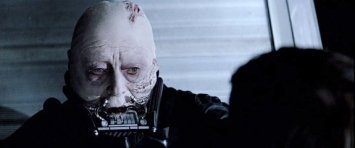 the ghost of Obi-Wan tells Luke: “When your father clawed his way out of that fiery pool, the change had been burned into him forever – he was Darth Vader, without a trace of Anakin Skywalker. Irredeemably dark. Scarred.” Those scars are kept underneath a menacing helmet for much of the series, but when that helmet comes off, oof: impact.
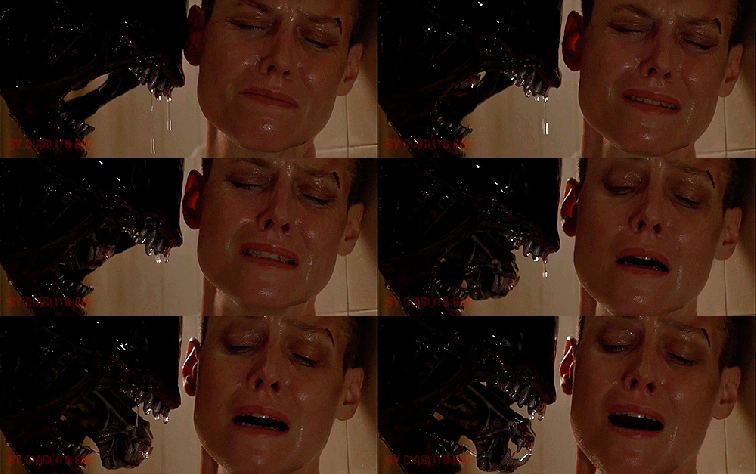 And this might be the first ever case of me agreeing with studio interference, purely because the world needs more Ripleys. We admire her because she was tough and she was smart. I admire her, and Scott, because Ripley cried at work and it didn’t weaken her, didn’t sap her power.
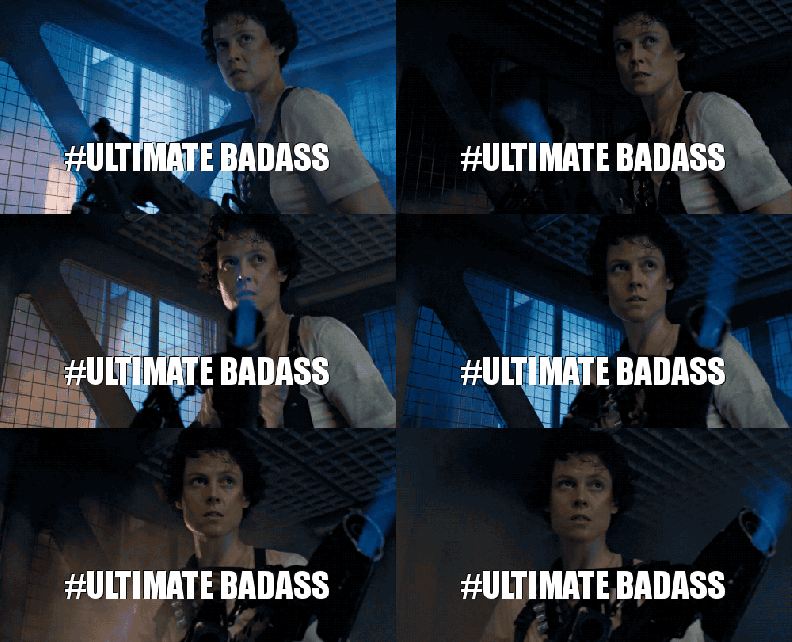 mechanisms. For many women, and many men, it’s just part of being human, part of having emotions, and most of us do not shut those emotions off at the start of our shift. 41% of women and 9% of men said they’d cried at work during the previous year and that it had made no difference in terms of their success (note: women have six times more prolactin – a hormone related to crying – than men).
 Once in a while I wish I had a more literary mind. When I write, it’s pretty direct and while I used to attempt subtext I’ve pretty much given up on it at this point – too much effort for too little payoff. But that’s for my writing, where no marks are given for artistry. All that matters is the end result.
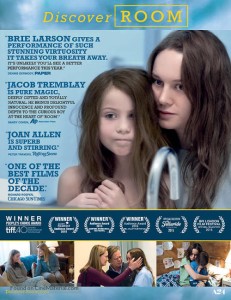
 certainly in at-home rentals (Clint Eastwood’s Million Dollar Baby went from just $8.4 million pre-nomination, to gross over $90 million after its Best Picture win). It’ll put a fancy gold sticker on the DVD box in stores. And it’s a shiny piece of hardware not only for their office, but for any movie poster coming out of their studio for the next several years. Prestige!
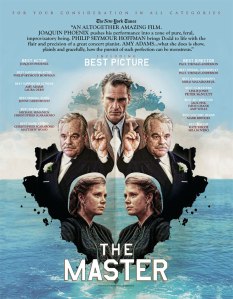 nominees in order to judge accurately. But these Hollywood types are busy people! They can’t be hitting up the cinema like us regular folk! Solution: studios can send out free screeners so big important people can watch the contenders in the privacy of their own homes. It will cost the studio about $300 000 to do that (it’s a lot of free DVDs – and there’s always a chance of piracy) but that’s just a drop in the bucket when it comes to buying an Oscar.
 That sounds like I’m joking and indeed I’ve never heard anything about Lonergan and any kind of pickle, but Harvey Weinstein is famous for being – er – quite competitive, stopping at nothing, including the nasty rumour mill, and lavishing expensive gifts on Academy members just out of the “goodness” of his heart, no strings attached (except vote for my movie or I’ll blackball you forever).
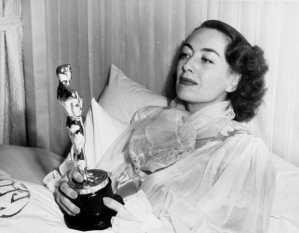 Joan Crawford hired a press agent to get her a win for Mildred Pierce. He kept her name in the news and planted items in the gossip columns. Still, she was too nervous to attend the ceremony, fearing a loss. Her agent, however, dispatched hair and makeup to her home while he covered for her: a fever of 104 degrees, I believe he said. She won, and when press raced to her house, she was sitting up in bed, full hair and makeup, sexy negligee, and an Oscar cradled in her arms. Success!
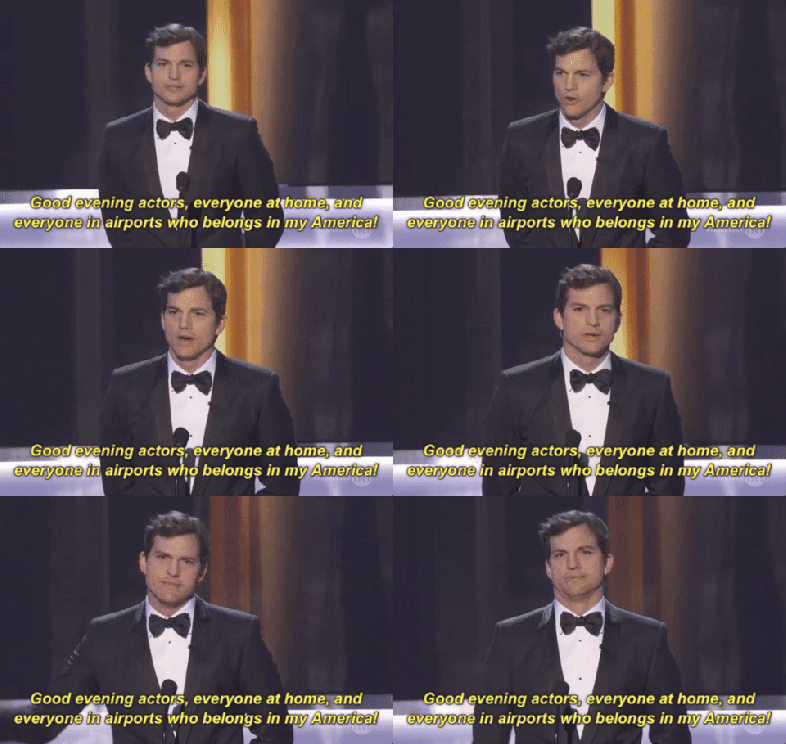 UnAmerican, and yet it was America who voted this buffoon into presidency just a few short months ago. In the face of one man’s cowardly discrimination, however, were many more acts of love and fraternity. American citizens stormed airports with signs of welcome and solidarity. Lawyers littered the floors working pro-bono around the clock. And a group of actors at the
 2012 when it was the first Iranian film to win an Oscar. This year he has toured the festivals with The Salesman, and won Best Screenplay at Cannes. Iran submitted it to be considered in the foreign film category at the Academy Awards and it won a nomination. Asghar Farhadi will not be allowed to attend the ceremony because of Trump’s “Muslim ban.” This is who his ban keeps out – not terrorists, but people who come here to work, to study, to visit friends and family.
 citizens of the other six countries trying to legally enter the United States of America and hope that the current situation will not give rise to further divide between nations,” Farhadi said. He’s not the only one with this fear on his mind: “Our most important allies in the fight against ISIL are the vast majority of Muslims who reject its apocalyptic ideology of hatred. This executive order sends a signal, intended or not, that America does not want Muslims coming into our country. That is why we fear this executive order may do more to help terrorist recruitment than improve our security” [italics are mine]. It wasn’t Bernie Sanders or Obama who said that, it was a joint statement from two Republican senators, John McCain and Lindsey Graham.
 The Syrian family at the heart of Watani: My Homeland, another short documentary up for an Academy Award, is also unable to attend the Oscars due to the travel ban, even though they are now German citizens. But movies and stories like this, and
 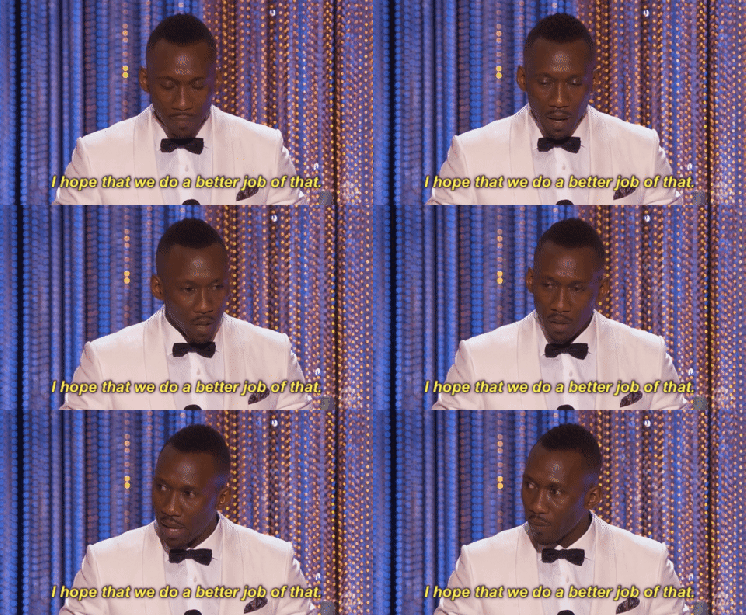 entertaining us, sometimes helping to tell urgently important stories. Oscar-nominated (and best supporting actor heir presumptive) Mahershala Ali is Muslim (Moonlight, Hidden Figures). Rogue One’s Riz Ahmed is Muslim. So are Dave Chapelle, Ice Cube, Mos Def, Amal Clooney, Omar Epps, Janet Jackson, Aziz Ansari, Ellen Burstyn, Muhammad Ali, Shaq, Kareem, and some of my favourite members of the Wu-Tang Clan. Muslims are not terrorists. Muslims are terrorized by terrorists, who use any reason, including religion (including Christianity) to do evil.
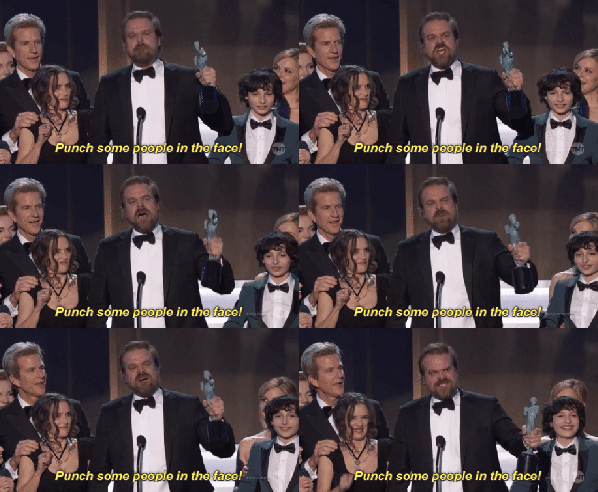 Taraneh Alidoosti, an actress known to very few over here in the west, is boycotting the Oscars. Wouldn’t it really mean something if others did as well? If the Oscars had to broadcast hundreds of empty seats, each tagged with the name of a celebrity who didn’t come because the thought of Trump’s America was so unpalatable that it’s better to stay home than to schmooze and be lauded by one’s colleagues? If they stood in solidarity with fellow film makers who are just as deserving but are prohibited from celebrating just because of their religion? Now that’s a story worth telling; let’s continue to take part in it.
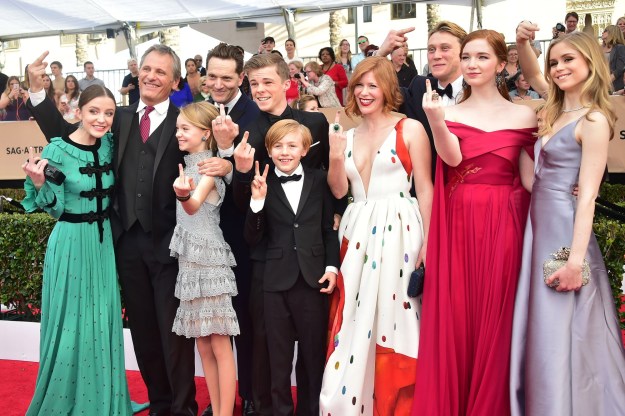
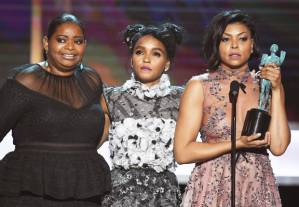 Outstanding performance by a cast was won by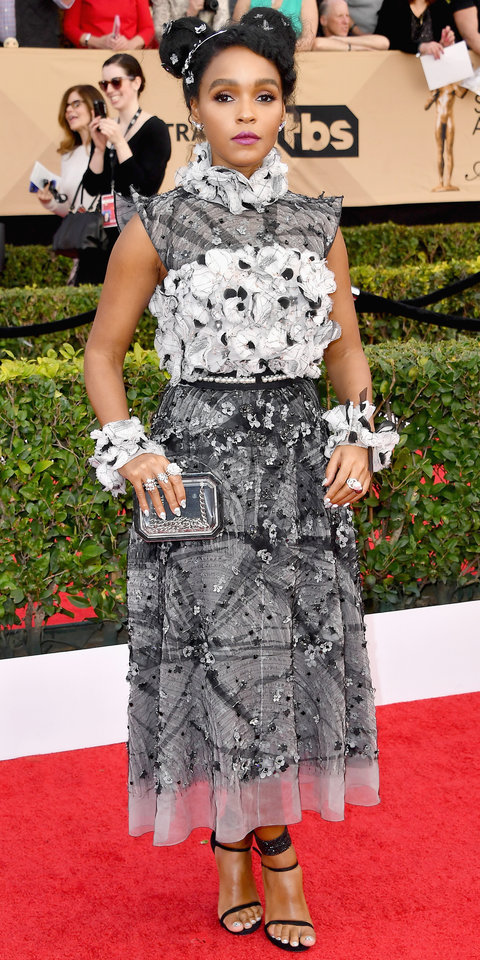

 means Casey Affleck for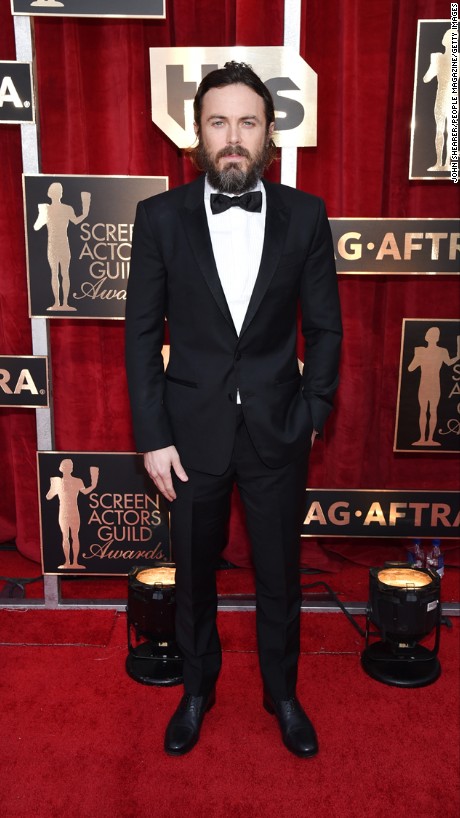

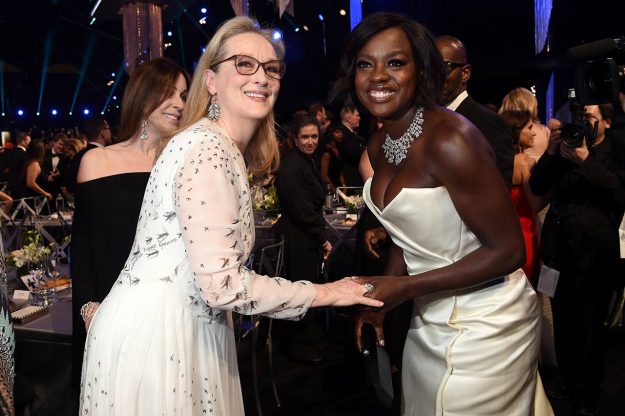
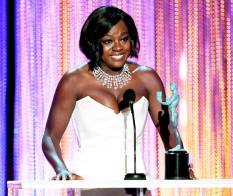 Viola Davis won for supporting actress for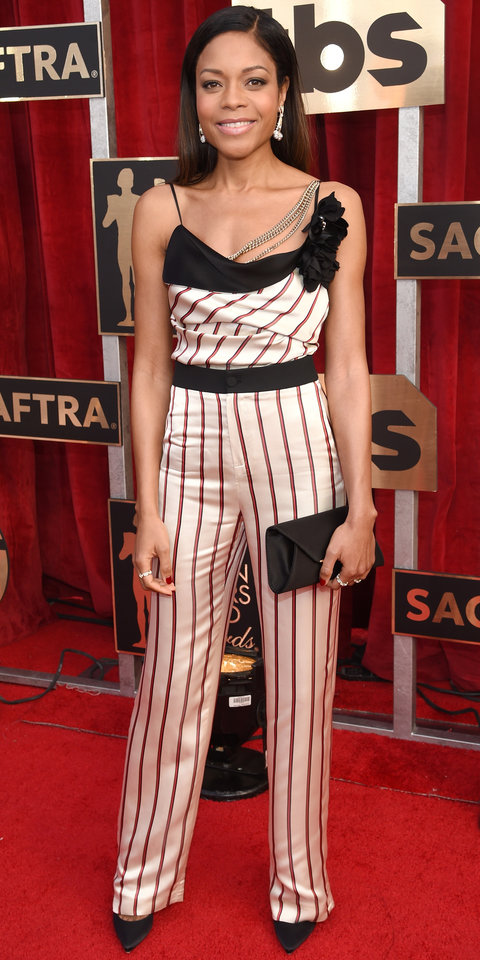



 Award, presented by Dolly Parton and Jane Fonda. Amid the many political speeches of the night, including digs against Donald Trump and his insane ban on Muslims, Tomlin quipped What sign should I make for the next march?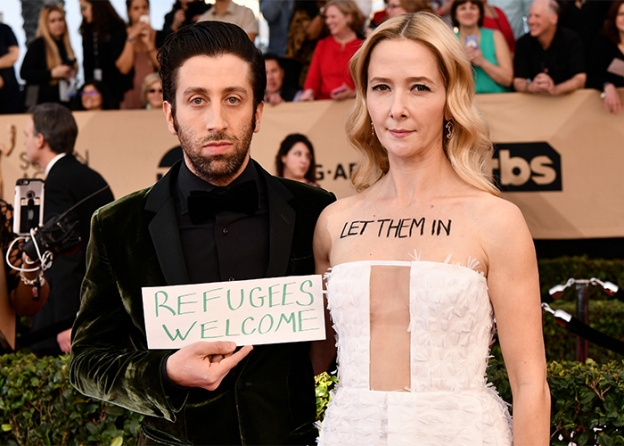
 Okay, sometimes it’s a bad thing. Brad Pitt was in
  extra; he manages about 18 minutes across the entire trilogy mind you, and only got that much when fans seemed to really respond. Mark Hamill got second billing in Star Wars:
  Judi Dench will see your 17 minutes, Michael Keaton, and she’ll raise you: she won a best supporting actress Oscar for only 8 minutes of a role. She played Queen Elizabeth I in Shakespeare in Love and clearly made quite an impression from her modest 6% of the film. Accepting the award, she joked “I feel for eight minutes on the screen, I should only get a little bit of him.” I’m sure that was some consolation to the likes of Lynn Redgrave and Kathy Bates, who lost to her.
 minutes were consistently under there. She plays the mother of a young boy who may or may not have been molested by a priest. She goes toe to toe with Meryl Streep and doesn’t just hold her own – she steals the scene, earning a supporting actress nomination to boot.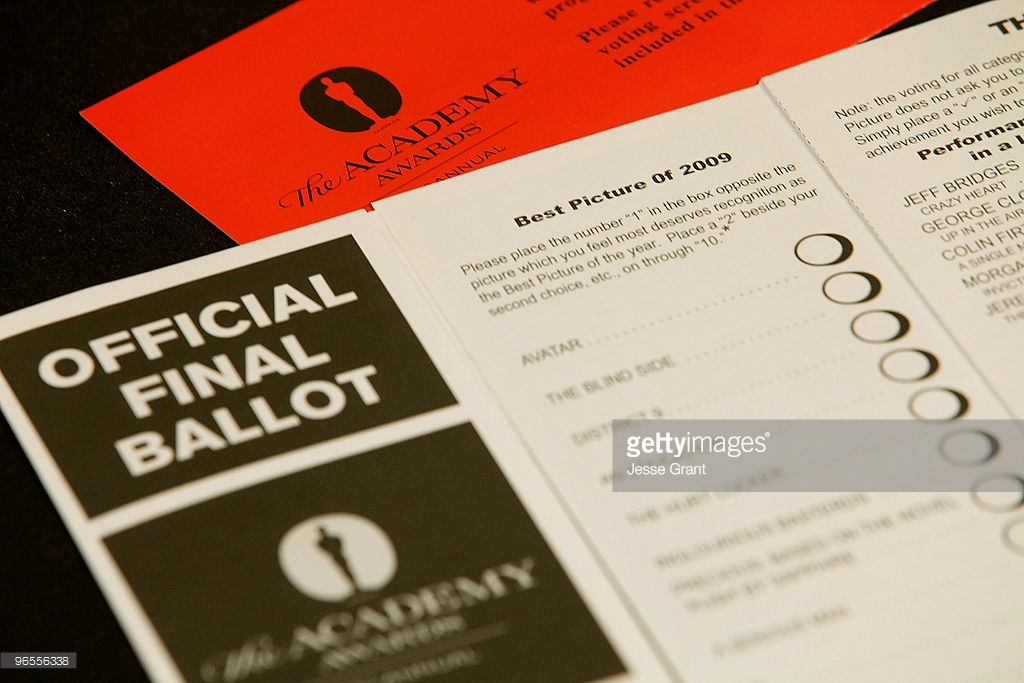
 ASSHOLES WATCHING MOVIES